
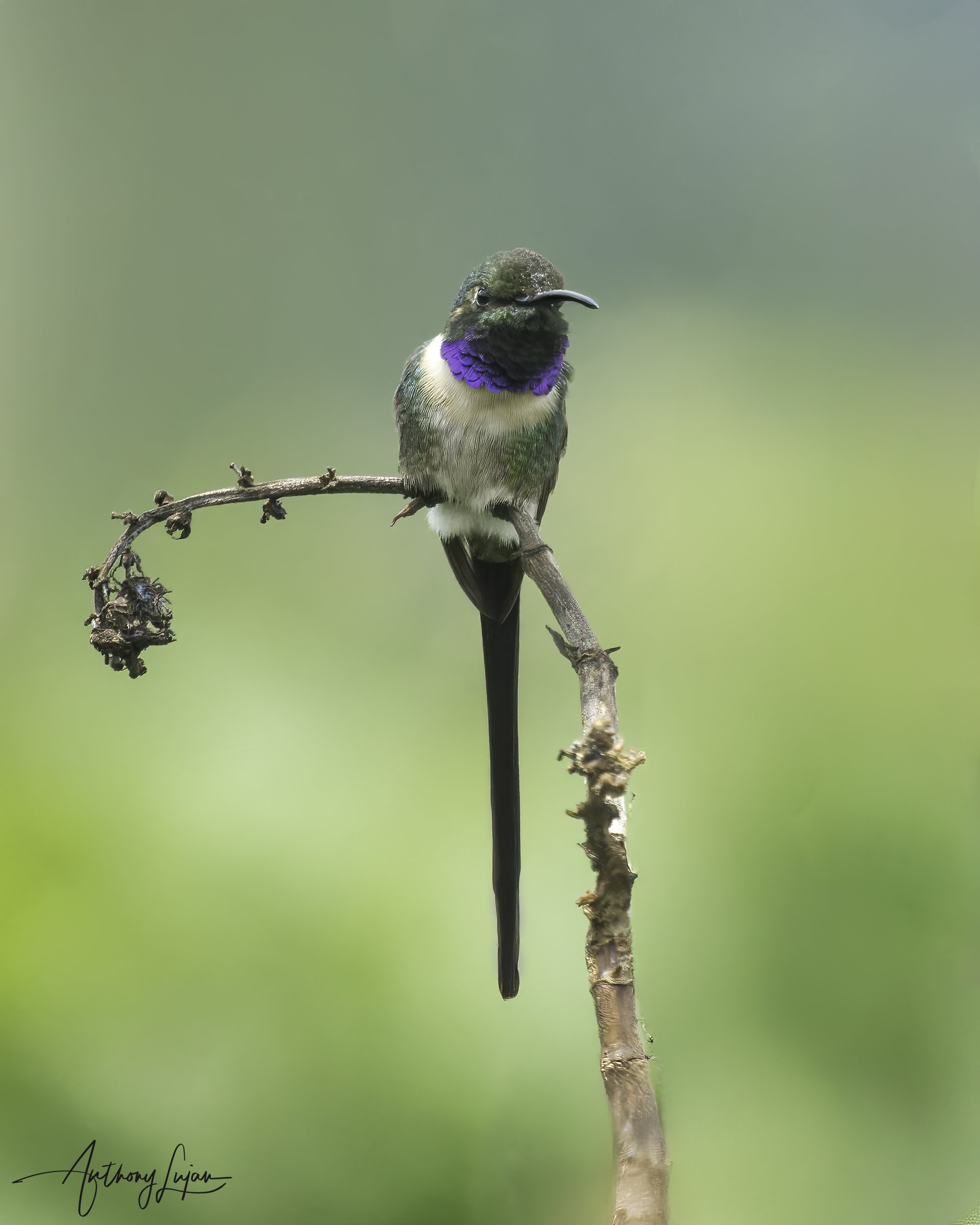
Scientific name: Doricha enicura
The Slender Sheartail is a highland hummingbird of southern Mexico and northern Central America. An estimated 20,000–49,999 mature individuals remain, the population is decreasing, it is considered non-migratory, and it is currently listed as Least Concern and monotypic, with no recognized subspecies.
At a Glance
Family: Trochilidae (hummingbirds)
Clade: Mellisugini – Bee Hummingbirds
Genus group: Doricha — slender “sheartail” hummingbirds of Mesoamerica
Range: Highlands of southern Mexico (Chiapas) south through Guatemala, Honduras, and El Salvador.
Habitat: Humid and semi-humid scrub, forest edges, clearings, second growth, and open woodland on slopes and in intermontane valleys.
Elevation: Mostly between about 1,000 and 3,000 m (3,300–9,800 ft).
Length: Males about 11–12.5 cm (4.3–4.9 in), females about 8–9 cm (3.1–3.5 in).
Weight: Around 2.3–2.6 g.
Number of mature individuals: 20,000–49,999
Population trend: Decreasing
Status: Least Concern (IUCN)
Name Origin
The genus name Doricha comes from a courtesan named Rhodopis or Doricha in Greek history, reflecting a tradition of using classical names. The species name enicura is derived from Greek roots often interpreted as referring to the distinctive tail compared with typical hummingbirds. The English name “Slender Sheartail” highlights the bird’s slim build and the long, narrow, deeply forked tail of the male.
Subspecies & Distribution
Monotypic — no subspecies are recognized.
Distribution: The Slender Sheartail is restricted to the highlands of southern Mexico (especially Chiapas) south through Guatemala and into western Honduras and northeastern El Salvador. It occurs in mountainous regions and intermontane valleys where suitable scrub and forest-edge habitats are available.
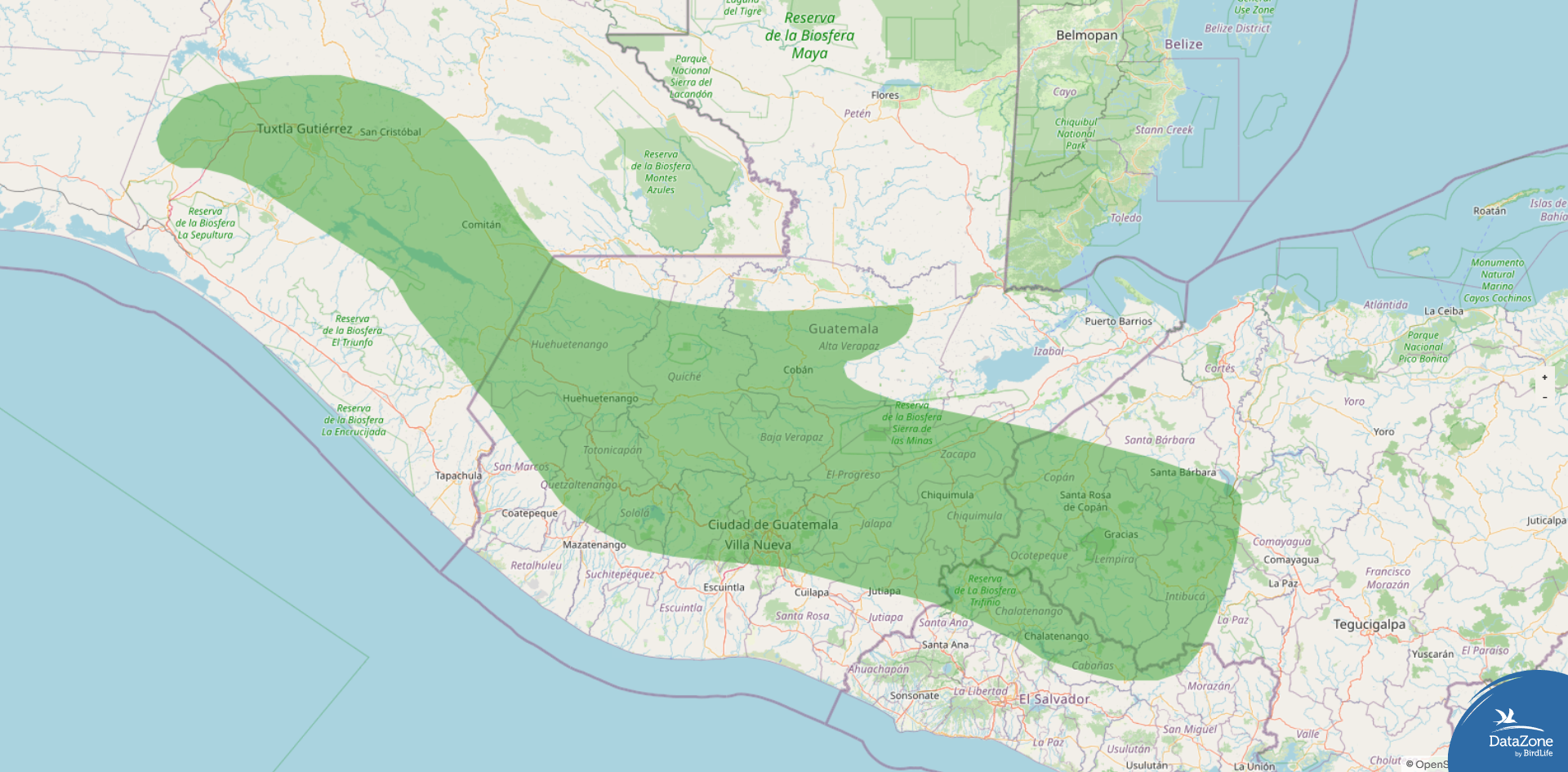
Legend
Green Resident
Species Overview
The Slender Sheartail is a small but striking hummingbird best known for the male’s long, deeply forked tail and glittering throat. It favors partly open, scrubby highland habitats, including forest edges, clearings, and secondary growth where flowers are abundant. Despite its fairly wide range, it is considered uncommon and is believed to be declining as natural vegetation is converted to agriculture and other land uses.
Male Description
Adult males have a long, slightly decurved black bill and a small white spot behind the eye. The head, upperparts, and sides of the belly are metallic green, while the chest and center of the belly are white. The gorget is a bright pinkish-purple, forming a vivid patch on the throat. The tail is very long and deeply forked; the central pair of feathers are green, and the outer feathers are dark, giving a dramatic, scissor-tailed look in flight. Overall, males appear as slim, green hummingbirds with a glowing purple throat, clean white underparts, and an exaggerated, forked sheartail.
Female Description
Adult females are smaller, with a similar long, slightly decurved black bill and a dark stripe through the eye. The upperparts are metallic green, and the underparts are warm cinnamon-buff, often richest on the flanks and lower breast. The tail is much shorter and only shallowly forked; the central feathers are green, and the outer feathers are cinnamon with a darker band near the tips and pale tips. Females thus appear as small green hummingbirds with buffy underparts and a modest tail pattern, lacking the male’s long sheartail and glittering gorget.
Habitat & Behavior
Slender Sheartails inhabit humid and semi-humid scrub, forest edges, clearings, young secondary forest, and open woodland in highland regions. They typically use partly open habitats with scattered shrubs and trees, often along slopes and in valleys. Like other hummingbirds, they feed on nectar from flowers and also take small arthropods. Males may gather in loose leks during the breeding season, performing aerial displays to attract females. The species is considered non-migratory, present year-round within its range, though individuals may move locally along elevation gradients as flowers bloom.
Population
The total population is estimated at approximately 20,000–49,999 mature individuals. Although the species occupies a fairly large area across multiple countries, it is generally described as uncommon and patchily distributed. Habitat conversion to agriculture, pasture, and other land uses is believed to be causing a slow overall decline.
Conservation
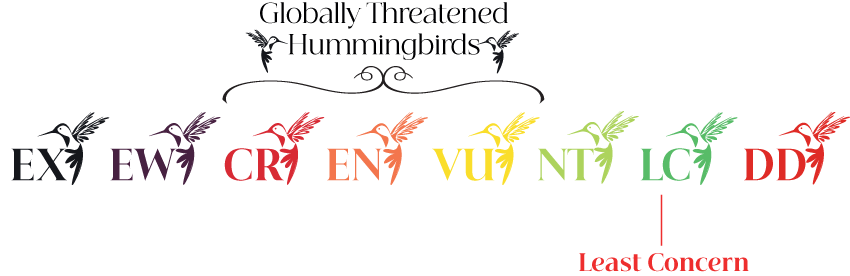
The Slender Sheartail is listed as Least Concern because of its relatively broad range and population size, but its decreasing trend and reliance on natural scrub and forest-edge habitats are causes for concern. It often disappears from areas where native vegetation is replaced by intensive agriculture, underscoring its dependence on semi-natural landscapes. Protecting highland scrub, forest edges, and secondary woodlands, along with promoting land-use practices that retain native vegetation and flowering shrubs, will benefit this species.


Related species in the Doricha genus (2 species total):


Please note: The content provided in this article reflects Anthony’s personal experience and photographic approach. Results can vary depending on light, weather, location, equipment, subject behavior, and field conditions.