
Sooty-capped Hermit
Scientific name: Phaethornis augusti
The Sooty-capped Hermit is a medium-sized hermit hummingbird of humid foothill and montane forests and forest edges in northern South America. The number of mature individuals is unknown, the population trend appears stable, it is not a migrant, and it is currently assessed as Least Concern
At a Glance
Family: Trochilidae (hummingbirds)
Clade: Phaethornithinae – Hermits
Genus: Phaethornis — 27 species in total
Range: Santa Marta Mountains of Colombia; Coastal Range and eastern Andes of Venezuela and adjacent Colombia; tepui highlands of southern Venezuela, western Guyana, and northern Brazil (Roraima)
Habitat: Humid foothill and montane forest, cloud forest, ravines, dense secondary growth, and forest edges; generally avoids open lowlands
Elevation: Mostly about 200–1,200 m, locally higher in some montane areas
Length: About 14–15 cm (5.5–5.9 in)
Weight: Males about 4.5–6 g; females about 4–5 g
Number of mature individuals: Unknown
Population trend: Stable
Movement: Not a migrant
IUCN Red List category: Least Concern
Name Origin
The genus name Phaethornis derives from Phaethon, son of the sun god Helios in Greek mythology, and alludes to the shimmering plumage of hermit hummingbirds. The species name augusti honors French naturalist Auguste Sallé, who collected extensively in the Neotropics. The English name “Sooty-capped Hermit” refers to the species’ dark, sooty crown, which contrasts with its paler face and body.
Taxonomy
Phaethornis augusti is a hermit hummingbird in the subfamily Phaethornithinae. It is closely related to the Planalto Hermit (Phaethornis pretrei), and the two are often considered to form a superspecies adapted to more open or montane habitats than many forest-interior hermits.
Subspecies and Distribution
Three subspecies:
Phaethornis augusti curiosus
Distribution: Santa Marta Mountains in northern Colombia.Phaethornis augusti augusti
Distribution: Coastal Range and eastern Andes of Venezuela, extending south on the eastern slope of the Eastern Andes in Colombia.Phaethornis augusti incanescens
Distribution: Isolated tepui highlands of southern Venezuela, western Guyana, and northern Brazil (Roraima).
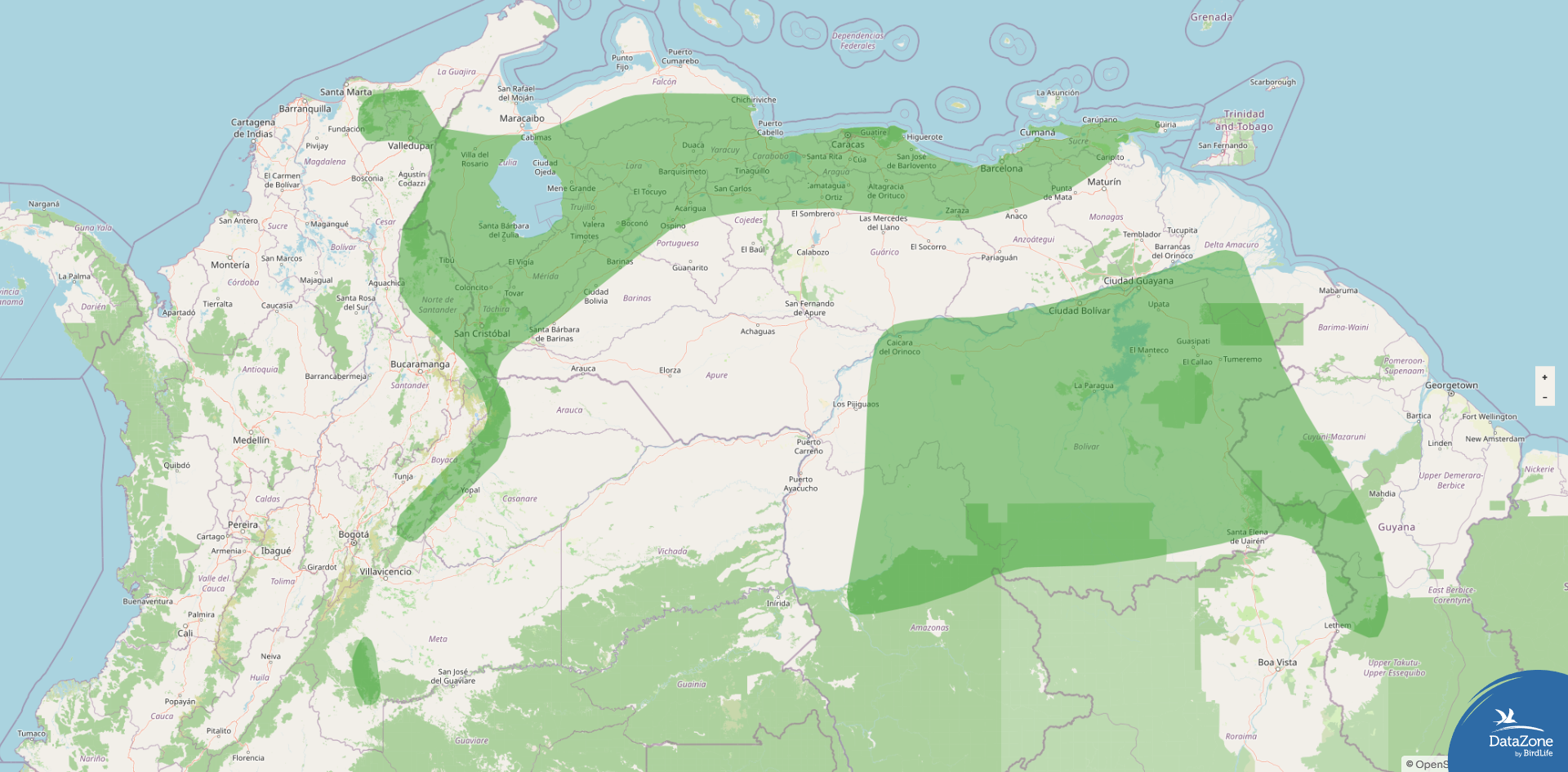
Legend
Green Resident
Species Overview
The Sooty-capped Hermit is a mid-sized, grayish-brown hermit distinguished by its dark sooty crown, rufous lower back and uppertail coverts, and gray underparts. It shows the classic hermit facial pattern: a dark mask crossed by a white stripe above the eye and a white gular stripe below. A long, slightly decurved bill and white-tipped tail feathers complete its characteristic silhouette. This species is locally common in humid foothill and lower montane forests and is often first detected by its high, insect‑like calls in the shaded understory.
Male Description
Males measure roughly 14–15 cm in length and weigh about 4.5–6 g. The crown is dark brown to blackish (“sooty”), contrasting with grayer nape and upperparts. The back is grayish-brown with a warm rufous wash across the lower back and uppertail coverts, while the underparts are mostly gray. The face shows a blackish mask with a narrow white supercilium and a white gular stripe. The tail is relatively long and slightly graduated; the inner tail feathers are a bit longer than the others, and all rectrices have conspicuous white tips. The bill is long, slender, and slightly decurved, usually dark above with a paler base to the lower mandible.
Female Description
Females are very similar to males but slightly smaller and lighter, averaging around 4–5 g. Plumage is nearly identical, with the same sooty crown, rufous rump, gray underparts, and contrasting white facial stripes. Any differences are subtle, mainly in size and bill proportions rather than color. Juveniles resemble adults but tend to show duller facial contrast and somewhat softer patterning until their first molt.
Habitat & Behavior
Sooty-capped Hermits inhabit humid foothill and montane forests, including cloud forest, ravines, forest edges, and dense secondary growth. They prefer cool, moist, shaded slopes and gullies where flowering plants and epiphytes are abundant, generally avoiding open lowlands and heavily disturbed areas. Birds usually forage in the understory and mid-levels, often along trails, streams, and forest edges.
They are typical hermit trapliners, following a repeated circuit between scattered flowers rather than defending a single nectar patch. The species visits a wide range of tubular flowers, including bromeliads, heliconias, and other forest understory plants. Small arthropods such as insects and spiders are also taken, gleaned from foliage or snatched in short sallies, and provide important protein, especially during breeding.
Breeding
Breeding biology is not fully documented, but the Sooty-capped Hermit follows the general hermit pattern. The female constructs a long, cone-shaped nest of plant fibers bound with spiderweb, often decorated with moss or lichens. The nest is typically suspended from the underside of a drooping leaf, a rootlet, or even human-made supports in sheltered situations.
A typical clutch consists of two white eggs. The female alone incubates and raises the young, feeding them by regurgitating nectar and small arthropods. Nests may be reused within a season, with repairs and new linings added as needed.
Movement
The Sooty-capped Hermit is considered not a migrant. It is resident across its disjunct ranges in the Santa Marta Mountains, Andean foothills, coastal cordilleras, and tepui highlands. Some individuals likely make local elevational shifts or short-distance movements in response to seasonal patterns in flowering and rainfall, but there is no evidence of regular long-distance migration.
Population
The total number of mature individuals is unknown, but the species is generally described as uncommon to locally common within suitable habitat. It occurs in several protected areas across its range. Thanks to the relative inaccessibility of some mountain sites and tepuis, parts of its population are buffered from intensive land use, though localized declines may occur where forests are cleared or degraded.

Conservation
The Sooty-capped Hermit is assessed as Least Concern due to its relatively wide, though patchy, distribution and apparently stable overall population. Nevertheless, ongoing deforestation, mining, agricultural expansion, and infrastructure development in montane regions threaten portions of its habitat. Conservation of humid foothill and montane forests, including cloud forest and tepui woodland, and maintaining structurally complex, flower‑rich understory are important for the long-term persistence of this species.
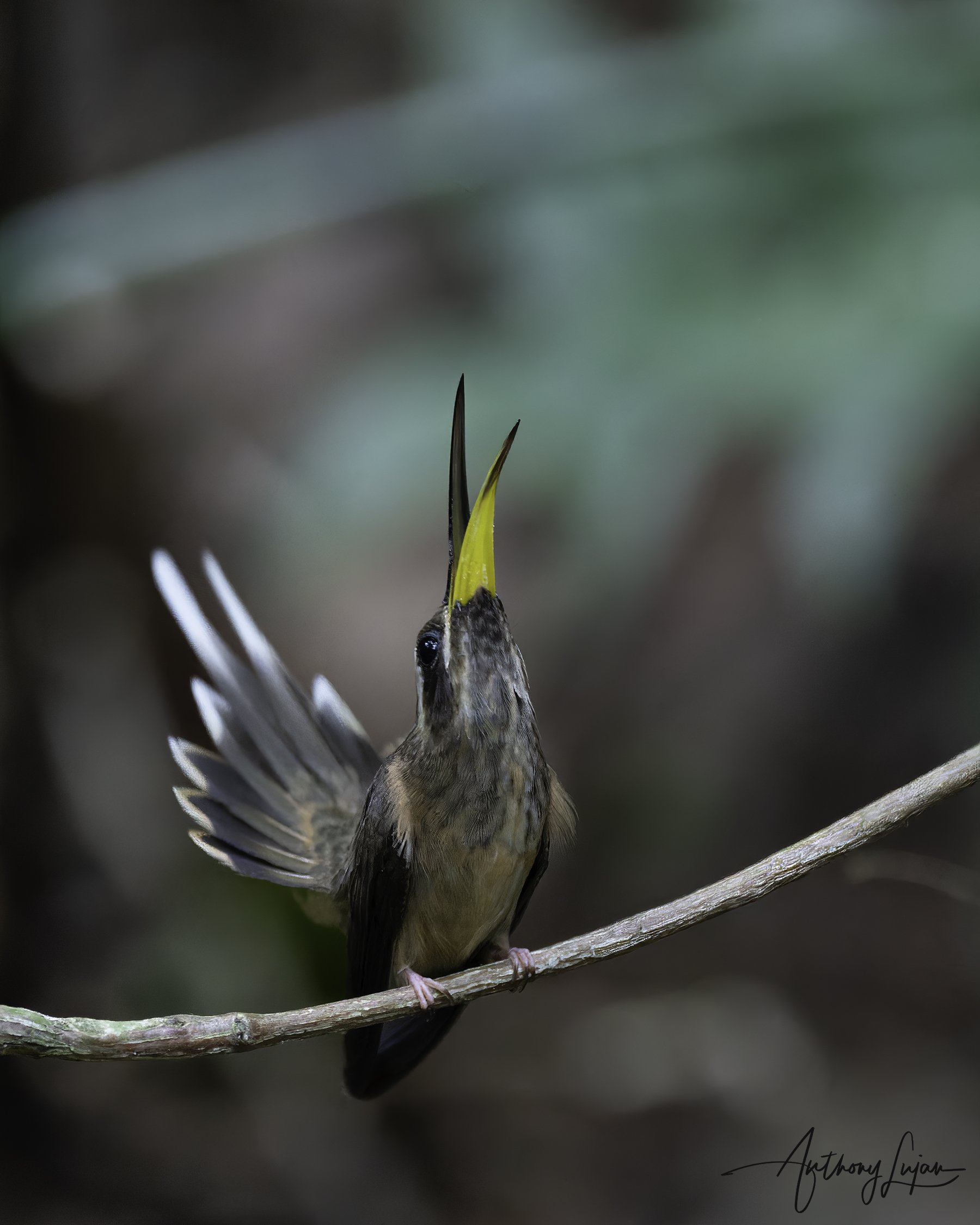
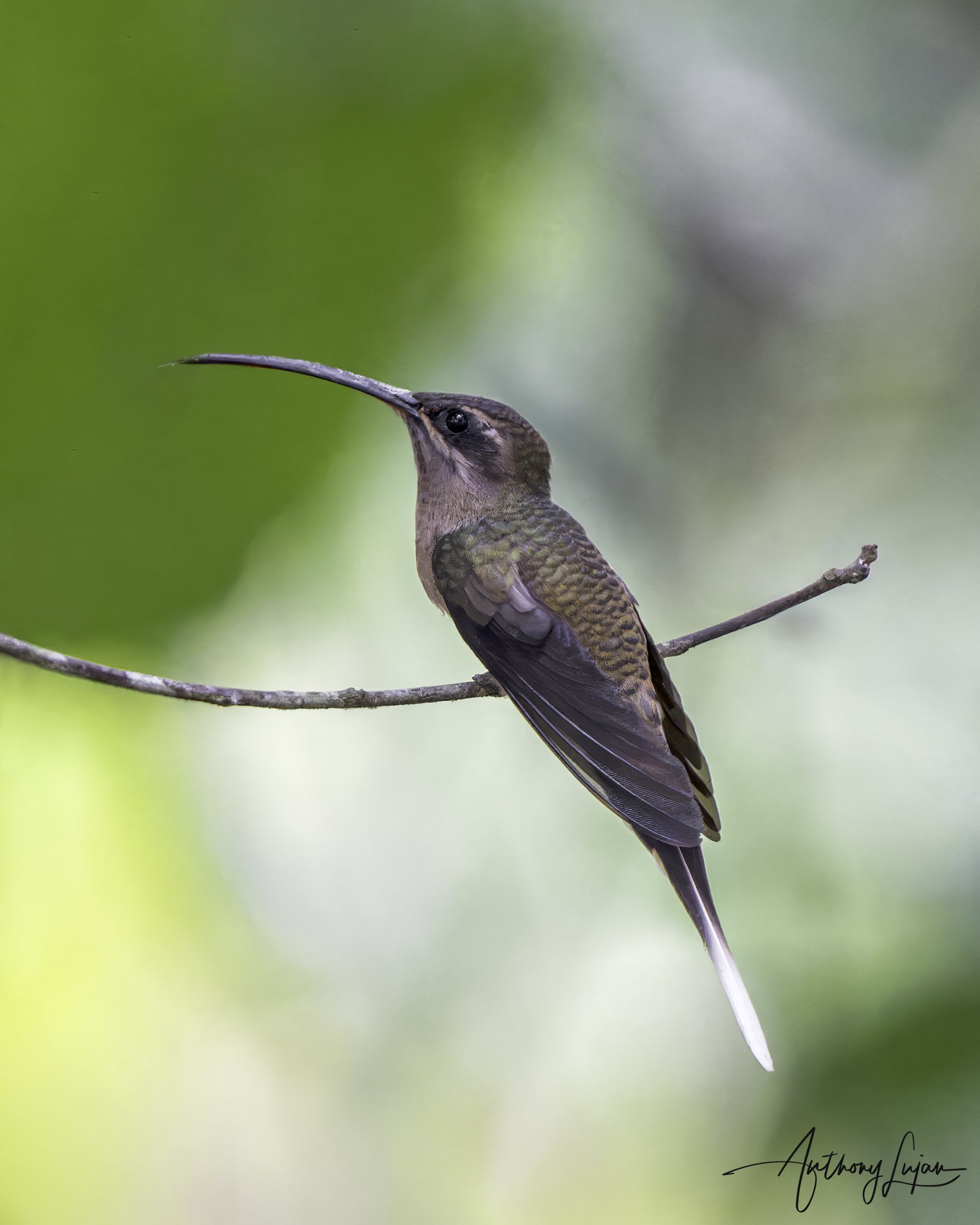
Below is the Sooty-capped Hermit (Phaethornis augusti augusti)
Photographed at Hacienda La Leona Birdwatching, Cundinamarca, Colombia
These individuals belong to the subspecies augusti, which ranges across the Coastal Range and Eastern Andes of Venezuela, extending south into the eastern slopes of the Eastern Andes in Colombia. It occupies humid foothill and lower montane forest between 200 and 1,800 meters. This subspecies shows uniform sooty-brown plumage with a whitish facial stripe and a slightly paler belly. Its soft, buzzy calls and traplining behavior make it a typical, if inconspicuous, presence in dense forest understory.


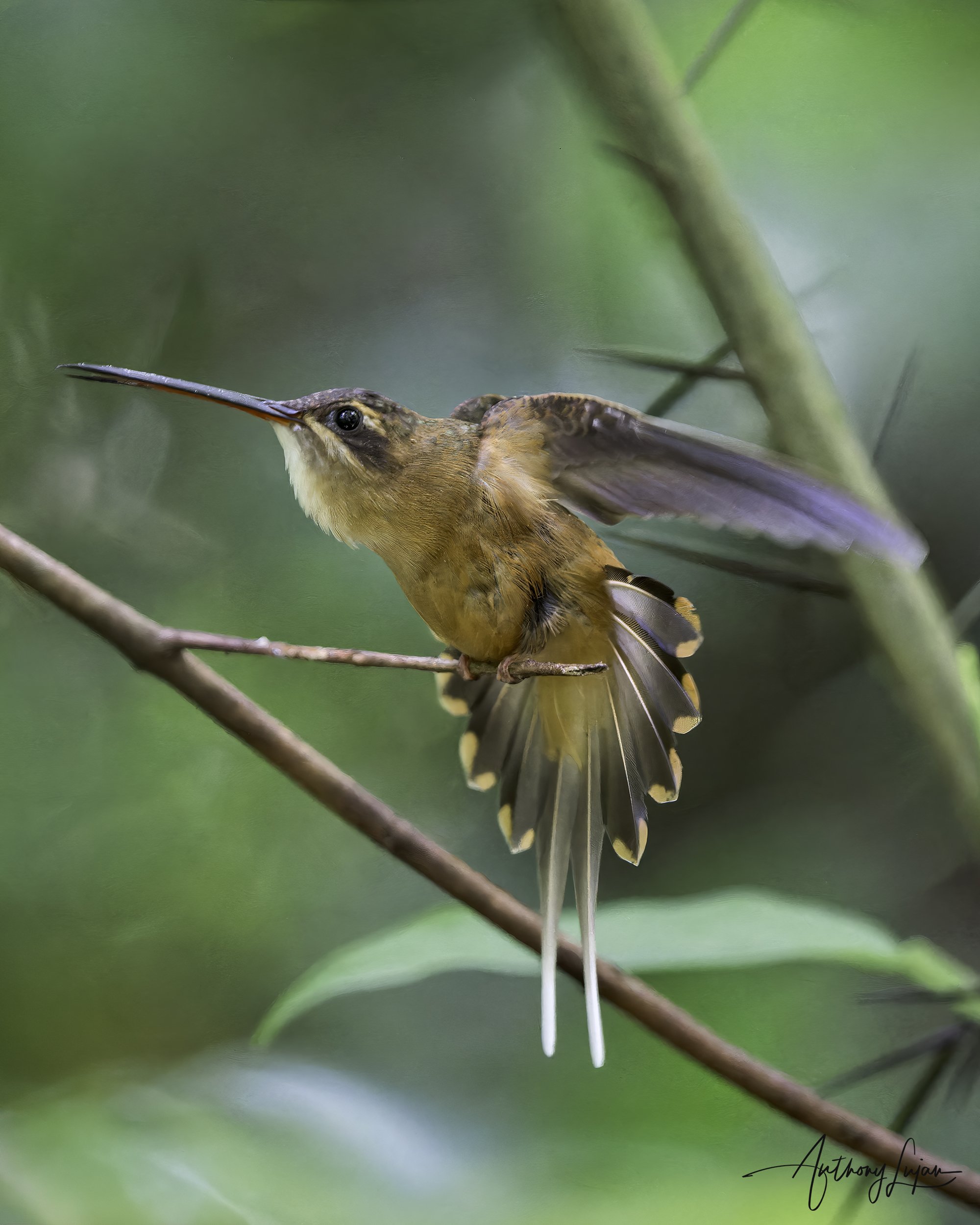
Related species in the Phaethornis genus (27 species total)







Please note: The content provided in this article reflects Anthony’s personal experience and photographic approach. Results can vary depending on light, weather, location, equipment, subject behavior, and field conditions.