

Scientific name: Eupetomena cirrochloris
The Sombre Hummingbird is a large Brazilian hummingbird of forest edge, open woodland, and gardens in southeastern Brazil. The number of mature individuals is unknown, the population trend is decreasing, it is not a migrant, and it is currently assessed as Least Concern.
At a Glance
Family: Trochilidae (hummingbirds)
Clade: Trochilini – Emeralds
Genus: Eupetomena — 2 species in total
Range: Endemic to Brazil
Habitat: Forest edge, open woodland, gardens, and wooded urban areas
Elevation: Mostly lowlands and foothills
Length: About 15 cm (5.9 in)
Weight: About 8–9 g
Number of mature individuals: Unknown
Population trend: Decreasing
Movement: Not a migrant
IUCN Red List category: Least Concern
Name Origin
The genus name Eupetomena refers to elegant or graceful flight, fitting the bird’s strong and buoyant movement. The species name cirrochloris refers to its dark, dusky green coloration. The English name “Sombre Hummingbird” reflects the bird’s overall dark, subdued appearance compared with many more brightly colored hummingbirds.
Taxonomy
Sombre Hummingbird belongs to the emerald clade, tribe Trochilini. The genus Eupetomena currently includes two species in your template framework. This species is endemic to Brazil, where it is restricted to the Atlantic Forest region and adjacent wooded habitats.
It is closely associated with forest edges, clearings, gardens, and semi-open wooded areas, and it adapts well to human-modified landscapes. Its limited endemic range makes it regionally important even though it remains globally listed as Least Concern.
Subspecies and Distribution
Monotypic — no subspecies recognized.
Distribution: Endemic to Brazil, especially southeastern Brazil in Atlantic Forest and adjacent habitats.
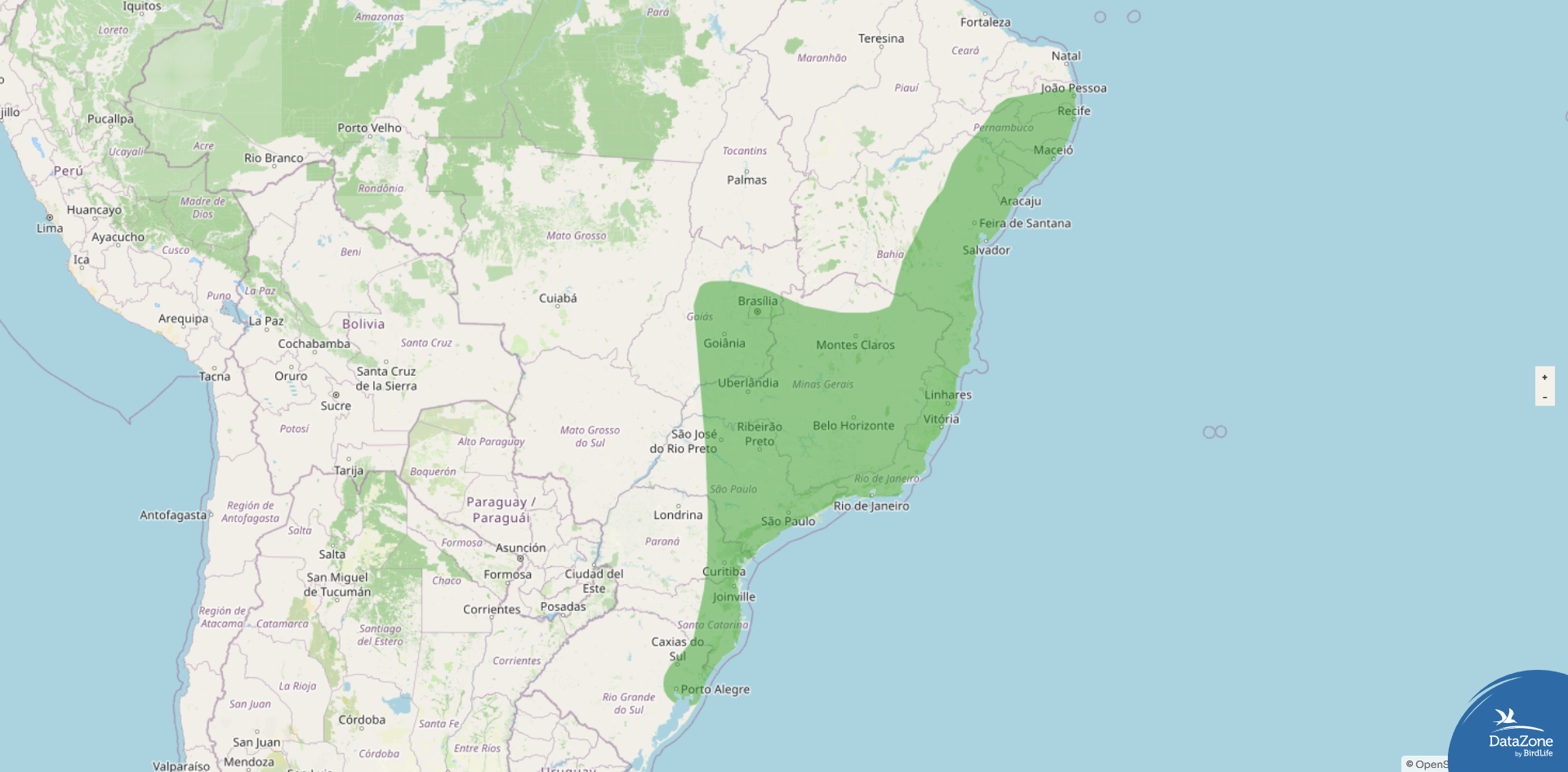
Legend
Green Resident
Species Overview
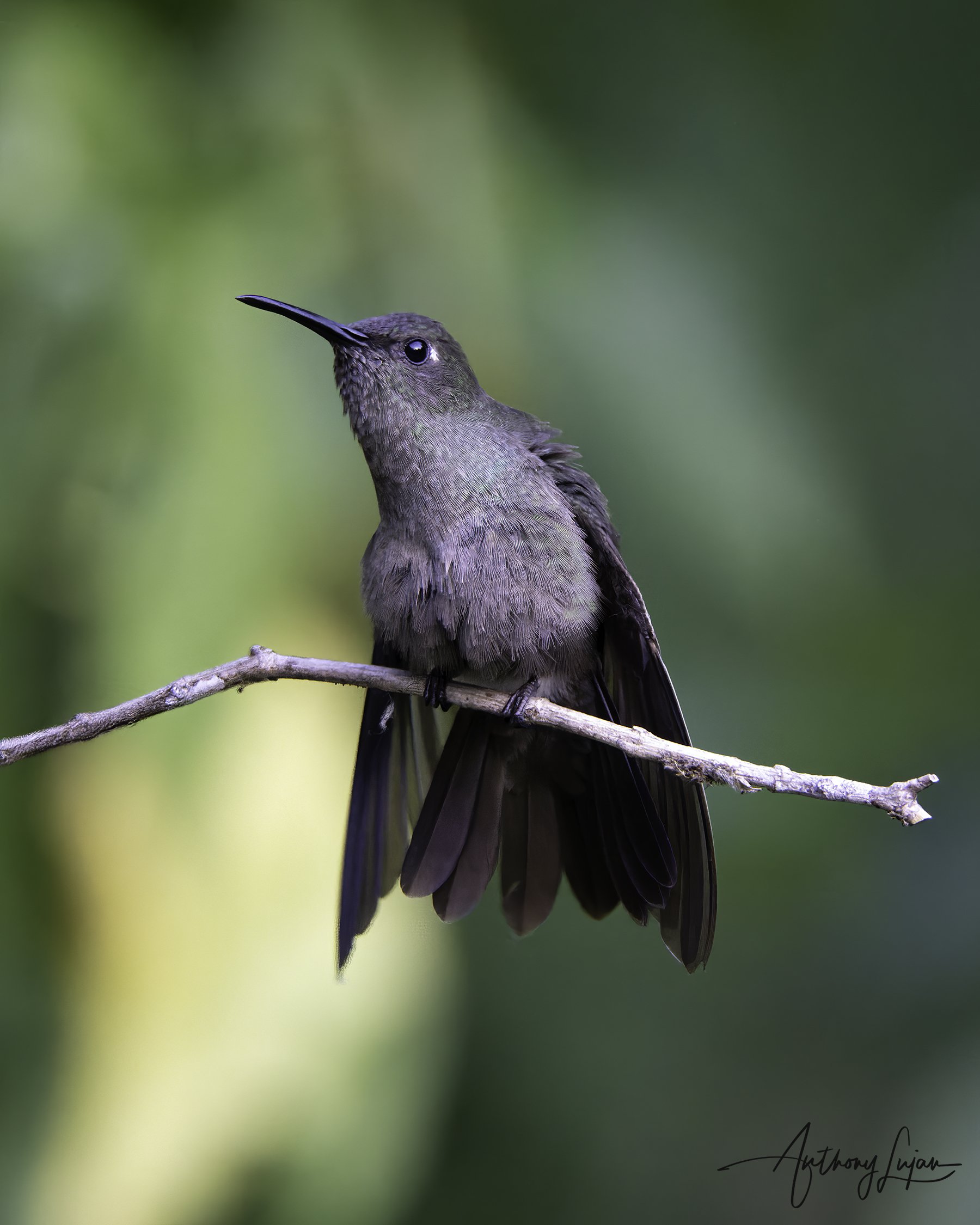
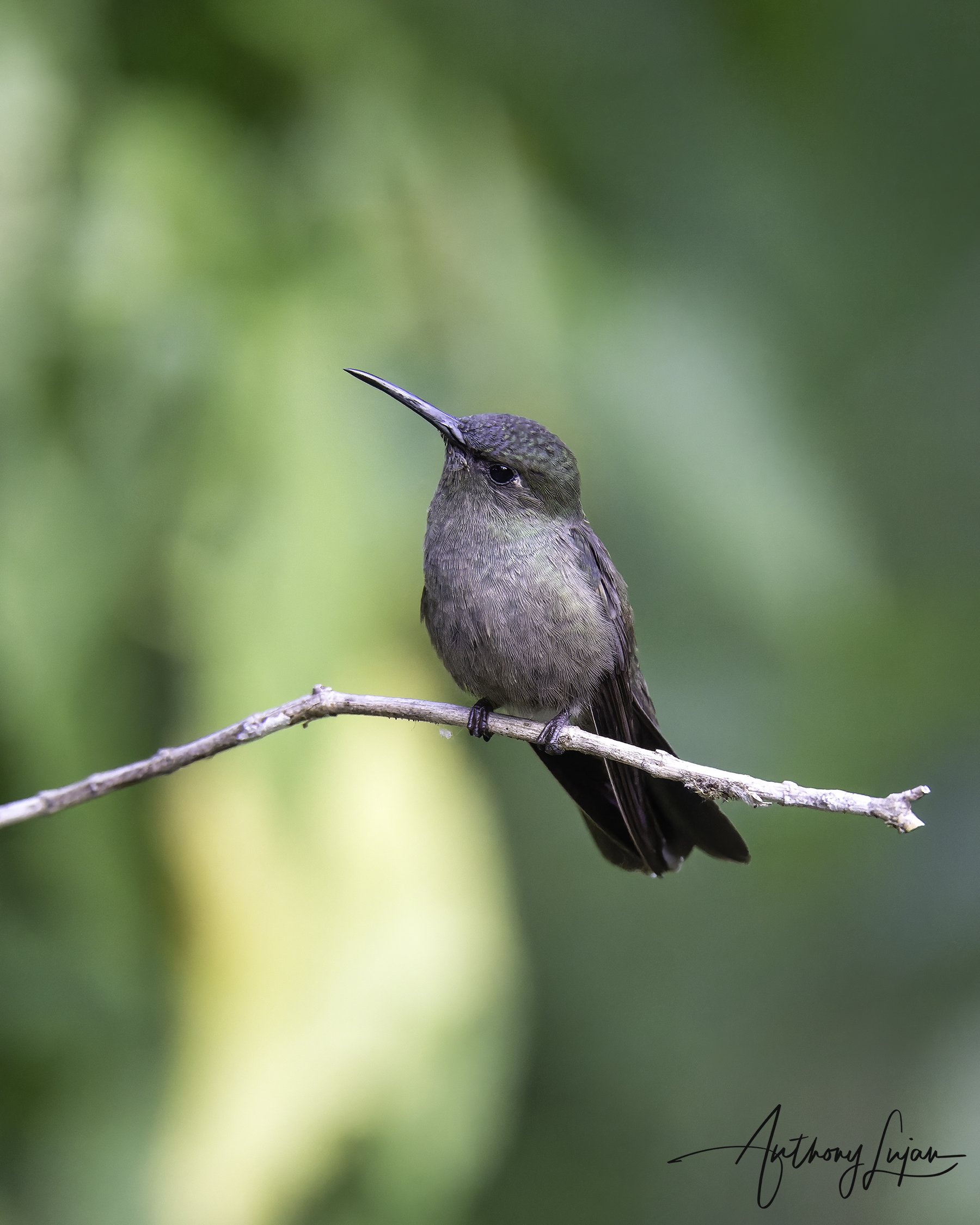
The Sombre Hummingbird is a large, dark green hummingbird with a heavy bill and robust build. It is often seen perched conspicuously on exposed branches, fence posts, or wires in open wooded areas and gardens. Despite its somewhat subdued coloration, it is an active and assertive species that often dominates feeding sites.
Male Description
Adult males are about 15 cm long and weigh roughly 8–9 g. The plumage is mostly dark green to bronzy green, with a relatively somber overall tone. The bill is straight, dark, and moderately long. The throat and upper breast are darker, and the tail is deep forked, giving the bird a distinctive silhouette in flight.
The underparts are dusky to grayish-green, and the tail may show blue-green or dark green gloss depending on the light. The species’ dark body, strong posture, and long tail make it easy to recognize among Brazilian hummingbirds.
Female Description
Females are very similar to males, though typically a bit duller and slightly less glossy. The body remains dark green overall, with the same long tail and sturdy build. Juveniles resemble adults but often show less intense coloration and a softer, less sharply defined appearance.
Habitat & Behavior
Sombre Hummingbirds frequent forest edges, open woodland, gardens, parks, and other semi-open habitats. They are often seen perched in the open and making short sallies to flowers, sometimes returning to the same perch repeatedly. Their strong flight allows them to move easily between scattered nectar sources in human-dominated areas as well as natural forest margins.
They feed on nectar from a variety of flowering shrubs, trees, and ornamental plants, and they also take small insects. They are often territorial around rich flowering patches and may aggressively chase other hummingbirds away.
Breeding
Breeding occurs in the warmer months, though timing varies by region. The female builds a cup nest of plant fibers, moss, and spiderweb, usually placed on a branch in a sheltered site. The nest is camouflaged with moss and lichens to blend with the surrounding vegetation.
The clutch usually consists of two white eggs. The female incubates the eggs and tends the chicks alone. As with many hummingbirds, the nestling period lasts several weeks before the young fledge.
Movement
The Sombre Hummingbird is not a migrant. It is generally resident throughout its range, with only local movements related to flowering and habitat conditions. Its year-round presence in southeastern Brazil makes it a familiar bird in suitable wooded and garden habitats.
Population
The total number of mature individuals is unknown. Even so, the species remains relatively common in parts of its Brazilian range, especially where forest edges and gardens provide nectar sources. The overall trend is decreasing, likely due to habitat loss and ongoing changes in Atlantic Forest landscapes.

Conservation
The Sombre Hummingbird is currently assessed as Least Concern. Its adaptability to edges, gardens, and secondary habitats helps it persist in modified environments. However, continued forest loss and fragmentation in Brazil remain important pressures, especially in the Atlantic Forest region where habitat conversion has been extensive.
Checkout Anthony’s playlist of this species! Click the top right dropdown to see all the videos.
Related species in the Eupetomena genus (2 species total)

Please note: The content provided in this article reflects Anthony’s personal experience and photographic approach. Results can vary depending on light, weather, location, equipment, subject behavior, and field conditions.