
Sparkling-tailed Hummingbird

Scientific name: Tilmatura dupontii
The Sparkling-tailed Hummingbird is a small, distinctive hummingbird of foothill and montane habitats from Mexico through Central America. The number of mature individuals is estimated at 20,000–49,999, the population trend is stable, it is not a migrant, and it is currently assessed as Least Concern.
At a Glance
Family: Trochilidae (hummingbirds)
Clade: Mellisugini – Bees
Genus: Tilmatura — monotypic
Range: Mexico, Guatemala, Honduras, El Salvador, and Nicaragua
Habitat: Foothill forest, montane forest, forest edge, second growth, and flowering clearings
Elevation: Mostly mid-elevation, often around 1,000–2,000 m
Length: About 7.5–8.5 cm (3.0–3.3 in)
Weight: About 2.8–3.5 g
Number of mature individuals: 20,000–49,999
Population trend: Stable
Movement: Not a migrant
IUCN Red List category: Least Concern
Name Origin
The genus name Tilmatura refers to the tail, highlighting the species’ remarkable forked, sparkling tail. The species name dupontii honors Dupont, and the common name “Sparkling-tailed Hummingbird” reflects the glittering appearance of the tail in flight and display.
Taxonomy
Tilmatura dupontii is a hummingbird in the tribe Mellisugini, within the family Trochilidae. The genus Tilmatura is monotypic, meaning no other species are currently recognized in the genus. The species occurs from Mexico south through Guatemala, Honduras, El Salvador, and Nicaragua, mainly in foothill and montane habitats.
It is most associated with wooded slopes, forest edges, second growth, and flowering clearings, where it moves along circuits of nectar sources. Despite its small size, it is a conspicuous and memorable bird because of its tail shape and display behavior.
Subspecies and Distribution
Monotypic — no subspecies recognized.
Distribution: Mexico through Guatemala, Honduras, El Salvador, and Nicaragua, mainly in foothill and montane habitats.
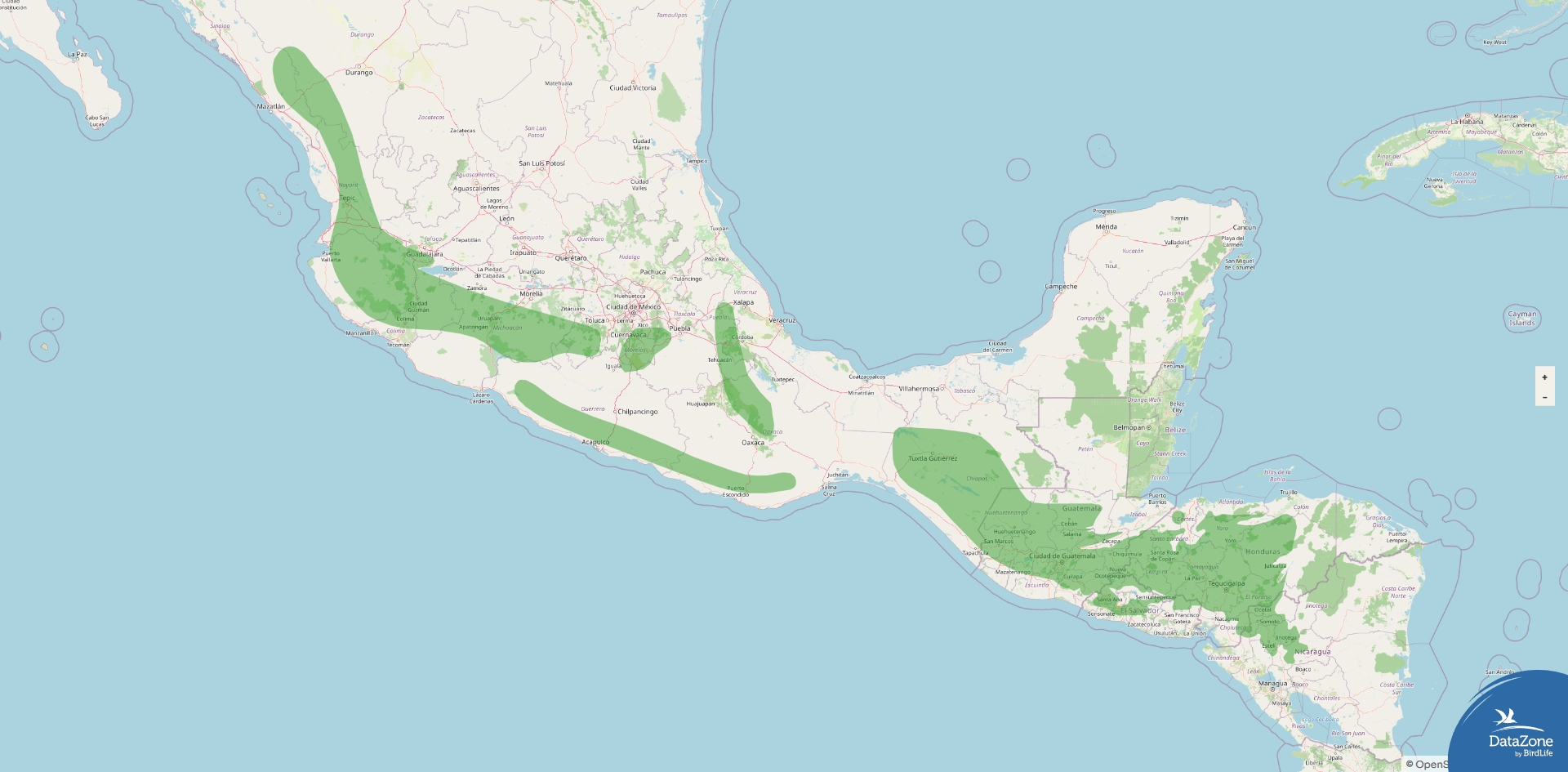
Legend
Green Resident
Species Overview
The Sparkling-tailed Hummingbird is a tiny hummingbird with a dramatic tail and a very distinctive appearance. Males show a glittering blue throat and a long forked tail with white markings, while both sexes have a clean, neat structure and a strong, direct flight. It is often found in wooded foothills and montane slopes, where it feeds by traplining rather than guarding a single patch of flowers.
Male Description
Adult males are very small, around 7.5–8.5 cm long and only a few grams in weight. They have a straight dark bill, a glittering blue to violet throat, green upperparts, and a long forked black tail with white bands or white outer markings. The tail is one of the species’ most striking features and gives the bird its common name.
Female Description
Females are similar in overall shape but duller in coloration. The throat lacks the intense blue sparkle of the male, and the tail is shorter and less dramatically forked, though still distinctive. Juveniles resemble females and gradually acquire the adult tail and brighter plumage as they mature.
Habitat & Behavior
Sparkling-tailed Hummingbirds inhabit foothill and montane forest, forest edge, second growth, and flowering clearings. They are especially associated with areas where a wide variety of nectar plants are available in a circuit, allowing them to move from patch to patch rather than defend one territory. Their flight is slow and fluttery compared with many hummingbirds, and their wingbeats can sound insect-like.
They feed primarily on nectar and also take small insects. Their traplining behavior is well suited to scattered flower resources in wooded mountain habitats.
Breeding
Breeding biology is not fully documented, but the female builds a small cup nest of plant fibers and moss held together with spiderweb, usually placed on a branch or other sheltered support. The nest is camouflaged and tucked into vegetation to reduce detection. The clutch is typically two white eggs, with the female responsible for incubation and chick care.
Movement
The Sparkling-tailed Hummingbird is not a migrant. It is considered a resident species, remaining in the same general regions year-round. Any movements are local and tied to flowering or habitat conditions rather than long-distance migration.
Population
The total number of mature individuals is estimated at 20,000–49,999. The population trend is stable, suggesting that the species remains reasonably secure in suitable habitat across its range. It is still limited to a fairly specific elevational and habitat zone, so local habitat changes can matter.

Conservation
The species is currently assessed as Least Concern. Its stable trend and use of foothill forest and second-growth habitats help sustain the population. Continued protection of wooded slopes, forest edges, and flowering corridors will remain important for maintaining healthy local populations.


View all the videos by clicking the three lines in the top right corner for the playlist.
No other species is currently recognized in the genus Tilmatura; the Sparkling-tailed Hummingbird is the only member of this genus.
Please note: The content provided in this article reflects Anthony’s personal experience and photographic approach. Results can vary depending on light, weather, location, equipment, subject behavior, and field conditions.