
Sparkling Violetear
Scientific name: Colibri coruscans
The Sparkling Violetear is a large, brilliantly iridescent green hummingbird of high Andean cities, gardens, and montane habitats from northern South America south into northwestern Argentina and northern Chile. BirdLife International lists the species as Least Concern but does not provide a firm estimate of mature individuals or a defined population trend; this site follows that treatment while noting that both values remain unknown.
At a Glance
Family: Trochilidae (hummingbirds)
Clades: Polytminae – Mangos
Genus group: Colibri — medium to large “violetears” with violet ear patches in males (5 species: Brown, Mexican, Lesser, Sparkling, White-vented)
Range: Tepuis of southern Venezuela, western Guyana, and adjacent northern Brazil; Santa Marta Mountains and Sierra de Perijá; mountains of northwestern Venezuela; and the Andes south through Colombia, Ecuador, Peru, Bolivia, northern Chile, and northwestern Argentina.
Habitat: High‑elevation gardens, parks, open woodlands, forest edges, and scrub in Andean cities and rural areas, as well as montane forest clearings and paramo margins.
Elevation: Typically from mid‑ to high elevations in the Andes and tepui regions, often common around highland towns and cities.
Length: Large for a hummingbird, similar in size or slightly larger than other violetears.
Weight: Heavier than many mid‑sized hummingbirds, reflecting its robust build.
Number of mature individuals: Unknown.
Population trend: Unknown.
Status: Least Concern (IUCN Red List).
Name Origin
The genus name Colibri is derived from a Caribbean word for hummingbird, adopted into European languages for this group. The species name coruscans means “sparkling” or “flashing,” a reference to the bird’s intense, glittering green and blue iridescence in good light. The English name “Sparkling Violetear” captures both the vivid, sparkling plumage and the violet “ear” patches characteristic of violetears.
Subspecies and Distribution
Sparkling Violetear has two recognized subspecies.
Colibri coruscans germanus
This subspecies occurs on the tepuis of southern Venezuela, western Guyana, and adjacent northern Brazil (Roraima), where it inhabits high plateaus, tepui slopes, and surrounding high‑elevation habitats with abundant flowering shrubs and trees. It is typically found in open or semi‑open areas near forest edges, rocky outcrops, and scrubby slopes, often visiting flowering bushes and trees along tepui rims and nearby clearings.Colibri coruscans coruscans
The nominate subspecies is widespread in the northern Andes and nearby mountains, from the Santa Marta Mountains and Sierra de Perijá and other ranges in northwestern Venezuela south through the Andes of Colombia, Ecuador, and Peru to Bolivia, northern Chile, and northwestern Argentina. It thrives in highland cities, towns, gardens, forest edges, and open montane habitats, frequently dominating flowering trees and urban plantings in plazas, neighborhoods, and rural highland communities.
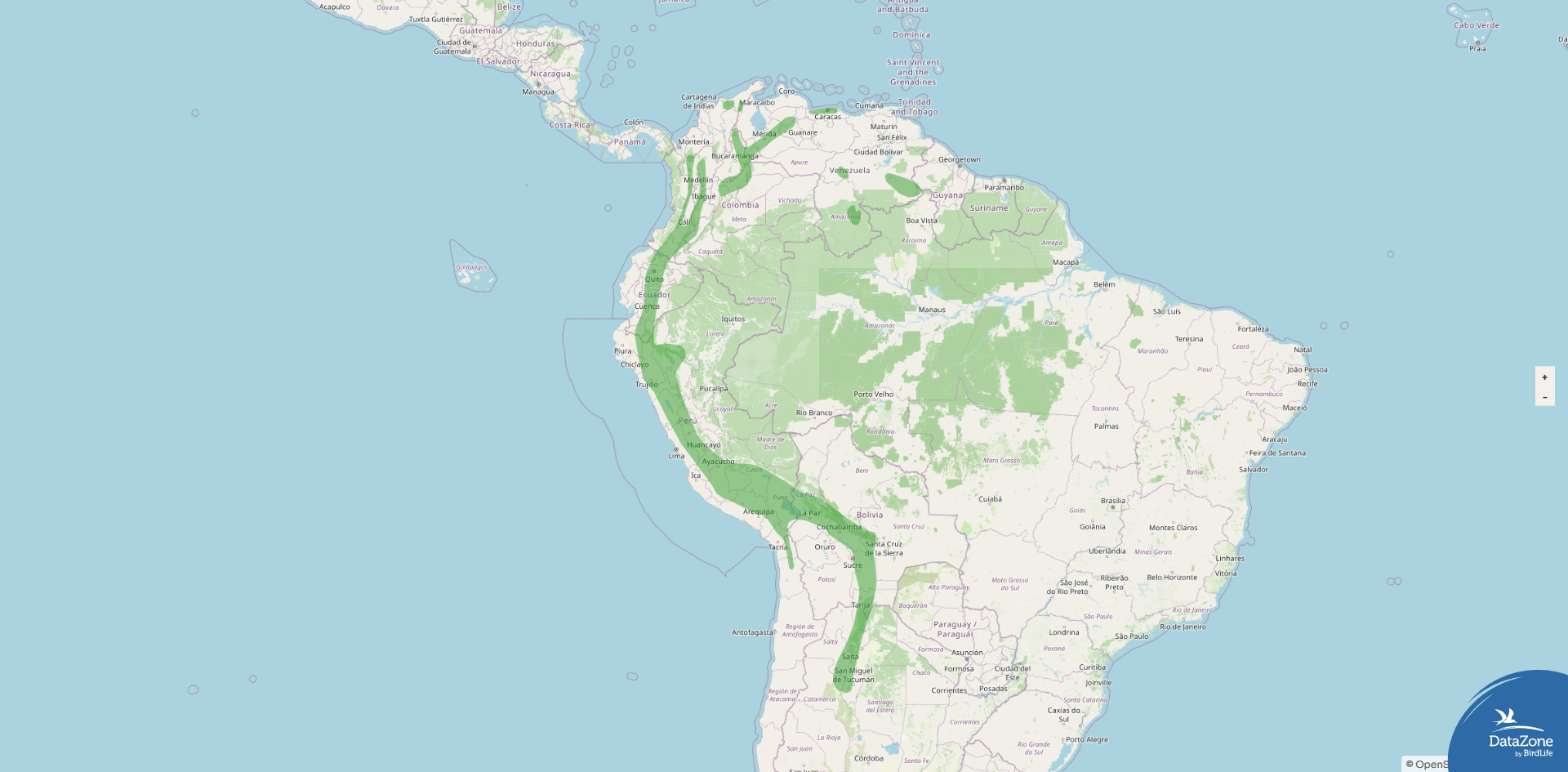
Legend
Green Resident
Species Overview
The Sparkling Violetear is one of the most conspicuous Andean hummingbirds, often dominating feeders, flowering trees, and urban gardens with its size, numbers, and aggressive behavior. Its combination of bright green body, deep violet ear patch, and blue‑green belly patch makes it one of the most striking violetears. It thrives in a wide variety of open and semi‑open highland habitats, from natural forest edges to city plazas and hillside neighborhoods.
Male Description
Adult males are large, with a mostly bright metallic green body, a deep violet patch behind and below the eye forming the “violetear,” and an additional blue‑green patch on the belly that contrasts with the surrounding green. The crown and upperparts shine with intense iridescence in sunlight, and the tail is dark with a greenish or bluish gloss and a darker subterminal band. The bill is straight and dark. In display or good light, males look intensely sparkling green with bold violet “ears” and a blue‑green belly.
Female Description
Females resemble males but are often slightly duller overall, with a somewhat less extensive or less intensely colored violet ear patch and a less vivid belly patch. The basic pattern of green body, darker tail, and violet “ear” is retained. Juveniles show reduced iridescence, smaller or less sharply defined violet ear patches, and a weaker belly patch.
Habitat & Behavior
Sparkling Violetears are highly adaptable and frequently occur around high‑elevation cities, towns, and villages, where they visit gardens, parks, and flowering street trees. They also use natural and semi‑natural habitats, including montane forest edges, clearings, scrub, and paramo margins. They feed on nectar from a wide variety of flowering trees, shrubs, and herbs and are famously aggressive, often chasing away other hummingbirds and even larger birds from favored nectar sources. In addition to nectar, they capture small insects for protein, often hawking from exposed perches.
Movement (Altitudinal Migrant)
The species is primarily resident but shows clear altitudinal movements in parts of its range, shifting up and down slopes as flowering conditions change seasonally. In some regions it becomes more numerous at particular elevations or around certain cities at specific times of year, reflecting these flexible, elevation‑linked movements rather than long‑distance migration.
Breeding
Breeding timing varies across its wide Andean and tepui range but is generally associated with favorable flowering and climate conditions. The female builds a small cup nest of plant fibers, down, and moss bound with spiderweb, typically placed on a horizontal branch or sheltered support in gardens, woodland edges, or open forest. She lays two white eggs and handles incubation and chick‑rearing alone, as is typical for hummingbirds.
Population
Although the exact number of mature individuals is unknown, Sparkling Violetear is one of the more frequently encountered large hummingbirds across much of the Andes and tepui region. Its success in urban and semi‑urban settings, along with its broad geographic and elevational range, suggests a large overall population, even though precise figures and detailed trend data are lacking.

Conservation
Sparkling Violetear is currently assessed as Least Concern. Its tolerance of disturbed habitats, including cities and agricultural edges, has likely helped buffer it from some of the impacts of habitat loss that strongly affect more specialized montane forest hummingbirds. Nonetheless, ongoing deforestation and degradation of montane forests and paramo margins can affect local populations, and conserving flowering trees, forest patches, and elevational corridors benefits this species and many associated hummingbirds.
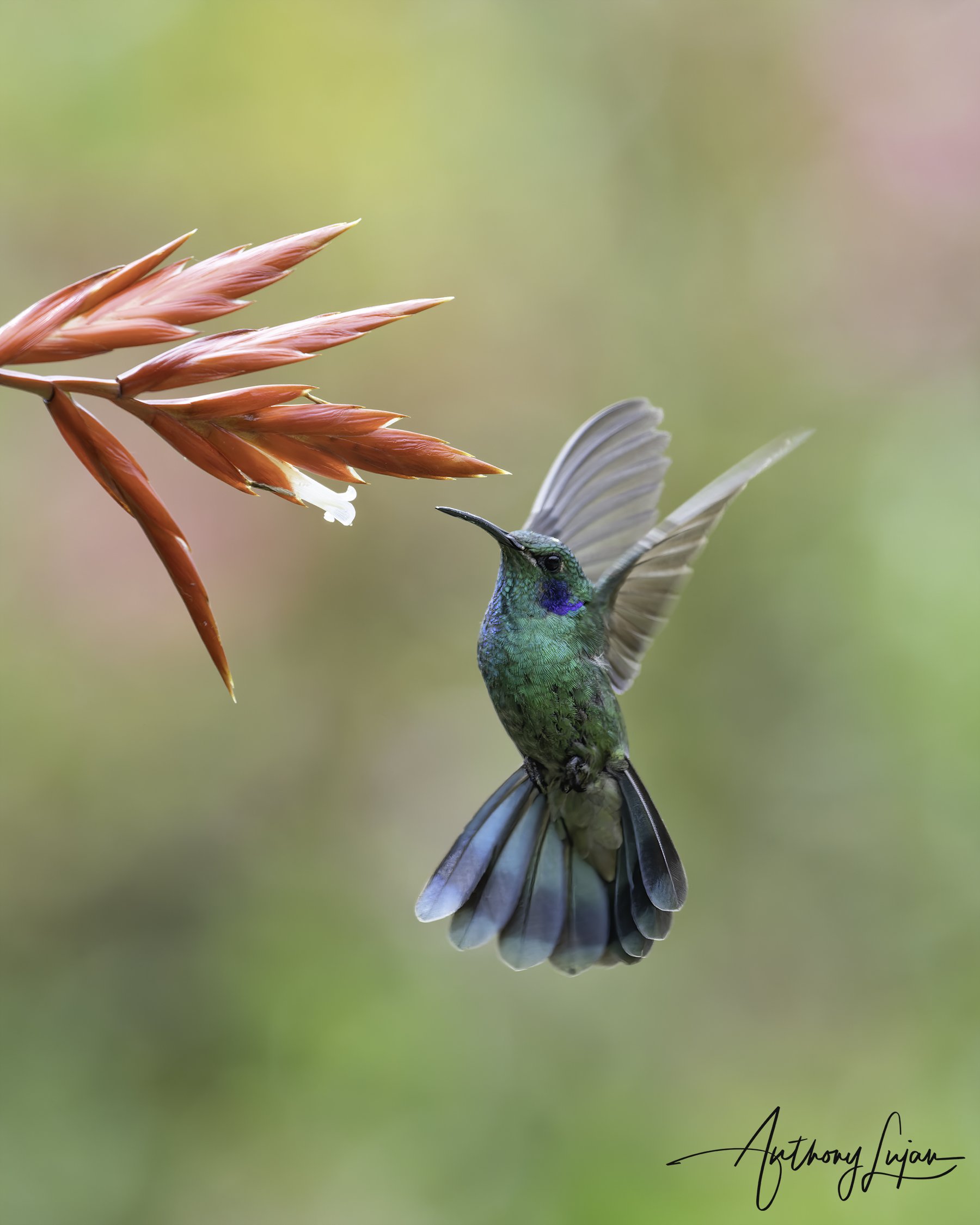
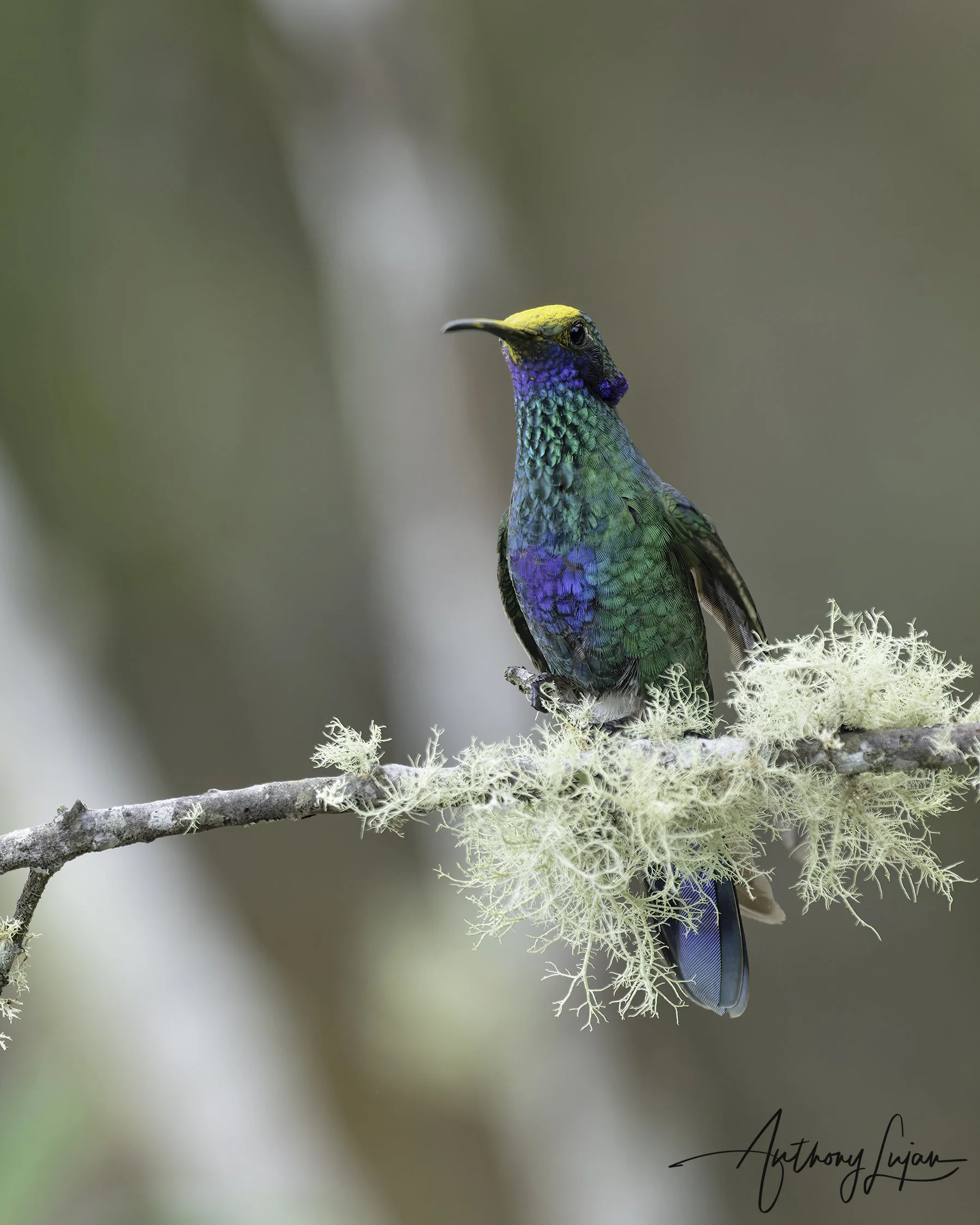
Below is the Sparkling Violetear (Colibri coruscans germanus)
Photographed in Magdalena, Sierra Nevada de Santa Marta, Colombia
This individual belongs to the subspecies germanus, restricted to the Sierra Nevada de Santa Marta. It typically occupies humid foothill and montane forest, forest edge, and flowering gardens at elevation. The plumage is metallic green with violet ear patches and tail, often appearing brighter and more saturated than the Andean form.
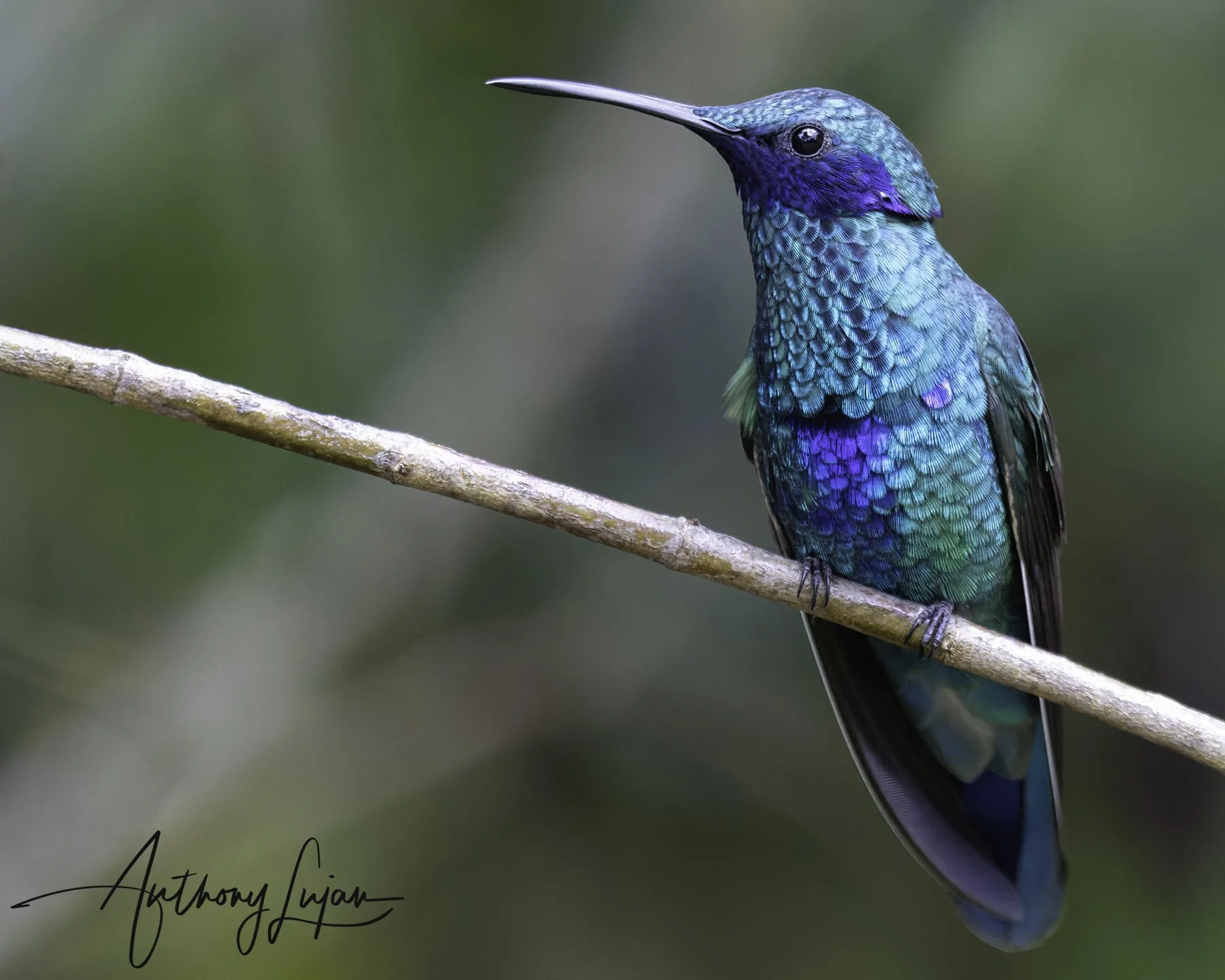
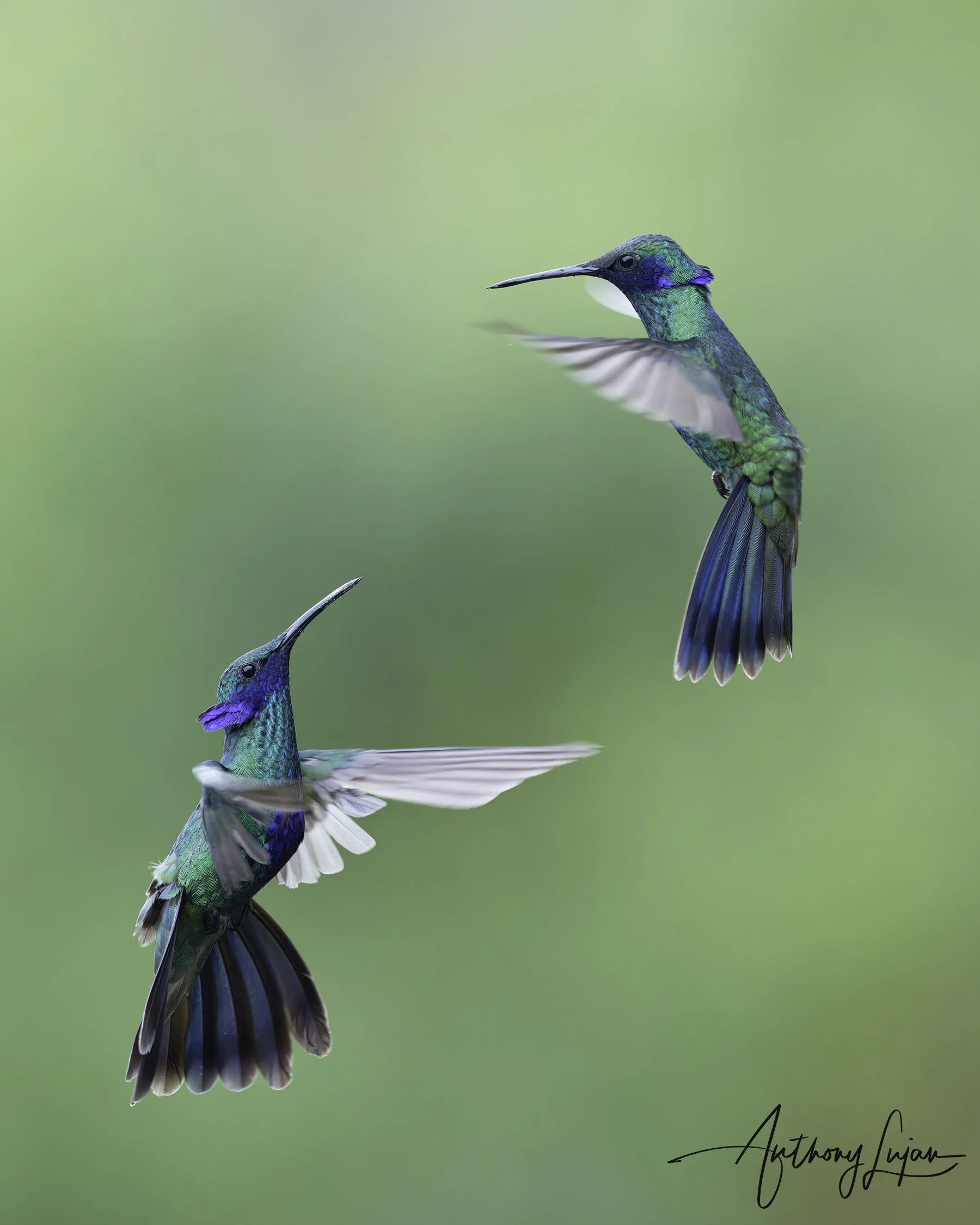
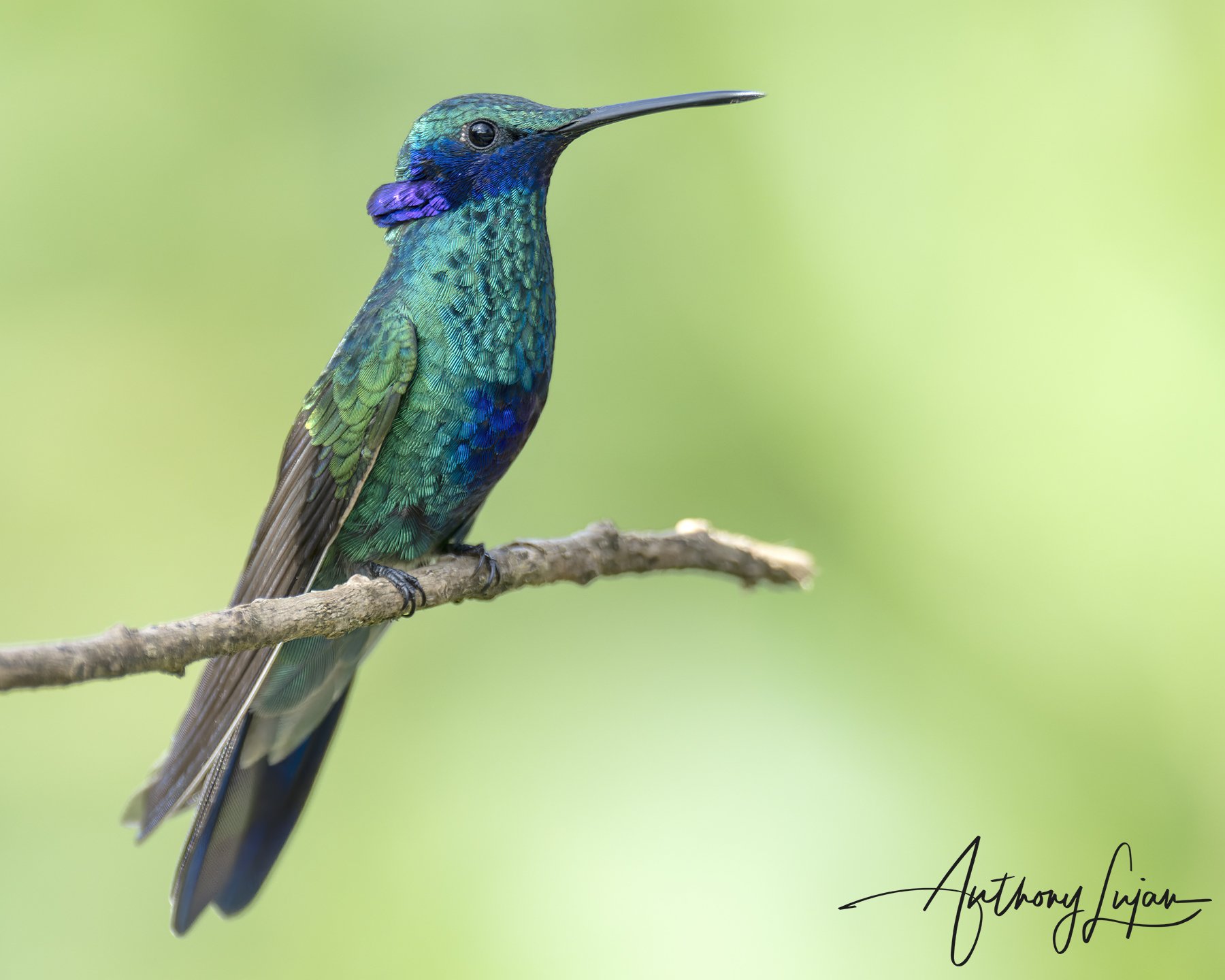
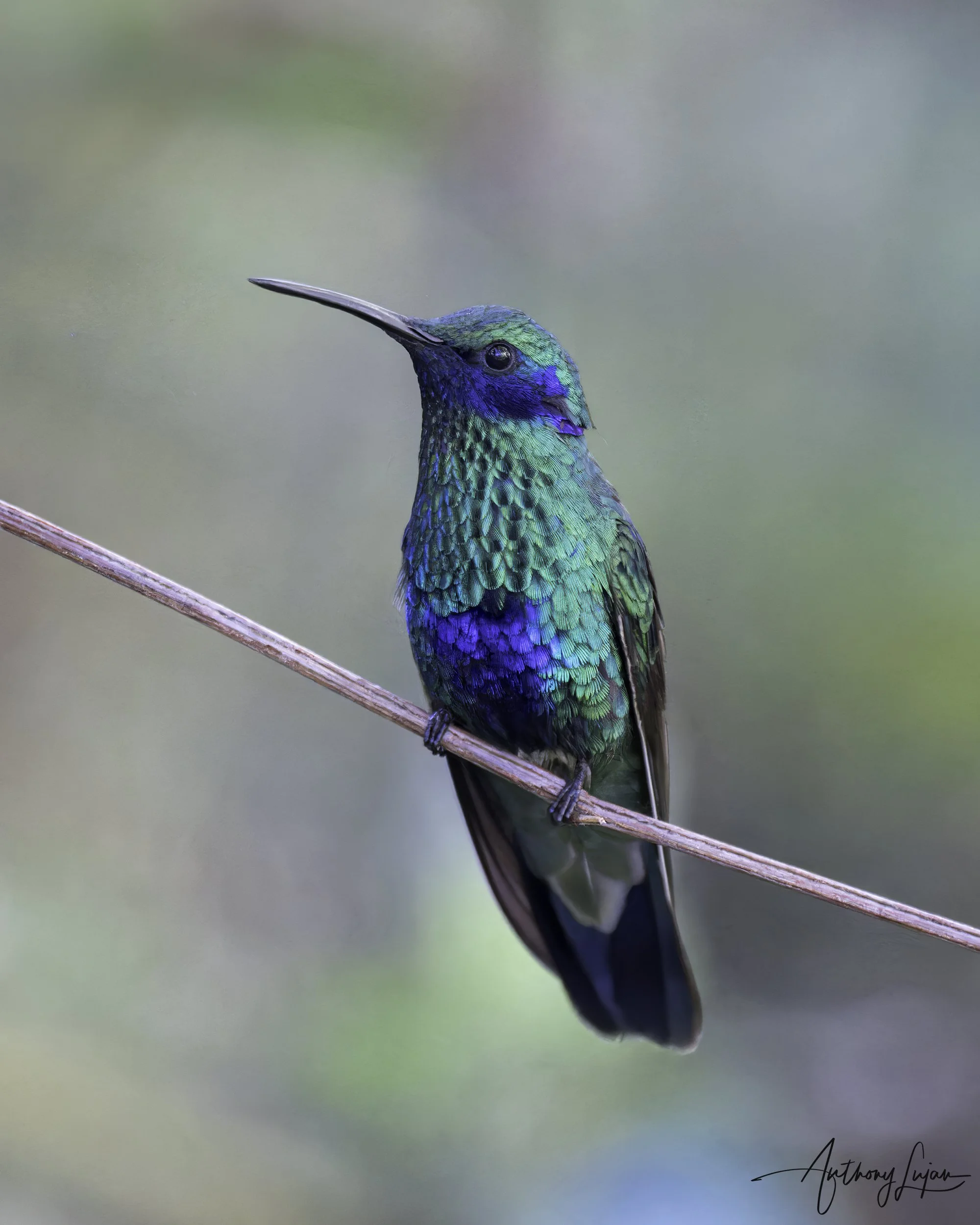
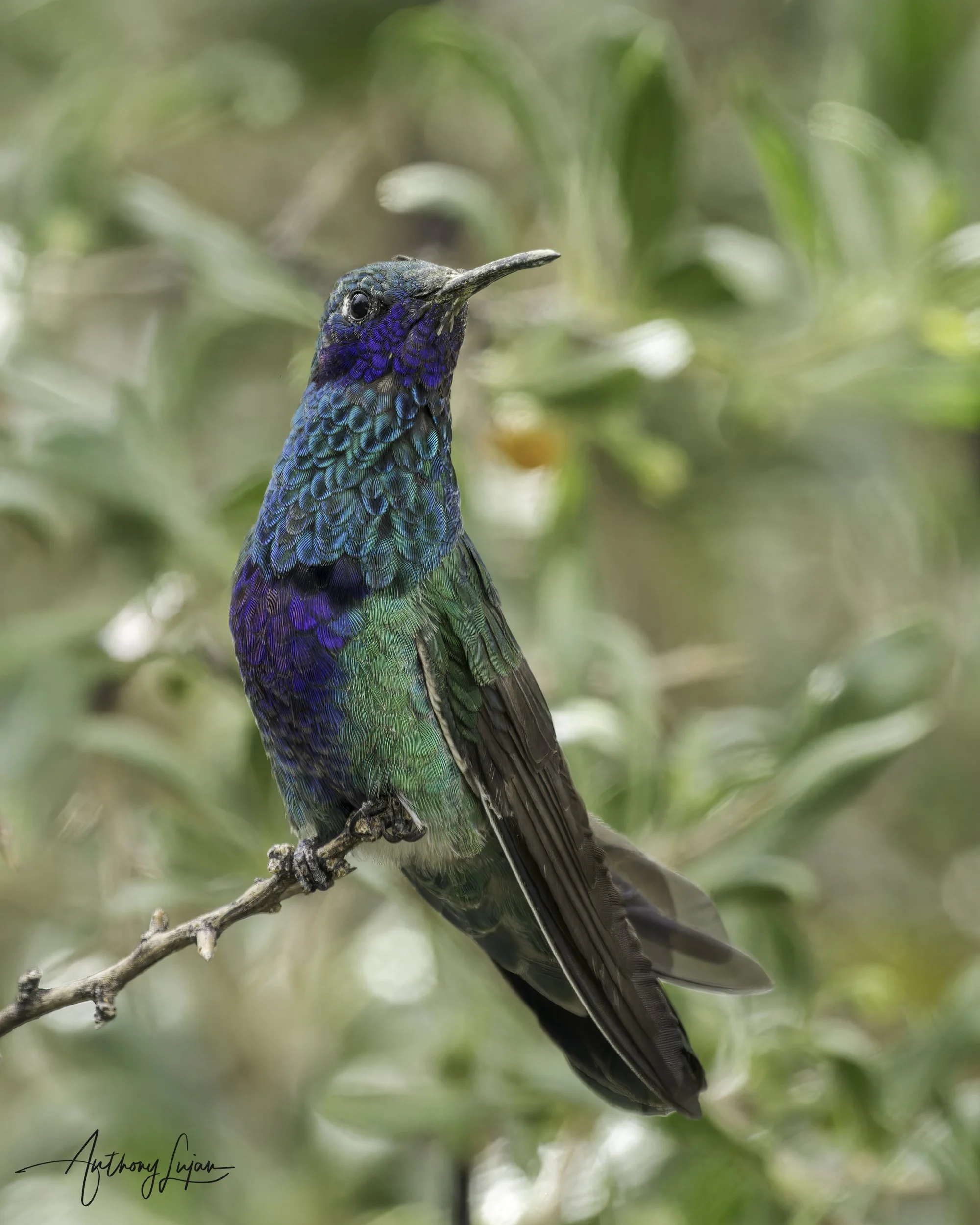
Below is the Sparkling Violetear (Colibri coruscans coruscans)
Photographed in Manaure (Cesar), Boyacá, Caldas, Hacienda El Bosque, Montenegro (Quindío), Amazonas (Peru), and Putre (Chile)
These individuals belong to the nominate subspecies coruscans, which is widespread throughout the Andes. It is found in montane forest, páramo transition, open clearings, and high elevation gardens.

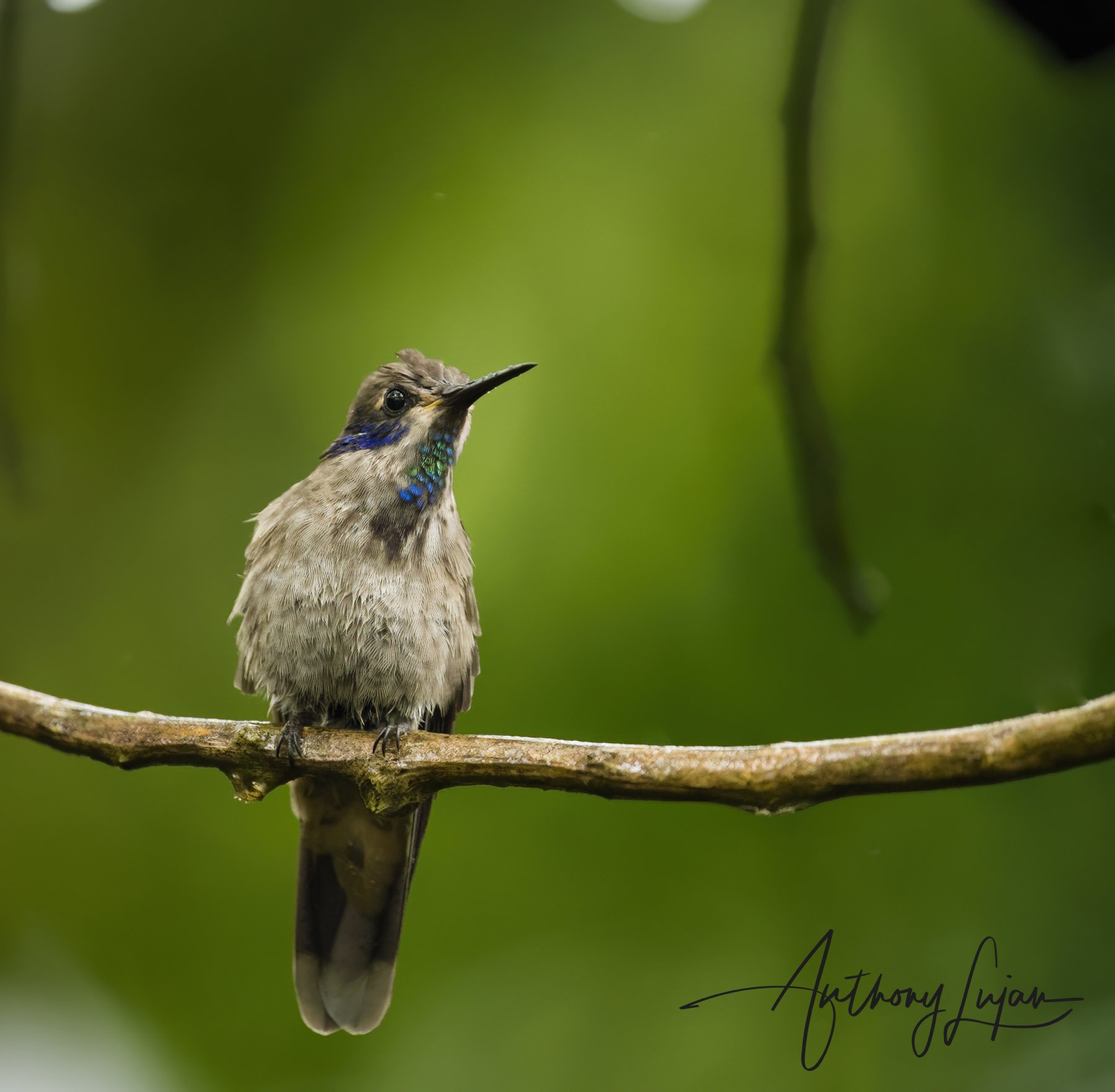
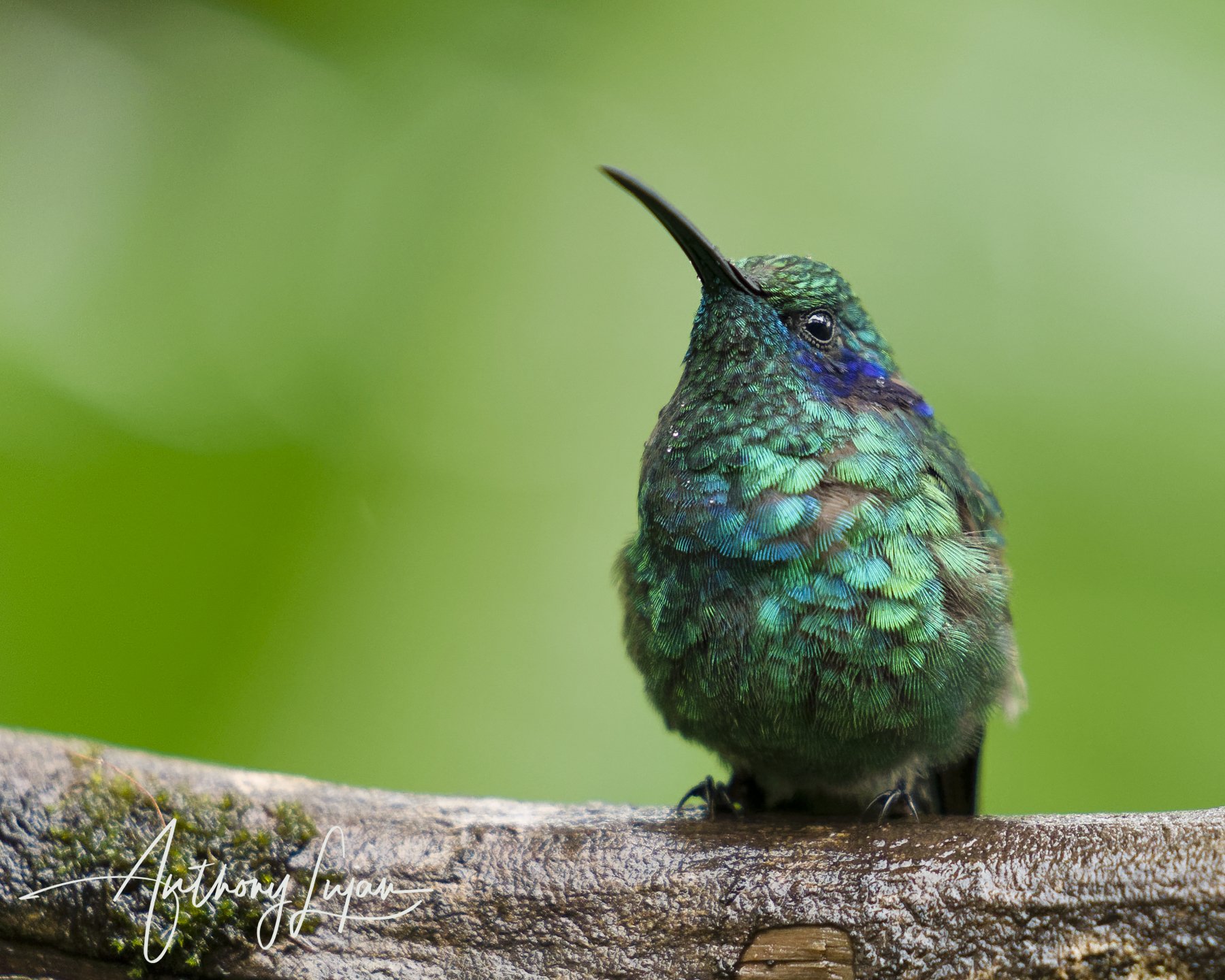
Related species in the Colibri genus (5 species total):


Please note: The content provided in this article reflects Anthony’s personal experience and photographic approach. Results can vary depending on light, weather, location, equipment, subject behavior, and field conditions.