
Speckled Hummingbird
Scientific name: Adelomyia melanogenys
Whatever it is, the way you tell your story online The Speckled Hummingbird is a small Andean hummingbird of cloud forest, humid montane forest, and forest edges from Venezuela and Colombia south through Ecuador, Peru, Bolivia, and northwestern Argentina. The number of mature individuals is unknown, the population trend is decreasing, it is not a migrant, and it is currently assessed as Least Concern.
At a Glance
Family: Trochilidae (hummingbirds)
Clade: Lesbiini – Coquettes
Genus: Adelomyia — monotypic
Range: Andes of Venezuela, Colombia, Ecuador, Peru, Bolivia, and northwestern Argentina
Habitat: Cloud forest, humid montane forest, forest edge, ravines, and mossy understory
Elevation: Roughly 1,000–3,000 m, locally lower or higher depending on region
Length: About 8 cm (3.1 in)
Weight: About 3.5–4.5 g
Number of mature individuals: Unknown
Population trend: Decreasing
Movement: Not a migrant
IUCN Red List category: Least Concern
Name Origin
The genus name Adelomyia is derived from Greek roots referring to a concealed or hidden hummingbird, fitting its quiet understory habits. The species name melanogenys means “black-cheeked,” referring to the dark facial marking. The common name “Speckled Hummingbird” comes from the mottled or speckled appearance of its underparts.
Taxonomy
Adelomyia melanogenys is the only recognized species in the genus Adelomyia. It is a widespread Andean hummingbird that inhabits humid montane forests and cloud forests from Venezuela to northwestern Argentina. The species is especially associated with shaded understory habitat, mossy trunks, ravines, and forest margins where flowering plants are available.
Despite its broad range, it is usually found singly or in pairs rather than in flocks, and it often forages low in the vegetation. Its distribution spans multiple Andean regions, and geographic variation across the range has produced a large number of named subspecies.
Subspecies and Distribution
Nine subspecies:
Adelomyia melanogenys cervina
Distribution: Western and Central Andes of Colombia.Adelomyia melanogenys sabinae
Distribution: Western slope of the Eastern Andes in Colombia (Santander and Boyacá).Adelomyia melanogenys melanogenys
Distribution: Andes of western Venezuela (Mérida) and the eastern Andes in Colombia south through south-central Peru.Adelomyia melanogenys connectens
Distribution: Upper Magdalena Valley (Huila), in southern Colombia.Adelomyia melanogenys debellardiana
Distribution: Sierra de Perijá on the Colombia–Venezuela border.Adelomyia melanogenys aeneosticta
Distribution: Mountains of northern Venezuela (Falcón east to Miranda).Adelomyia melanogenys chlorospila
Distribution: Southeastern Peru (southern Cuzco).Adelomyia melanogenys maculata
Distribution: Western Andes from southwestern Colombia (Nariño) south to northwestern Peru (La Libertad).Adelomyia melanogenys inornata
Distribution: Yungas of Bolivia and northwestern Argentina (Salta, Jujuy).
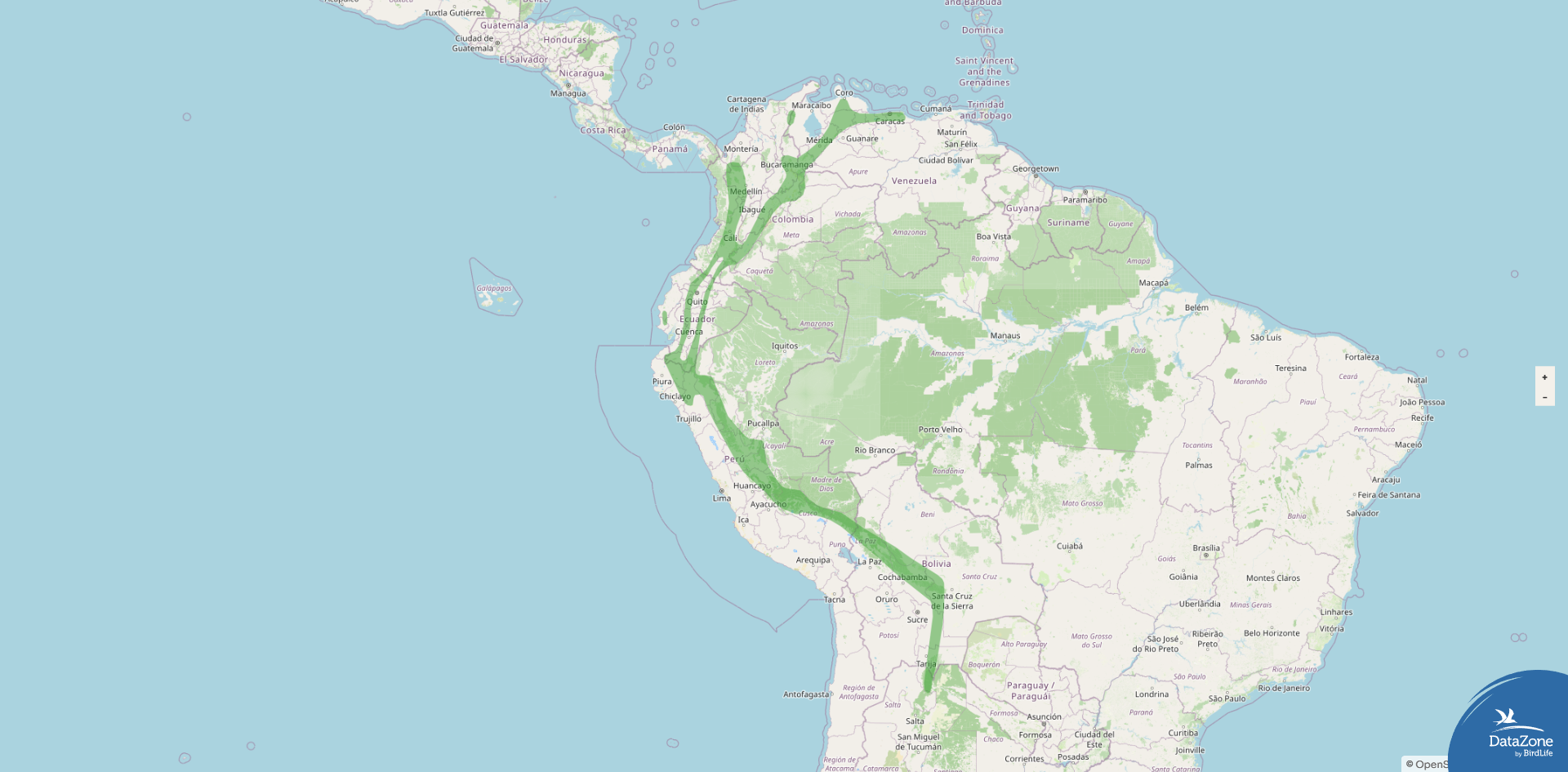
Legend
Green Resident
Species Overview
The Speckled Hummingbird is a small, quietly colored Andean hummingbird with green upperparts and a pale underside marked by speckling. It is typically solitary, preferring the shady understory rather than open canopy or exposed flowering displays. Its behavior and plumage make it easy to overlook even where it is locally common.
Male Description
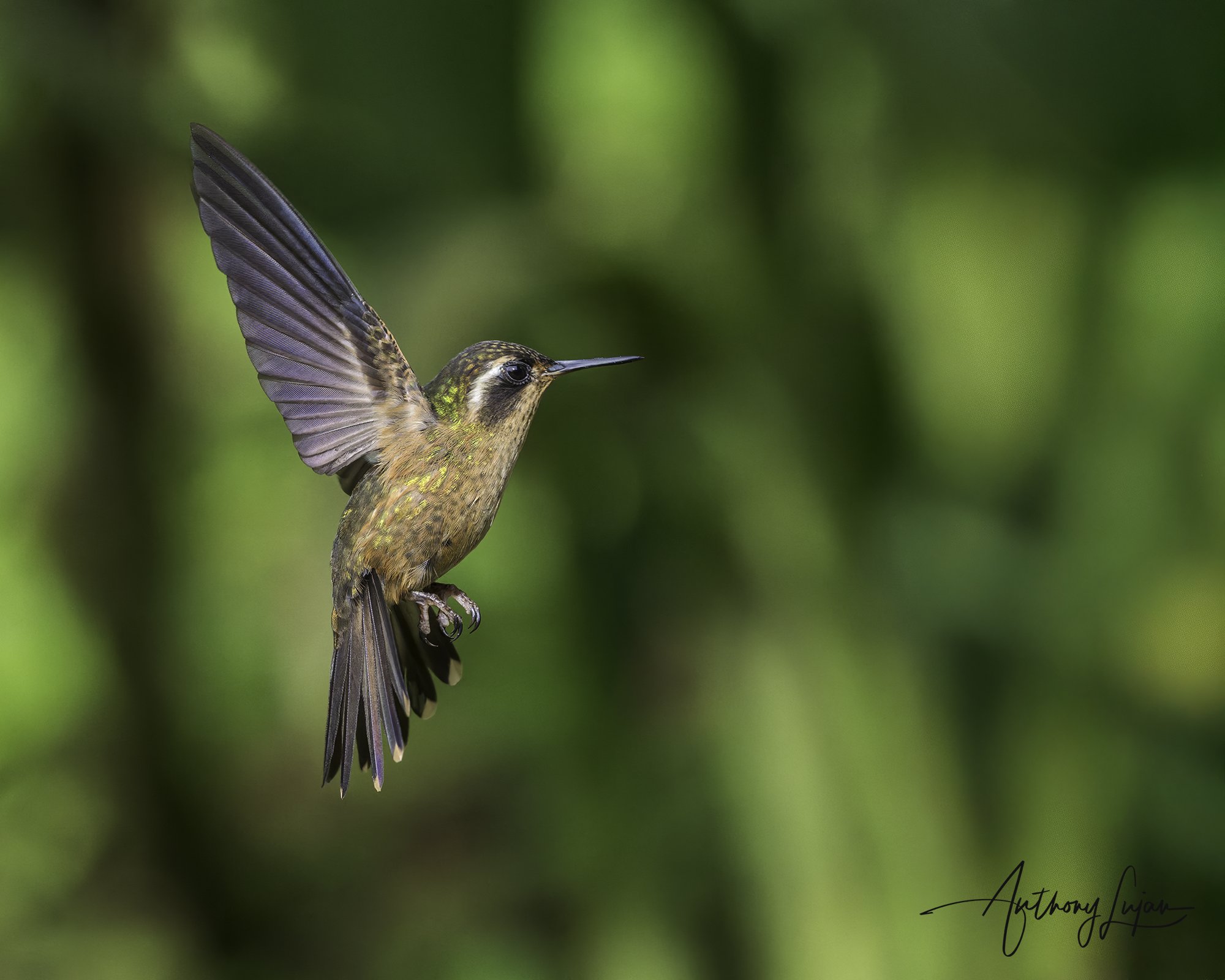
Adults are small hummingbirds, usually around 8 cm long, with a straight dark bill and green to bronze upperparts. The underparts are pale, often whitish to buff, with green and bronze speckling or mottling that gives the bird its common name. A dark cheek patch below the eye, often paired with a pale or whitish line above, helps define the face.
The overall impression is of a compact, understated hummingbird with a clean green back and a softly marked underside. Males and females are similar enough that they are usually difficult to tell apart in the field.
Female Description
Females are very similar to males, with the same general size, green upperparts, and speckled underparts. As with the male, the face shows a dark cheek patch and contrasting pale line. Juveniles resemble adults but may appear duller and less crisply marked until they mature.
Habitat & Behavior
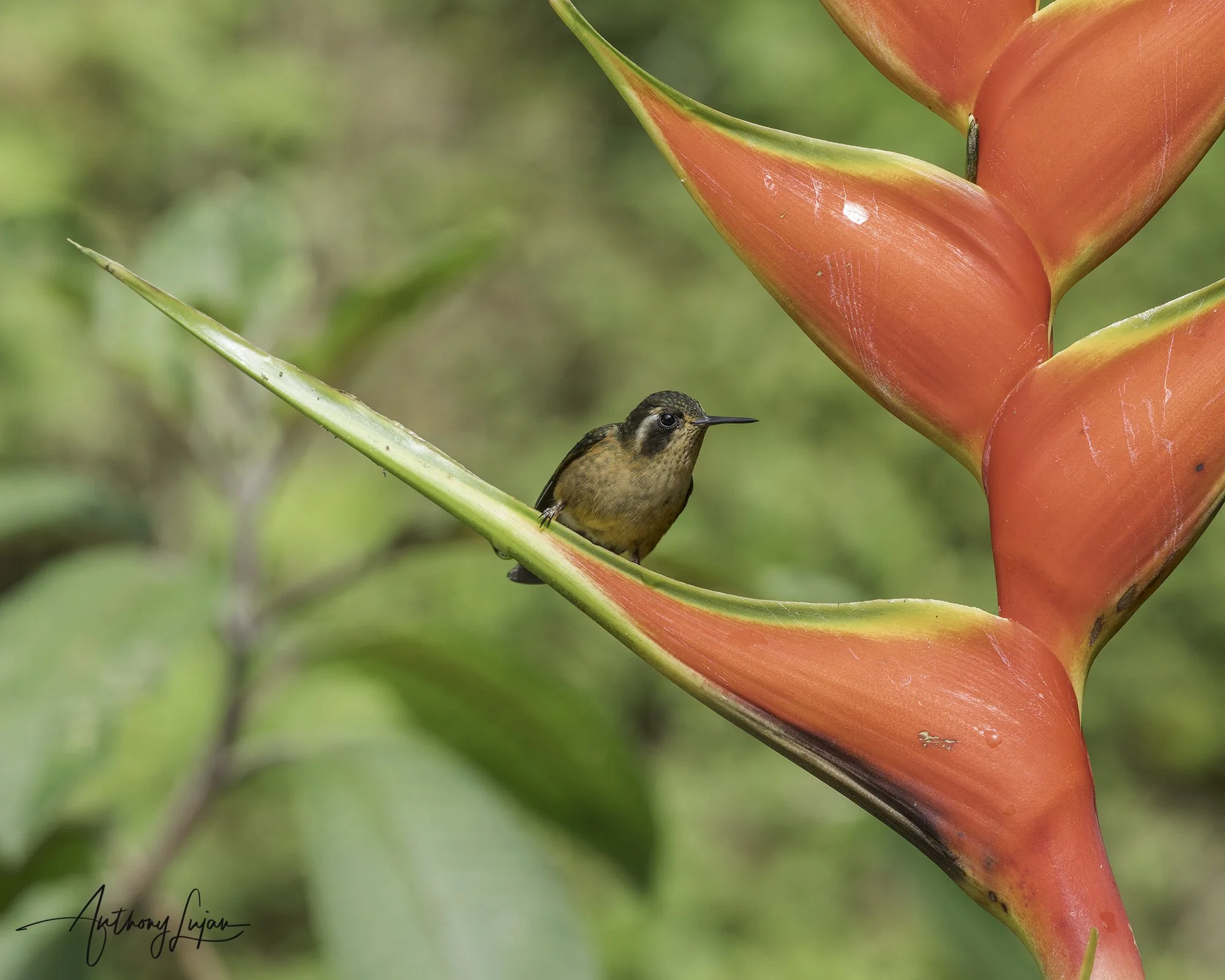
Speckled Hummingbirds inhabit humid montane forest, cloud forest, ravines, mossy understory, and forest edges. They are often seen low in the vegetation, hovering near small flowers, especially along shaded trails and streamside thickets. The species is largely solitary and does not gather in groups at flowering trees.
It feeds on nectar from short-tubed flowers and also from holes at the base of longer flowers, which lets it exploit a wide range of blossoms. Like most hummingbirds, it also takes small insects for protein. Individuals may make short local movements to lower elevations after breeding, but they remain within the Andean region.
Breeding
Breeding biology is not fully documented across the entire range, but the nest is a small cup made of moss, plant fibers, and spiderweb, usually placed on moss-covered trunks, rocky ridges, or sheltered sites such as cave entrances. Nest height is often low, around 1–3 m above the ground.
The clutch consists of two white eggs. The female alone incubates the eggs for roughly 17–20 days and cares for the young after hatching. Nesting in mossy, hidden sites helps protect the nest in the humid montane environment.
Movement
The Speckled Hummingbird is not a migrant. It is generally sedentary, although individuals may disperse to lower elevations after the breeding season. These movements are local and altitudinal rather than true migration.
Population
The total number of mature individuals is unknown. The species is often described as common in suitable Andean habitat, but its population trend is considered decreasing, likely reflecting ongoing habitat loss and degradation in montane forest regions. Even so, its broad range and adaptability to forest edges help it persist across much of the Andes.

Conservation
The Speckled Hummingbird is currently assessed as Least Concern. Its wide Andean distribution and presence in multiple countries reduce immediate risk, but continued deforestation, fragmentation, and degradation of cloud forest habitat remain important pressures. Protecting humid montane forest, ravines, and understory vegetation will be important for long-term stability.
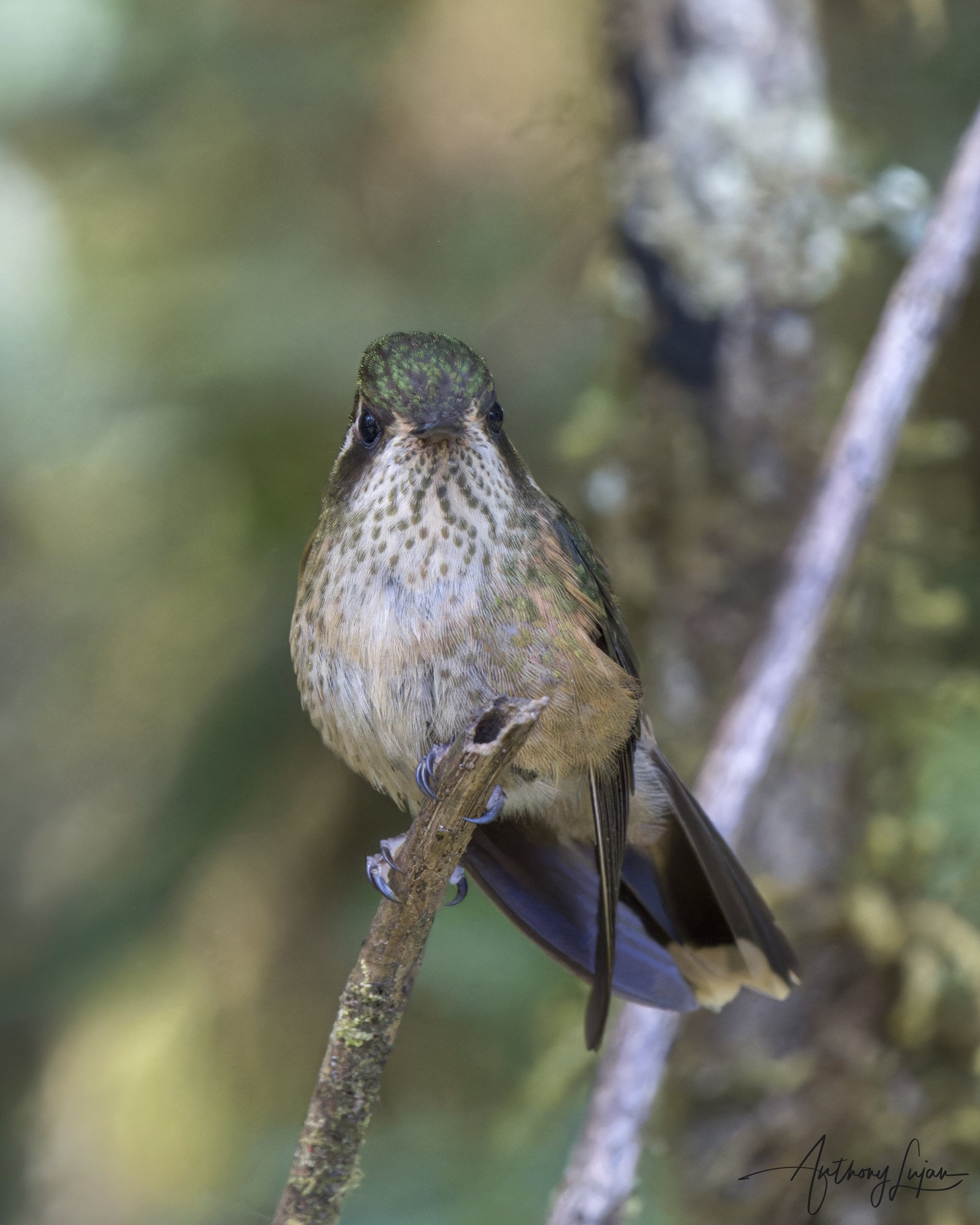
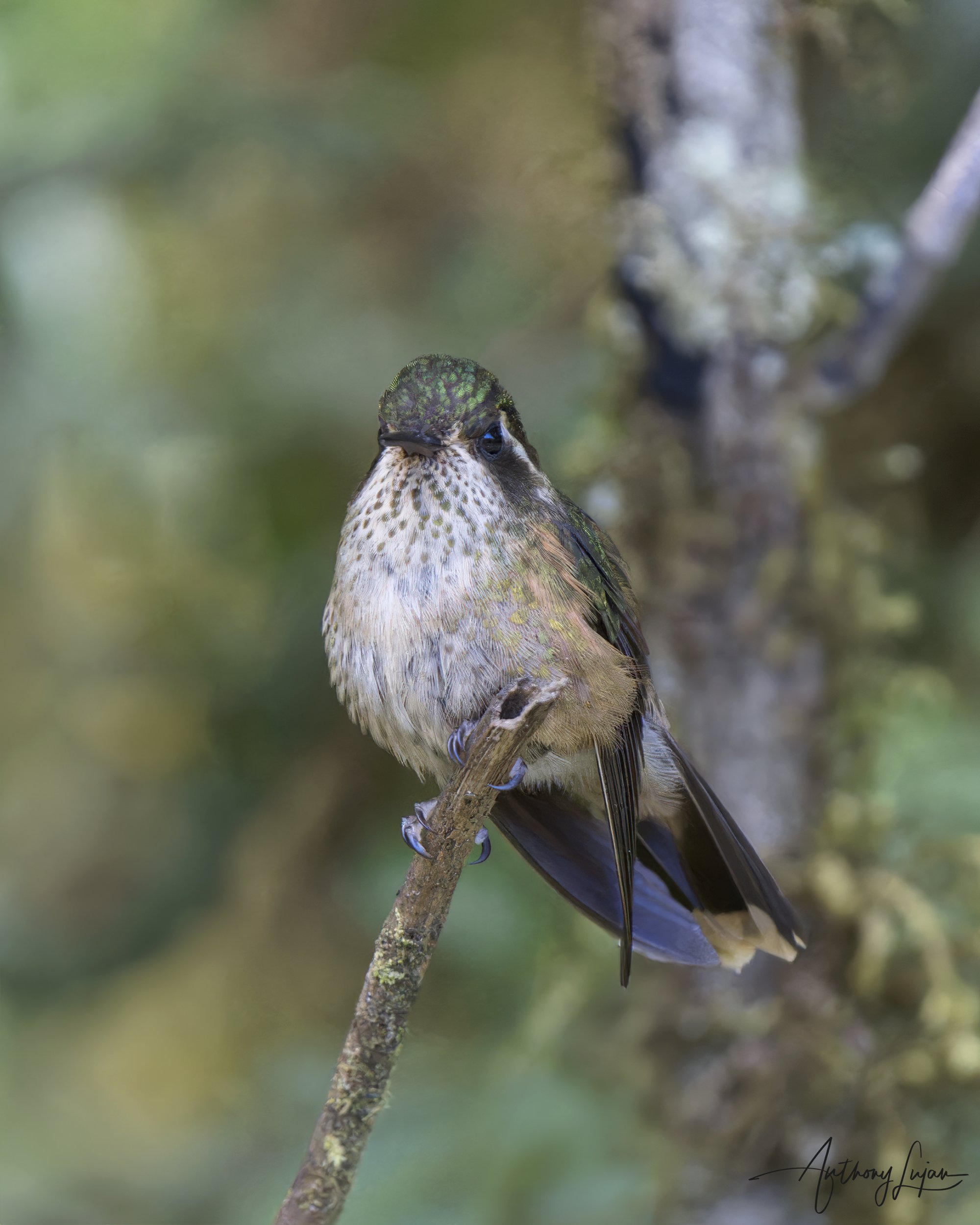
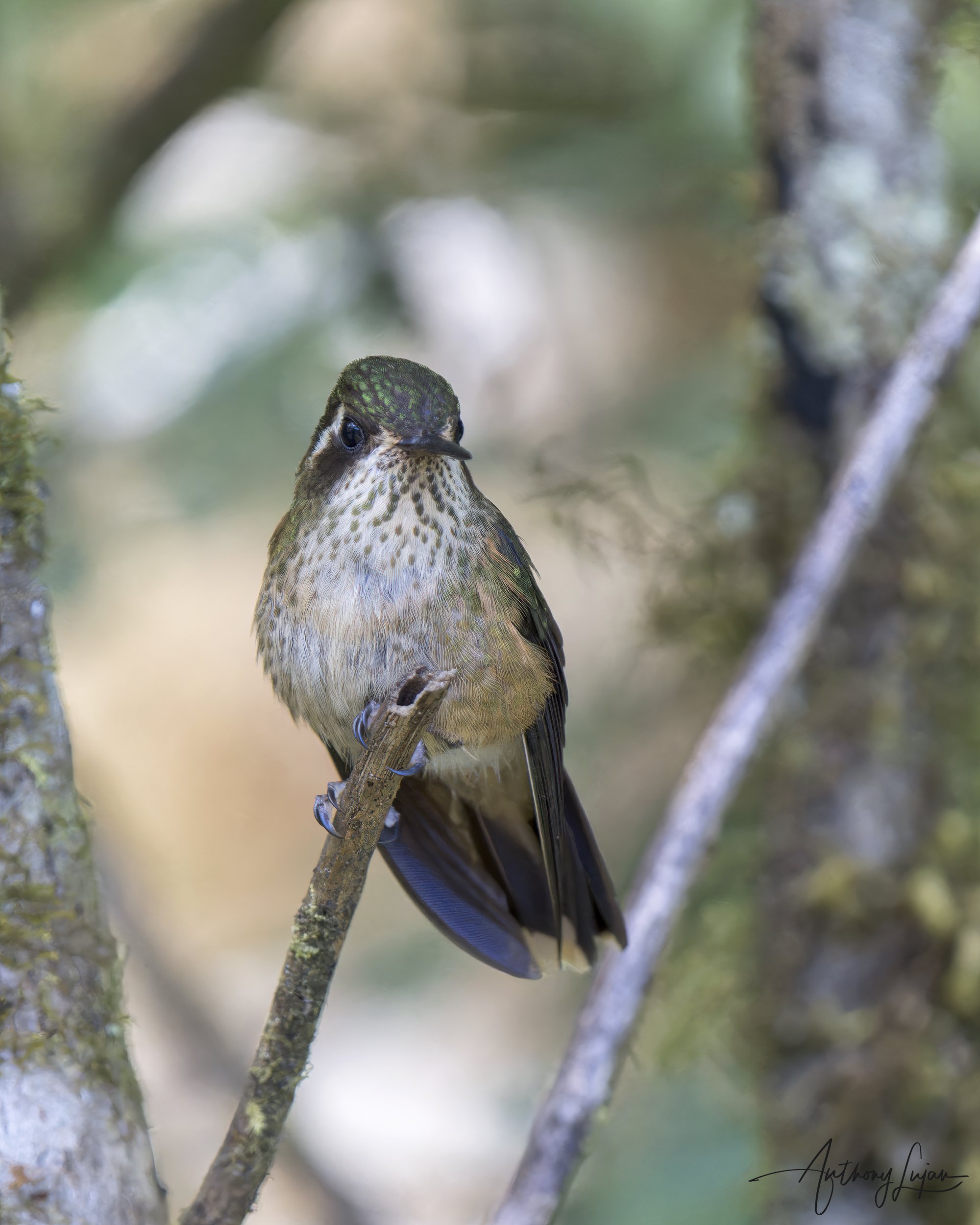
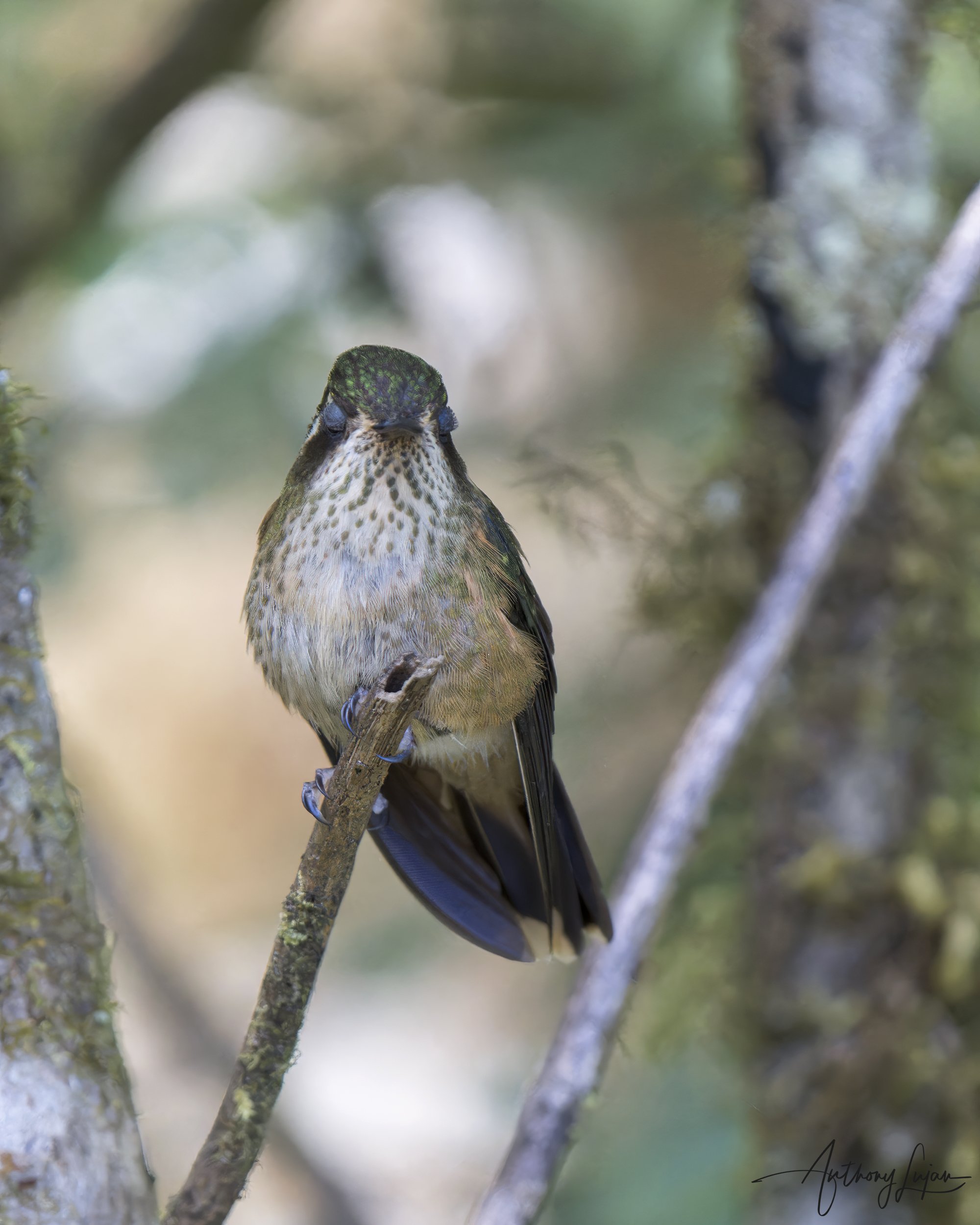
Below is the Speckled Hummingbird (Adelomyia melanogenys melanogenys)
Photographed at Owlet Lodge, Amazonas, Peru
These individuals belong to the subspecies melanogenys, which occurs from the Andes of western Venezuela through the eastern Andean slopes of Colombia and south into south-central Peru. This population typically shows a darker cheek patch, bold post-ocular stripe, and speckled underparts, consistent with birds found in humid montane forest from 1,200 to 2,500 meters.
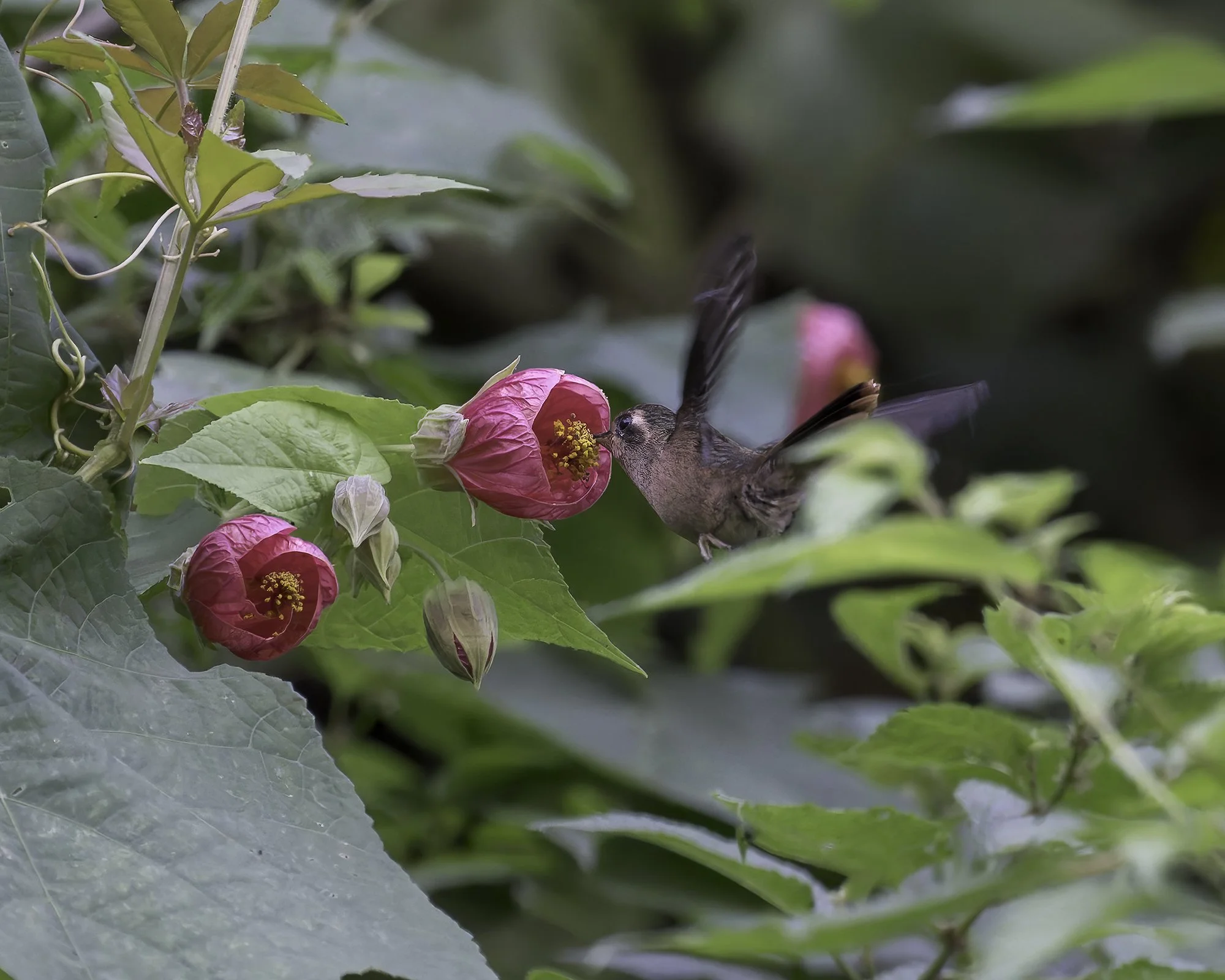
Below is the Speckled Hummingbird (Adelomyia melanogenys inornata)
Photographed at Francisco, Valle Grande, Jujuy, Argentina
These individuals belong to the subspecies inornata, found in the Yungas of Bolivia and northwestern Argentina. Compared to northern forms, inornata is paler below and slightly less marked overall, with a more subdued cheek patch and reduced speckling, traits adapted to the drier edge of its humid forest range.
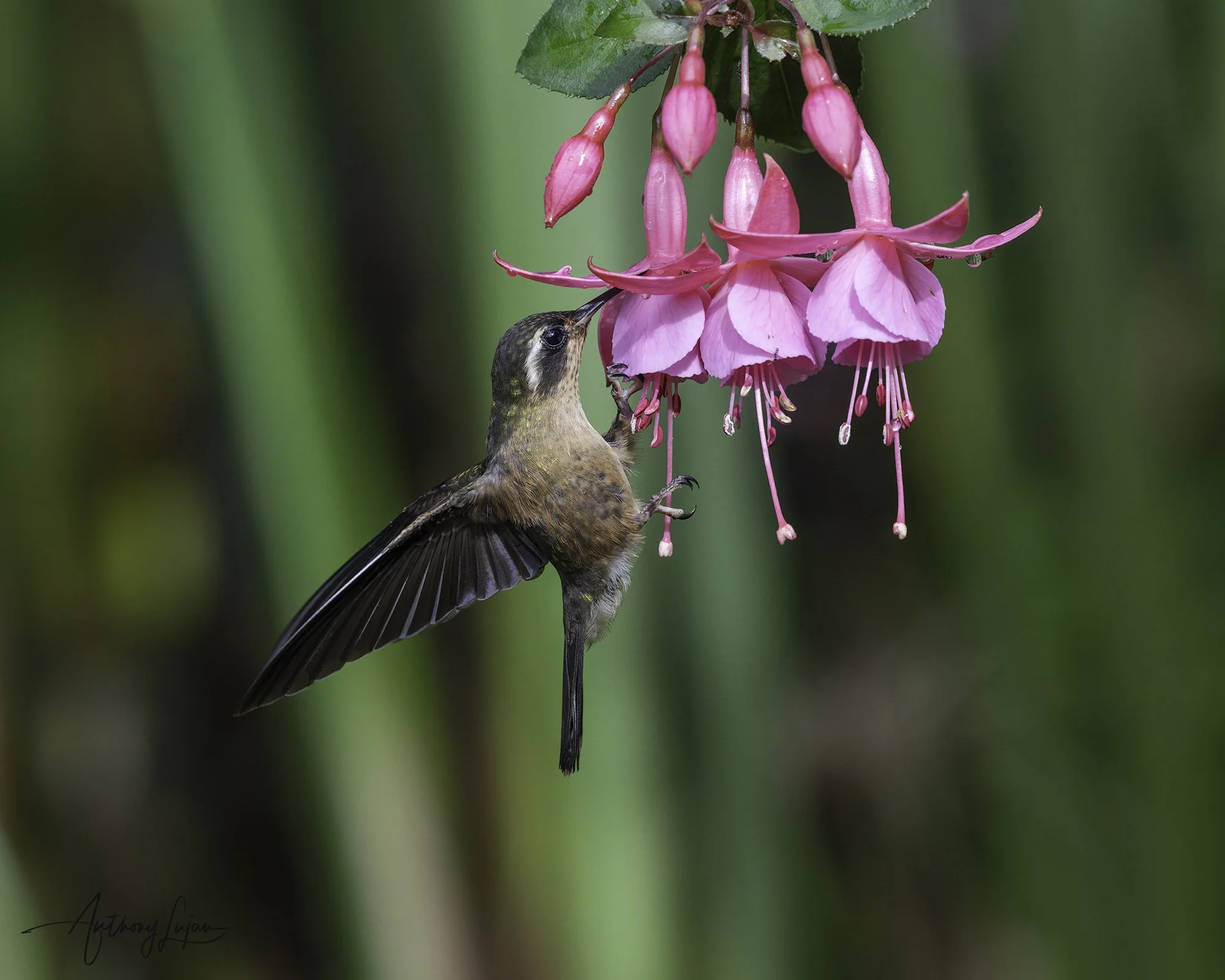
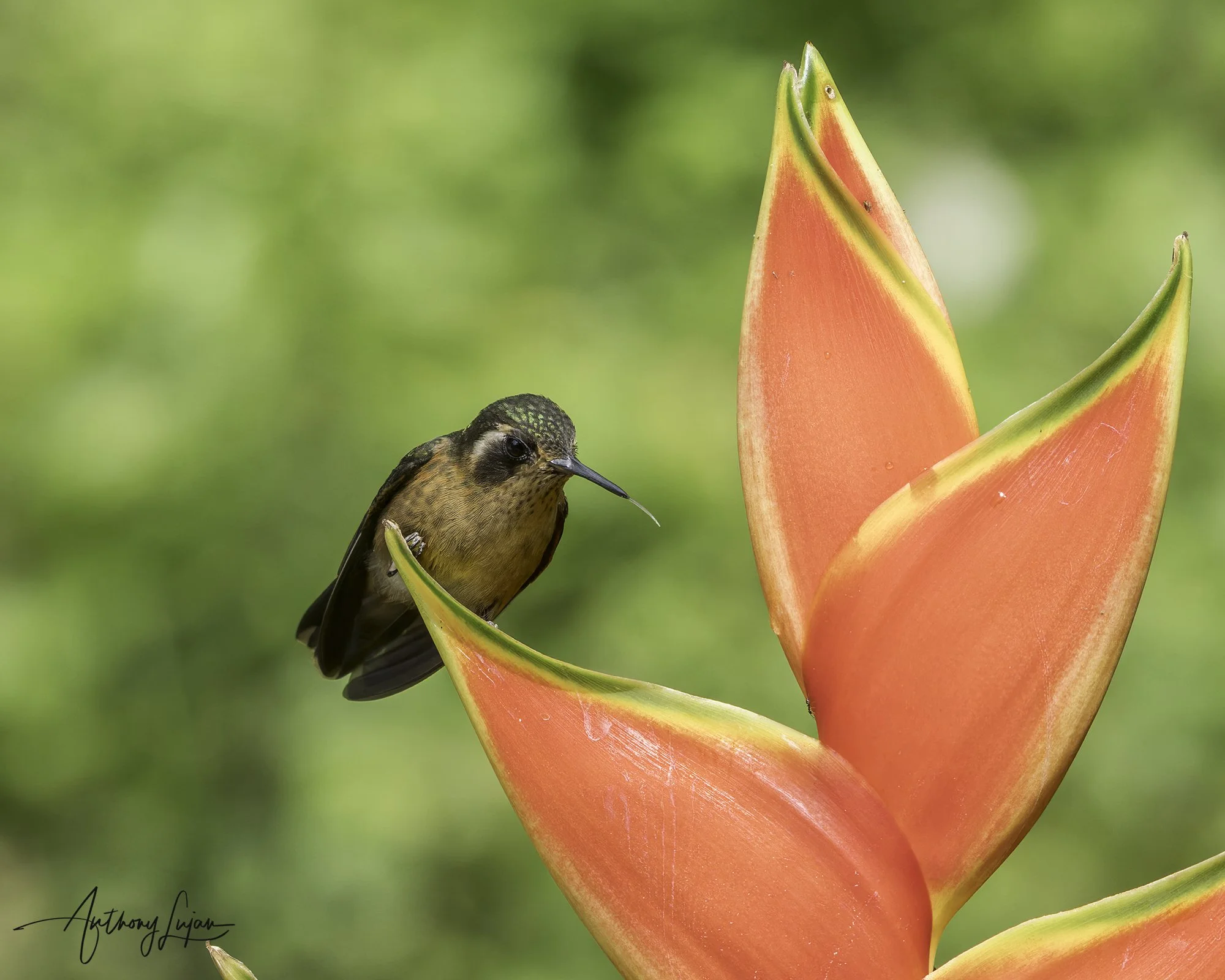
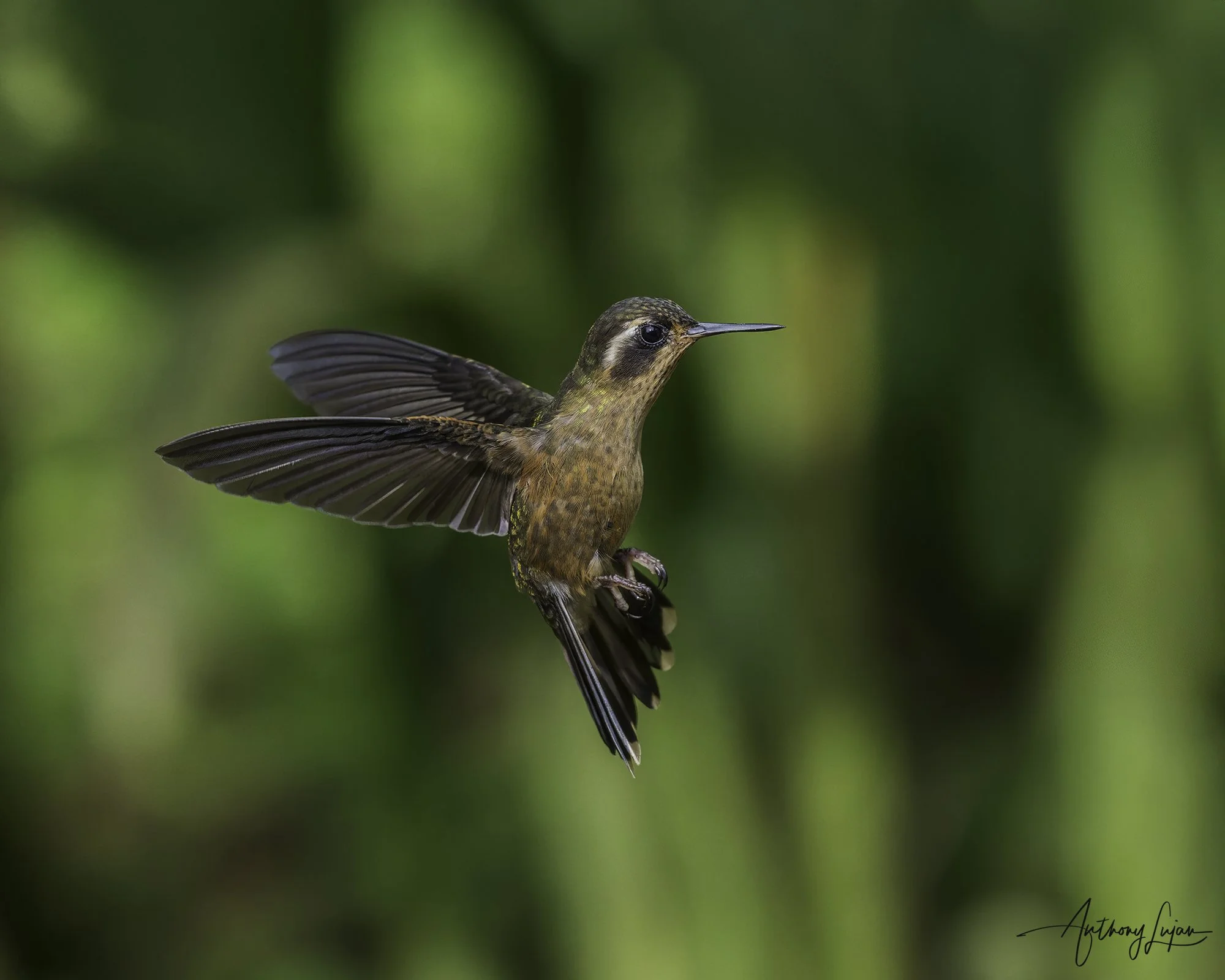
Below is the Speckled Hummingbird (Adelomyia melanogenys cervina)
Photographed at La Florida - Bosque de Las Aves, Valle del Cauca, Colombia
and Colibrí del Sol ProAves Reserve, Antioquia, Colombia
These individuals belong to the subspecies cervina, which occurs in the Western and Central Andes of Colombia. This form shows heavy olive speckling on the breast, a well-defined white post-ocular stripe, and bronzy upperparts, fitting birds in mid-elevation montane forests of the Colombian Andes.
Checkout Anthony’s playlist of this species! Click the top right dropdown to see all the videos.
No other species is currently recognized in the genus Adelomyia; the Speckled Hummingbird is the only member of this genus.
Please note: The content provided in this article reflects Anthony’s personal experience and photographic approach. Results can vary depending on light, weather, location, equipment, subject behavior, and field conditions.