
Scientific name: Ensifera ensifera
The Sword-billed Hummingbird is a remarkable Andean species famous for its extraordinarily long bill, found in montane forest, forest edges, shrublands, and páramo. The number of mature individuals is unknown, the population trend is decreasing, it is an altitudinal migrant, and it is currently assessed as Least Concern.
At a Glance
Family: Trochilidae (hummingbirds)
Clade: Heliantheini – Brilliants
Genus: Ensifera — 1 species total
Range: Andes from Venezuela through Colombia, Ecuador, Peru, to Bolivia
Habitat: Humid montane forest, forest edges, shrubland, gardens, páramo patches
Elevation: 1,700–3,500 m (5,600–11,500 ft), most common 2,400–3,100 m
Length: 13–14 cm (5.1–5.5 in), excluding bill
Weight: 10–15 g (0.35–0.53 oz)
Number of mature individuals: Unknown
Population trend: Decreasing
Movement: Altitudinal migrant
IUCN Red List category: Least Concern
Name Origin
The genus and species name Ensifera derives from Latin words meaning "sword-bearer," perfectly describing its unique bill longer than the body (excluding tail). This is the only bird with such proportions, adapted for deep-tubed flowers like Passiflora. The English name reflects this extraordinary adaptation.
Taxonomy
Ensifera ensifera is the sole species in its monotypic genus within the brilliants clade (Heliantheini). It ranges across the Andes from western Venezuela through all three cordilleras of Colombia, both slopes through Ecuador and Peru, reaching Bolivia. The species favors humid montane forest interiors and edges, shrubby slopes, and páramo where long-tubed flowers provide its specialized diet.
Subspecies and Distribution
Monotypic — no subspecies recognized.
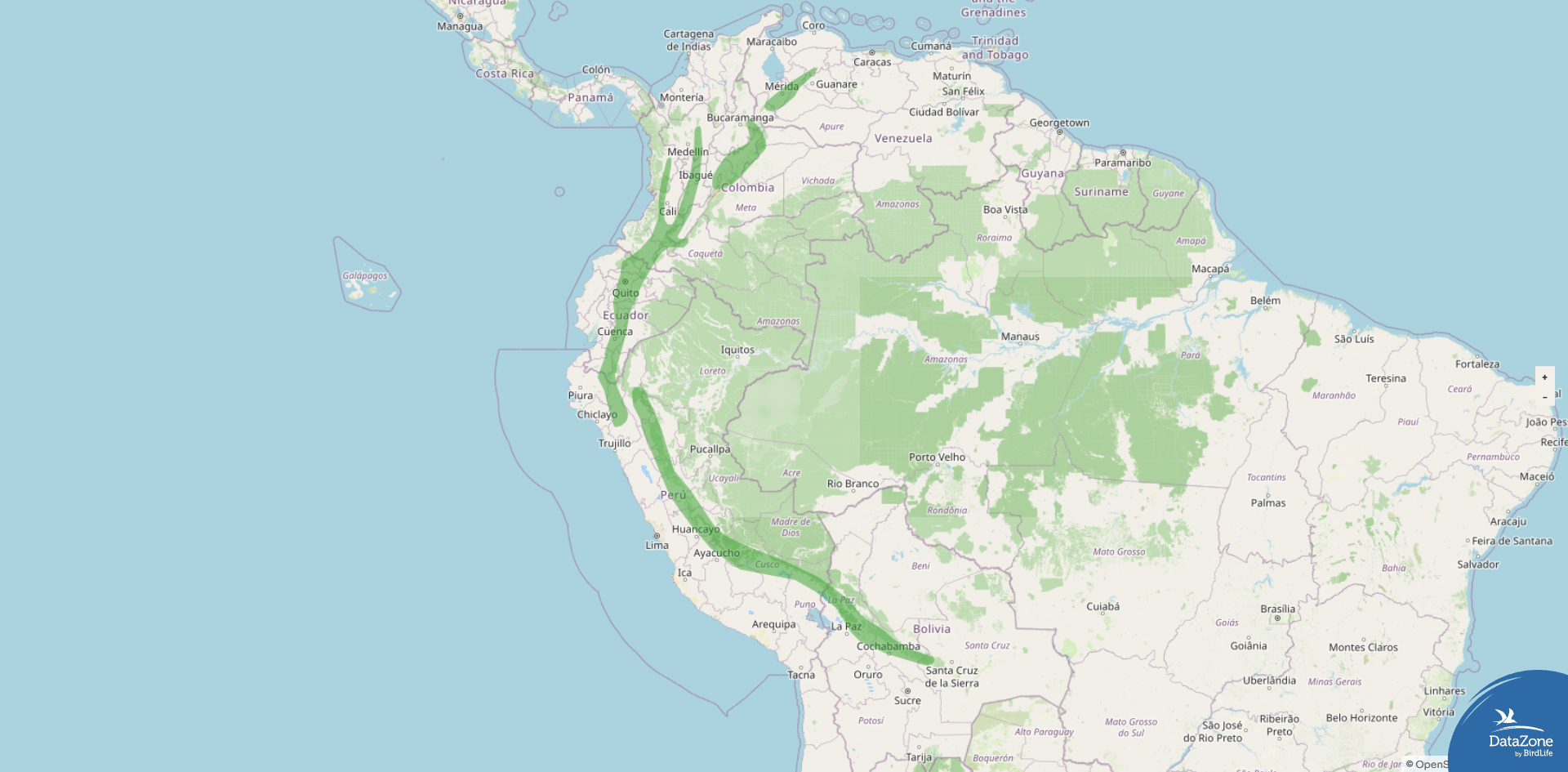
Legend
Green Resident
Species Overview
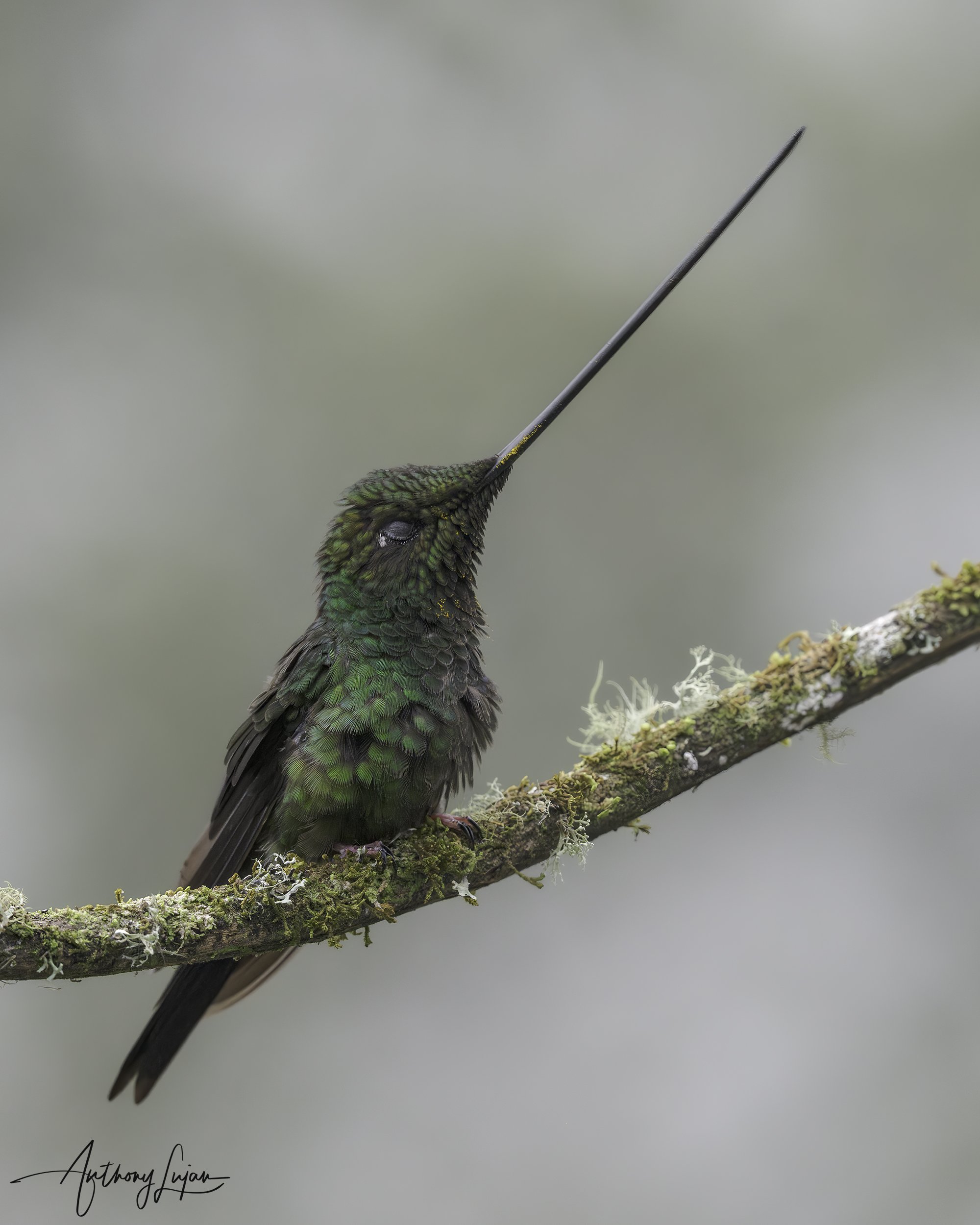
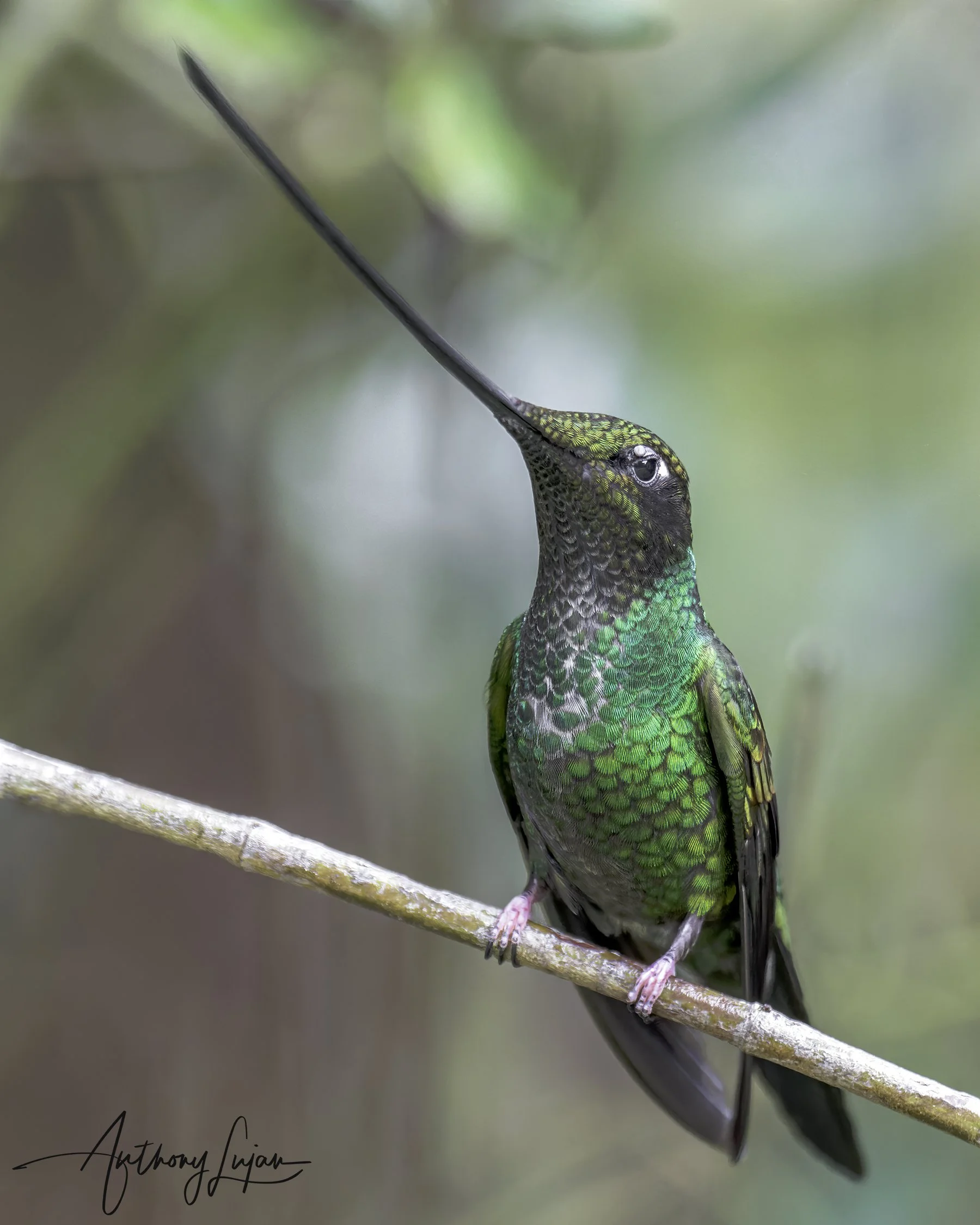
This extraordinary hummingbird has the longest bill relative to body size of any bird. It perches with bill pointed skyward to balance its weight, feeds on nectar from deep flowers other hummingbirds can't reach, and catches insects in aerial sallies. Territorial and conspicuous despite habitat specialization, individuals often perch prominently on dead branches.
Male Description
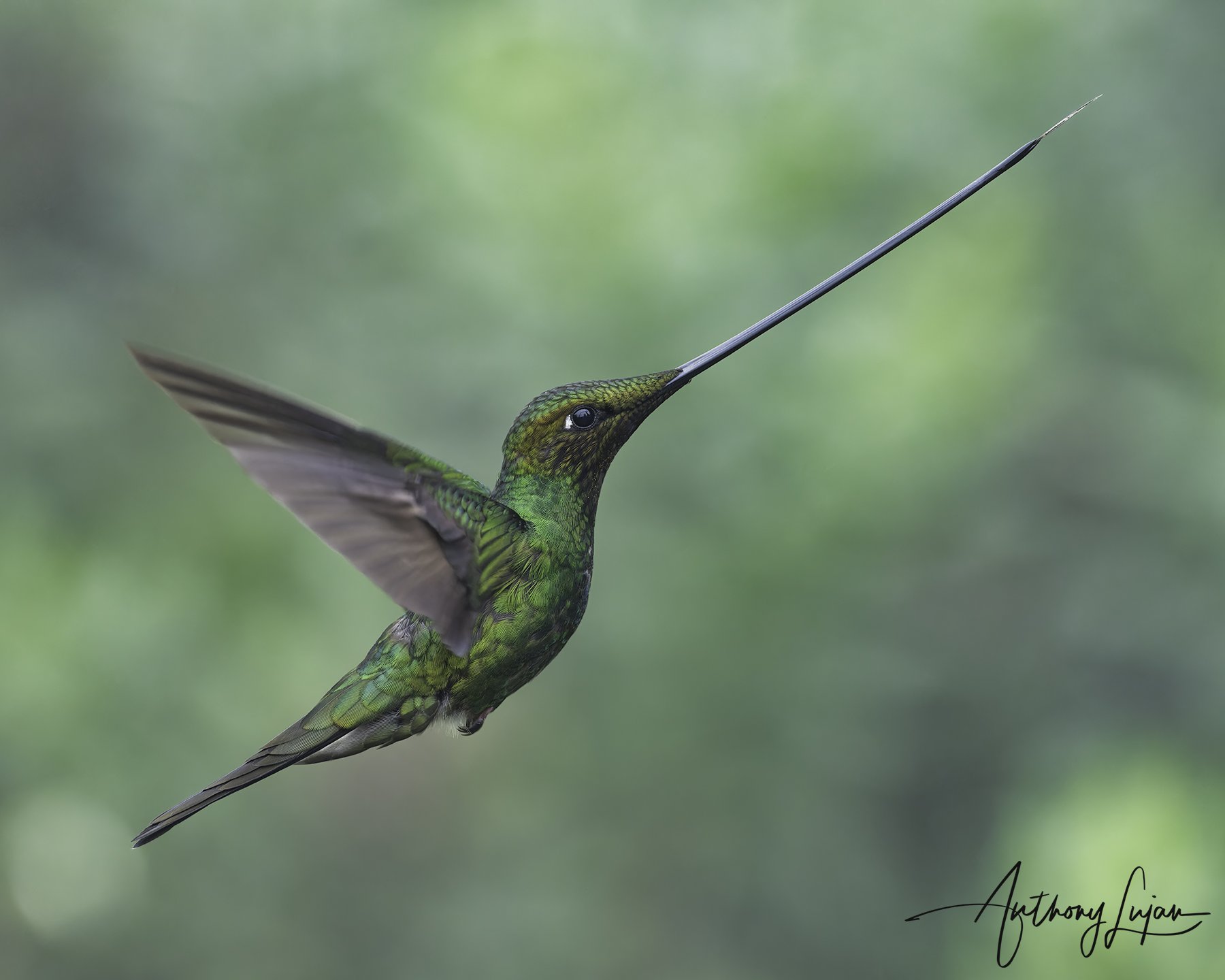
Bronze-green plumage with blackish bill (8–12 cm long, straight to slightly upcurved). Throat shows violet-blue iridescence; tail dark green with purplish gloss. Males slightly larger; bill can exceed head+body+tail length. The combination creates a silhouette impossible to confuse with other hummingbirds.
Female Description
Very similar to males but slightly smaller with duller throat iridescence. Same extraordinary bill proportions and bronze-green body. Females show identical foraging behavior and habitat preferences. Juveniles resemble females with even less throat sparkle.
Habitat & Behavior
Inhabits humid montane forest edges, shrublands, gardens, and páramo where long-tubed flowers (Passiflora mixta, Datura) bloom. Traplines nectar routes between scattered deep flowers; defends territories aggressively against all intruders. Uses long tongue (forked, fringed) to extract nectar. Often seen rubbing bill on branches to clean it.
Breeding
Female builds small cup nest of moss, spider silk, and leaves (stretches dramatically with growing chicks). Lays 1–2 white eggs February–March. Female incubates 16–19 days; chicks fledge 24–28 days after hatching. Female-only care; bill-up perching common at nest.
Movement
Altitudinal migrant; ascends to higher elevations early wet season (nectar flush), descends during dry season in Colombia/northwest Venezuela. Otherwise resident within Andean range. Tracks long-tubed flower availability across elevational gradient.
Population
Unknown total but fairly common where habitat suitable. Most abundant in areas with abundant Passiflora and other deep flowers. Decreasing due to deforestation, climate change affecting flowering plants.

Conservation
Least Concern due to wide range, but montane habitat loss threatens. Found at ABC reserves (Abra Patricia, Yanacocha). Specialized bill limits dietary flexibility; vulnerable to changes in long-tubed flower availability. Climate change may disrupt flowering cycles.
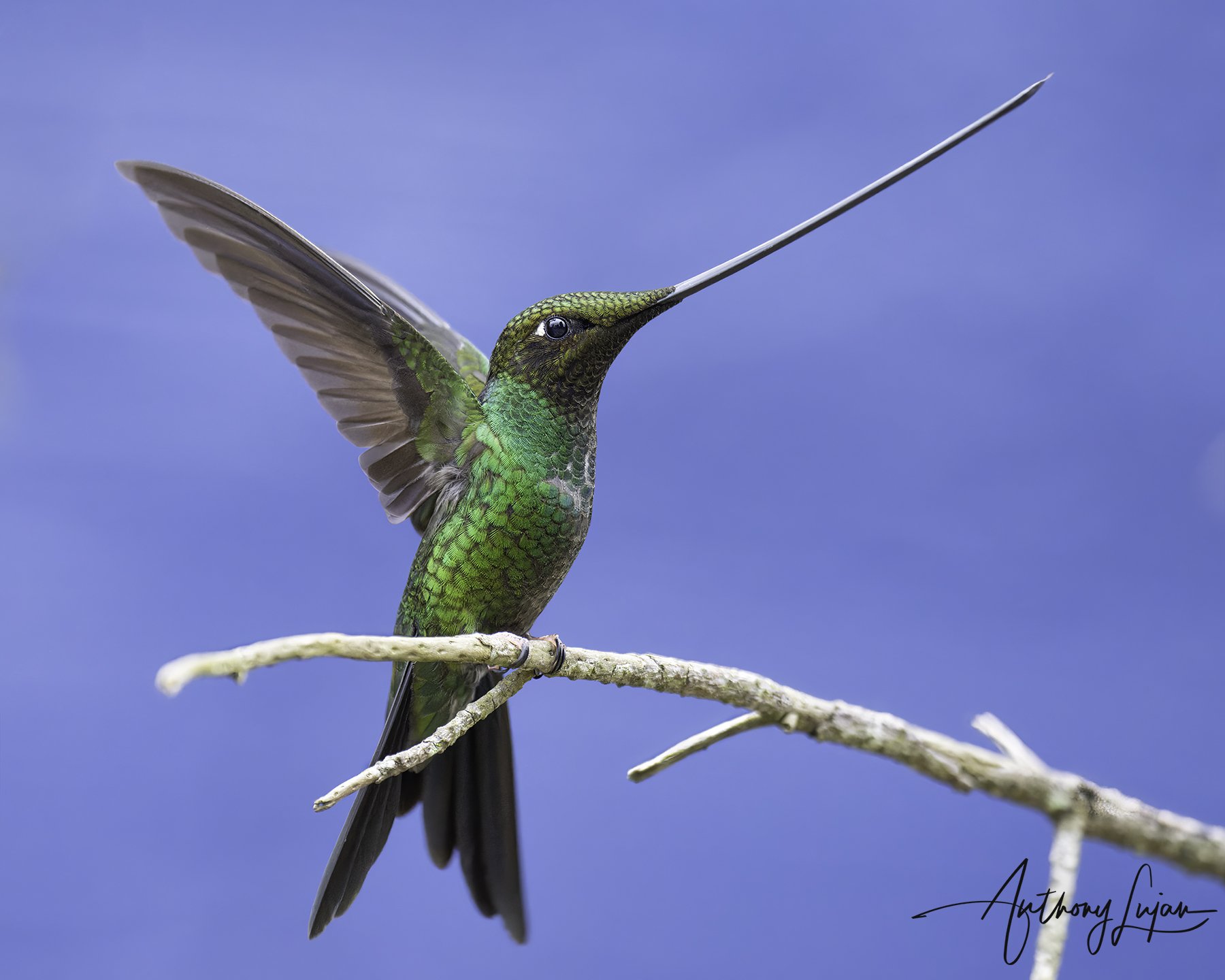
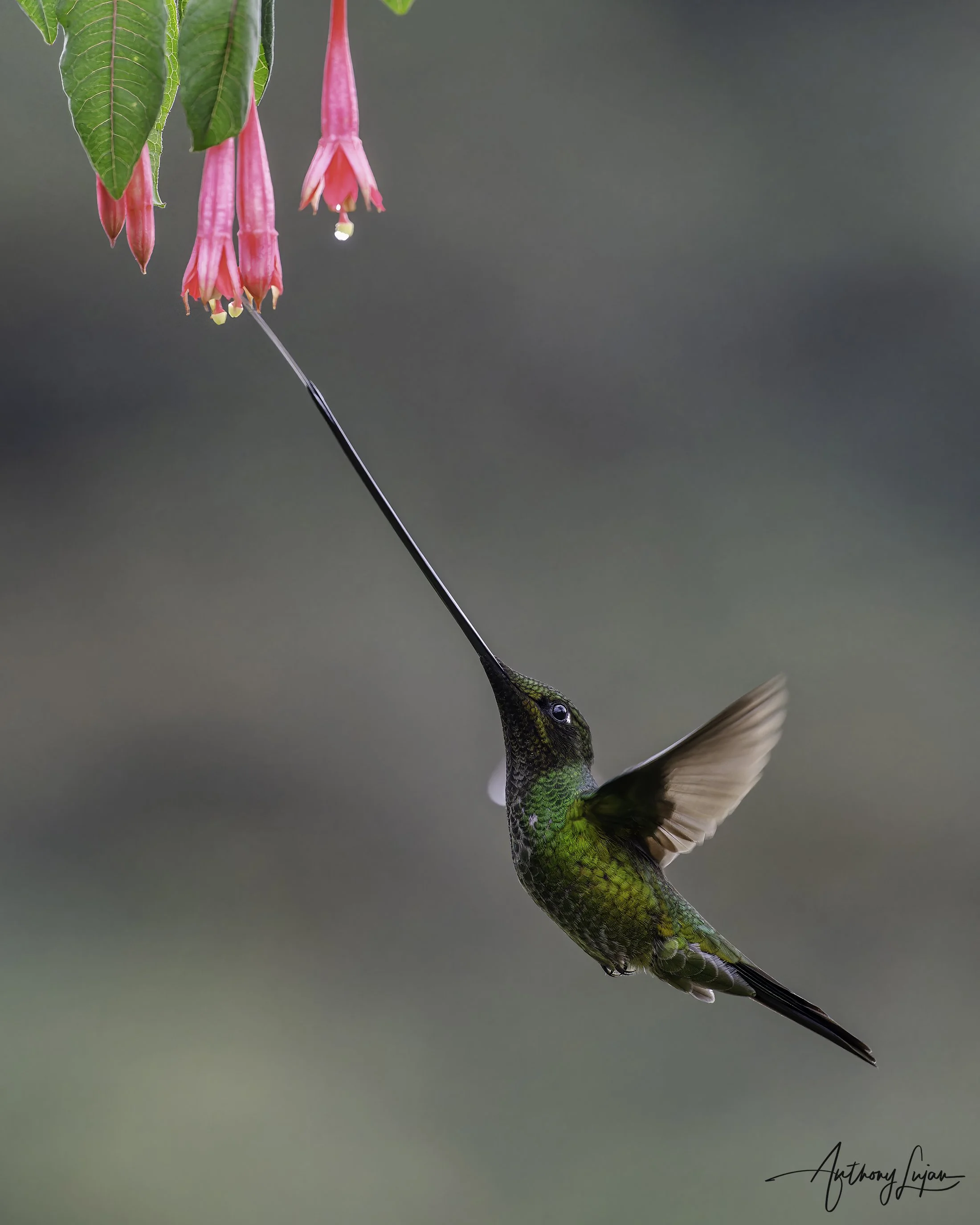
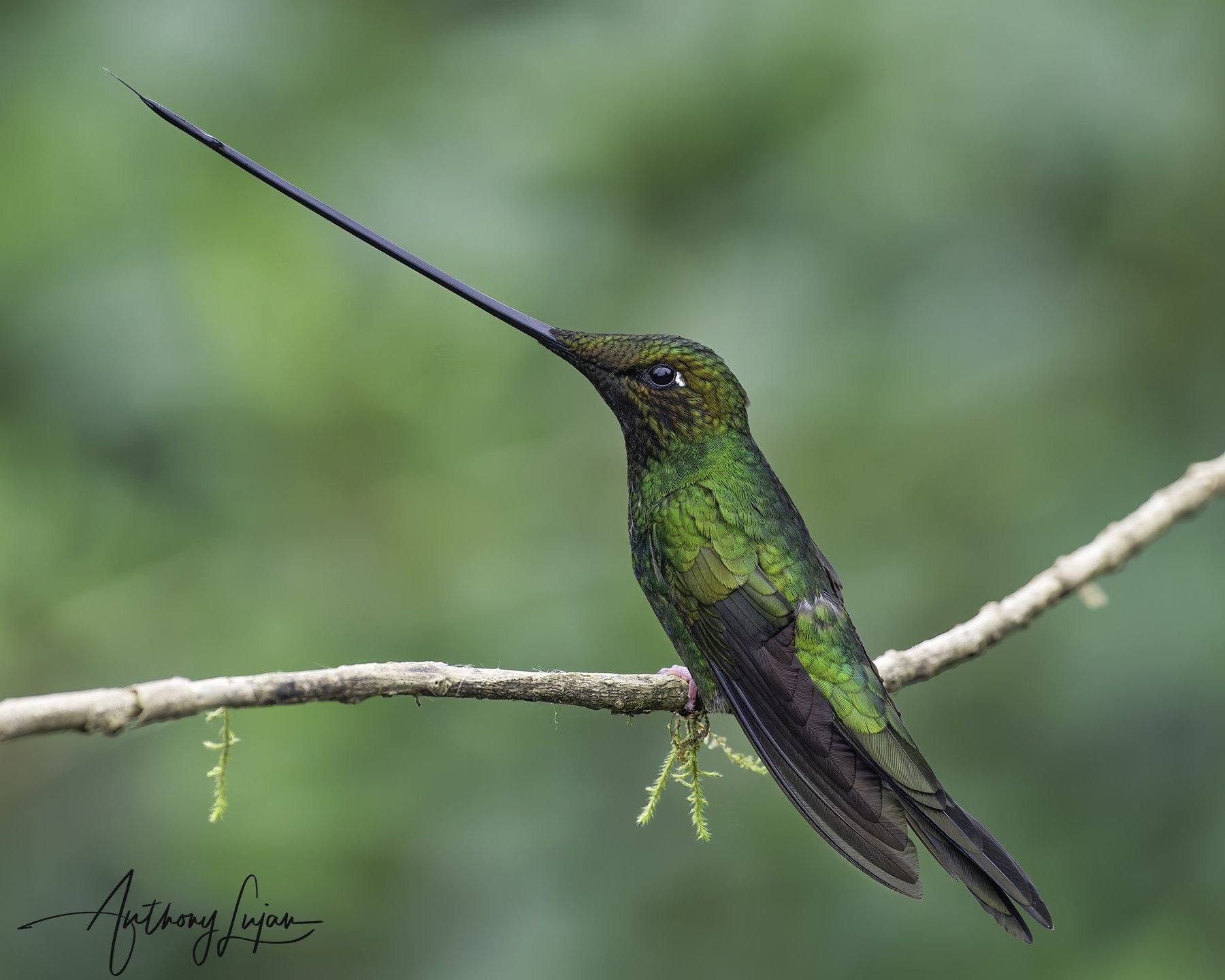
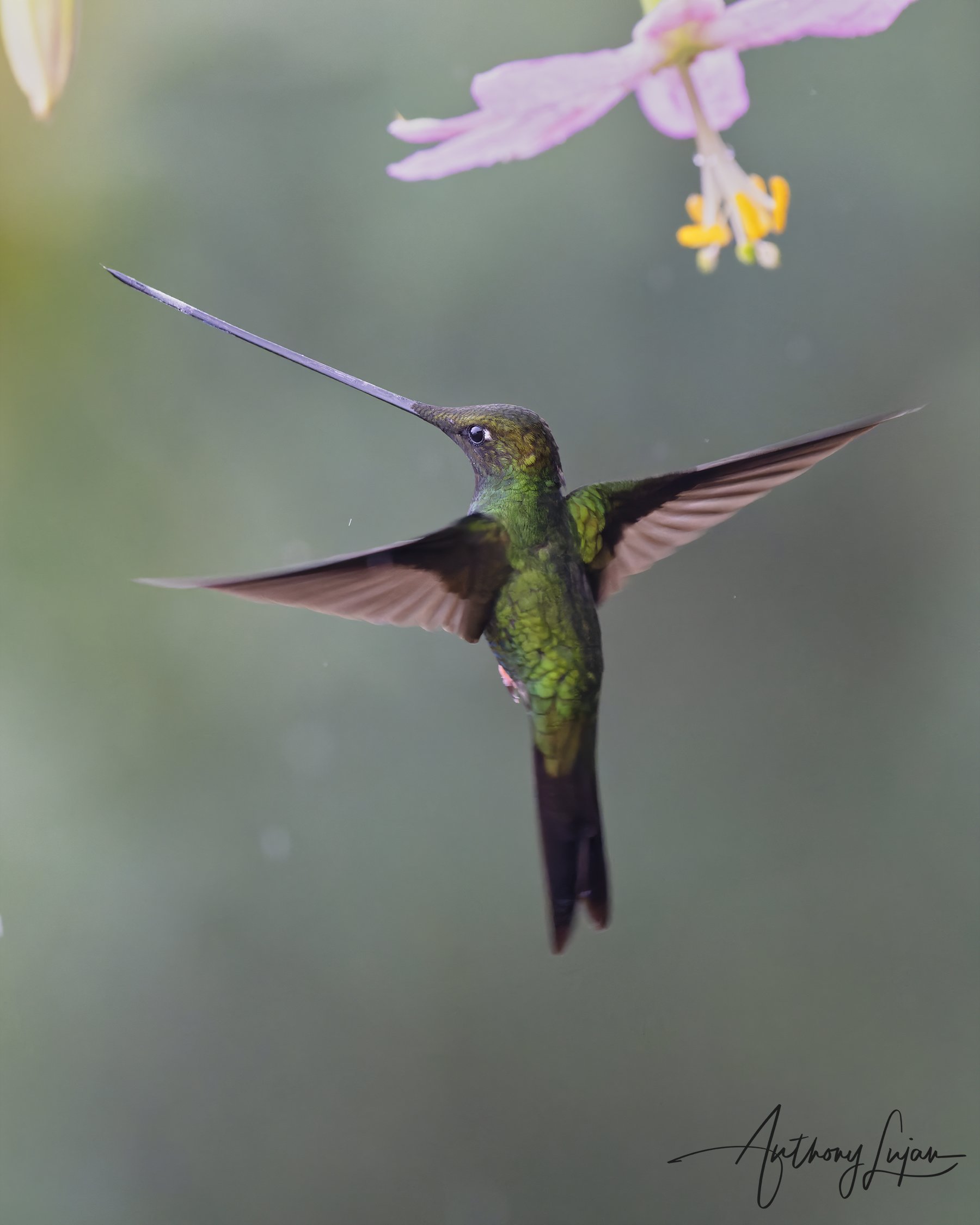
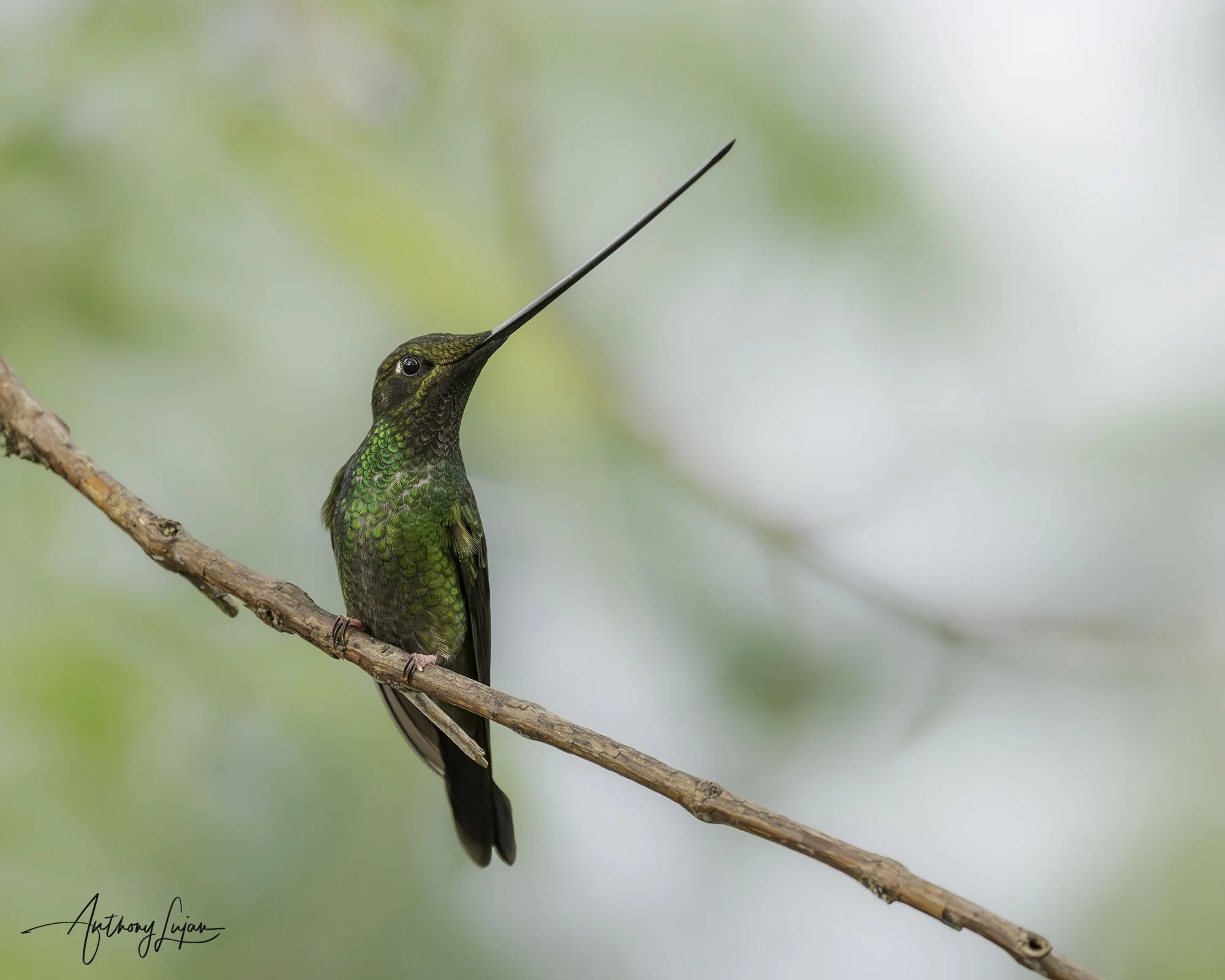
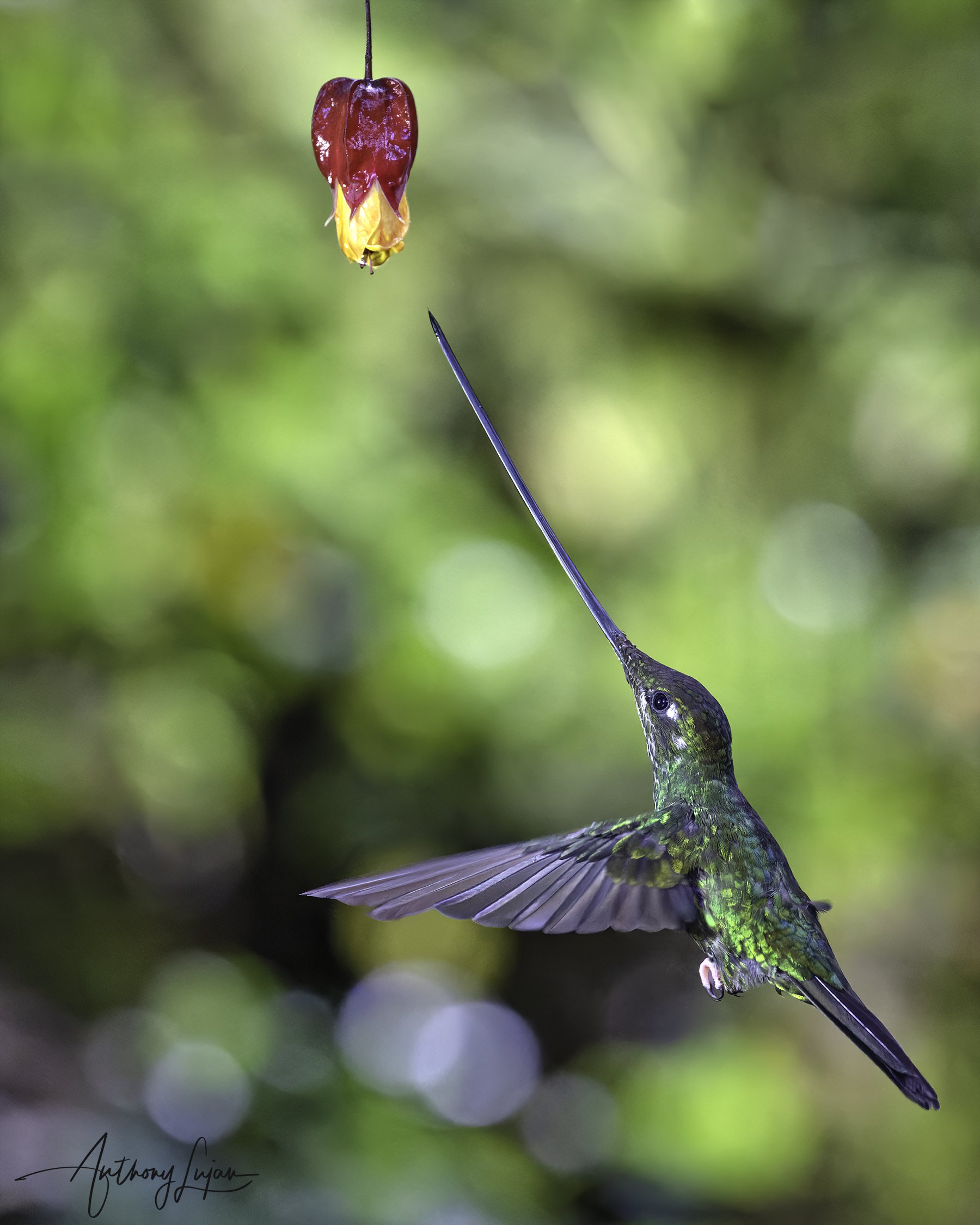
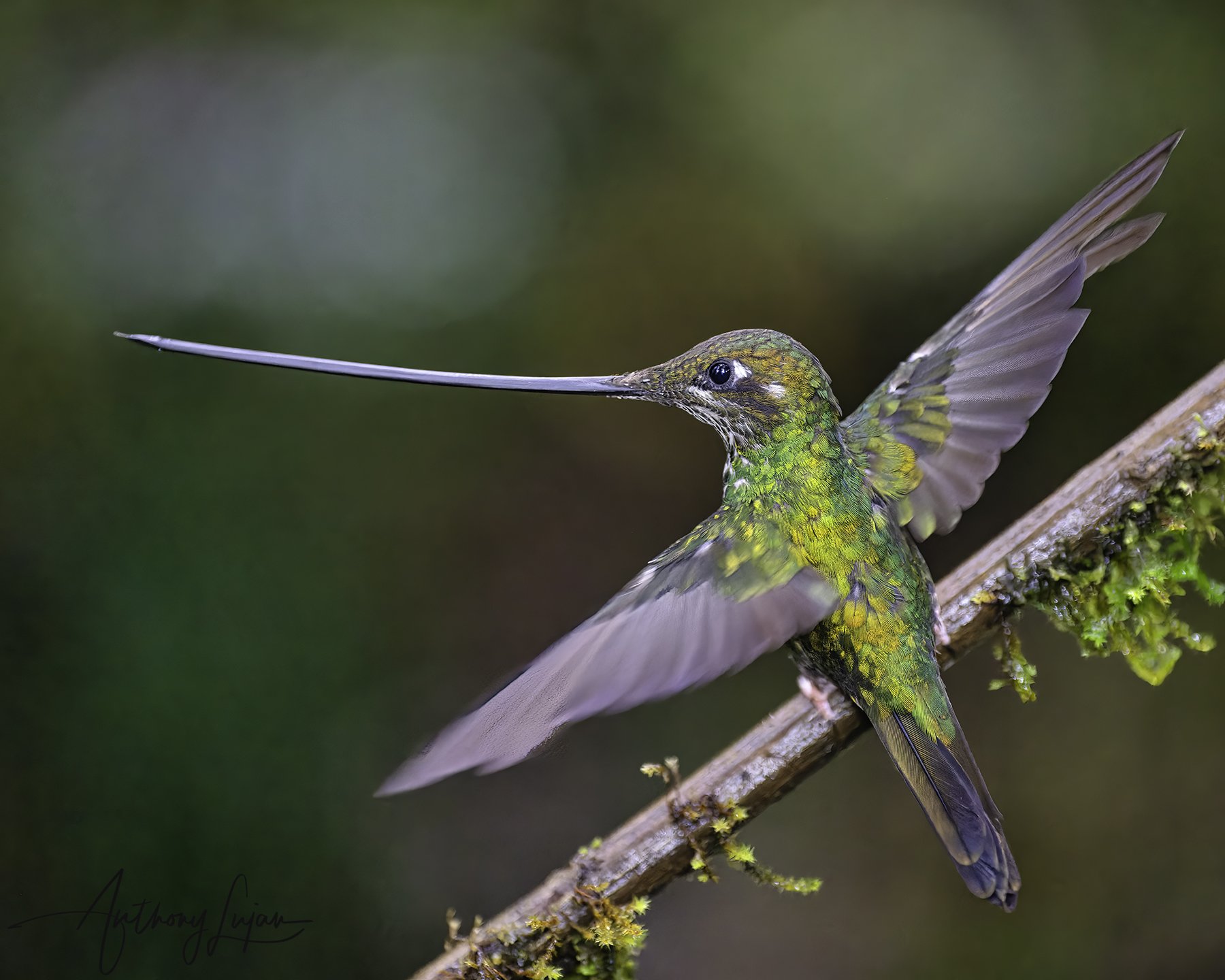
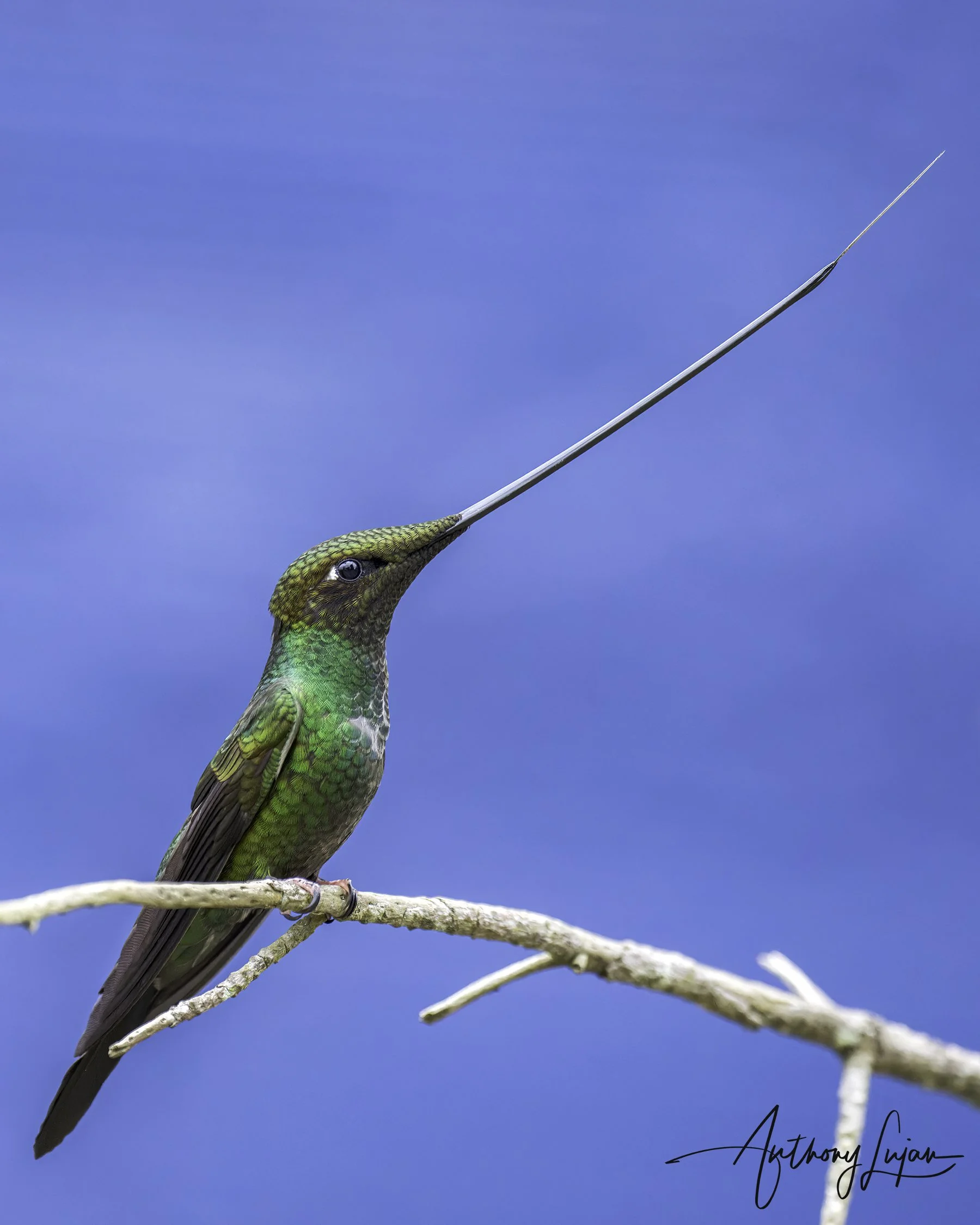
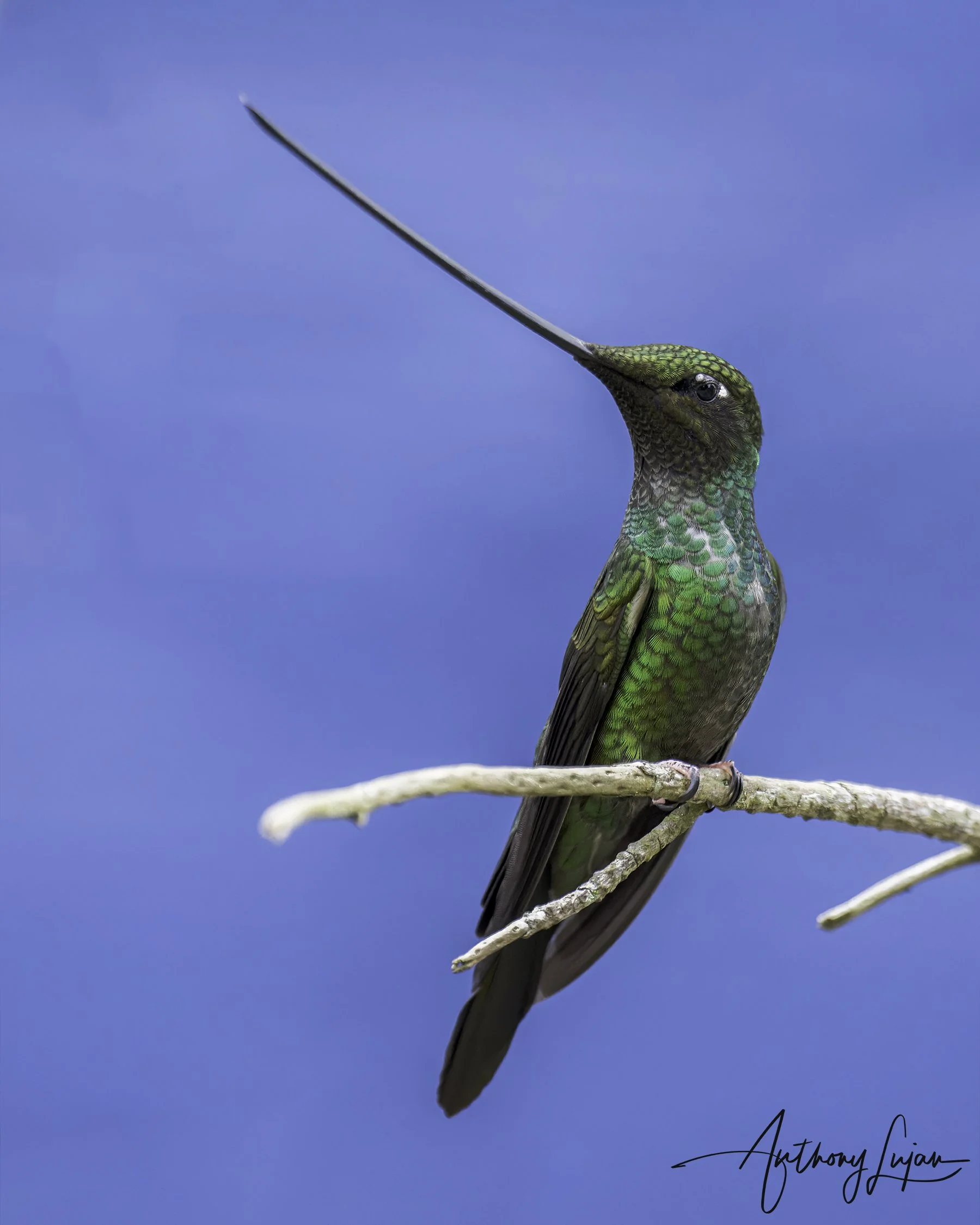
Checkout Anthony’s playlist of this species! Click the top right dropdown to see all the videos.
No other species is currently recognized in the genus Ensifera; the Sword-billed Hummingbird is the only member of this genus
Please note: The content provided in this article reflects Anthony’s personal experience and photographic approach. Results can vary depending on light, weather, location, equipment, subject behavior, and field conditions.