
Turquoise-crowned Hummingbird
Scientific name: Cynanthus doubledayi
The Turquoise-crowned Hummingbird (also known as Doubleday’s Hummingbird) is a small “emerald” hummingbird endemic to southern Mexico. The number of mature individuals is unknown, the global population is considered stable, it is non-migratory, and it is currently listed as Least Concern and monotypic, with no recognized subspecies.
At a Glance
Family: Trochilidae (hummingbirds)
Clades: Trochilini – Emeralds
Genus group: Cynanthus — small, bright green emeralds with mostly red-based bills (6 species total)
Range: Southern Mexico, primarily along the Pacific slope of Guerrero, Oaxaca, and Chiapas, including interior slopes and foothills of the Sierra Madre del Sur.
Habitat: A variety of dry and semi-humid landscapes including arid thorn forest, tropical deciduous forest, gallery forest, secondary forest, forest edges, and sometimes open pine–oak woodland and grassy slopes with scattered trees.
Elevation: Generally from near sea level up to about 2,200 m (7,200 ft), sometimes as high as 3,000 m (9,800 ft).
Length: About 8–9 cm (3.1–3.5 in).
Weight: About 2.5–3 g (0.09–0.11 oz).
Number of mature individuals: Unknown
Population trend: Stable
Status: Least Concern (IUCN)
Name Origin
The genus name Cynanthus is often interpreted as “flower-hunter,” fitting for an energetic emerald constantly working nectar sources. The species name doubledayi honors the English entomologist and naturalist Edward Doubleday. The English name “Turquoise-crowned Hummingbird” emphasizes the male’s vivid turquoise crown, while “Doubleday’s Hummingbird” recognizes the honoree.
Taxonomy & Distribution
Monotypic — no recognized subspecies.
Distribution: Endemic to Mexico, found mainly along the Pacific slope and interior valleys of Guerrero, Oaxaca, and Chiapas. It inhabits dry and semi-humid forest types and scrub on the slopes and foothills of the Sierra Madre del Sur and adjoining ranges.
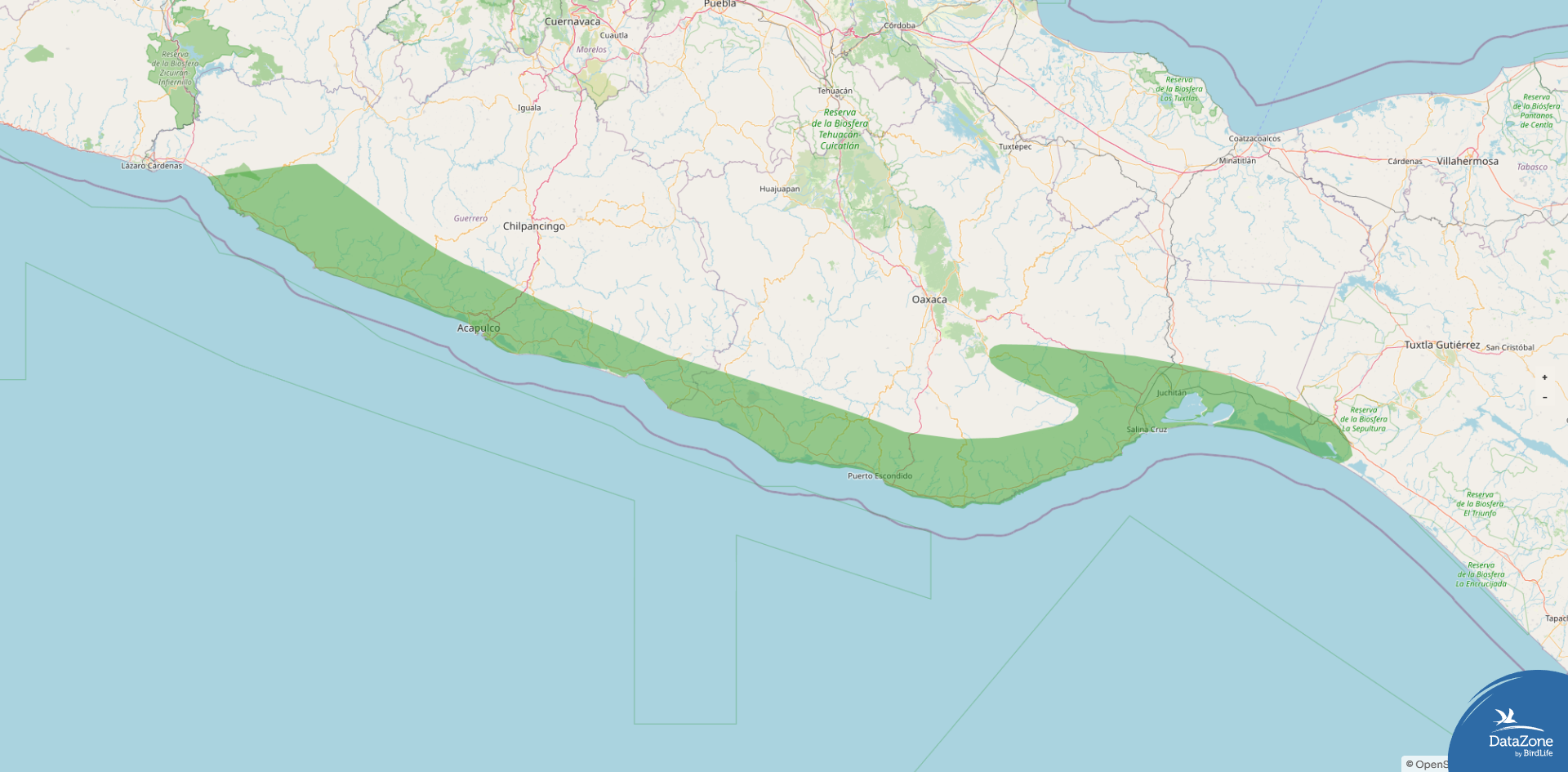
Legend
Green Resident
Species Overview
The Turquoise-crowned Hummingbird is a characteristic small emerald of southern Mexico’s dry and semi-humid Pacific-slope forests. It frequents flowering shrubs and trees in thorn forest, tropical deciduous forest, and forest edges, and it is a sought-after endemic for visiting birders. Its moderate range, relatively stable populations, and tolerance of semi-open and secondary habitats support its current Least Concern status, although its endemism makes it sensitive to regional habitat change.
Male Description
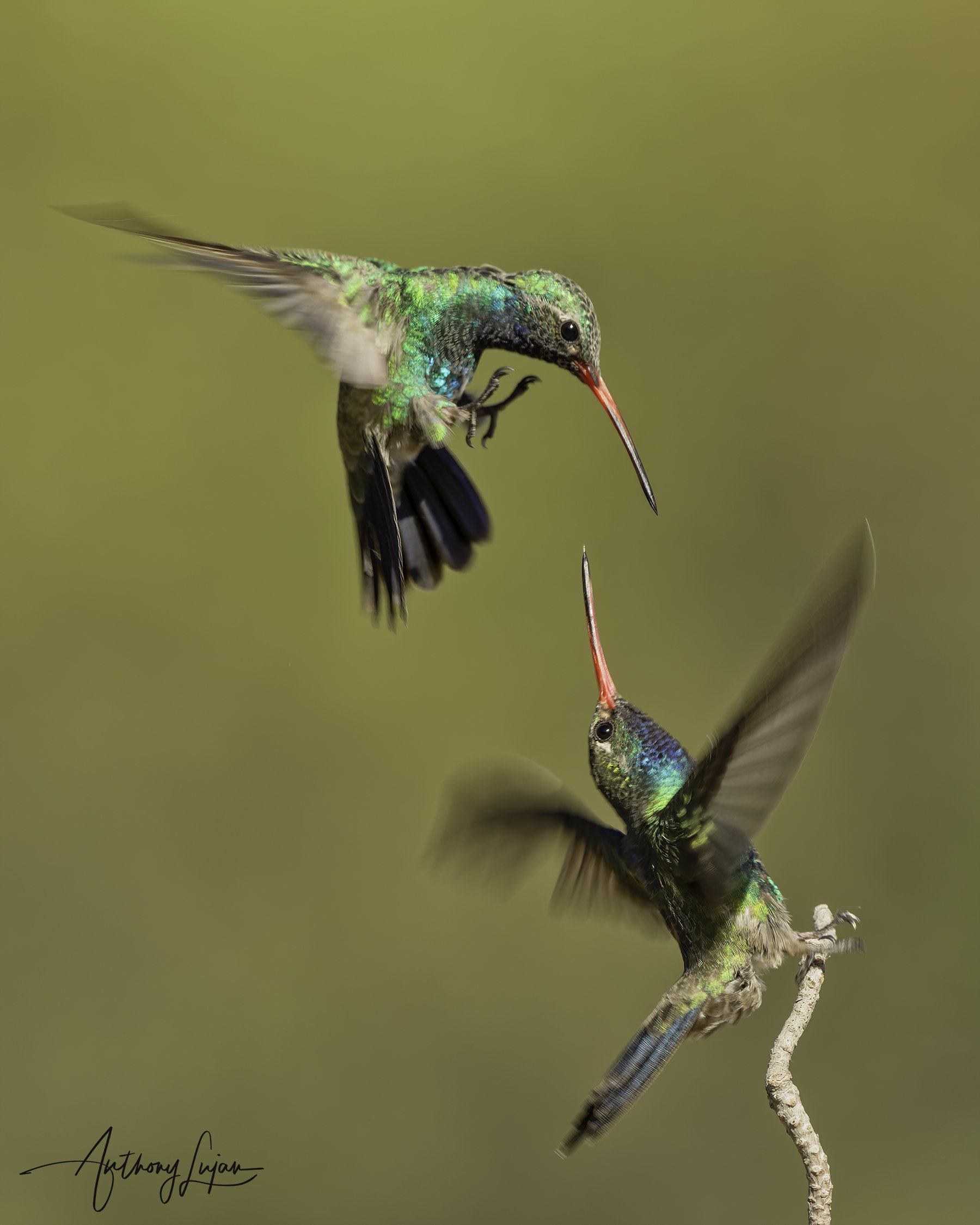
Adult males are tiny with a straight, mostly red bill tipped black. The crown is bright turquoise to blue-green, standing out against the rest of the head. The upperparts are metallic green, and the face is green with a darker cheek and a small pale spot behind the eye. The gorget is an iridescent purple-magenta patch on the throat that can appear dark in poor light but flashes bright when struck by sun. The breast and belly are greenish, sometimes with a slightly grayer or paler central belly. The tail is moderately forked and dark blue-black, often looking glossy in flight. In the field, males appear as small green hummingbirds with a turquoise crown, purple gorget, red-based bill, and a dark forked tail.
Female Description
Adult females have green upperparts like the male but lack the bright turquoise crown and bold purple gorget. The underparts are grayish to pale gray-buff, with the throat often slightly paler and the belly more uniformly grayish. The face shows a dark cheek and a pale stripe or spot behind the eye. The tail is forked and dark with pale or whitish tips on the outer feathers, forming white tail corners. Females therefore appear as small green-backed hummingbirds with a grayish underside, red-based bill, and a dark forked tail with pale corners.
Habitat & Behavior
Turquoise-crowned Hummingbirds inhabit arid thorn forest, tropical deciduous forest, gallery forest along streams, secondary forest, edges, and occasionally open pine–oak woodland and grassy slopes with scattered shrubs and trees. They forage at low to mid-levels, visiting tubular and brushy flowers on shrubs, trees, and vines, and also use flowering trees in rural areas and plantations. Like other hummingbirds, they supplement nectar with small insects and spiders gleaned from foliage or taken in short sallies. Birds may be territorial around rich flower patches but often follow a loose trap-line circuit among multiple nectar sources. The species is considered resident throughout its southern Mexican range, with only local movements tracking flowering and seasonal rainfall.
Breeding
The breeding season generally coincides with the regional rainy season and peaks in flowering, varying locally across Guerrero, Oaxaca, and Chiapas. Females build small, compact cup nests of plant fibers, soft down, and spiderweb, often camouflaged with lichens, on slender branches or forks. Clutches typically consist of two eggs, and the female alone incubates and raises the young. Exact incubation and fledging times are not well documented but likely fall near two weeks of incubation and about three weeks to fledging, similar to other small emeralds.
Population
The total number of mature individuals is unknown, but the Turquoise-crowned Hummingbird appears locally common in suitable dry and semi-humid forest and scrub within its limited range. Its ability to use secondary forest, edges, and semi-open agricultural landscapes helps maintain stable numbers. Because it is endemic to southern Mexico, extensive habitat loss or degradation in its key regions could impact the species, but current data support a stable overall trend.

Conservation
The Turquoise-crowned Hummingbird is classified as Least Concern, with a stable population and occurrence in multiple habitat types across southern Mexico. Conservation priorities include protecting tropical deciduous forest, thorn scrub, and gallery forest along the Pacific slope and maintaining mosaic landscapes with hedgerows, flowering trees, and patches of natural vegetation. Such measures support this endemic hummingbird and many other dry-forest and foothill species in the Sierra Madre del Sur.


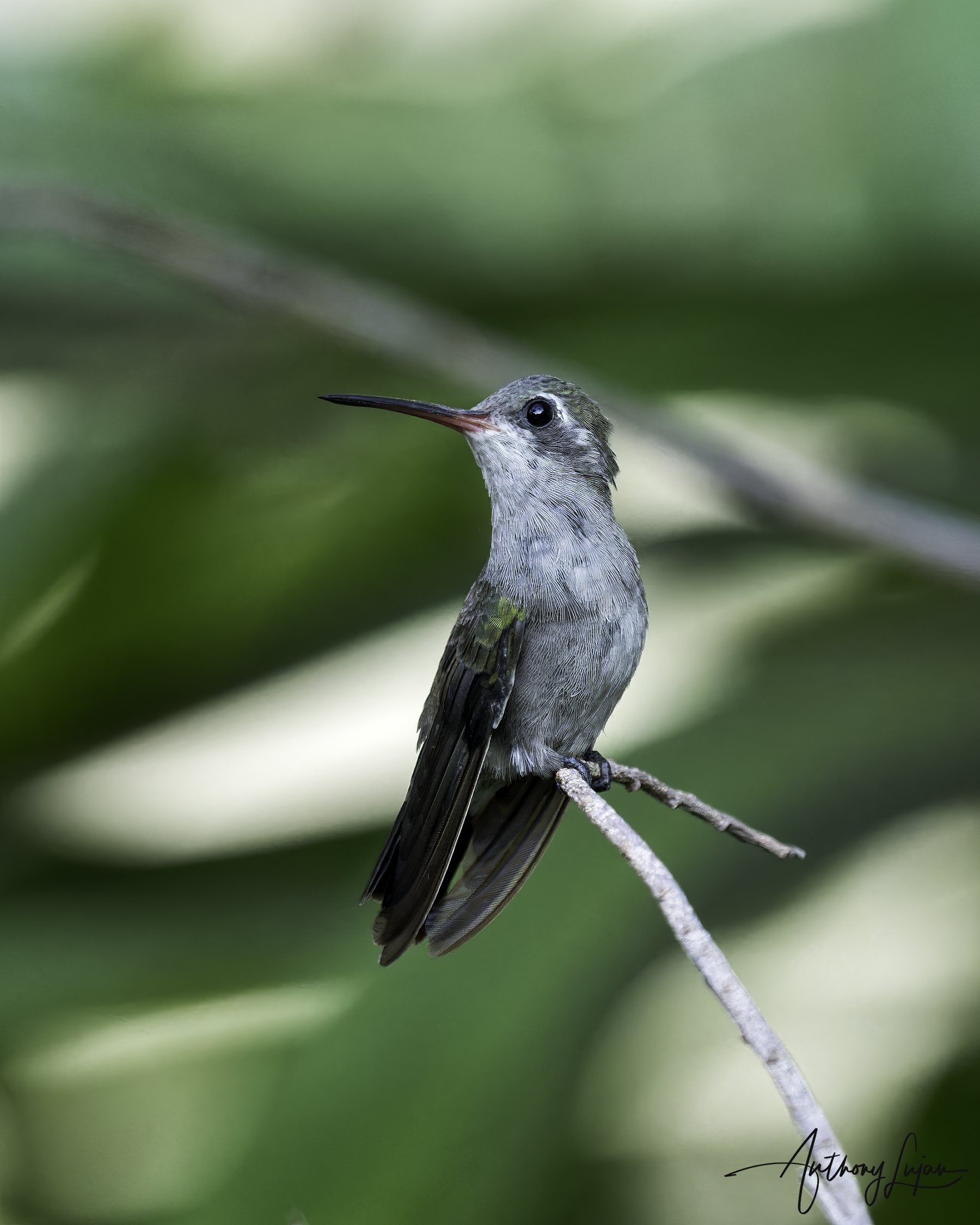
Checkout Anthony’s playlist of this species! Click the top right dropdown to see all the videos.
Related species in the Cynanthus genus (6 species total):


Please note: The content provided in this article reflects Anthony’s personal experience and photographic approach. Results can vary depending on light, weather, location, equipment, subject behavior, and field conditions.