
Tufted Coquette
Scientific name: Lophornis ornatus
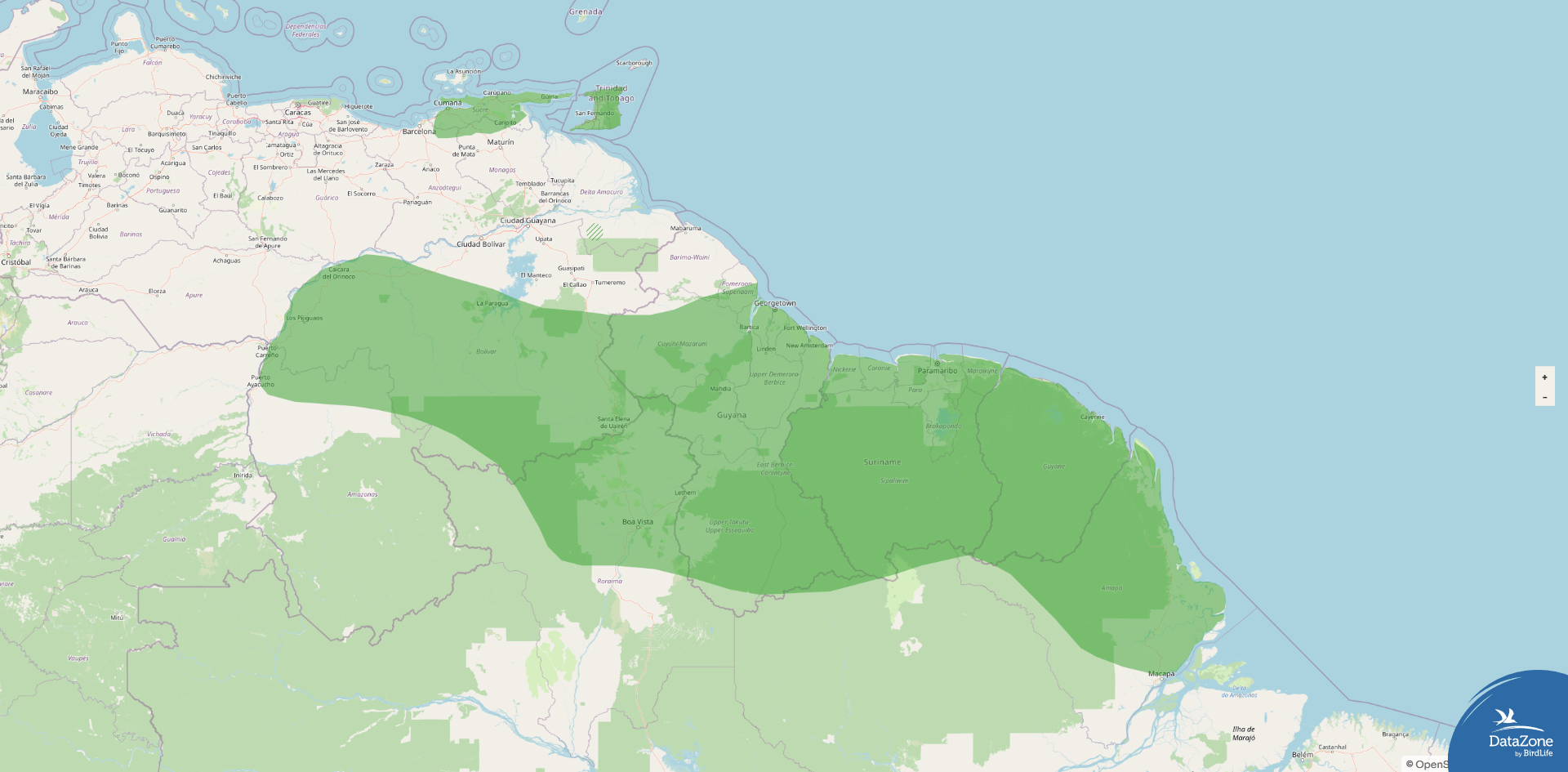
The Tufted Coquette is a tiny, ornate hummingbird of northeastern South America, occurring from eastern Venezuela and Trinidad through the Guianas into northern Brazil. The number of mature individuals is unknown, its population trend is considered Stable, and it is assessed as Least Concern.
At a Glance
Family: Trochilidae (hummingbirds)
Clade: Lesbiini – coquettes
Genus: Lophornis — very small, crested hummingbirds with elaborate head and throat plumes
Range: Northeastern South America, including eastern Venezuela, Trinidad, the Guianas, and northern Brazil
Habitat: Open country and humid forest edges, gardens, thickets, plantations, and savannas with abundant flowering plants
Elevation: Primarily lowlands and foothills within its northeastern South American range
Length: About 6.5–7 cm (2.6–2.8 in)
Weight: Around 2.3–2.8 g (0.08–0.10 oz)
Number of mature individuals: Unknown
Population trend: Stable
Status: Least Concern (IUCN)
Name Origin
The genus name Lophornis comes from Greek words meaning “crest” and “bird,” referring to the prominent crests typical of coquettes. The species name ornatus means “ornate” or “adorned,” a direct nod to this hummingbird’s richly decorated head and plumage. The English name “Tufted Coquette” highlights the male’s distinctive tufted crest and overall showy appearance.
Subspecies & Distribution
Tufted Coquette is monotypic, with no recognized subspecies.
It occurs in northeastern South America, breeding in eastern Venezuela, Trinidad, the Guianas, and northern Brazil. Within this broad but regional range, it inhabits a mix of open and semi-open habitats, including humid forest edges, thickets, gardens, plantations, and savannas where flowering shrubs and trees are common. The species is generally uncommon but can be locally regular where nectar resources are abundant.
Ledged
Green Resident
Species Overview
The Tufted Coquette is one of the smallest hummingbirds in its range, often compared in size to a large bee, yet it is highly conspicuous when males display their rufous crest and colorful plumage. It thrives in mosaics of forest edge, open country, and human-modified landscapes like gardens and plantations, as long as flowering plants are plentiful. Its wide but regional distribution and use of varied semi-open habitats contribute to a stable population and a Least Concern conservation status.
Male Description
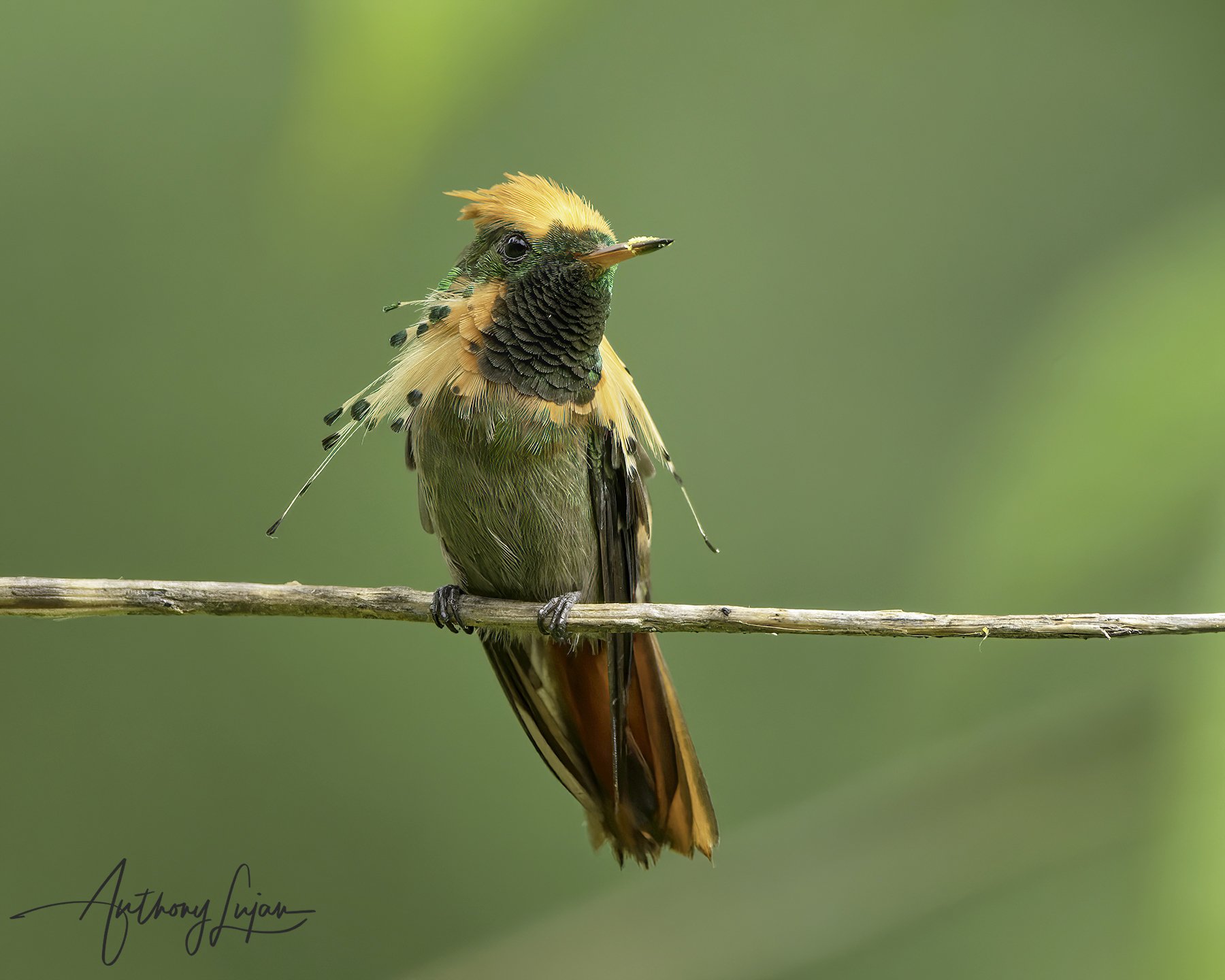
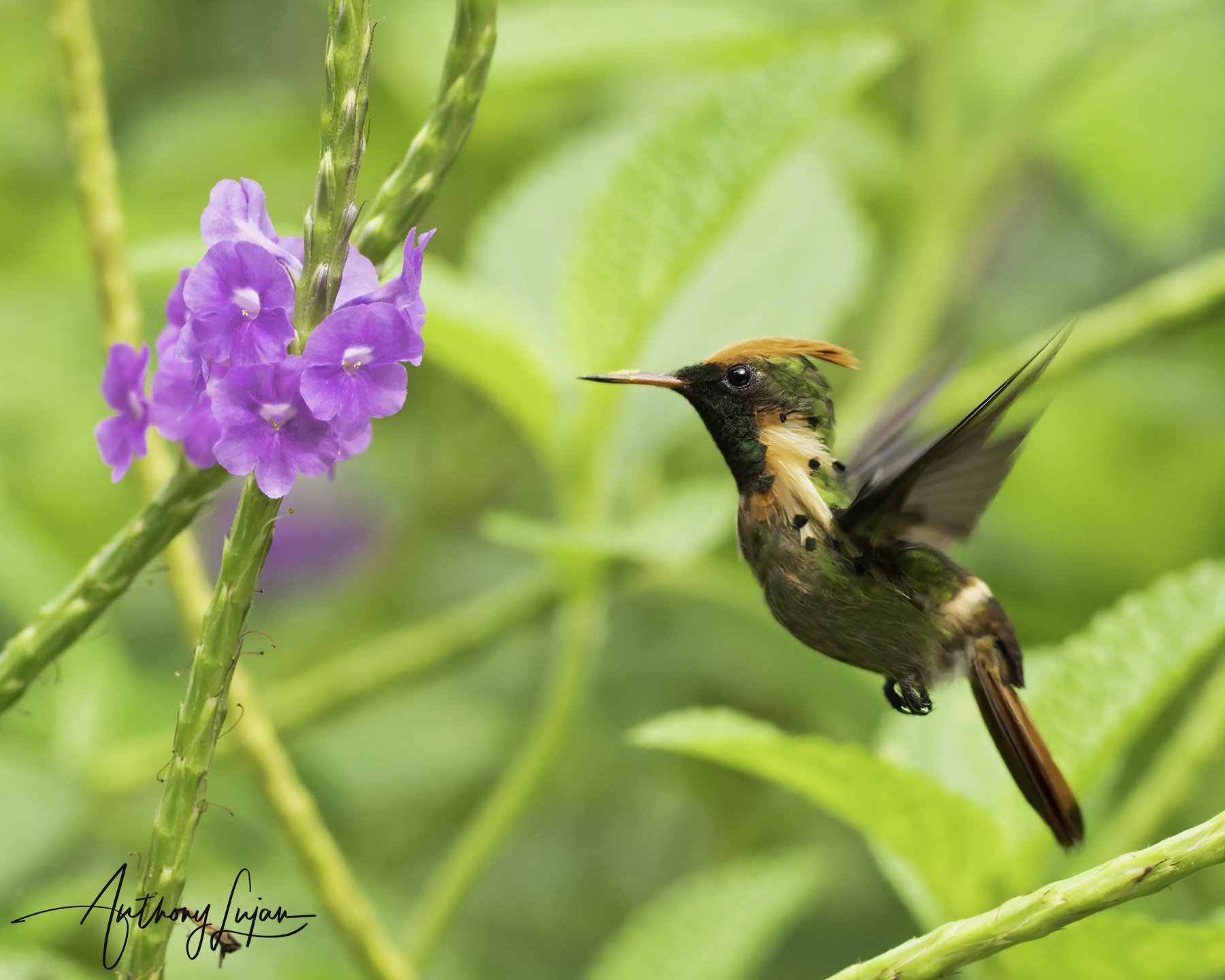
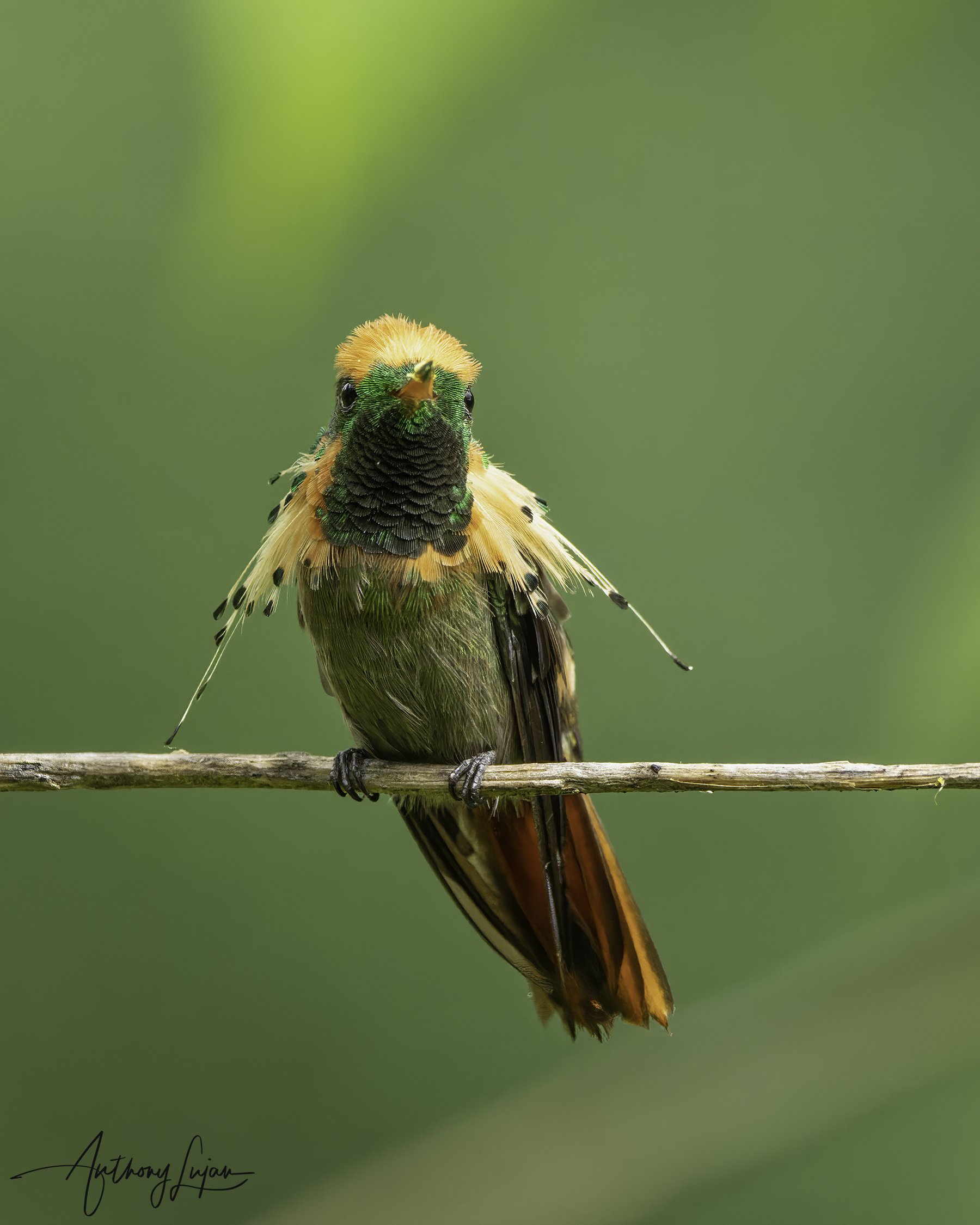
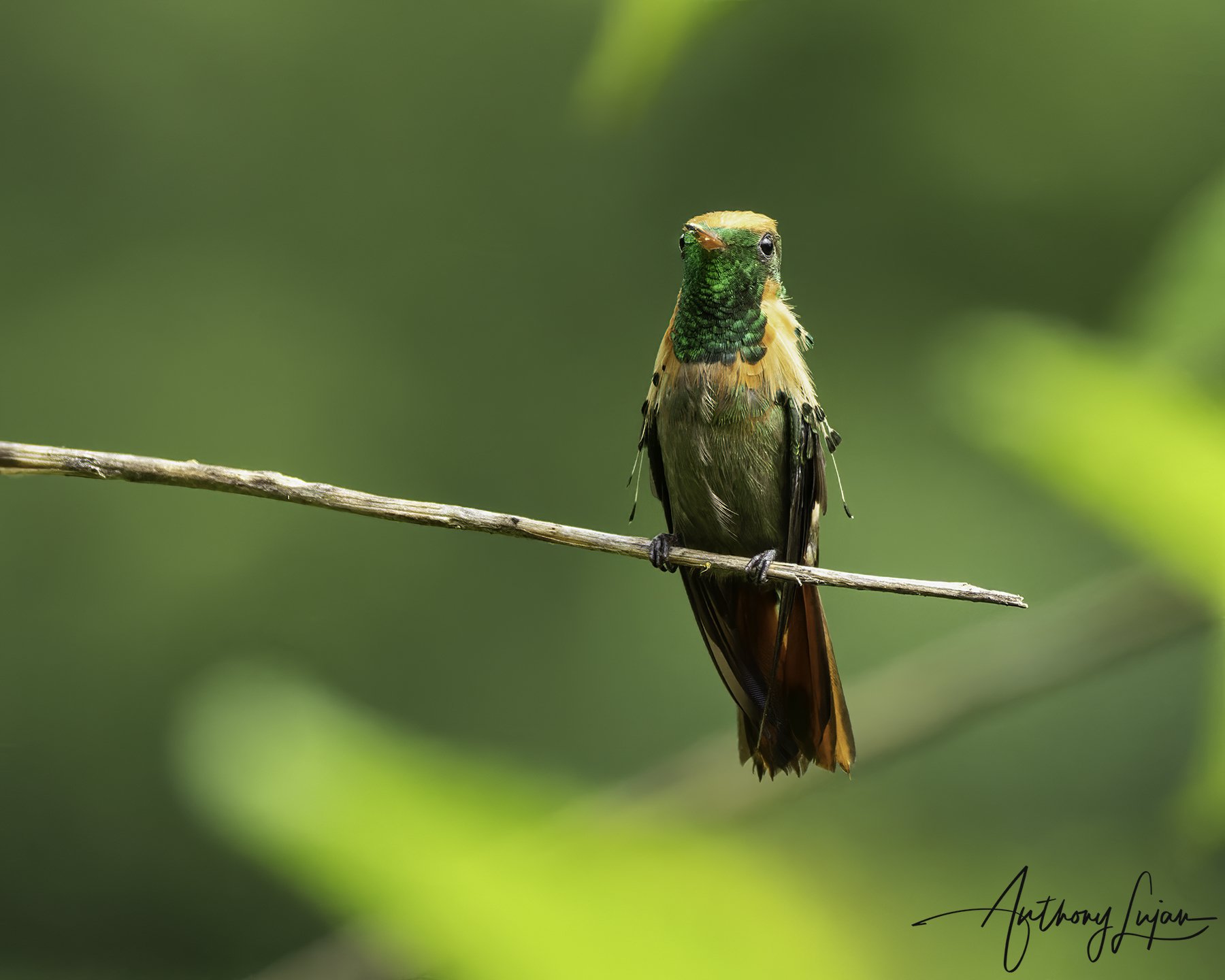
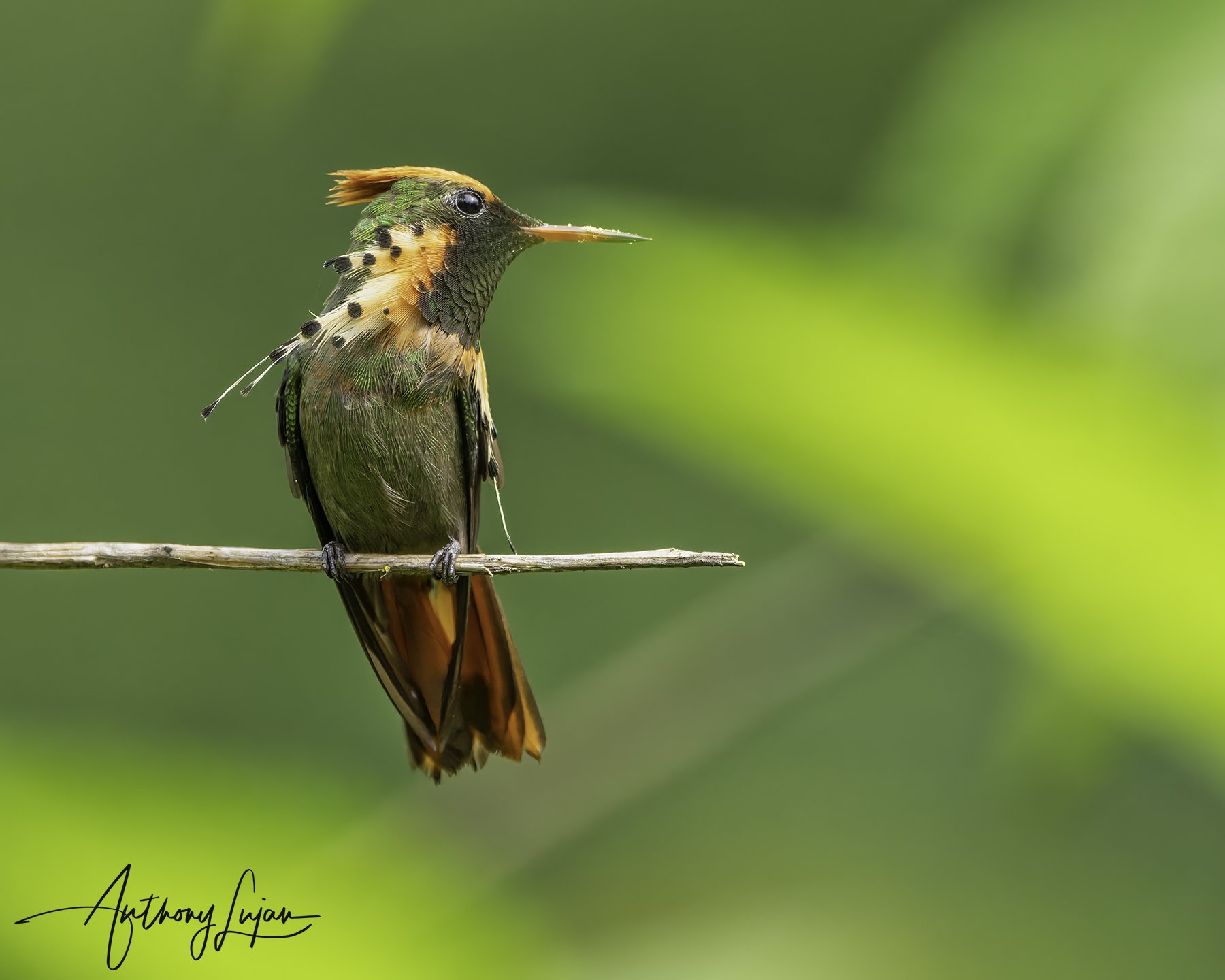
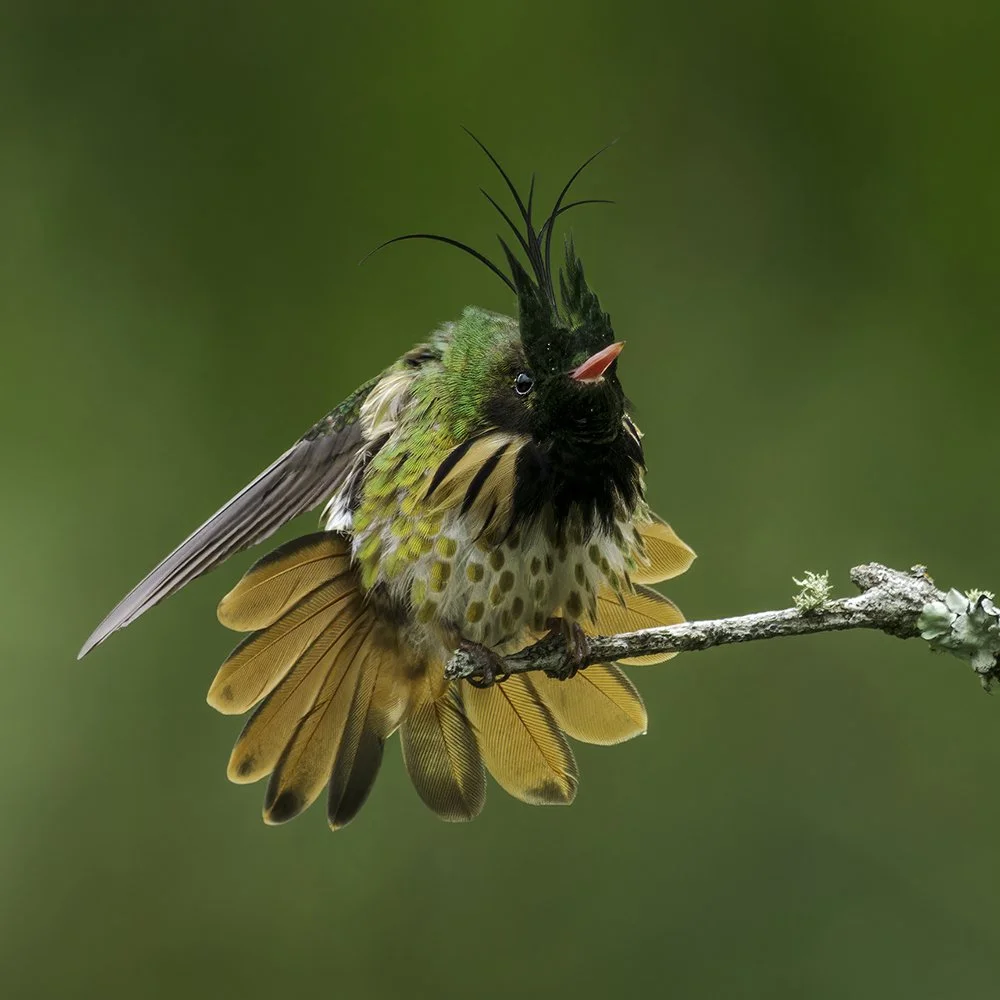
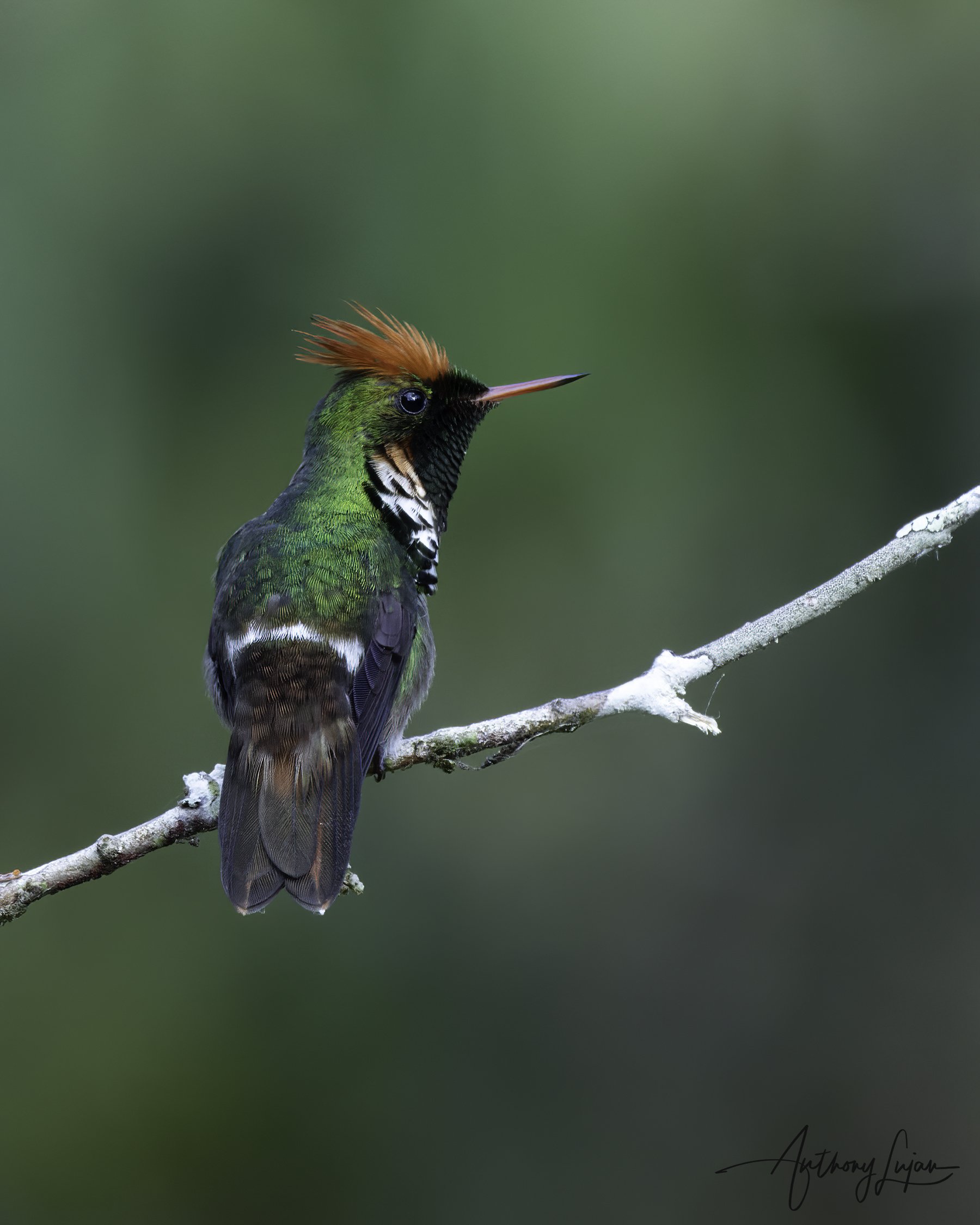
Adult males are minute but striking, with a short, straight, black-tipped red bill and an ornate, rufous head crest that can be raised into a distinctive tuft. The back is coppery green with a prominent whitish rump band that stands out in flight, and the underparts are mostly green with decorative, spiky flank plumes that enhance the coquette look. The tail is mostly rufous with green edges and tips, relatively short and rounded, adding to the tiny, compact silhouette. In good light, the male flashes a combination of rich rufous tones, bright coppery green, and crisp white accents that make him unmistakable.
Female Description
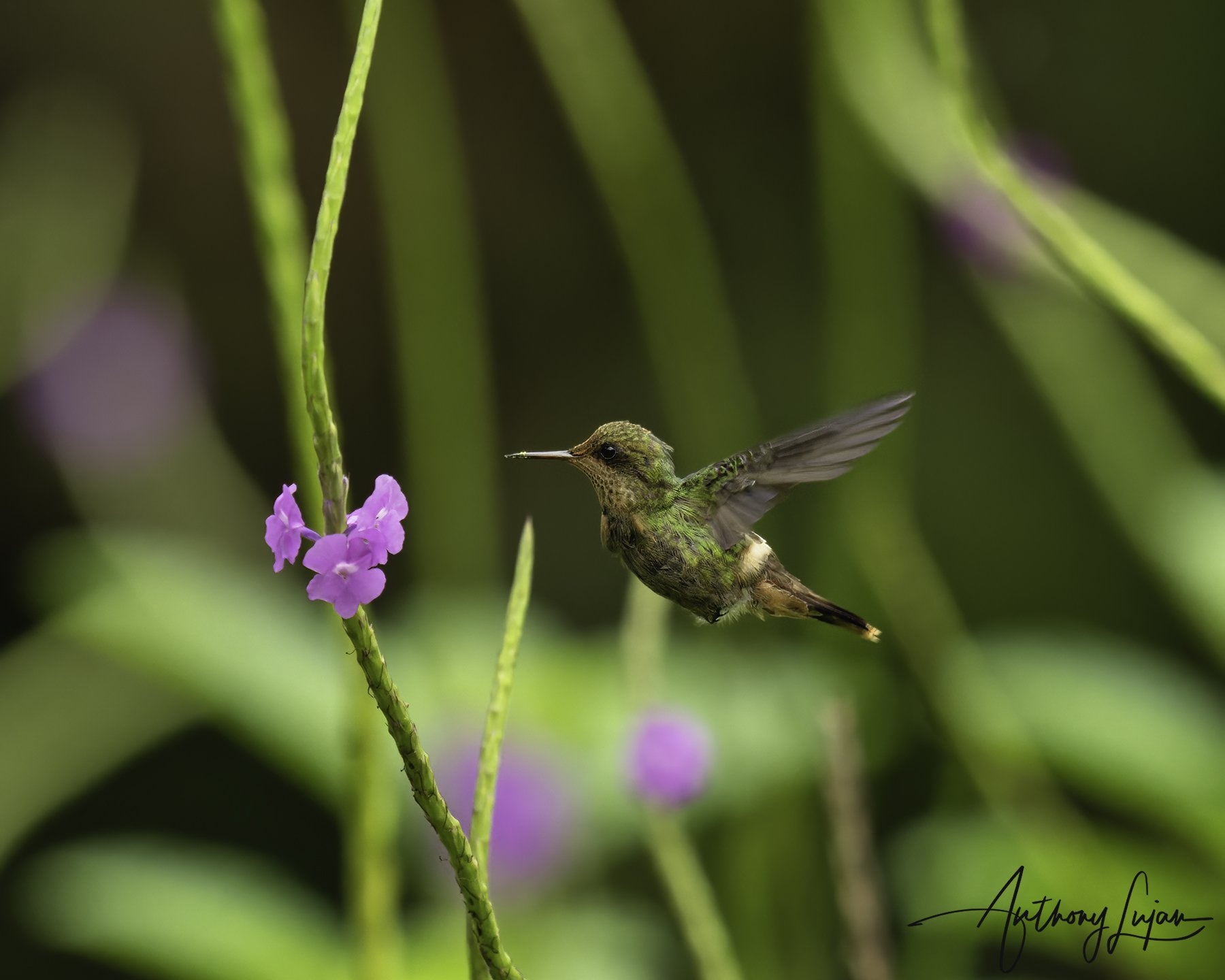
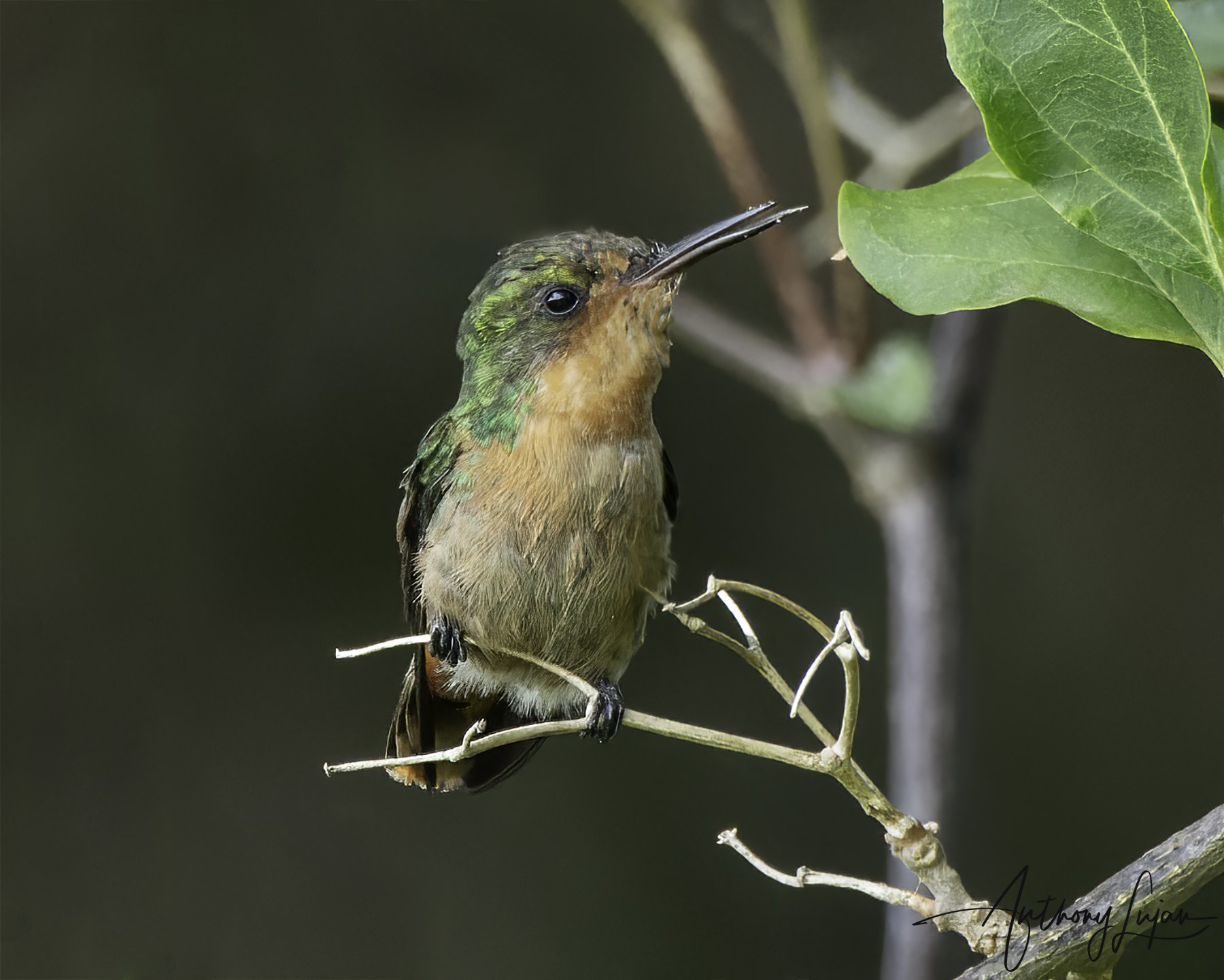
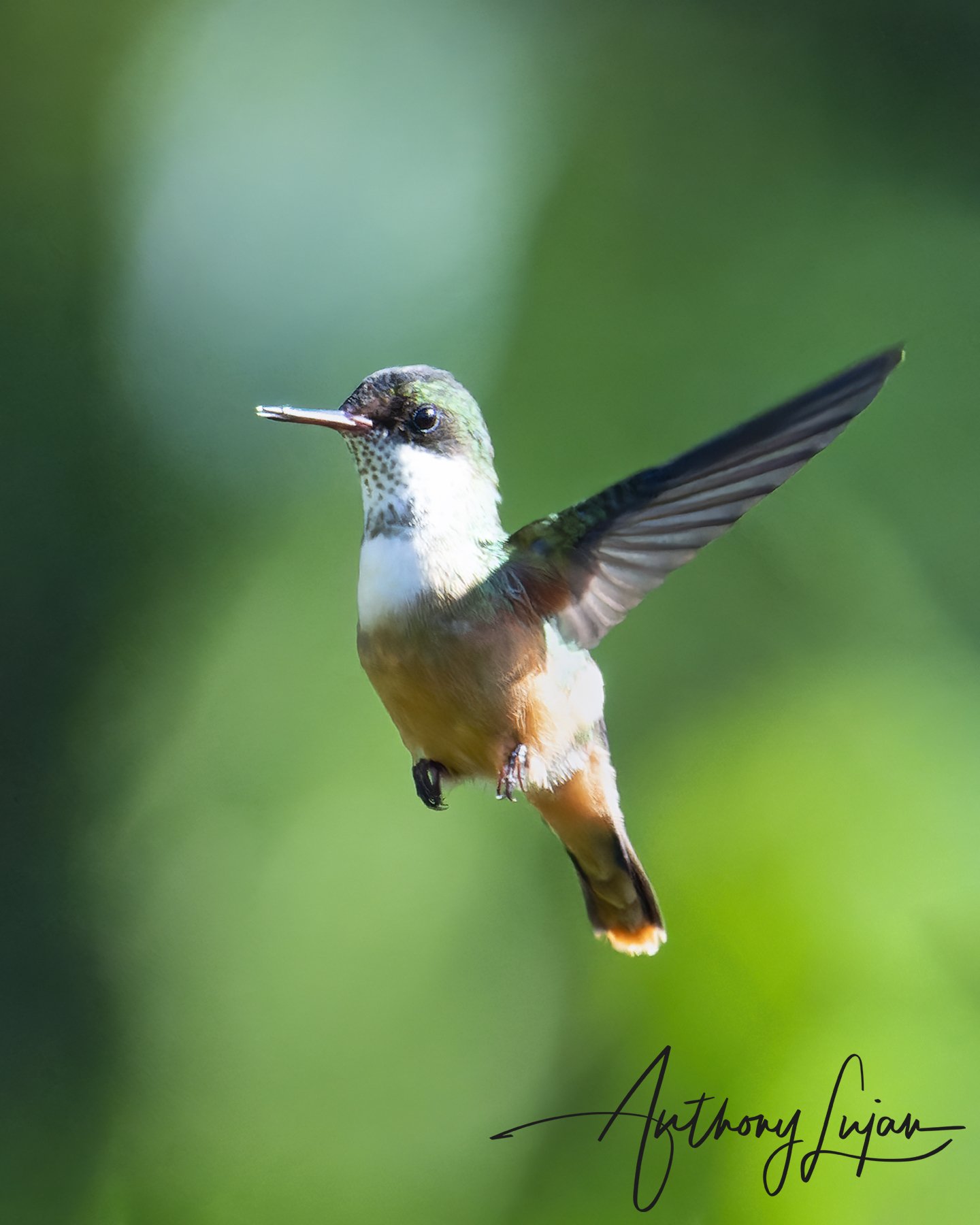
Females lack the rufous crest and elaborate flank plumes of the male, giving them a neater, more understated appearance. They are green above with a similar whitish rump band, and the underparts are whitish to buff with green spotting or scaling, especially on the sides. The tail is rufous with green edges and tips but appears slightly longer in proportion to body size compared to males, helping balance the slimmer head profile. Overall, females resemble very small, tidy green hummingbirds, best identified by size, rump pattern, and association with males or known Tufted Coquette sites.
Habitat & Behavior
Tufted Coquettes use a wide variety of semi-open habitats, including open country, humid forest edges, gardens, thickets, plantations, and savannas across northeastern South America. They often forage at low to mid-levels, hovering at small flowers along edges, in shrubby patches, and around ornamental plantings and flowering trees. Their diet consists mainly of nectar, supplemented with tiny insects taken in flight or gleaned from foliage. Birds are usually seen singly, and because of their very small size and fast, hovering movements, they are sometimes mistaken for large bees as they zip between blossoms.
Population
The total number of mature Tufted Coquettes is currently unknown, but within their northeastern South American range they are considered an uncommon yet widespread species. They benefit from the availability of flowering plants in both natural and human-modified habitats, which helps support a Stable population trend. Local abundance can vary with flowering conditions, and they may show local or seasonal movements in response to changes in nectar availability.

Conservation
Tufted Coquette is listed as Least Concern, reflecting its relatively wide distribution, use of diverse semi-open habitats, and currently stable population. While deforestation and intensive land-use change can reduce some forest-edge and thicket habitats, the species’ ability to use gardens, plantations, and other modified landscapes provides resilience. Maintaining diverse, flower-rich vegetation in rural and peri-urban areas, preserving forest edges and riparian strips, and safeguarding remaining natural habitats in northeastern South America will help ensure this tiny, ornate hummingbird continues to thrive.
Checkout Anthony’s playlist of this species! Click the top right dropdown to see all the videos.
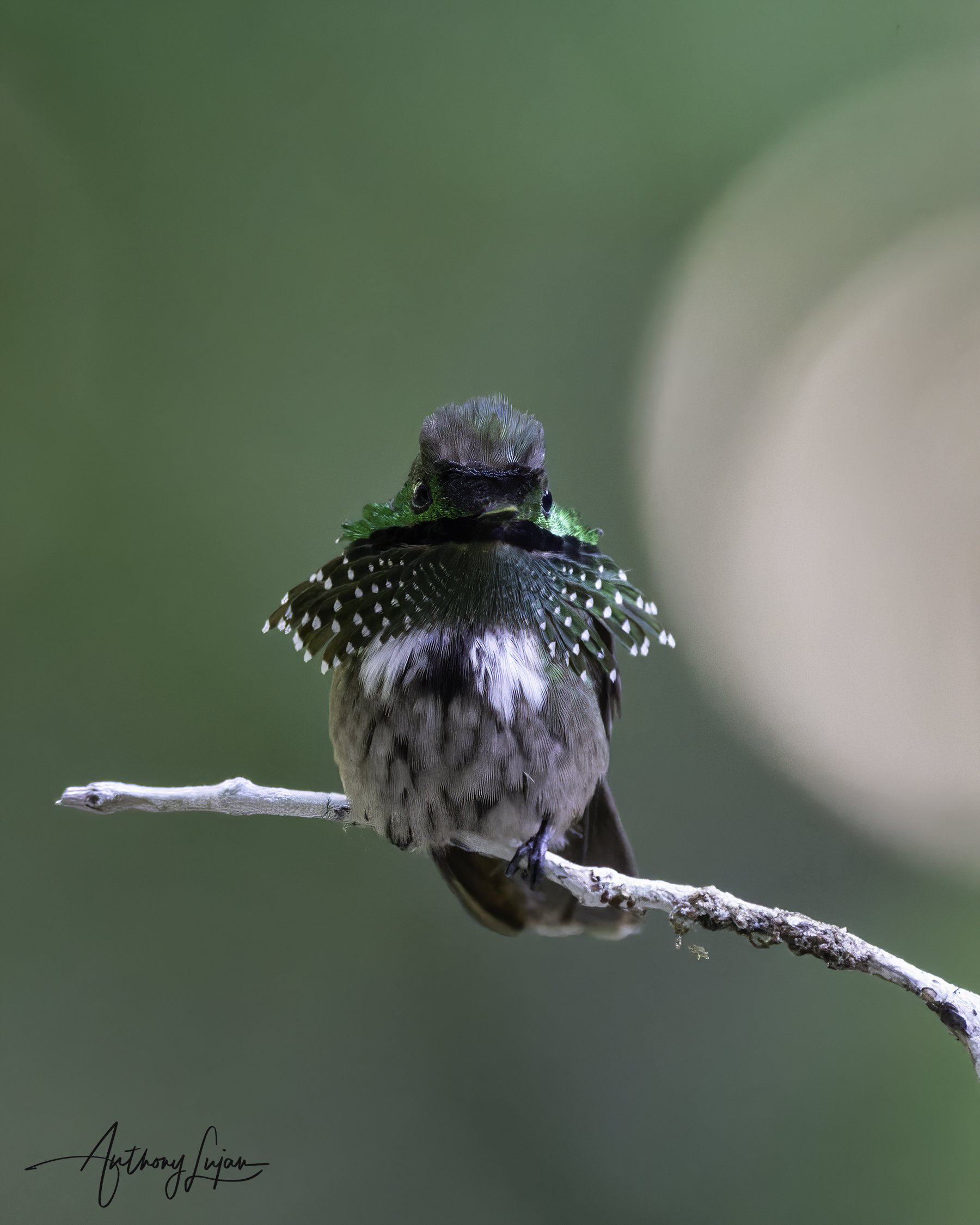
Related species in the Lophornis genus (11 species total):


Please note: The content provided in this article reflects Anthony’s personal experience and photographic approach. Results can vary depending on light, weather, location, equipment, subject behavior, and field conditions.