
Tyrian Metaltail
Scientific name: Metallura tyrianthina
The Tyrian Metaltail is a widespread high-Andean hummingbird occurring from Venezuela south through Colombia, Ecuador, Peru, and into Bolivia. The number of mature individuals is unknown, the population is believed to be decreasing, it is an altitudinal migrant, and it is currently listed as Least Concern, with seven recognized subspecies.
At a Glance
Family: Trochilidae (hummingbirds)
Clade: Lesbiini – “coquettes” of the Andean highlands
Genus group: Metallura — high-elevation “metaltails” of the northern and central Andes
Range: Andes and associated ranges from northern Venezuela and northern Colombia south through Ecuador and Peru to central Bolivia.
Habitat: Humid open landscapes including secondary forest, cloud forest, mossy treeline scrub, elfin forest, and brushy edges of páramo.
Elevation: Mostly between about 1,500–4,200 m (4,900–13,800 ft), most common around 2,500–3,300 m, locally as low as ~600–1,000 m in some coastal or foothill ranges.
Length: Around 8–9 cm (3.1–3.5 in).
Weight: Approximately 3.5–4.5 g.
Number of mature individuals: Unknown
Population trend: Decreasing
Status: Least Concern (IUCN)
Name Origin
The genus name Metallura refers to the metallic sheen and colorful tails typical of metaltails. The species name tyrianthina alludes to “Tyrian purple,” a famous, vivid purple dye, reflecting the rich, iridescent tones of this hummingbird’s plumage and tail. The English name “Tyrian Metaltail” emphasizes both the jewel-like Tyrian colors and the metallic tail characteristic of the genus.
Subspecies & Distribution
Seven subspecies:
Metallura tyrianthina districta
Distribution: Santa Marta Mountains (Sierra Nevada de Santa Marta) and Serranía del Perijá of northern Colombia and adjacent northwest Venezuela, mainly in humid montane scrub, elfin forest, and páramo edges.Metallura tyrianthina chloropogon
Distribution: Venezuelan Coastal Range (roughly Aragua to Miranda and neighboring ranges), inhabiting humid montane forest, cloud forest, and treeline scrub.Metallura tyrianthina oreopola
Distribution: Andes of western Venezuela (Trujillo, Mérida, northern Táchira), occurring in cloud forest, elfin forest, and mossy scrub near treeline.Metallura tyrianthina tyrianthina
Distribution: Andes of Colombia, eastern and southern Ecuador, and extreme northern Peru (Piura and nearby regions), found along all three Colombian cordilleras and south through humid montane forest and scrub toward northern Peru.Metallura tyrianthina quitensis
Distribution: Northwestern Ecuador, mostly in Andean slopes and ridges where cloud forest and elfin forest meet open scrub.Metallura tyrianthina septentrionalis
Distribution: West slope of the Andes in northern Peru (Cajamarca south to Lima), occupying brushy slopes, forest edges, and páramo-like scrub west of the Marañón River.Metallura tyrianthina smaragdinicollis
Distribution: East slope of the Andes from northern Peru south into central Bolivia, inhabiting high-elevation cloud forest, elfin forest margins, and shrubby páramo-like zones.
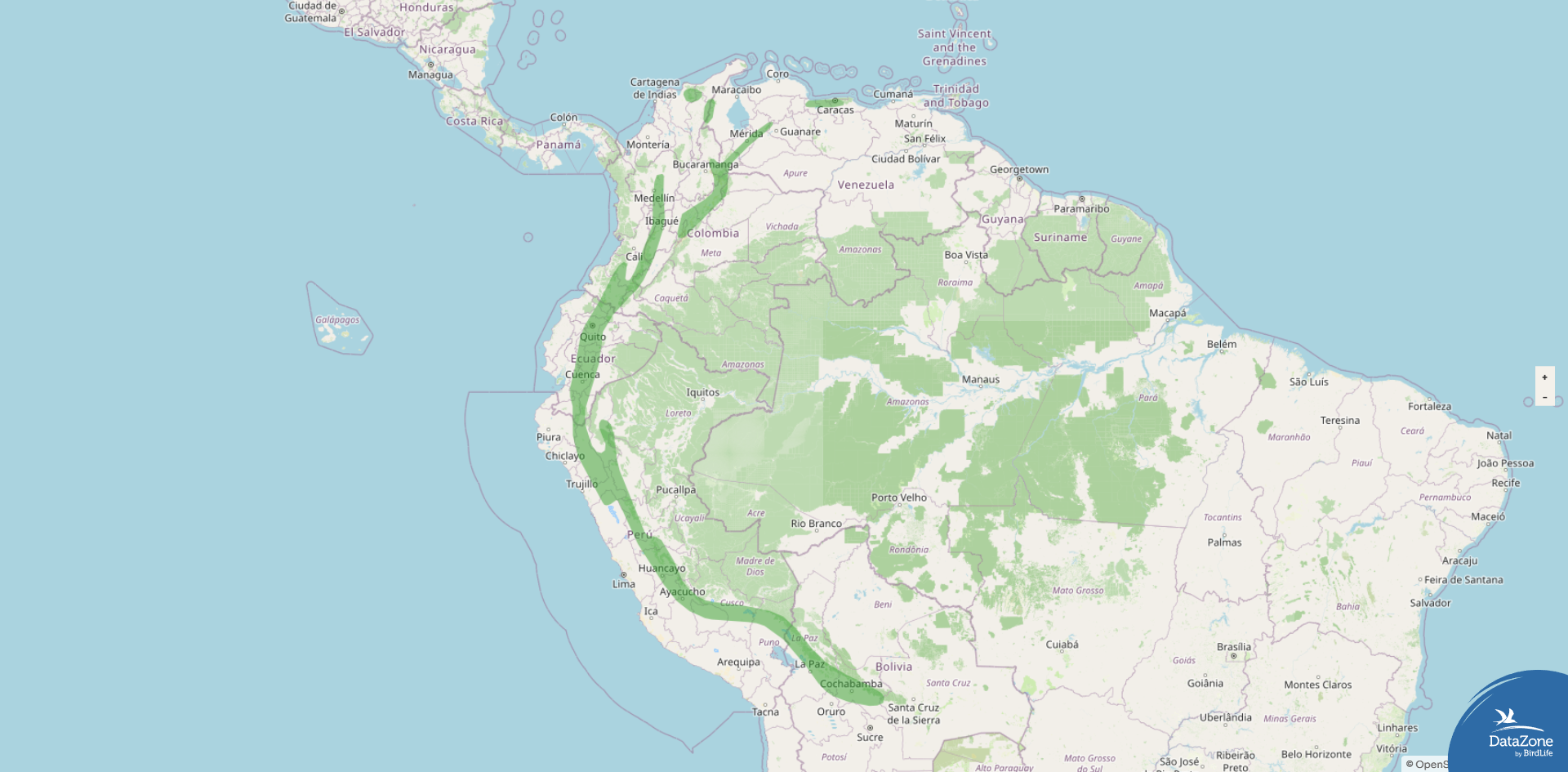
Legend
Green Resident
Species Overview
The Tyrian Metaltail is a small, short-billed hummingbird that thrives in cool, humid highland environments across much of the northern and central Andes. It frequents forest edges, clearings, treeline scrub, and shrubby páramo, often perching conspicuously on exposed twigs or shrubs. Despite its broad range and local commonness in many areas, pressures on high-Andean forests and páramo are contributing to a gradual overall decline.
Male Description
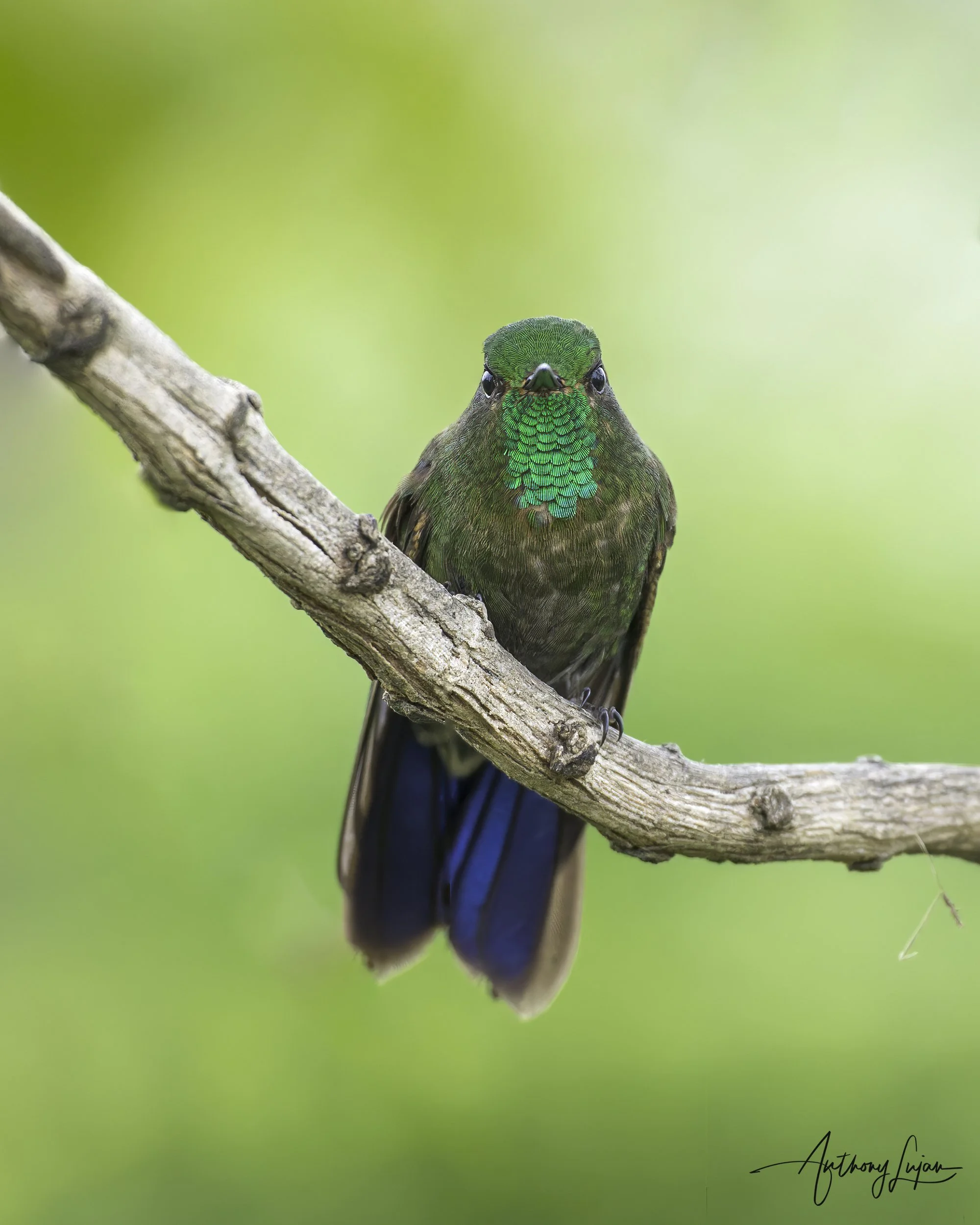
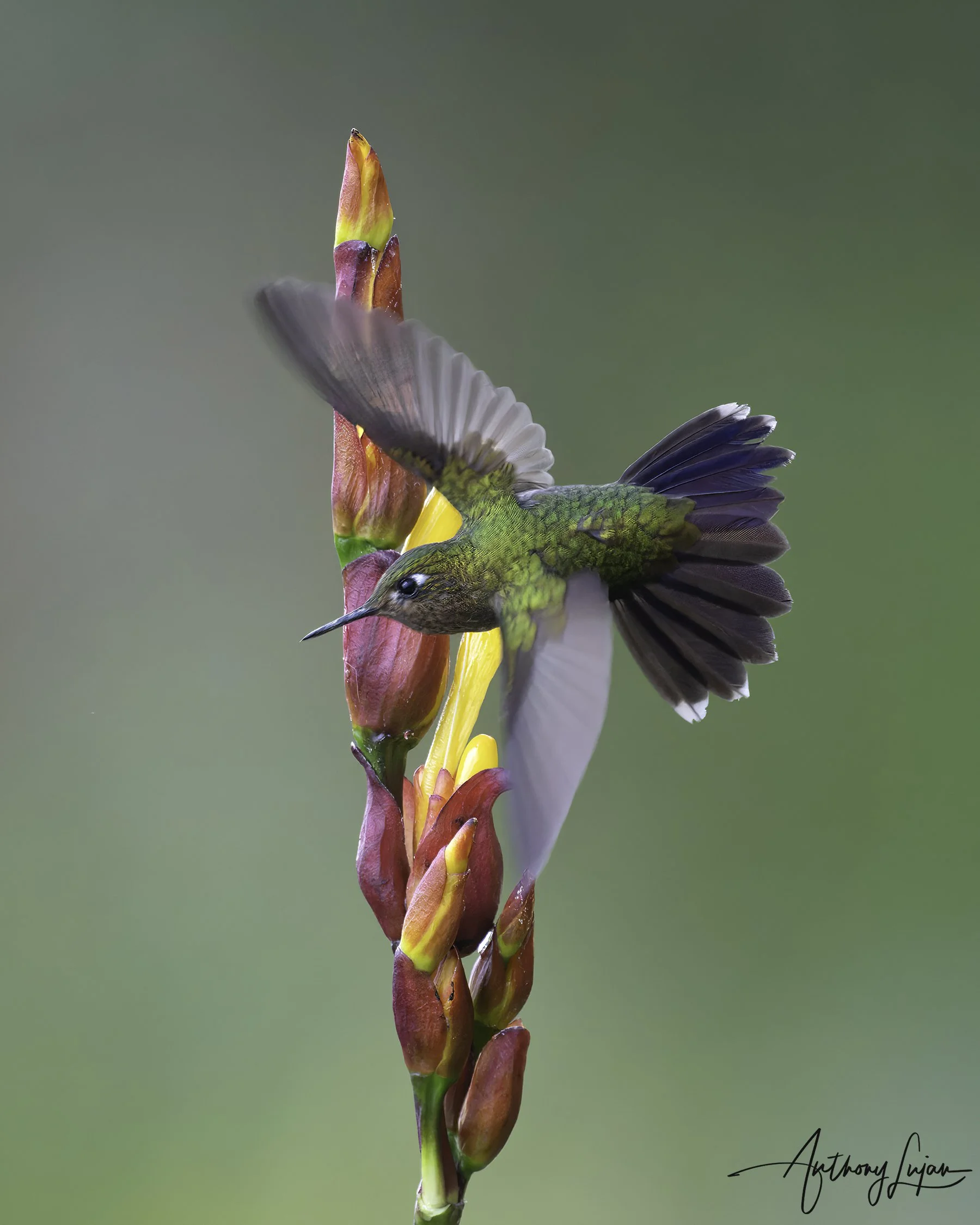
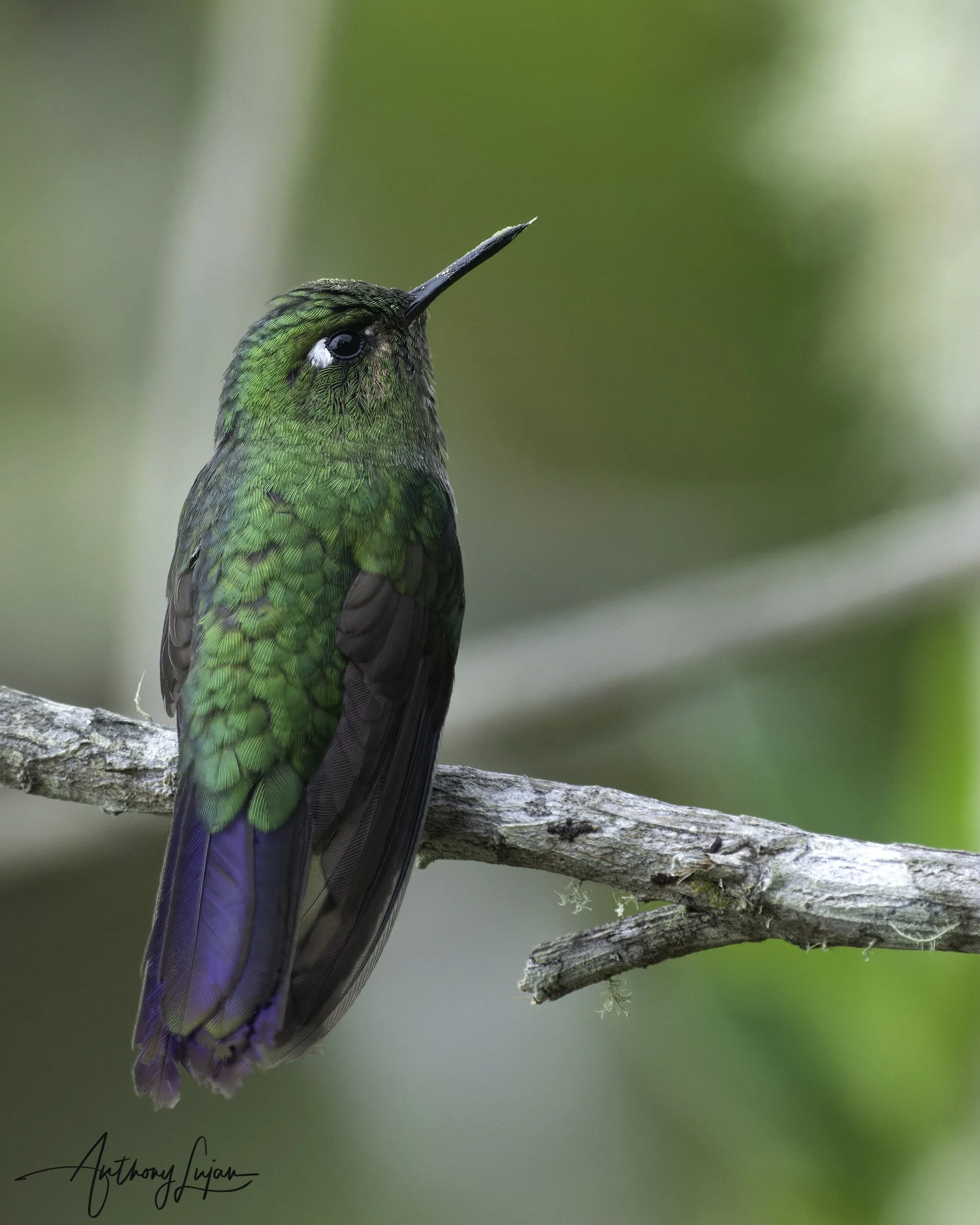
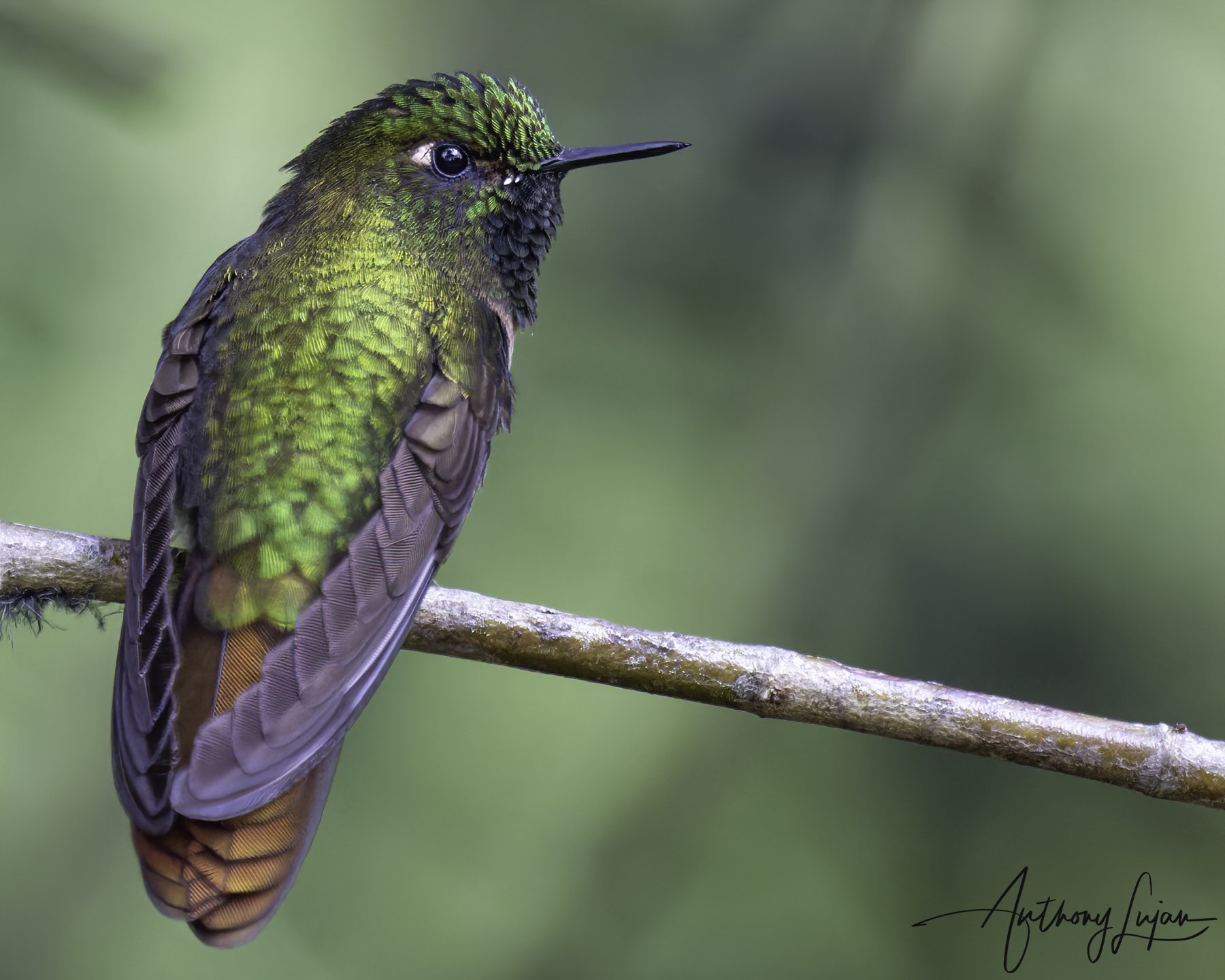
Adult males are dark coppery-green above with a short, straight black bill. The crown, back, and rump are iridescent green to bronzy-green, often with coppery tones. The throat typically bears an iridescent, emerald to greenish gorget that can glow strongly in good light. The underparts are mostly green with paler or whitish edging on the belly feathers, giving a slightly scaled look. The tail is metallic and varies by subspecies: in the nominate it is shiny coppery or bronze; in others (such as districta and some southern forms) it may appear purplish, violet, or purple-blue, sometimes with green highlights. In the field, males appear as compact, mostly green hummingbirds with a glowing green throat and a conspicuous, metallic tail that flashes copper or violet as they move.
Female Description
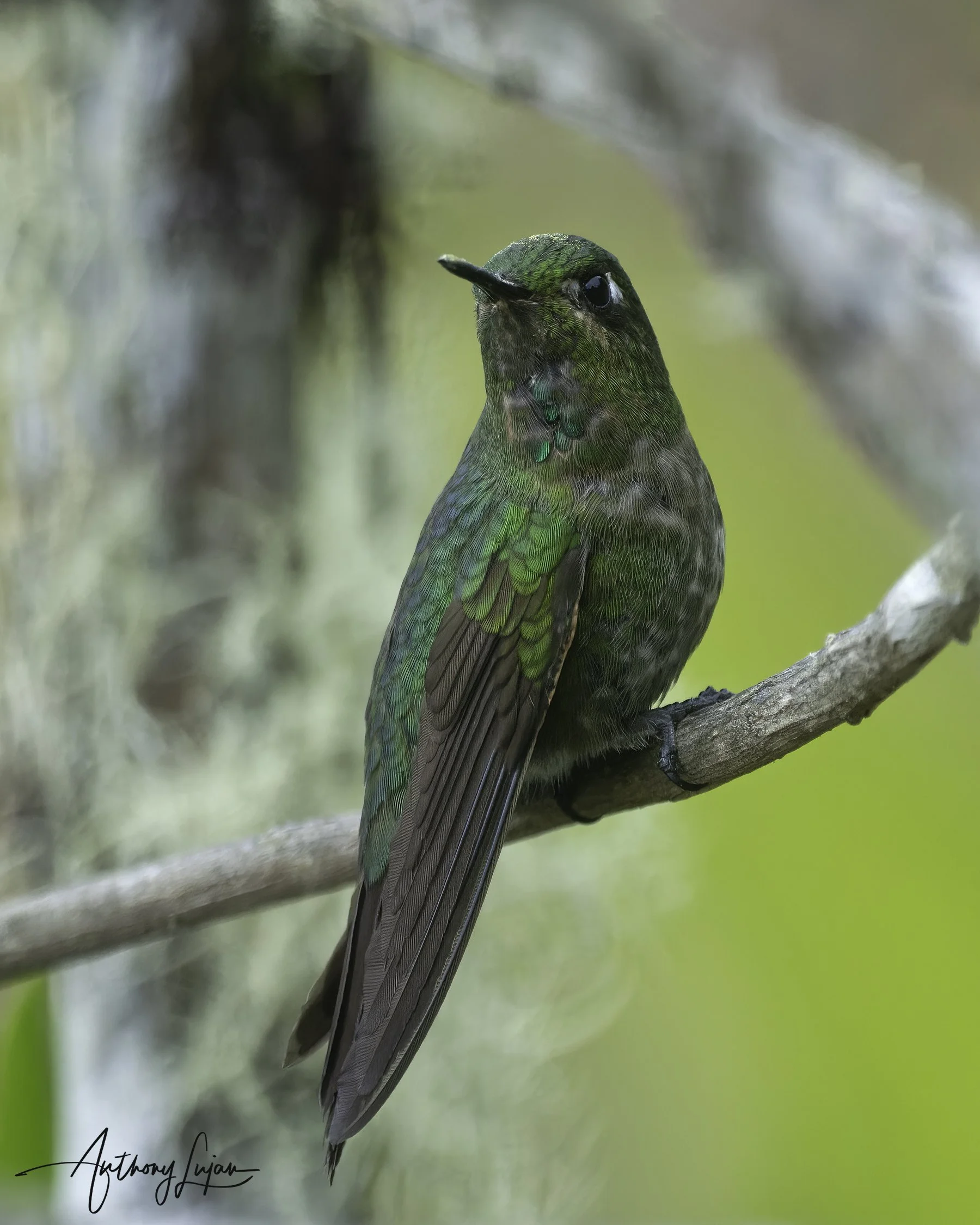
Adult females closely resemble males but are generally duller and more patterned below. The upperparts are dark coppery-green, while the cheeks, throat, and upper breast are tawny to buff with scattered dark or greenish spots. The rest of the underparts are pale whitish to buff, finely mottled or stippled with brownish-green, especially on the sides. The tail is similar in structure to the male’s but can be slightly less vivid, still showing metallic bronze, copper, or purplish tones with paler or grayish tips on the outer feathers. Females thus appear as small, green-backed hummingbirds with warm, spotted throats, pale bellies, and a bright but slightly less intense metallic tail.
Habitat & Behavior
Tyrian Metaltails inhabit humid, open to semi-open montane habitats including secondary forest, cloud forest, mossy treeline scrub, elfin forest, and brushy páramo edges. They feed on nectar from a wide variety of flowers, especially small shrubs and herbs, and also take small insects caught in short sallies from exposed perches. The species is an altitudinal migrant: individuals shift up and down the elevation gradient in response to seasonal changes in flowering, occasionally descending to lower montane or foothill zones outside the breeding season. Males may defend rich flowering patches and perform short, hovering displays around favored perches.
Population
The total number of mature individuals is unknown, but the Tyrian Metaltail is one of the more widespread metaltails, occurring across multiple Andean countries and mountain systems. It is often fairly common where suitable cloud forest and treeline scrub remain intact, yet ongoing deforestation, burning, and conversion of páramo and high-Andean forest to pasture and agriculture are reducing habitat quality and extent. This combination of broad range but persistent habitat loss underlies the assessment of a decreasing population trend.

Conservation
The Tyrian Metaltail is listed as Least Concern because of its large overall range and presence in many parts of the northern and central Andes, including within reserves and national parks. However, land-use changes such as burning of páramo, expansion of cattle pasture, agriculture, and infrastructure development continue to erode its habitats near and above treeline. Protecting cloud forest and elfin forest belts, maintaining natural shrub cover in páramo, and reducing uncontrolled burning will help secure this species, along with other high-Andean hummingbirds and endemics.
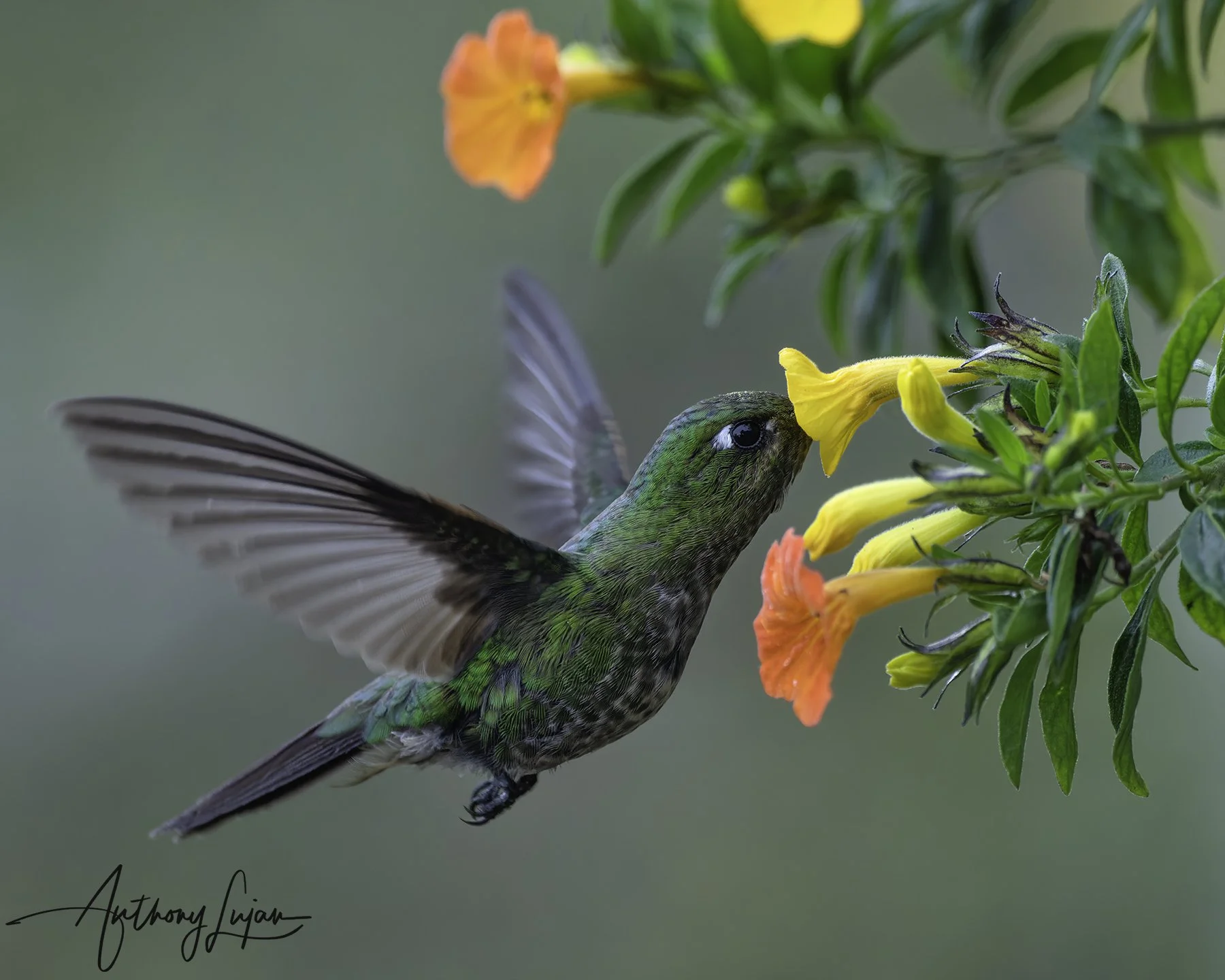
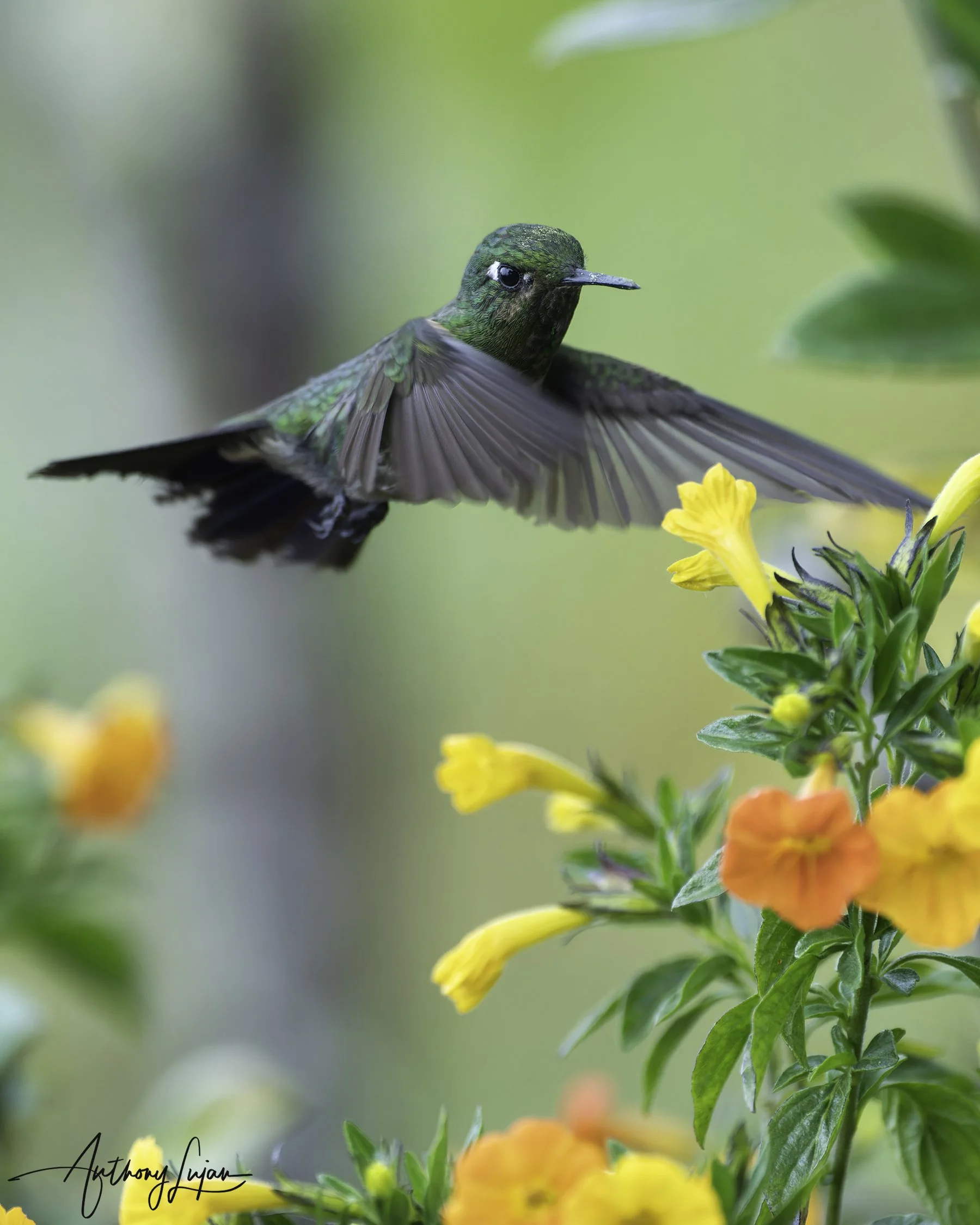
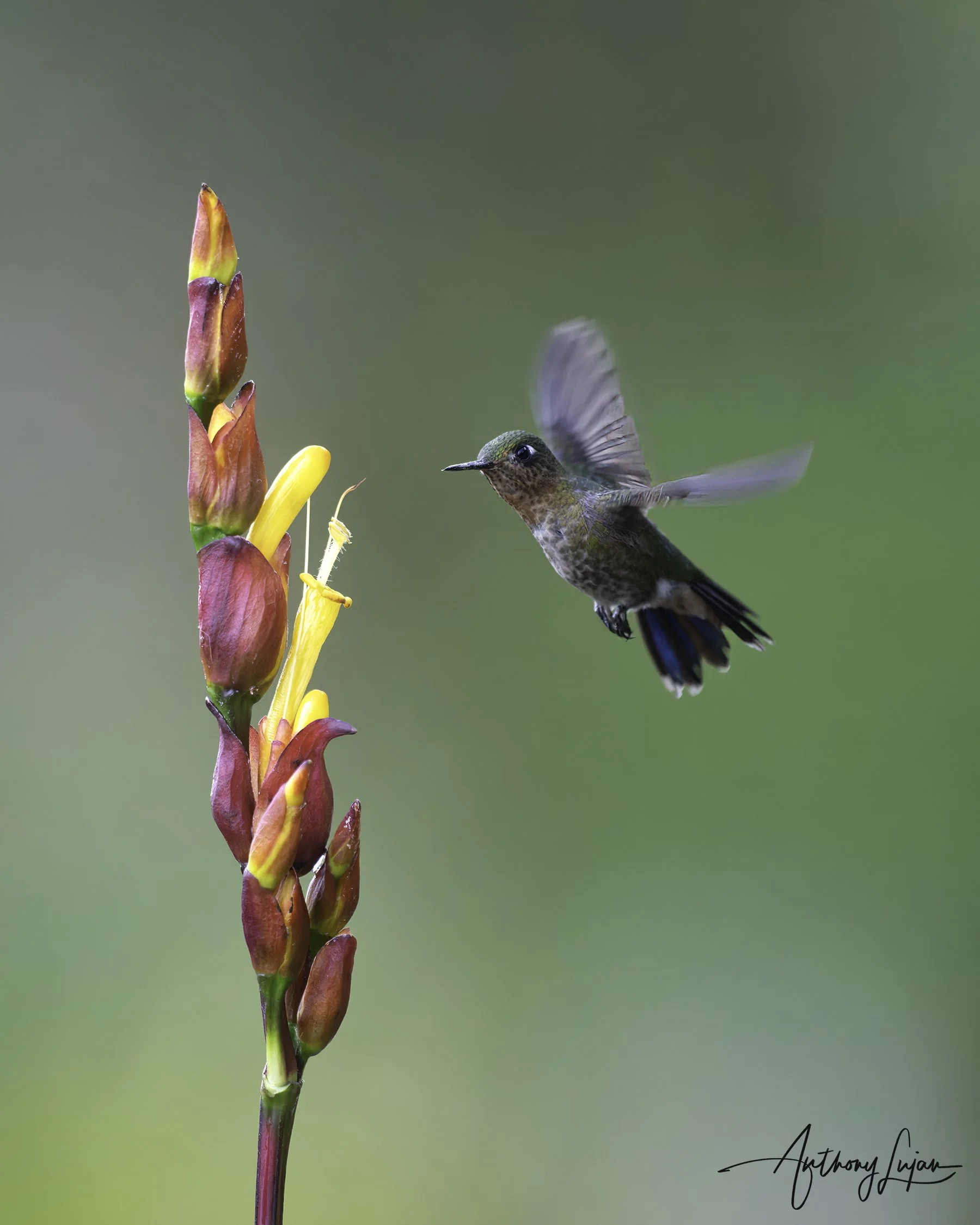
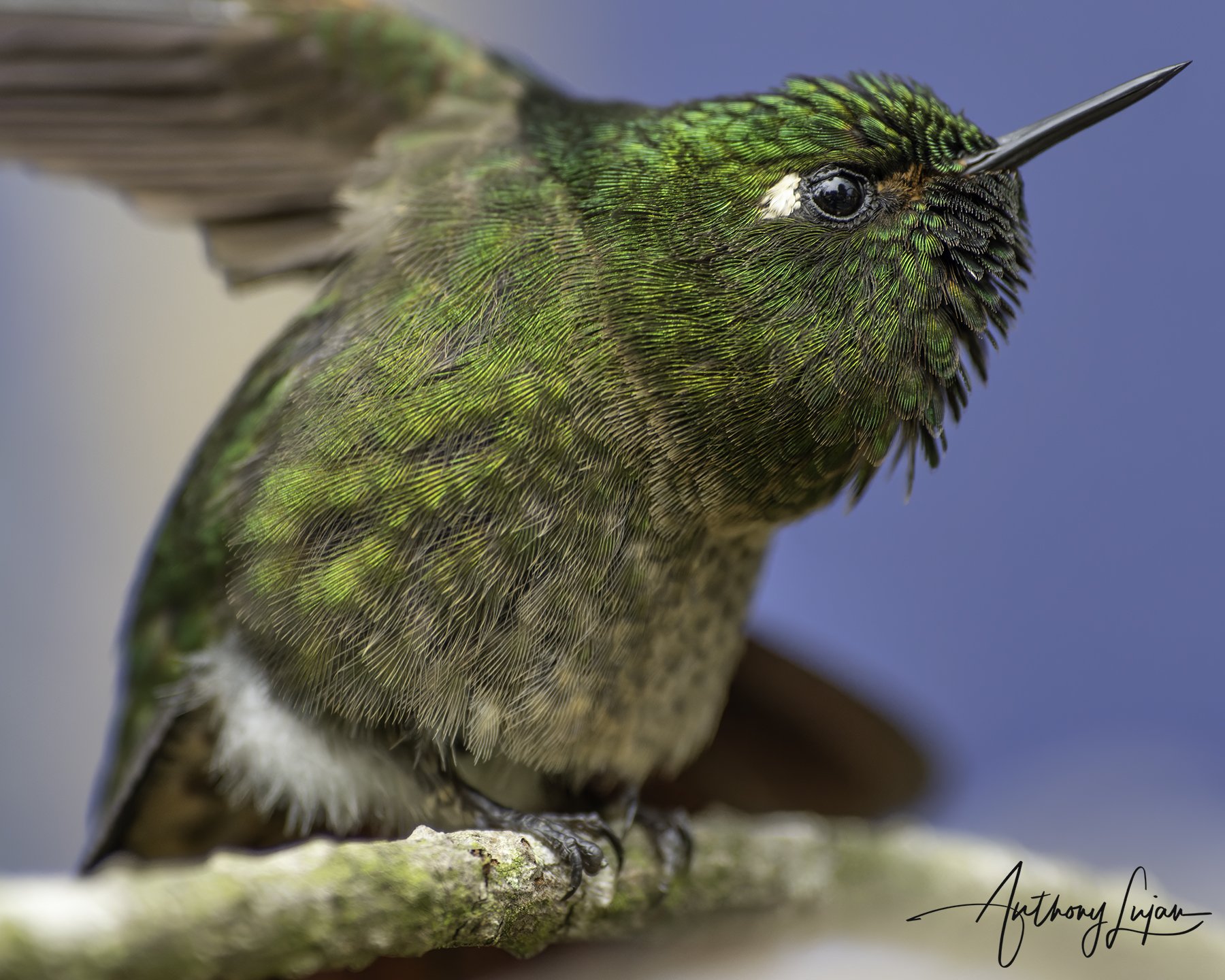
Below is the Tyrian Metaltail (Metallura tyrianthina districta)
Photographed at HOSTAL EL RAMO, Magdalena; Estación Experimental San Lorenzo PNN, Magdalena; and Reserva Bosque Guajira, Cundinamarca, Colombia
These individuals belong to the subspecies districta, which occurs in the Santa Marta Mountains and Serranía del Perijá of northern Colombia and northwestern Venezuela. It inhabits humid montane forest and shrubby ridgelines, typically between 2,400 and 3,400 meters. Males exhibit a distinctive violet-purple tail, which helps distinguish them from other populations.
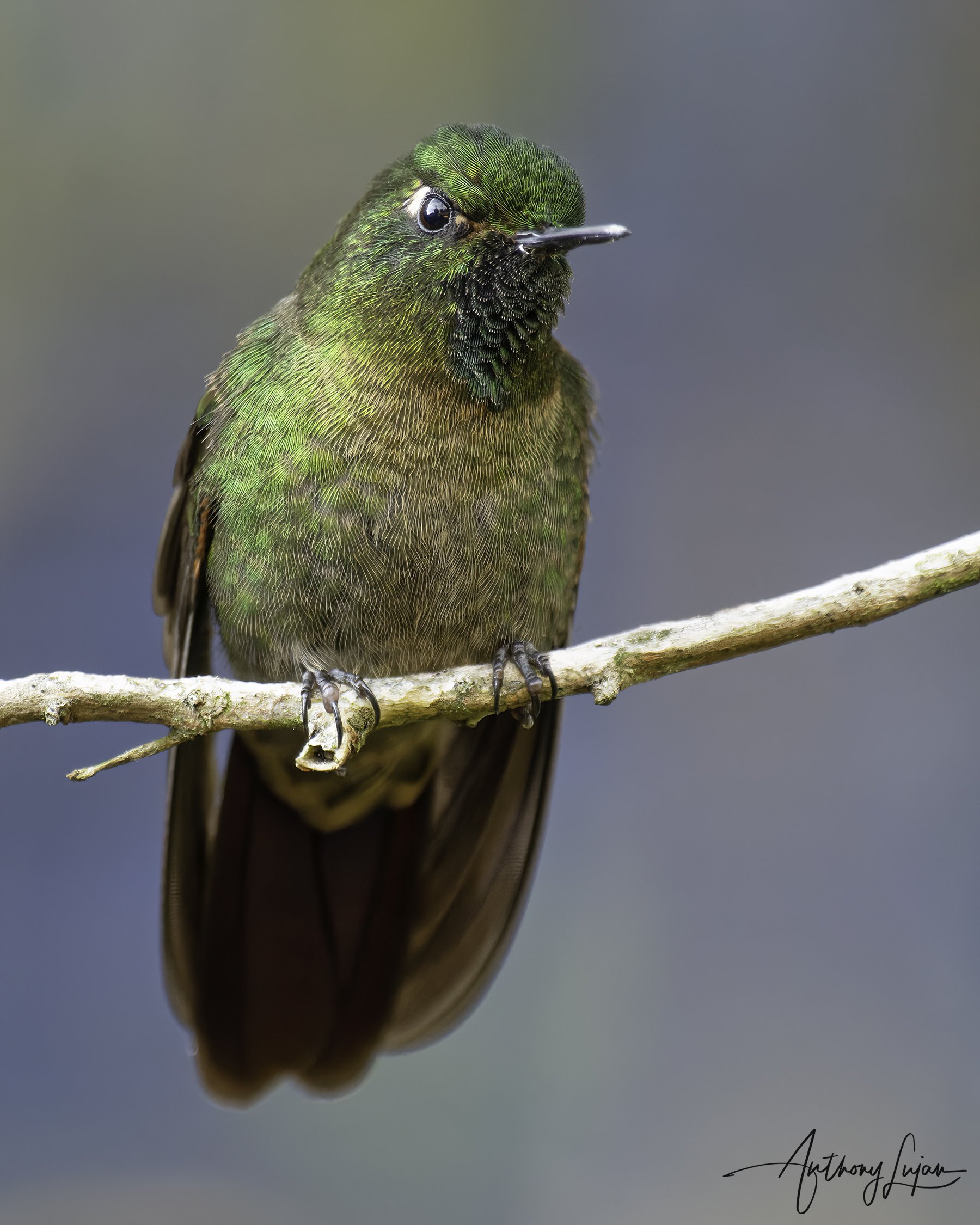
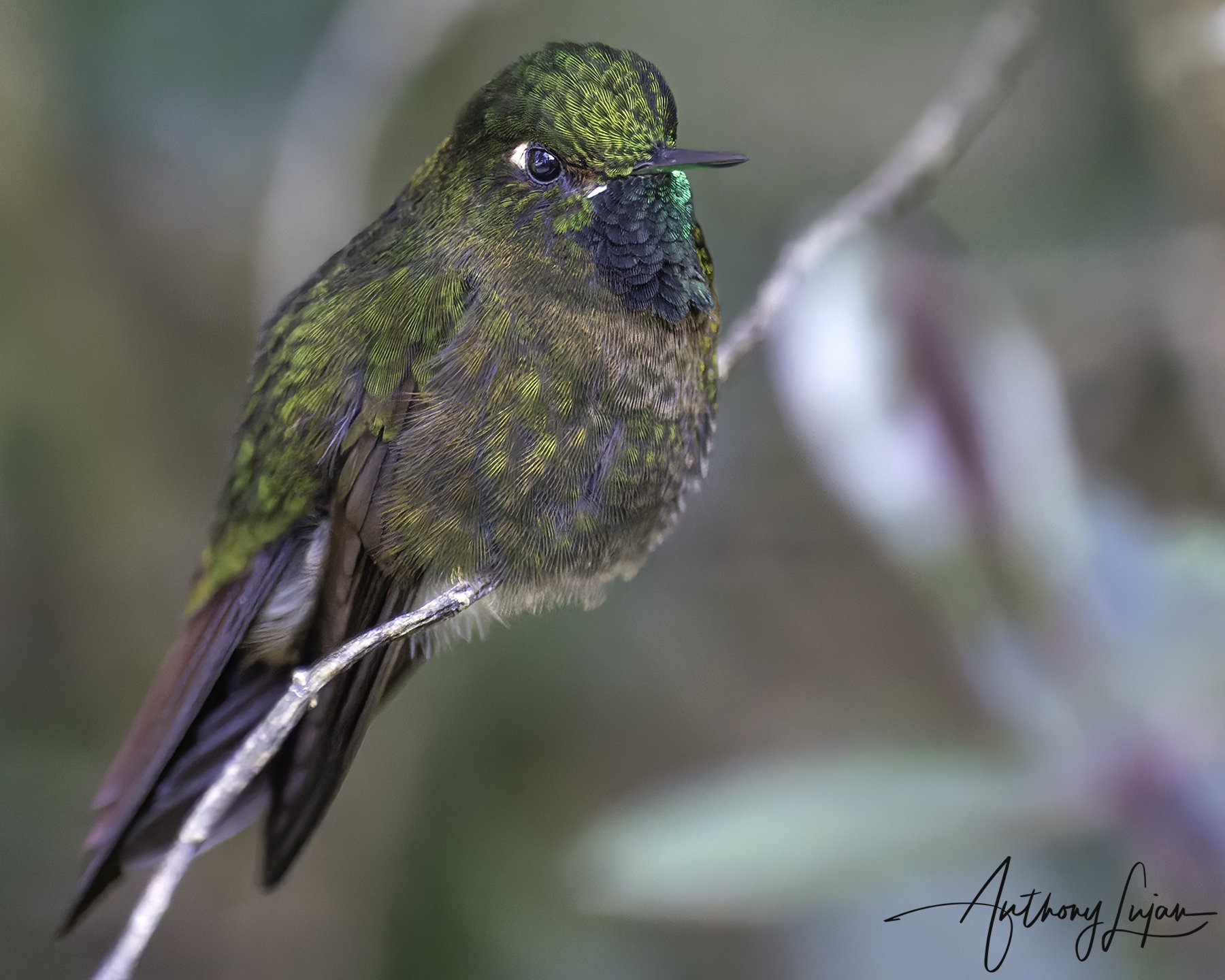
Below is the Tyrian Metaltail (Metallura tyrianthina tyrianthina)
Photographed at Observatorio de Colibries, Cundinamarca; Ranger Station, Cesar; and Hacienda El Bosque, Caldas, Colombia
These individuals belong to the subspecies tyrianthina, which is the nominate form found throughout the Andes of Colombia, extending southward into Ecuador and northern Peru. It frequents high Andean shrublands and elfin forests. Males of this subspecies typically have a reddish-bronze tail, a characteristic feature used to separate it from other groups.
Checkout Anthony’s playlist of this species! Click the top right dropdown to see all the videos.
Related species in the Metallura genus (examples from 9 species total):


Please note: The content provided in this article reflects Anthony’s personal experience and photographic approach. Results can vary depending on light, weather, location, equipment, subject behavior, and field conditions.