
Velvet-purple Coronet

Scientific name: Boissonneaua jardini
The Velvet-purple Coronet is a medium-sized, spectacularly iridescent hummingbird of wet mossy forests along the Pacific slope of the Andes from southwestern Colombia to northwestern Ecuador. It is listed as Least Concern, with an unknown number of mature individuals, a decreasing population trend, and it is considered not a migrant.
At a Glance
Family: Trochilidae (hummingbirds)
Clades: Lesbiinae – Brilliants
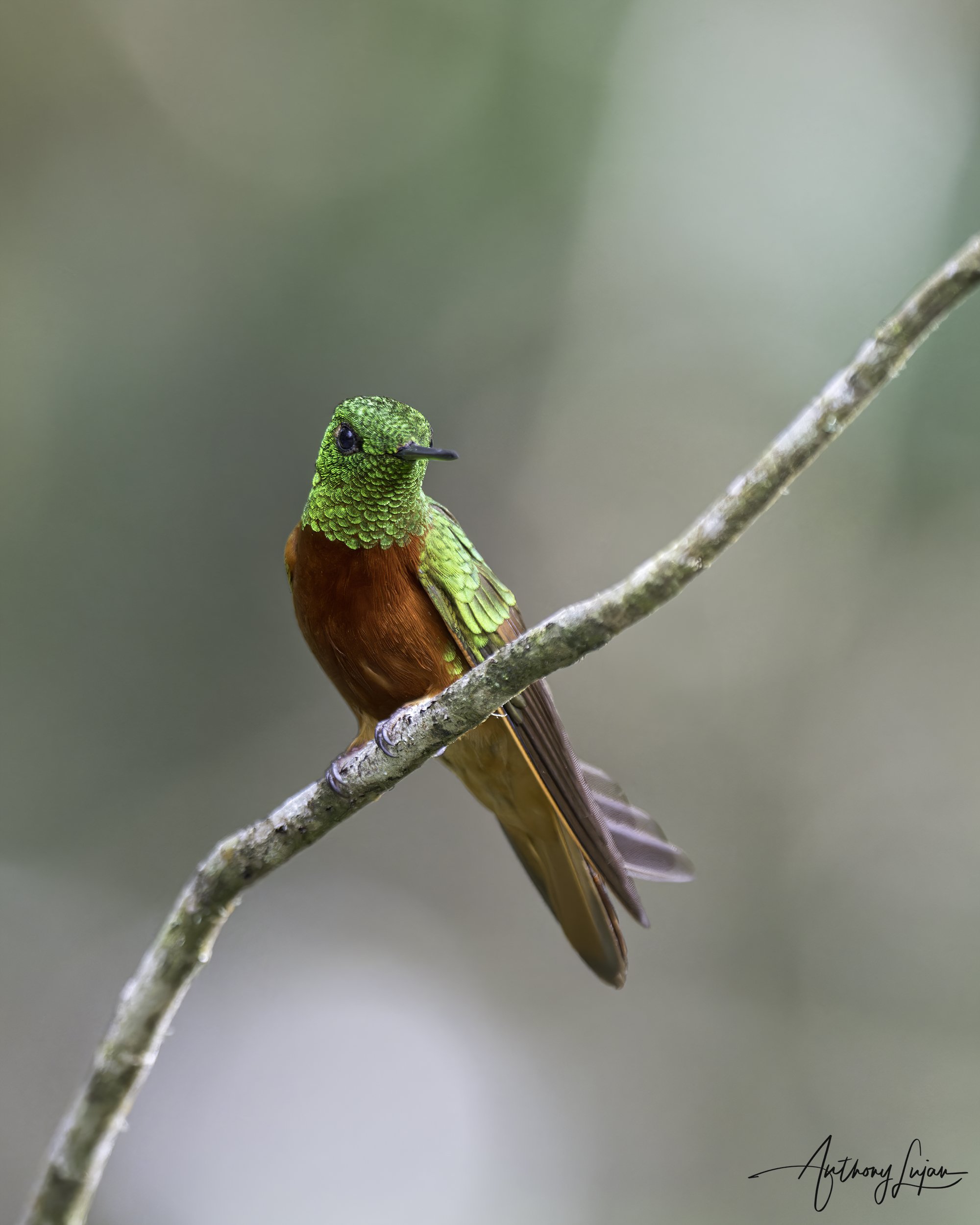
Genus group: Boissonneaua — medium-sized “coronets” (3 species in total: Buff-tailed, Velvet-purple, Chestnut-breasted)
Range: Pacific slope of the Andes from southwestern Colombia (Chocó Department and adjacent areas) south into northwestern Ecuador (including Pichincha and adjacent provinces).
Habitat: Interior and edges of wet, mossy primary and secondary montane forest, cloud forest, and shrubby forest clearings on the Chocó (Pacific) slope.
Elevation: Recorded from roughly 350 to 2,200 m (1,150–7,220 ft), most common above about 1,200 m (3,900 ft).
Length: About 11–12.7 cm (4.3–5.0 in).
Weight: About 8.0–8.5 g (0.28–0.30 oz).
Number of mature individuals: Unknown.
Population trend: Decreasing.
Status: Least Concern (IUCN Red List category).
Migration: Not a migrant.
Name Origin
The genus name Boissonneaua honors Auguste Boissonneau, a French naturalist known for describing Neotropical hummingbirds. The species name jardini commemorates a naturalist with the surname Jardine, recognized for contributions to ornithology. The English name “Velvet-purple Coronet” refers to the bird’s deep velvety plumage that flashes with purples, blues, and greens in good light and to the typical upright, crowned posture of coronets.
Taxonomy & Distribution
Monotypic — no recognized subspecies.
Velvet-purple Coronet is part of the Lesbiinae brilliants and one of three coronet species in the genus Boissonneaua. It is monotypic, with no recognized subspecies. The species is endemic to the Chocó region along the Pacific slope of the Andes in southwestern Colombia and northwestern Ecuador, where it inhabits wet, mossy montane and cloud forests and nearby shrubby clearings.
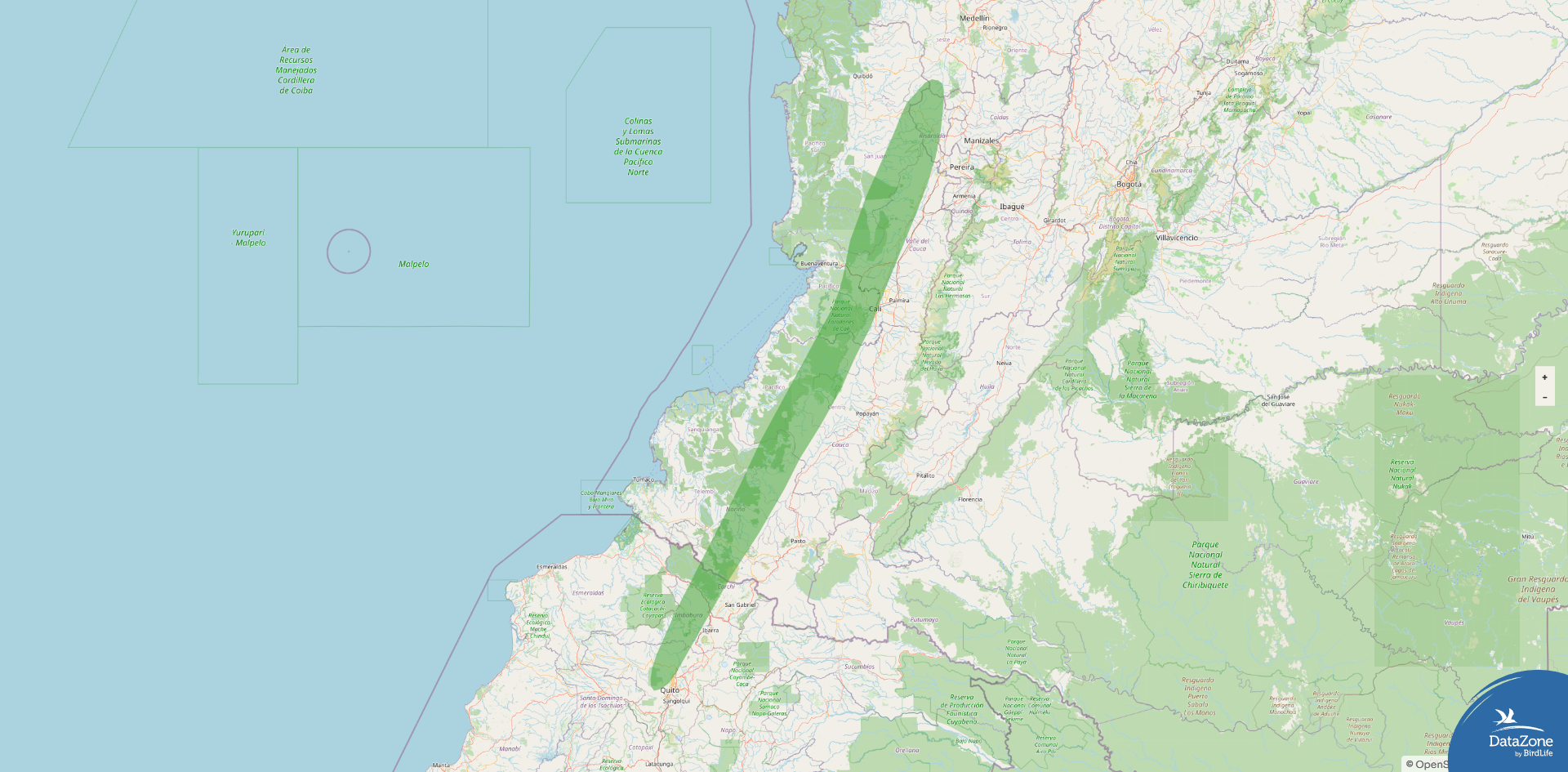
Legend
Green Resident
Species Overview
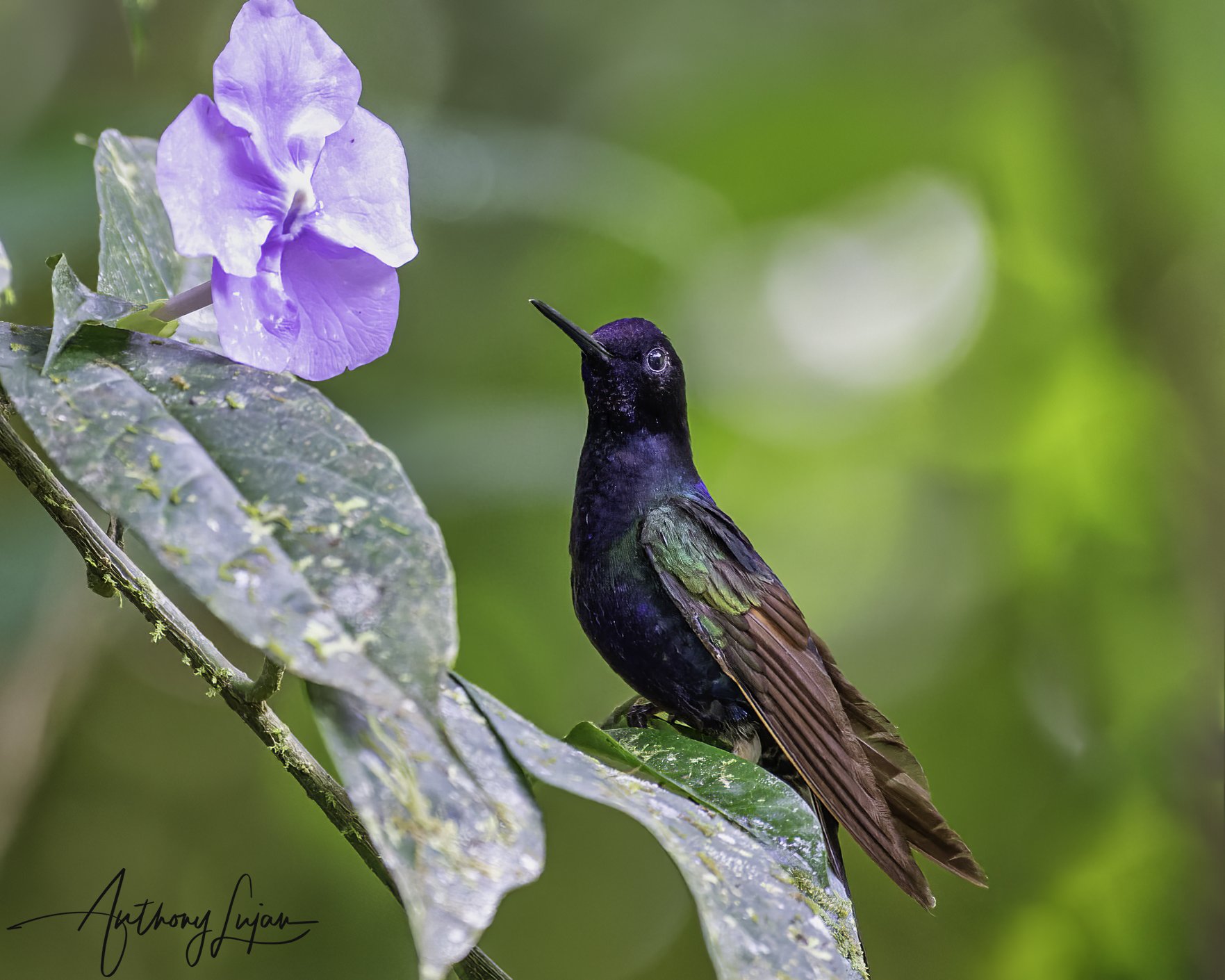
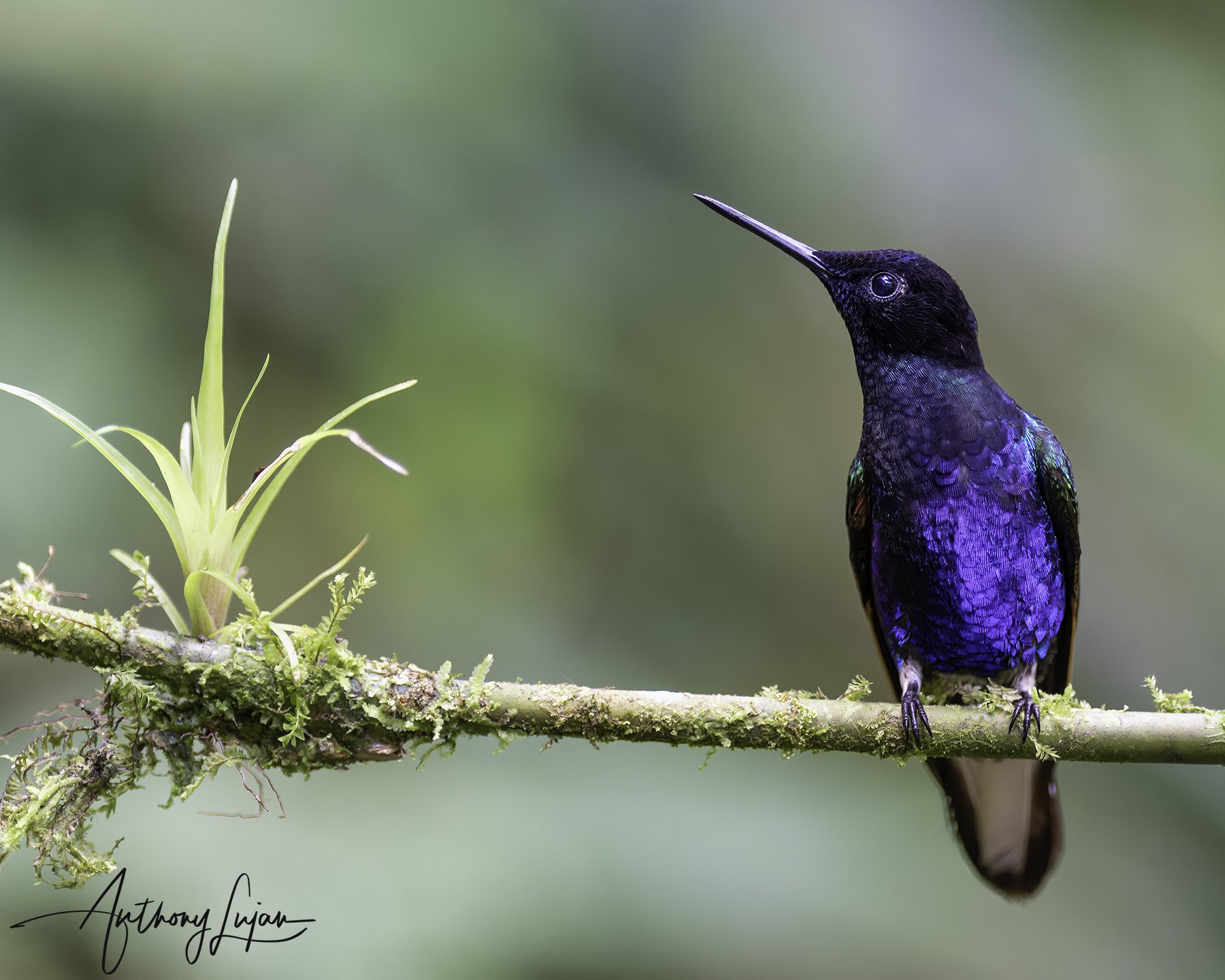
The Velvet-purple Coronet is one of the most striking hummingbirds of the Chocó cloud forests, often appearing almost black in shade but exploding into iridescent purples, blues, and greens when caught by sunlight. It frequently visits flowering shrubs and feeders at Andean lodges, where its bold colors and active behavior make it a favorite among birdwatchers. Despite its showy appearance, it has a relatively restricted range and depends on intact wet montane forests on the Pacific slope.
Male Description
Adult males are medium-sized and robust, with plumage that appears dark or velvety in low light but reveals a mix of iridescent purples, blues, and greens in strong light. The crown and throat are deep purple, the sides of the body can show turquoise or blue-green, and the wing coverts are green. The tail is dark with striking white outer tail feathers, especially noticeable in flight or when fanned. The bill is short, straight, and black, and there is a white spot behind the eye and small white puffs on the legs. In good light, males can show a purple crown and belly, violet or magenta breast, turquoise sides, and bright green wing coverts all at once.
Female Description
Females resemble males in basic structure and pattern, including the short black bill, white post‑ocular spot, white leg puffs, and white outer tail feathers, but are generally less vivid. Their throat is grayer, and the iridescence on the crown, breast, and belly is reduced or less intense, giving a slightly duller overall appearance than males. Juveniles are duller still, with more limited iridescence and often more gray or brownish tones mixed into the plumage.
Habitat & Behavior
Velvet-purple Coronets inhabit wet, mossy primary and secondary montane forest and cloud forest along the Pacific slope of the Andes, including forest edges and shrubby clearings. They forage at all forest levels, from lower strata to the canopy, visiting flowers on shrubs, trees, vines, and epiphytes, and they are regular visitors to feeders in reserves and lodges. Like other coronets, they are territorial and defend clusters of flowers from other nectar-feeding birds, often engaging in fast aerial chases. They also capture small insects by hawking from perches or gleaning near flowers, supplementing their nectar diet.
Breeding
Breeding details are less well documented than for some congeners, but the species is believed to breed in suitable wet montane forests within its range, likely timed to local peaks in flowering and favorable weather. The female constructs a cup nest of moss and plant fibers bound with spiderweb, typically attached to a branch or other support in forest or at forest edge a few meters above the ground. She lays two white eggs and alone incubates and cares for the chicks, following the standard hummingbird breeding pattern.
Population
The total number of mature individuals is unknown, and given the species’ restricted Chocó range, the global population is likely much smaller than that of many widespread Andean hummingbirds. It remains common in some well‑preserved localities, especially protected reserves and forested lodge areas, but overall habitat loss and fragmentation in the Chocó region are causing a decreasing population trend.
Conservation
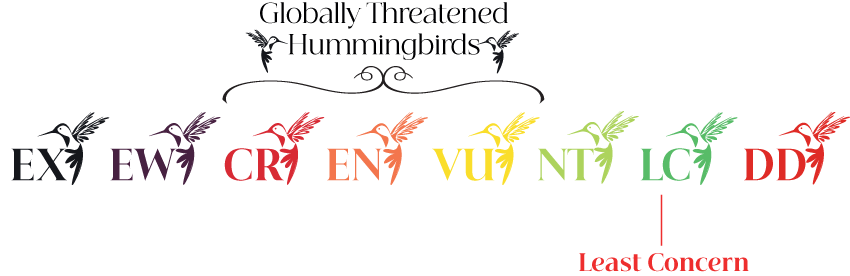
Velvet-purple Coronet is currently assessed as Least Concern, but its limited range and dependence on wet, mossy montane forests in the Chocó bioregion make it vulnerable to ongoing deforestation and habitat degradation. Conservation of remaining Chocó forests, protection of cloud-forest reserves along the Pacific slope, and maintenance of forest corridors between fragments are critical for the long‑term survival of this species. Ecotourism at hummingbird lodges and reserves that preserve native forest and flowering plants can also contribute to its conservation.
Checkout Anthony’s playlist of this species! Click the top right dropdown to see all the videos.
Related species in the Boissonneaua genus (3 species in total):

Please note: The content provided in this article reflects Anthony’s personal experience and photographic approach. Results can vary depending on light, weather, location, equipment, subject behavior, and field conditions.