
Violet-crowned Hummingbird
Scientific name: Ramosomyia violiceps
The Violet-crowned Hummingbird is a medium-sized hummingbird of riparian woodlands, canyons, and semi‑open habitats in the southwestern United States and western and central Mexico. Its global population is estimated at about 2,000,000 mature individuals, the overall population trend is stable, it is considered a full migrant, and it is assessed as Least Concern.
At a Glance
Family: Trochilidae (hummingbirds)
Clade: Trochilini – Emeralds
Genus: Ramosomyia — 2 species in total
Range: Extreme southeastern Arizona and southwestern New Mexico south through northwestern and central Mexico to Puebla, Hidalgo, and northwestern Oaxaca
Habitat: Canyons and riparian woodlands with large trees (such as sycamores and cottonwoods), plus edges of dry deciduous woodland, thorn scrub, fields, orchards, and parks
Elevation: Typically from about 200 to 1,700 m, locally from near sea level up to around 2,400 m
Length: About 10–11 cm (3.9–4.3 in)
Weight: About 5.1–5.8 g (0.18–0.20 oz)
Number of mature individuals: 2,000,000
Population trend: Stable
Movement: Full migrant
IUCN Red List category: Least Concern
Name Origin
The name “Violet-crowned Hummingbird” refers to the bird’s bright violet crown, which contrasts sharply with its otherwise white head and underparts. The genus name Ramosomyia was established after genetic studies grouped this species with the Green-fronted Hummingbird, separating them from older generic placements. The species name violiceps combines Latin elements for “violet” and “headed,” again describing the distinctive colored crown.
Taxonomy & Distribution
Ramosomyia violiceps belongs to the emerald clade (tribe Trochilini) within the hummingbird family Trochilidae. It is one of two recognized species in the genus Ramosomyia, alongside the Green-fronted Hummingbird (Ramosomyia viridifrons). The Violet-crowned Hummingbird’s range extends from extreme southeastern Arizona and southwestern New Mexico south through northwestern and central Mexico to at least central Michoacán and Hidalgo, then south and east into Puebla and northwestern Oaxaca. Within this range it is closely associated with riparian corridors and canyons but also uses a variety of semi‑open and human‑modified habitats that include large trees and flowering plants.
Subspecies and Distribution
Two subspecies:
Ramosomyia violiceps ellioti
Distribution: Extreme southeastern Arizona and southwestern New Mexico south through northwestern and central Mexico, reaching as far as central Michoacán and Hidalgo. Inhabits canyons, gallery forests, and edges of dry deciduous woodland, especially along sycamore‑lined streams in the northern portion of the range.Ramosomyia violiceps violiceps
Distribution: Southwestern Mexico from eastern Michoacán south and east to Puebla and northwestern Oaxaca. Found in arid to semi‑arid slopes, often in dry scrub and thorn forest, as well as in riparian corridors and semi‑open woodlands with scattered trees and bushes.
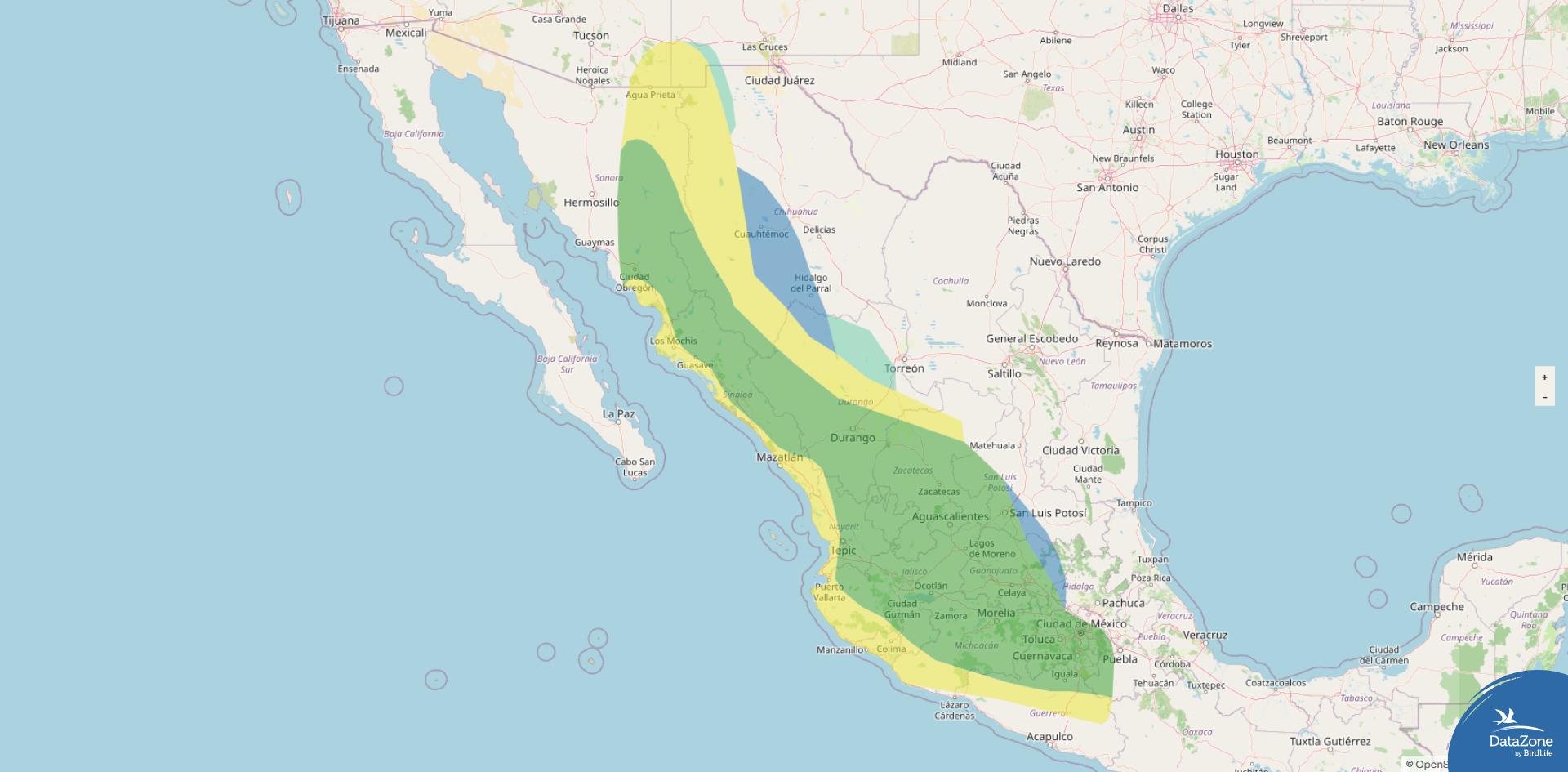
Legend
Green Resident
Yellow Breeding
Blue Non-breeding
Species Overview
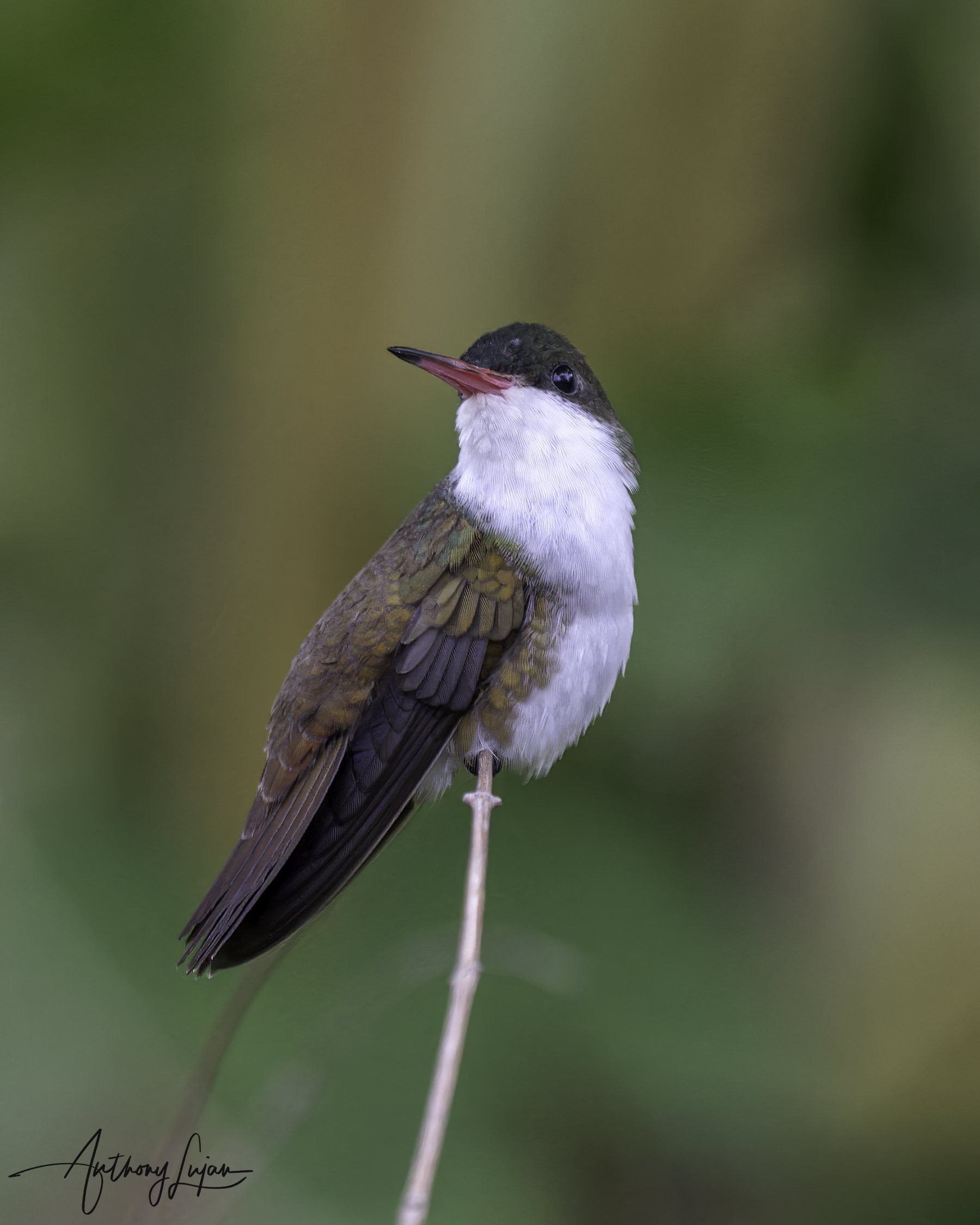
The Violet-crowned Hummingbird is a distinctive hummingbird with a violet‑blue crown, pure white underparts, green back, and a long red bill tipped black. Unlike many other hummingbirds, it lacks an iridescent throat patch, relying instead on its crisp head and crown pattern for identification. In the United States it is a localized specialty of sycamore‑lined canyons and riparian corridors in southeastern Arizona and nearby New Mexico, while in Mexico it occupies a broader set of semi‑open and riparian habitats at low to middle elevations.
Male Description
Adult males have a bright violet‑blue crown and nape, sharply separated from the white forehead, face, throat, breast, and belly. The back and rump are metallic green, and the wings are dusky. The tail is coppery‑bronze to greenish‑bronze with darker central feathers and paler or slightly rufous‑bronze outer portions, often catching warm light in flight. The bill is straight, relatively long, bright red to orange‑red with a black tip. Overall, males present a clean, high‑contrast pattern with a violet crown, white body, and green back.
Female Description
Females are very similar to males in overall pattern and are often treated as essentially monomorphic. They may be slightly duller in crown and back coloration, and the violet of the crown can appear less intense, but the combination of violet crown, white underparts, green back, and red bill is shared. Juveniles resemble adults but can show more brownish or grayish tones in the crown and upperparts and may have a less sharply defined crown color; the bill is also duller initially and brightens with age.
Habitat & Behavior
Violet-crowned Hummingbirds favor riparian woodlands and canyons with large trees such as sycamores, cottonwoods, and willows, especially in the northern portion of their range. They also occur in thorn scrub, dry deciduous woodland, orchards, fields with scattered trees, and urban or suburban gardens and parks that include flowering shrubs and trees. Birds typically forage at low to mid‑levels, visiting flowers on shrubs and trees and frequently using hummingbird feeders in areas with human presence.
They feed on nectar from a wide variety of native and introduced plants, including agaves, desert willows, ocotillo, and riparian flowering trees, and they supplement this diet with small insects and spiders caught by hawking from perches or gleaning near flowers. In Arizona, Violet-crowned Hummingbirds can be dominant at feeders, often displacing smaller species and using exposed perches to watch for intruders. Their flight is direct and relatively powerful, and they often return repeatedly to favored perches and feeding sites within riparian corridors.
Breeding
In the United States, Violet-crowned Hummingbirds typically breed from about April to September, with most nesting activity in late spring and summer. They usually place nests in large riparian trees such as sycamores, often on horizontal branches that overhang streams or open ground. In Mexico, breeding generally occurs from spring into late summer, with timing varying somewhat by region and elevation.
The nest is a small cup constructed of soft plant fibers and down bound with spiderweb, with the exterior camouflaged using lichens and small pieces of bark. The female alone builds the nest, lays two white eggs, and performs all incubation and chick‑rearing. Incubation lasts roughly two weeks, and chicks typically fledge about three weeks after hatching, though exact timing can vary with local conditions.
Movement
The Violet-crowned Hummingbird is considered a full migrant because its northern populations are largely migratory. Birds that breed in southeastern Arizona, southwestern New Mexico, and adjacent northern Mexico mostly withdraw southward into Mexico for the winter, though some now overwinter in Arizona where reliable feeders and mild microclimates exist. Farther south in Mexico, the species is generally resident or only locally dispersive, with movements driven by flowering patterns and water availability rather than long‑distance migration. Across the range, individuals may shift among elevations and habitat types seasonally but remain within the same general regions.
Population
With an estimated 2,000,000 mature individuals and a broad geographic range, the Violet-crowned Hummingbird has a large global population. It is uncommon but regular in the United States, where numbers and reports have increased over recent decades and the species may be slowly expanding. In Mexico it can be fairly common in suitable riparian and semi‑open habitats, especially where mature trees and flowering plants persist along canyons and river corridors. There is no evidence of rapid global decline, and the overall population is considered stable.

Conservation
The Violet-crowned Hummingbird is assessed as Least Concern, with a stable global population and a wide though patchy distribution. Its use of both natural and modified habitats, including orchards, gardens, and urban parks, provides some resilience to land‑use change. However, degradation and loss of riparian corridors, removal of large streamside trees, changes in water flow, and intensive development in canyon systems can reduce high‑quality breeding and foraging habitat, particularly in arid and semi‑arid regions. Protecting and restoring riparian woodlands, maintaining flowering resources, and promoting responsible feeder practices all support this species across its range.
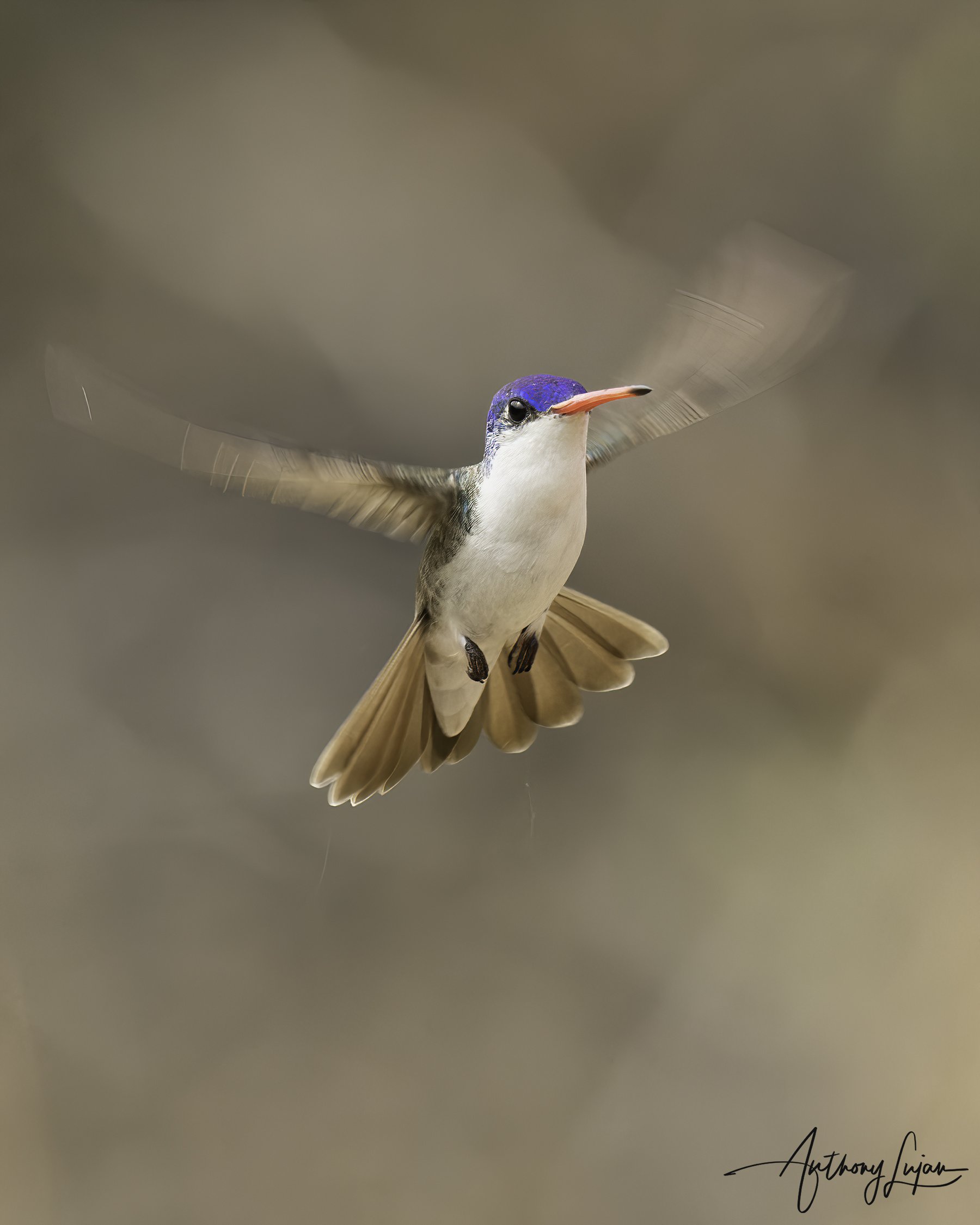
Below is the Violet-crowned Hummingbird (Ramosomyia violiceps violiceps)
Photographed at Centro Universitario UAGro, Chilpancingo de los Bravo, Guerrero, Mexico
These individuals belong to the subspecies violiceps, which is found across southwestern Mexico from eastern Michoacán to Oaxaca. It inhabits dry slopes, scrubby forest, and tropical deciduous woodland between 600 and 1,800 meters. Compared to ellioti, it may show a slightly darker crown and a more compact body size, though plumage differences are subtle.

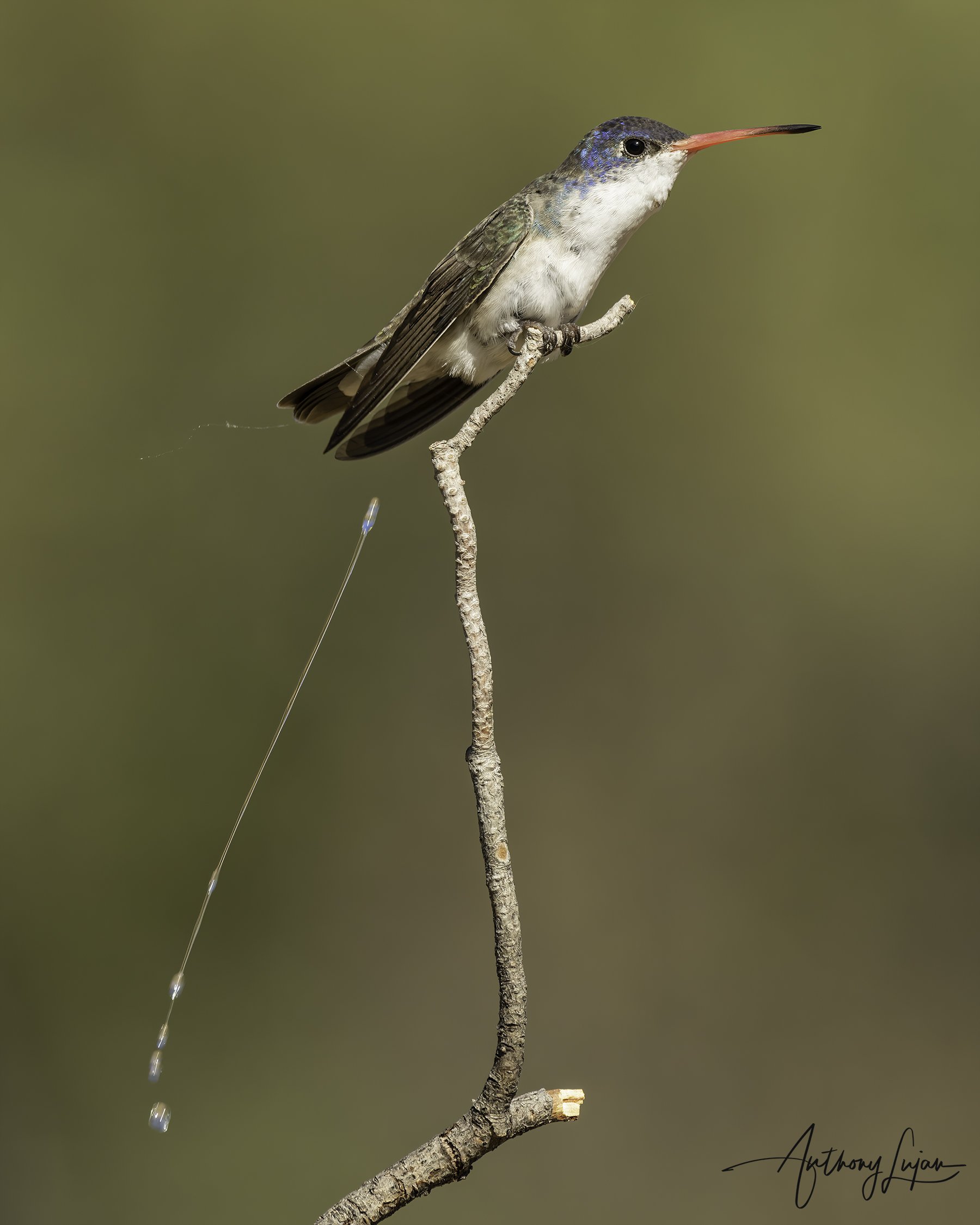
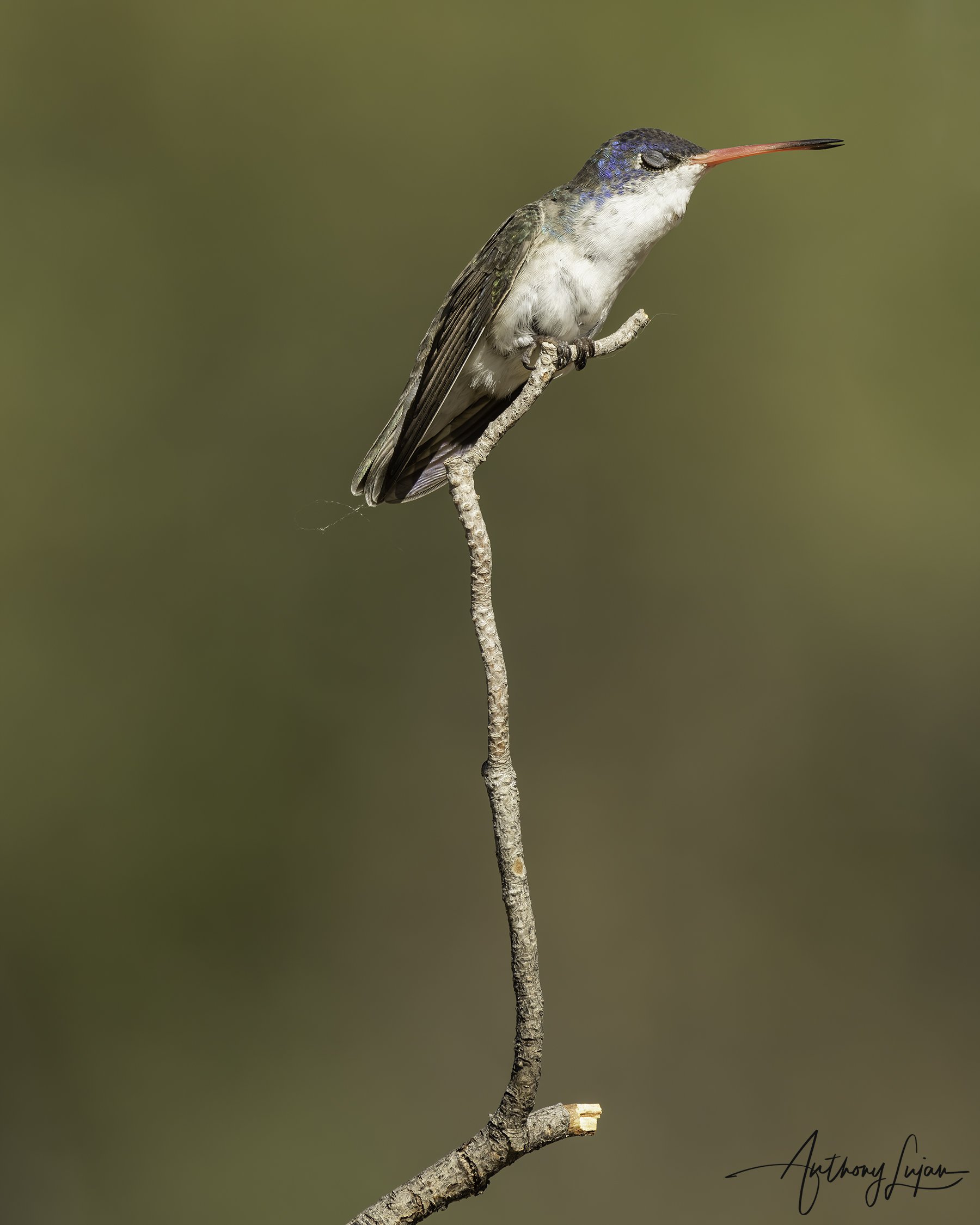
Below is the Violet-crowned Hummingbird (Ramosomyia violiceps ellioti)
Photographed at Ramsey Canyon Inn, Cochise, Arizona, United States
These individuals belong to the subspecies ellioti, which ranges from southeastern Arizona and southwestern New Mexico southward through northwestern and central Mexico. It inhabits riparian woodlands and arid canyons, typically between 1,000 and 2,000 meters in elevation. This subspecies is noted for its pale underparts, bold violet crown, and slightly longer bill compared to violiceps.
Related species in the Ramosomyia genus (2 species in total):
Please note: The content provided in this article reflects Anthony’s personal experience and photographic approach. Results can vary depending on light, weather, location, equipment, subject behavior, and field conditions.