
Violet-headed Hummingbird
Scientific name: Klais guimeti
The Violet-headed Hummingbird is a small species of humid forest edges, second growth, and plantations from eastern Honduras through Central America into northern South America. The number of mature individuals is estimated at 500,000–4,999,999, the population trend is decreasing, it is not a migrant, and it is currently assessed as Least Concern.
At a Glance
Family: Trochilidae (hummingbirds)
Clade: Trochilini – Emeralds
Genus: Klais — 1 species total
Range: Eastern Honduras to Bolivia
Habitat: Humid forest edges, second growth, shrubby clearings, plantations, shade coffee
Elevation: 150–1,900 m (500–6,200 ft), most common in foothills
Length: About 8.5–9 cm (3.3–3.5 in)
Weight: About 3.5–4 g
Number of mature individuals: 500,000–4,999,999
Population trend: Decreasing
Movement: Not a migrant
IUCN Red List category: Least Concern
Name Origin
The genus name Klais refers to Kleis (Cleis), daughter of the ancient Greek poet Sappho. The species name guimeti honors French chemist Jean Baptiste Guimet. The English name highlights the striking violet crown and head of males.
Taxonomy
Klais guimeti is the sole species in its monotypic genus within the emeralds clade (Trochilini).
Subspecies and Distribution
Three subspecies:
Klais guimeti merrittii
Distribution: Eastern Honduras to eastern Panama, inhabiting lowland forests and foothills along the Caribbean slope.Klais guimeti guimeti
Distribution: Sierra de Perijá, northern and western Venezuela, and into the eastern Andes of Colombia and Ecuador to extreme northern Peru.Klais guimeti pallidiventris
Distribution: Eastern slope of the Andes from northern Peru (Amazonas) south through central Bolivia (Cochabamba), occupying humid foothill forests.
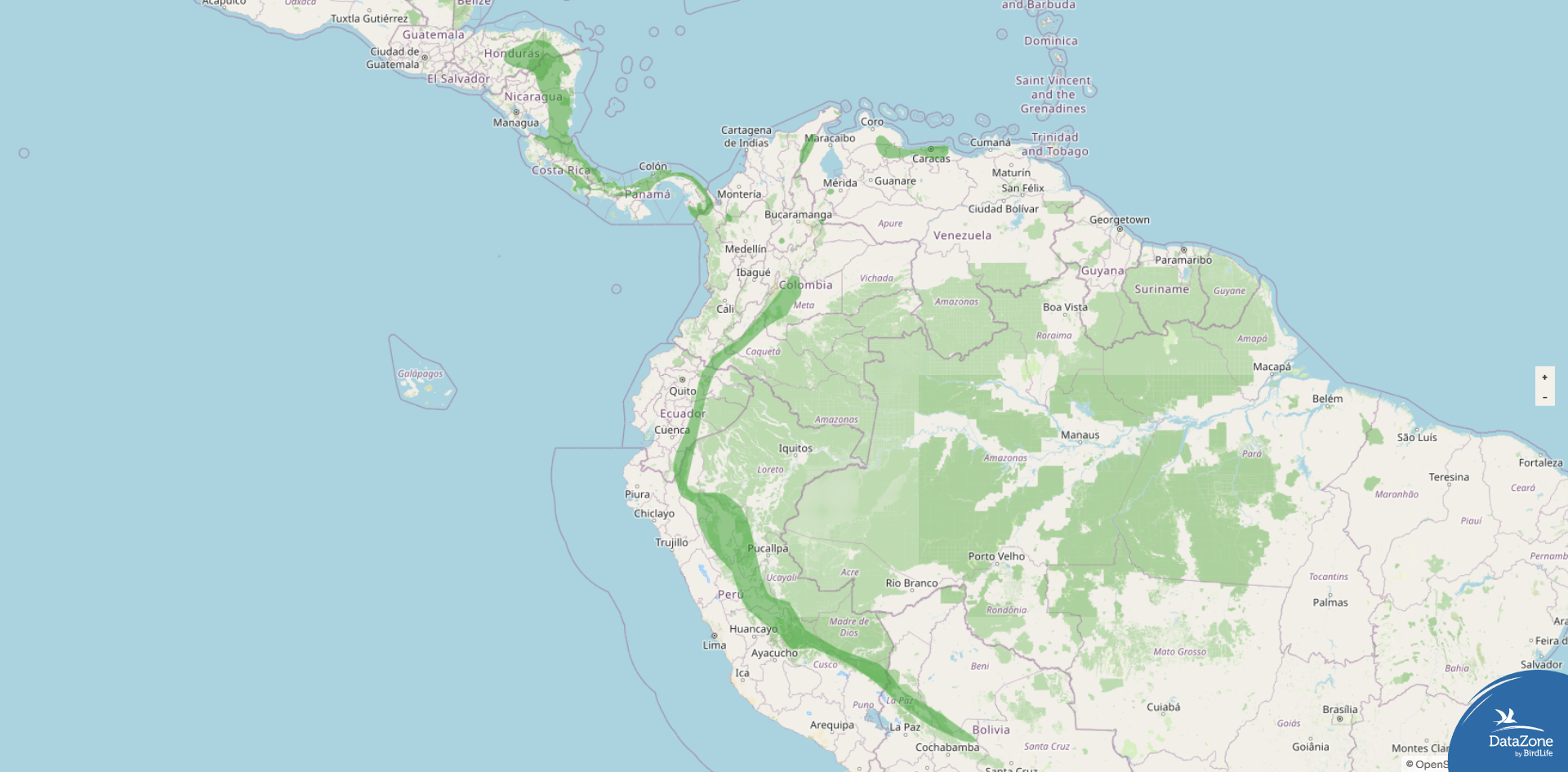
Legend
Green Resident
Species Overview
The Violet-headed Hummingbird is a dainty species with a distinctive white post-ocular spot and preference for forest edge habitats. Males show spectacular violet crown and throat iridescence while females are duller green with gray underparts. Often found in pairs or small groups at flowering shrubs and hedges.
Male Description
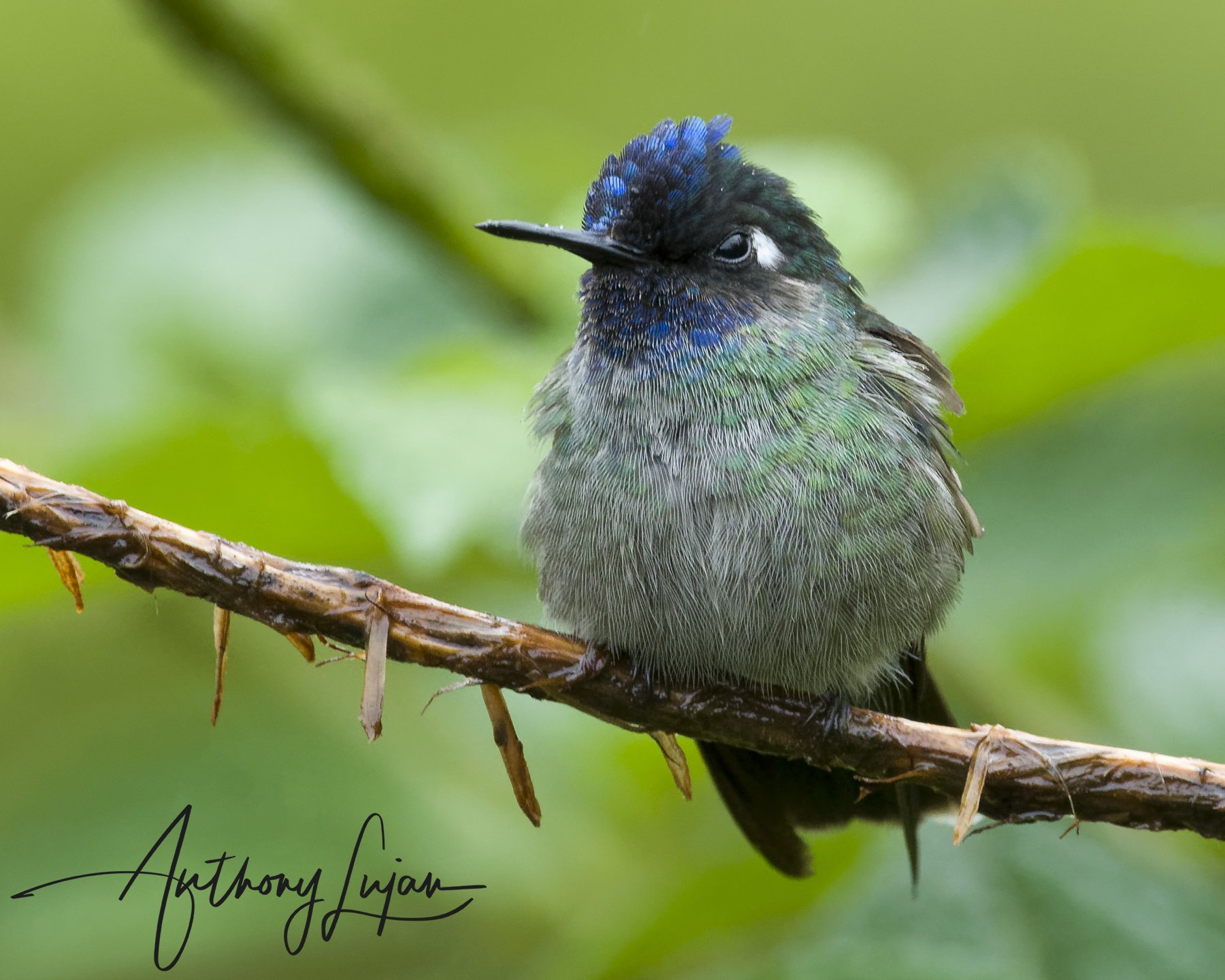
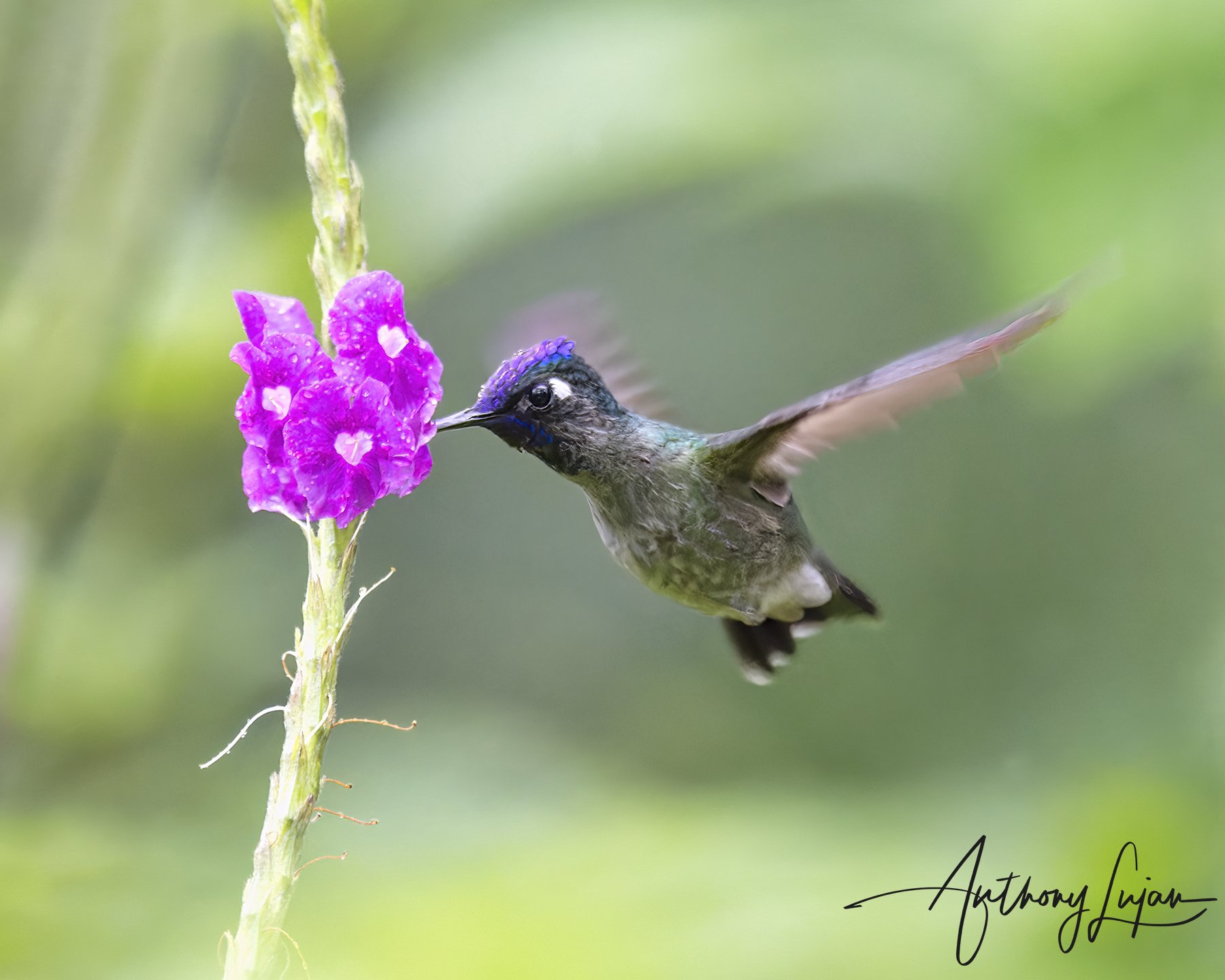
Small hummingbird with glittering violet crown and throat, green upperparts, and conspicuous white spot behind eye. Underparts grayish with green flecks and scaling. Tail short, rounded, dark with green gloss. Straight black bill medium length. Violet head patches most vivid in good light.
Female Description
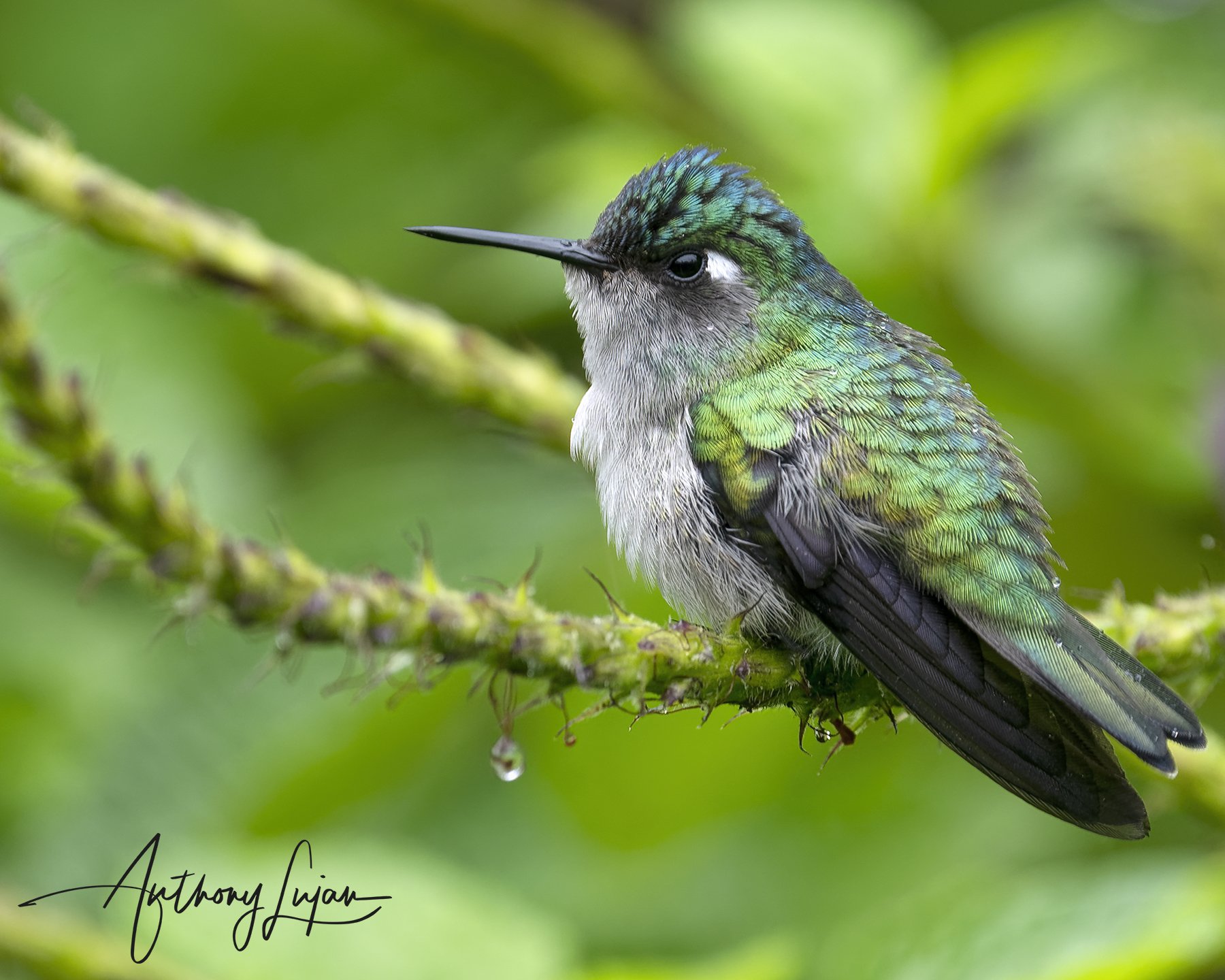
Duller version of male with green crown (no violet), gray throat and underparts, same prominent white post-ocular spot. Green upperparts and tail similar to male. Less iridescent overall but same compact structure and foraging behavior. Juveniles resemble females.
Habitat & Behavior
Prefers humid forest edges, second growth, shrubby clearings, Stachytarpheta hedges, and shade coffee plantations. Forages at understory shrubs and small trees, often in pairs or loose groups. Traplines scattered nectar sources rather than defending single territories. Takes small insects on the wing.
Breeding
Female builds small cup nest of moss, plant fibers, and spiderweb, often on thin branch in shrub layer or vine tangle. Lays two white eggs. Female incubates 15–17 days; chicks fledge around 20–23 days. Nesting coincides with local flowering peaks in humid zones.
Movement
Not a migrant. Resident throughout range though may make minor elevational shifts following flowering cycles. Remains faithful to same forest edge territories year-round.
Population
Estimated 500,000–4,999,999 mature individuals across broad range from Honduras to Bolivia. Locally common in suitable humid foothill habitat and shade coffee. Decreasing due to forest edge degradation and conversion to sun coffee plantations.

Conservation
Least Concern due to large range and population despite decreasing trend. Tolerates some habitat modification including shade coffee. Vulnerable to complete forest clearing and conversion to sun monocultures. Benefits from shade-grown coffee conservation initiatives.
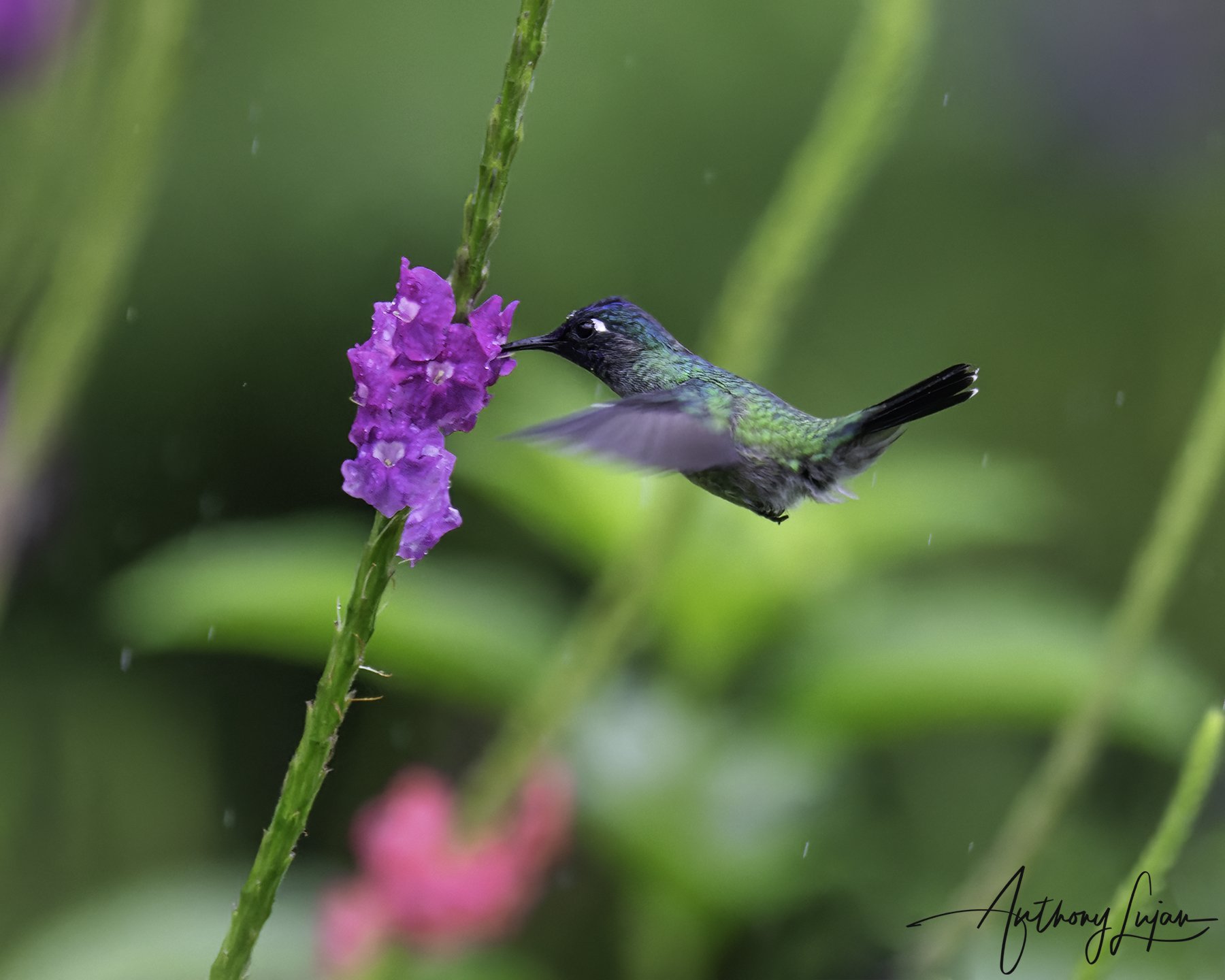
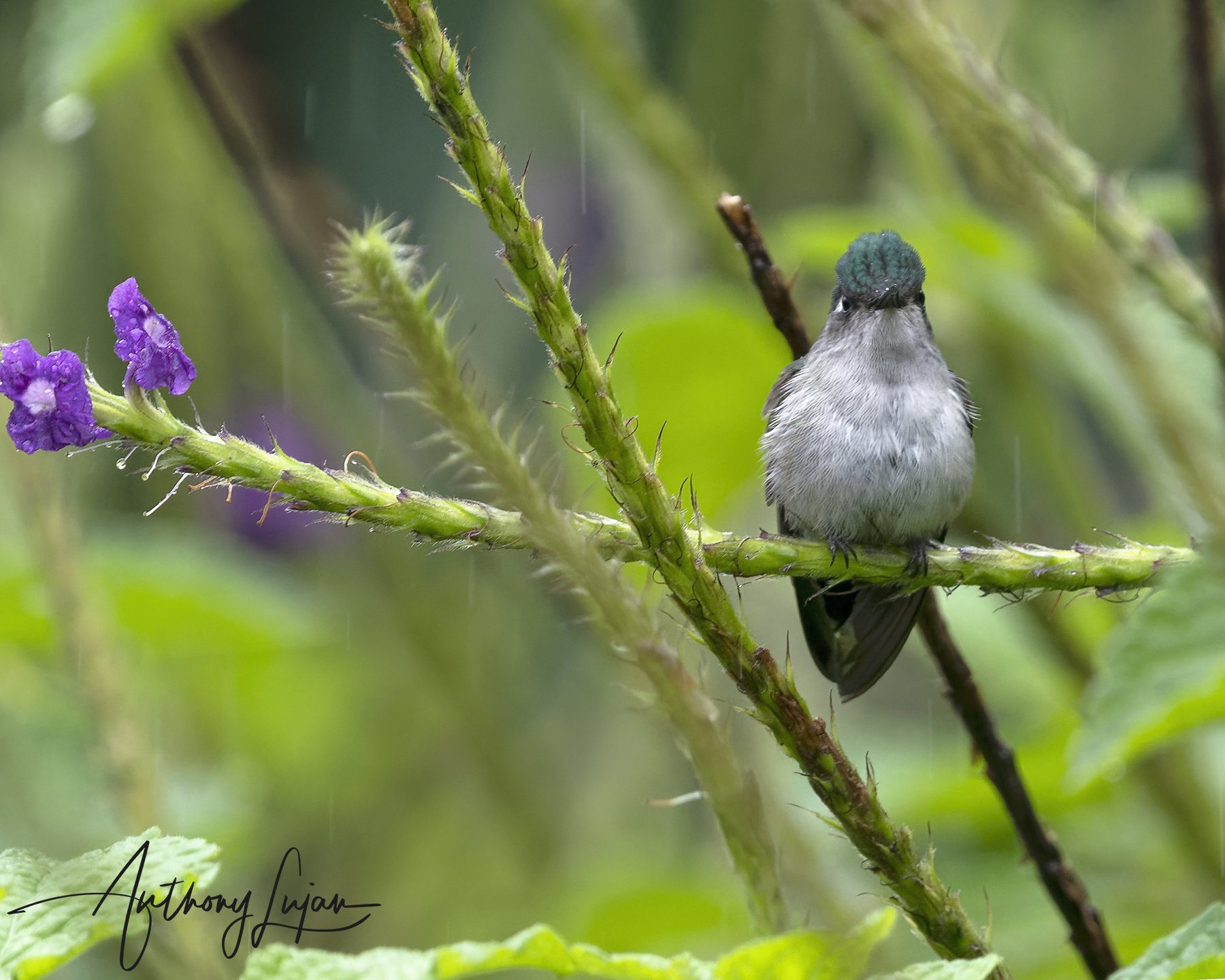
Below is the Violet-headed Hummingbird (Klais guimeti merrittii)
Photographed at Nectar & Pollen Reserve, Limón; Rancho Naturalista, Cartago; and Esquipulas Rainforest Lodge, Puntarenas, Costa Rica
These individuals belong to the subspecies merrittii, which ranges from eastern Honduras south to eastern Panama, primarily on the Caribbean slope. It is found in lowland and premontane forests between 400 and 1,200 meters. This subspecies features bright green upperparts and a richer violet head sheen in males. It frequently forages in flowering trees and forest borders.

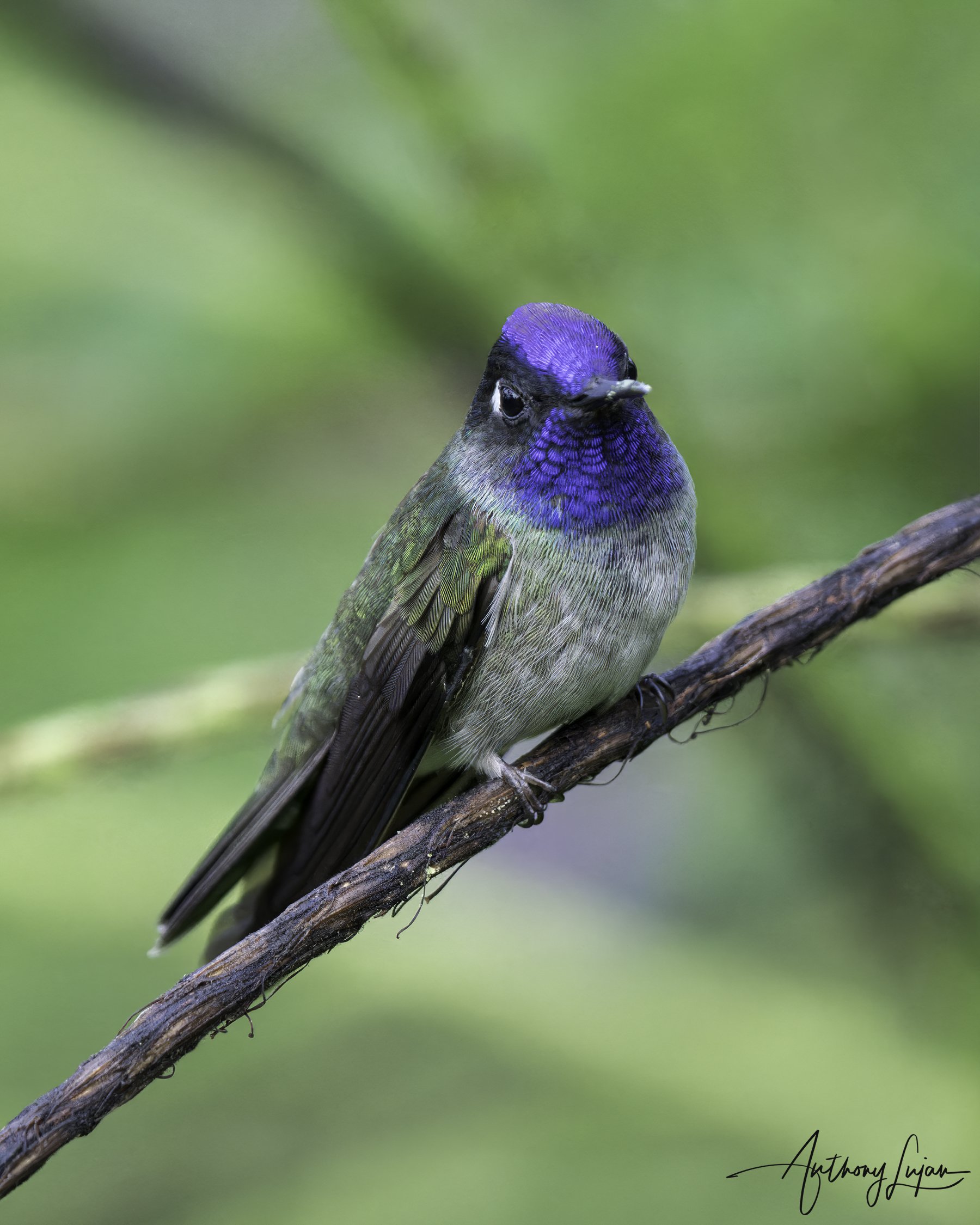
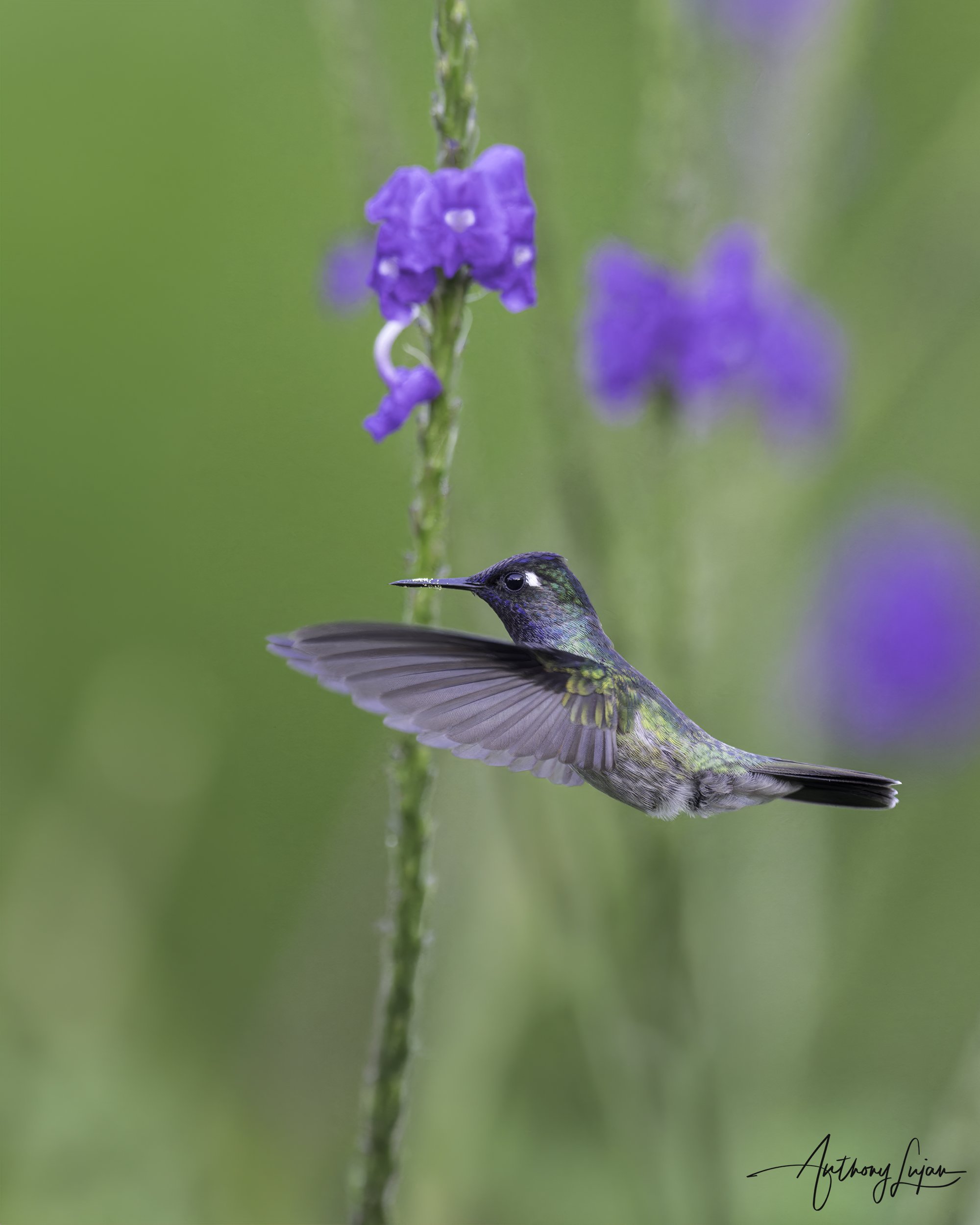
Below is the Violet-headed Hummingbird (Klais guimeti pallidiventris)
Photographed at Waqanki/Quebrada Mishquiyaquillo, San Martín, Peru
These individuals belong to the subspecies pallidiventris, which inhabits the eastern slope of the Andes from northern Peru (Amazonas and San Martín) south to central Bolivia. It is generally found in humid foothill forests between 500 and 1,500 meters. This form typically shows slightly paler underparts and a more subdued violet crown compared to northern forms.
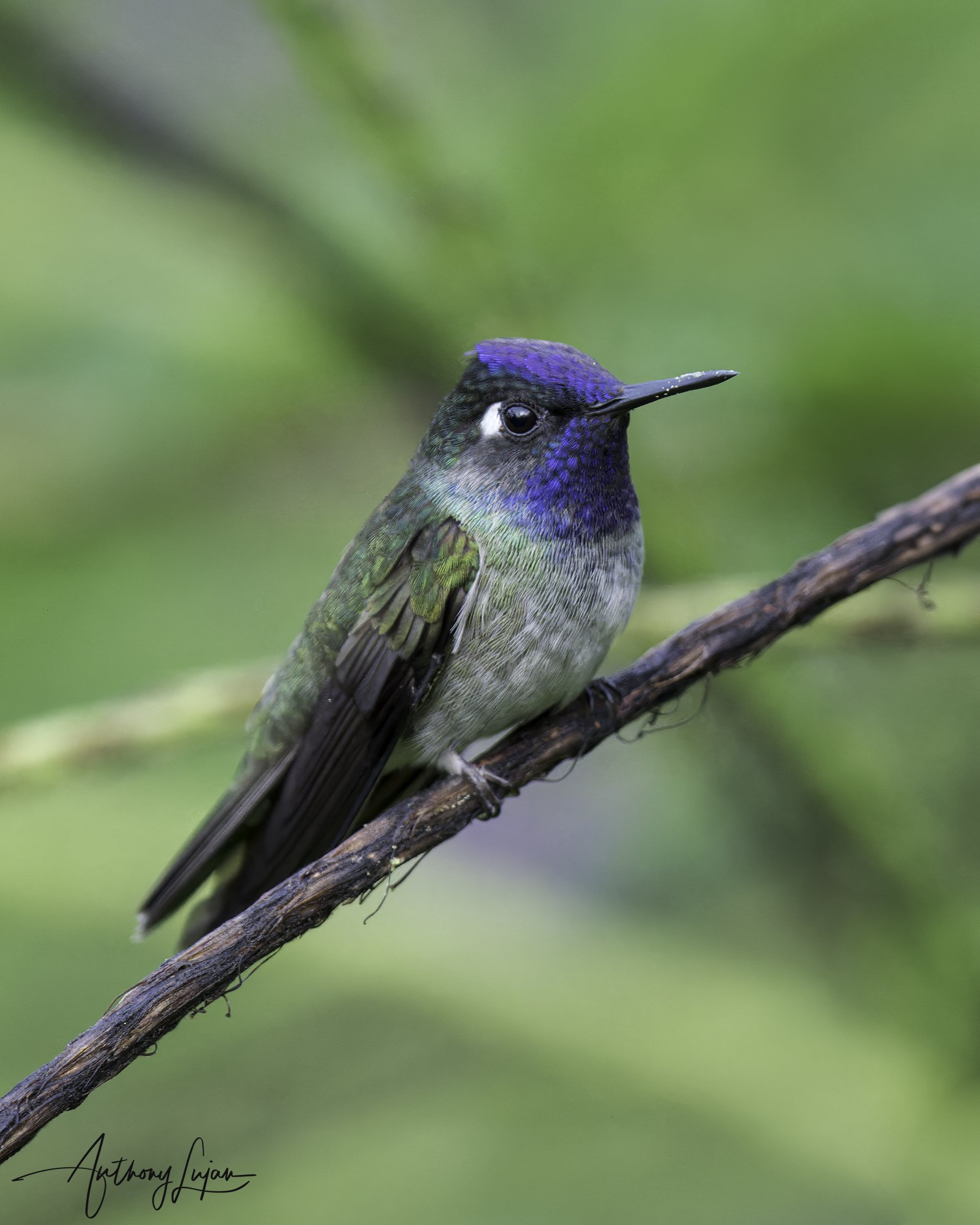
No other species is currently recognized in the genus Klais; the Violet-headed Hummingbird is the only member of this genus.
Please note: The content provided in this article reflects Anthony’s personal experience and photographic approach. Results can vary depending on light, weather, location, equipment, subject behavior, and field conditions.