
White-bellied Mountain-gem
Scientific name: Lampornis hemileucus
The White-bellied Mountain-gem is a localized highland hummingbird of Costa Rica and western Panama, where it occupies wet montane forests and cloudforest canopies. It is currently assessed as Least Concern, with an estimated 20,000–49,999 mature individuals and a Stable population trend.
At a Glance
Family: Trochilidae (hummingbirds)
Clade: Mellisugini – “Bee” hummingbirds
Genus group: Lampornis — mountain-gems, medium to large highland hummingbirds with bold facial patterns and colorful throats.
Range: Caribbean slope from north‑central Costa Rica south and east into western Panama as far as Veraguas; locally on the Pacific slope in Panama.
Habitat: Canopy of cool, very wet subtropical forest and cloudforest; also forest edge, gaps, and clearings; mostly avoids heavily altered secondary forest and semi‑open country.
Elevation: Breeds around 700–1,400 m, descending seasonally to about 400–600 m after breeding.
Length: 10–11 cm (3.9–4.3 in).
Weight: Males about 6.2 g (0.22 oz), females about 5.1 g (0.18 oz)
Status: Least Concern (IUCN)
Name Origin
The genus name Lampornis combines Greek lampros (“bright,” “shining”) and ornis (“bird”), referring to the bright metallic plumage and vivid throats of mountain-gems. The species name hemileucus comes from Greek hemi (“half/partial”) and leukos (“white”), referencing the strikingly white underparts contrasted with darker upperparts. Together, Lampornis hemileucus roughly means “bright bird with partly white” plumage, matching the male’s glittering green top and white belly.
Subspecies and Distribution
White-bellied Mountain-gem is monotypic, with no recognized subspecies.
Across its range, it occurs:
On the Caribbean slope from north‑central Costa Rica south and east into western Panama (to Veraguas Province).
Locally on the Pacific slope in Panama where suitable wet montane forest persists.
Within this narrow highland belt, it favors the canopy of very wet subtropical forest and cloudforest and moves downslope after the breeding season.
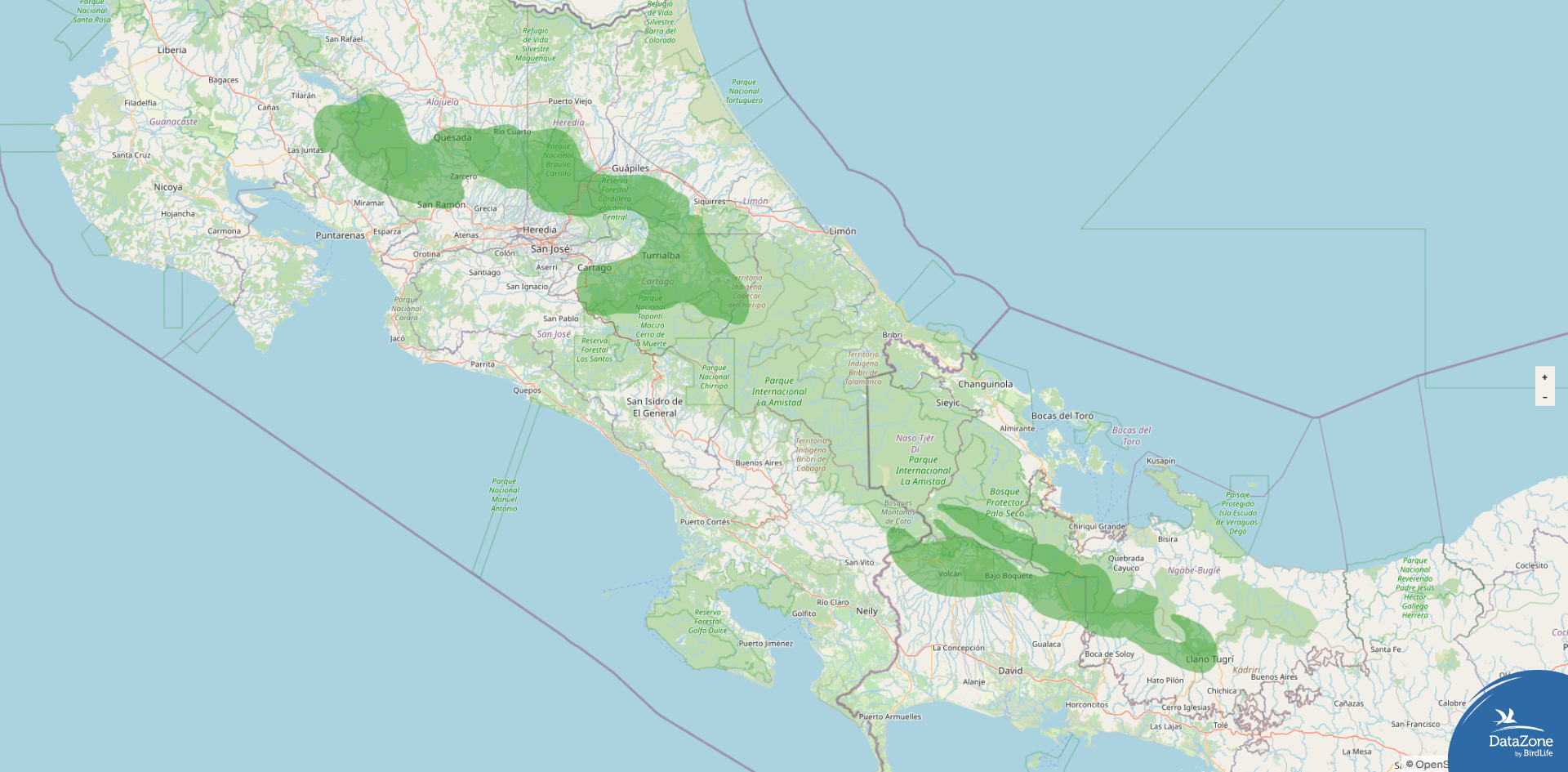
Legend
Green Resident
Identification
Male
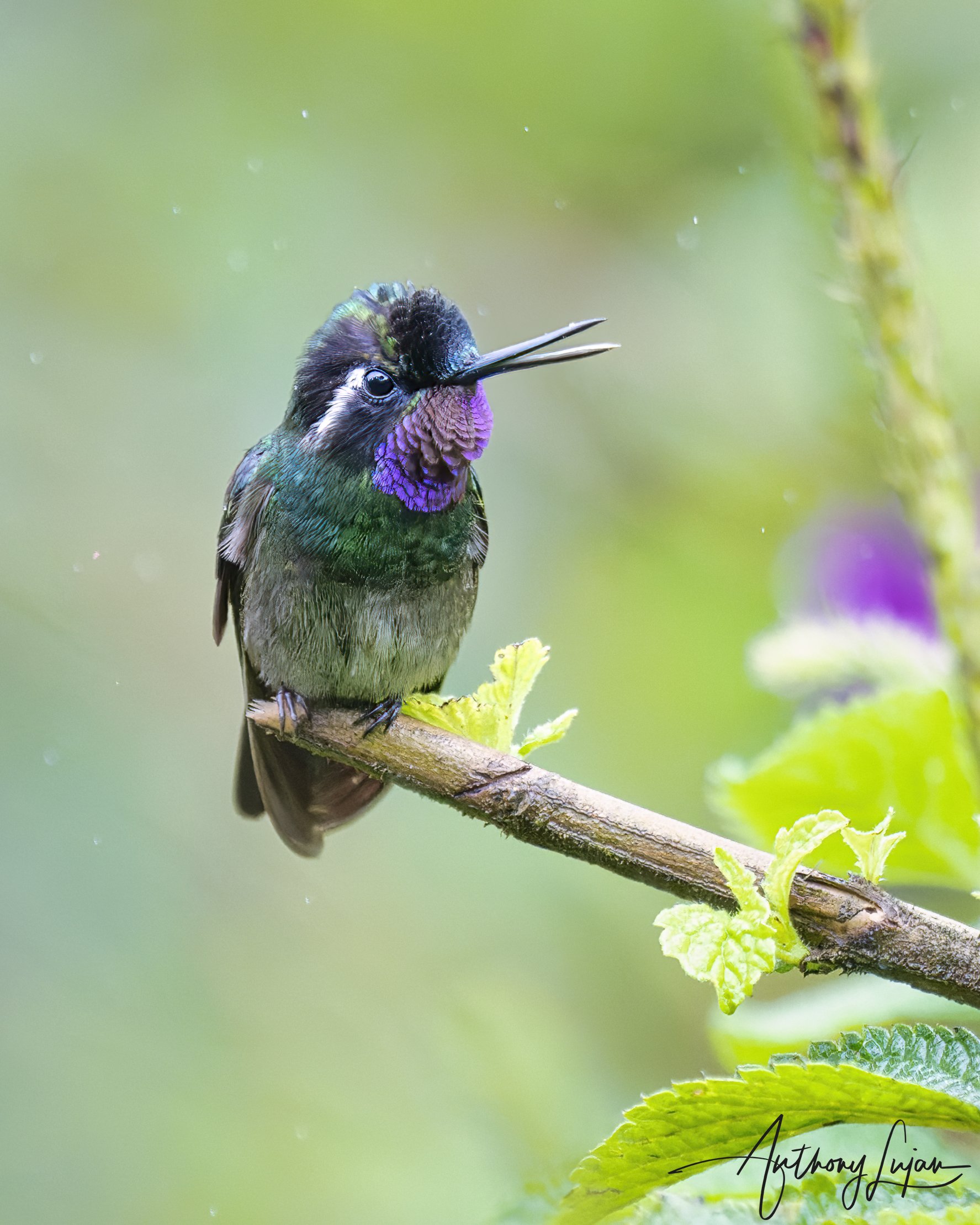
Adult males are medium‑sized mountain-gems with a glittering green face and crown and bronzy‑green upperparts, including bronzy uppertail coverts. Both sexes have a medium‑length black bill, bold white stripe behind the eye, dark mask, and pinkish feet. The male’s gorget is blue‑violet, sharply contrasting with the bright white belly and underparts, which show green speckling along the sides and flanks. The tail is bronzy with dusky gray bands near the ends of the outer rectrices, creating a subtly banded appearance.
Female
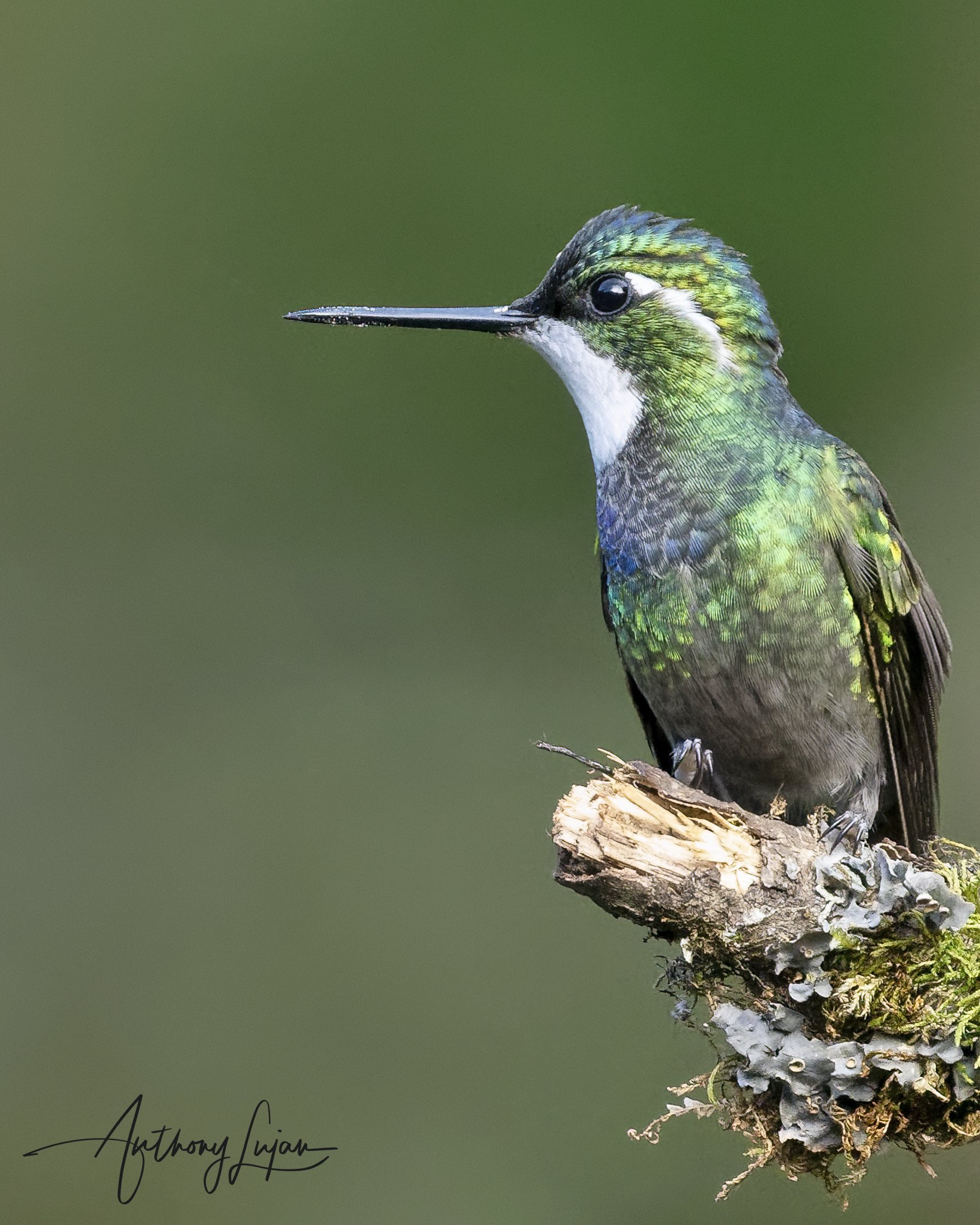
Females have metallic green upperparts like males but show a white throat with green speckles instead of a solid blue‑violet gorget. Their underparts are largely white with variable green spotting on the sides, and the facial pattern is similar but slightly softer. Juveniles resemble females, with rusty fringes on green body feathers; young males gradually develop a bronzy then blue‑violet throat as they mature.
Habitat and Behavior
White-bellied Mountain-gems inhabit the canopy of cool, very wet subtropical forest and cloudforest, and also use forest edges, gaps, and clearings, but mostly shun extensive secondary forest and semi‑open country. In Costa Rica they breed between about 700 and 1,400 m and then move downslope to roughly 400–600 m after breeding, making short elevational movements rather than long migrations.
They feed on nectar from flowering trees and epiphytes, especially epiphytic Ericaceae and Columnea species, and are important pollinators in these montane forests. Males are notably aggressive at clumps of flowering epiphytes and often dominate other hummingbirds, while females and nonterritorial birds forage more widely. In addition to nectar, they take insects by hawking from perches, and females sometimes glean small arthropods from foliage.
Population
The global population of White-bellied Mountain-gem is estimated at 20,000–49,999 mature individuals. The population trend is considered Stable, and the species is assessed as Least Concern by the IUCN. Although it has a somewhat restricted range, it is locally common and much of its habitat remains intact, especially within several Costa Rican national parks and other protected montane forests.

Conservation
Conservation of White-bellied Mountain-gem depends on continued protection of Talamancan cloudforest and wet montane forests in Costa Rica and western Panama. Safeguarding primary forest, maintaining epiphyte‑rich canopies, and limiting conversion of foothill and montane forest to agriculture will help keep this localized highland hummingbird secure. Because it relies heavily on intact, wet forest canopies, ongoing monitoring of forest cover and protection of key national parks are particularly important.
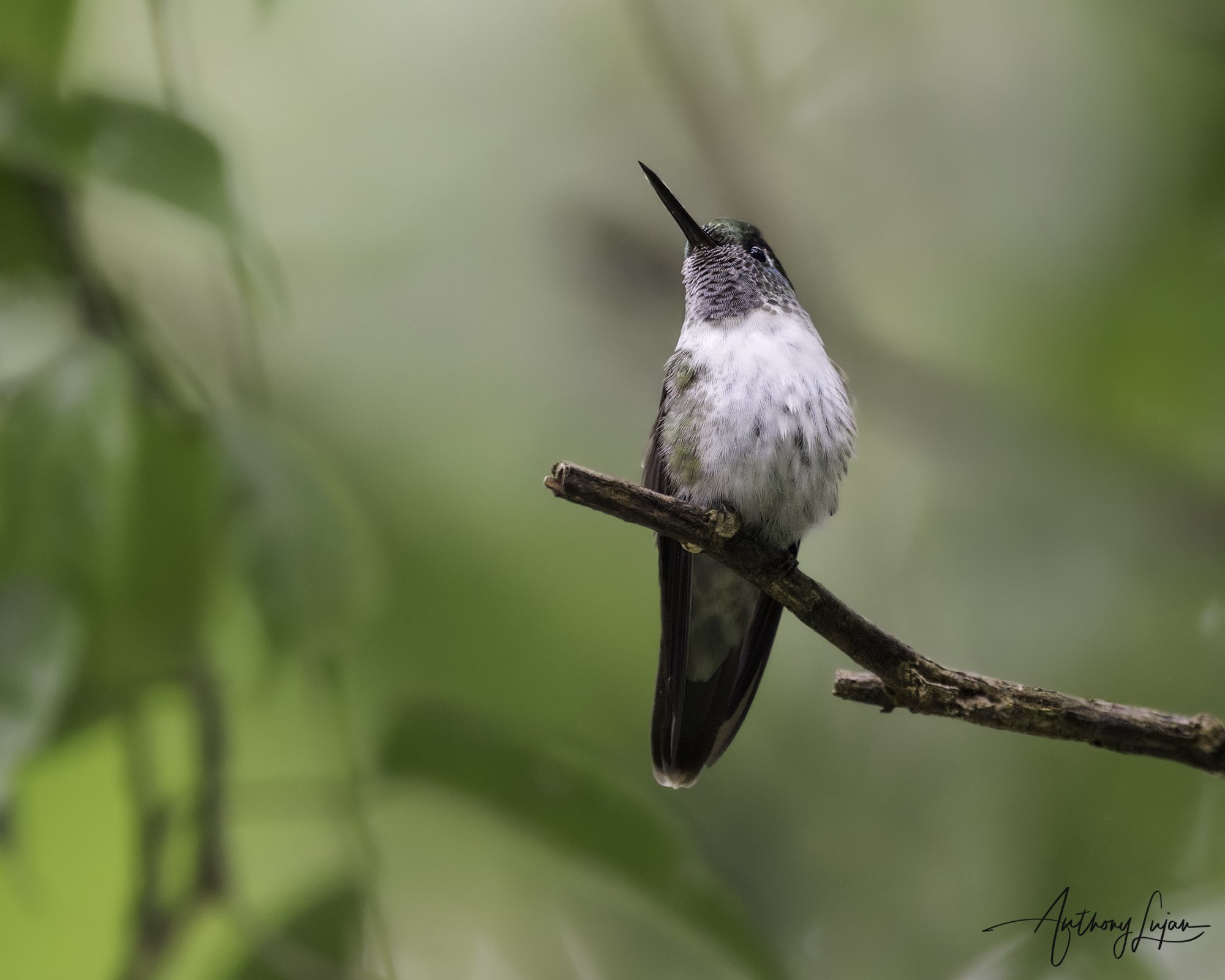

Checkout Anthony’s playlist of this species! Click the top right dropdown to see all the videos.
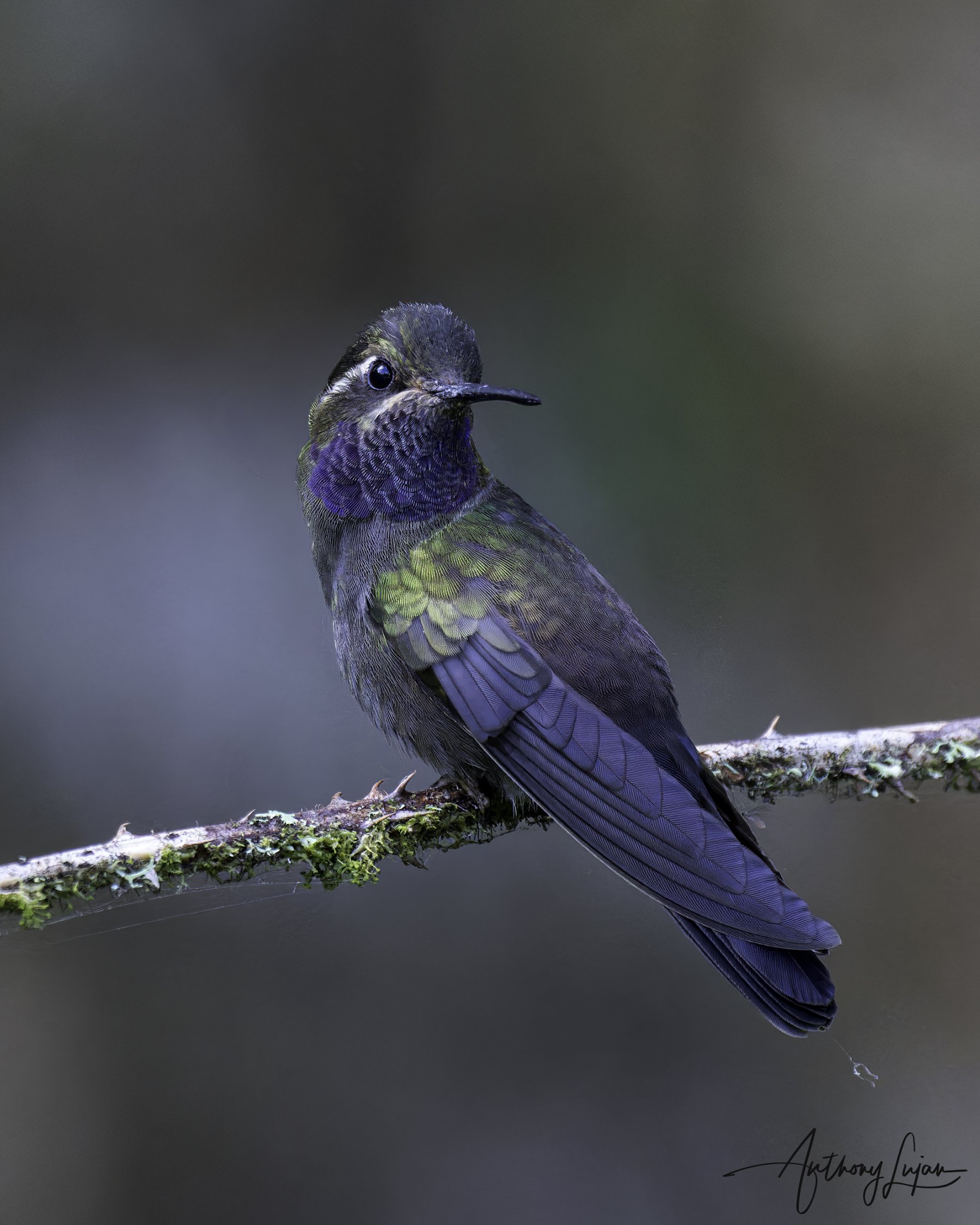
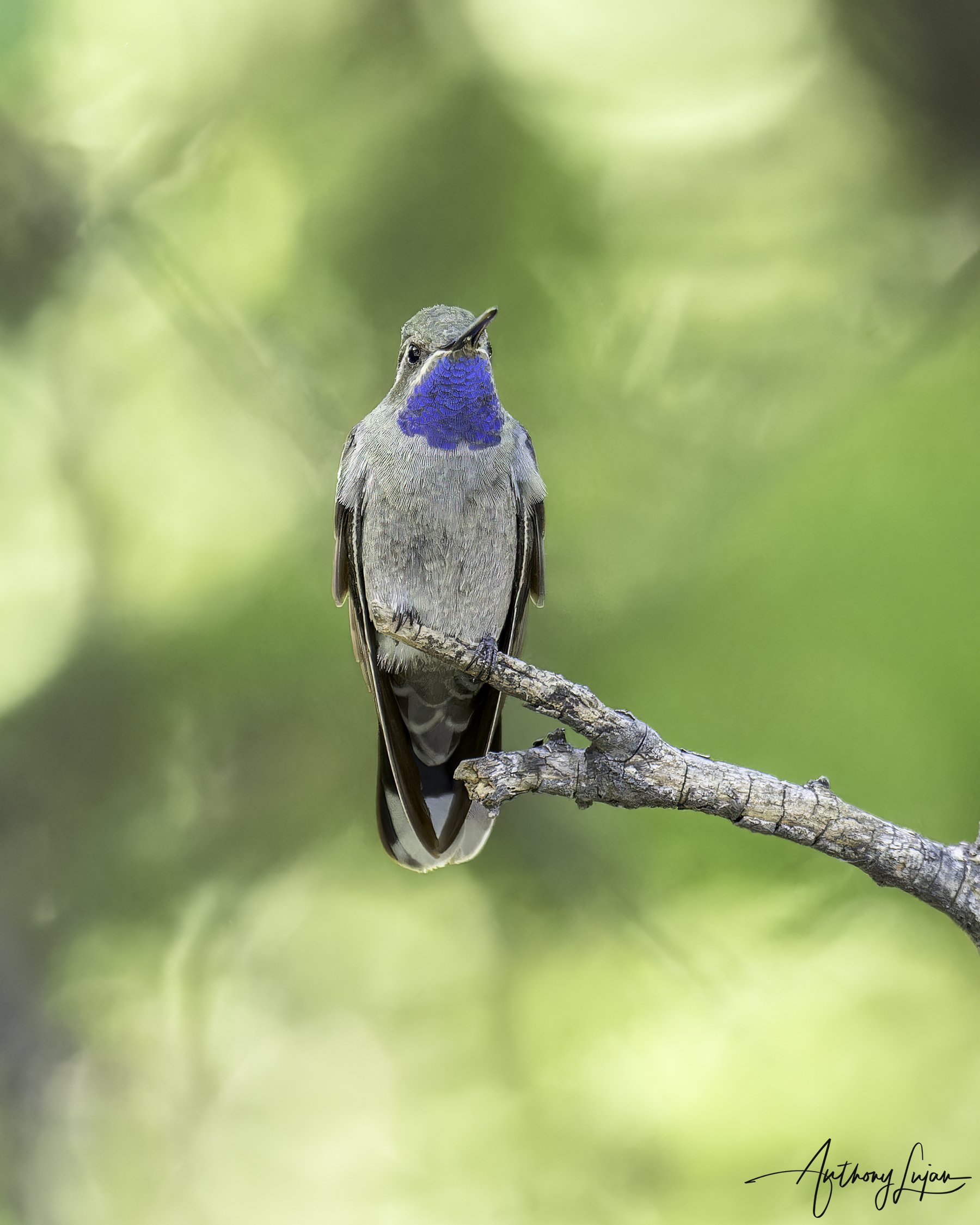
Related species in the Lampornis genus (7 species total):


Please note: The content provided in this article reflects Anthony’s personal experience and photographic approach. Results can vary depending on light, weather, location, equipment, subject behavior, and field conditions.