
White-bellied Woodstar

Scientific name: Chaetocercus mulsant
The White-bellied Woodstar is a tiny hummingbird of humid Andean forests and their edges from Colombia south through Ecuador and Peru into western Bolivia. The number of mature individuals is unknown, the population is decreasing, it is considered non-migratory, and it is currently listed as Least Concern and monotypic.
At a Glance
Family: Trochilidae (hummingbirds)
Clade: Mellisugini – Bee Hummingbirds
Genus group: Chaetocercus — 6 species, all tiny “woodstars” of northern and western South America
Range: Central and Eastern Andes of Colombia south through Ecuador and Peru into Bolivia as far as Cochabamba Department.
Habitat: Edges of humid and wet montane forest, tall second growth, pastures and cultivated areas with trees and shrubs, and heavily degraded former forest.
Elevation: Most common around 2,200–2,800 m, regularly found from roughly 1,500 m and locally up to about 4,000 m.
Length: About 8–8.5 cm (3.1–3.3 in).
Weight: Approximately 3.8–4 g.
Number of mature individuals: Unknown
Population trend: Decreasing
Status: Least Concern (IUCN)
Name Origin
The genus name Chaetocercus means “bristle tail,” referring to the narrow, filamentous outer tail feathers of male woodstars. The species name mulsant honors French naturalist Martial Étienne Mulsant for his contributions to ornithology. The English name “White-bellied Woodstar” highlights the male’s gleaming white belly contrasted with its tiny woodstar build.
Subspecies & Distribution
Chaetocercus mulsant
Monotypic — no subspecies are recognized. It occurs from the Central and Eastern Andes of Colombia southward through the Andes of Ecuador and Peru into western Bolivia (Cochabamba), where it inhabits humid forest edges, tall second growth, and semi-open montane landscapes with scattered trees and shrubs.
Across this range, Chaetocercus mulsant is patchily distributed along the Andean slopes, primarily at mid to upper elevations where humid montane forest and its edges are widespread.
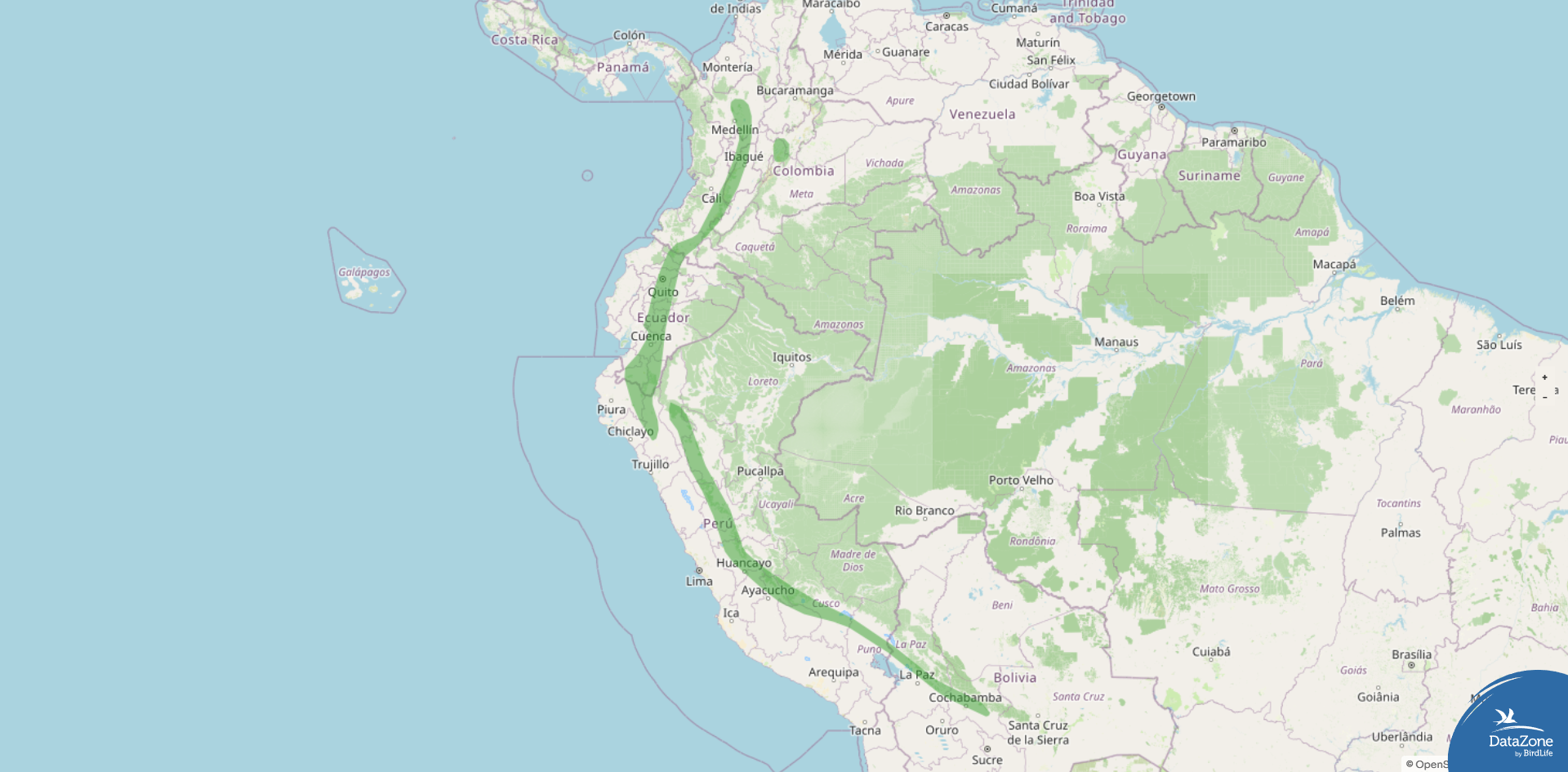
Legend
Green Resident
Species Overview
The White-bellied Woodstar is one of the slightly larger woodstars but still very small, with a bee-like flight and a preference for forest edges and open, shrubby Andean habitats. It is typically seen around flowering shrubs and trees at the borders of montane forest, along streams, in pastures with trees, and in gardens. Though it occupies a long stretch of the Andes, it is generally uncommon to fairly common locally, and habitat loss has led to a slow decline.
Male Description
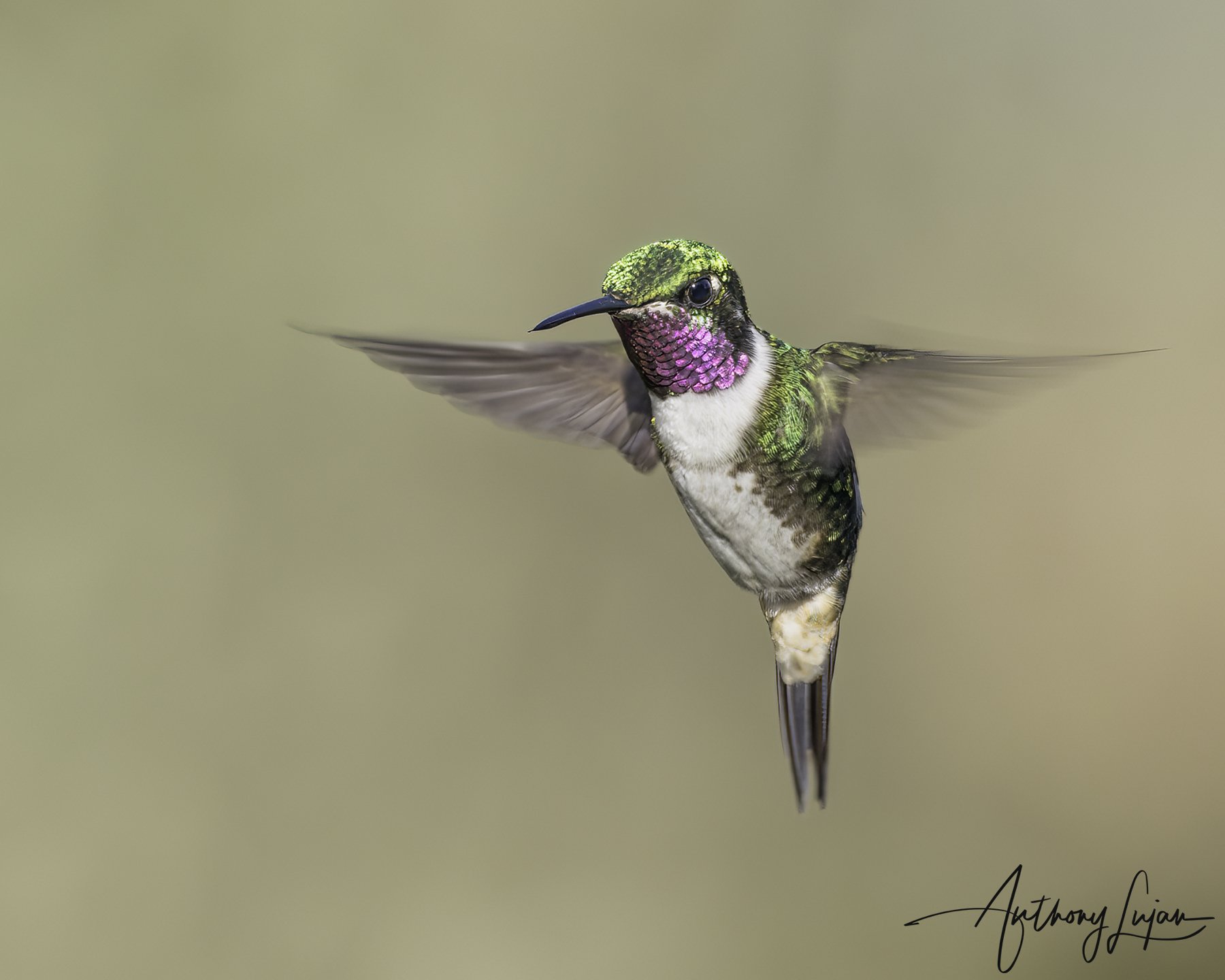
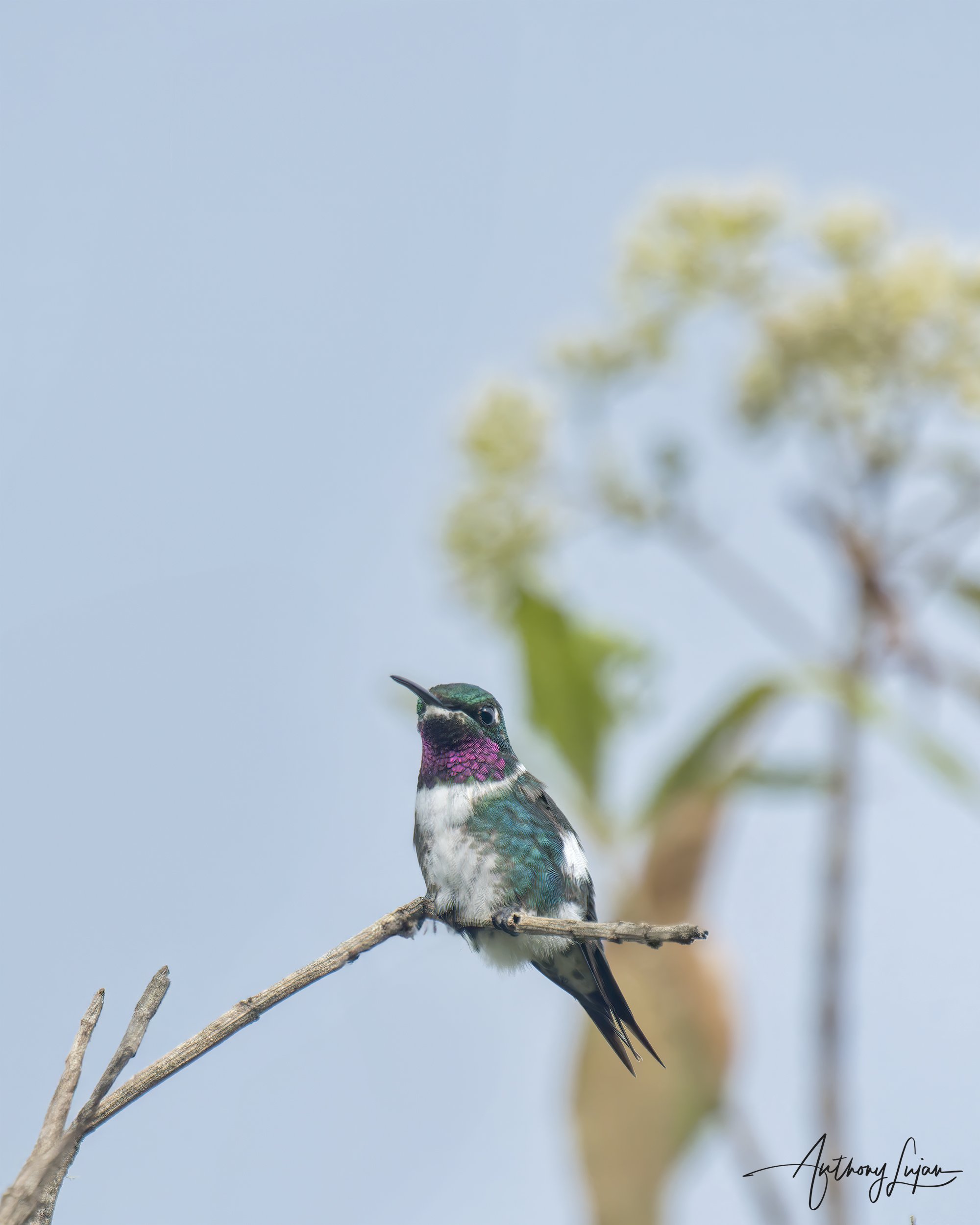
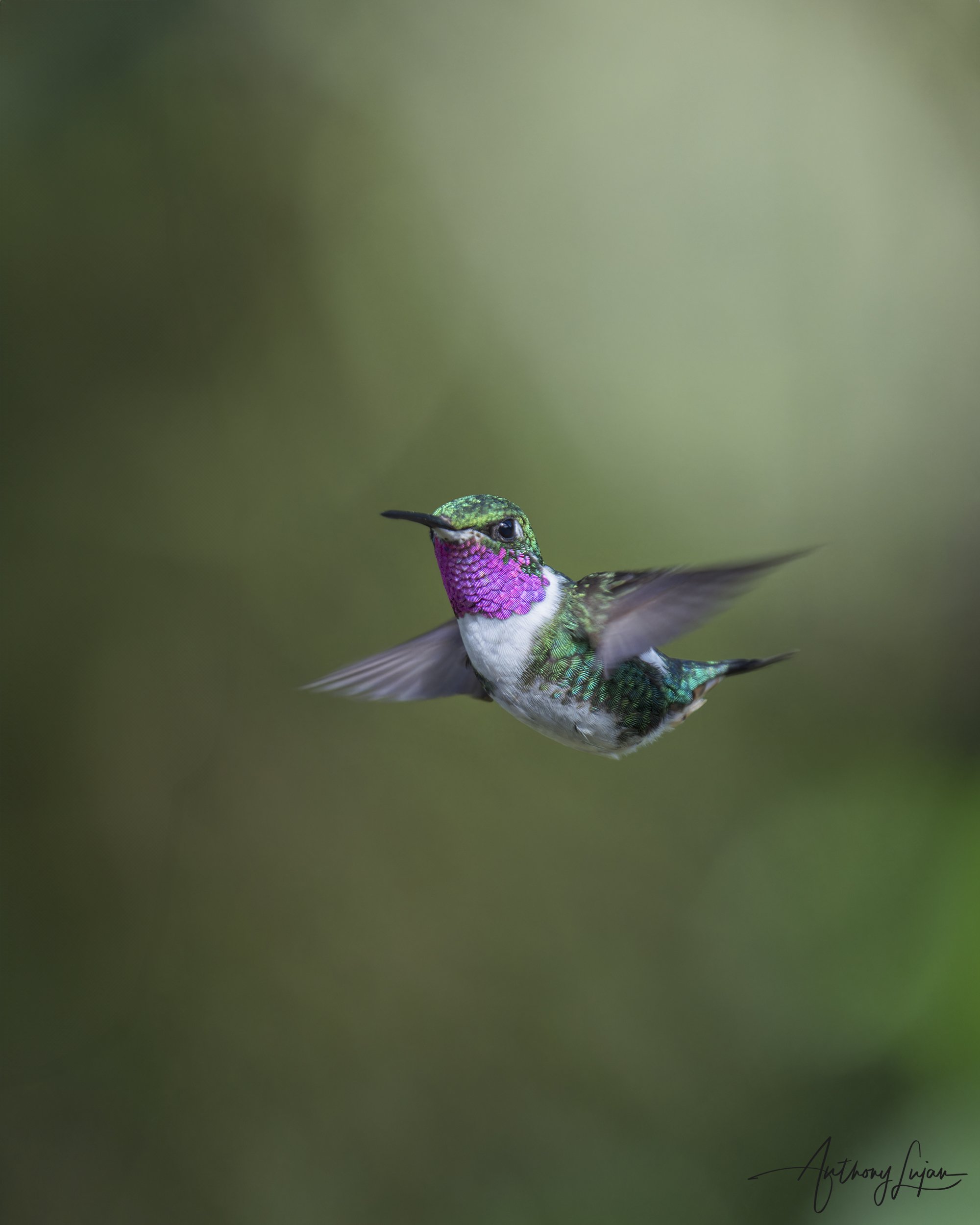
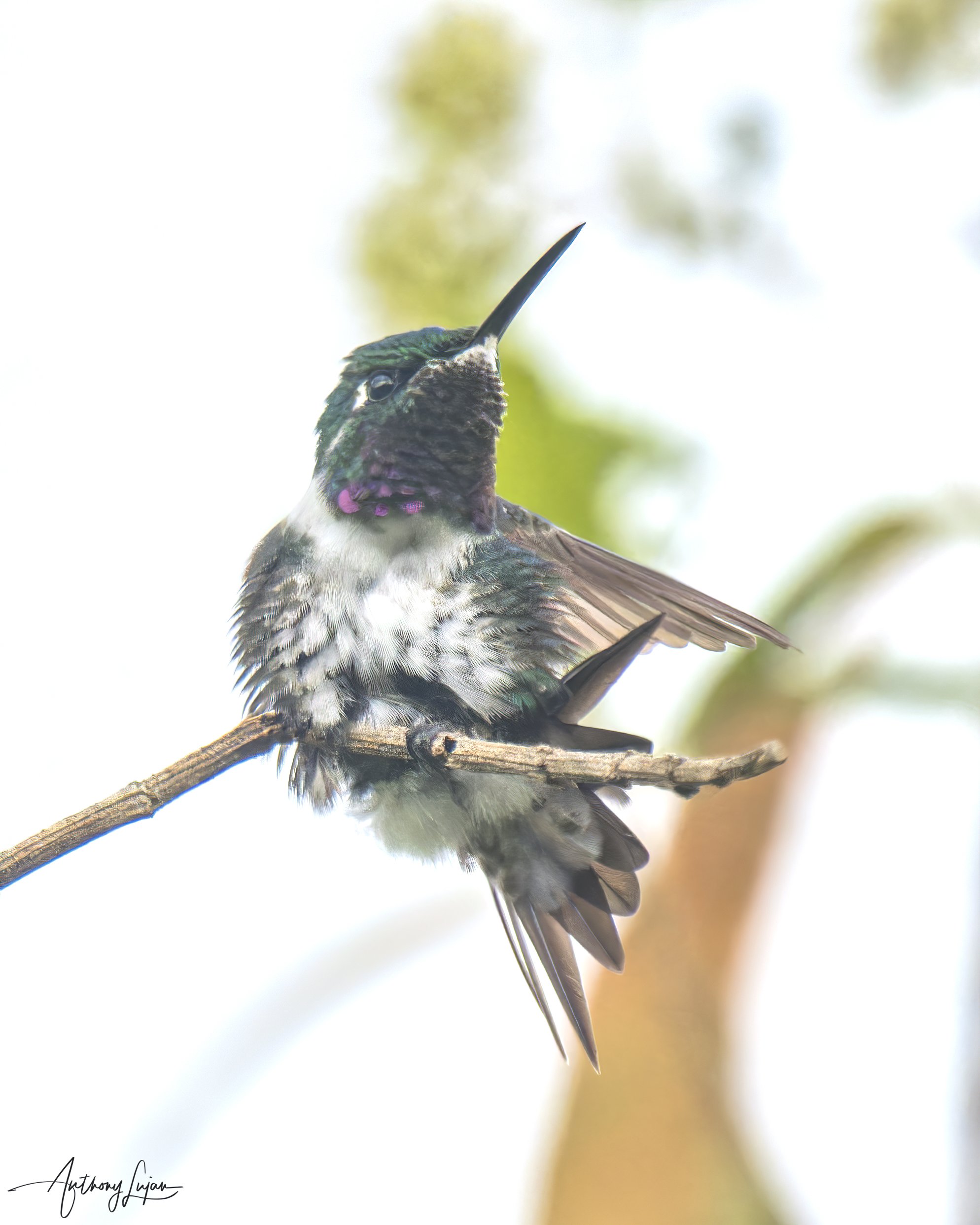
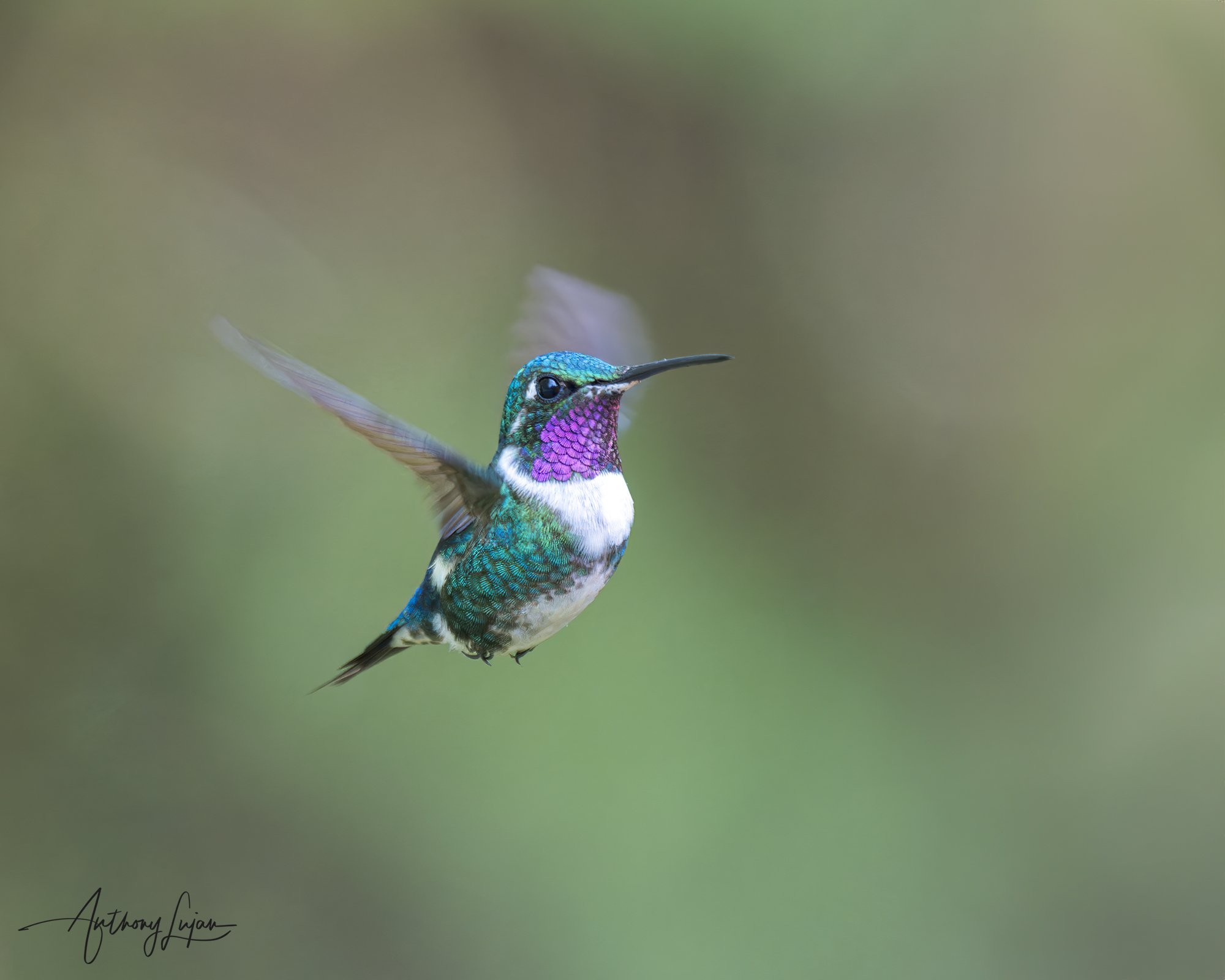
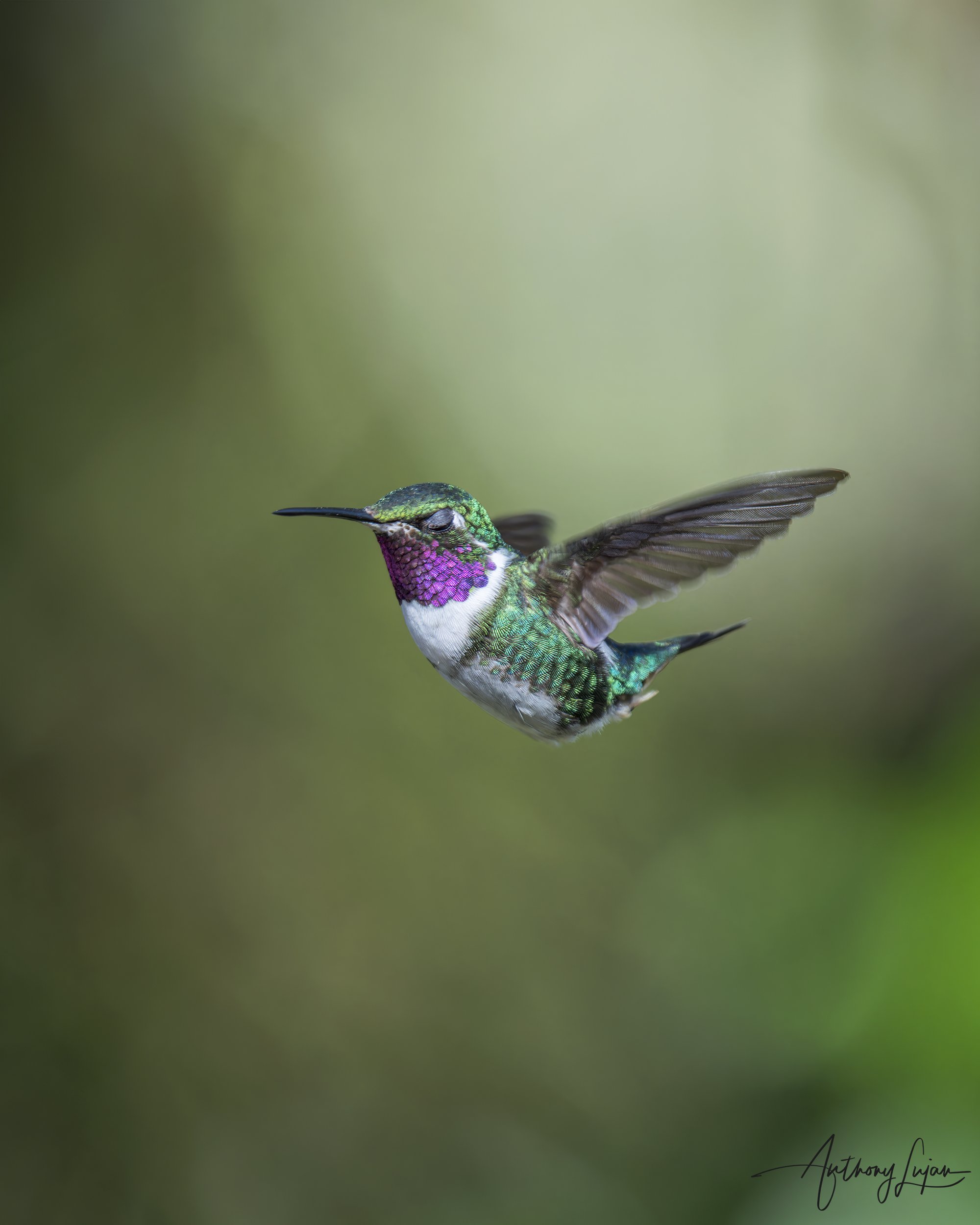
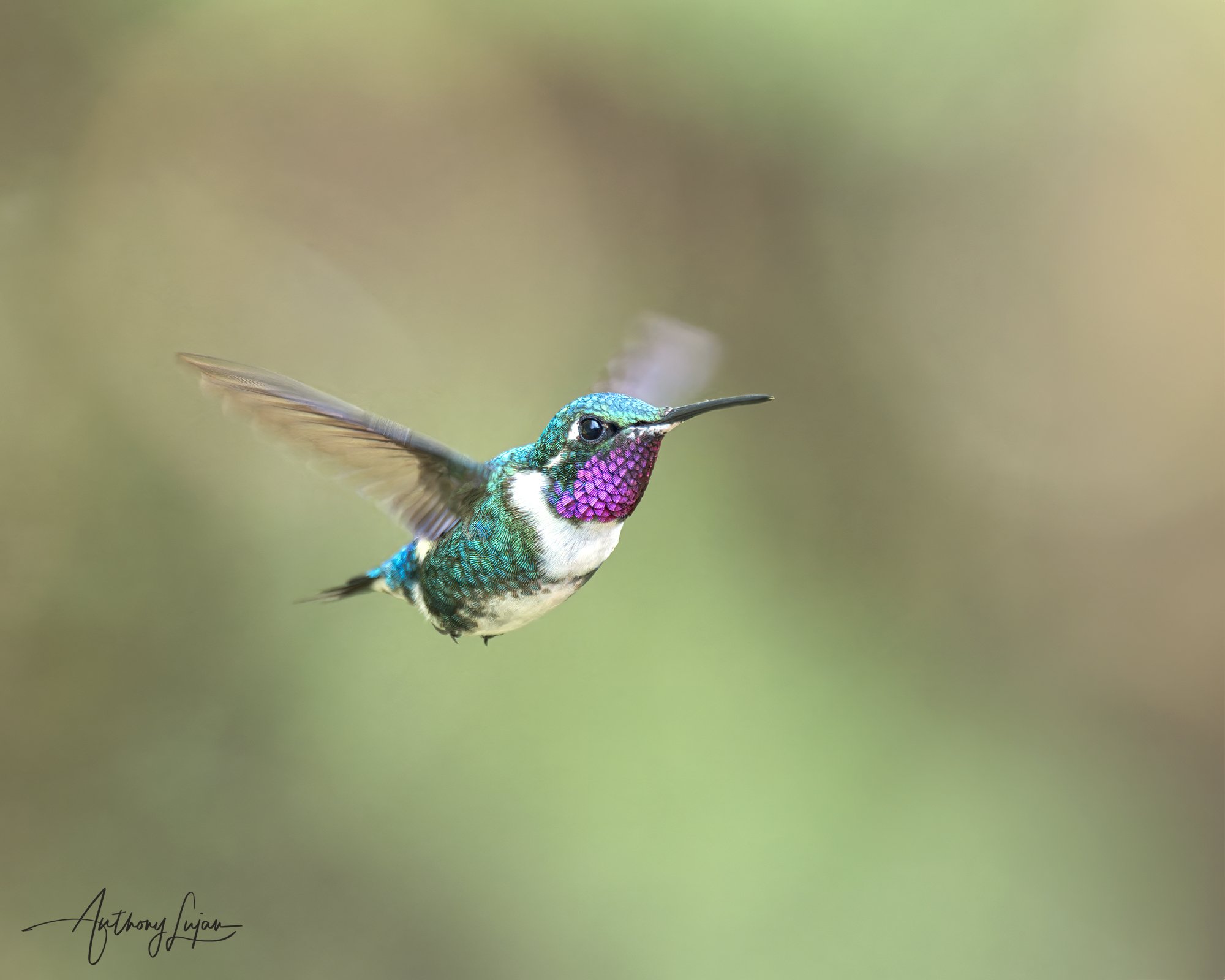
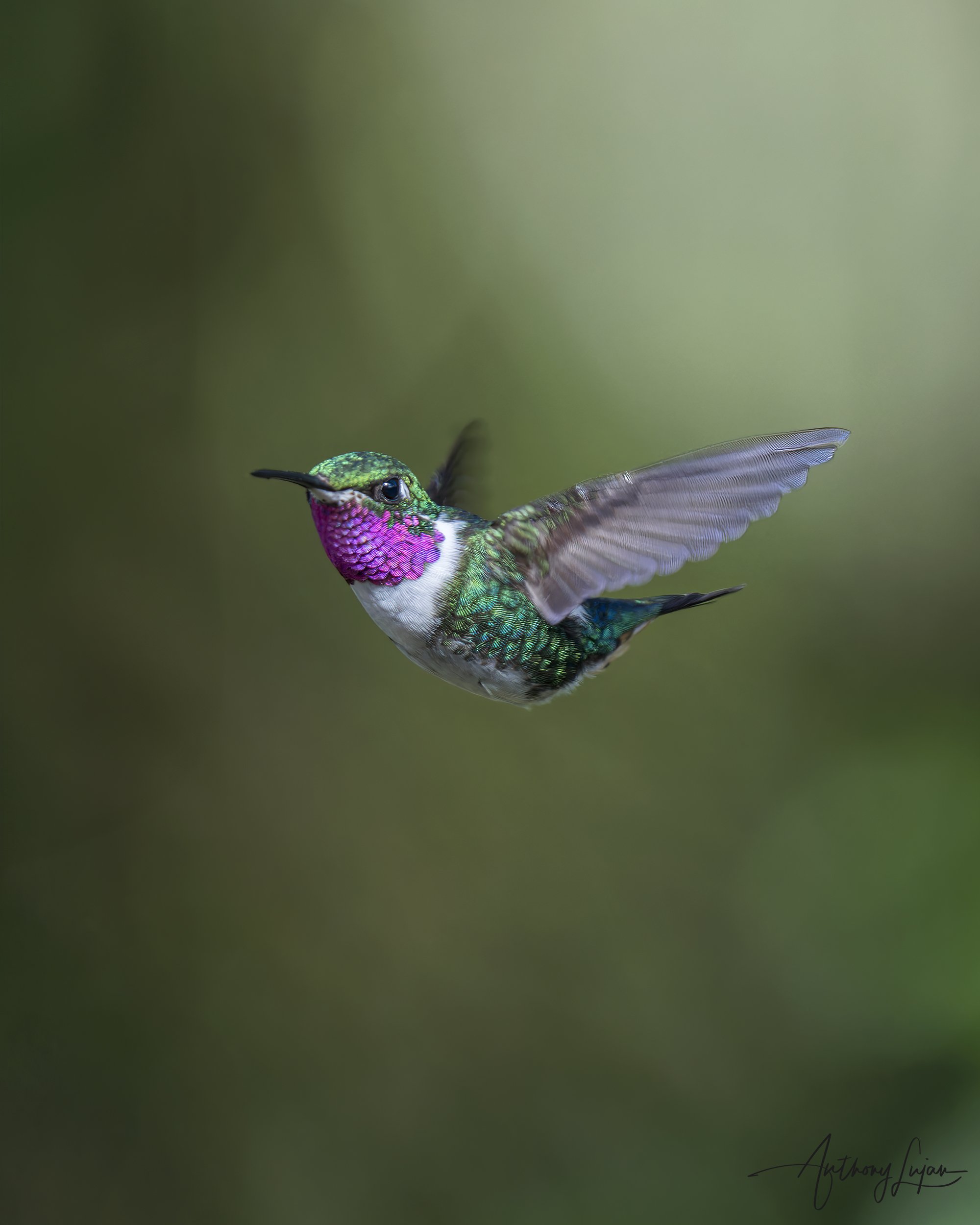
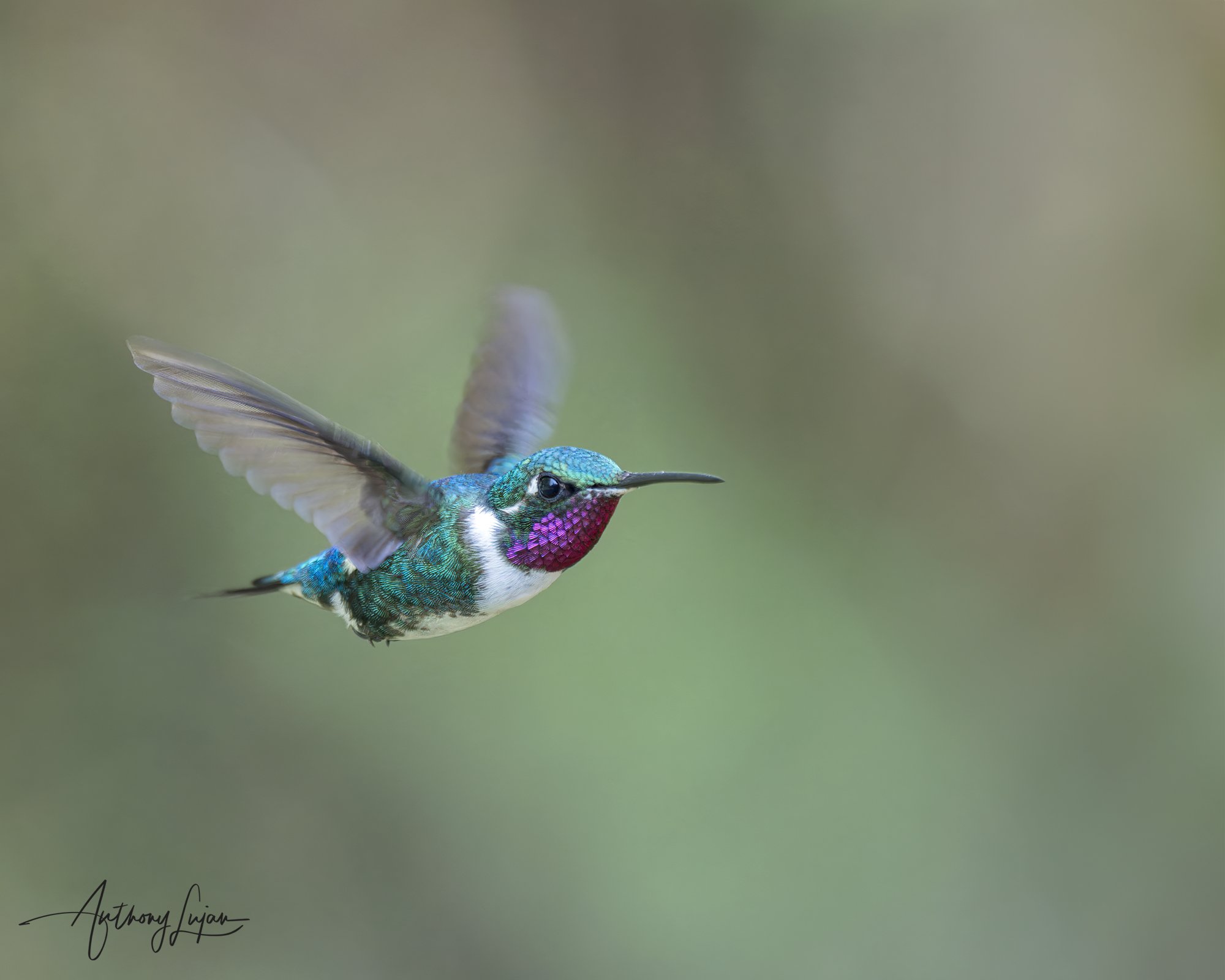
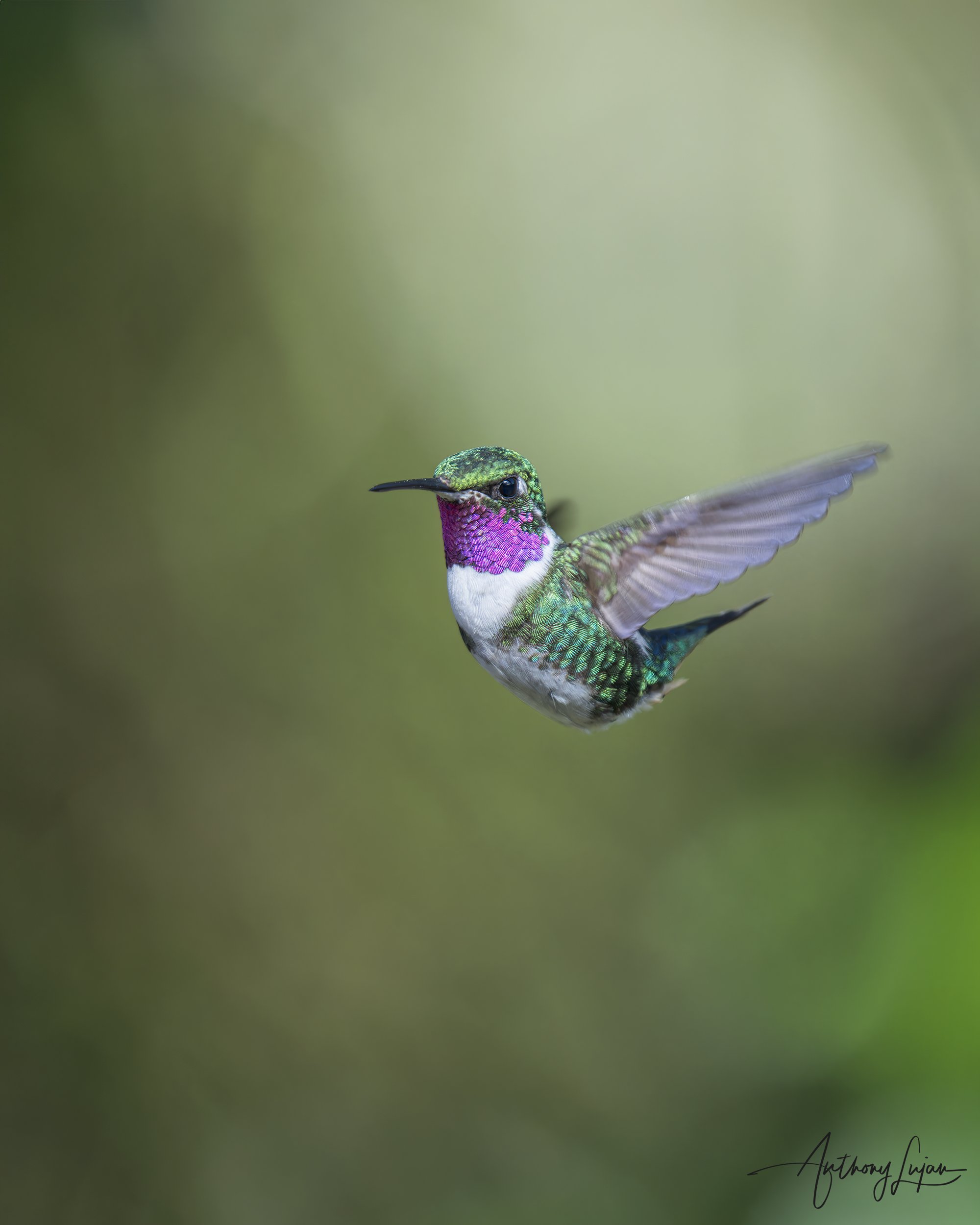
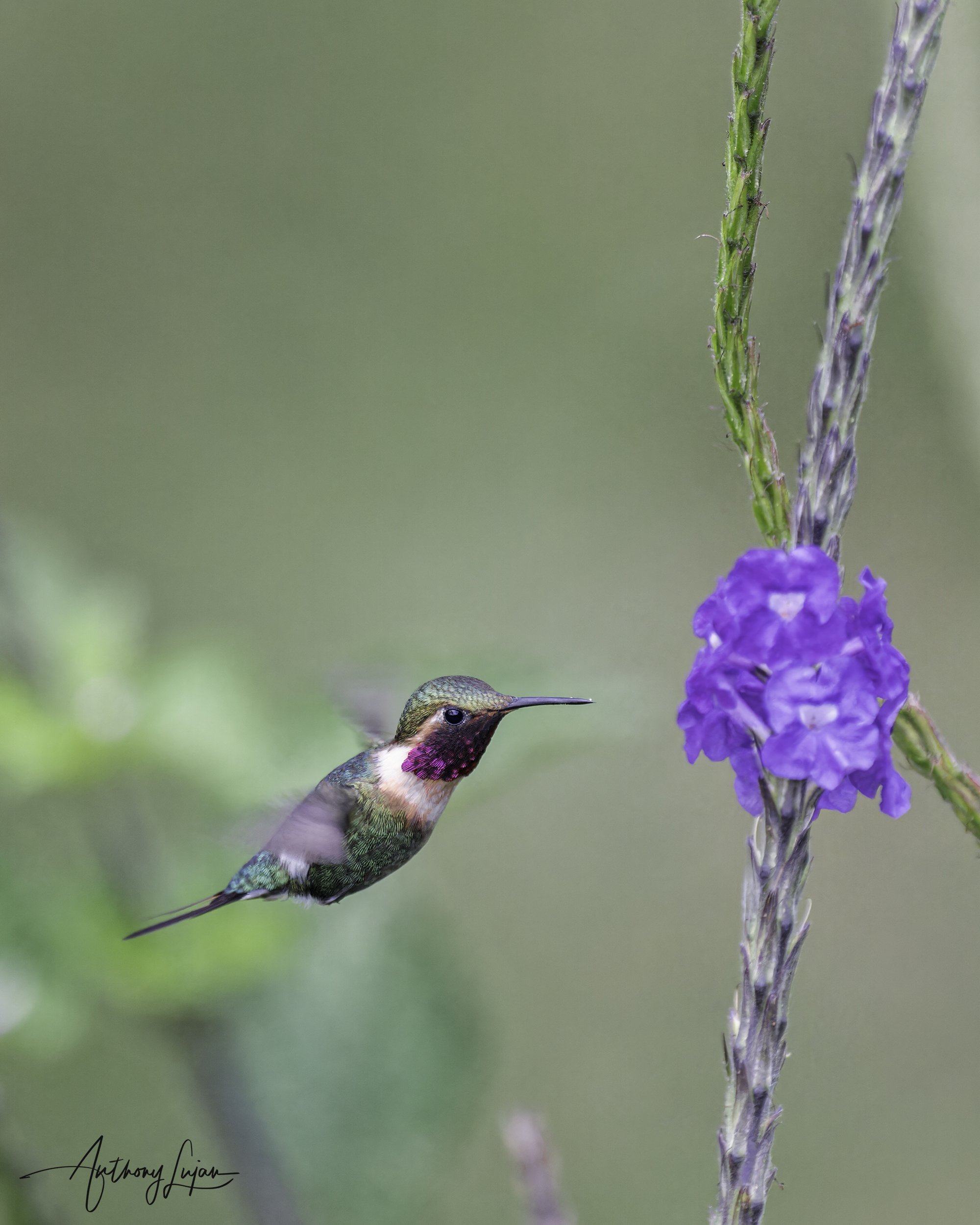
Adult males are shining dark bluish-green above, including the crown and back, with the green extending onto the flanks. A white line curves behind the eye and meets a broad white band across the upper breast, creating a clean, collar-like effect. The gorget is glittering reddish-violet, standing out strongly against the surrounding white and green. The belly is white, with conspicuous white patches on the flanks, and the tail is forked, bluish-green to blackish, with the outermost feathers reduced to narrow shafts lacking vanes, giving the typical woodstar “wire-tailed” look. Overall, males appear as tiny, dark green woodstars with a reddish-violet throat, bold white chest band and belly, white flank patches, and a short, forked filamentous tail.
Female Description
Adult females are bronzy green above with a straight black bill. The face shows a grayish “mask” with a buff-colored stripe running behind the eye. The throat is pale cinnamon, the belly is white, and the sides are tawny or light brownish-orange, giving a softly two-toned underpart pattern. The tail is rounded; the central feathers are green, and the outer feathers are cinnamon with a wide black subterminal band near the tips. Females lack the male’s iridescent gorget and forked filamentous tail, instead appearing as tiny bronzy-green hummingbirds with pale cinnamon throat, white belly, tawny sides, and a short, square tail with green and cinnamon-black patterning.
Habitat & Behavior
White-bellied Woodstars frequent edges of humid and wet montane forest, tall second growth, and semi-open habitats such as pastures, cultivated fields with trees, and degraded former forest. They often forage at mid-level to canopy along forest borders and streams, visiting small tubular flowers on shrubs, vines, and trees, and also take tiny insects for protein. Their flight is slow, seemingly erratic and bumblebee-like, with a noticeable wing buzz, and they are usually seen singly or in very small numbers. The species is considered resident throughout its range, with no major migratory movements known, though local elevational shifts likely follow flowering patterns and seasonal changes.
Population
The total number of mature individuals is unknown, but the White-bellied Woodstar is generally described as rare to uncommon along much of its Andean range. It is more regularly encountered in some zones of Ecuador and Peru where suitable forest edges and second growth are common, but overall it occurs at low densities. Ongoing deforestation, fragmentation, and degradation of montane forests and their edges are thought to be driving a gradual decrease in population.

Conservation
The White-bellied Woodstar is listed as Least Concern because of its broad Andean distribution, but its decreasing population and dependence on humid forest edges warrant continued monitoring. Habitat loss due to agricultural expansion, logging, and conversion of forest to pasture or more intensive land uses reduces the quality and extent of its preferred habitats. Conservation measures that protect montane forest and riparian corridors, maintain tall second growth, and encourage the retention of flowering shrubs and trees in agricultural landscapes will help support this species and other small woodstars.
taken in Colombia
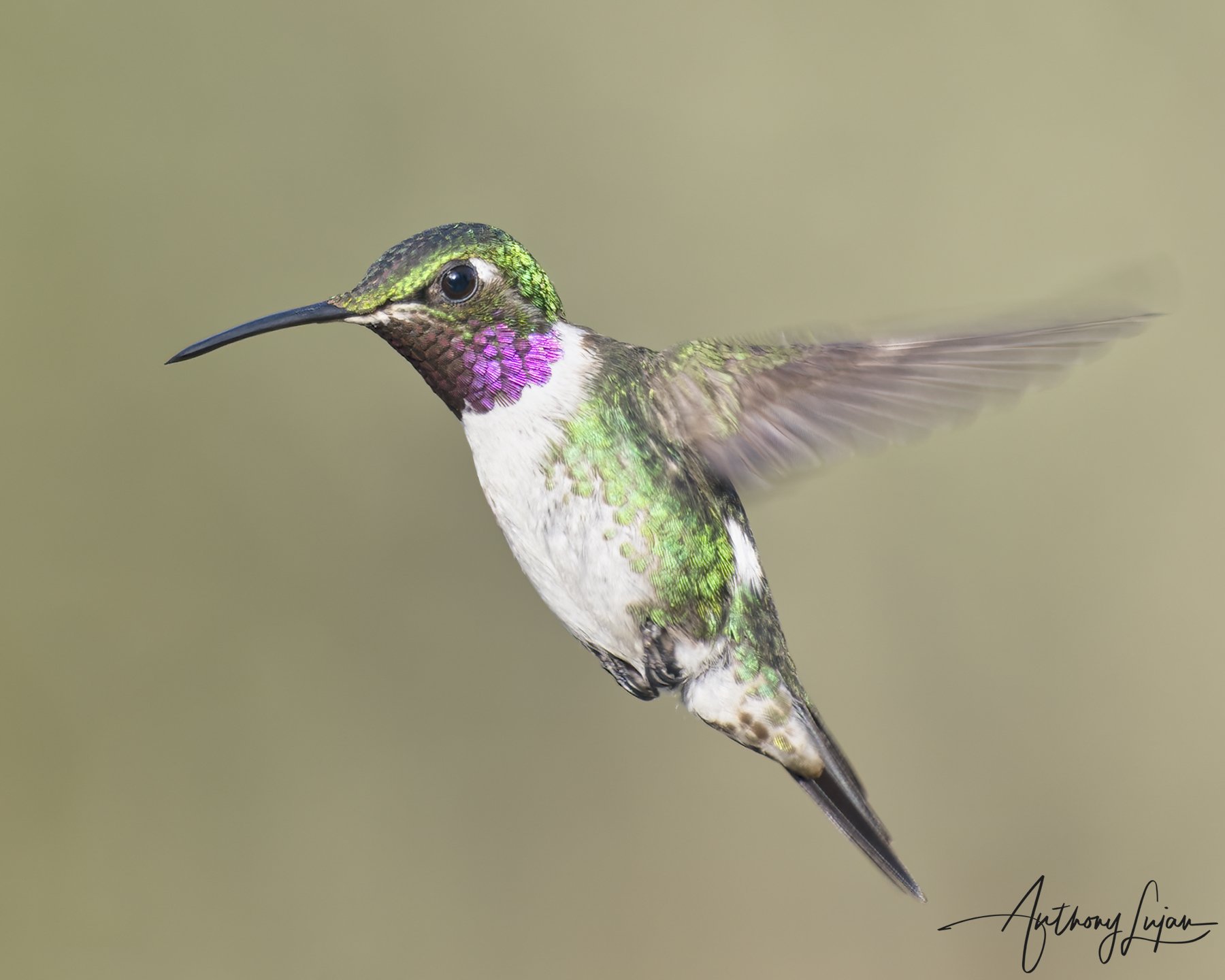

taken in Peru
Related species in the Chaetocercus genus (6 species total):



Please note: The content provided in this article reflects Anthony’s personal experience and photographic approach. Results can vary depending on light, weather, location, equipment, subject behavior, and field conditions.