
White-chested Emerald
Scientific name: Chrysuronia brevirostris
The White-chested Emerald is a small hummingbird of the Guiana Shield and Trinidad, found in eastern Venezuela, Guyana, Suriname, coastal French Guiana, and far northern Brazil, as well as on the island of Trinidad. The number of mature individuals is unknown, the population appears stable, it is considered largely non-migratory, and it is currently listed as Least Concern with three recognized subspecies.
At a Glance
Family: Trochilidae (hummingbirds)
Clade: Trochilini – Emeralds
Genus group: Chrysuronia — 10 species, 24 subspecies
Range: Eastern Venezuela, the Guianas, extreme northern Brazil (northeastern Roraima), and Trinidad, mostly in lowland forest and semi-open habitats.
Habitat: Rainforest and semi-deciduous forest, gallery and secondary forest, scrub, savanna with trees, forest edges, cacao and other plantations, and gardens, often in dry to moderately humid lowlands.
Elevation: Primarily from sea level up to a few hundred meters in lowland zones.
Length: About 9–10 cm (3.5–3.9 in).
Weight: Around 4–5 g.
Number of mature individuals: Unknown
Population trend: Stable
Status: Least Concern (IUCN)
Name Origin
The genus name Chrysuronia is formed from Greek roots meaning “golden tail,” though in this species the tail is more bronze-green than truly golden. The species name brevirostris means “short-billed,” referring to its relatively short, straight bill compared to some other hummingbirds. The English name “White-chested Emerald” highlights the clean white chest and belly that contrast with the bird’s emerald-green upperparts.
Subspecies & Distribution
Chrysuronia brevirostris chionopectus
Distribution: Endemic to Trinidad, where it occurs in a range of semi-open habitats including forest edges, dry and moist forest, plantations, and gardens.Chrysuronia brevirostris brevirostris
Distribution: Eastern Venezuela, Guyana, Suriname, and extreme northern Brazil (northeastern Roraima), mainly in lowland forest, forest edges, and semi-open woodland.Chrysuronia brevirostris orienticola
Distribution: Coastal French Guiana, known from lowland coastal forest, scrub, and nearby semi-open landscapes.
Taken together, Chrysuronia brevirostris forms a patchy but fairly continuous band across the Guiana Shield and adjacent areas, from Trinidad and eastern Venezuela east through the Guianas into far northern Brazil, largely confined to lowland forest and semi-open country.
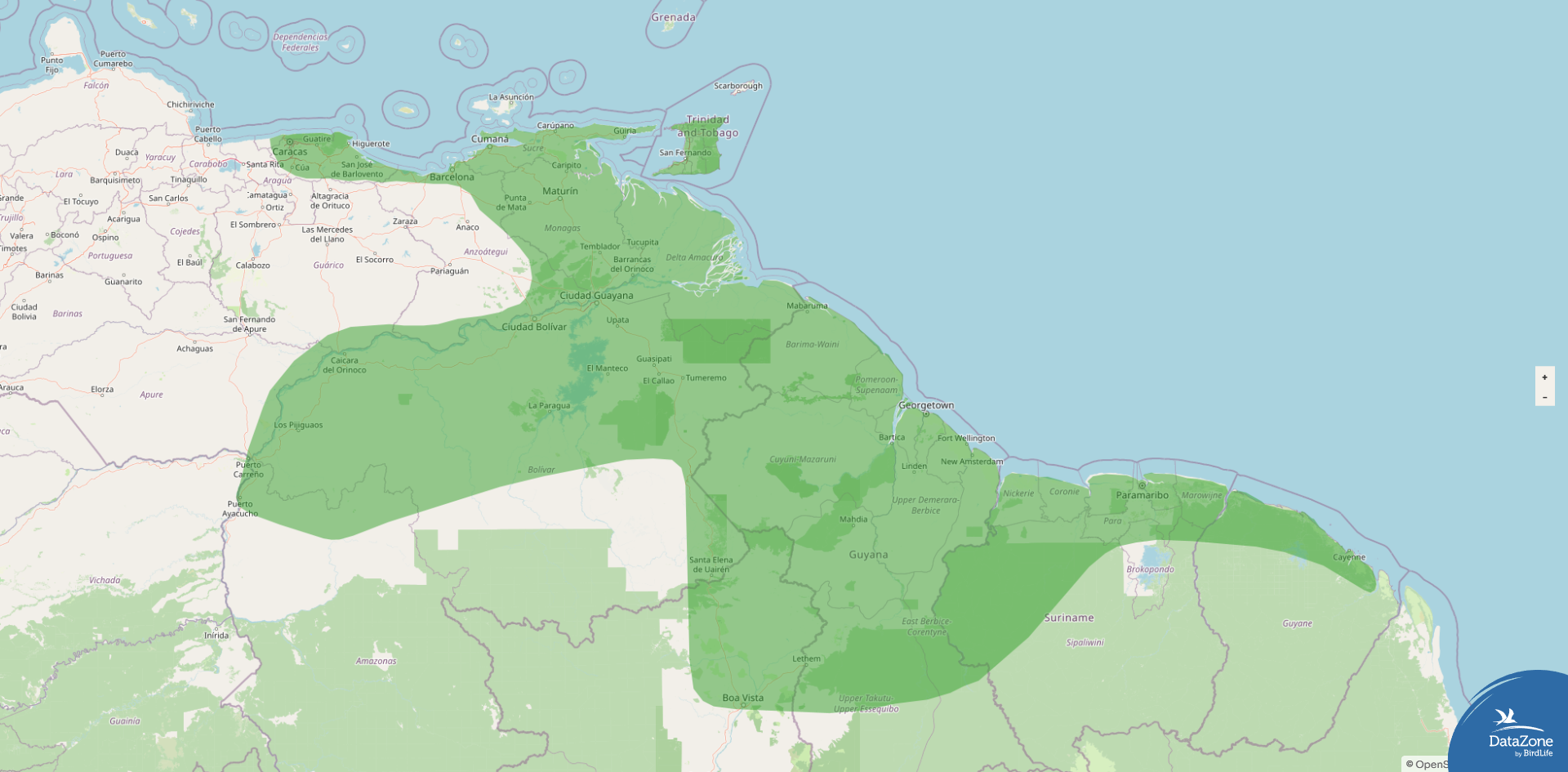
Legend
Green Resident
Species Overview
The White-chested Emerald is a common small emerald in Trinidad and parts of the Guiana region, frequenting forest edges, secondary growth, plantations, and gardens. It adapts well to disturbed habitats and cultivated landscapes as long as flowering shrubs and trees are available. Its combination of bright green upperparts and a clean white chest and belly makes it one of the easier regional hummingbirds to recognize.
Male Description
Adult males have a short, straight, dark bill, usually entirely blackish. The forehead, crown, and upperparts are bright emerald green, often with a slight bronze sheen toward the rump. The chest and belly are white, sharply contrasting with the green sides and flanks, and the undertail coverts are pale with some green or bronzy wash. The tail is bronze-green to slightly coppery with darker subterminal shading but lacks bold white patches. Overall, males appear as compact, bright green hummingbirds with a clean white chest and belly and a short dark bill.
Female Description
Females are very similar to males in overall pattern, with green upperparts and a white chest and belly, but the contrast between the sides and center of the underparts can be slightly less sharp. Some females show a faint grayish or lightly spotted wash on the throat and upper breast rather than a perfectly clean white. The tail is bronze-green and similar in pattern to the male’s, and the bill is likewise short and dark. In the field, females look almost like males, and the species shows little obvious sexual dimorphism in plumage compared to many other hummingbirds.
Habitat & Behavior
White-chested Emeralds occupy a variety of lowland habitats, from rainforest and semi-deciduous forest to gallery forest, secondary growth, scrub, savanna with trees, plantations (especially cacao), and gardens. They typically forage at low to mid-levels, visiting nectar-rich flowers in shrubs, small trees, and forest edges, and also take small insects and spiders for protein. Birds often defend productive flowering shrubs in gardens and plantations but may also follow loose trap-line routes through their home ranges. The species is generally regarded as resident, with only local or seasonal movements, especially in response to flowering patterns; large-scale migration is not known.
Population
The total number of mature individuals is unknown, but the White-chested Emerald is described as widespread and common in much of its range, particularly on Trinidad and in suitable lowland habitats of the Guianas. Its tolerance of habitat disturbance, use of plantations, and presence in gardens suggest a relatively secure status at present. Overall, the population trend is considered stable, with no evidence of major declines.

Conservation
The White-chested Emerald is assessed as Least Concern because of its broad distribution in the Guiana region and Trinidad, stable population, and ability to use a variety of semi-open and cultivated habitats. While deforestation and land-use change can reduce local forest cover, this species often persists in mosaics of secondary forest, plantations, and gardens. Maintaining flowering shrubs and trees in agricultural landscapes, preserving forest edges and riparian strips, and protecting remaining lowland forests in the Guiana Shield and Trinidad will help ensure that this emerald remains common.
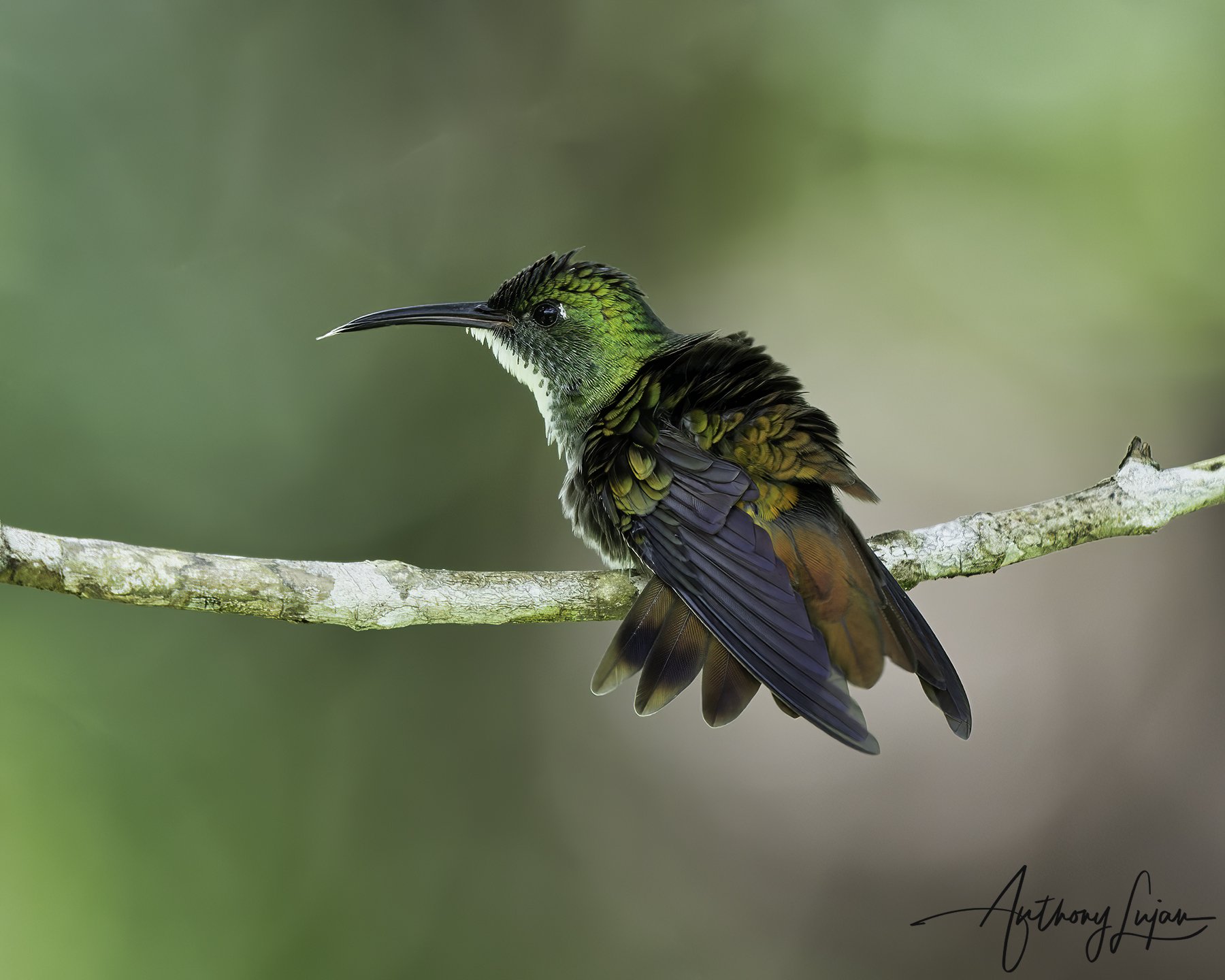
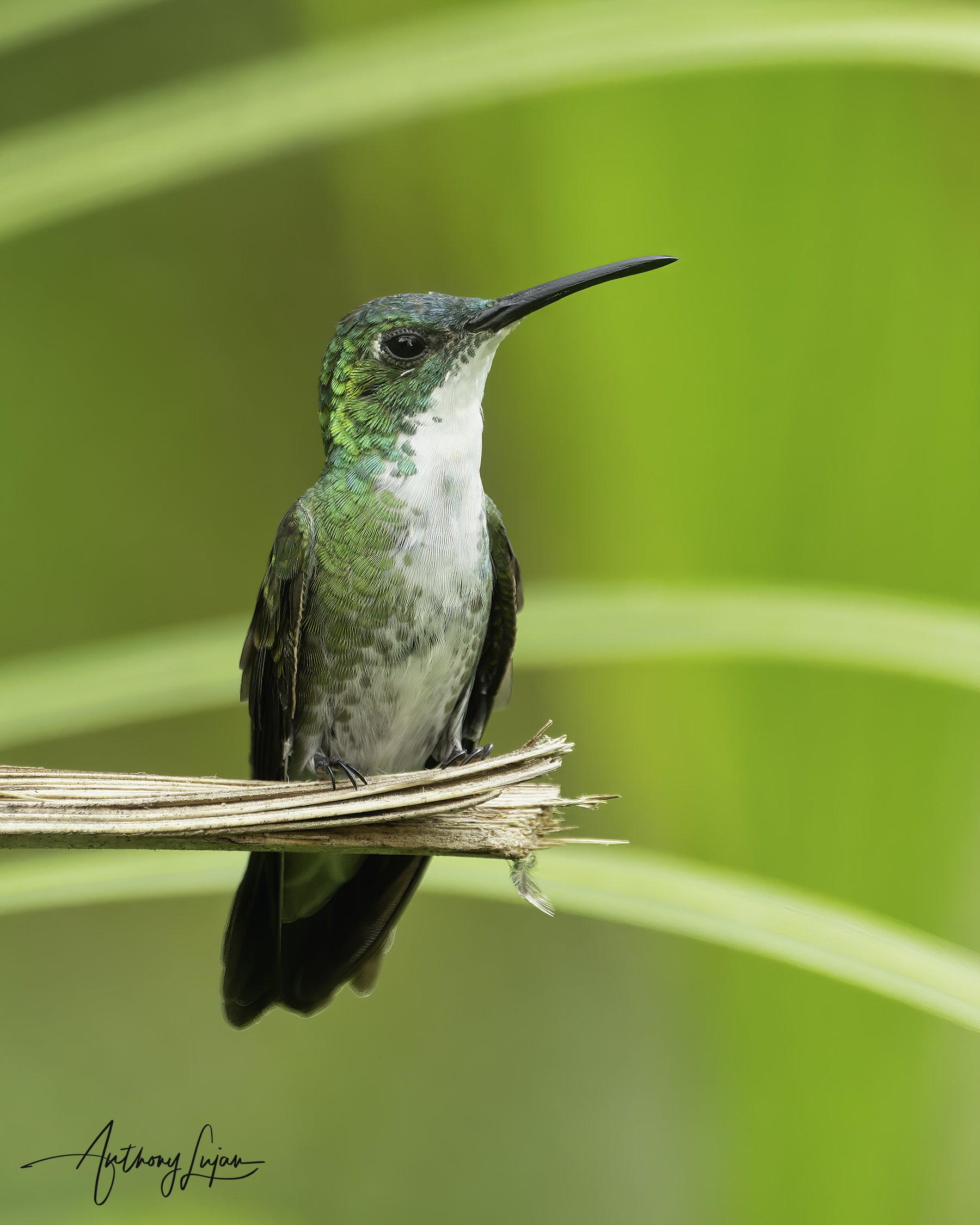
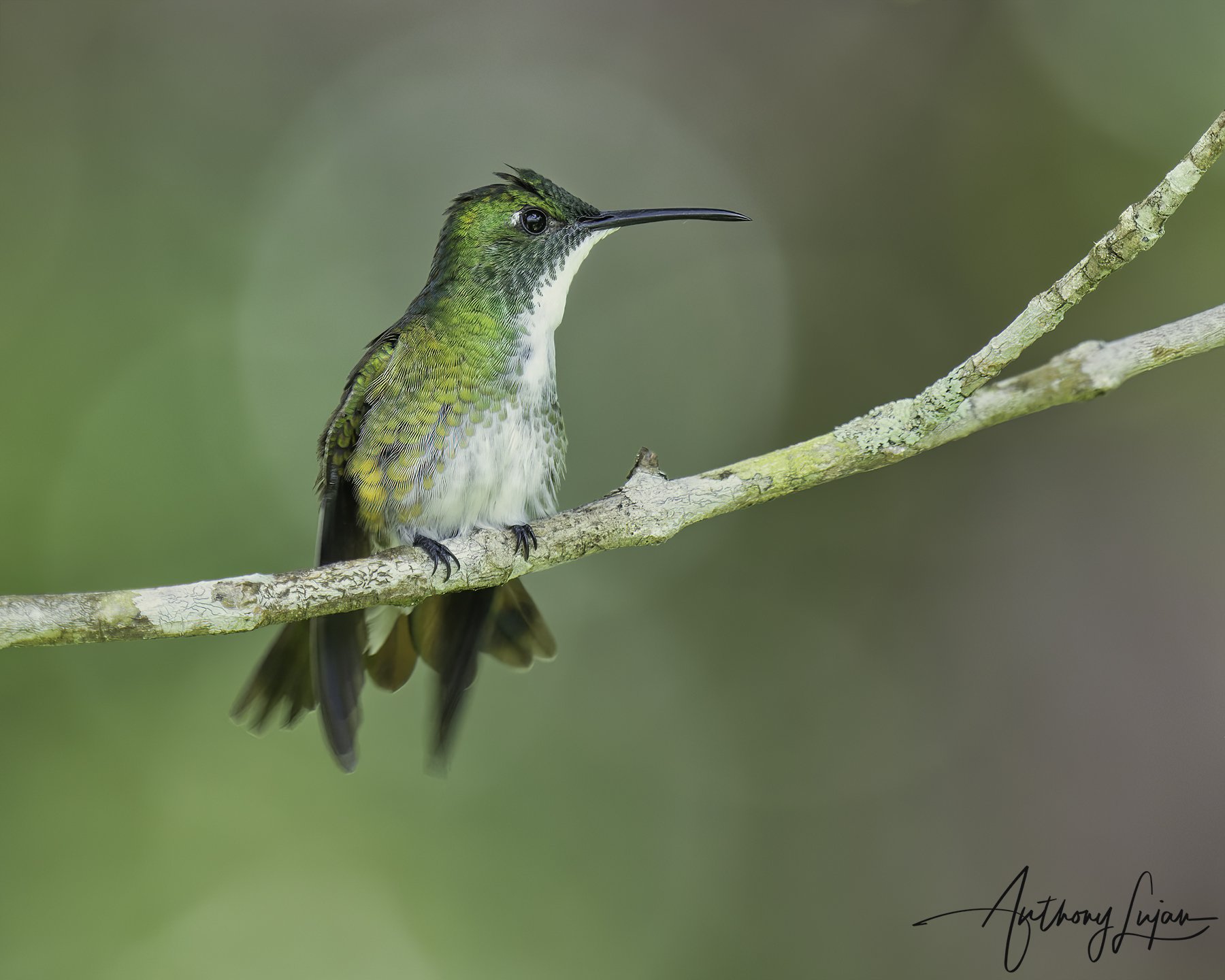
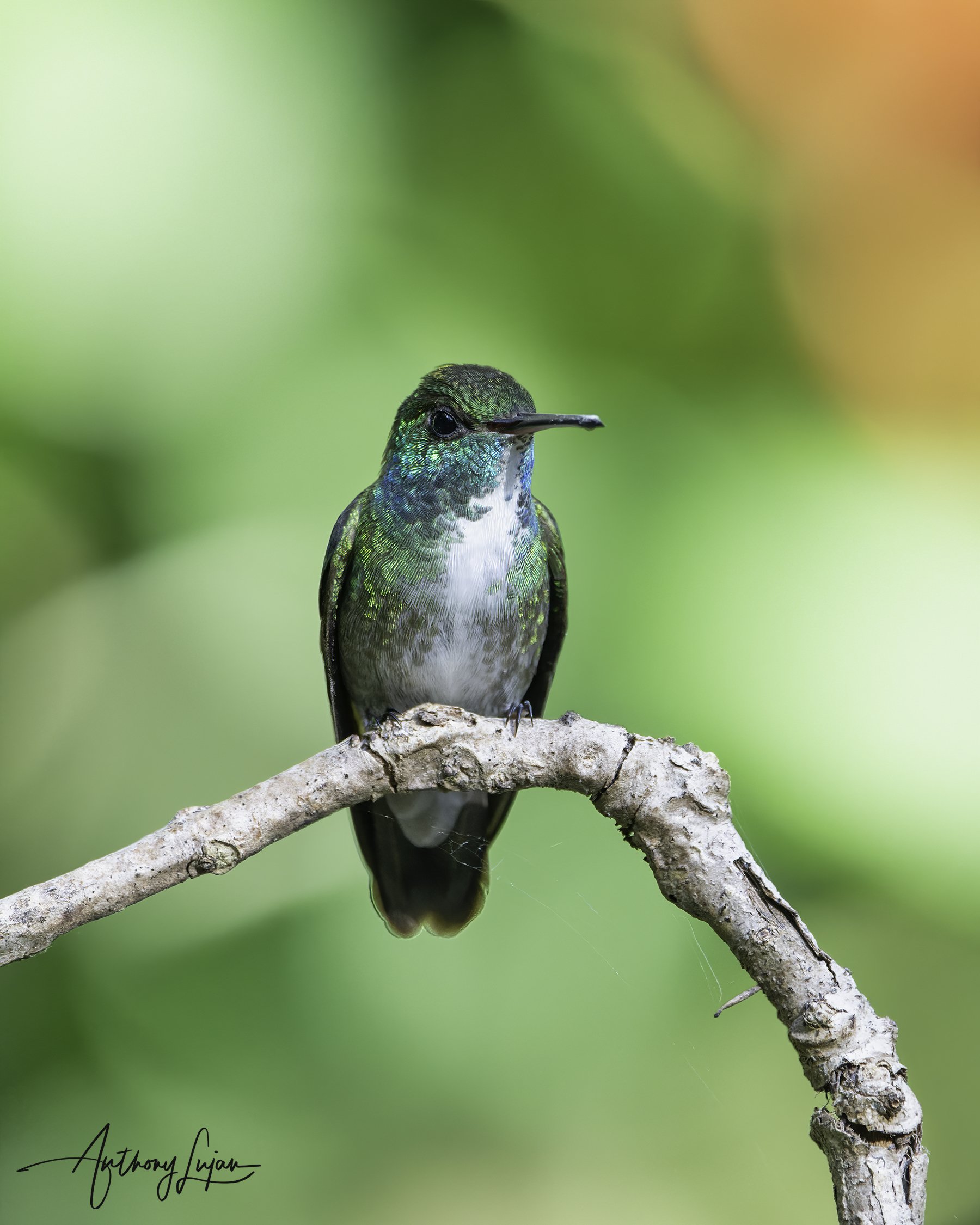
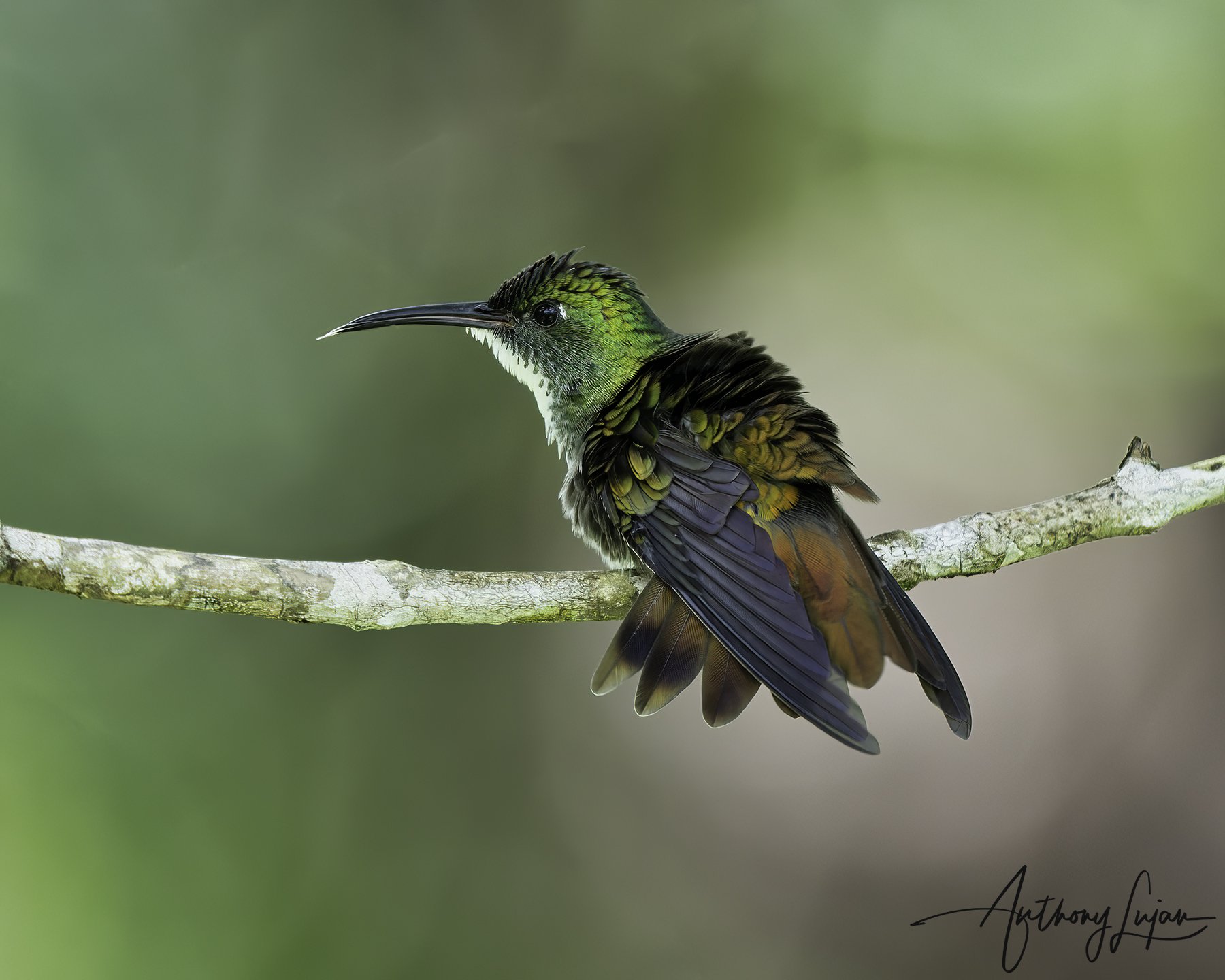
Below are individuals of the White-chested Emerald (Chrysuronia brevirostris chionopectus)
Photographed at:
Café Mariposa Gardens, Tunapuna-Piarco, Trinidad and Tobago
Yerette Home of the Hummingbird, Tunapuna-Piarco, Trinidad and Tobago
These individuals belong to the subspecies chionopectus, which is restricted to the island of Trinidad. This insular form is commonly found in gardens, forest edges, and secondary growth, particularly in the northern range of the island. Males are glittering green above with a distinct white chest and belly, while females are duller with more subdued green tones and grayish underparts. They feed on a variety of low- to mid-level flowers and frequently perch in open areas.
Checkout Anthony’s playlist of this species! Click the top right dropdown to see all the videos.
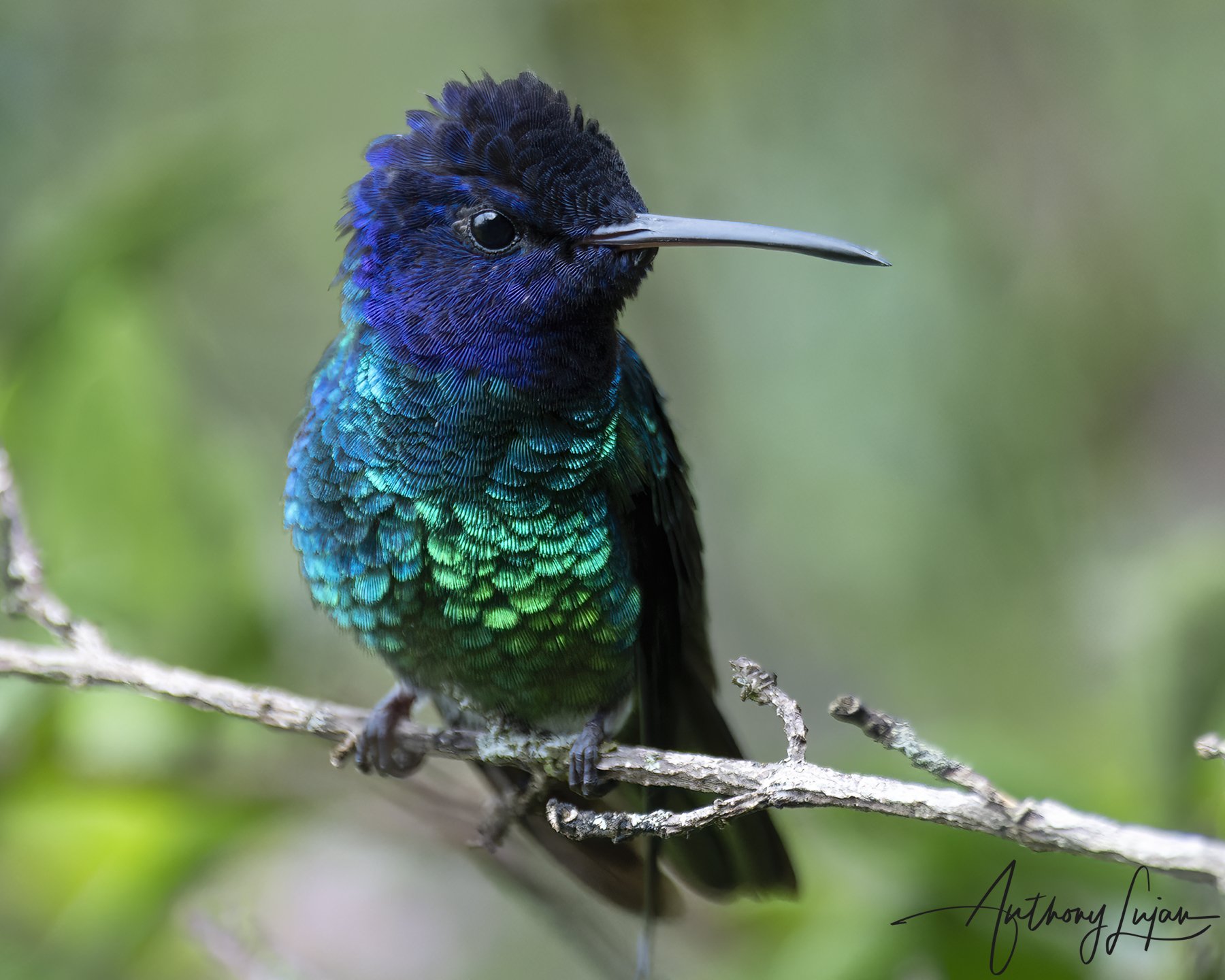
Related species in the Chrysuronia genus (10 species total):



Please note: The content provided in this article reflects Anthony’s personal experience and photographic approach. Results can vary depending on light, weather, location, equipment, subject behavior, and field conditions.