
White-chinned Sapphire
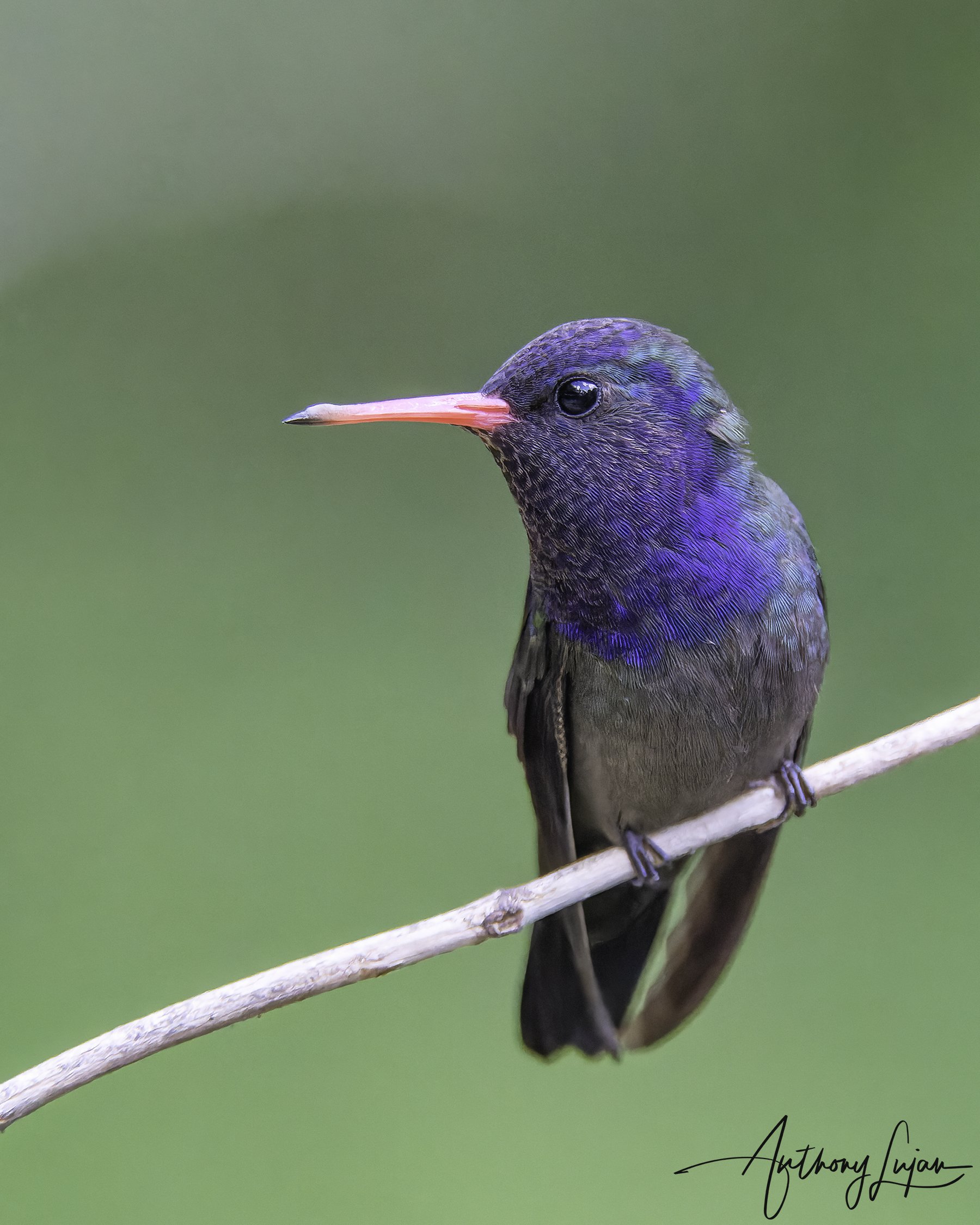
Scientific name: Chlorestes cyanus
The White-chinned Sapphire is a small “emerald” hummingbird of northern and eastern South America. The number of mature individuals is unknown, the population is decreasing, it is considered non-migratory, and it is currently listed as Least Concern with five recognized subspecies.
At a Glance
Family: Trochilidae (hummingbirds)
Clades: Trochilini – Emeralds
Genus group: Chlorestes — small, mostly green “emerald” hummingbirds of the Neotropics (5 species total)
Range: Northern and eastern South America, including much of Amazonia and the Atlantic Forest from Venezuela and the Guianas south into southeastern Brazil and adjacent Bolivia and Paraguay.
Habitat: Subtropical and tropical moist lowland forest, white-sand forest, dry shrubland, forest edges, riverine woodland, and heavily degraded former forest and semi-open areas with trees.
Elevation: Mostly from sea level up to about 1,000 m (3,300 ft).
Length: About 8.5–9 cm (3.3–3.5 in).
Weight: About 3–4 g (0.11–0.14 oz).
Number of mature individuals: Unknown
Population trend: Decreasing
Status: Least Concern (IUCN)
Name Origin
The genus name Chlorestes is derived from Greek elements meaning “green companion,” reflecting the shimmering green plumage typical of these emeralds. The species name cyanus means “dark blue,” referring to the bluish tones in the plumage. The English name “White-chinned Sapphire” highlights the pale chin patch contrasted with the bird’s jewel-like body.
Subspecies & Distribution
Five subspecies:
Chlorestes cyanus viridiventris
Distribution: Northern and eastern Colombia, western, southern, and eastern Venezuela, the Guianas, and northern Brazil (south to Mato Grosso and east to Maranhão). This subspecies occupies a broad swath of Amazonian and Guianan lowlands and foothills.Chlorestes cyanus rostrata
Distribution: Eastern Peru, northern Bolivia, and western Brazil south of the Amazon (east to the Madeira River); likely also eastern Ecuador. It is the western and southwestern Amazonian form, mostly south of the main Amazon channel.Chlorestes cyanus conversa
Distribution: Eastern Bolivia. This subspecies is centered in lowland and foothill forests and edges in eastern Bolivian Amazonia and adjacent semi-humid regions.Chlorestes cyanus cyanus
Distribution: Coastal eastern Brazil from Pernambuco south to Rio de Janeiro. It is the Atlantic Forest form along Brazil’s eastern seaboard.Chlorestes cyanus griseiventris
Distribution: Southeastern Brazil (São Paulo coast to northern Paraná). Historical records also exist from northeastern Argentina (Buenos Aires). This subspecies extends the range into the southern Atlantic Forest region.
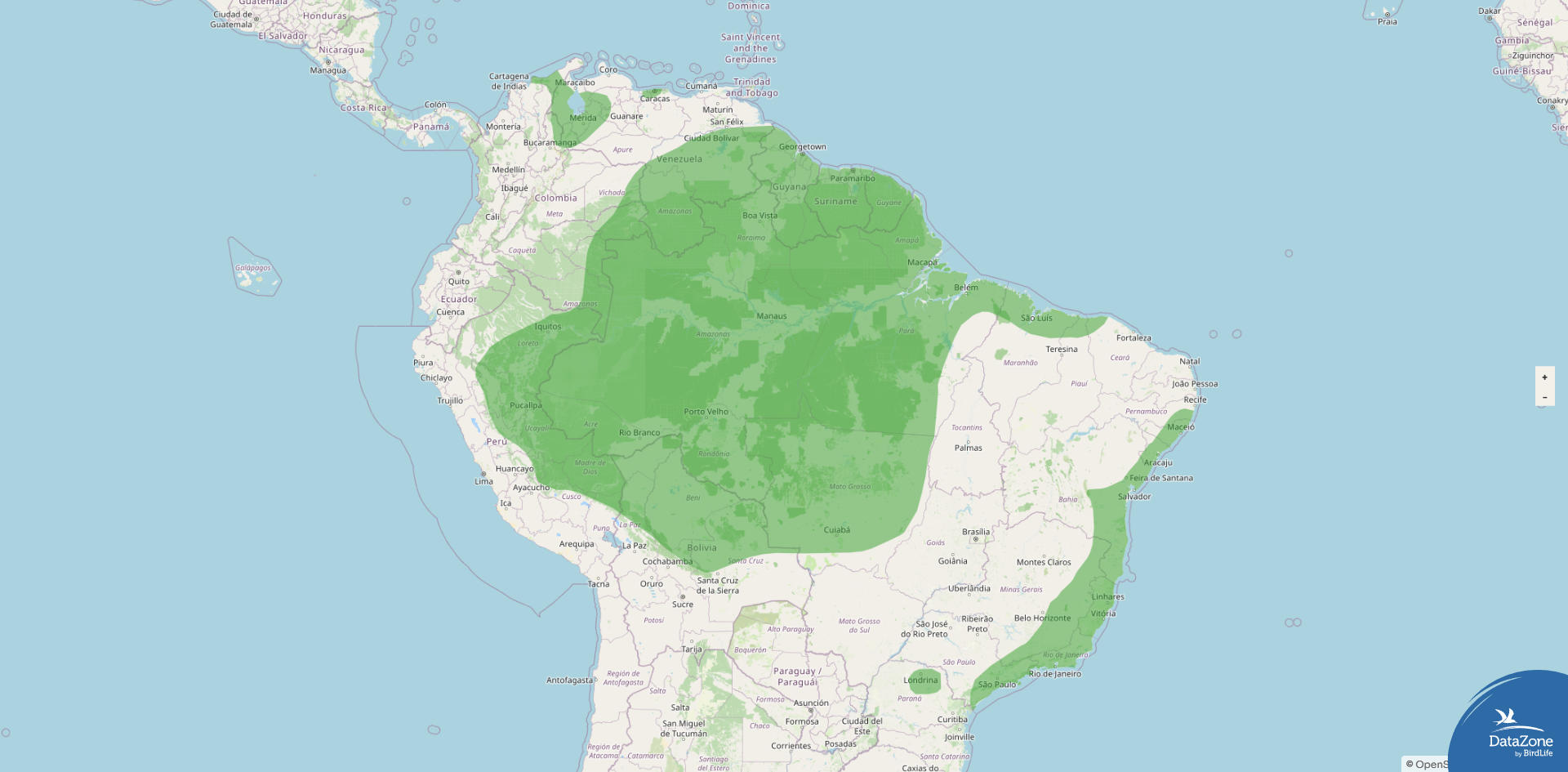
Legend
Green Resident
Species Overview
The White-chinned Sapphire is a versatile lowland hummingbird that uses a wide variety of wooded and semi-open habitats across Amazonia and the Atlantic Forest. It forages in the canopy and subcanopy of humid and semi-humid forests, as well as at edges, clearings, and degraded areas where flowering trees and shrubs are present. Despite its broad distribution, ongoing habitat loss and fragmentation contribute to a gradual decline.
Male Description
Adult males are small and slender with a straight, mostly black bill (the lower mandible often paler toward the base). The head and upperparts are bright metallic green, sometimes with bluish or bronze highlights depending on light. The throat and chest are glittering green, blending into slightly duller green or grayish underparts, with a small whitish patch on the chin that gives the species its name. The tail is moderately forked and metallic bluish or blue-green, flashing strongly in flight. In the field, males look like compact, bright green hummingbirds with a subtle pale chin and a forked blue-tinged tail.
Female Description
Adult females have green upperparts like the male but are paler below. The throat and upper breast are whitish to grayish with small green or dusky spots, and the rest of the underparts are pale grayish or buff-white. The chin patch is whitish and often more obvious than in males. The tail is bluish to dark with whitish or pale tips on the outer feathers. Females therefore appear as green-backed hummingbirds with a pale, lightly spotted throat, whitish underparts, and a modest bluish tail.
Habitat & Behavior
White-chinned Sapphires inhabit moist and semi-moist lowland forests, including white-sand forests, as well as dry shrublands, secondary growth, forest edges, and degraded areas with scattered trees. They feed on nectar from flowers of trees, shrubs, and herbs, often high in the subcanopy and canopy but also at lower blossoms along edges and clearings. Like other hummingbirds, they also take small insects, captured in short sallies from perches or gleaned from foliage. The species is considered non-migratory across its range, though individuals likely make local movements in response to flowering and seasonal changes in resource availability.
Population
The total number of mature individuals is unknown, but the species occupies a very large range across northern and eastern South America, from the western Amazon to the Atlantic Forest. It is generally rare to fairly common depending on locality and habitat quality. Continued deforestation, fragmentation, and conversion of forest to agriculture and pasture are thought to be driving a slow overall decline, even though the species remains widespread.

Conservation
The White-chinned Sapphire is assessed as Least Concern due to its extensive distribution and presence in multiple regions and countries. However, its decreasing trend reflects ongoing habitat loss in both Amazonian and Atlantic Forest landscapes. Protection of lowland forest, maintenance of riparian corridors and secondary growth with tall trees, and the conservation of white-sand forest and semi-open wooded mosaics will benefit this species and many other lowland hummingbirds.
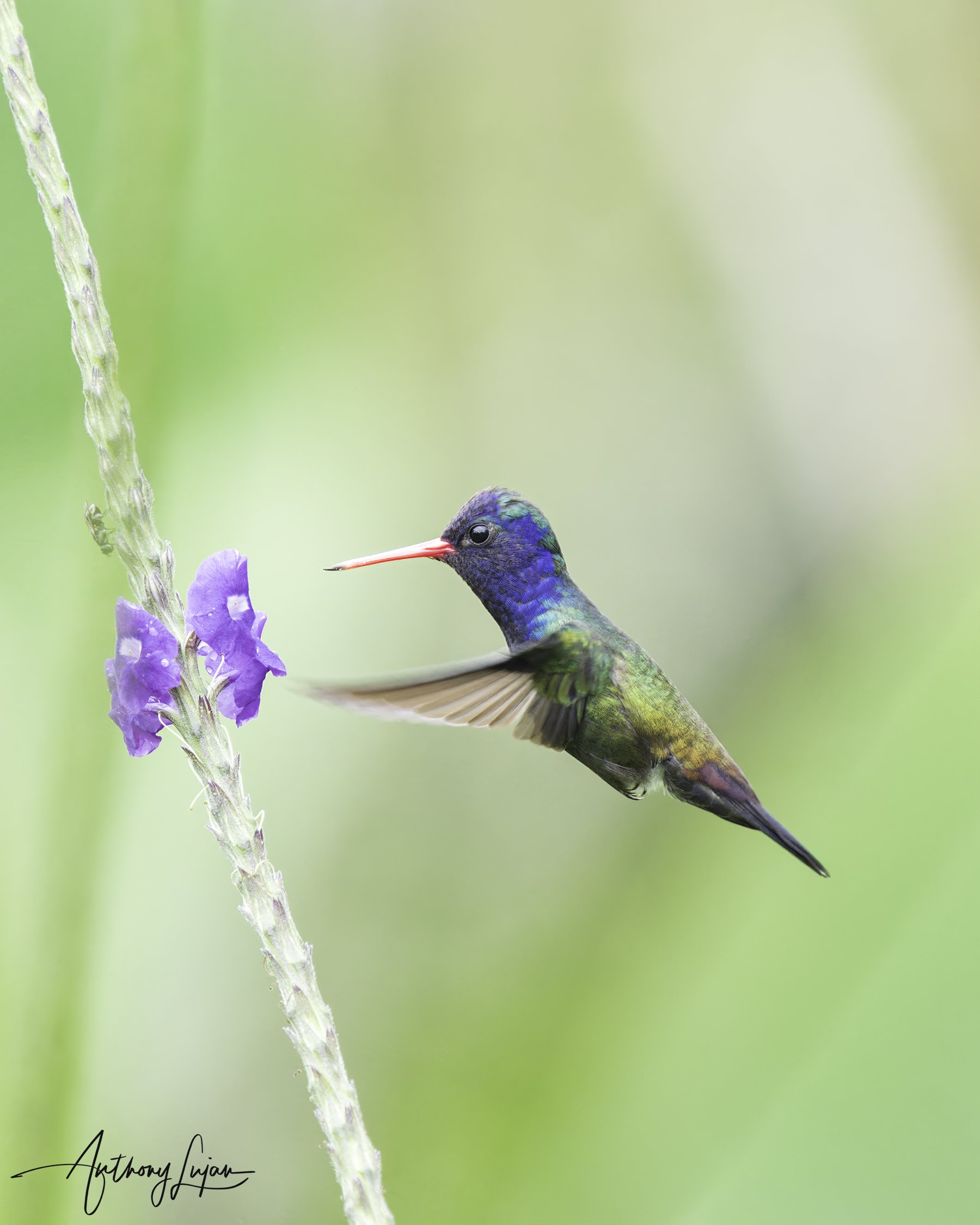
Below are individuals of the White-chinned Sapphire (Chlorestes cyanus griseiventris)
Photographed at:
Eldorado – Recanto Gavião-de-penacho, Eldorado, São Paulo, Brazil
Eldorado – Duco Lodge, Eldorado County, São Paulo, Brazil
These individuals belong to the subspecies griseiventris, found in southeastern Brazil. This form is distinguished by slightly grayer underparts compared to other subspecies, and it typically inhabits coastal forest fragments, gardens, and lowland secondary growth. Males show rich green upperparts and a faint white chin spot, with a red-based bill.
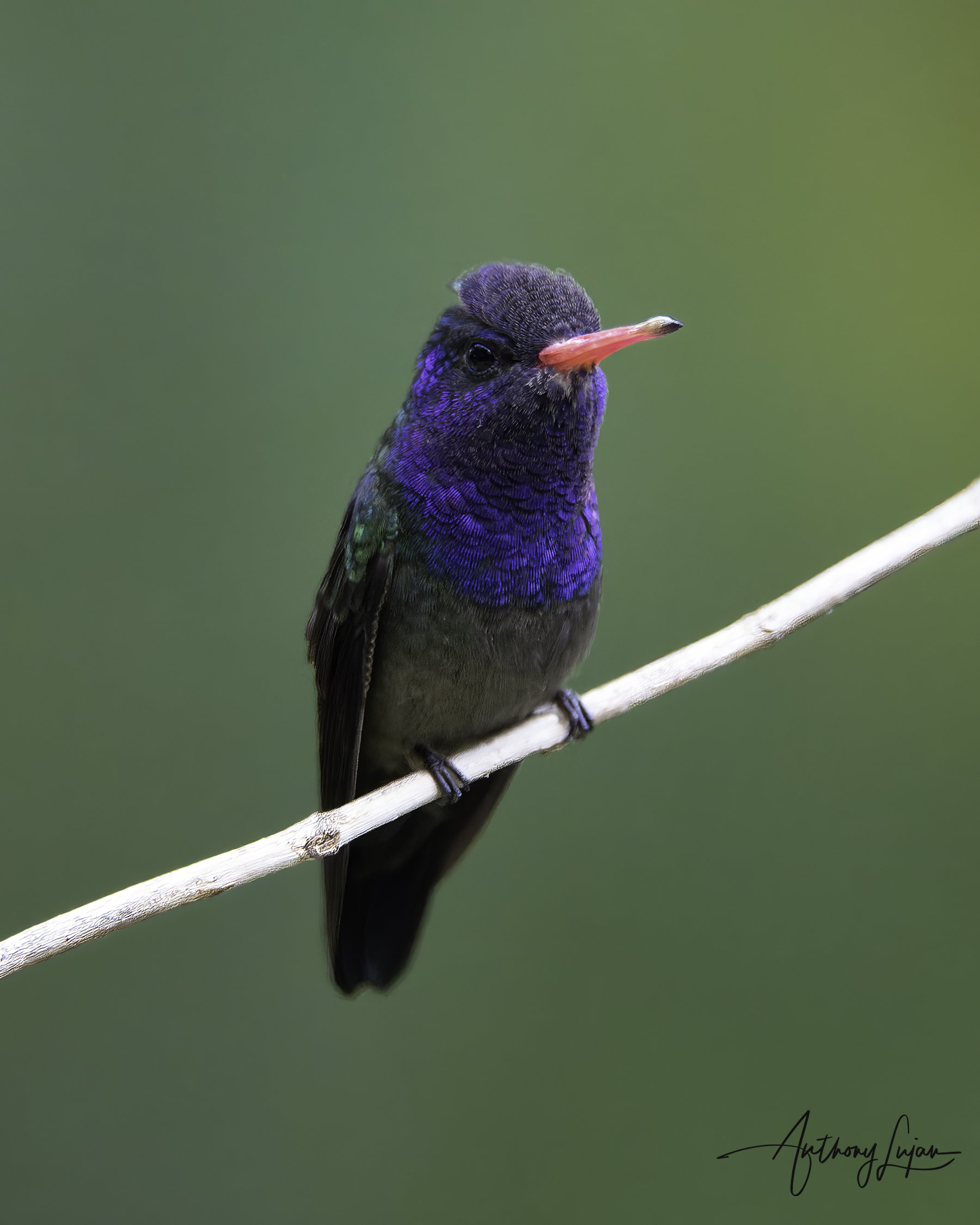
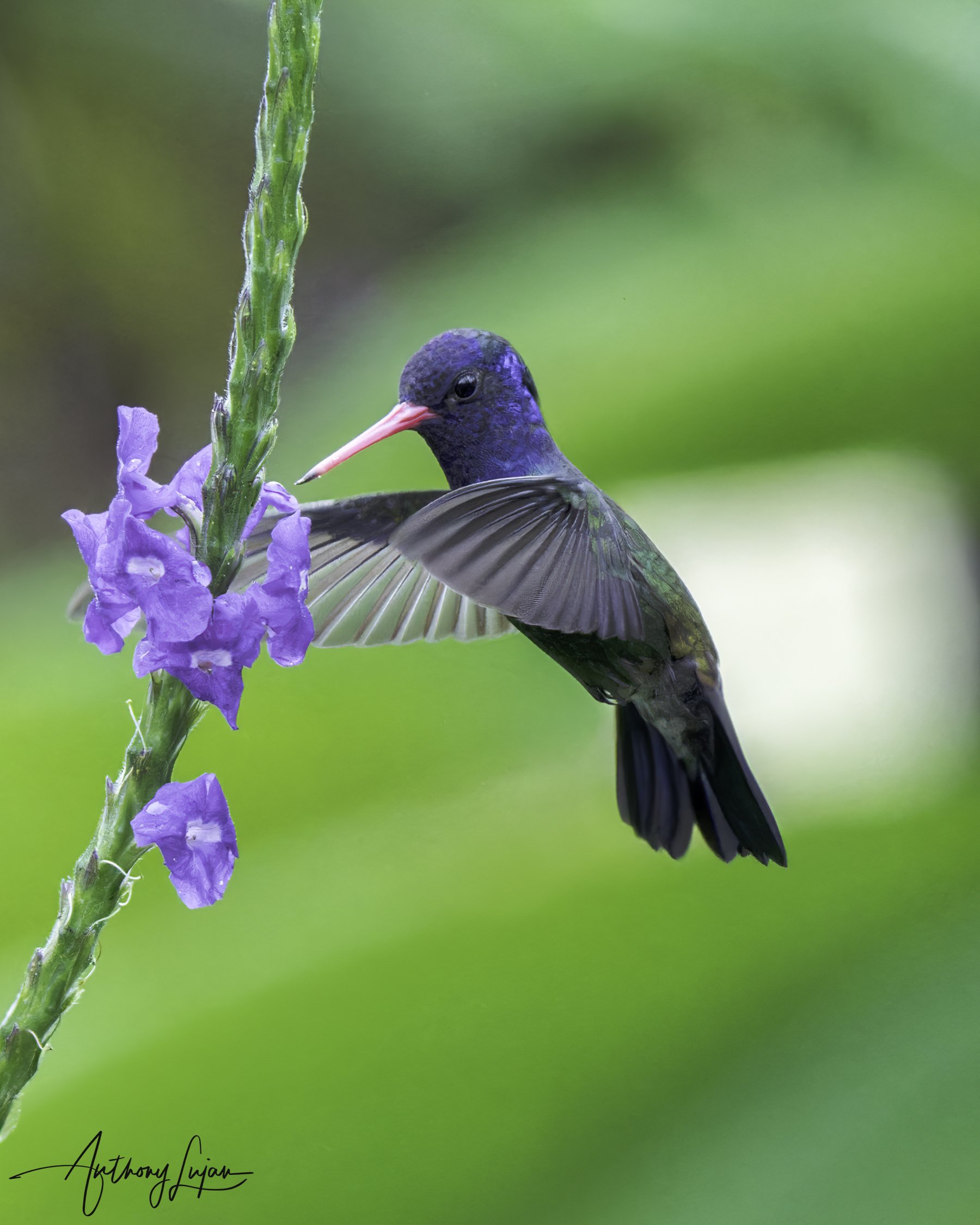
Below are individuals of the White-chinned Sapphire (Chlorestes cyanus rostrata)
Photographed at:
Waqanki/Quebrada Mishquiyaquillo, San Martín, Peru
This bird belongs to the rostrata subspecies, found throughout eastern Peru and adjacent western Amazonia. It occurs in tropical humid forest edges and open areas, frequently visiting flowering shrubs in disturbed habitats. Males exhibit deeper blue-green tones and a bolder red base to the bill. The chin spot is often less visible in this population.
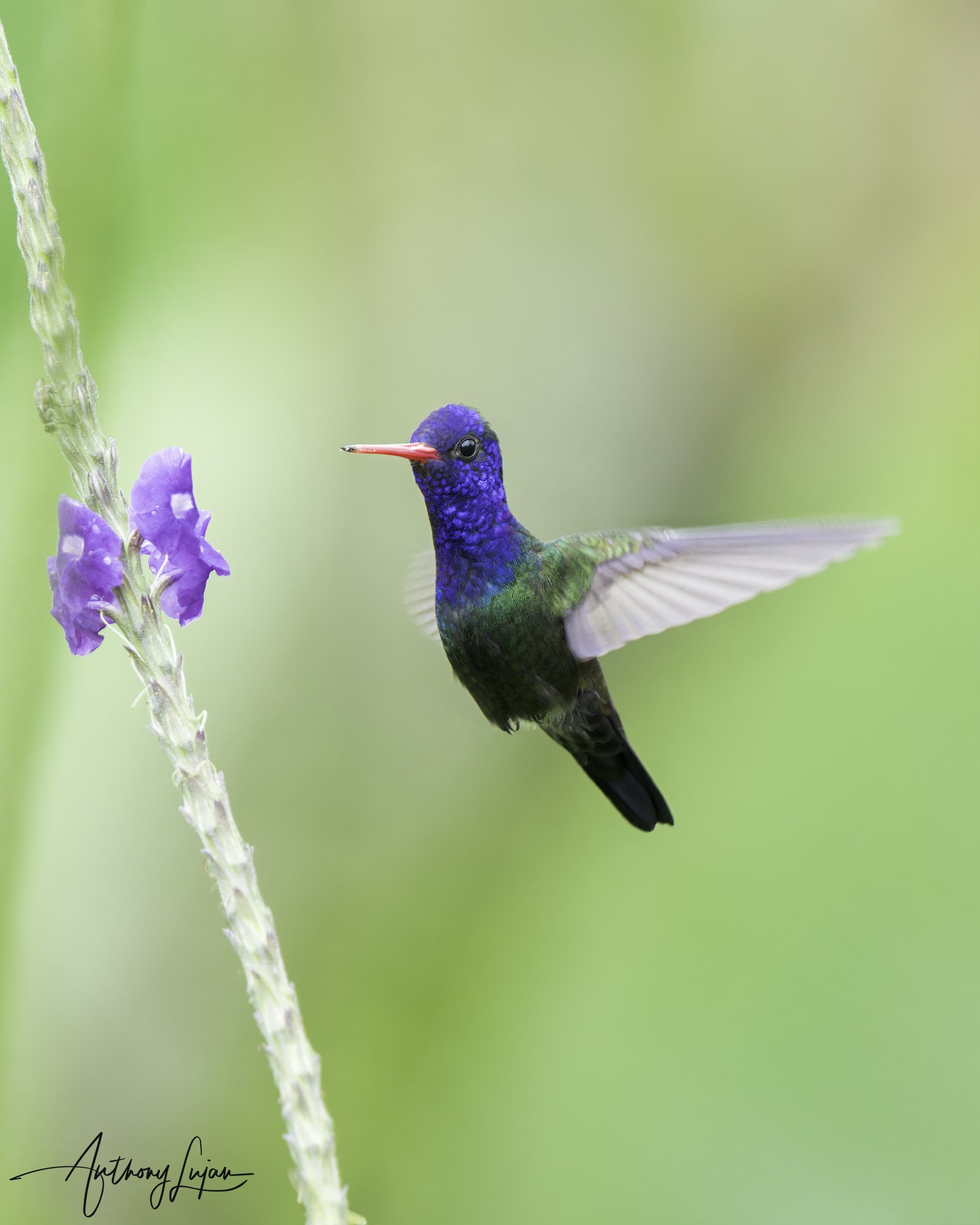
Related species in the Chlorestes genus (5 species total):


Please note: The content provided in this article reflects Anthony’s personal experience and photographic approach. Results can vary depending on light, weather, location, equipment, subject behavior, and field conditions.