
White-necked Jacobin
Scientific name: Florisuga mellivora
The White-necked Jacobin is a medium-sized, boldly patterned hummingbird found from southern Mexico through Central America into much of northern South America, including Trinidad and Tobago. An estimated 5,000,000–50,000,000 mature individuals exist, the population is decreasing, it is considered largely non-migratory, and it is currently listed as Least Concern with two recognized subspecies.
At a Glance
Family: Trochilidae (hummingbirds)
Clade: Polytminae – Mangoes
Genus group: Florisuga — 2 species, 2 subspecies
Range: From southern Mexico through Central America into Colombia, Venezuela, the Guianas, Amazonian Brazil, eastern Peru, northern Bolivia, and on Trinidad and Tobago.
Habitat: Canopy and edges of humid lowland and foothill forest, tall secondary forest, gallery forest, and shaded coffee and cacao plantations, occasionally gardens.
Elevation: Generally from sea level to about 900 m, rarely up to roughly 1,500–1,600 m in some parts of the range.
Length: About 11–12 cm (4.3–4.7 in), a medium-sized hummingbird with a fairly long, straight bill.
Weight: Males about 7.4–9.0 g; females about 6.0–9.2 g.
Number of mature individuals: 5,000,000–50,000,000
Population trend: Decreasing
Status: Least Concern (IUCN)
Name Origin
The genus name Florisuga combines Latin roots meaning “flower” and “to suck,” referring to the bird’s nectar-feeding behavior. The species name mellivora means “honey-eating,” again emphasizing its dependence on floral nectar. The English name “White-necked Jacobin” highlights the distinctive white nape patch and collar, while “Jacobin” recalls historical comparisons to robed Jacobin monks with contrasting hoods and collars.
Subspecies & Distribution
Florisuga mellivora mellivora
Ranges from southern Veracruz and northern Oaxaca in Mexico through Belize, northern Guatemala, eastern Honduras and Nicaragua, Costa Rica, and Panama into much of northern South America, including Colombia, Venezuela, the Guianas, Amazonian Brazil, eastern Peru, northern Bolivia, and Trinidad; also recorded as a vagrant on some Caribbean islands and into northern Argentina.Florisuga mellivora flabellifera
Occurs on the island of Tobago, where birds tend to be slightly larger and may show minor plumage differences compared to the widespread nominate form.
Together, Florisuga mellivora forms a broad band through the humid tropical lowlands and lower foothills of the Americas from southern Mexico south and east across Central America and much of northern South America, with island populations on Trinidad and Tobago.
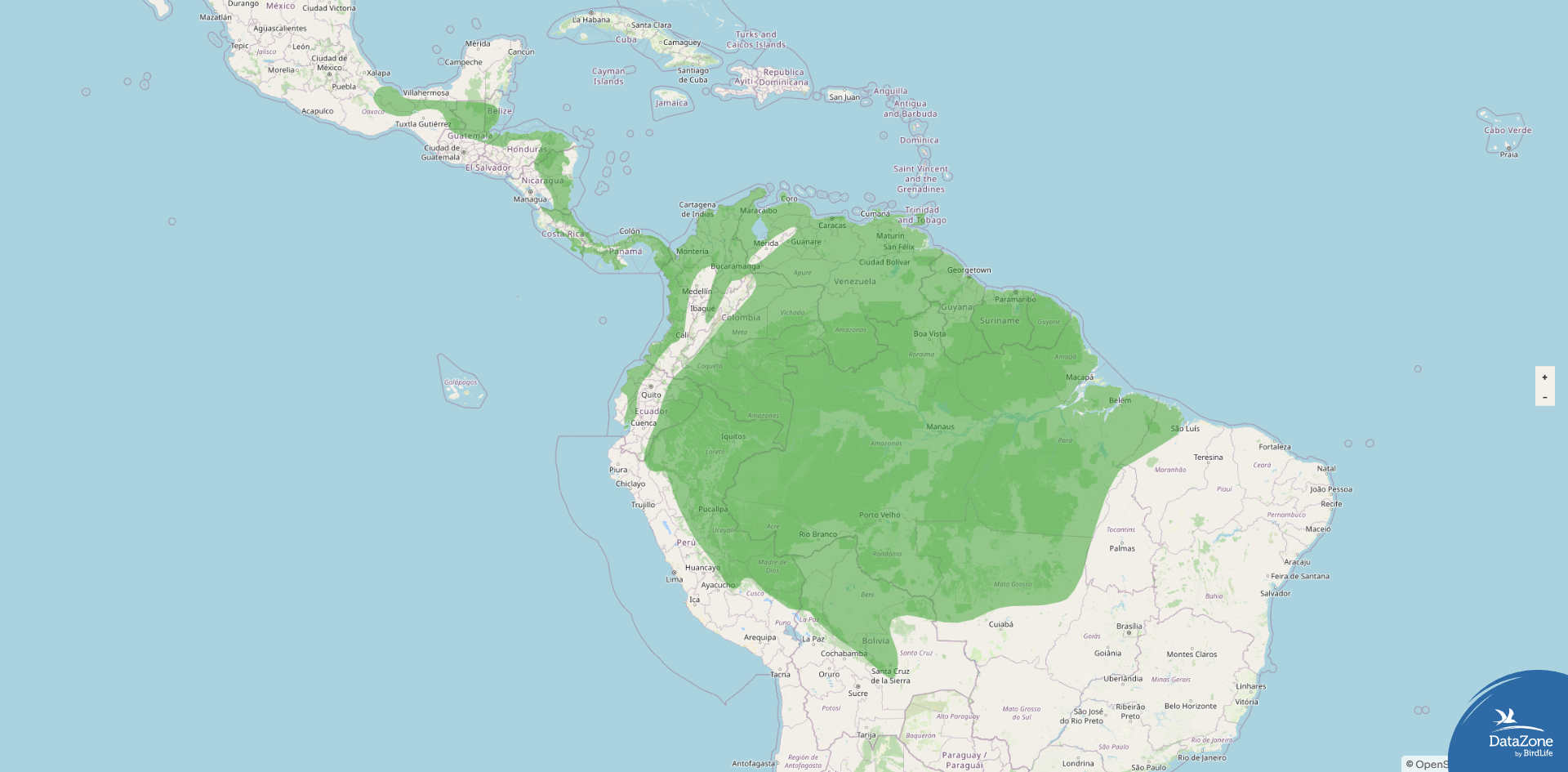
Legend
Green Resident
Species Overview
The White-necked Jacobin is a common and conspicuous hummingbird of humid tropical lowlands, especially at forest edges and in tall secondary growth and plantations. Males, with their blue head, white neck and belly, and green back, are particularly eye-catching as they display and chase in the canopy. The species plays an important role as a pollinator of various flowering trees and shrubs and is a frequent visitor at nectar feeders in parts of its range.
Male Description
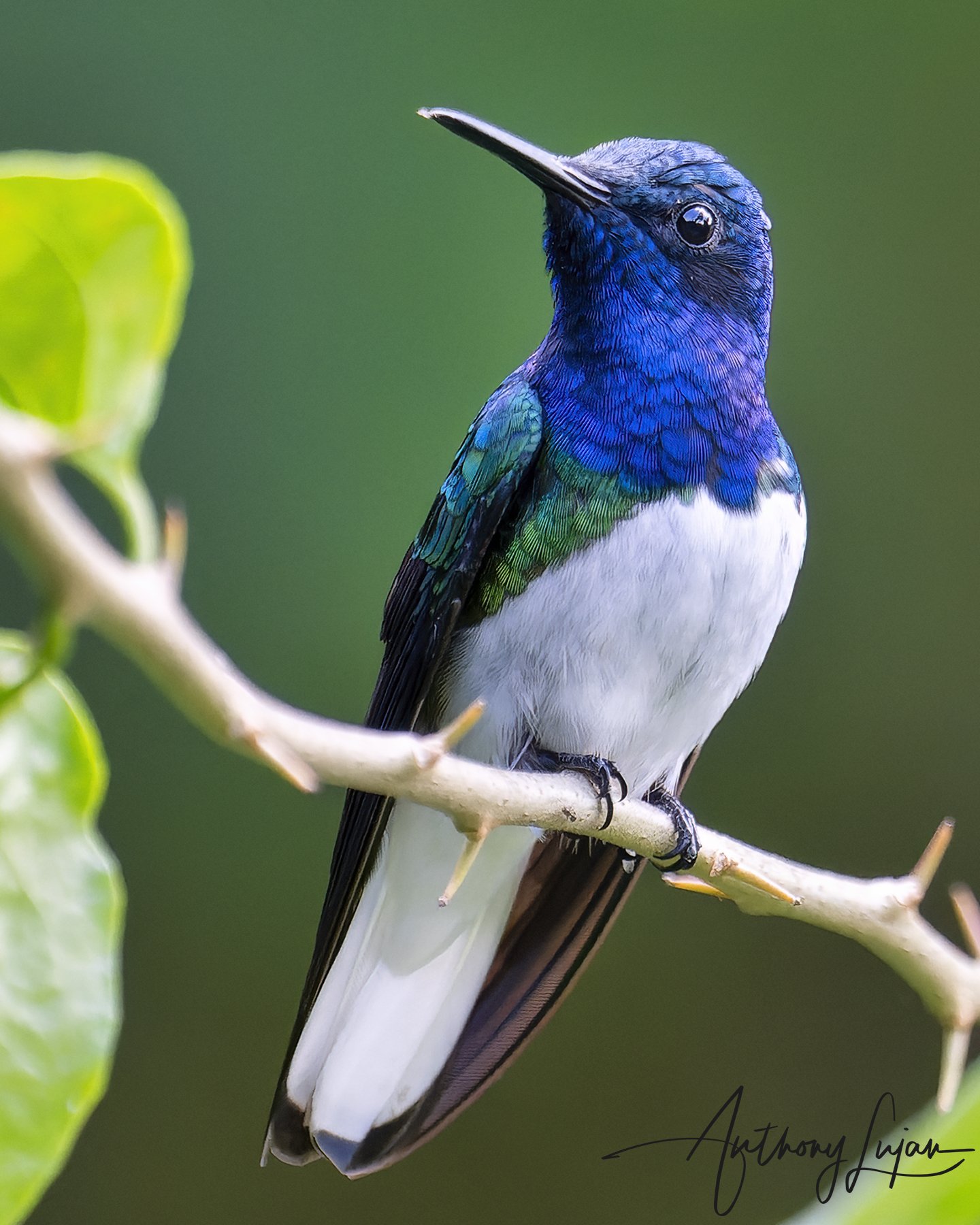
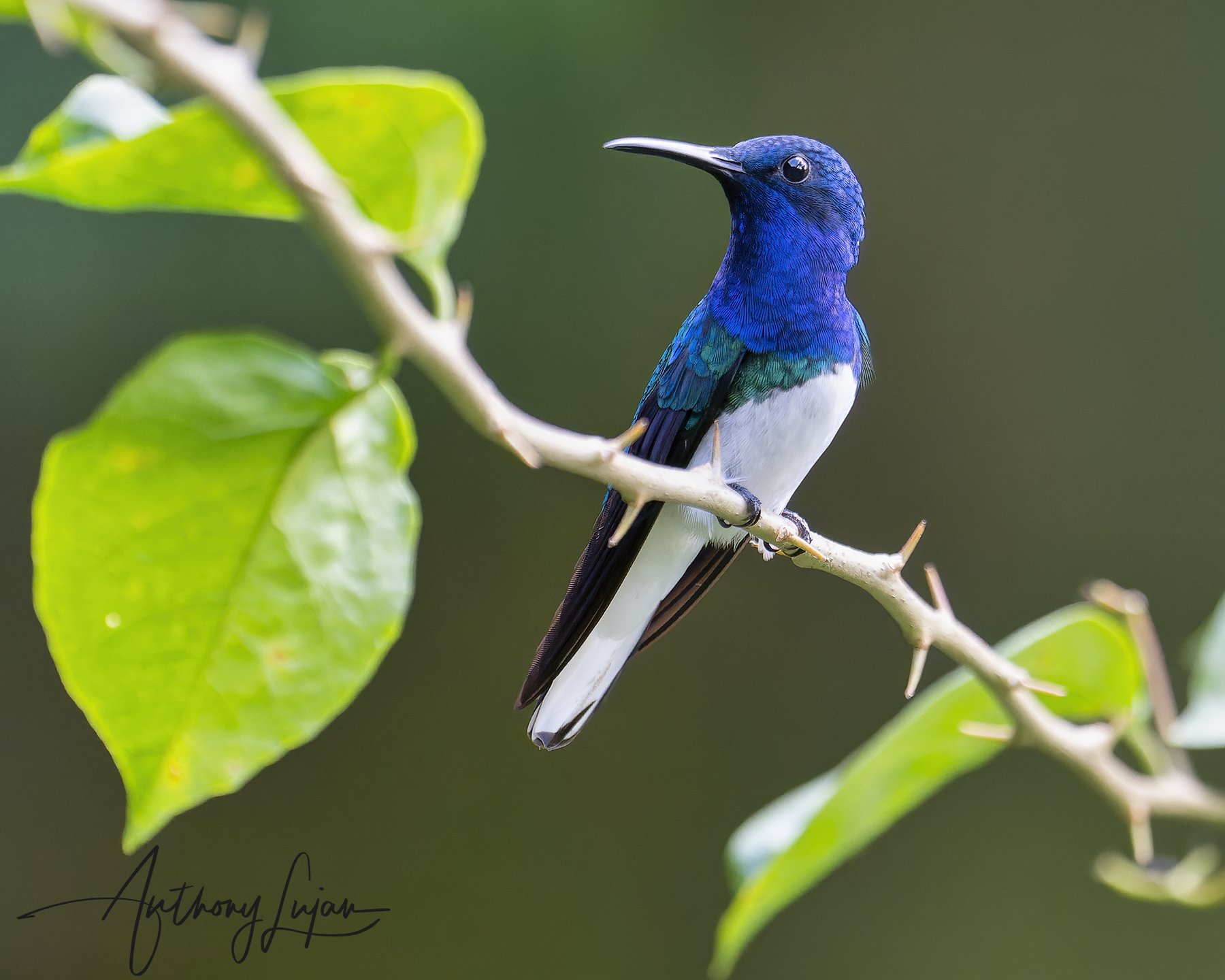
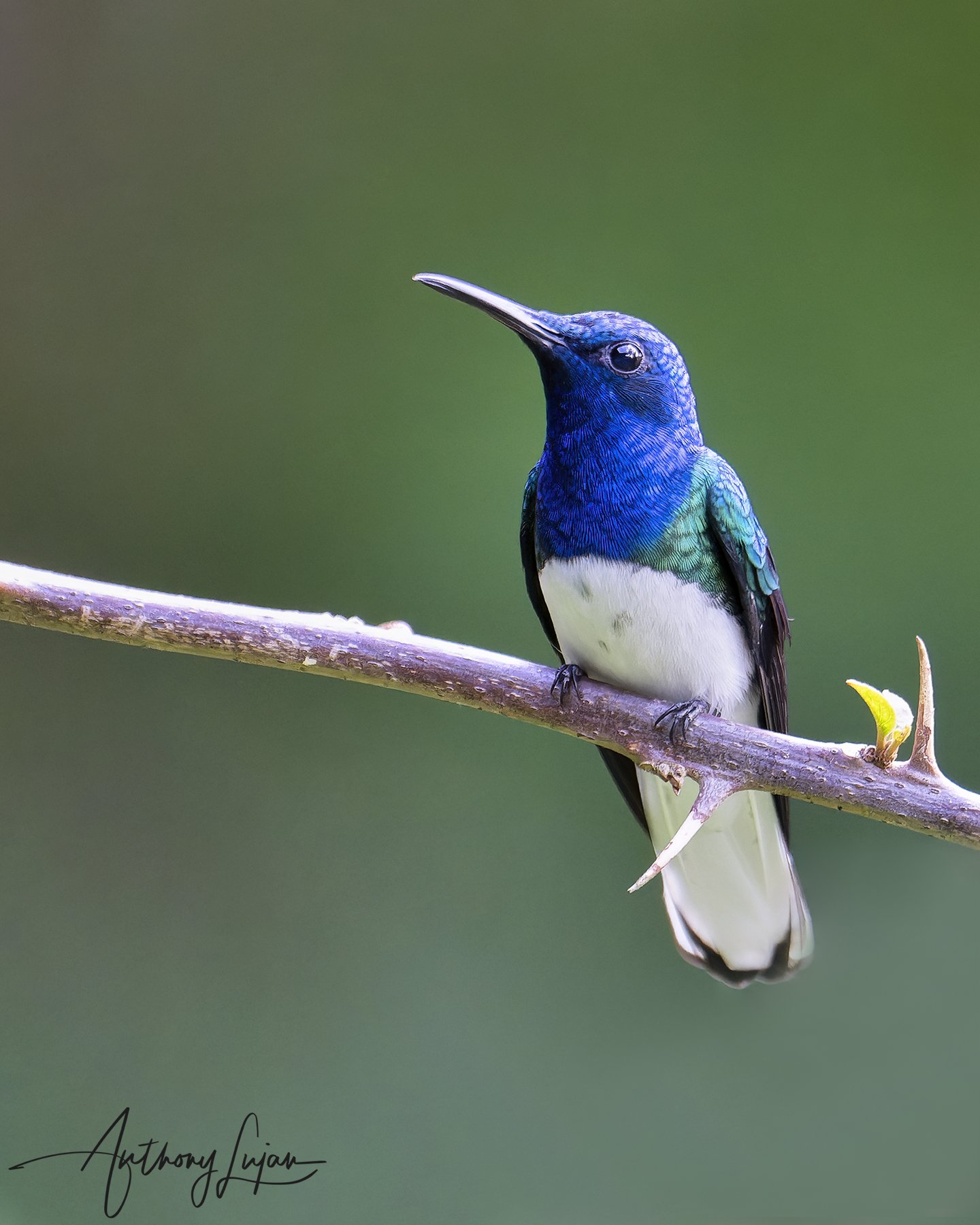
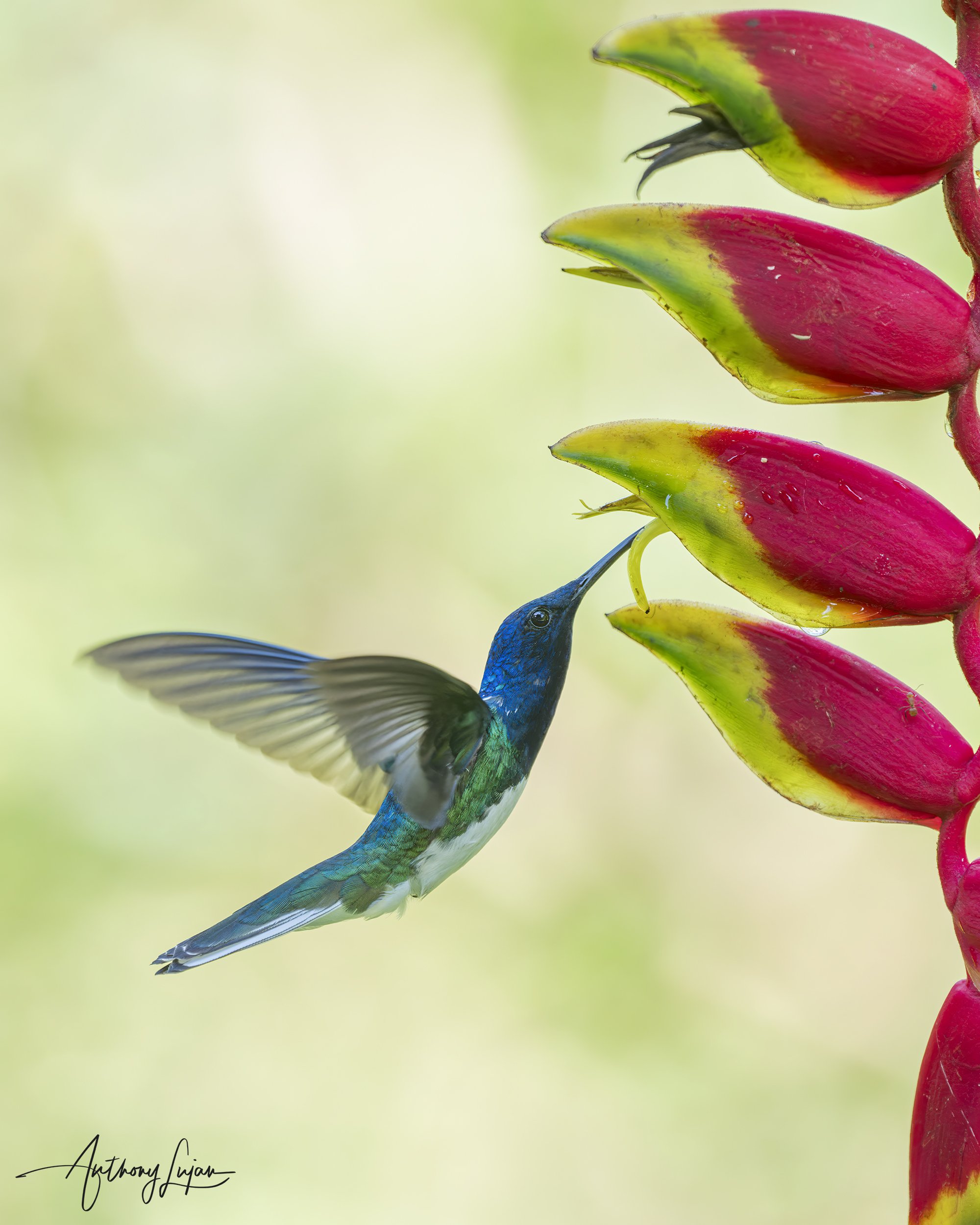
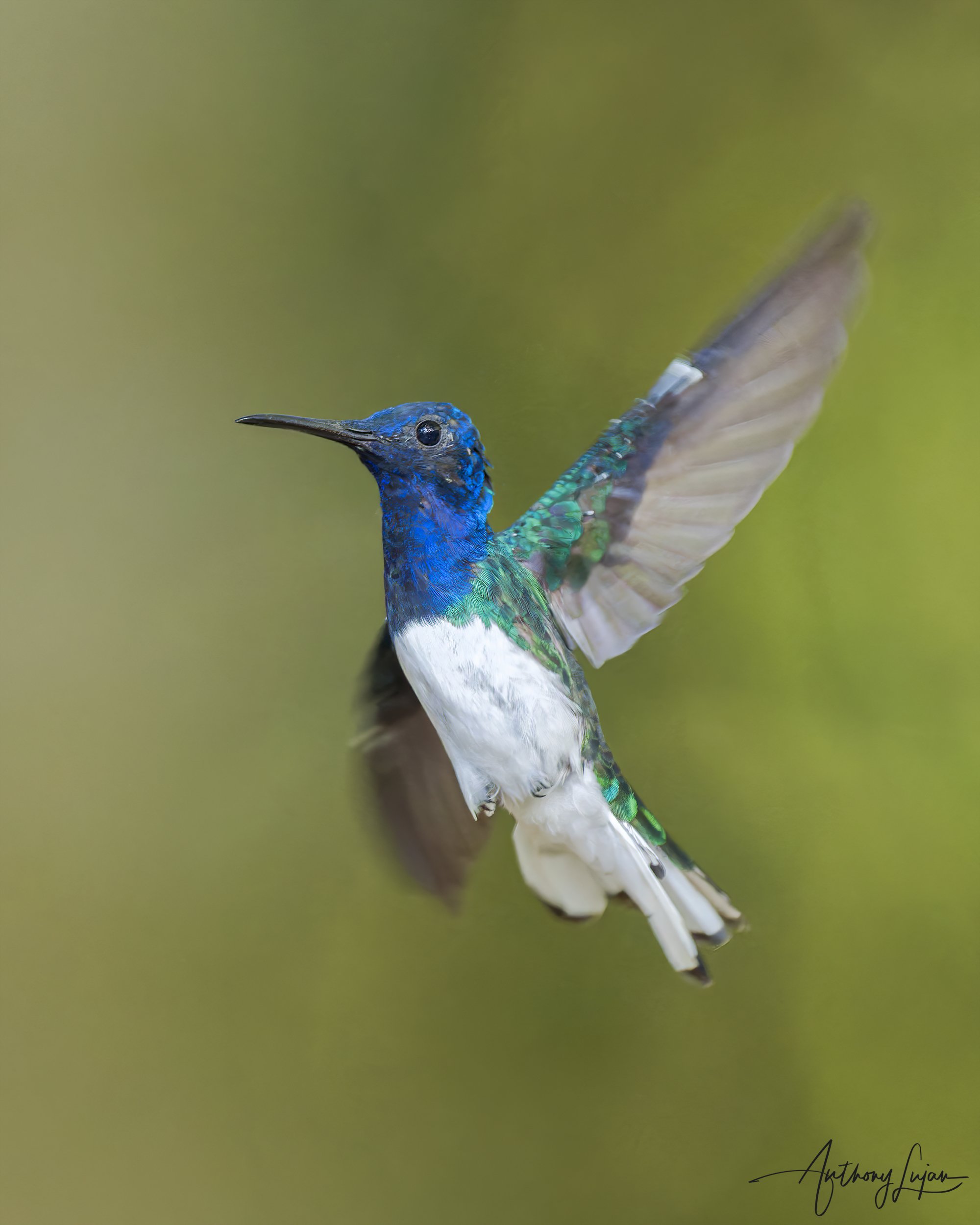
Adult males have a dark blue head and upper chest, a bright white nape and lower neck that form the “white neck,” and a white belly and undertail region. The back and upperwings are bright green with long green uppertail coverts, and the tail is mostly white with dark tips to the feathers, especially near the end. In flight and at rest, the clean contrast of blue head, white neck and underparts, and green back makes the male unmistakable among Neotropical hummingbirds.
Female Description
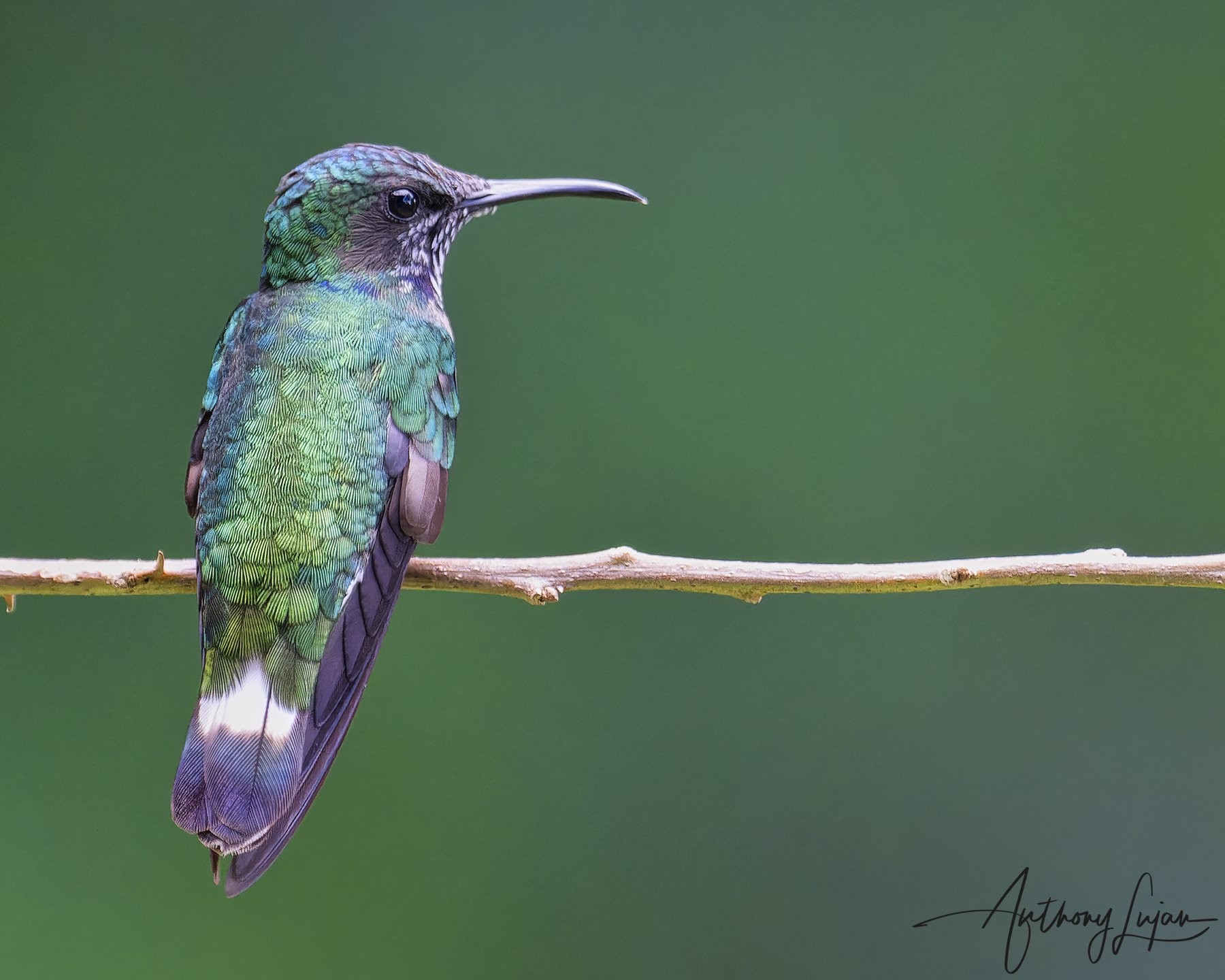
Females are highly variable and can resemble either adult males or immature males, but most show green upperparts with a blue-green throat and upper breast patterned with white “scales.” The belly is largely white, and the tail is mostly green or bluish with a darker or bluish tip, often lacking the extensive clean white tail of adult males. Some females and immature birds show more muted, bronzy or greenish tones on the throat and chest and less pure white in the tail, which helps separate them from fully adult males. Overall, females look like greener, more patterned birds with a scaled blue-green throat, white belly, and less sharply contrasting tail.
Habitat & Behavior
White-necked Jacobins inhabit the canopy and borders of humid lowland forest, tall secondary forest, gallery forest, and shaded coffee and cacao plantations, often favoring the highest layers of vegetation. They feed on nectar from a wide array of flowering trees, shrubs, and epiphytes and also take small insects and spiders by hawking or gleaning, especially during the breeding season. The species is typically solitary at flowers but can join mixed feeding aggregations at large blooming trees, and males are known for aggressive, territorial behavior, frequently chasing other hummingbirds from rich nectar sources. It is generally considered resident throughout its wide range, with no major migratory movements, though local movements likely track flowering patterns.
Population
With an estimated 5,000,000–50,000,000 mature individuals, the White-necked Jacobin is one of the more numerous tropical hummingbirds, and it remains common over much of its very large range. It is regularly seen at forest edges, plantations, and feeders and can be one of the dominant species at flowering trees in some areas. Despite this abundance, the overall population is believed to be decreasing, primarily due to ongoing habitat loss and degradation in tropical lowlands and foothills.

Conservation
The White-necked Jacobin is assessed as Least Concern because of its extensive distribution and large global population, but a decreasing trend reflects continued deforestation, forest fragmentation, and conversion of lowland forest to agriculture and pasture. The species shows some tolerance of disturbed habitats, including tall secondary forest and shaded plantations, which helps buffer it against habitat change. Long-term conservation will depend on maintaining large tracts of humid forest, protecting riparian corridors and forest edges, and promoting shade-grown coffee and cacao systems that retain tall flowering trees used for feeding and nesting.
Photographed Individuals of White-necked Jacobin (Florisuga mellivora mellivora)
Photographed at:
'Doña Dora', Valle del Cauca, Colombia
La Florida - Bosque de Las Aves, Valle del Cauca, Colombia
Nectar & Pollen Reserve, Limón, Costa Rica
Waqanki/Quebrada Mishquiyaquillo, San Martín, Peru
Hotel Minca, Magdalena, Colombia
Asociación para La Conservación de Aves y La Biodiversidad Koepcke's Hermit, San Martín, Peru
Faunal - Observatorio de Aves de Minca, Magdalena, Colombia
Tranki_Garden, Cartago, Costa Rica
Rancho Naturalista, Cartago, Costa Rica
These individuals belong to the subspecies Florisuga mellivora mellivora, which is widely distributed from southern Mexico through Central America and into much of northern South America, including the Andean foothills and Amazon Basin. It occupies lowland and foothill rainforests, plantations, and forest edges, typically below 900 meters elevation. Males are easily distinguished by their brilliant blue heads and prominent white neck patches, often seen defending feeding territories or engaging in aerial displays. Females show more subtle patterns, sometimes mimicking male plumage but generally less iridescent.
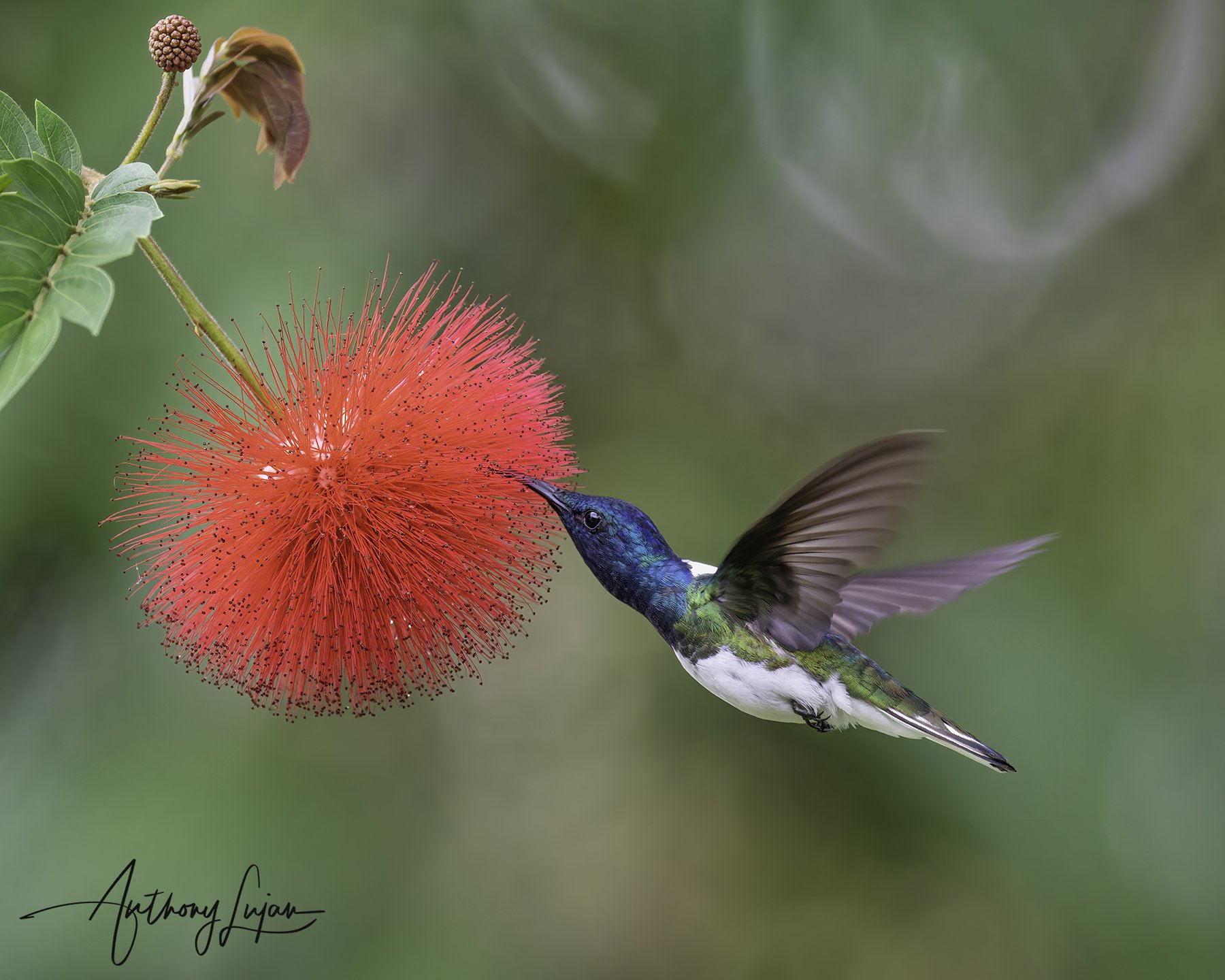
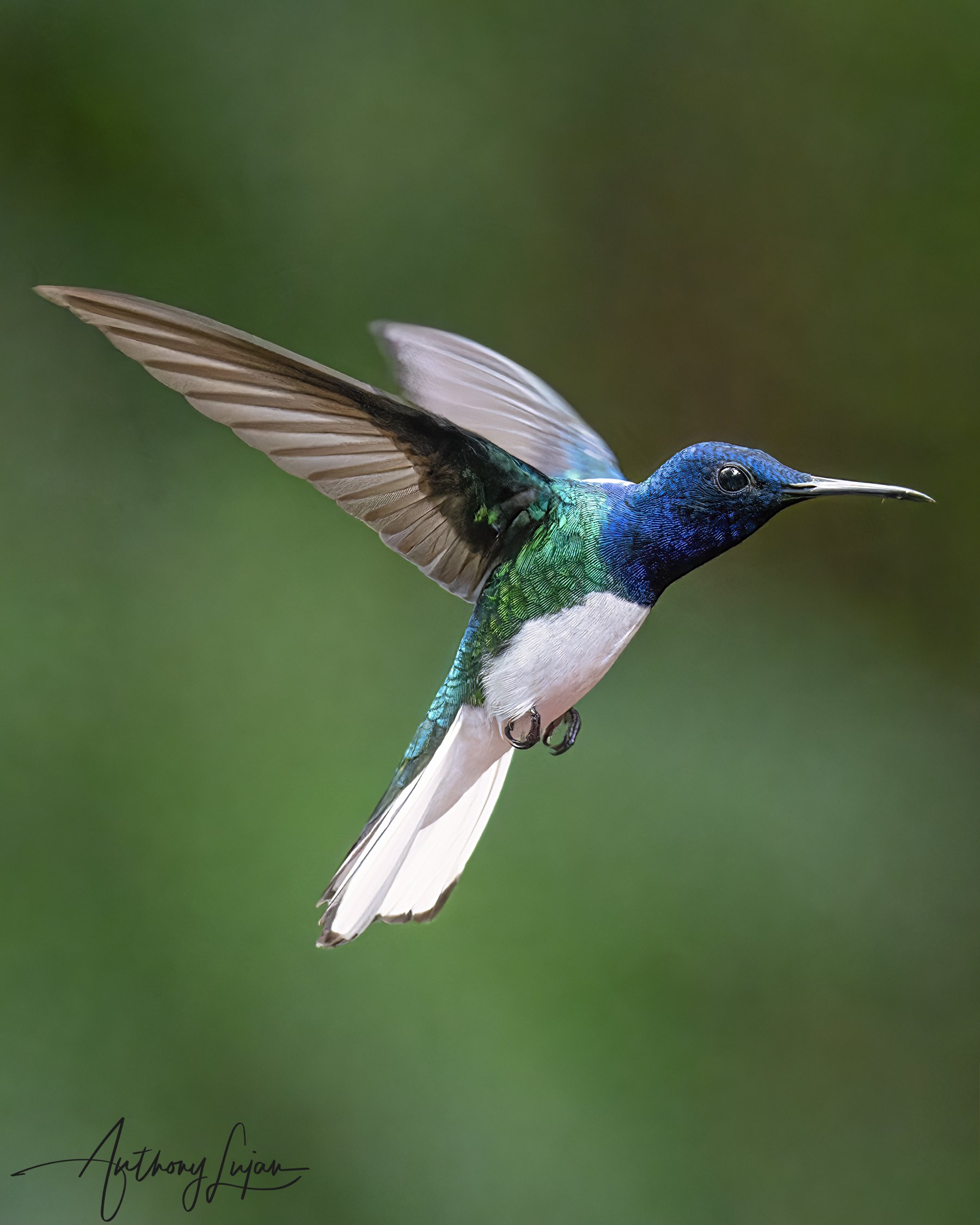
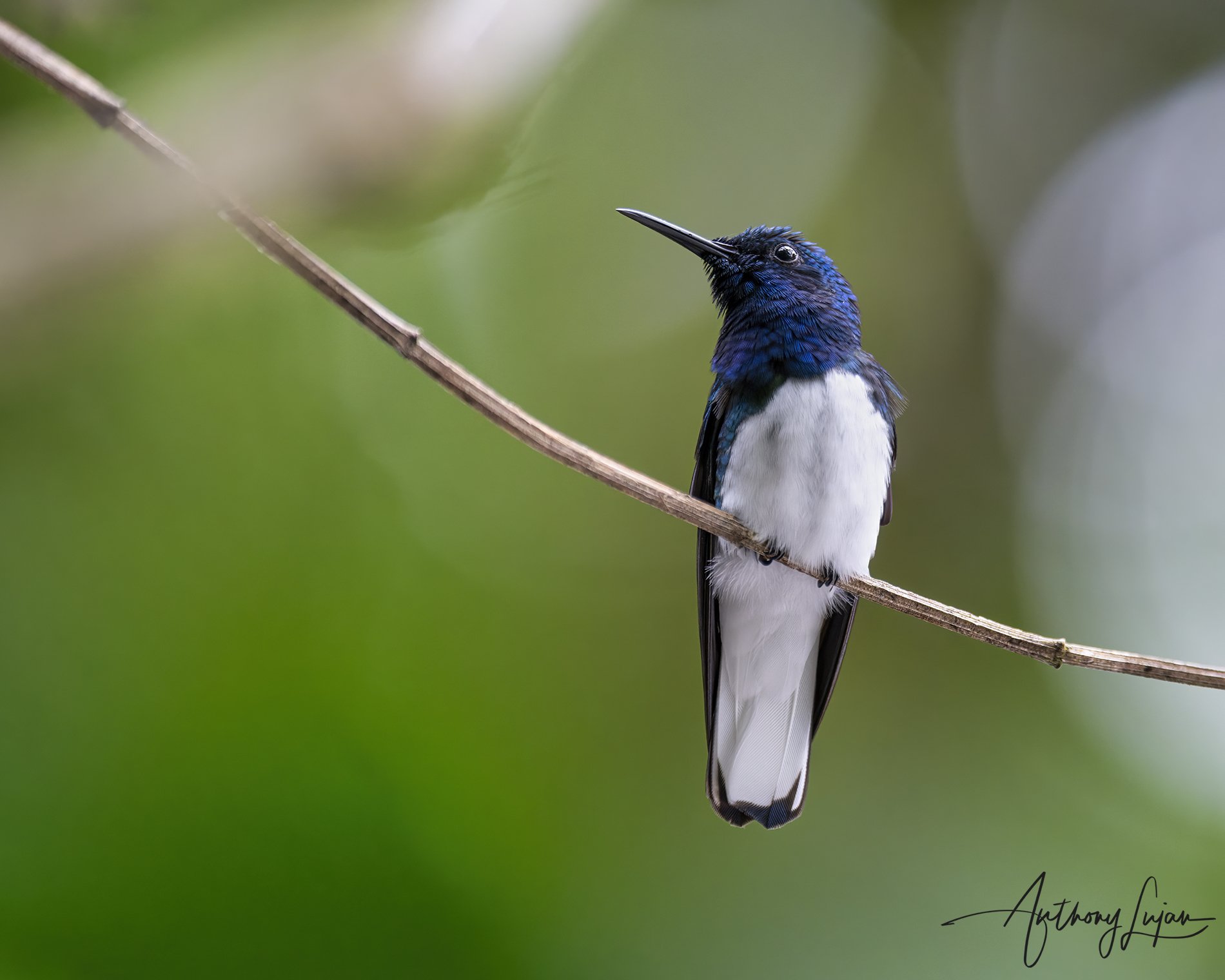
taken in Costa Rica
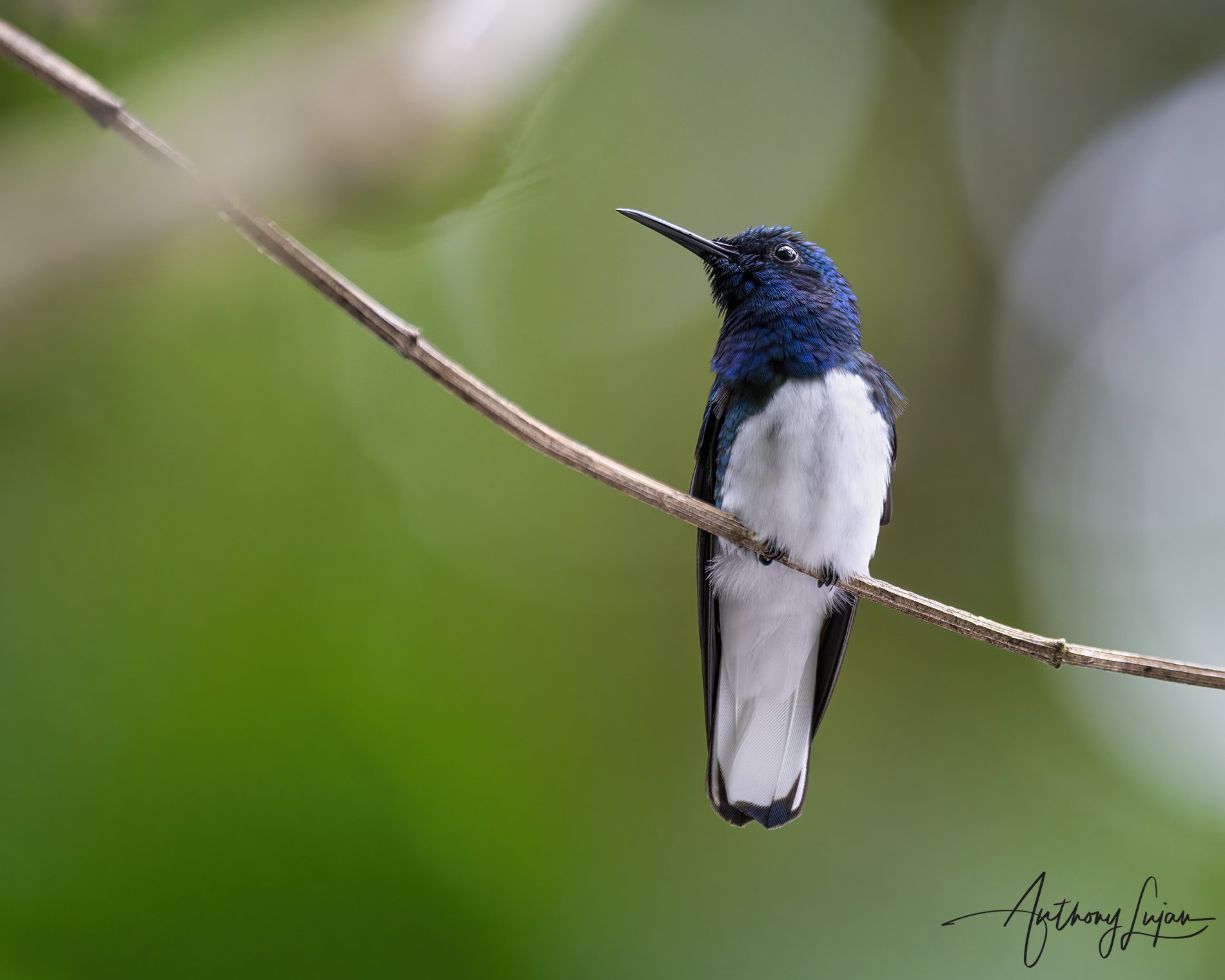
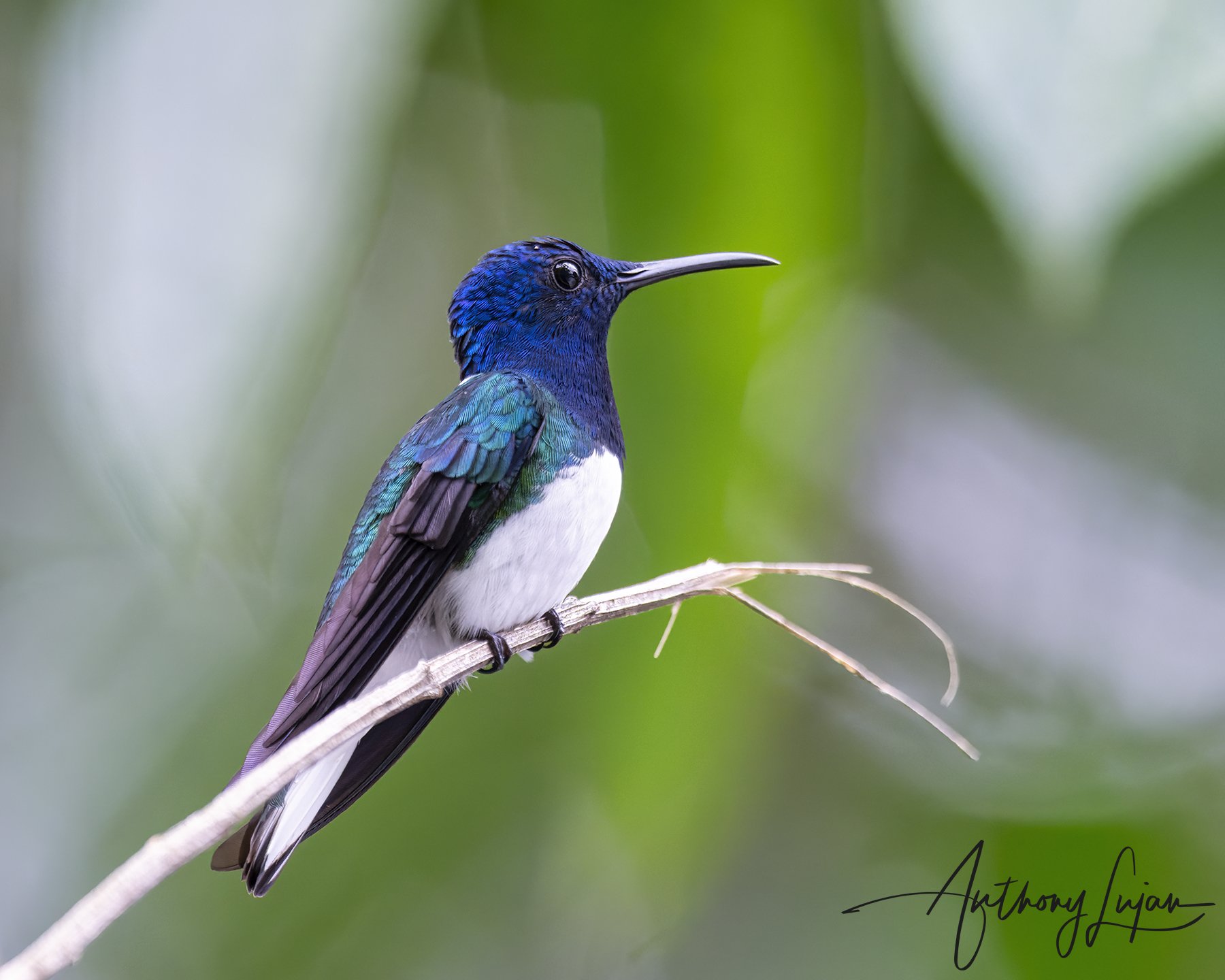
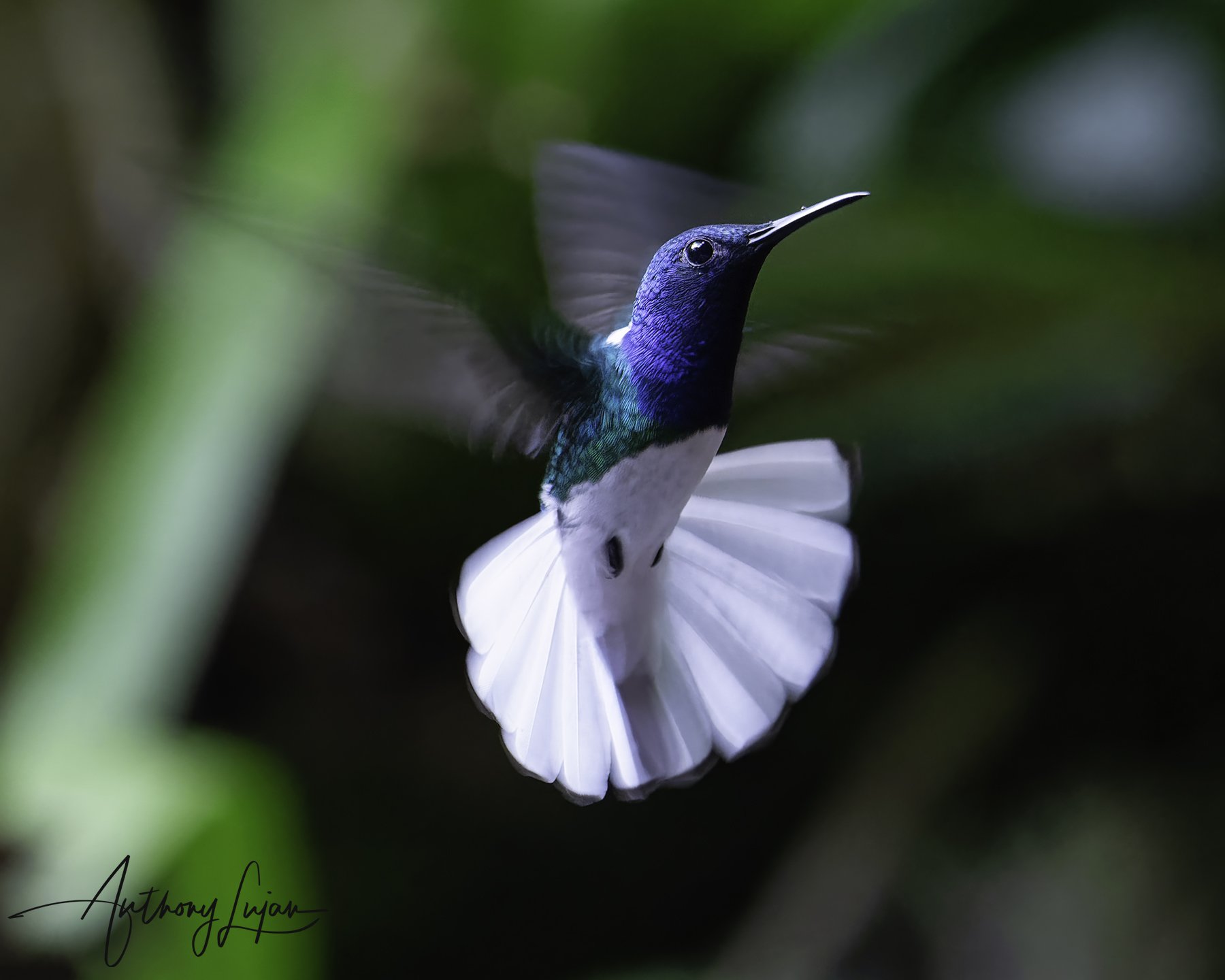
taken in Trinidad and Tobago
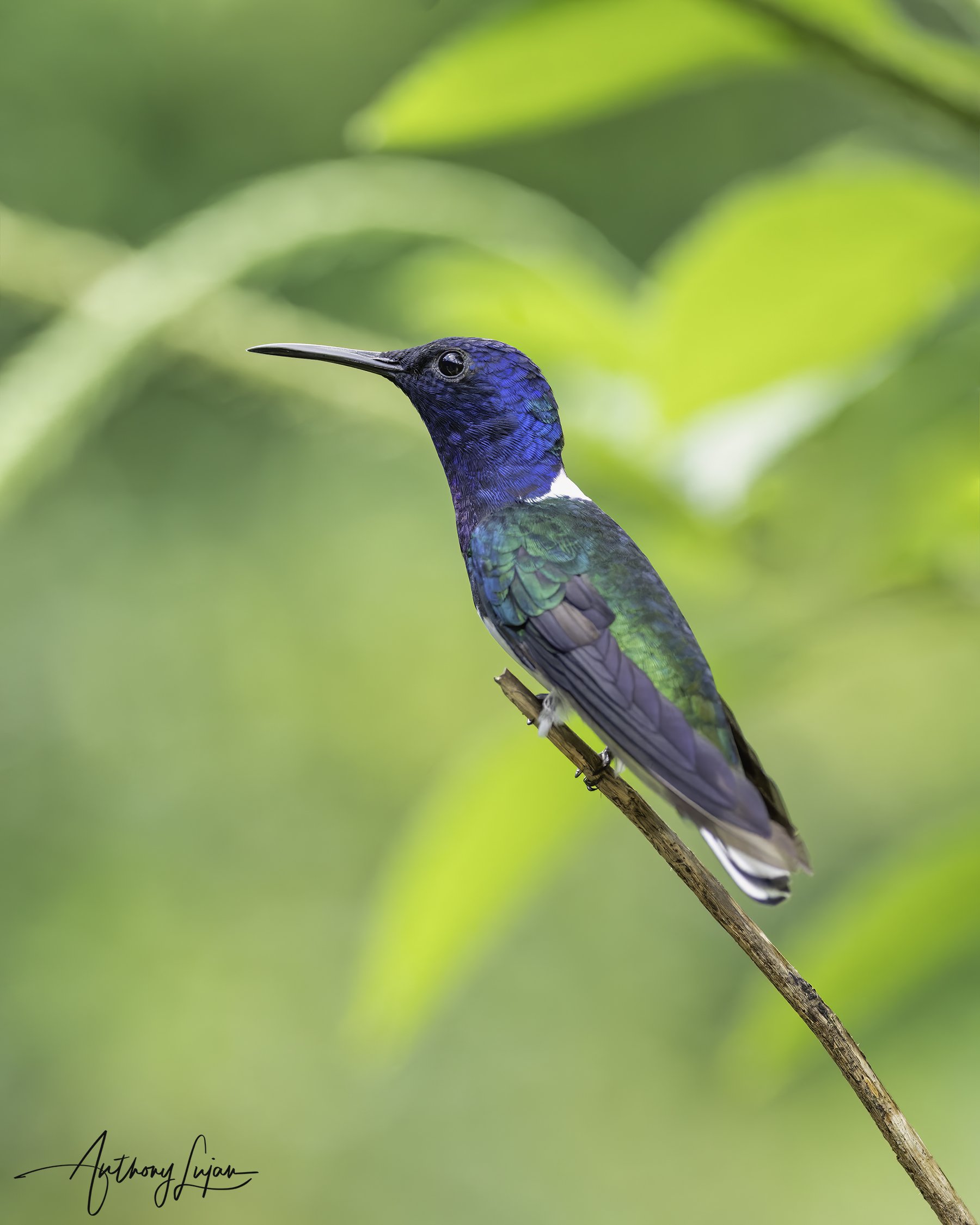
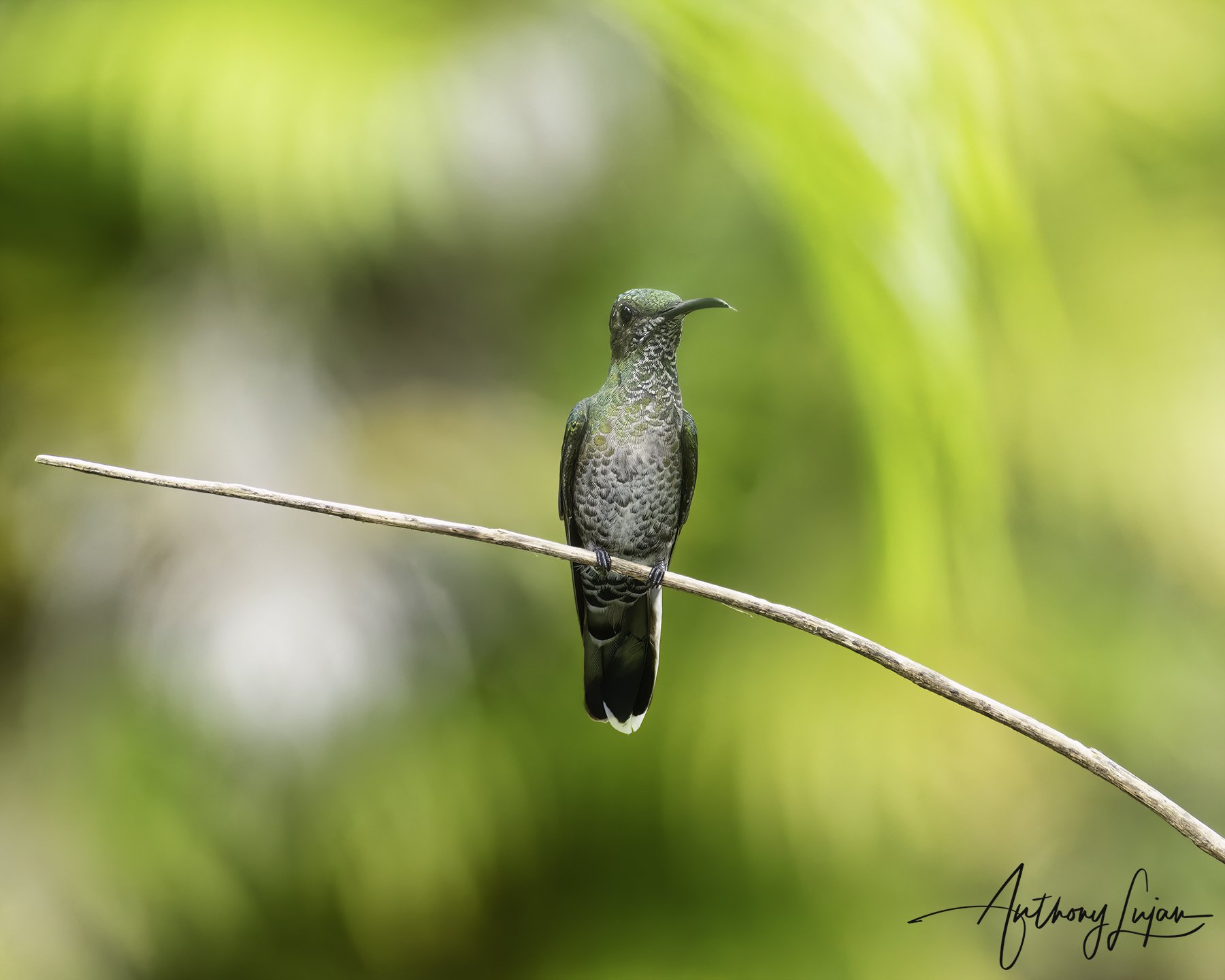
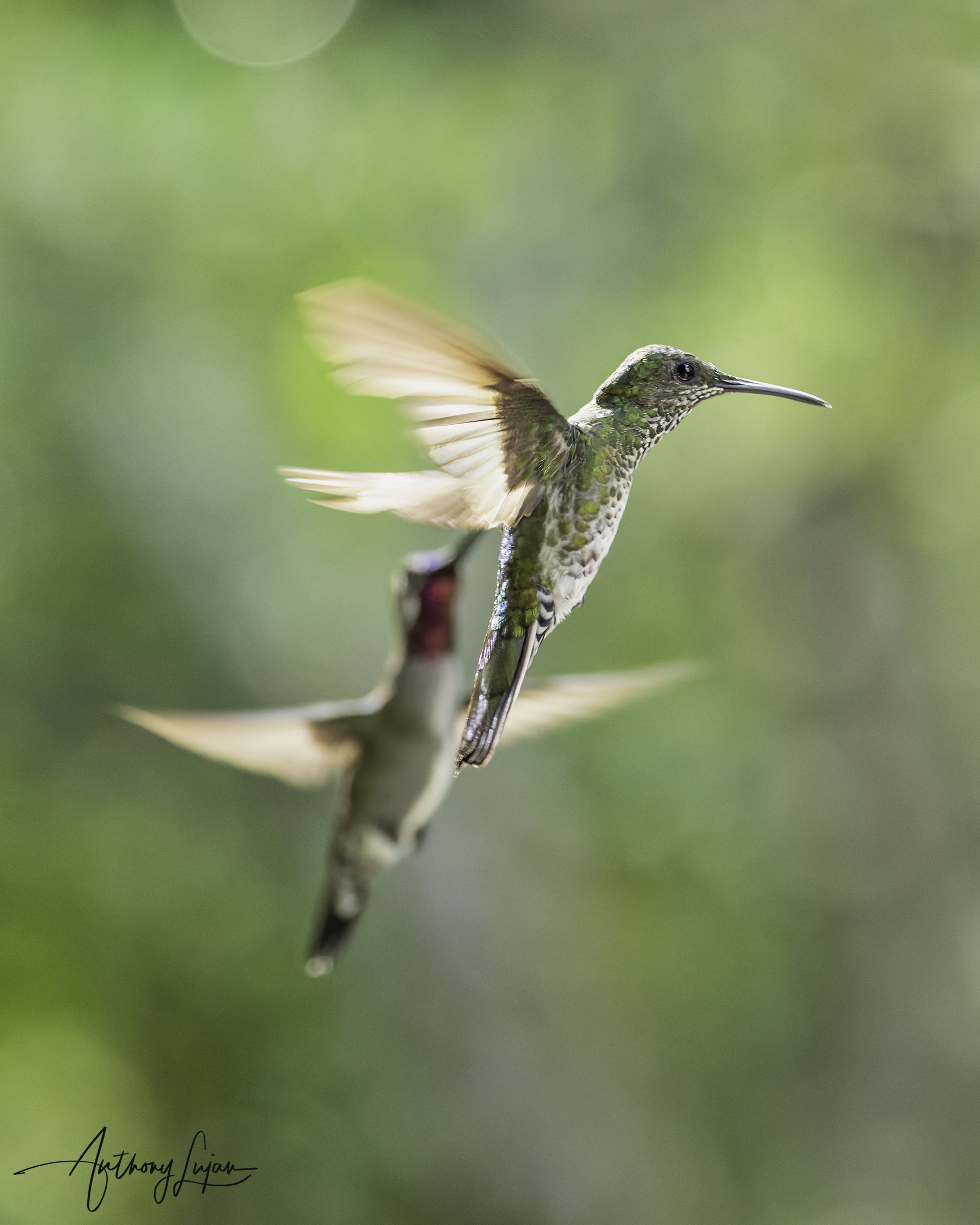
taken in Peru
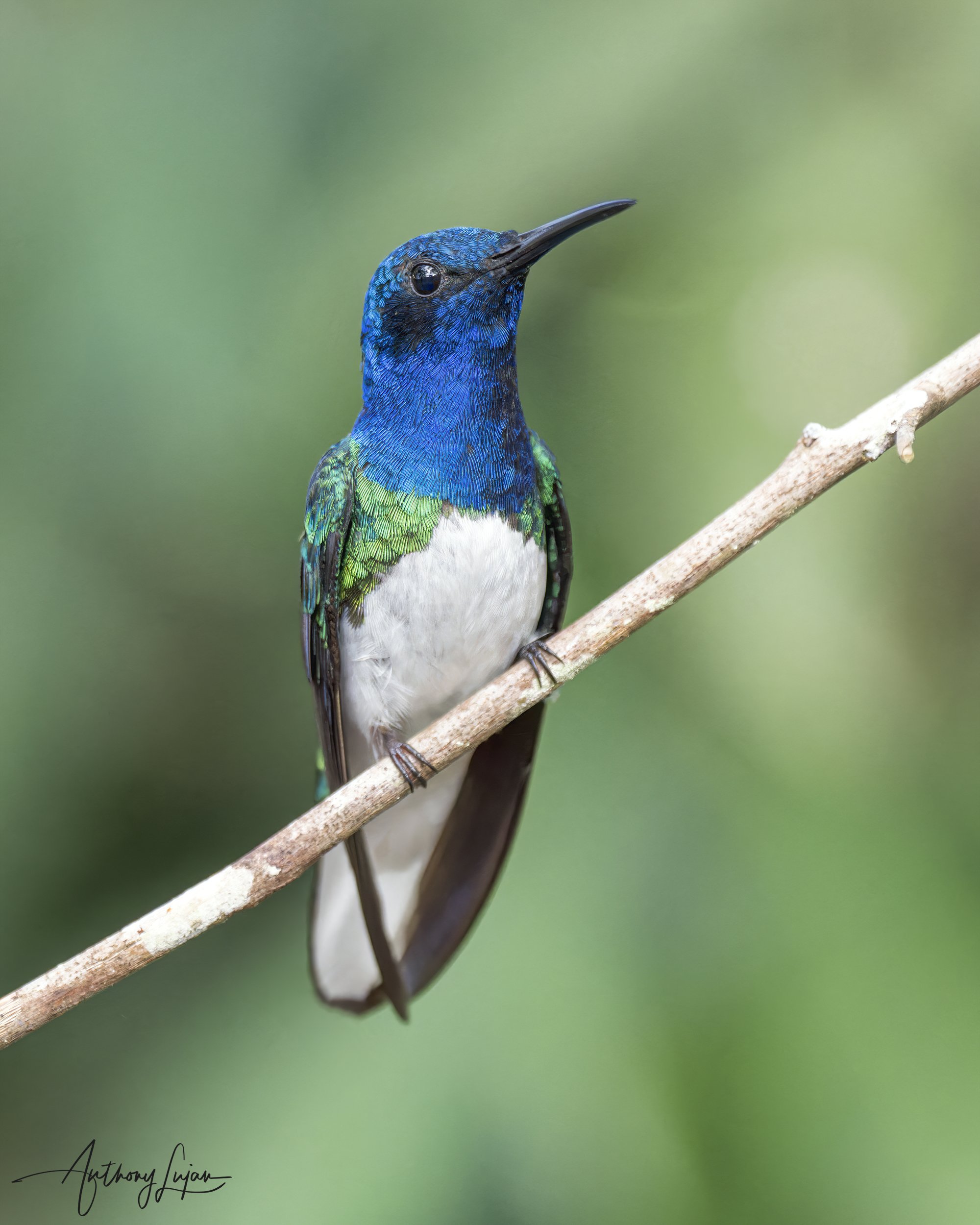
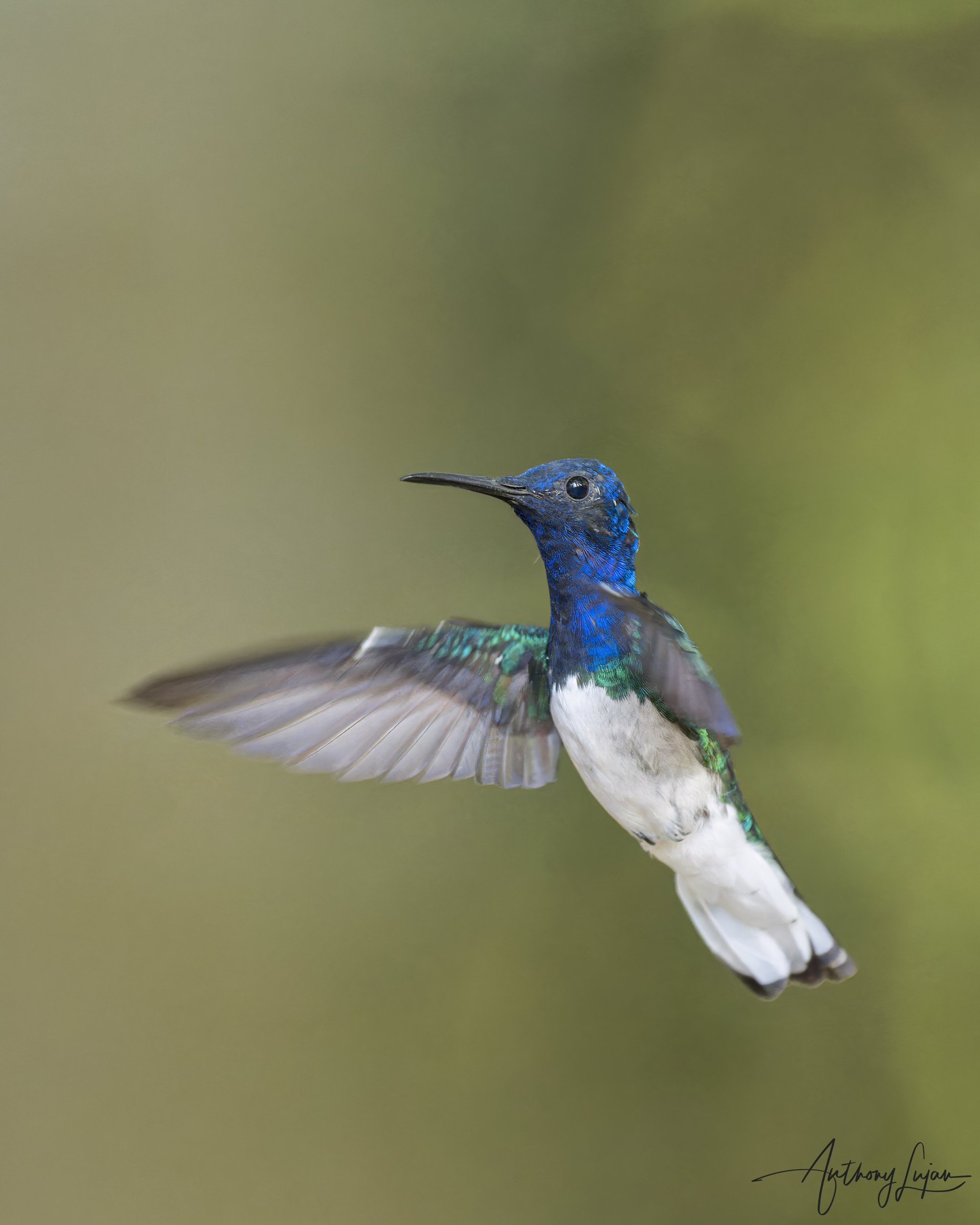
Checkout Anthony’s playlist of this species! Click the top right dropdown to see all the videos.
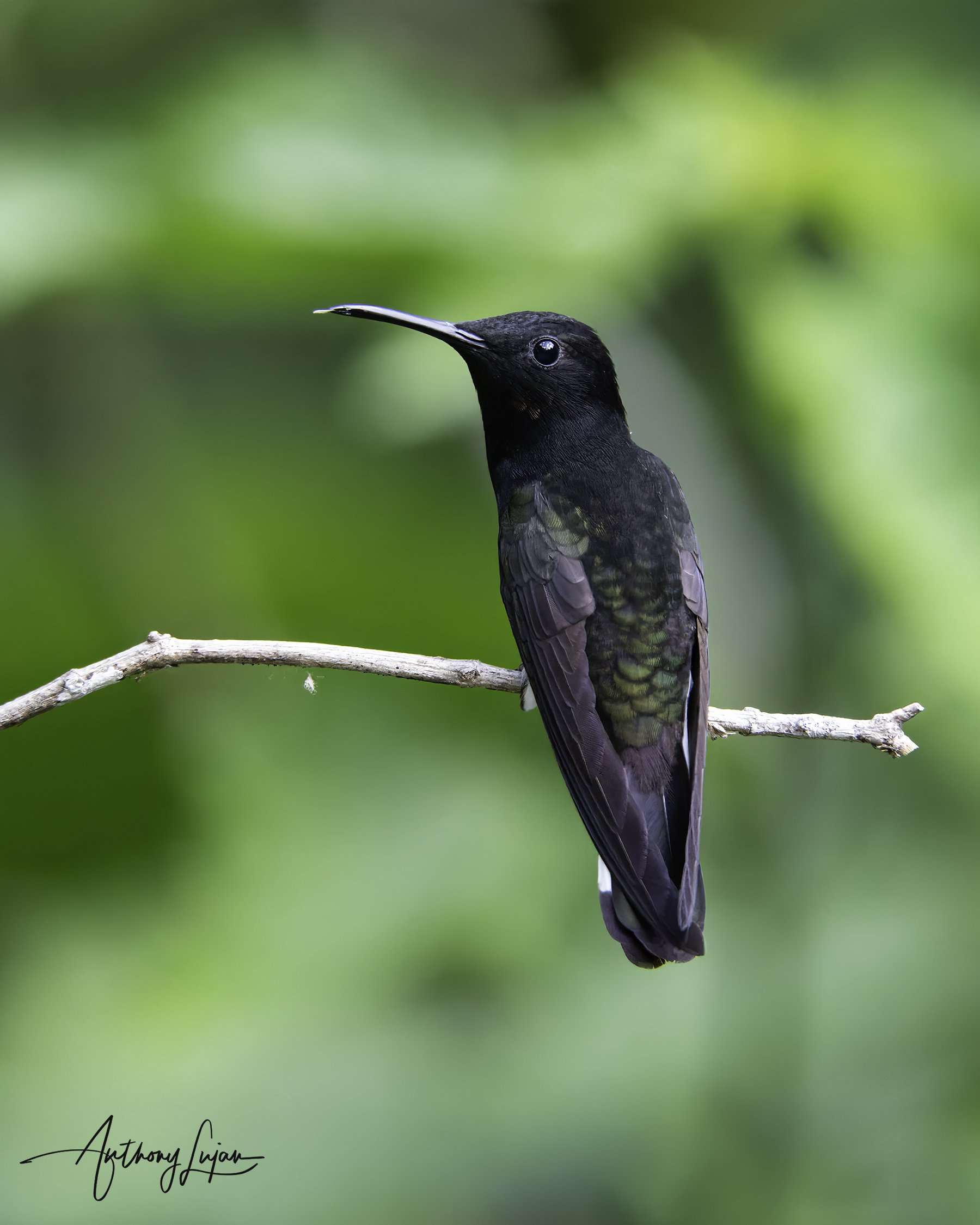
Related species in the Florisuga genus (2 species total):
Please note: The content provided in this article reflects Anthony’s personal experience and photographic approach. Results can vary depending on light, weather, location, equipment, subject behavior, and field conditions.