
Scientific name: Oreotrochilus leucopleurus
The White-sided Hillstar is a high-Andean hummingbird of grasslands and scrub from central Bolivia south through Chile to southern Argentina, where it ranges farther south than any other hillstar. It inhabits puna grasslands with dwarf shrubs, cacti, and Puya bromeliads, often foraging on windy, exposed slopes up toward the snow line.
At a Glance
Family: Trochilidae (hummingbirds)
Clade: Lesbiini – Coquettes
Genus group: Oreotrochilus — hillstars of the high Andes.
Range: Central Andes from central Bolivia’s Cochabamba Department south through Chile (to Biobío Region) and Argentina as far south as Santa Cruz Province; the southernmost hillstar.
Habitat: Puna grasslands and high Andean scrub with dwarf shrubs, cacti, and Puya, often on rocky slopes; also dry to semi‑humid Polylepis woodland and puna during austral winter and early spring in Bolivia.
Elevation: Generally from about 1,200 to 4,000 m (3,900–13,100 ft), occasionally higher toward the snow line.
Length: about 13–15 cm (5.1–5.9 in).
Weight: roughly 7.9–8.4 g (0.28–0.30 oz).
Number of mature individuals: not quantified; locally common in suitable habitat and present in several protected areas.
Population trend: Stable (believed to be stable overall).
Status: Least Concern (IUCN).
Name Origin
The genus name Oreotrochilus combines Greek oreos (“mountain”) and trochilos (“small bird” / “hummingbird”), referring to mountain-dwelling hummingbirds. The species name leucopleurus derives from Greek leukos (“white”) and pleuron (“side”), alluding to the distinctive white sides and underparts that contrast with darker upperparts. The English name “White-sided Hillstar” mirrors this descriptive reference to its plumage and high-Andean lifestyle.
Subspecies and Distribution
White-sided Hillstar is treated as monotypic, with no recognized subspecies.
The species occurs from central Bolivia’s Cochabamba Department south through the Andes of Chile to the Biobío Region and in Argentina south to Santa Cruz Province. It is the southernmost hillstar, occupying grassland and scrub landscapes in the southern Andes, and in Bolivia it is a rare to uncommon non-breeding visitor in austral winter and early spring to dry to semi‑humid Polylepis woodland and puna grassland.
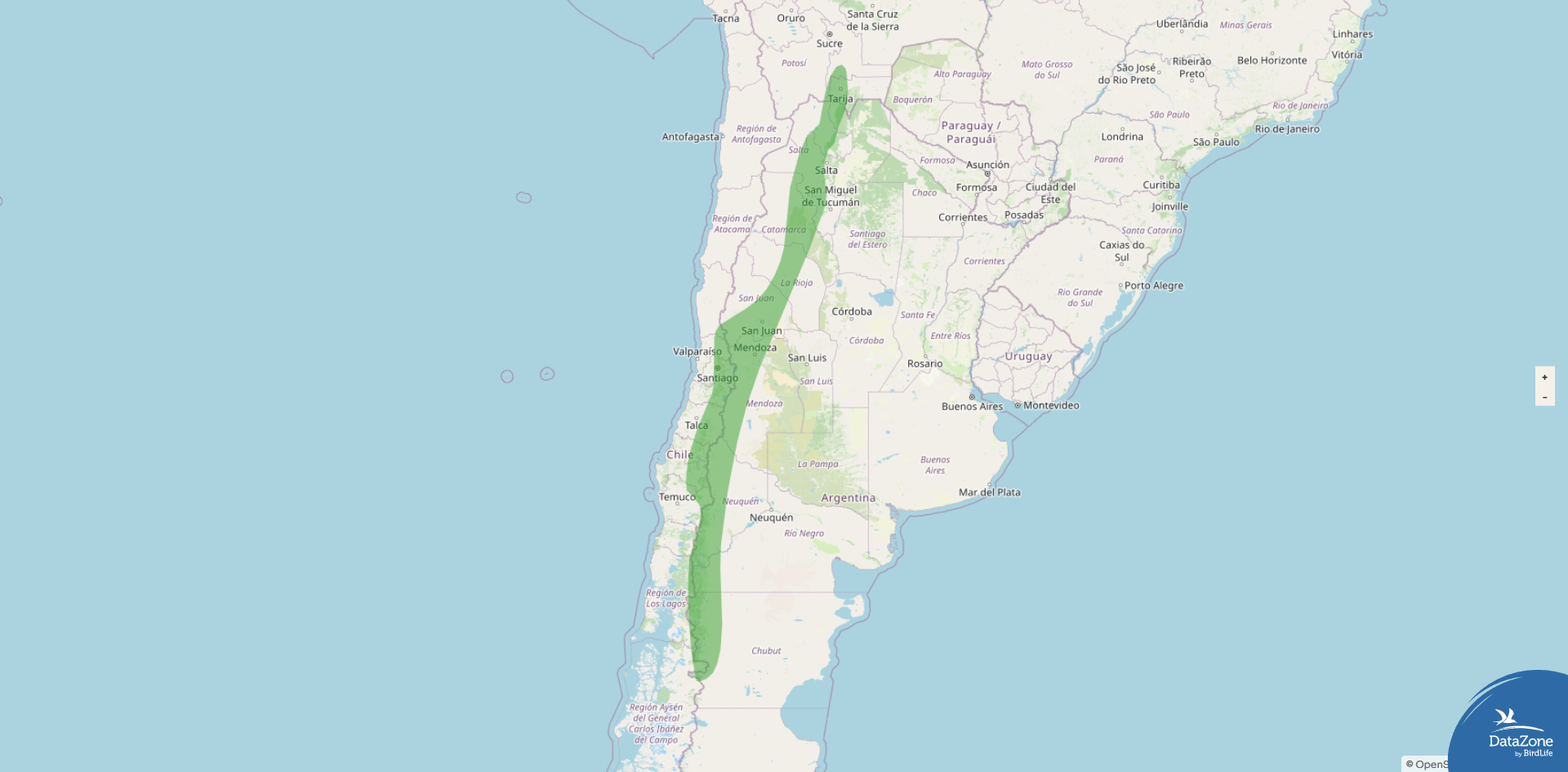
Legend
Green Resident
Species Overview
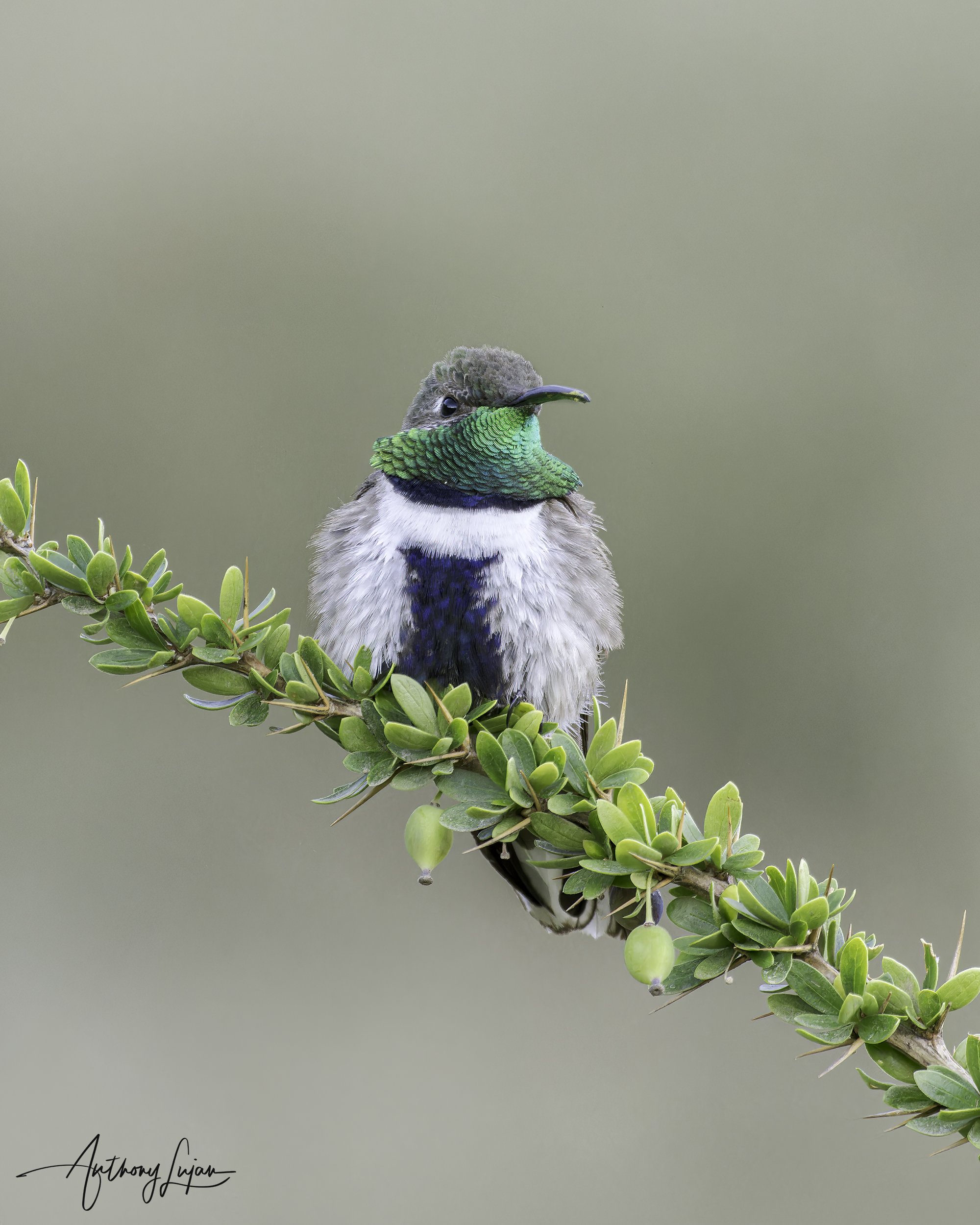
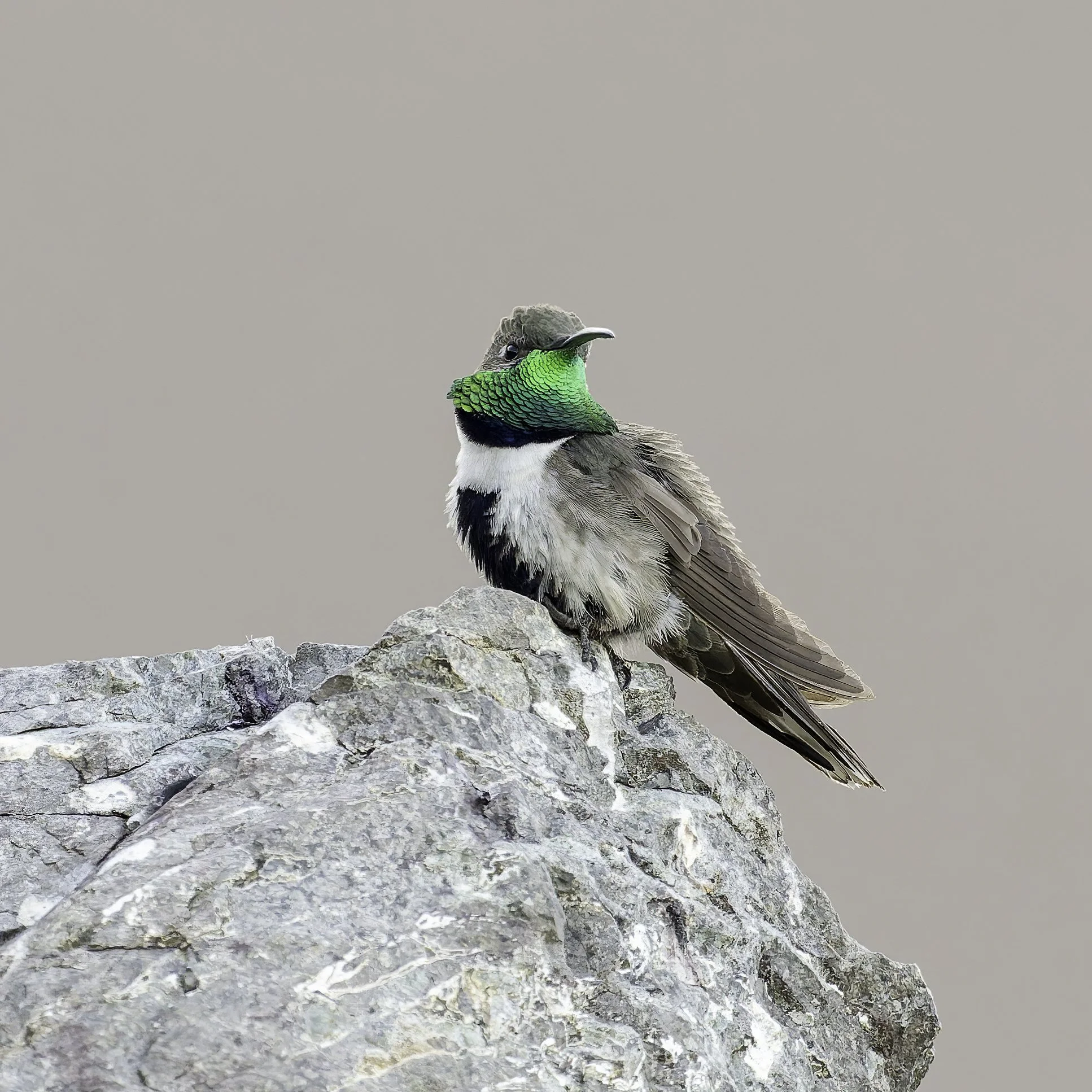
Among hillstars, White-sided is notable for its southerly distribution and broad elevational range, from 1,200 m up toward the snow line. It is well adapted to cold, windy slopes and open puna, often perching on low shrubs or rocks while feeding at flowers rather than hovering constantly. Its combination of brownish upperparts, white underparts, and green gorget gives it a clean, contrasting appearance against the muted tones of the high-Andean landscape.
Identification
Male
Adult males have drab brown upperparts and a slightly decurved black bill. They show a shiny green gorget bordered by black that separates it sharply from the white breast and belly, with the “white-sided” look enhanced by pale flanks. The tail pattern is similar to Andean Hillstar’s, with white and darker outer portions, but White-sided Hillstar tends to look cleaner white below overall, emphasizing the contrast between brown back and white underparts.
Female
Females are duller, with a more finely spotted or mottled throat and generally plainer underparts compared to males. Their upperparts are brownish to bronzy, and the underparts are mostly whitish, sometimes with subtle spotting or wash, helping maintain the white-sided impression but without the fully developed green gorget. As with other hillstars, both sexes are relatively large and robust for hummingbirds, and their presence in high, windswept puna is a strong identification clue.
Habitat and Behavior
White-sided Hillstars inhabit puna grasslands, scrub, and rocky slopes with dwarf shrubs, cacti, and Puya bromeliads, typically between about 1,200 and 4,000 m. In Bolivia they occur as rare to uncommon non‑breeding visitors to dry to semi‑humid Polylepis woodland and puna grassland in austral winter and early spring. They feed on nectar from high-Andean flowers, often perching at inflorescences of shrubs, cacti, and Puya rather than hovering continuously, and they also take small arthropods for protein. Vocalizations are poorly known but include a repeated short “tsit” call and a fast twittering during chasing or display, similar to Andean Hillstar.
Population and Threats
The White-sided Hillstar is assessed as Least Concern, with a wide range and no evidence of rapid population decline. Its population size has not been quantified, but it is believed to be stable, and the species is generally common and occurs in several protected areas. Its core puna and high-Andean scrub habitat is considered under only slight human pressure in much of its range, though localized threats from overgrazing, shrub removal, and climate-related shifts in snow lines and vegetation could affect some populations over time.

Conservation
At present, White-sided Hillstar does not meet IUCN criteria for a higher threat category and benefits from occurring in relatively intact high-Andean grasslands and scrub across a broad latitudinal span. Conservation of puna and Polylepis woodlands, sensible grazing management, and protection of high-Andean protected areas all help maintain habitat for this and other southern Andes specialists. Monitoring of high-elevation ecosystems under climate change will be important to ensure that this hillstar’s apparently stable population remains secure.
Checkout Anthony’s playlist of this species! Click the top right dropdown to see all the videos.
Related species in the Oreotrochilus genus (7 species total):


Please note: The content provided in this article reflects Anthony’s personal experience and photographic approach. Results can vary depending on light, weather, location, equipment, subject behavior, and field conditions.