
White-tailed Goldenthroat
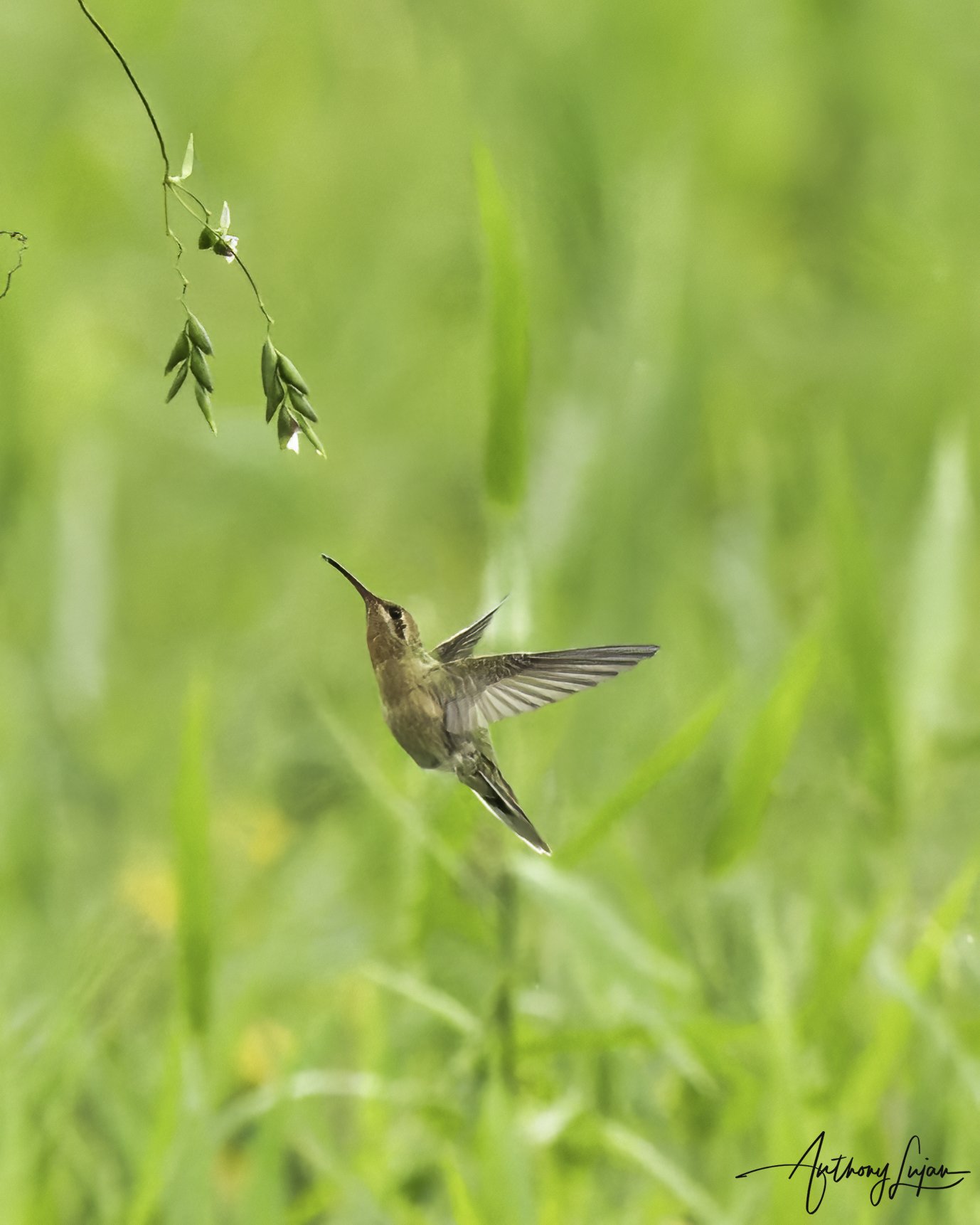
Scientific name: Polytmus guainumbi
The White-tailed Goldenthroat is a medium-sized hummingbird of wet grasslands, savannas, marshes, and other open lowland habitats across much of northern and central South America and Trinidad. The total number of mature individuals and the overall population trend are both unknown, it is considered non‑migratory, and it is currently assessed as Least Concern.
At a Glance
Family: Trochilidae (hummingbirds)
Clade: Polytminae – Mangoes
Genus: Polytmus — 3 species in total
Range: Eastern Colombia, Venezuela, Trinidad, the Guianas, northern and central Brazil, southeastern Peru, Bolivia, eastern Paraguay, and northeastern Argentina
Habitat: Wet grasslands, shrubby savannas, freshwater marshes, swamps, and other open areas near water; also drier savannas and pastures where water and flowering shrubs are present
Elevation: Mostly from sea level to about 600 m (2,000 ft)
Length: About 9.7–11.8 cm (3.8–4.6 in)
Weight: About 4.4–5 g (0.16–0.18 oz)
Number of mature individuals: Unknown
Population trend: Unknown
Movement: Not a migrant (mostly sedentary, with some local seasonal movements)
IUCN Red List category: Least Concern
Name Origin
The name “White-tailed Goldenthroat” refers to the species’ white‑tipped tail and golden‑green throat, which are among its most conspicuous features. The genus name Polytmus is applied to the goldenthroats, a small group of open‑country hummingbirds with bright metallic throats. The species name guainumbi comes from a local or indigenous word used historically for hummingbirds in parts of South America.
Taxonomy & Distribution
Polytmus guainumbi belongs to the mango subfamily Polytminae within the hummingbird family Trochilidae. It is one of three species in the genus Polytmus, along with the Green-tailed Goldenthroat (Polytmus theresiae) and the Tepui Goldenthroat (Polytmus milleri). The White-tailed Goldenthroat has a wide but patchy distribution in South America and on Trinidad, with two main population centers: one in northern South America (Colombia, Venezuela, Trinidad, the Guianas, and coastal northern Brazil) and one in central and eastern South America (Peru, Bolivia, Brazil, Paraguay, and Argentina).
Subspecies and Distribution
Three subspecies:
Polytmus guainumbi andinus
Distribution: Eastern Colombia, south to Meta and Vichada.Polytmus guainumbi guainumbi
Distribution: Venezuela and Trinidad east through the Guianas and into northern Brazil (Amapá coast).Polytmus guainumbi thaumantias
Distribution: Southeastern Peru, Bolivia, and central to eastern Brazil (south from Maranhão and Bahia to Mato Grosso do Sul, São Paulo, and northern Paraná), extending into eastern Paraguay and northeastern Argentina.
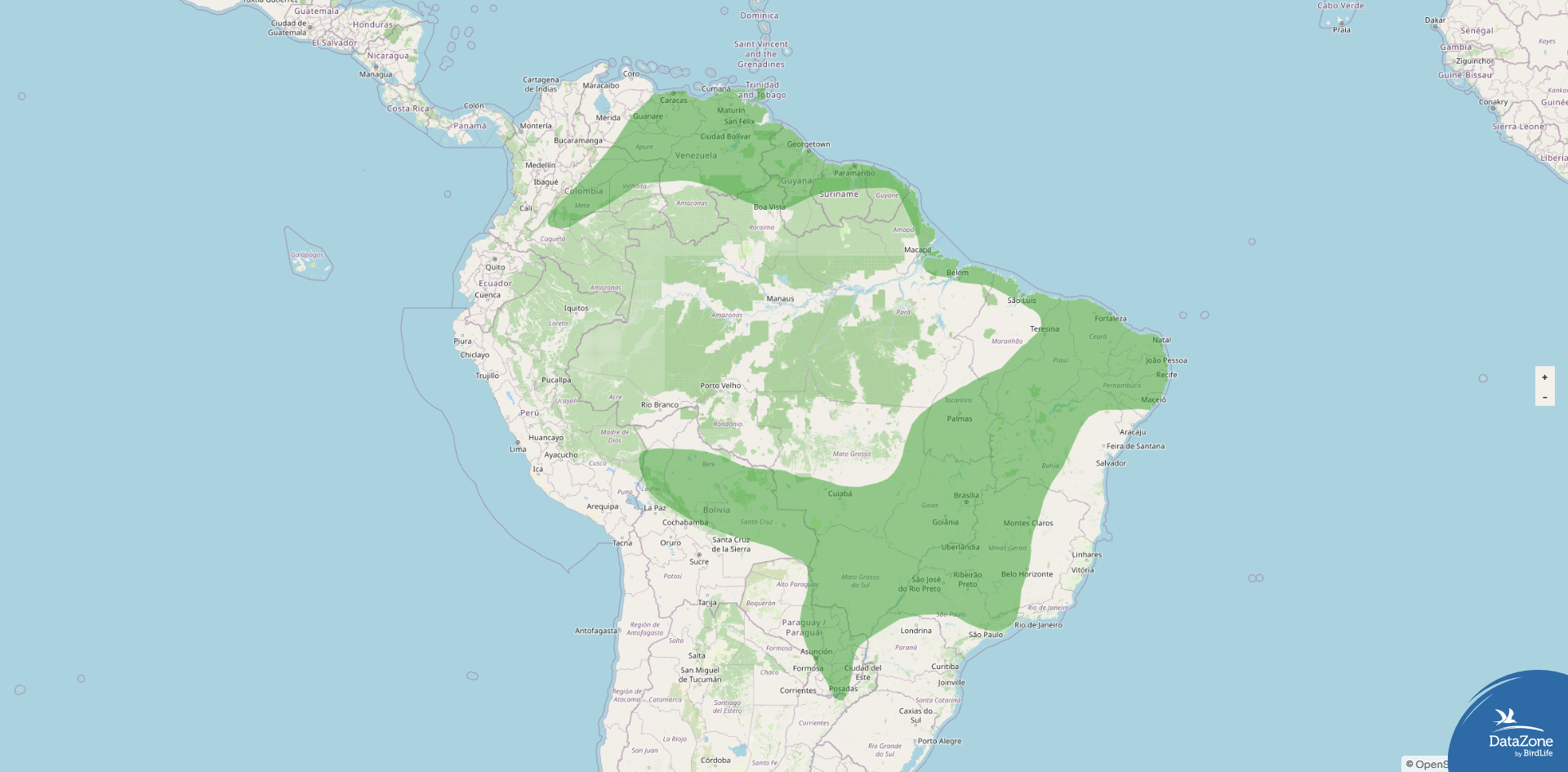
Legend
Green Resident
Species Overview
The White-tailed Goldenthroat is a distinctive open‑country hummingbird of wet grasslands, savannas, marshes, and other lowland habitats, typically near water. It is characterized by a long, slightly decurved reddish‑and‑black bill, golden‑green throat and underparts, and a long, rounded tail with prominent white tips and edges that make the tail look largely white when closed. Within suitable wet and savanna habitats it can be common to locally abundant, although it is more uncommon and local on Trinidad and in some coastal regions.
Male Description
Adult males are metallic green above, including the crown, back, and rump. The throat and underparts are iridescent golden‑green, sometimes appearing more green or more bronzy depending on the light. The area around the eye is dusky gray with distinct white streaks above and below, framing the eye. The tail is long, broad, and rounded; the feathers are mostly green with white tips, and the outer three pairs have broad white edges, so that the underside of the tail appears almost completely white when the tail is closed. The bill is long, slightly decurved, reddish at the base and along most of the lower mandible, with a black tip and darker upper mandible.
Female Description
Females are similar to males but generally paler below. The throat and breast are more whitish and spotted or scaled with green rather than solid golden‑green. The underparts may look more grayish‑white with greenish mottling, especially on the sides. The tail pattern, with broad white tips and edges to the outer feathers, is shared, though the contrast with the rest of the plumage can appear stronger in females. Juveniles resemble females, often with even duller throat and underparts and reduced iridescence; as young males mature, they gradually develop the more extensive golden‑green underparts typical of adults.
Habitat & Behavior
White-tailed Goldenthroats inhabit a variety of open, lowland landscapes that are usually near water. Core habitats include wet grasslands, shrubby savannas, pastures, freshwater marshes, swamps, and edges of wetlands, as well as drier savannas and campos where water and flowering shrubs are nearby. They often occur in seasonally flooded areas and along river margins and ponds, where they forage among flowering shrubs, herbs, and low trees.
They usually forage singly and relatively low to the ground, visiting flowers of grasses, herbs, shrubs, and small trees. They feed mainly on nectar, hovering briefly at blossoms or perching to reach flowers, and they also catch insects on the wing or glean small arthropods from vegetation to supplement their diet. Birds are often seen making short, direct flights across open ground between patches of flowers or between wet depressions and slightly higher, shrubbier ground.
Breeding
Breeding seasons vary across the species’ extensive range but generally coincide with wetter periods or peaks in flower availability. In different parts of the range, nesting has been recorded in mid‑year months (such as June–August) and in the early wet season or transition periods; exact timing depends on local climate and rainfall. The female alone builds a small cup‑shaped nest of plant down and fine fibers bound with spiderweb, often decorated externally with lichens or other small plant fragments.
Nests are usually placed low, in forks of shrubs or small bushes close to the ground, often between about 0.5 and 1 m (1.6–3.3 ft) above the ground and sometimes over water or in exposed positions within wet grasslands. The typical clutch consists of two white eggs. The female incubates the eggs for about 14–15 days and continues to care for the nestlings until fledging, which occurs around 20–22 days after hatching.
Movement
The White-tailed Goldenthroat is mostly sedentary and is treated as not a migrant. However, local seasonal movements do occur, especially after the breeding season in some regions. On Trinidad, for example, birds may move between wet and drier parts of the island or shift following changes in water levels and flowering. In mainland South America, some populations appear to be regular winter visitors to certain regions (such as Mato Grosso do Sul and northeastern Argentina), suggesting short‑distance seasonal movements within the species’ broad range. These movements are regional and habitat‑tracking rather than long‑distance, directional migrations.
Population
The total number of mature individuals is unknown, but the White-tailed Goldenthroat is described as common to locally abundant across much of its range. It is less numerous and more local in some areas, such as Trinidad and French Guiana, where it can be uncommon or rare. Overall, its preferred habitats—wet grasslands, savannas, and marshes—remain extensive in many regions, and there is no clear evidence of strong widespread decline, which helps explain the Least Concern status despite unknown trend metrics.

Conservation
The species is currently assessed as Least Concern, with unknown population size and trend but a very wide distribution across tropical South America and Trinidad. Many of its habitats are not considered globally threatened at present, although localized pressures such as drainage of wetlands, conversion of savannas and marshes to agriculture or pasture, and changes in fire and water regimes can affect local populations. Because the species can use a range of open wet and semi‑wet habitats, including some human‑modified landscapes near water, it shows a degree of resilience. Continued protection and sensible management of wetlands, savannas, and riverine grasslands will be important for maintaining healthy populations in the long term.
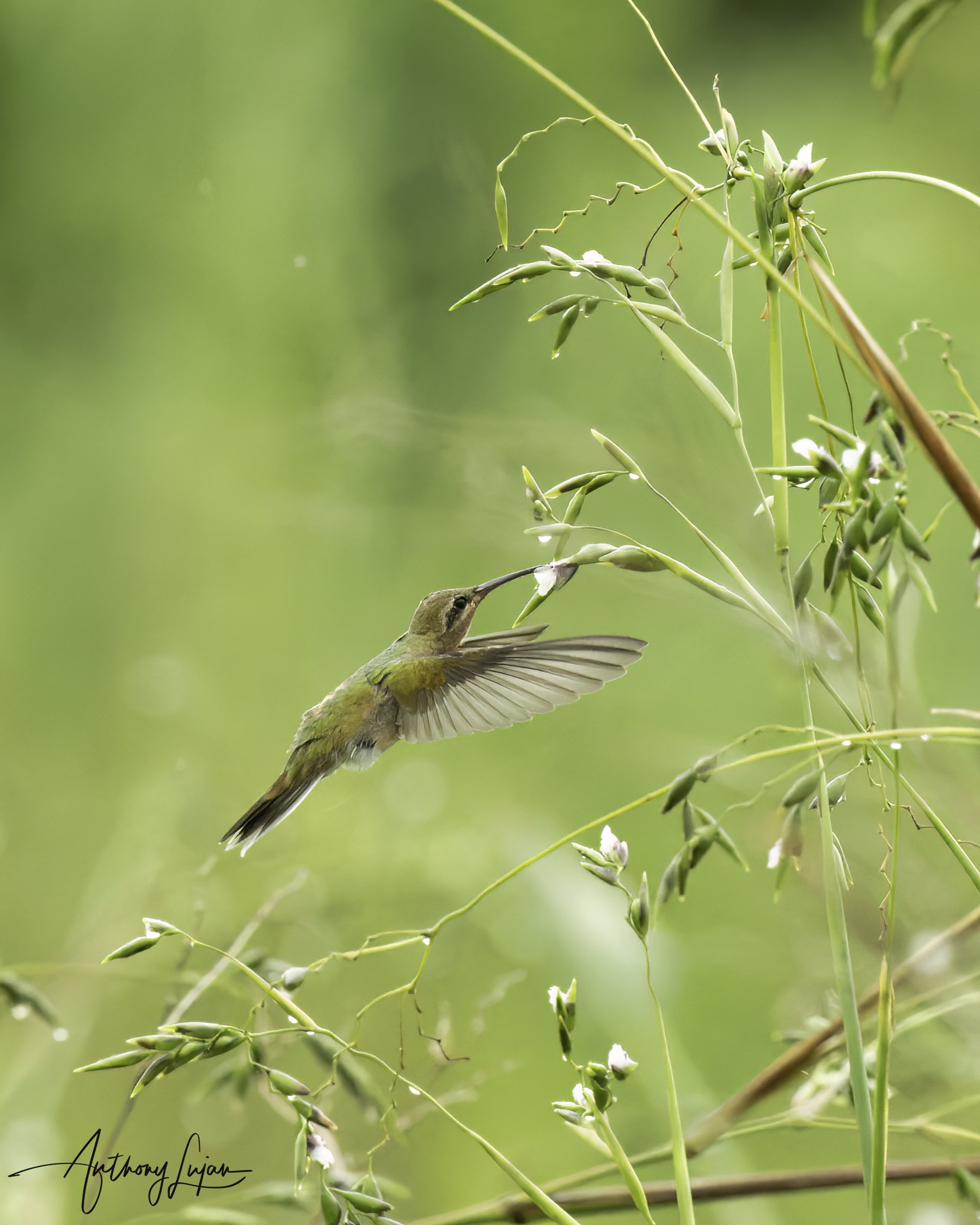
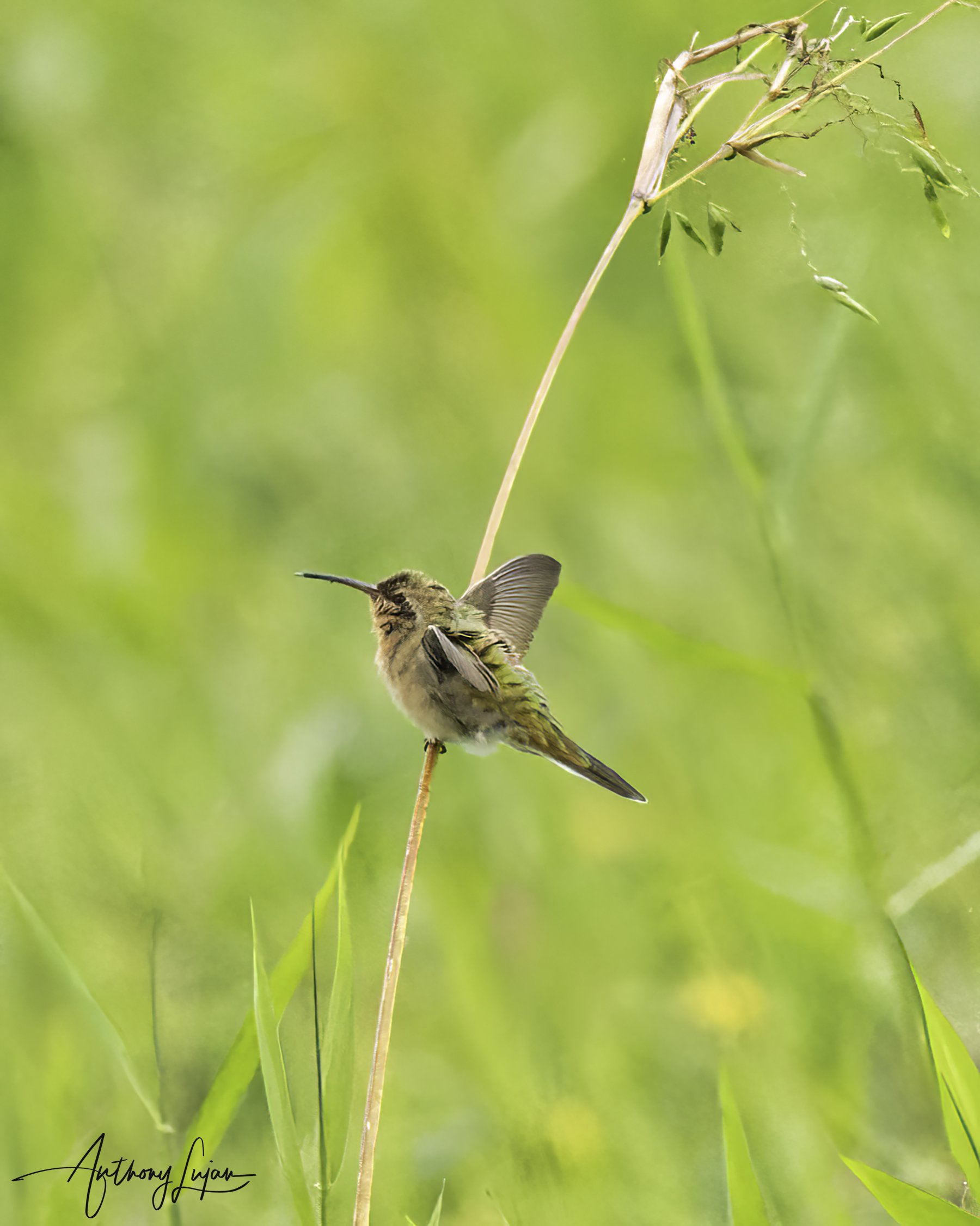
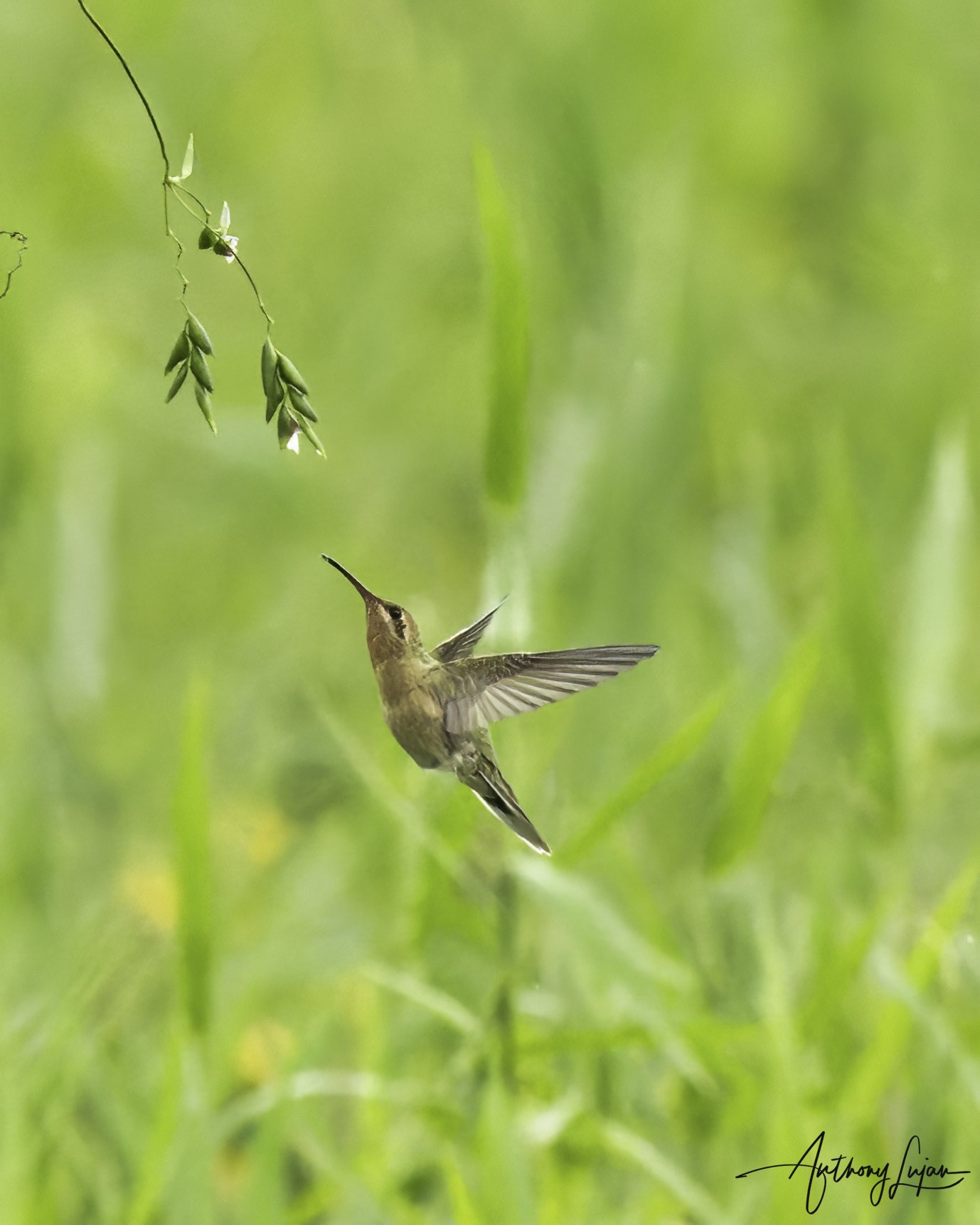
Below is a juvenile male of the White-tailed Goldenthroat (Polytmus guainumbi guainumbi)
Photographed at:
Kernaham, Rio Claro-Mayaro, Trinidad and Tobago
These individuals belong to the subspecies guainumbi, found in Venezuela, Trinidad, the Guianas, and coastal northern Brazil. This population occupies open and semi-open lowland areas, including savanna, coastal scrub, and mangrove edges. Males are known for their glowing green throats and strong contrast between dark tail feathers and white terminal tips. They are agile and persistent nectar feeders, often seen visiting flowering shrubs at low heights.
Related species in the Polytmus genus (3 species in total):


Please note: The content provided in this article reflects Anthony’s personal experience and photographic approach. Results can vary depending on light, weather, location, equipment, subject behavior, and field conditions.