
White-tailed Sabrewing
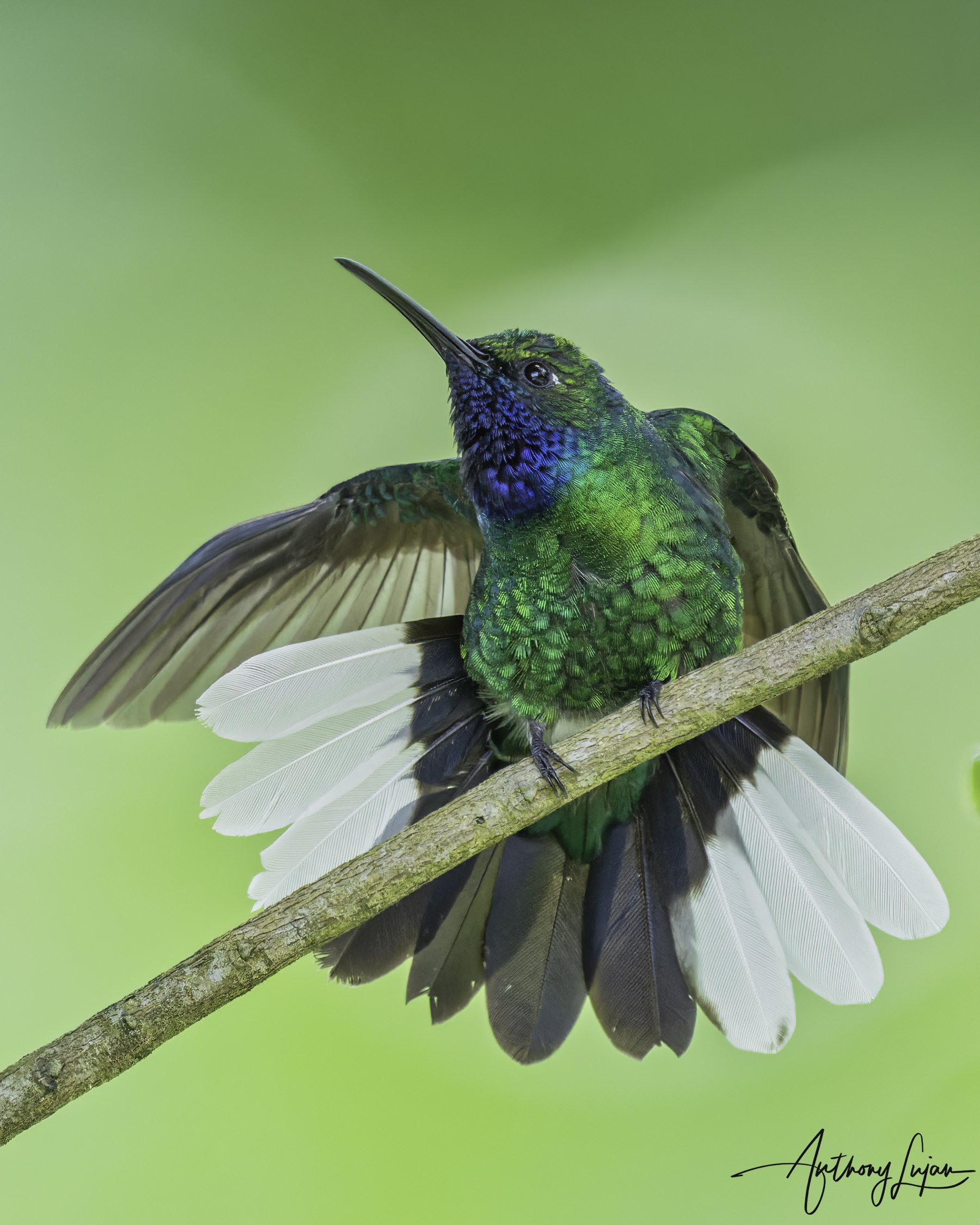
Scientific name: Campylopterus ensipennis
The White-tailed Sabrewing is a large, localized hummingbird that breeds in northeastern Venezuela and on the island of Tobago. An estimated 50,000–99,999 mature individuals exist, the population is decreasing, and it is listed as Near Threatened, monotypic, non-migratory, and tied to mature montane forests and regenerating forest edges.
At a Glance
Family: Trochilidae (hummingbirds)
Clade: Trochilini – Emeralds
Genus group: Campylopterus — 10 species, 6 subspecies
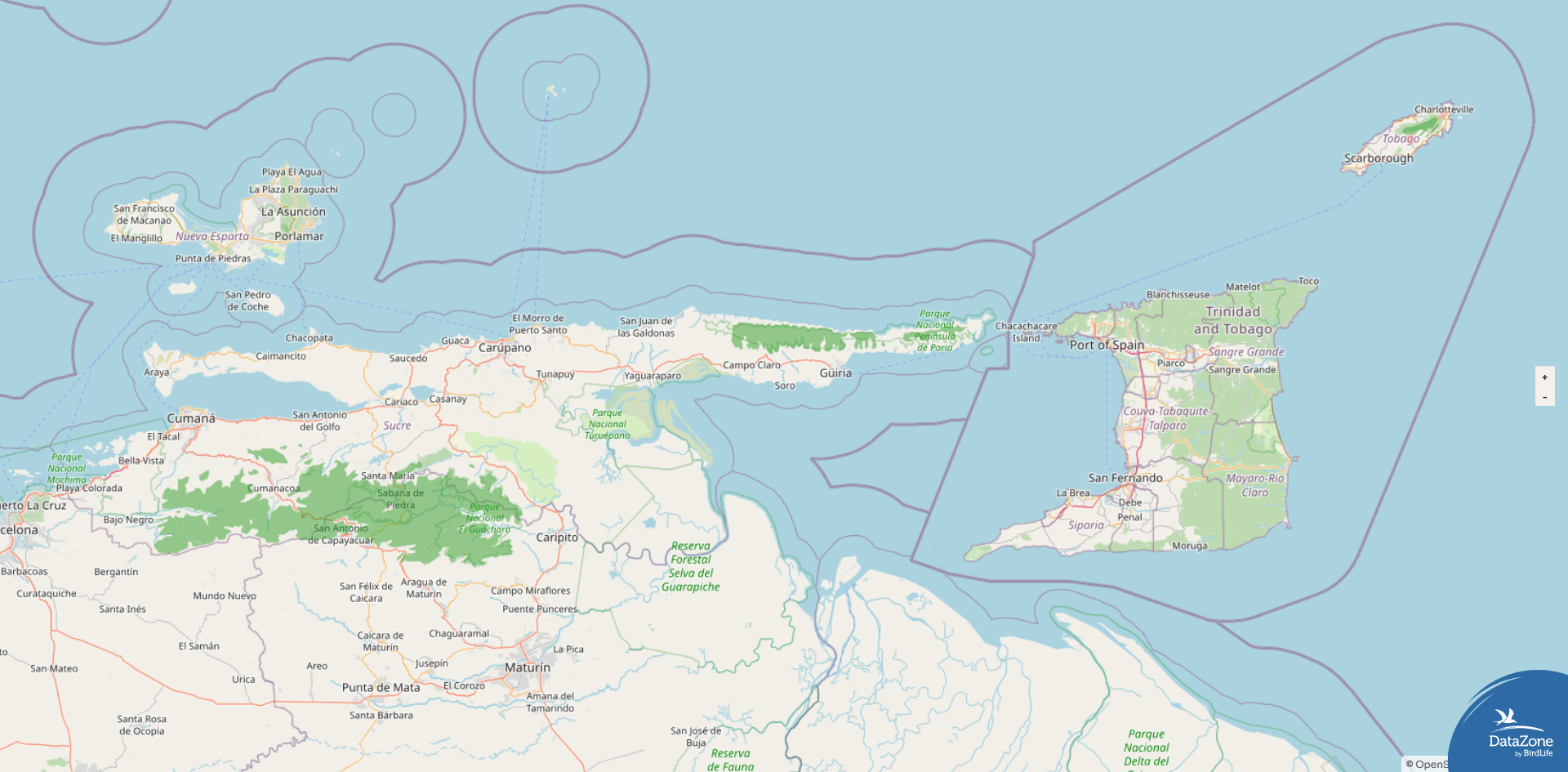
Range: Disjunct populations in the Cordillera de Caripe and Paria Peninsula of northeastern Venezuela, and along the Main Ridge of Tobago.
Habitat: Mature montane forest, forest edges, shade coffee and abandoned plantations, and regenerating forest in humid upland regions.
Elevation: Mostly from about 400 up to roughly 2,000 m, with nesting on Tobago concentrated at mid-elevations.
Length: About 12–13 cm (4.7–5.1 in).
Weight: Males roughly 9.5–10.5 g, females slightly lighter.
Number of mature individuals: 50,000–99,999
Population trend: Decreasing
Status: Near Threatened (IUCN)
Name Origin
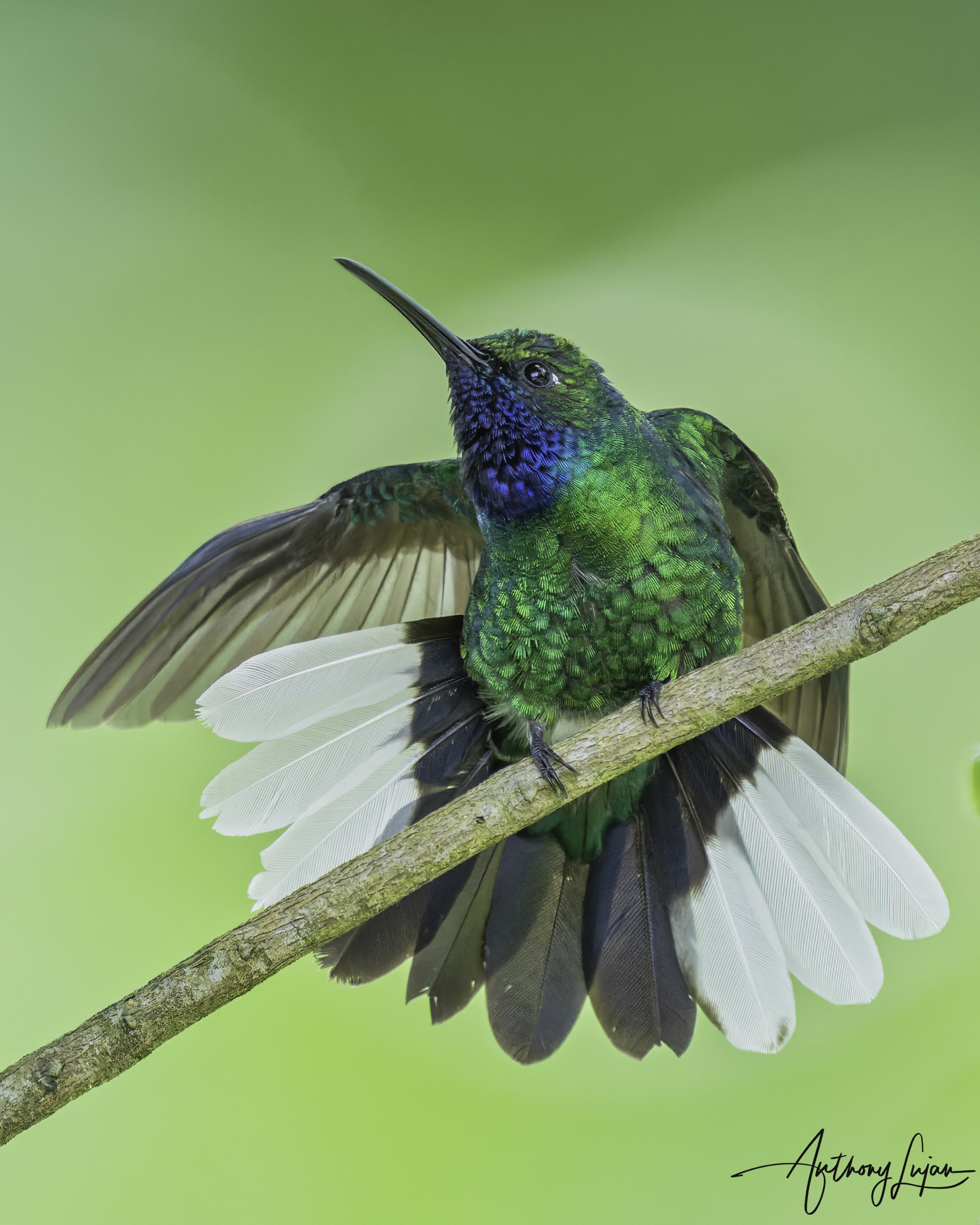
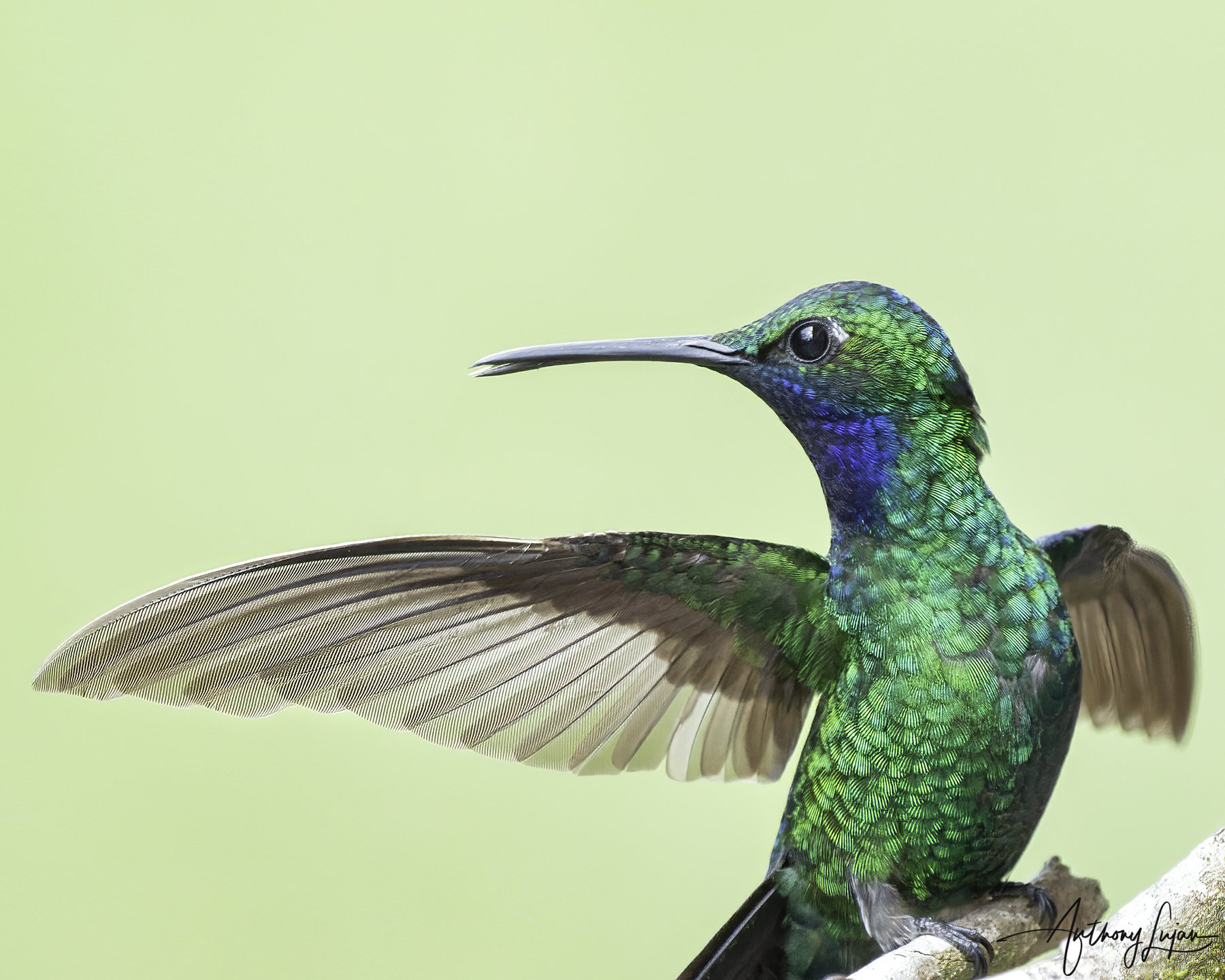
The genus name Campylopterus means “curved wing,” referring to the thickened, sabre-shaped outer primaries that characterize sabrewings. The species name ensipennis derives from Latin for “sword-feathered” or “sword-winged,” again describing the distinctive sabre-like wing feathers. The English name “White-tailed Sabrewing” highlights the broad white outer tail feathers and its placement in the sabrewing group.
Subspecies & Distribution
The White-tailed Sabrewing is monotypic, with no recognized subspecies.
Occurs in humid montane forests of the Cordillera de Caripe and Paria Peninsula of northeastern Venezuela.
Also found along the Main Ridge of Tobago, where it occupies mature forest, forest edges, and adjacent plantations.
Across its range, Campylopterus ensipennis is highly localized, confined to a small portion of northeastern Venezuela and the forested uplands of Tobago, with no other known natural populations.
Ledged
Green Resident
Species Overview
The White-tailed Sabrewing is among the largest hummingbirds within its limited range and is especially emblematic of Tobago’s montane forests. It favors humid, mature upland forest and adjacent secondary or plantation habitats, where it forages from low to mid-levels in the vegetation. Historically, the Tobago population suffered a severe crash following a major hurricane but was later rediscovered, while mainland populations have been affected by habitat loss, leading to concern despite its still moderately large global population.
Male Description
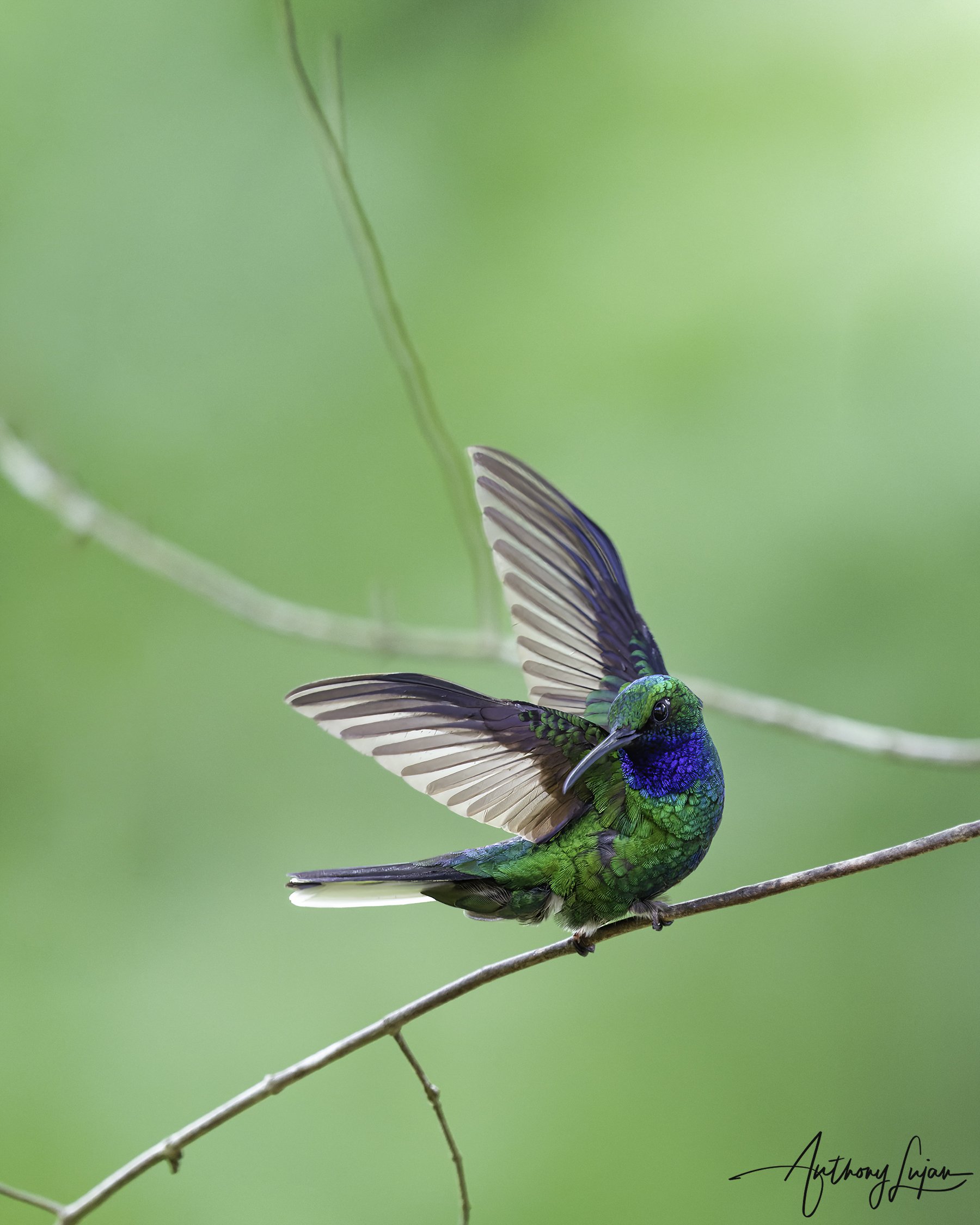
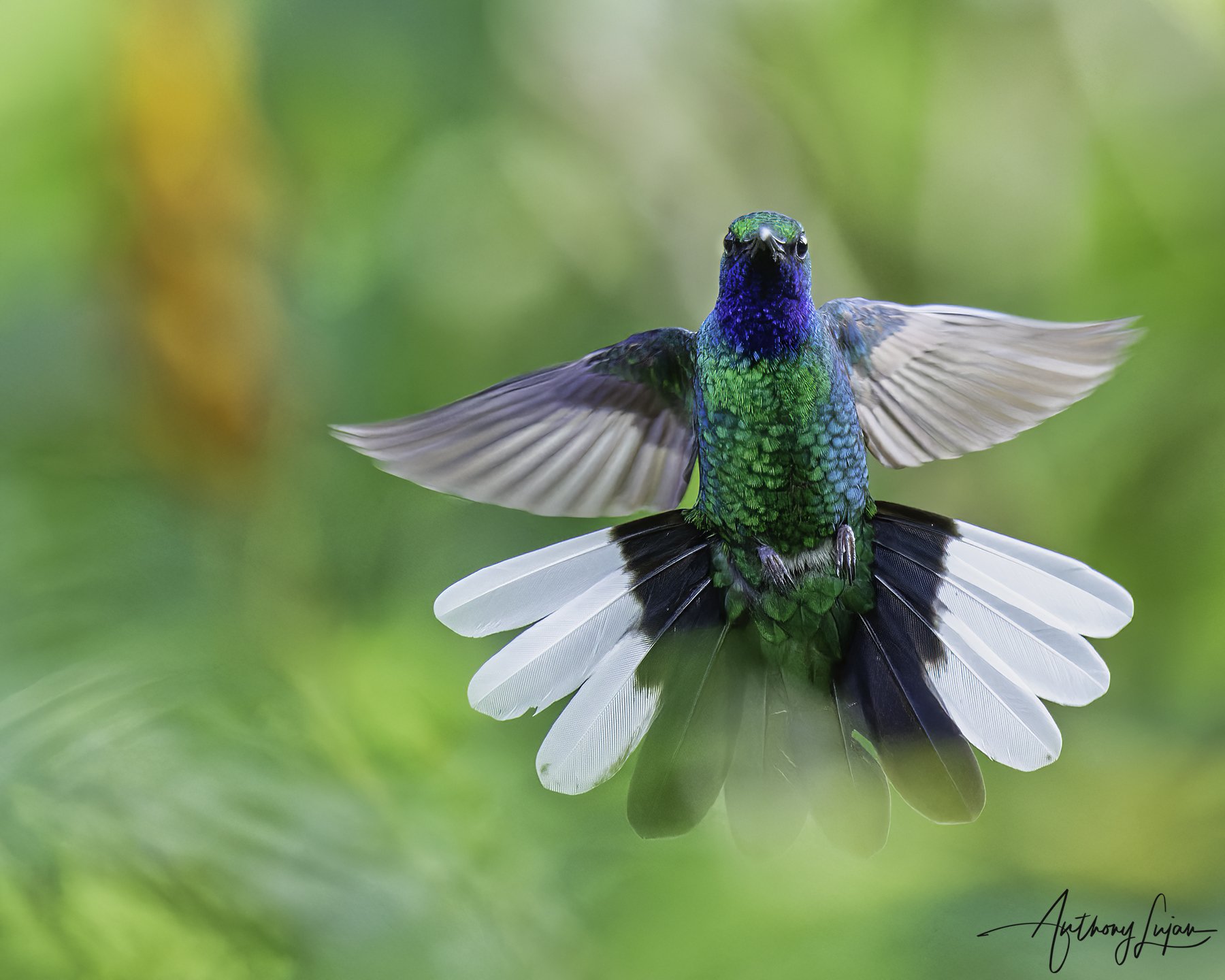
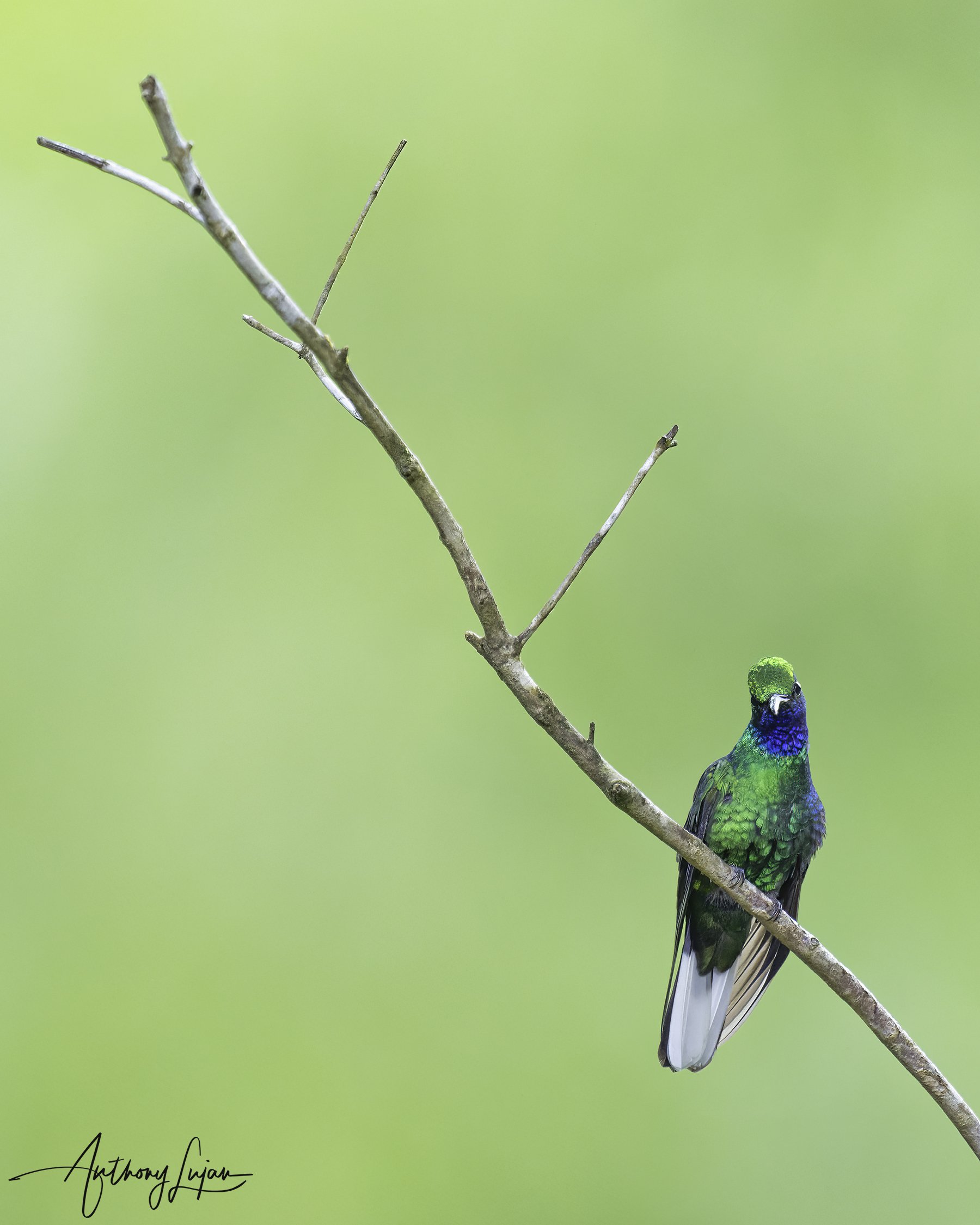
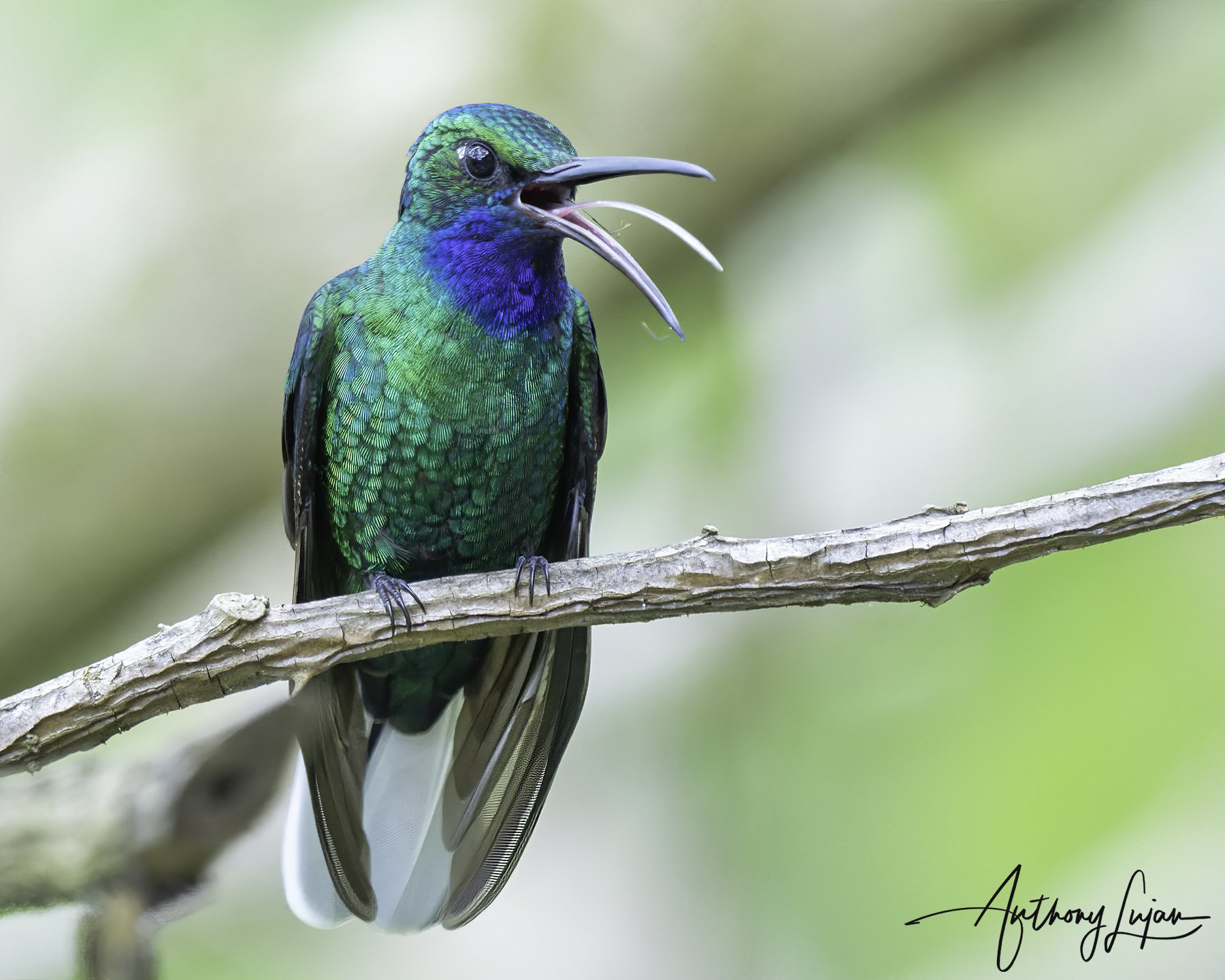
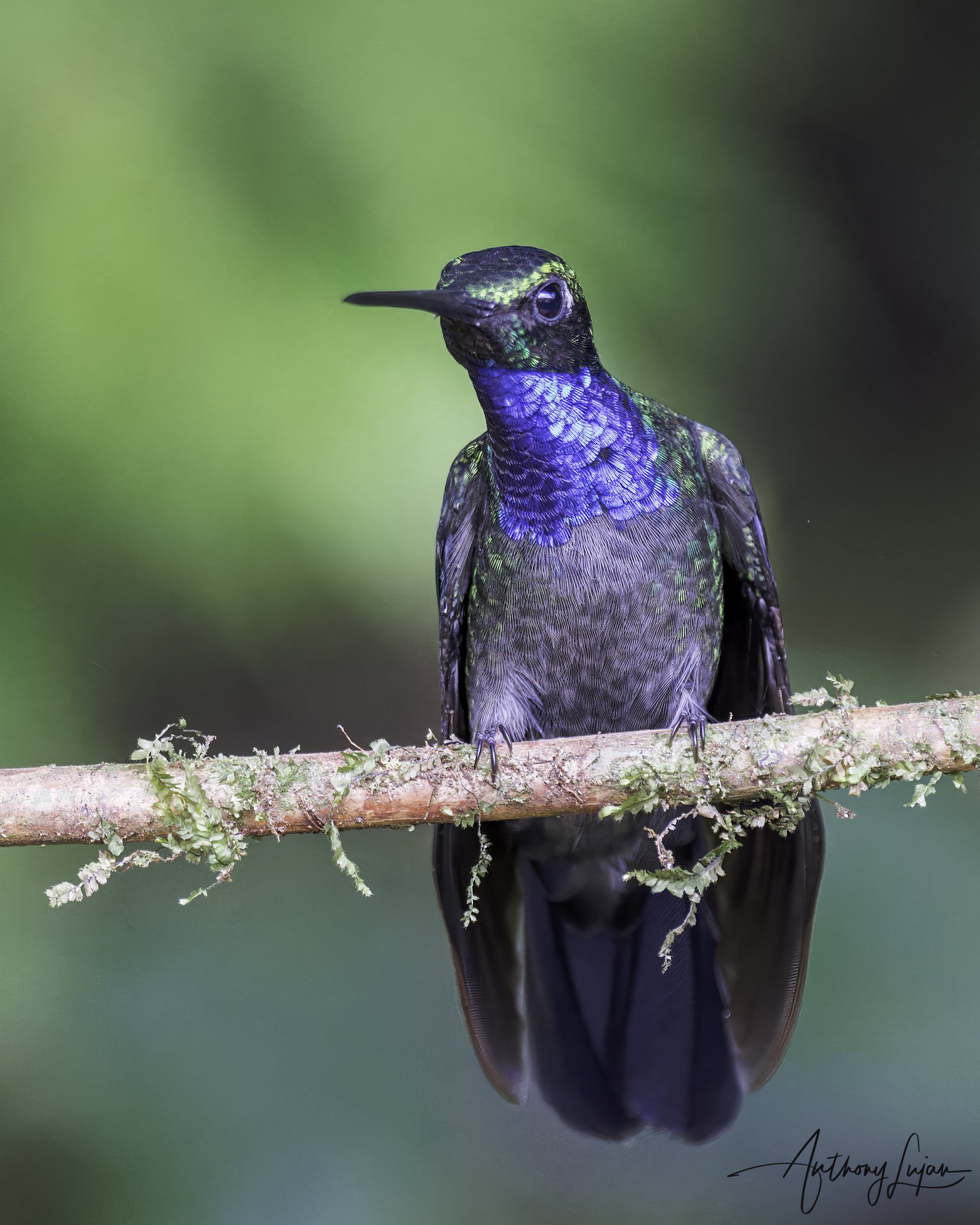
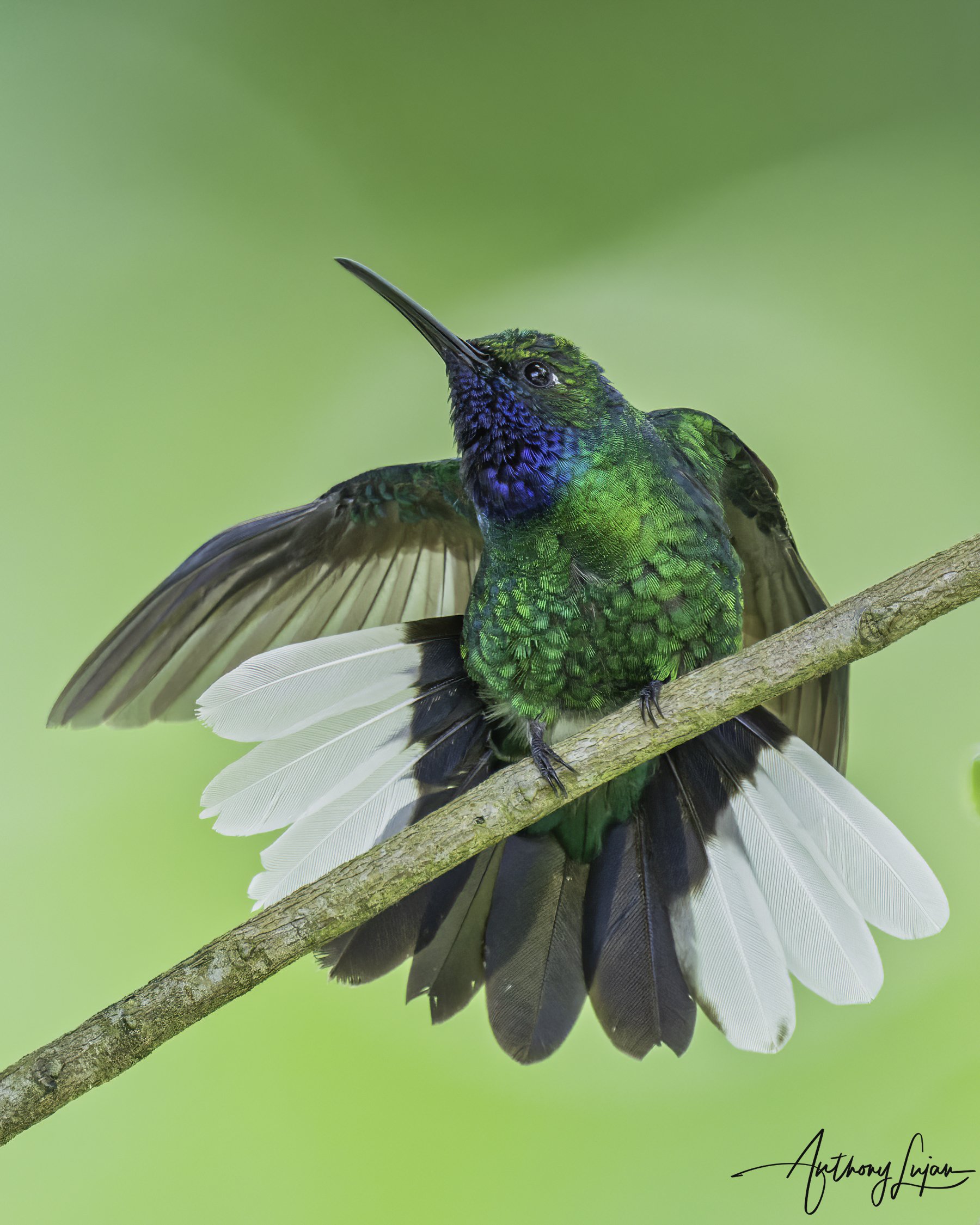
Adult males have a slightly decurved black bill and a small white spot behind the eye. The upperparts are glittering green, and the throat shows a vivid iridescent blue to violet patch contrasting with similarly bright green underparts. The tail is distinctive, with the central feathers bronzy green and the outer tail feathers largely white beyond darker bases, creating a bold white tail effect in flight. Overall, males appear as big, green-and-blue hummingbirds with a conspicuous white tail and thick, sabre-like primaries.
Female Description
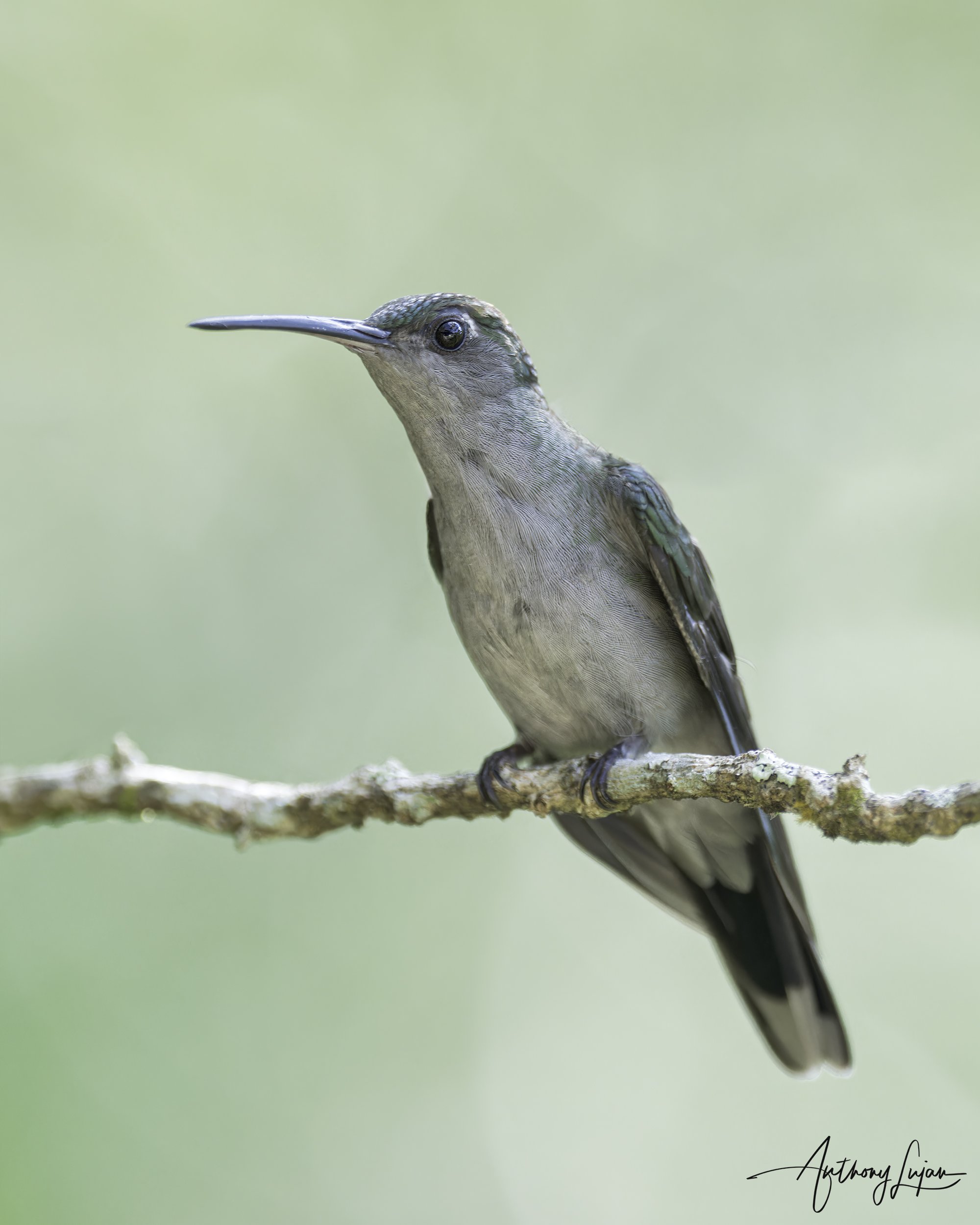
Females share the black, decurved bill and white post-ocular spot but are generally duller than males. The throat patch is smaller and less intensely blue, and the underparts are mostly pale gray with green spotting or scaling on the sides rather than solid green. The tail pattern mirrors that of the male, with striking white outer tail feathers, though the contrast is slightly reduced. In the field, females look like large, green-backed hummingbirds with a reduced blue throat, grayish underparts, and a prominent white tail.
Habitat & Behavior
White-tailed Sabrewings inhabit mature montane forest, forest edges, shade coffee and abandoned plantations, and regenerating forest in humid upland zones. They typically forage at low to mid-heights, but in more open situations may also feed higher in the canopy, visiting a variety of tubular flowers and occasionally hawking small insects and spiders. Males may defend rich flowering patches but also employ trap-lining along regular routes between scattered nectar sources. The species is not a long-distance migrant and is generally considered resident, though minor seasonal or elevational shifts may occur in response to flowering patterns.
Population
The global population of Campylopterus ensipennis is estimated at about 50,000–99,999 mature individuals, split between the Venezuelan and Tobago populations. Within suitable habitat it can be locally fairly common, particularly along ridges and in well-structured montane forest. Overall, however, numbers are thought to be declining due to its small, fragmented range and sensitivity to habitat loss and severe storms.

Conservation
The White-tailed Sabrewing is listed as Near Threatened because of its restricted distribution, ongoing habitat degradation, and vulnerability to extreme weather events. Deforestation, conversion of montane forest to agriculture, and the loss of traditional shade coffee systems reduce and fragment suitable habitat, especially on the Venezuelan mainland. On Tobago, protection of the Main Ridge forest reserve, legal safeguards, and recognition as a flagship species have supported partial recovery, but continued forest protection, sustainable land use in surrounding landscapes, and long-term monitoring remain critical to maintaining this species.
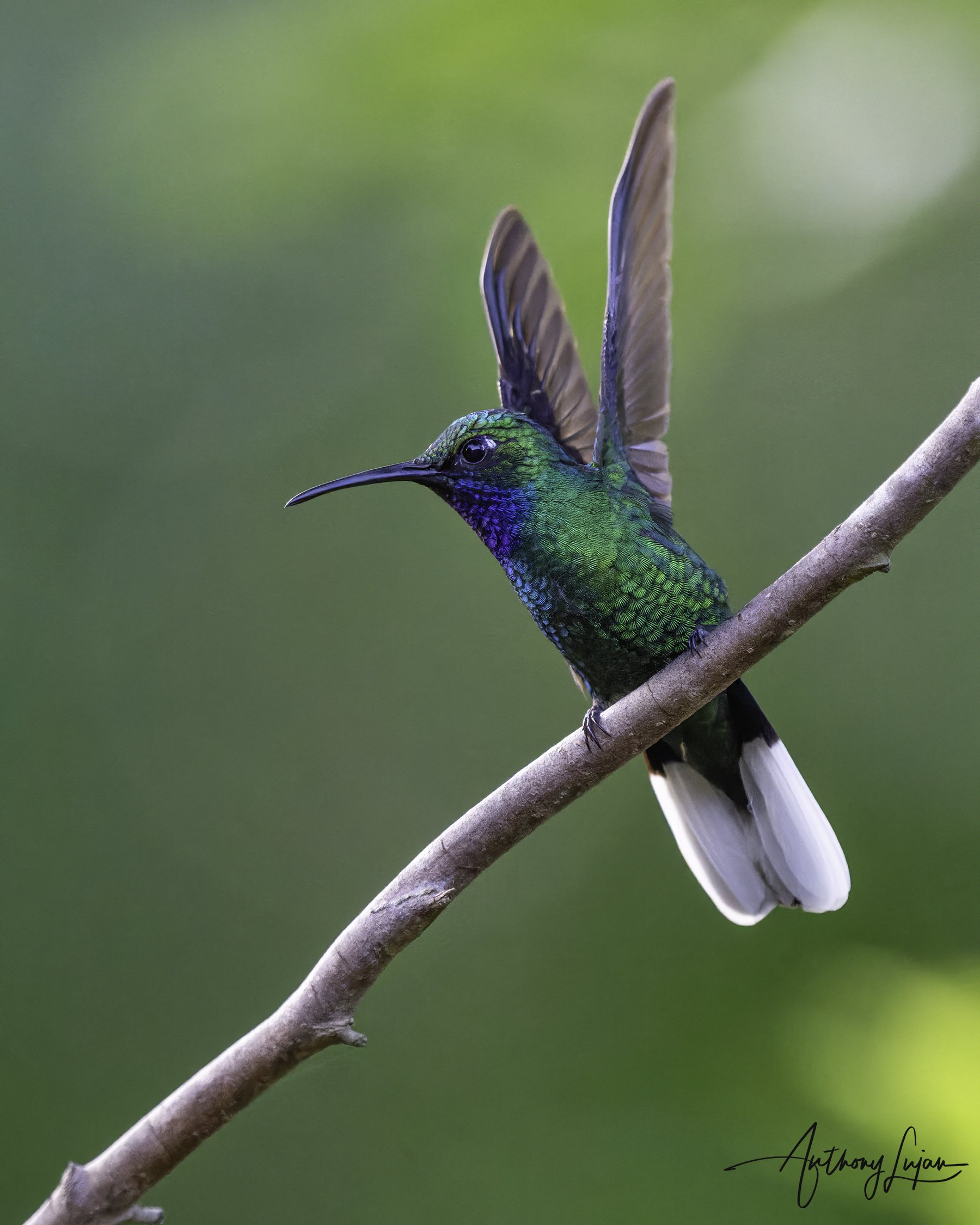
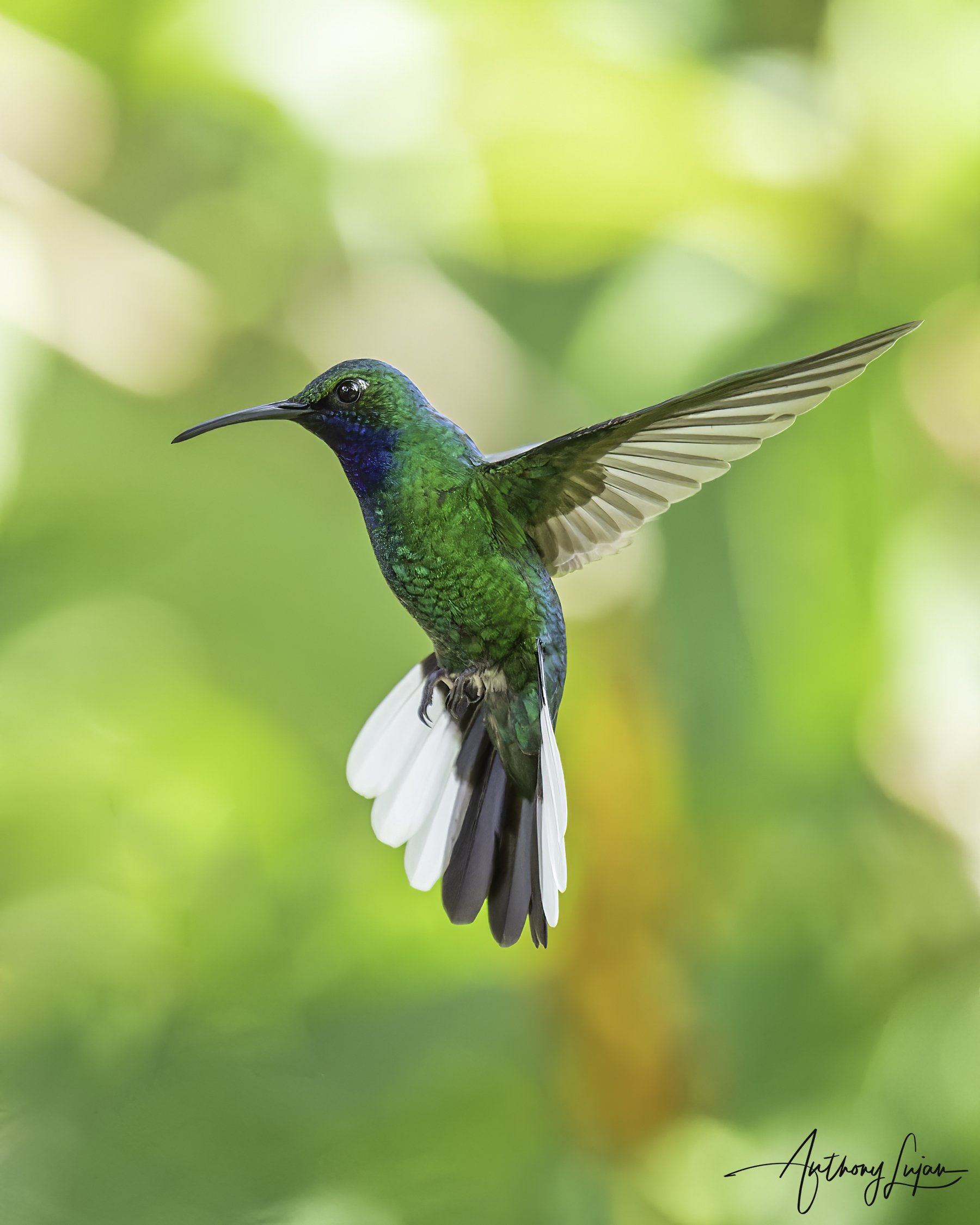
Checkout Anthony’s playlist of this species! Click the top right dropdown to see all the videos.
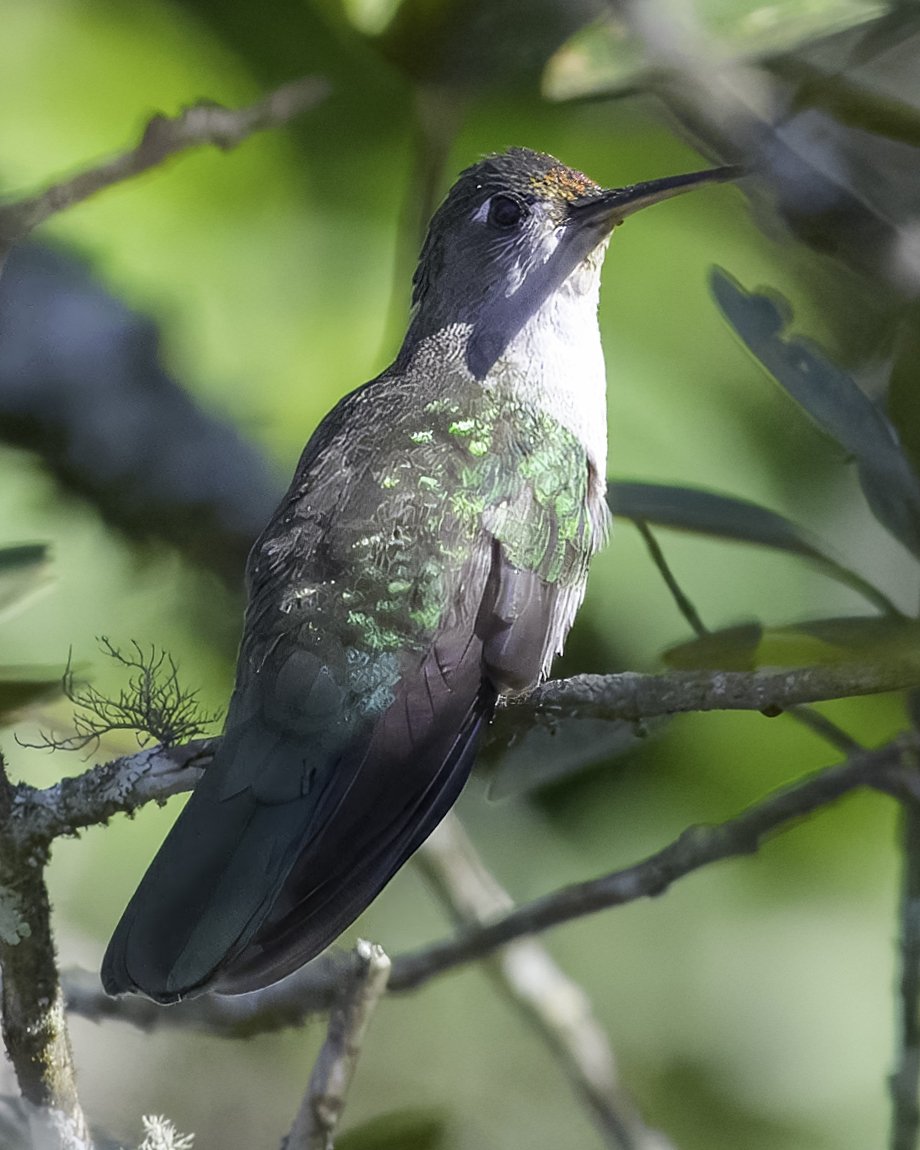
Related species in the Campylopterus genus (10 species total):



Please note: The content provided in this article reflects Anthony’s personal experience and photographic approach. Results can vary depending on light, weather, location, equipment, subject behavior, and field conditions.