
White-tailed Starfrontlet

Scientific name: Coeligena phalerat
The White-tailed Starfrontlet is a localized, high-Andean hummingbird endemic to the Sierra Nevada de Santa Marta in northeastern Colombia. The number of mature individuals is unknown, the population is believed to be decreasing, and it is listed as Near Threatened, monotypic, non-migratory, and confined to a very small range.
At a Glance
Family: Trochilidae (hummingbirds)
Clade: Heliantheini – Brilliants
Genus group: Coeligena — 15 species, 28 subspecies
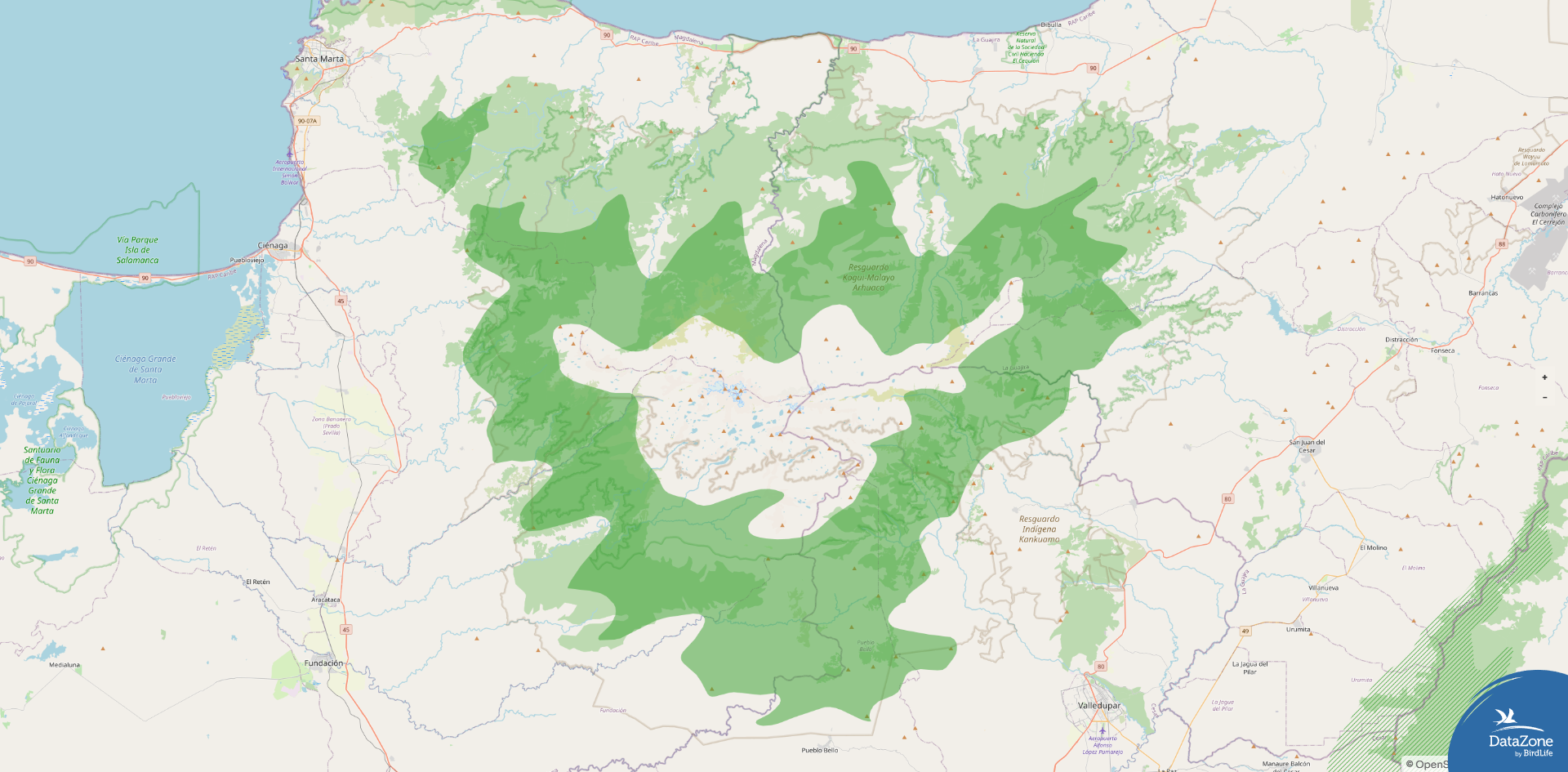
Range: Endemic to the Sierra Nevada de Santa Marta in northeastern Colombia.
Habitat: Interior and edges of humid to wet montane forest, with some use of nearby clearings and open Areas.
Elevation: Approximately 1,400–3,700 m within the Santa Marta range.
Length: About 14 cm (5.5 in).
Weight: Around 6–7 g.
Number of mature individuals: Unknown
Population trend: Decreasing
Status: Near Threatened (IUCN)
Name Origin
The genus name Coeligena means “born of heaven” or “sky-born,” reflecting the high Andean habitats and iridescent plumage typical of incas and starfrontlets. The species name phalerata derives from a term meaning “ornamented” or “adorned,” likely referring to the bird’s conspicuous white tail and bright colors. The English name “White-tailed Starfrontlet” highlights its striking white tail feathers and its placement among the starfrontlets of the Andean brilliants.
Subspecies & Distribution
The White-tailed Starfrontlet is monotypic, with no recognized subspecies.
Endemic to the Sierra Nevada de Santa Marta of northeastern Colombia, where it occurs only in this isolated mountain massif. It inhabits humid to wet montane forests, primarily in the interior and at edges, within its restricted elevational band.
Overall, the species is a microendemic confined entirely to the Santa Marta range, with no populations outside this single isolated mountain system.
Ledged
Green Resident
Species Overview
The White-tailed Starfrontlet is one of several specialized hummingbirds limited to the Sierra Nevada de Santa Marta, an isolated mountain range separate from the main Andes. It occupies humid and wet montane forests and their edges at mid to high elevations, where it forages for nectar and insects. Its very small range, ongoing habitat loss and fragmentation, and inferred population decline have led to its Near Threatened status, with concerns that further habitat degradation could quickly push it into a higher risk category.
Male Description
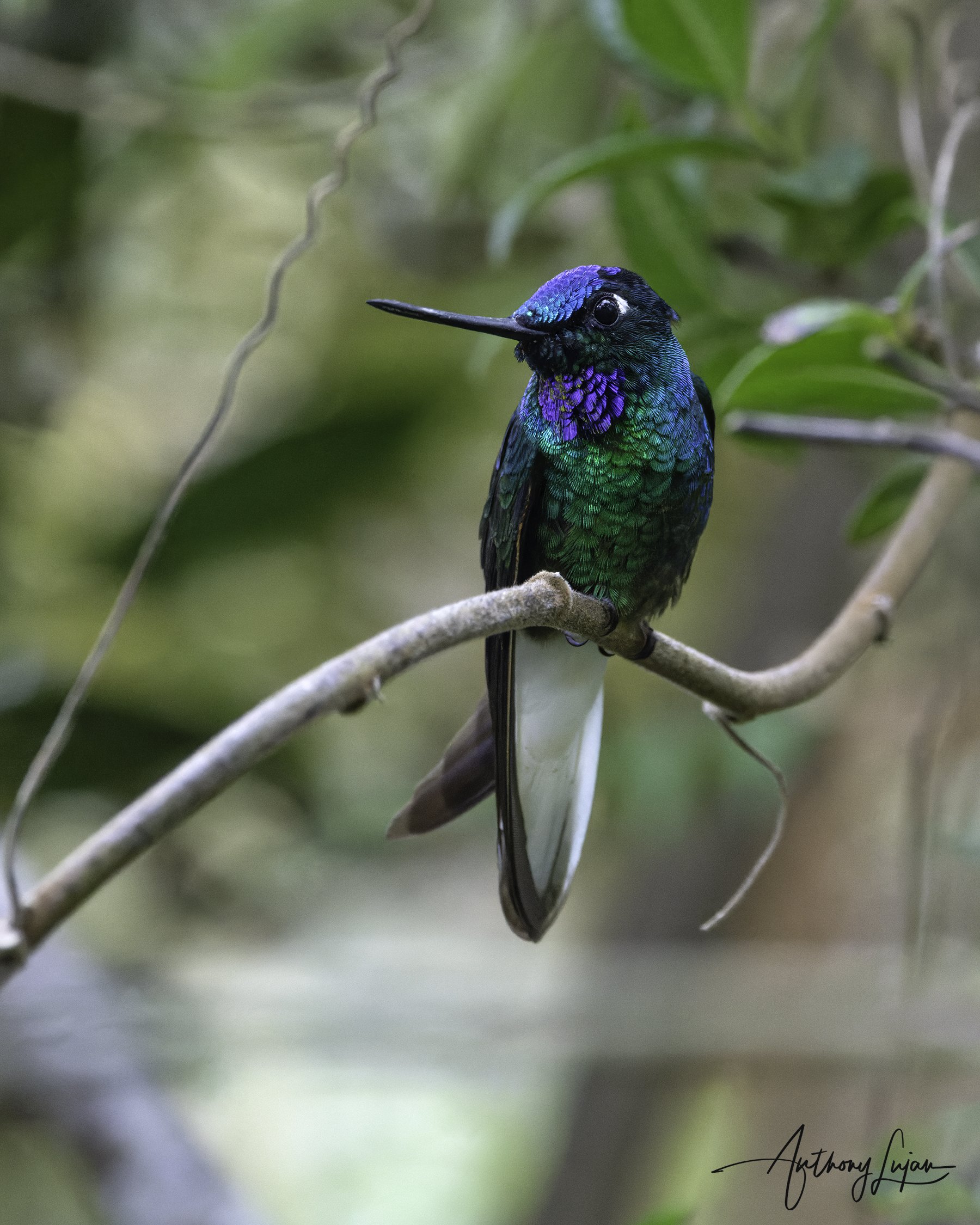
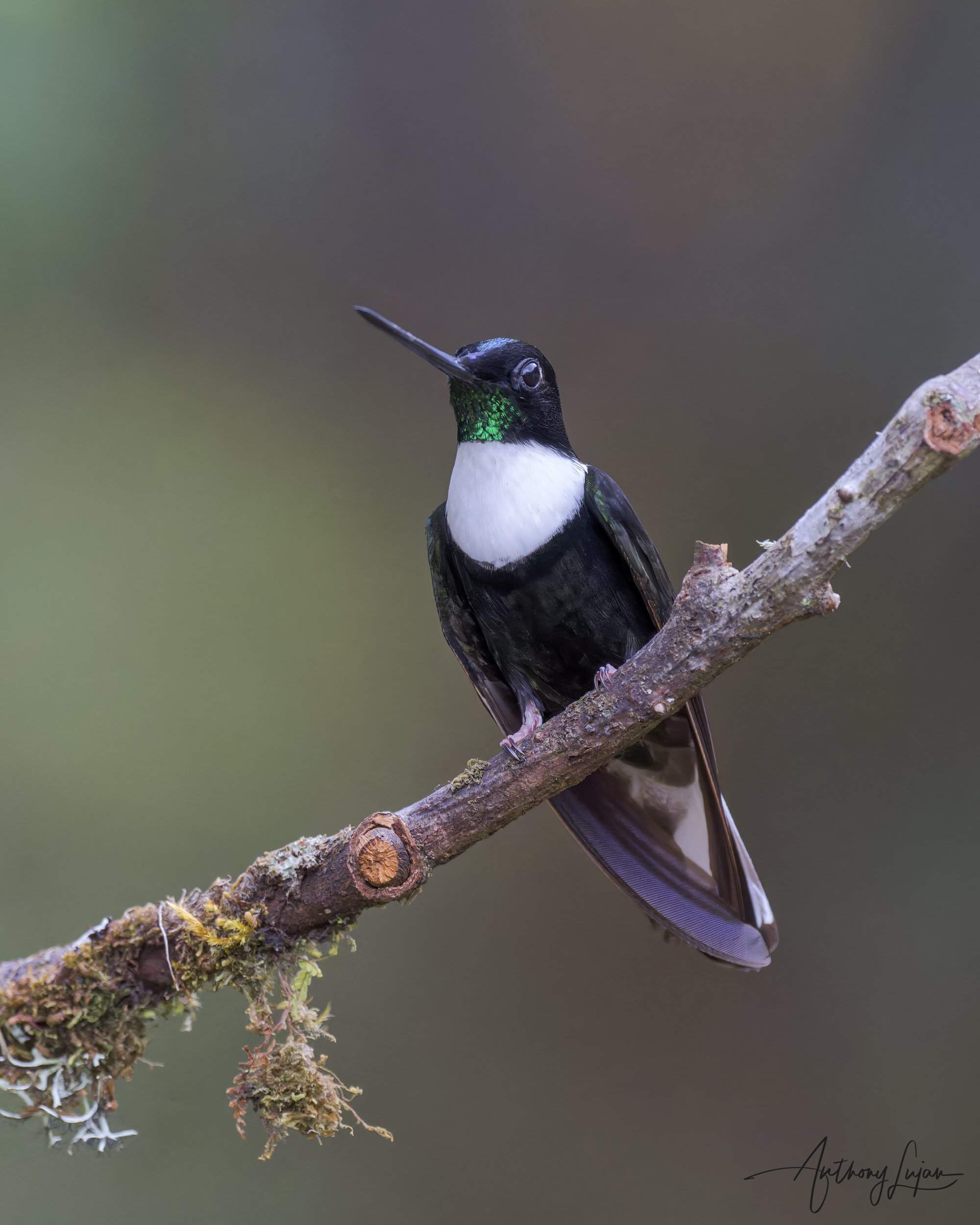
Adult males have metallic dark green upperparts and a glittering turquoise crown. Their most distinctive feature is the tail, which is entirely white, with fresh feathers sometimes showing narrow bronzy tips that wear off over time. The gorget is blue, the rest of the underparts are mostly emerald green, and they show white leg puffs and white undertail coverts. As in other Coeligena, males also have a white spot behind the eye and a long, straight, black bill. Overall, males appear as green-crowned, blue-throated starfrontlets with a spectacular all-white tail and white accents underneath.
Female Description
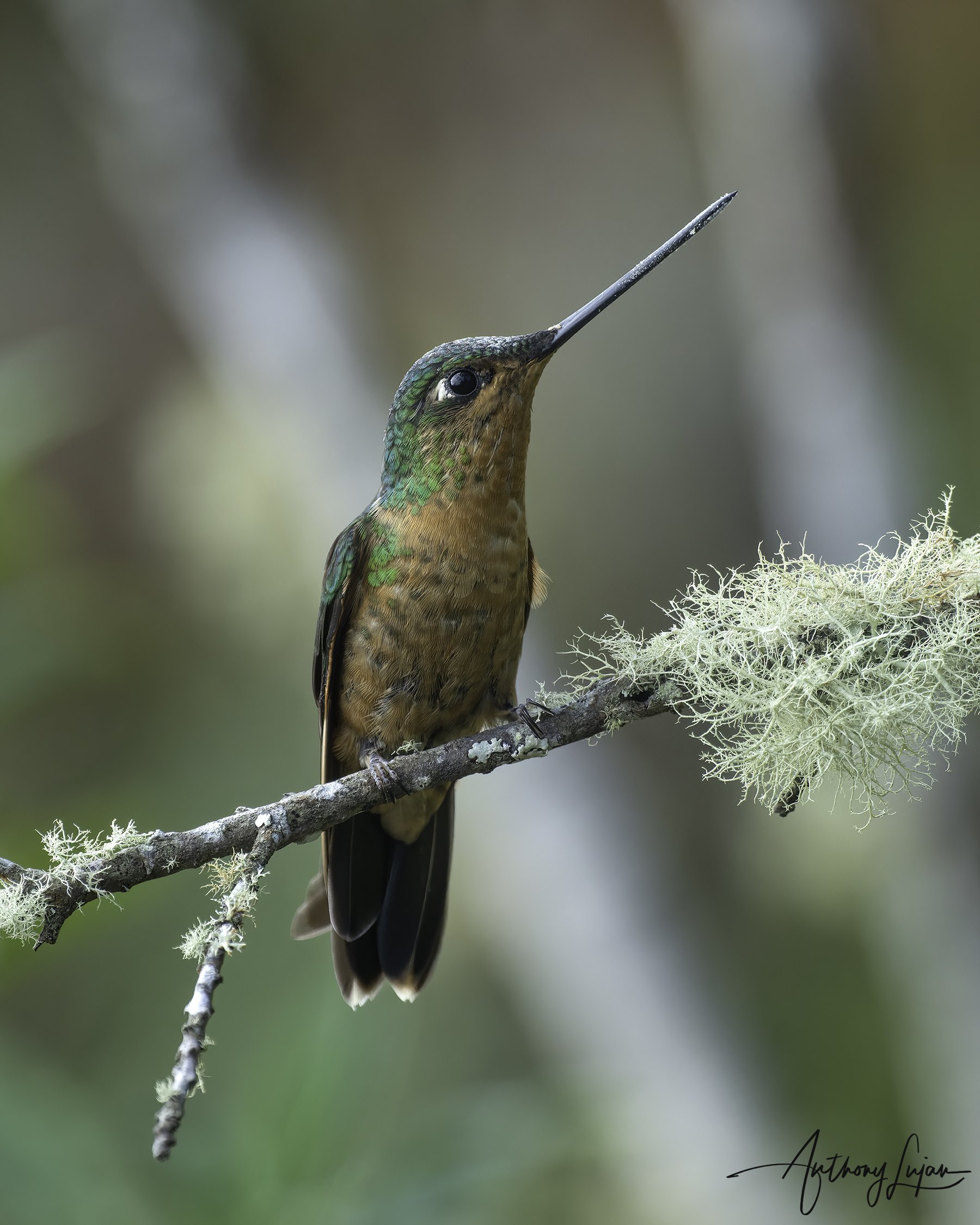
Adult females have a dusky blue-green crown and shining green upperparts. Unlike the male, they have a bronzy tail with pale buff tips to the feathers rather than a fully white tail. Their underparts are rufous cinnamon, lacking the male’s emerald-green underparts and blue gorget; they still show the white post-ocular spot typical of the genus. Immatures resemble adult females, with similar bronzy tails and rufous underparts, and do not yet show the full adult male pattern.
Habitat & Behavior
White-tailed Starfrontlets inhabit the interior and edges of humid and wet montane forests in the Sierra Nevada de Santa Marta and occasionally use nearby clearings and open areas with scattered shrubs and flowering plants. Males tend to favor openings within the forest, while females are more often seen at forest edges, indicating subtle habitat partitioning between sexes. They feed on nectar from a variety of flowers, including Fuchsia and bromeliads, and likely visit many other tubular blossoms as well. Compared to some congeners, they are more territorial, often defending rich nectar sources, but they also use trap-lining routes between flowers; they supplement their diet by gleaning small arthropods from foliage and by hawking insects in short flights.
Population
The total number of mature individuals of the White-tailed Starfrontlet is unknown, but the species has a very small range and its population is believed to be decreasing. It is restricted to a single isolated mountain range where suitable humid montane forest is limited and fragmented by human activities. Because of this tiny extent of occurrence and ongoing habitat loss, even modest additional deforestation or degradation can have a disproportionate impact on its population.

Conservation
White-tailed Starfrontlet is currently classified as Near Threatened because it occupies a very small, isolated range in the Sierra Nevada de Santa Marta where habitat loss and fragmentation continue. Deforestation for agriculture, cattle grazing, and human settlement, as well as logging and other forest disturbance, reduce and break up the humid montane forests it depends on. Conservation actions should focus on protecting and restoring remaining forests within the Santa Marta range, managing human land use to minimize additional fragmentation, and integrating the species’ habitat needs into regional conservation planning. Continued monitoring is essential to track population trends and ensure that further declines are detected early enough to trigger stronger protection if needed.


Checkout Anthony’s playlist of this species! Click the top right dropdown to see all the videos.
Related species in the Coeligena genus (15 species total):





Please note: The content provided in this article reflects Anthony’s personal experience and photographic approach. Results can vary depending on light, weather, location, equipment, subject behavior, and field conditions.