
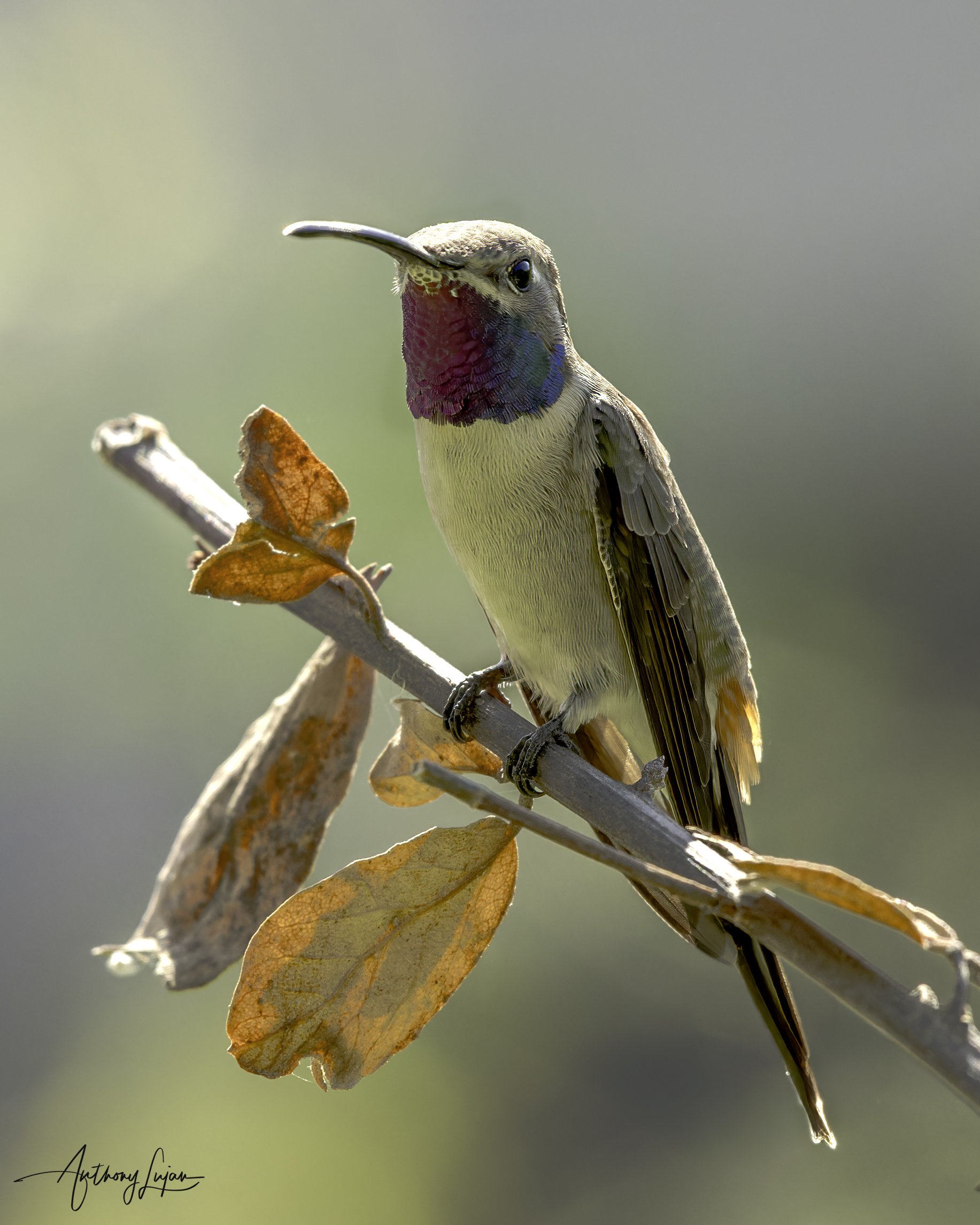
Scientific name: Rhodopis vesper
The Oasis Hummingbird is a medium-sized coastal hummingbird of arid and semi‑arid scrub, valleys, and oases along the Pacific coast of Peru and northern Chile. The total number of mature individuals is unknown, the global population trend is considered stable, it is treated as non‑migratory, and it is currently assessed as Least Concern.
At a Glance
Family: Trochilidae (hummingbirds)
Clade: Mellisugini – Bee Hummingbirds
Genus: Rhodopis — monotypic (1 species)
Range: Western Peru and northern Chile along the Pacific coastal belt
Habitat: Arid and semi‑arid coastal scrub, desert valleys, river oases, riparian corridors, agricultural areas, and rural/urban gardens with flowering plants
Elevation: From near sea level up to about 3,800 m (12,500 ft), but in most of Peru mainly below about 2,600 m (8,500 ft)
Length: Males about 13–13.5 cm (5.1–5.3 in); females about 11–11.5 cm (4.3–4.5 in)
Weight: About 4–4.5 g (0.14–0.16 oz)
Number of mature individuals: Unknown
Population trend: Stable
Movement: Not a migrant (resident, with local movements only)
IUCN Red List category: Least Concern
Name Origin
The genus name Rhodopis comes from Greek roots meaning “rosy appearance,” likely referring to reddish tones on the rump or tail. The species name vesper means “evening” in Latin, possibly alluding to early descriptions or perceived peak activity times. The English name “Oasis Hummingbird” reflects its strong association with desert valleys, irrigated fields, and green oases within otherwise arid landscapes.
Taxonomy & Distribution
Rhodopis vesper belongs to the bee hummingbird tribe Mellisugini within the subfamily Trochilinae. It is the only species in the genus Rhodopis, and no other species are currently placed in this genus or “family‑level” grouping in your template sense. The Oasis Hummingbird is restricted to the Pacific coastal belt of South America, with its main range running the length of the Peruvian coast and extending south into northern Chile, including the Atacama region and further south where the species has expanded in recent decades. It occupies a relatively narrow coastal and near‑coastal strip, following river valleys inland where suitable habitats and flowering plants occur.
Subspecies
Three recognized subspecies:
Rhodopis vesper koepckeae
Distribution: Northwest Peru (Cerro Illescas in southwestern Piura). This subspecies is known only from its type locality on the isolated, arid Cerro Illescas massif, where it inhabits dry coastal scrub and nearby oases.Rhodopis vesper vesper (nominate)
Distribution: Western Peru south from Lambayeque into extreme northern Chile (Tarapacá). The nominate form occurs along most of the Peruvian coast, following river valleys and irrigated areas, and continues south into northern Chile, especially in Tarapacá and nearby regions.Rhodopis vesper atacamensis
Distribution: Northern Chile (Atacama) and possibly south into Coquimbo. This subspecies inhabits desert valleys, oases, and irrigated coastal zones in Atacama and has expanded southward since the mid‑20th century, now reaching at least into Coquimbo, where it occupies similar arid and semi‑arid landscapes with flowering vegetation.
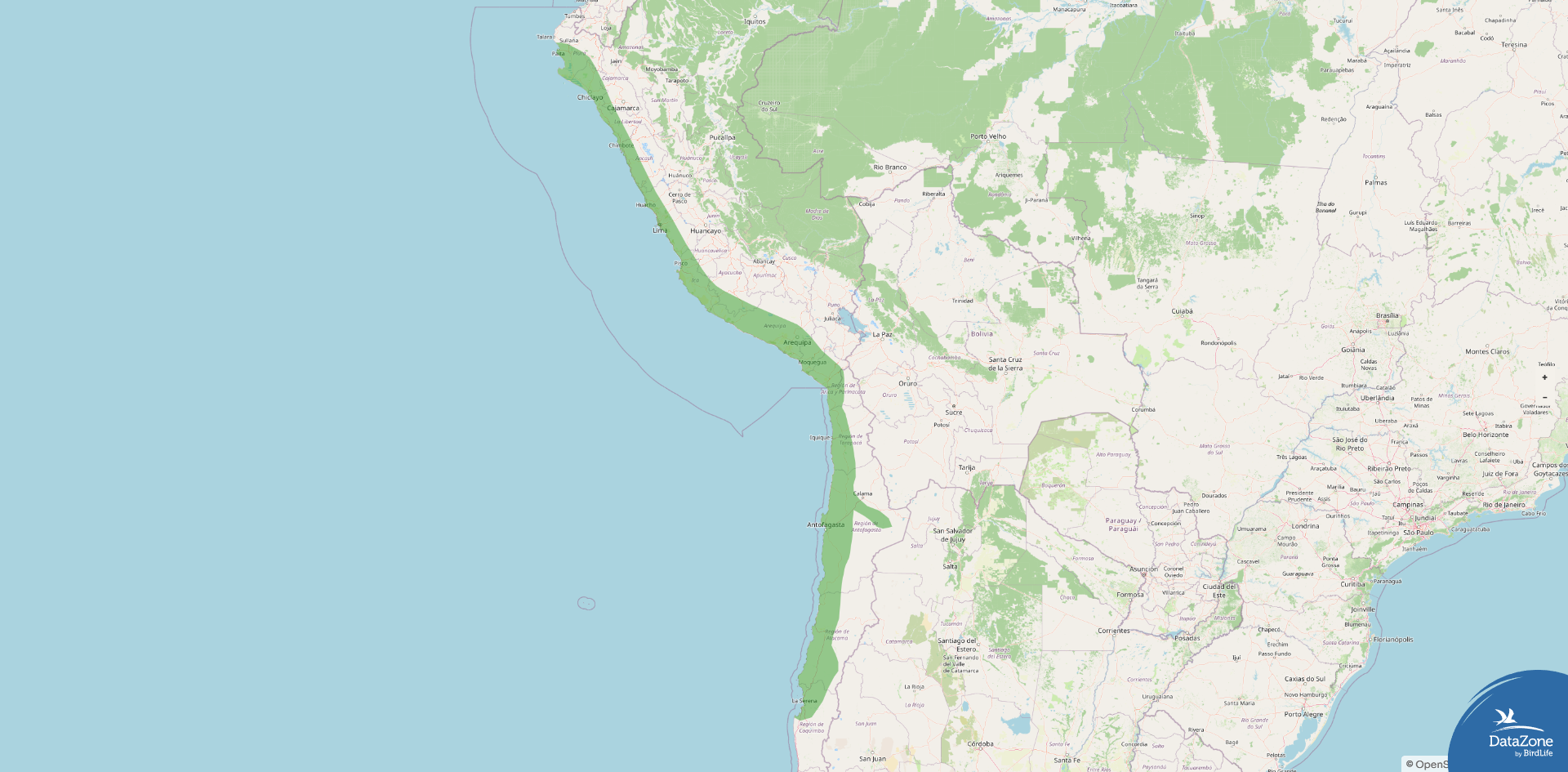
Legend
Green Resident
Species Overview
The Oasis Hummingbird is a characteristic hummingbird of the Peruvian and northern Chilean coastal deserts, often encountered around flowering shrubs, trees, and gardens that punctuate otherwise bare, sandy or rocky landscapes. It has olive‑green upperparts, a warm cinnamon lower back and tail, and whitish underparts, with males showing a small iridescent purple throat patch and a relatively long tail. It adapts well to human‑modified habitats, frequently visiting ornamental gardens and irrigated fields, and its ability to exploit a wide variety of coastal and valley habitats helps explain its stable conservation status despite living in highly arid regions.
Male Description
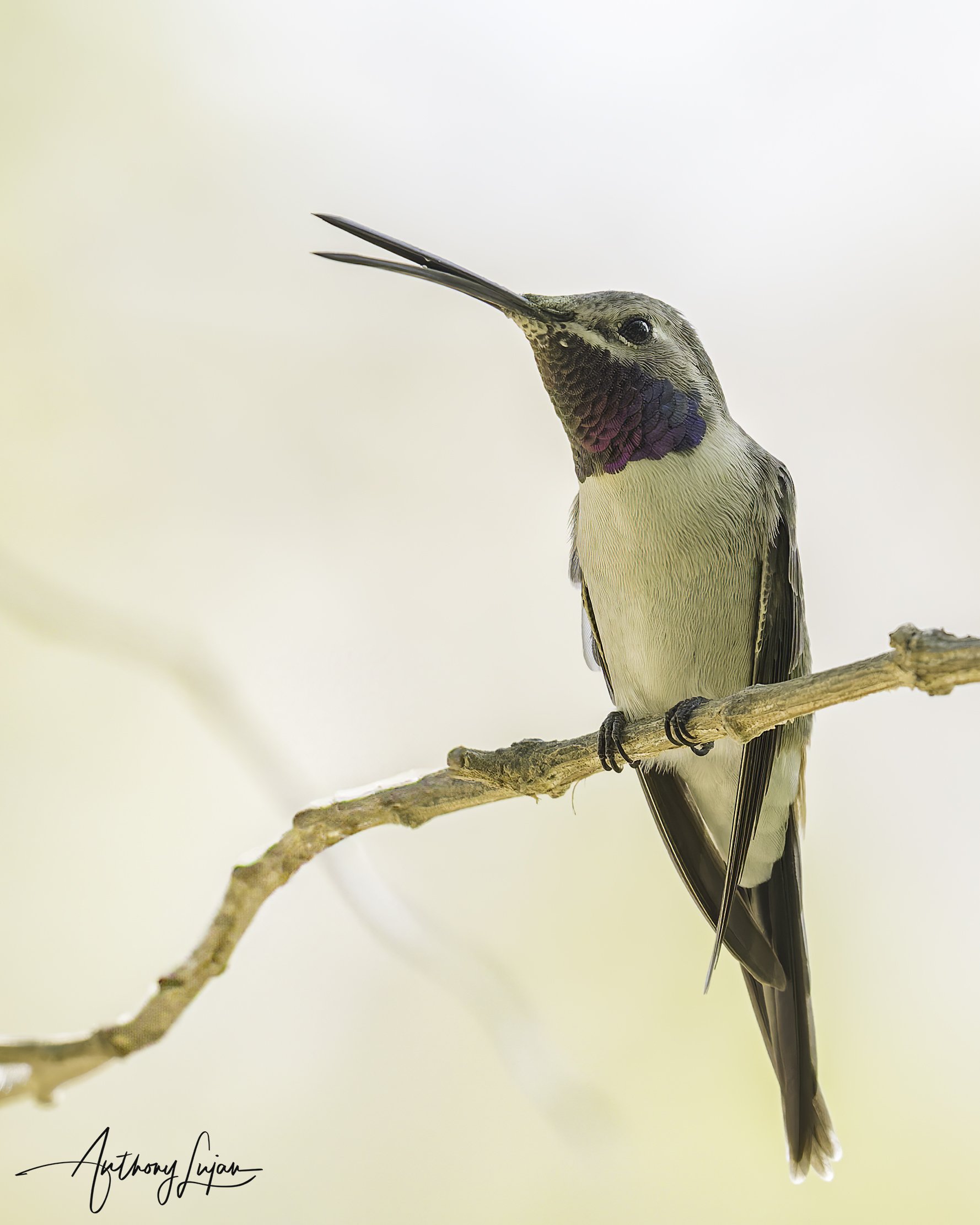
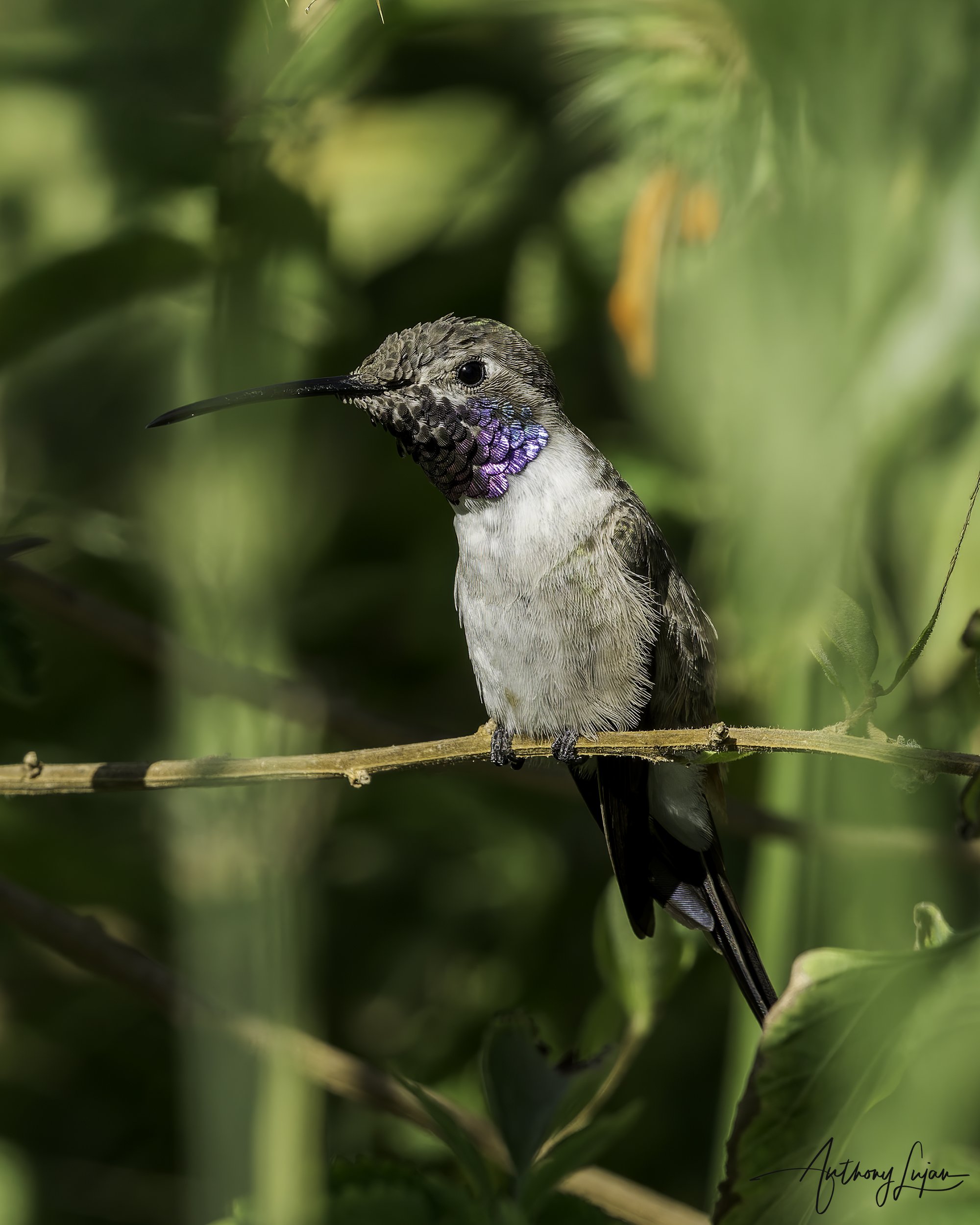
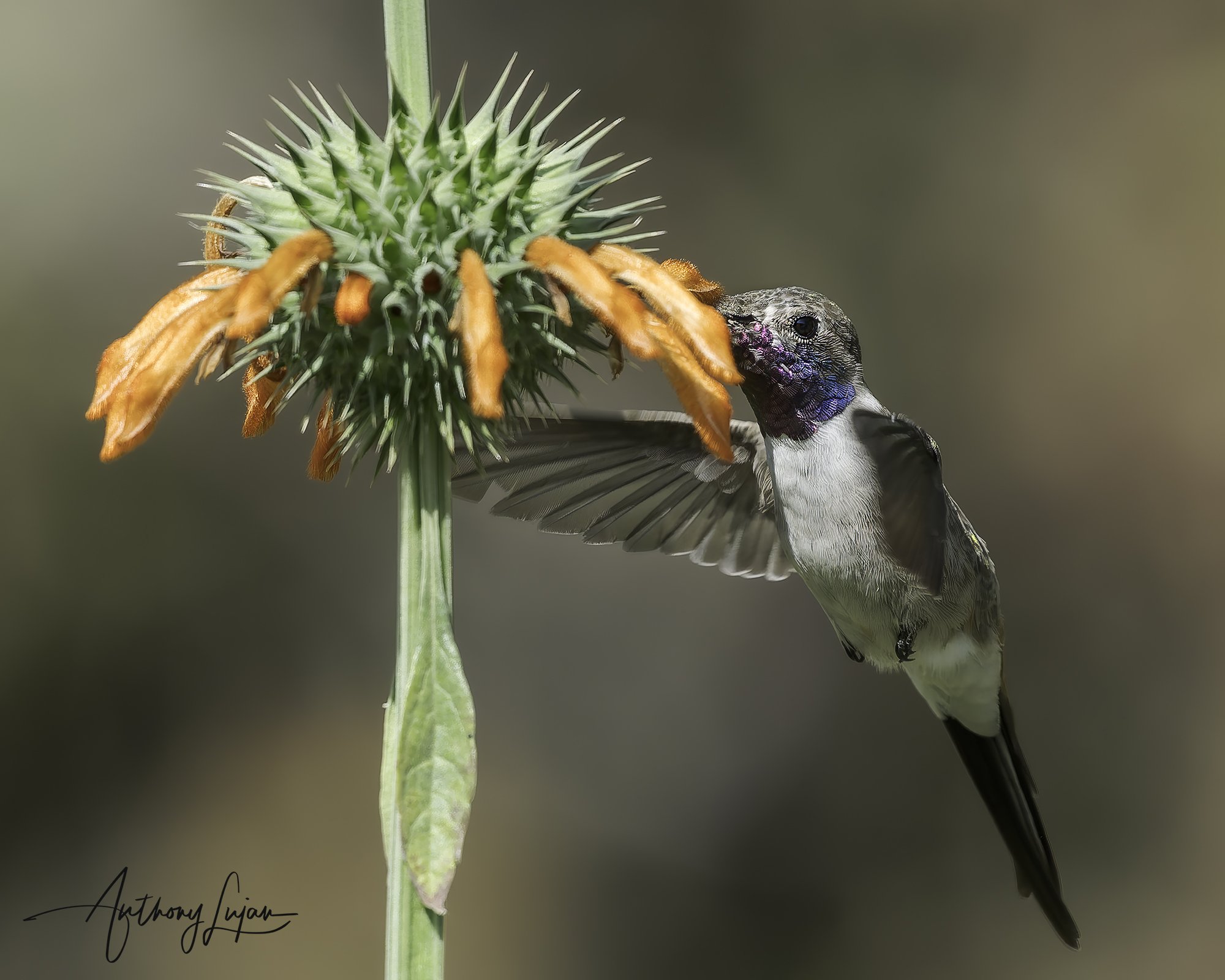
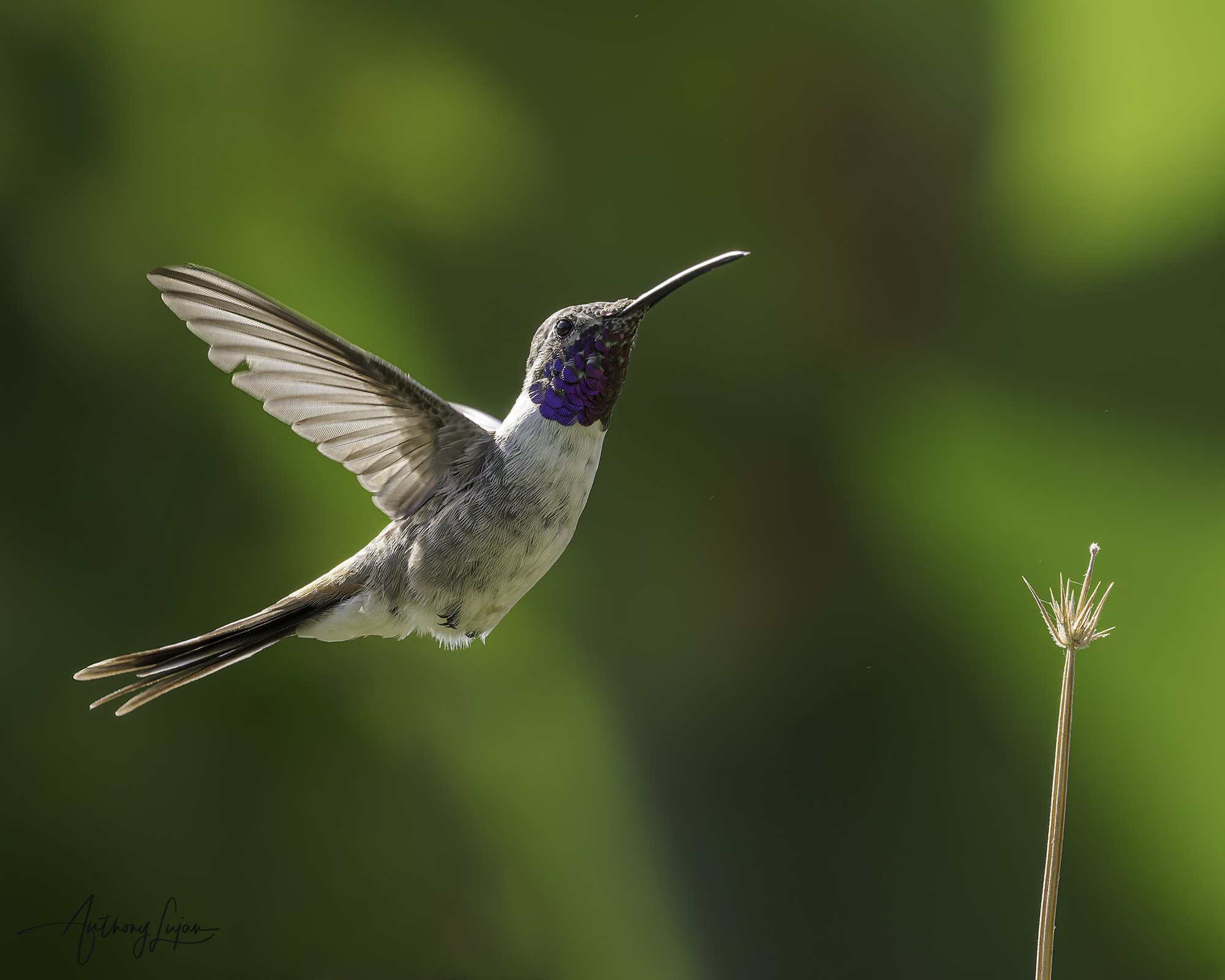
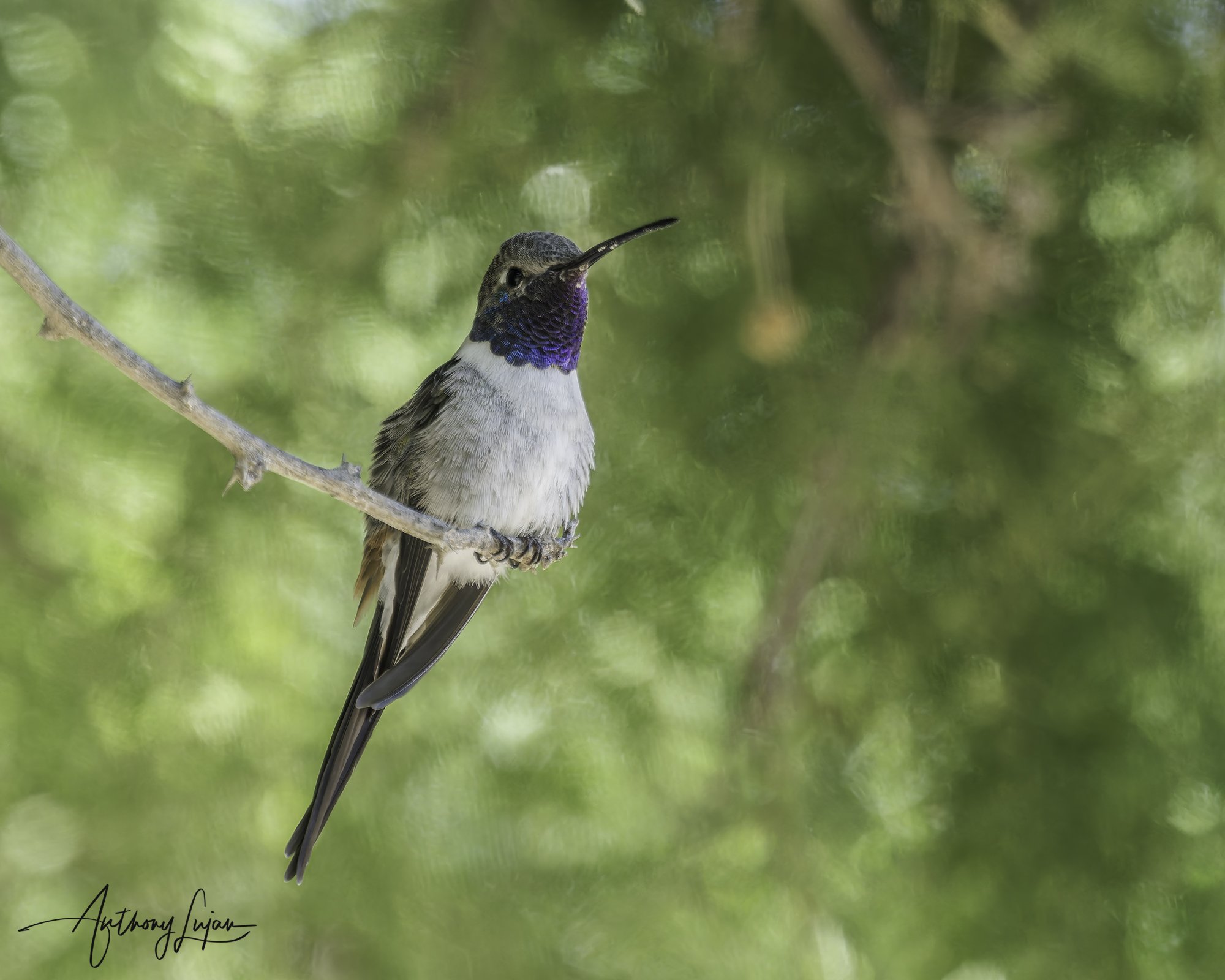
Adult males are mid‑sized hummingbirds with olive to dark green upperparts and a rufous to cinnamon lower back and uppertail coverts that contrast with the greener mantle. The tail is relatively long and somewhat forked, with largely cinnamon or rufous feathers and darker subterminal bands. The underparts are mostly whitish to pale gray, sometimes with faint buffy tones on the flanks. The throat bears a small, iridescent purple patch (gorget) that is often only visible in good light and at certain angles. The bill is medium‑length, straight to very slightly decurved, and black. A white stripe or elongated spot behind the eye is typically longer and more obvious in males than in females.
Female Description
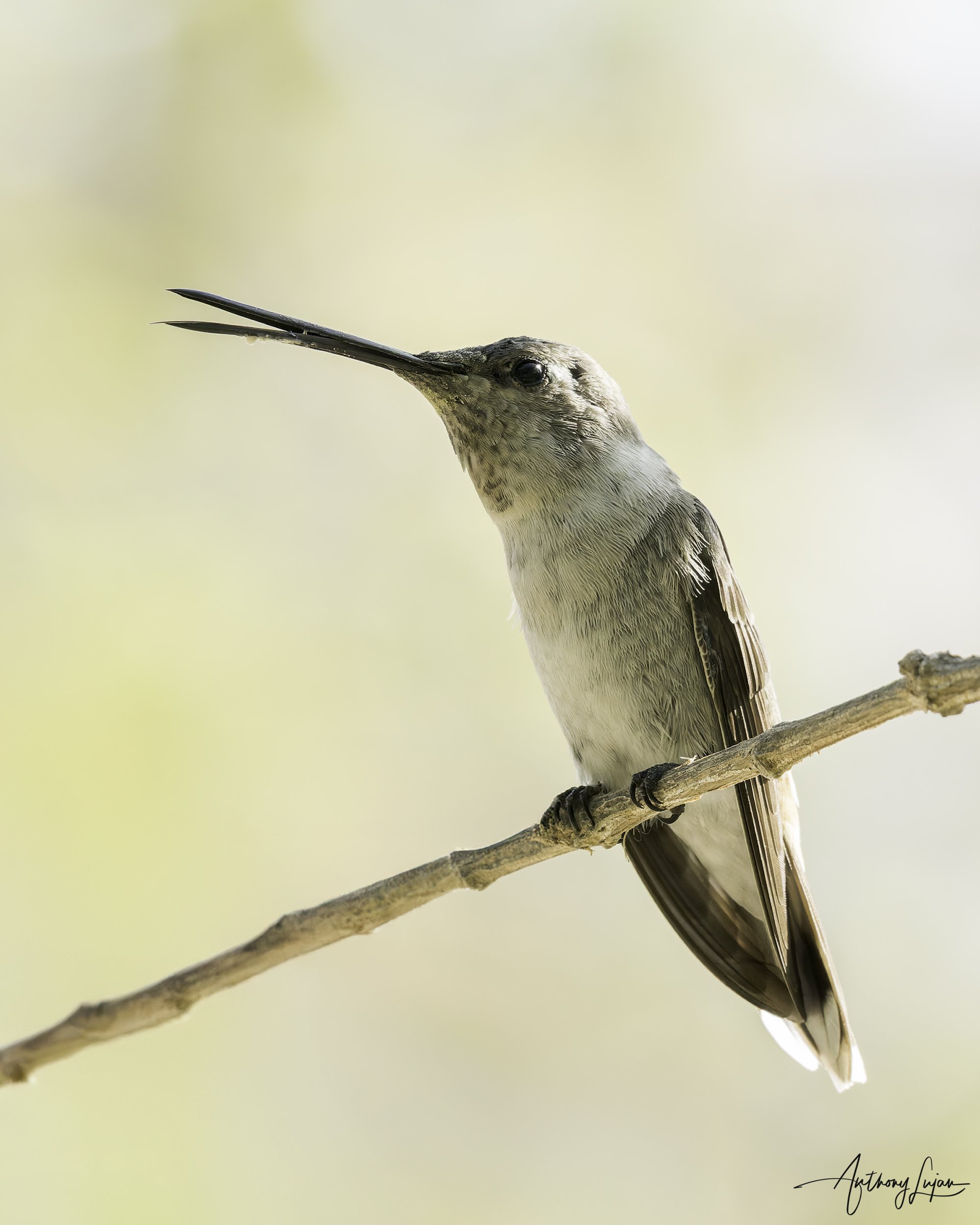
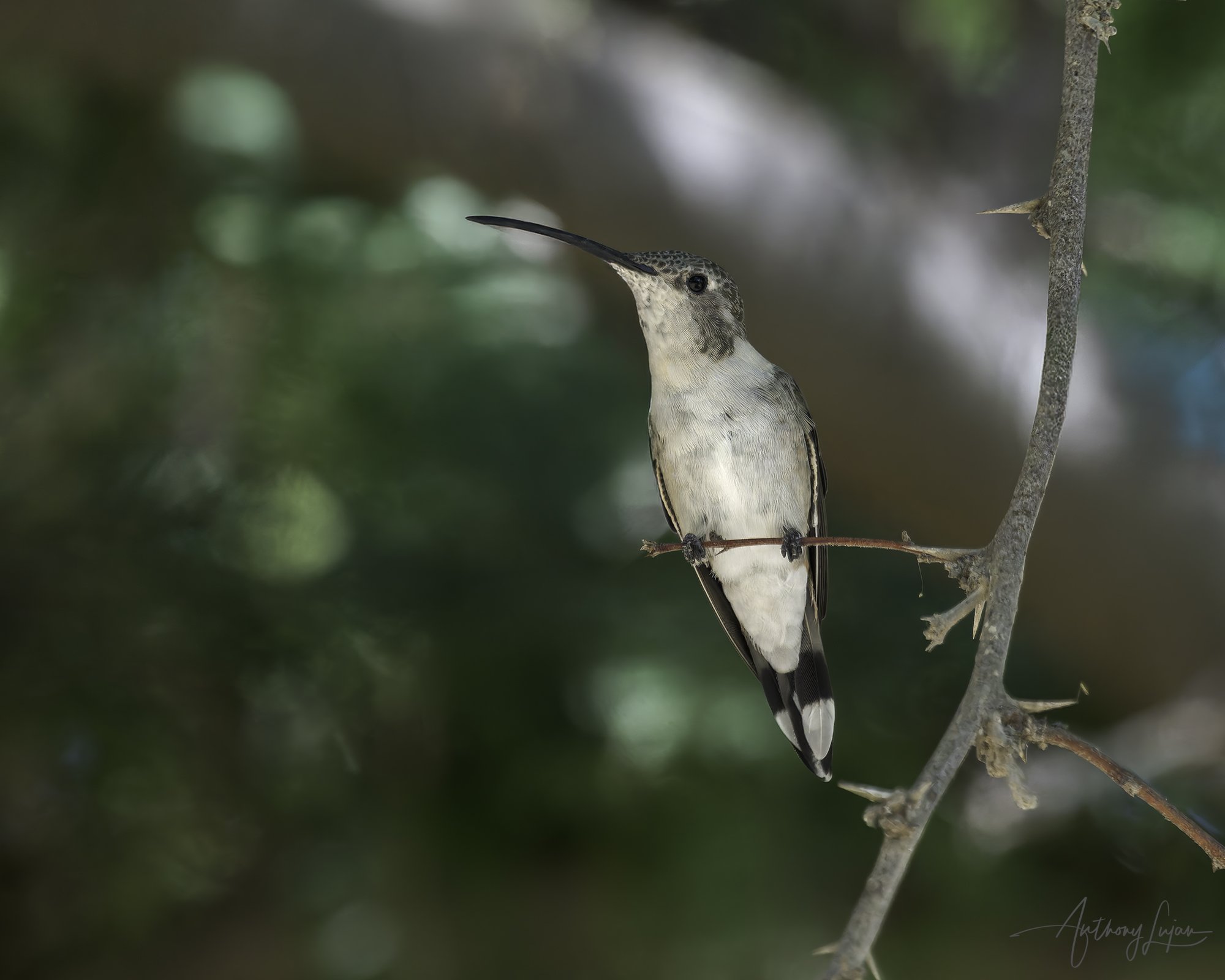
Females are similar in overall structure and coloration but lack the male’s distinct purple gorget. The upperparts are olive green with a warm cinnamon lower back and tail, and the underparts are whitish with faint spotting or mottling on the throat in some individuals. The white mark behind the eye is usually smaller and more dot‑like than the male’s longer stripe. The tail pattern is much like the male’s, with rufous‑cinnamon feathers and darker bands, but can appear slightly shorter and less pointed. Juveniles resemble females, with duller plumage overall; young males gradually develop the small purple throat patch and sharper facial contrast as they mature.
Habitat & Behavior
Oasis Hummingbirds inhabit a wide range of arid and semi‑arid habitats along the Pacific coast and coastal slopes, including desert scrub, valleys with riparian vegetation, river oases, irrigated agricultural fields, orchards, and rural and urban gardens. They are strongly associated with flowering trees and shrubs in these otherwise dry environments and often concentrate along watercourses, irrigation ditches, and coastal foothills where vegetation is densest.
They feed primarily on nectar from a variety of native and introduced plants, including shrubs, trees, cacti, and ornamental species. Foraging occurs at a range of heights, from low shrubs to canopy‑level flowers on trees and tall cacti. Birds hover at blossoms or perch while feeding and also take small insects and spiders, captured by hawking from perches or gleaning near flowers, to supplement their diet. Oasis Hummingbirds can be territorial around rich nectar sources, especially in gardens and oases where flowering plants are clustered, but they also move widely through coastal and valley landscapes in search of bloom.
Breeding
The breeding season varies across the range but generally coincides with periods when flowering is sufficient to support nesting birds and their chicks, often following seasonal rains or irrigation pulses that stimulate plant growth. The female builds a small, cup‑shaped nest of plant fibers and spiderweb on horizontal branches or twigs, often in shrubs or small trees in gardens, orchards, or riparian corridors. The nest exterior is typically camouflaged with bits of lichen, bark, or dry plant material to match its surroundings.
The usual clutch consists of two white eggs. The female performs all incubation and chick‑rearing, with incubation lasting around two weeks and fledging occurring roughly three weeks after hatching, in line with other similar‑sized hummingbirds. Nests may be located relatively low or at moderate heights depending on available cover and disturbance levels.
Movement
The Oasis Hummingbird is considered a resident species and is classed as not a migrant. It does not undertake long‑distance, directional migrations, though local movements are common as birds follow flowering cycles in coastal valleys, foothills, and irrigated zones. These movements can involve shifts between coastal plains and nearby hills or between different river valleys, but the species remains within its general coastal and near‑coastal range throughout the year. In Chile, the documented southward expansion since the 1960s reflects gradual range extension rather than regular seasonal migration.
Population
The total number of mature individuals is unknown, but the Oasis Hummingbird occupies a long, narrow coastal strip from northwestern Peru into northern and now central Chile. Within this range it is often locally common in suitable habitats, particularly around irrigated fields, orchards, gardens, and river oases where flowering plants are plentiful. Its tolerance of human‑modified environments and ability to utilize ornamental plantings, agricultural landscapes, and natural scrub contribute to its overall stable population trend. Although localized habitat loss can affect some sites, there is no evidence of significant overall decline.

Conservation
The Oasis Hummingbird is assessed as Least Concern, with a stable population trend and a reasonably wide range along the Pacific coast of Peru and Chile. Its use of arid scrub, river oases, agricultural zones, and gardens provides resilience in the face of land‑use changes, and in some areas it has even expanded its range southward as irrigated agriculture and ornamental plantings have increased. Nonetheless, local threats include the loss or degradation of riparian vegetation, overuse of pesticides in agricultural areas, and urban development that removes flowering shrubs and trees. Maintaining vegetated river corridors, reducing pesticide impacts, and planting nectar‑rich shrubs and trees in rural and urban areas all support this species.
Below is the Oasis Hummingbird (Rhodopis vesper vesper)
Photographed at Valle de Azapa – Santuario del Picaflor, Arica, Arica y Parinacota, Chile
These individuals belong to the subspecies vesper, which ranges from southern Lambayeque, Peru south into extreme northern Chile, including the region of Tarapacá. It occurs in arid coastal valleys, desert scrub, and oasis habitats from sea level to lower montane elevations. This form shows a standard-sized forked tail, male gorget with deep magenta tones, and slightly duller plumage than southern populations.







Checkout Anthony’s playlist of this species! Click the top right dropdown to see all the videos.
No other species is currently recognized in the genus Rhodopis; the Oasis Hummingbird is the only member of this genus.
Please note: The content provided in this article reflects Anthony’s personal experience and photographic approach. Results can vary depending on light, weather, location, equipment, subject behavior, and field conditions.