

Scientific name: Florisuga fusca
The Black Jacobin is a large, striking black-and-white hummingbird found from eastern and southeastern Brazil south into eastern Paraguay, northeastern Argentina, and Uruguay. The number of mature individuals is unknown, the population is believed to be decreasing, it is treated as a full migrant, and it is currently listed as Least Concern and monotypic.
At a Glance
Family: Trochilidae (hummingbirds)
Clade: Polytminae – Mangoes
Genus group: Florisuga — 2 species, 2 subspecies
Range: Eastern and southeastern Brazil from Bahia south through Rio Grande do Sul, and locally in eastern Paraguay, northeastern Argentina, and eastern Uruguay.
Habitat: Moist and semi-open habitats including woodlands, forest edges, clearings, plantations (especially coffee and cacao with tall shade trees), rural gardens, and urban green spaces.
Elevation: From sea level up to around 1,400 m, mainly in lowlands and foothills.
Length: About 12–13 cm (4.7–5.1 in), a fairly large hummingbird with a long straight bill.
Weight: Typically around 7–9 g.
Number of mature individuals: Unknown
Population trend: Decreasing
Status: Least Concern (IUCN)
Name Origin
The genus name Florisuga combines Latin roots meaning “flower” and “to suck,” referring to the bird’s habit of sipping nectar from flowers. The species name fusca means “dusky” or “dark,” describing its mostly black plumage. The English name “Black Jacobin” highlights its dark coloration and echoes older European naming traditions that likened boldly patterned birds to “Jacobin” monks with dark robes and contrasting hoods.
Subspecies & Distribution
Florisuga fusca
Occurs in a relatively narrow but elongated band from eastern and southeastern Brazil (roughly from Bahia south through Rio Grande do Sul) into eastern Paraguay, northeastern Argentina, and eastern Uruguay, with scattered records beyond the core range.
Across this range, Florisuga fusca is patchily distributed in suitable moist, semi-open habitats, from coastal lowlands and urban gardens to inland woodlands and tall-tree plantations.
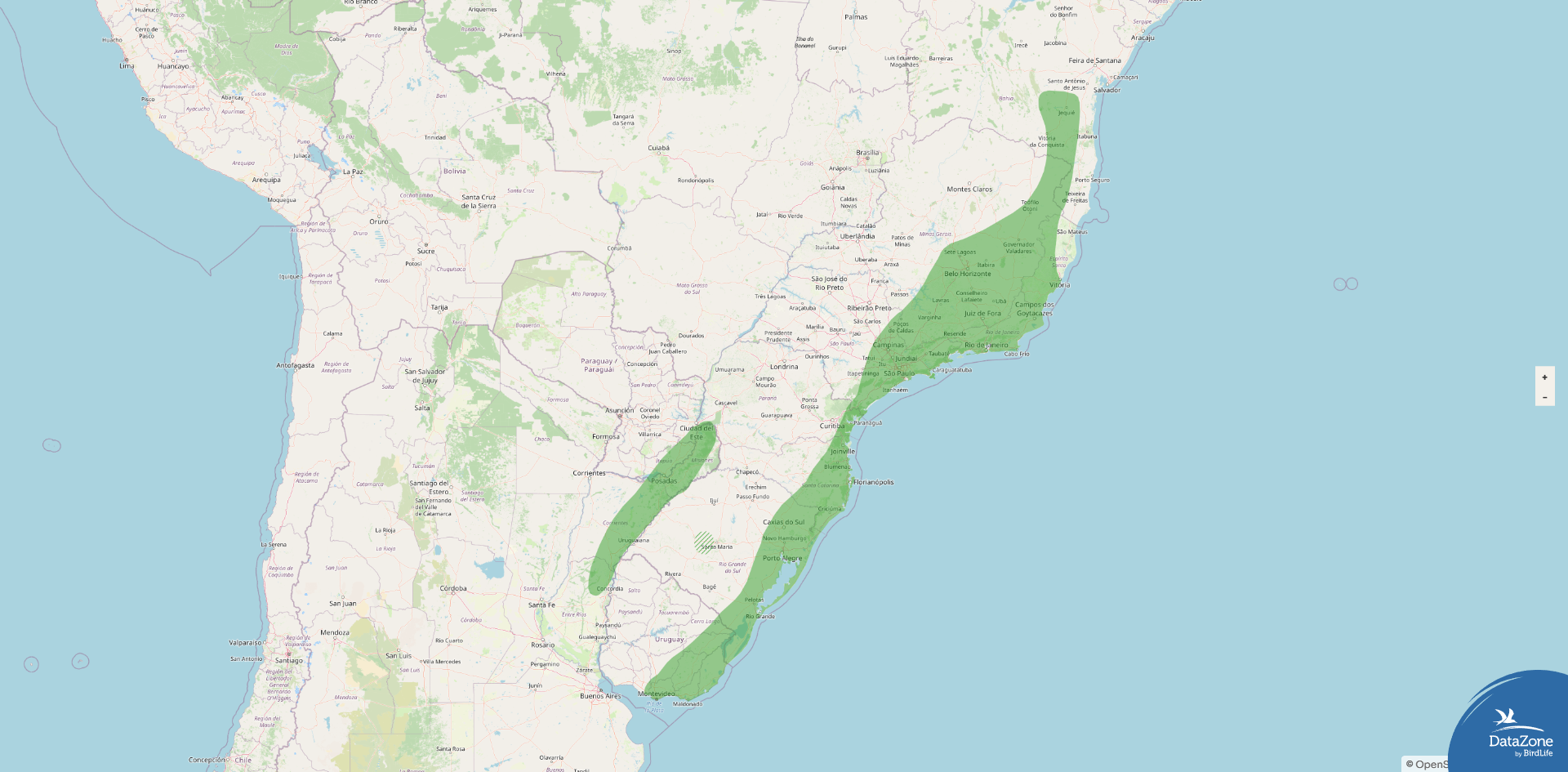
Legend
Green Resident
Species Overview
The Black Jacobin is one of the most conspicuous hummingbirds within its range, its bold black-and-white plumage and active behavior making it highly noticeable in woodlands and gardens. It readily uses human-modified habitats, including coffee and cacao plantations, parks, yards, and urban green spaces, as long as tall flowering trees and shrubs are available. Despite this adaptability and a broad regional range, local abundance can vary, and habitat change plus its migratory behavior contribute to a decreasing trend.
Male Description
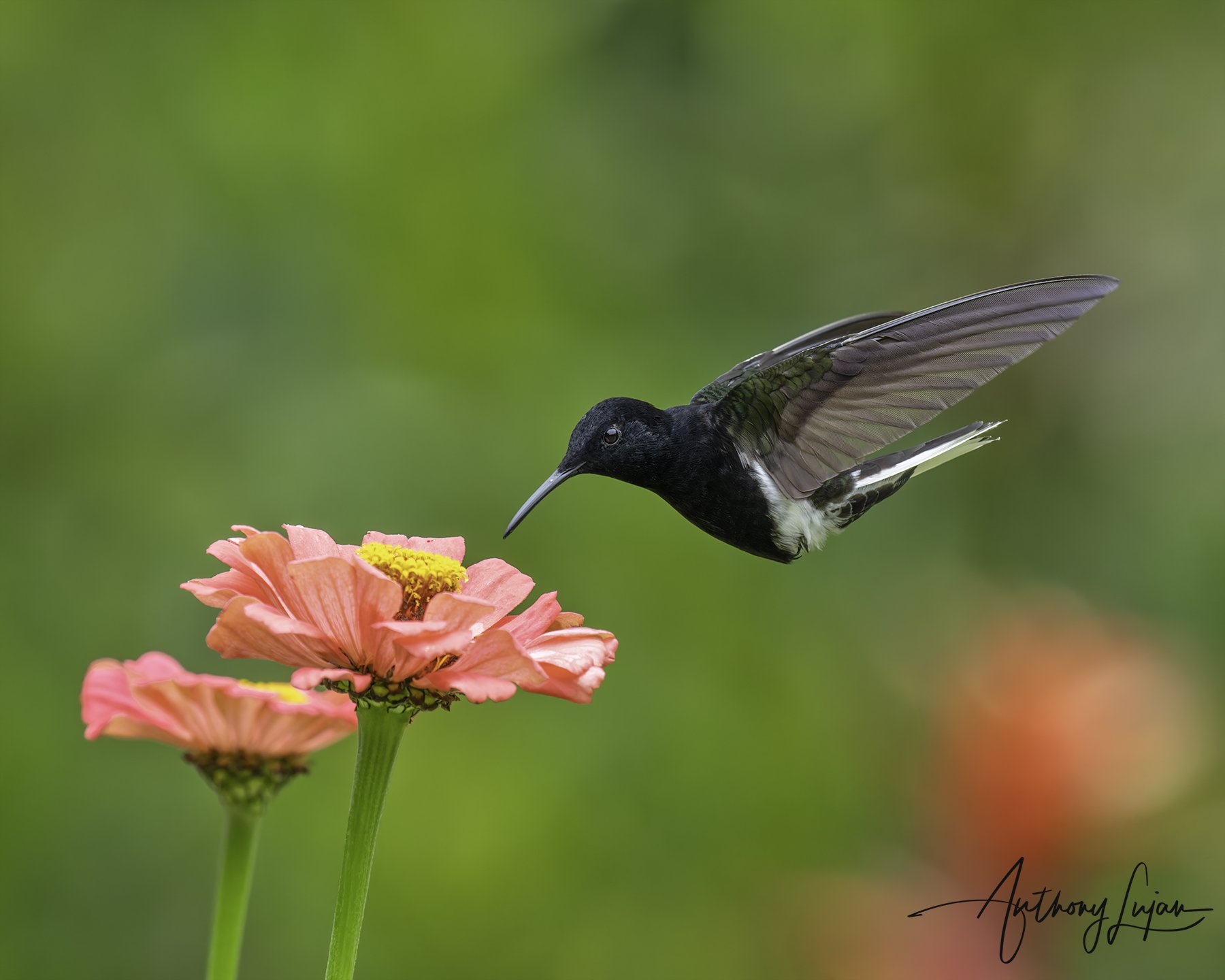
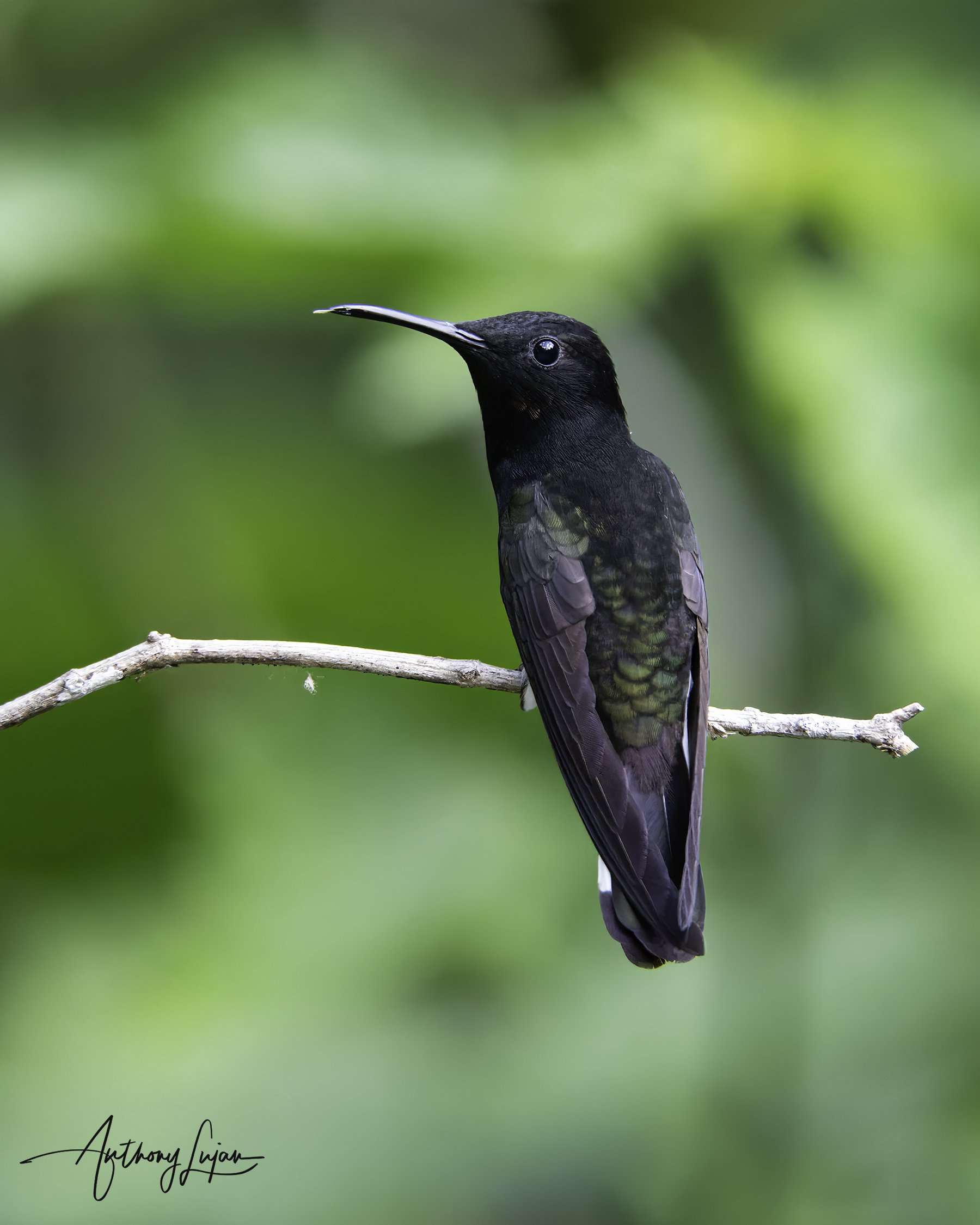
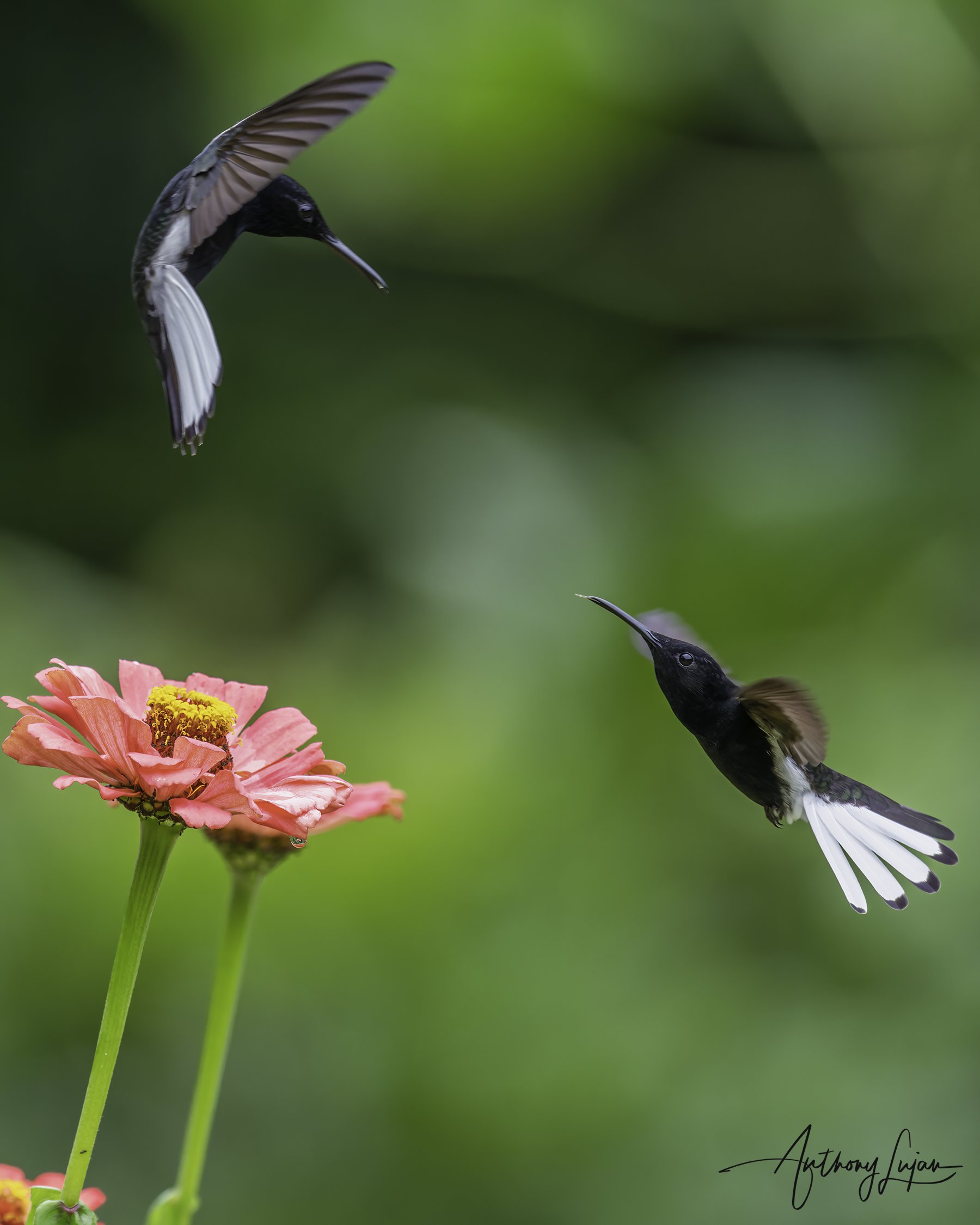
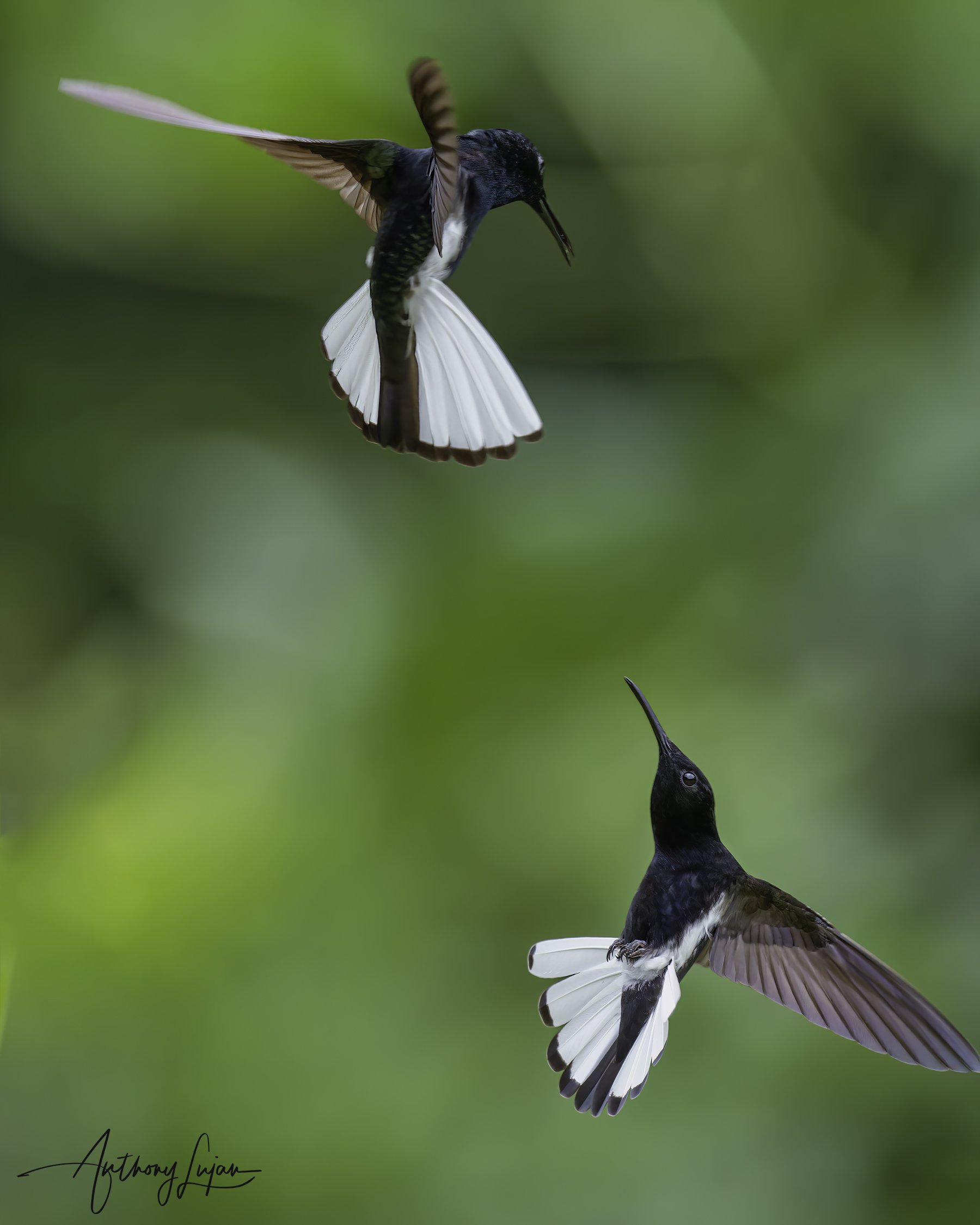
Adult males are mostly black with a slight greenish or bronzy sheen on the back and wing coverts, contrasting with white lower flanks and conspicuous white outer tail feathers that flash in flight. The head, upperparts, and most of the underparts are dark, with the black body offset by strong white patches on the sides and tail and a long straight black bill. In flight, the combination of dark body, white in the tail, and rapid, powerful wingbeats gives a distinctive, high-contrast impression that separates it from smaller, greener hummingbirds sharing the same habitats.
Female Description
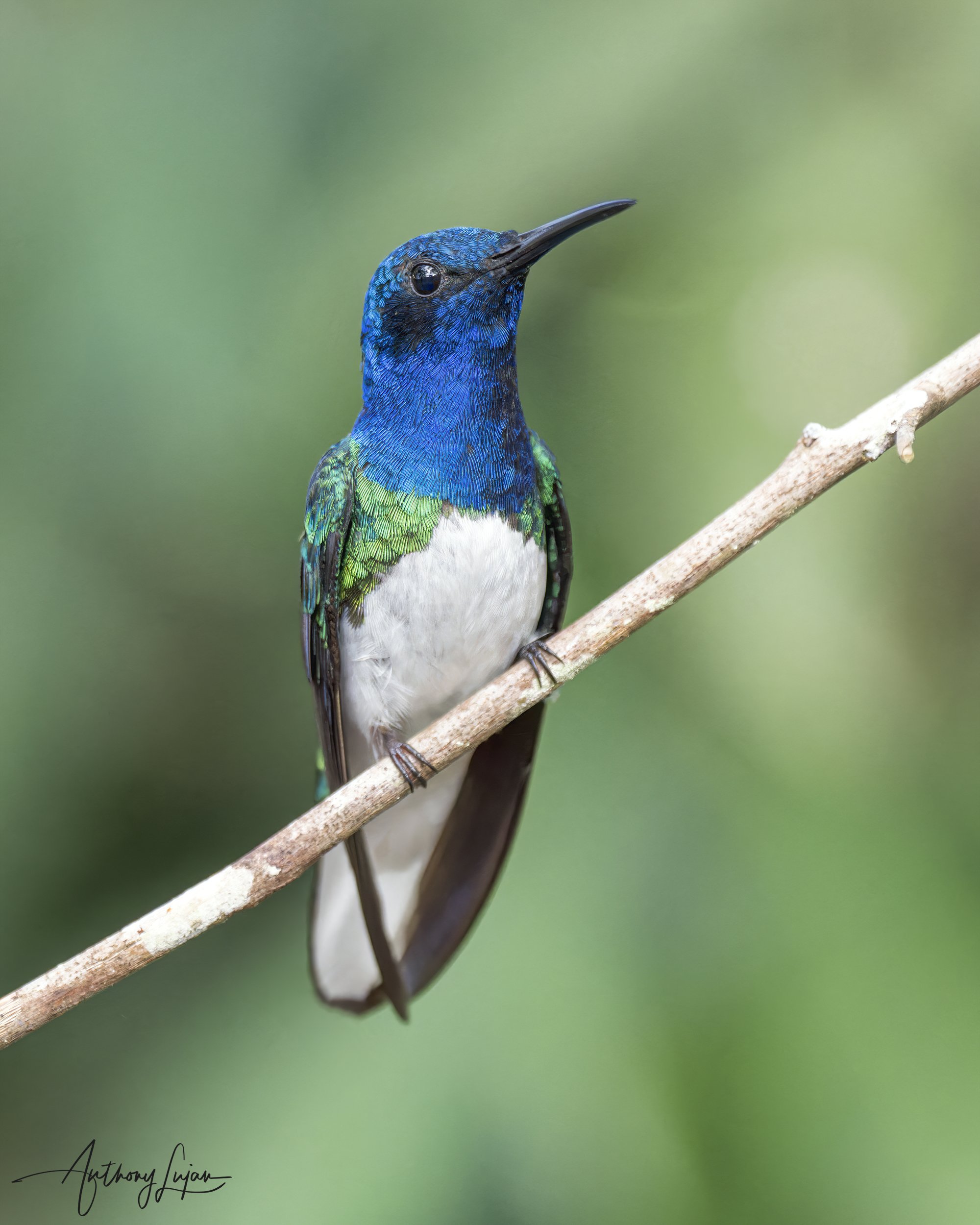
Females are variable and often resemble males but may show more greenish upperparts and a bluish- to blue-green-tinged throat. Some females have paler or mottled underparts compared to the solidly dark underside of adult males, and the contrast between flanks and belly can be less stark. Immature birds show broad cinnamon or rufous bands or patches on the sides of the throat and face, which is useful for identification at close range. Overall, females and immatures appear as slightly duller or more patterned versions of the male but still share the characteristic dark body, white in the tail, and relatively large size.
Habitat & Behavior
Black Jacobins mostly inhabit woodlands, forest edges, secondary growth, and plantations with tall shade trees, but they also occur in rural gardens and urban parks where flowering trees and shrubs are abundant. They feed on nectar from a wide variety of native and introduced plants and can form large congregations of dozens of individuals at rich nectar sources. In addition to nectar, they take small insects and spiders, hawking them in flight, gleaning from leaves, or picking them from spider webs. The species is notably aggressive and territorial, often dominating other hummingbirds and even chasing away large insects from favored flowering patches.
The Black Jacobin is a full migrant, with movements not yet fully understood; overall it tends to shift southward during the austral winter, but there are also winter records to the northwest into inland regions, suggesting complex seasonal movements.
Population
The total number of mature individuals is unknown, but the Black Jacobin is generally considered fairly common to common in suitable habitat across much of its range. It can be especially numerous around flowering trees in plantations, gardens, and forest edges, where dense feeding aggregations may occur. Nevertheless, habitat loss and changes in land use, together with the species’ migratory behavior, are thought to contribute to a gradual, ongoing population decline.

Conservation
The Black Jacobin is listed as Least Concern due to its wide distribution and overall abundance, but its population trend is decreasing. Conversion and degradation of woodlands, shade plantations, and other semi-open forest habitats can reduce nectar availability and nesting sites, especially where tall shade trees are removed. Because it is a full migrant with poorly understood movement patterns, large-scale habitat changes along migratory routes may have cumulative effects that are not yet fully documented. Maintaining forest patches, shade plantations with tall trees, and flowering corridors in agricultural and urban landscapes will help sustain this species, while continued monitoring and research on its migration are important for future conservation planning.
Checkout Anthony’s playlist of this species! Click the top-right dropdown to see all the videos.
Related species in the Florisuga genus (2 species total):
Please note: The content provided in this article reflects Anthony’s personal experience and photographic approach. Results can vary depending on light, weather, location, equipment, subject behavior, and field conditions.