
Blue-bearded Helmetcrest

Scientific name: Oxypogon cyanolaemus
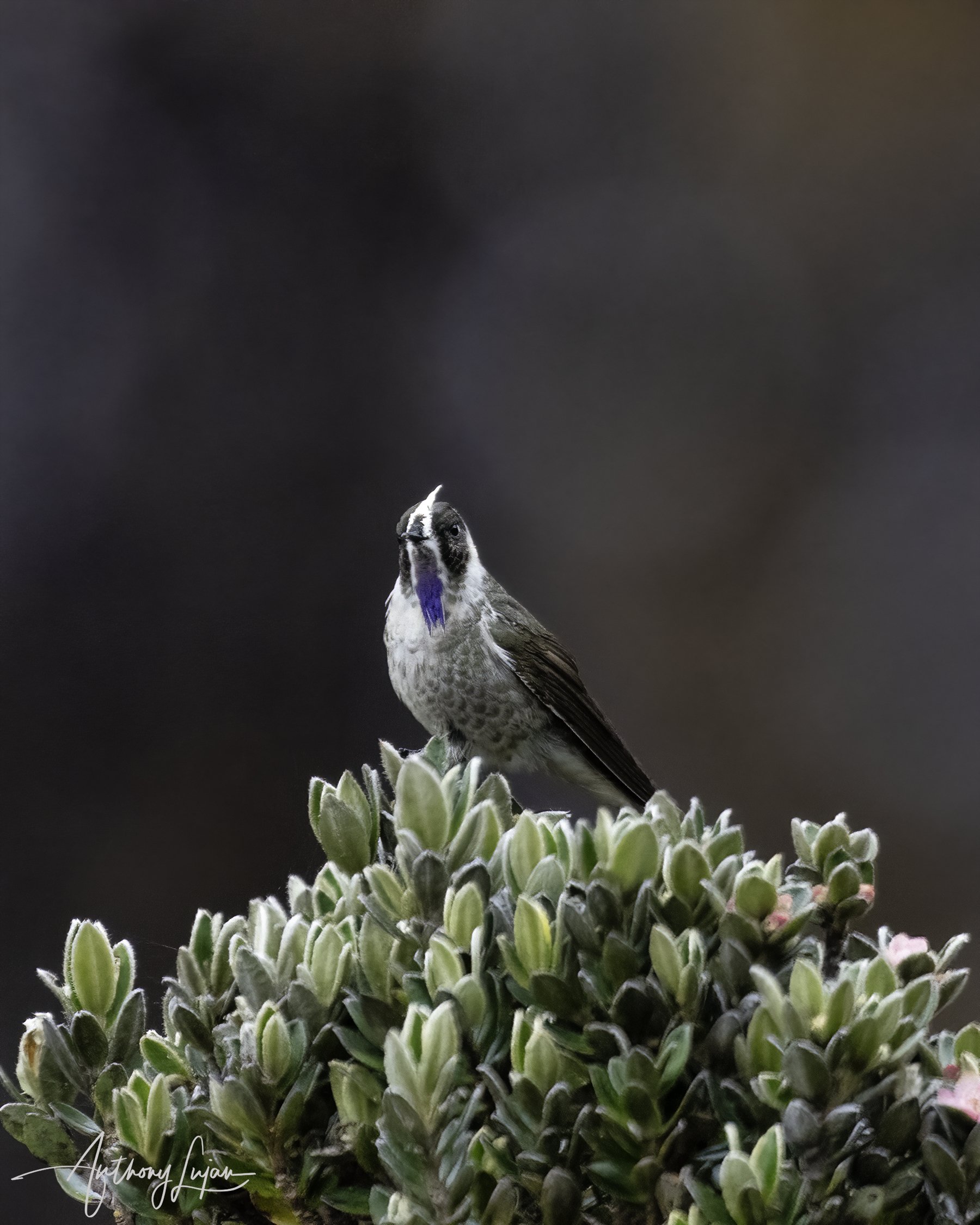
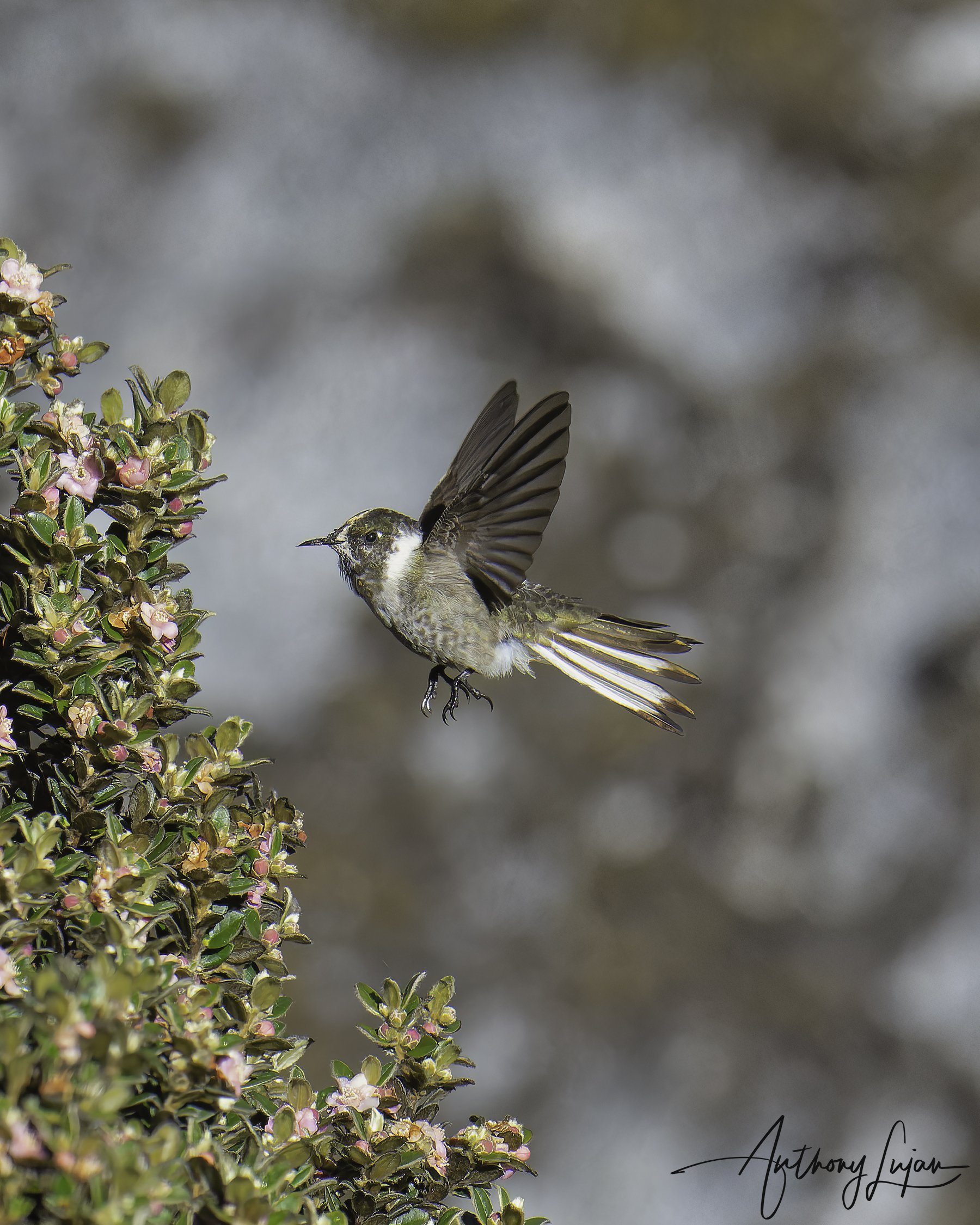
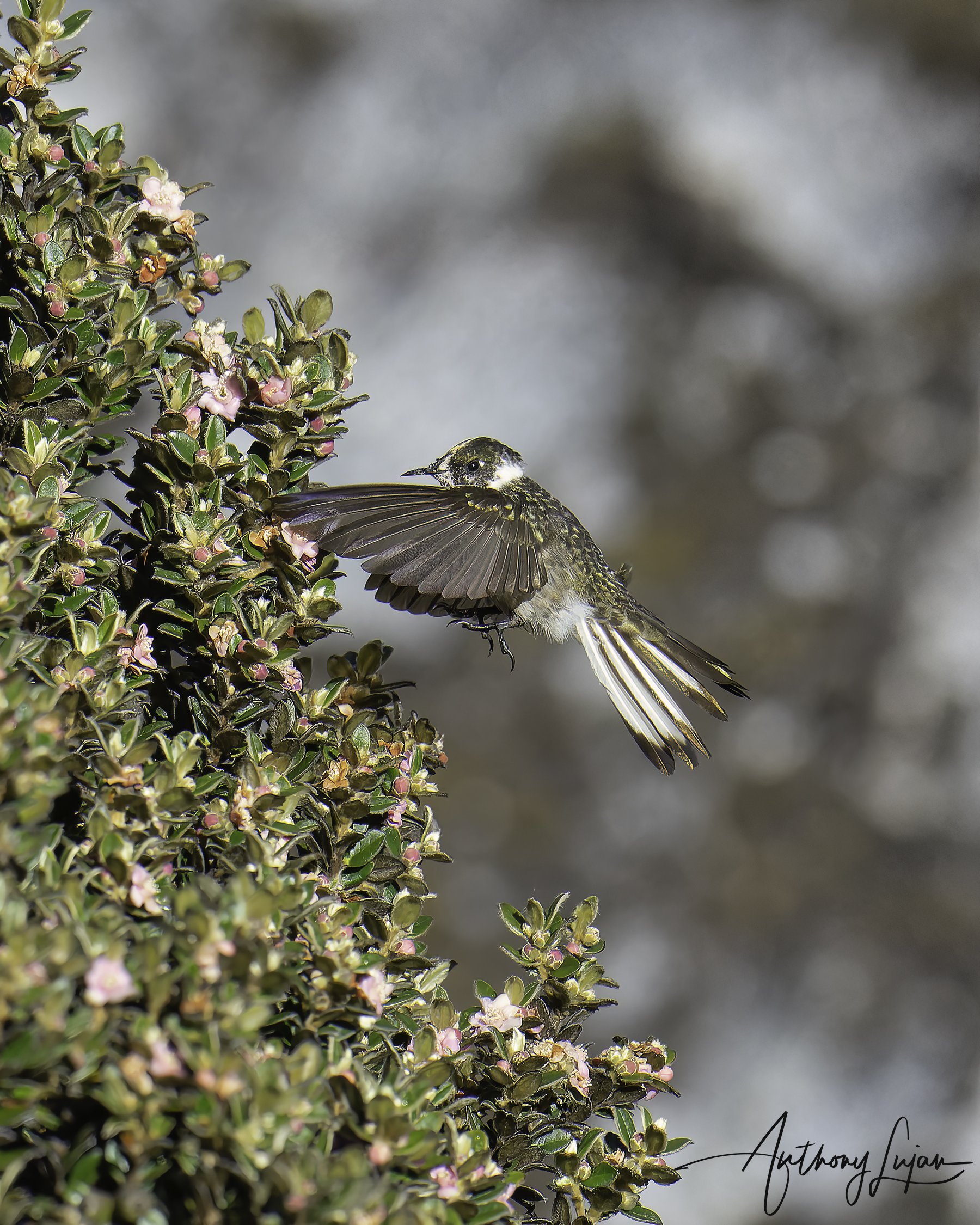
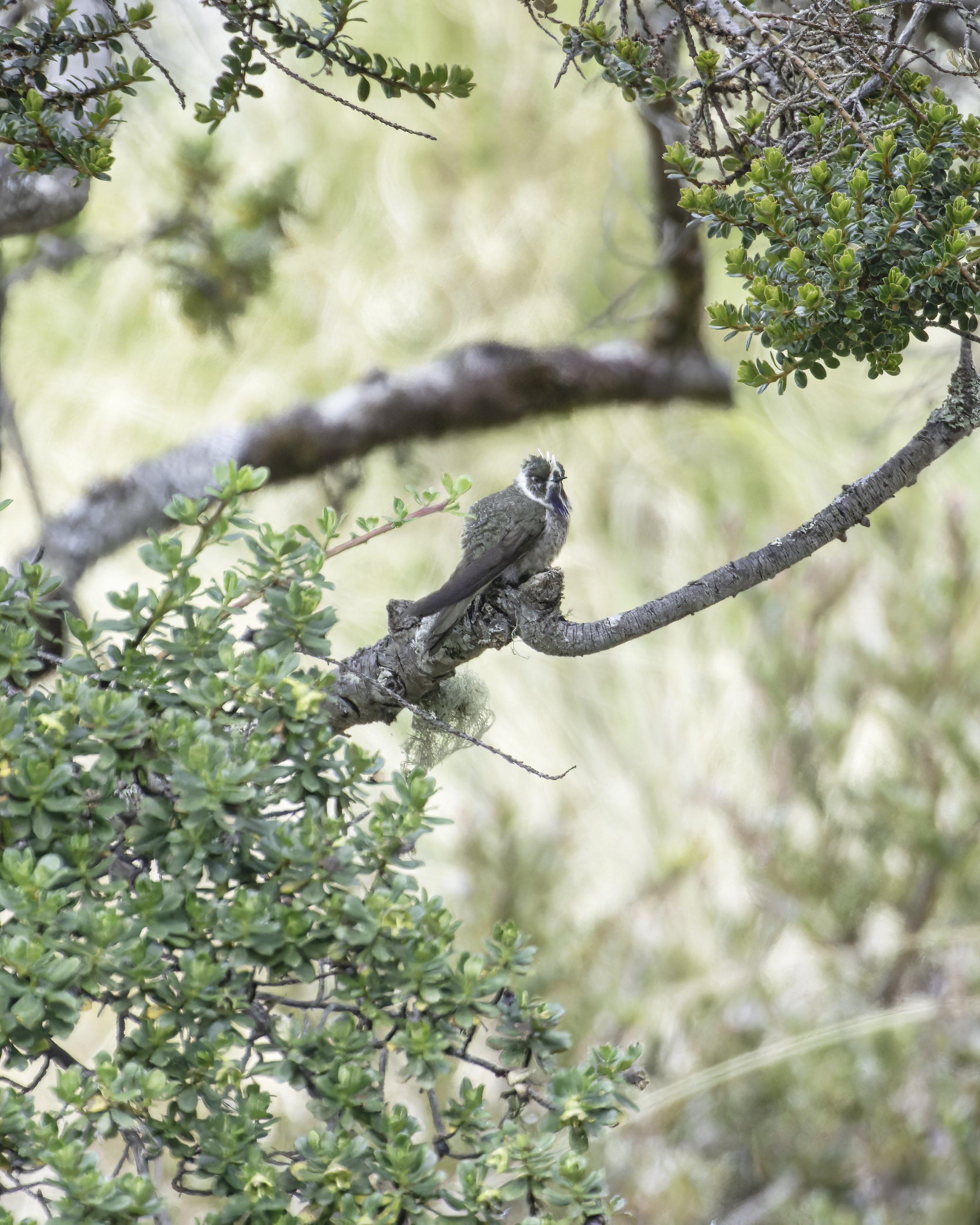
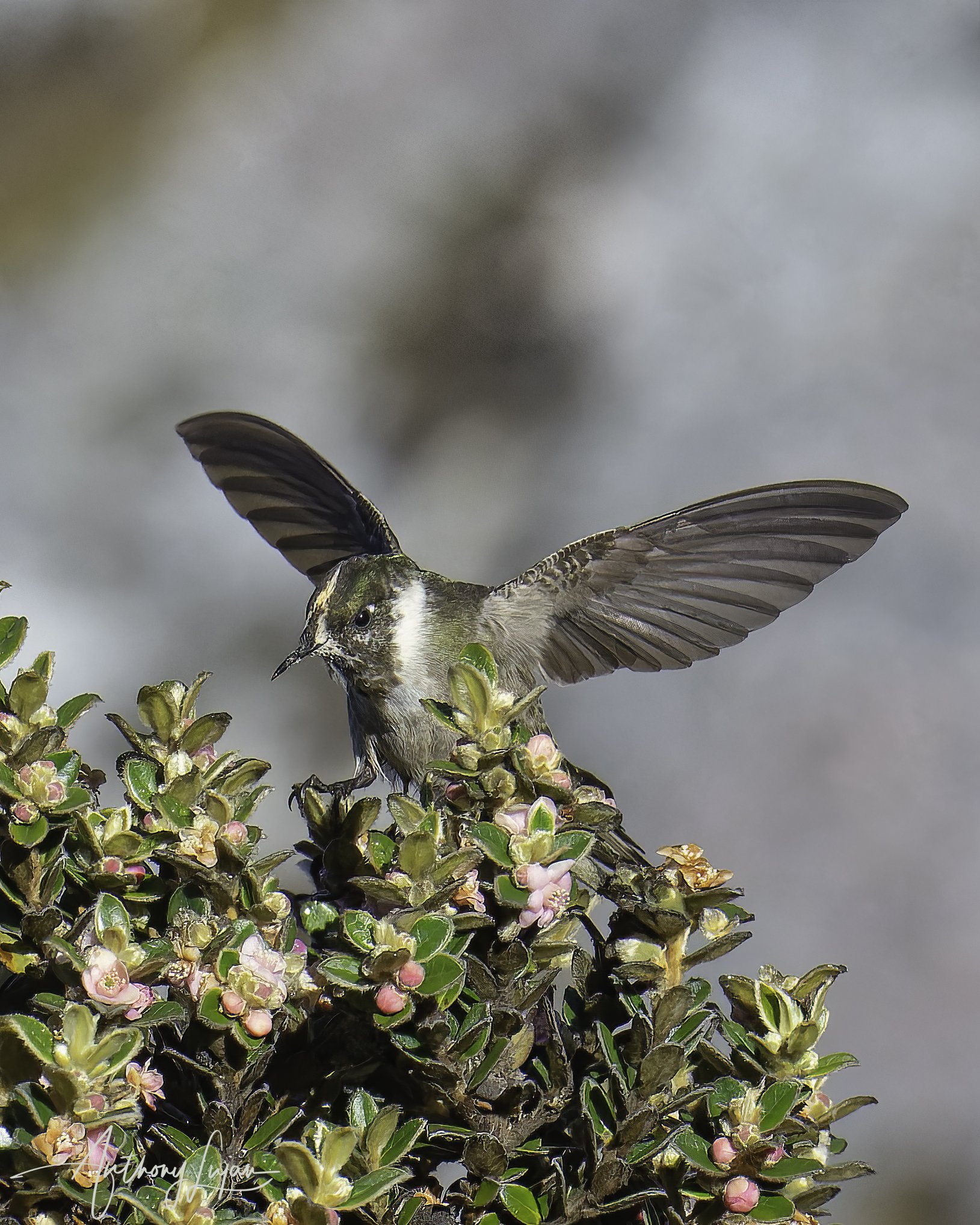
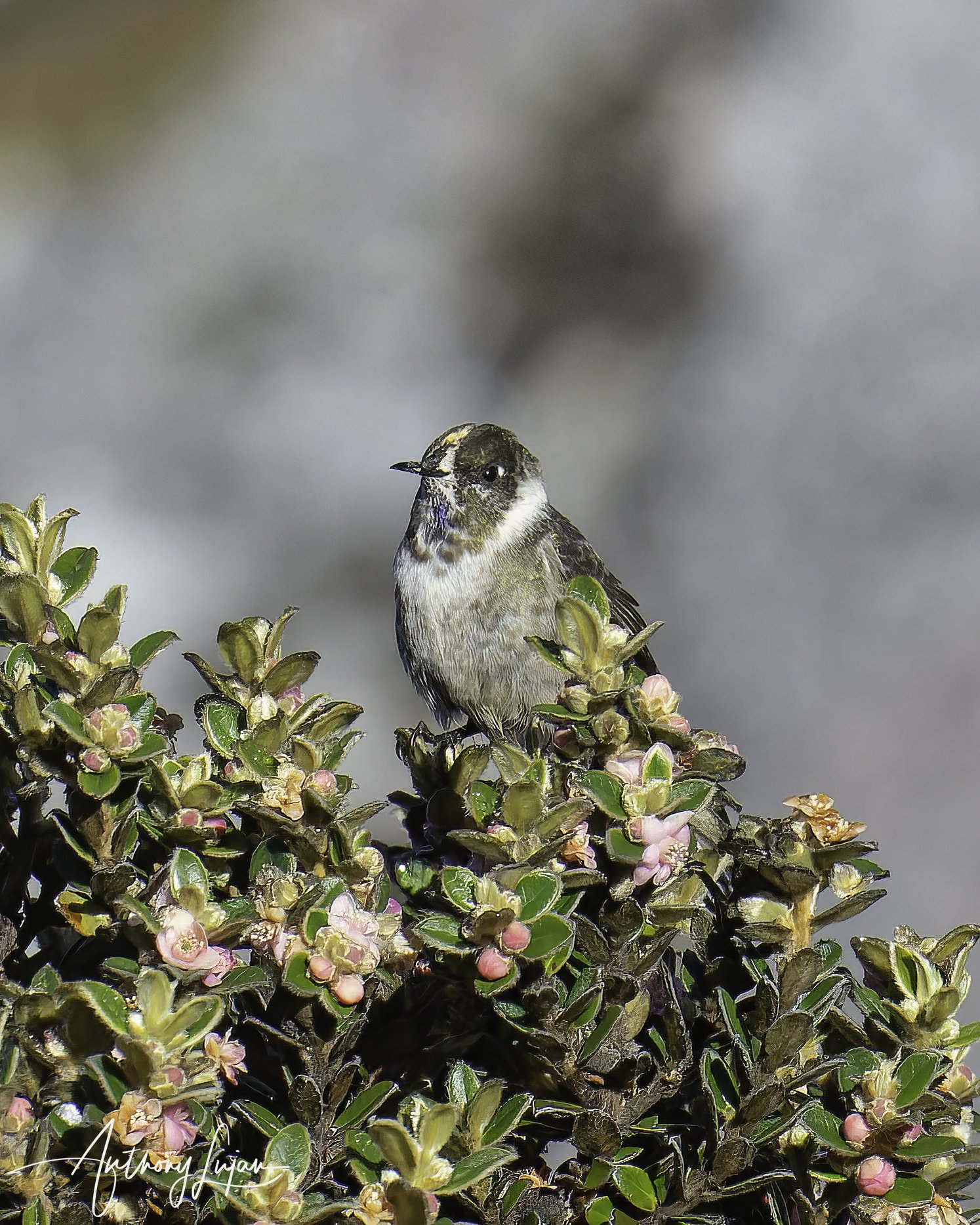
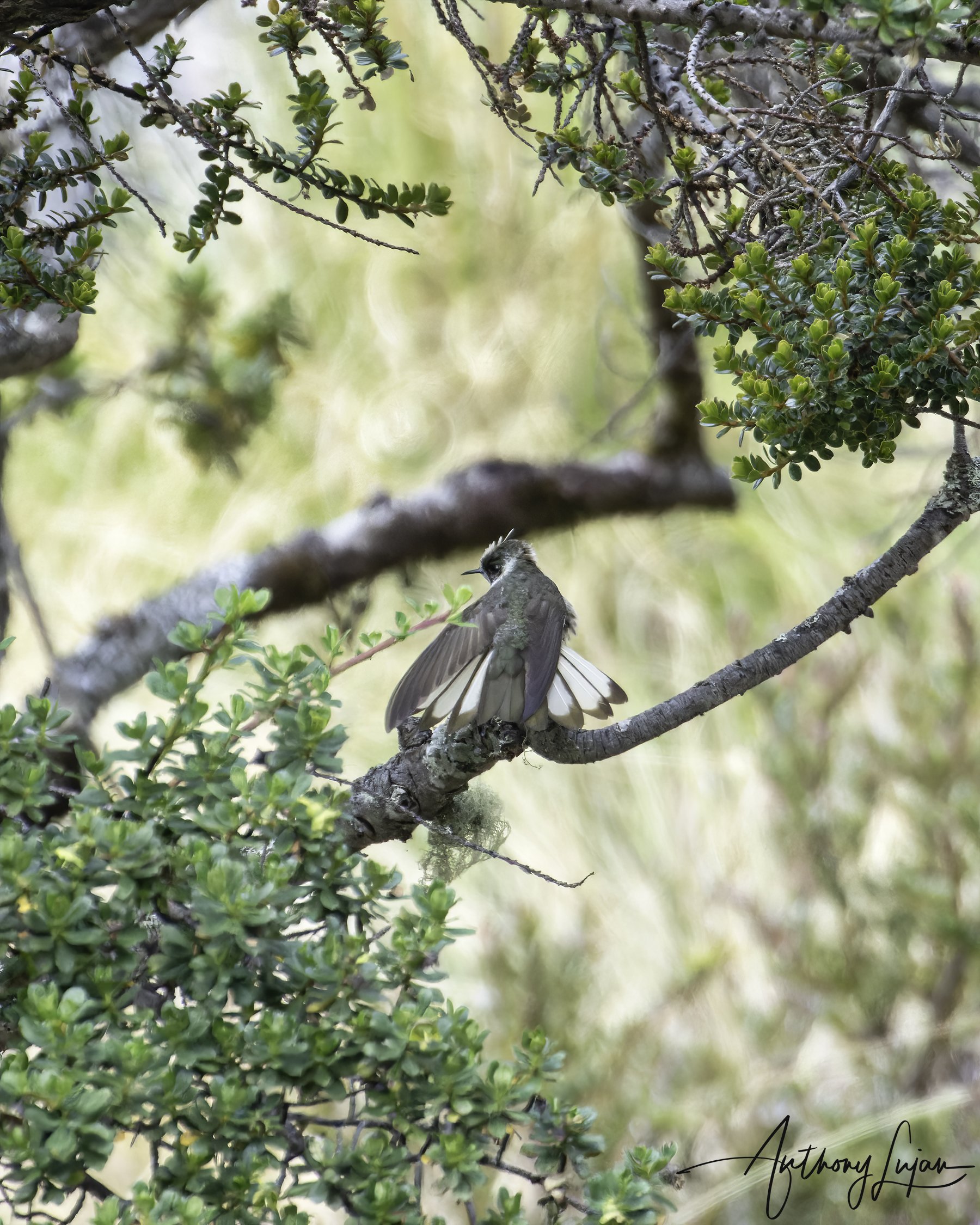
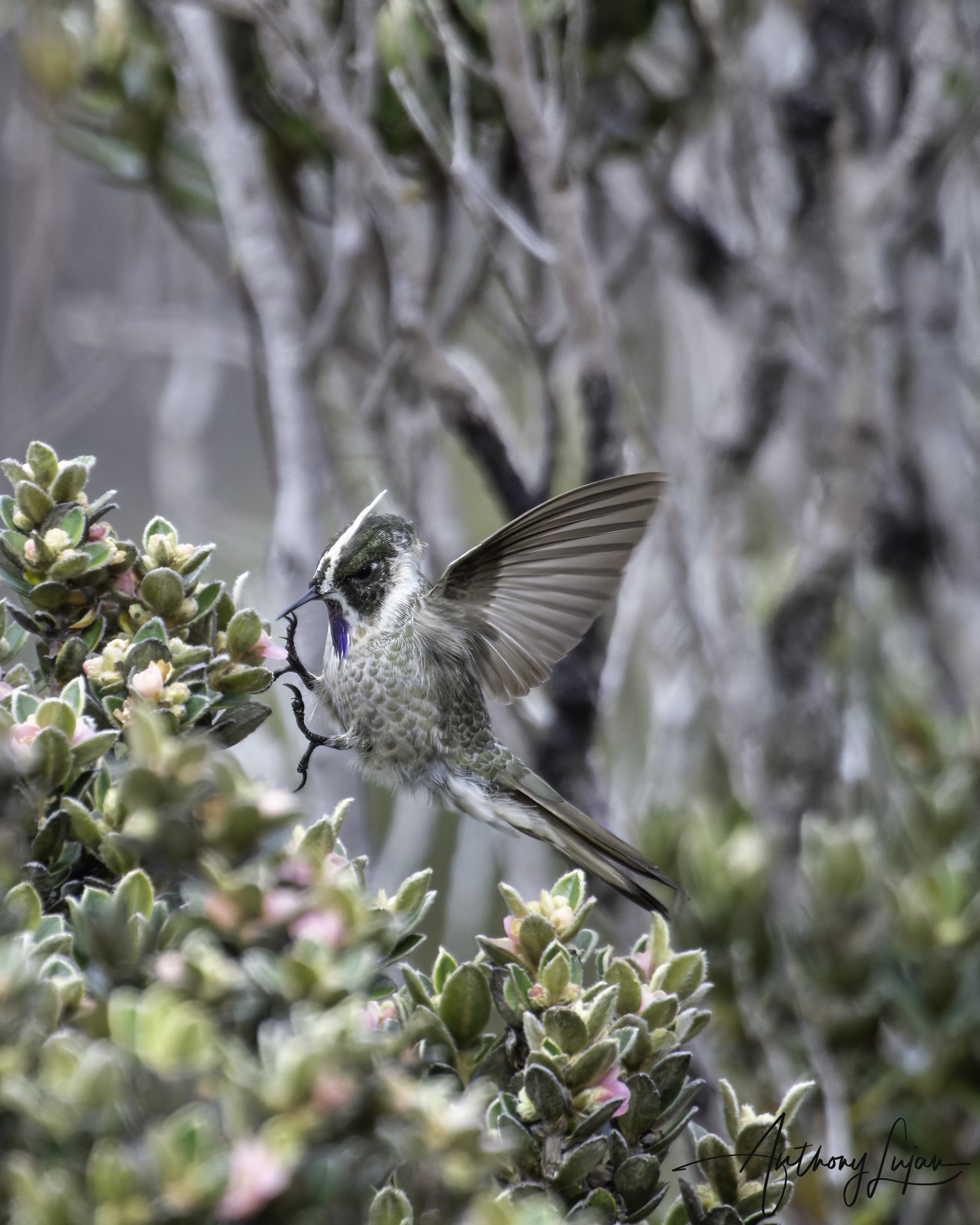
The Blue-bearded Helmetcrest is one of the world’s rarest and most endangered hummingbirds, found only at extremely high altitudes in Colombia’s Santa Marta Mountains. Thought to be extinct for 69 years (1945–2015), it now survives in remote páramo grasslands reached only by multi-day camping expeditions over steep terrain. Adult males are unmistakable, with a shaggy crest, bold black-and-white head pattern, and shimmering green-and-blue beard, while younger males and females lack crests and beards but show a short bill, white collar, and relatively large size. This species feeds by clinging to flowering bushes in and around high-elevation grassland rather than hovering constantly.
At a Glance
Family: Trochilidae (hummingbirds)
Clade: Lesbiini (“coquettes”)
Genus group: Oxypogon — helmetcrests
Related species: Buffy Helmetcrest (O. stuebelii), Green‑bearded Helmetcrest (O. guerinii), White‑bearded Helmetcrest (O. lindenii)
Endemic to the Santa Marta Mountains in Colombia
Habitat: High‑elevation páramo grasslands and shrublands on steep, windswept slopes
Length: is about 4.5 in (11.5 cm) long
Weight: is not well documented
Status: Endangered (one of the world’s rarest hummingbirds; formerly considered extinct for 69 years)
Name Origin
The name “Helmetcrest” reflects the bird’s striking elongated head crest, which gives it a helmet‑like profile and defines the genus Oxypogon. “Blue‑bearded” refers to the male’s narrow blue‑violet throat beard, which hangs beneath the chin and flashes when it catches the light. The species name cyanolaemus combines Greek roots for “blue” and “throat,” again highlighting this signature feature.
Identification
Male
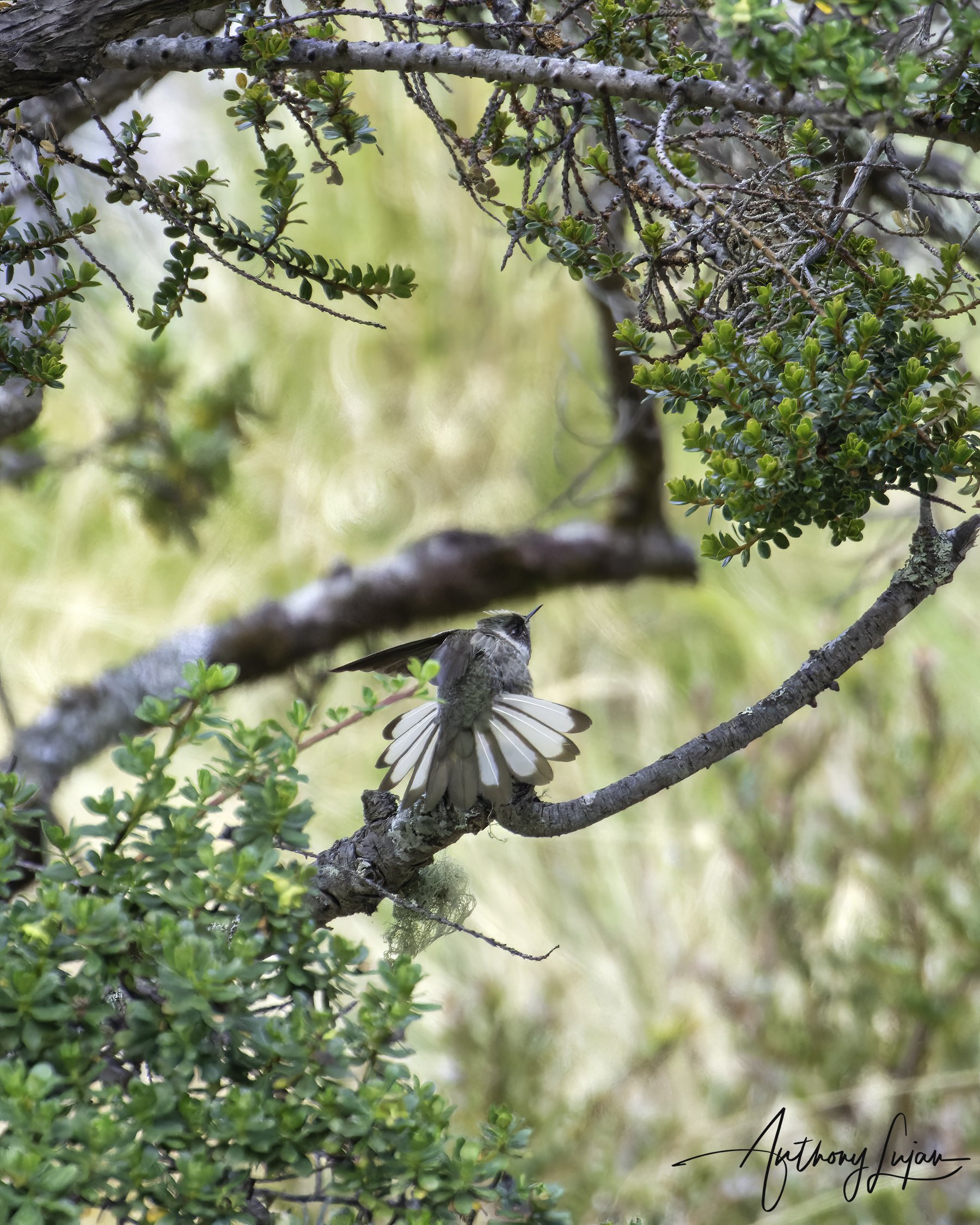
The male Blue‑bearded Helmetcrest is a medium‑sized mountain jewel with an elongated black‑and‑white crest, olive‑green upperparts, and a bold whitish facial frame that runs from behind the eye down the sides of the neck. From the throat hangs a white beard with a central stripe of metallic purplish‑blue feathers, forming the characteristic “blue beard” that can glow in good light. The tail shows extensive buff‑white on the outer feathers, especially visible when the bird fans or flicks the tail while perched among páramo shrubs.
Female
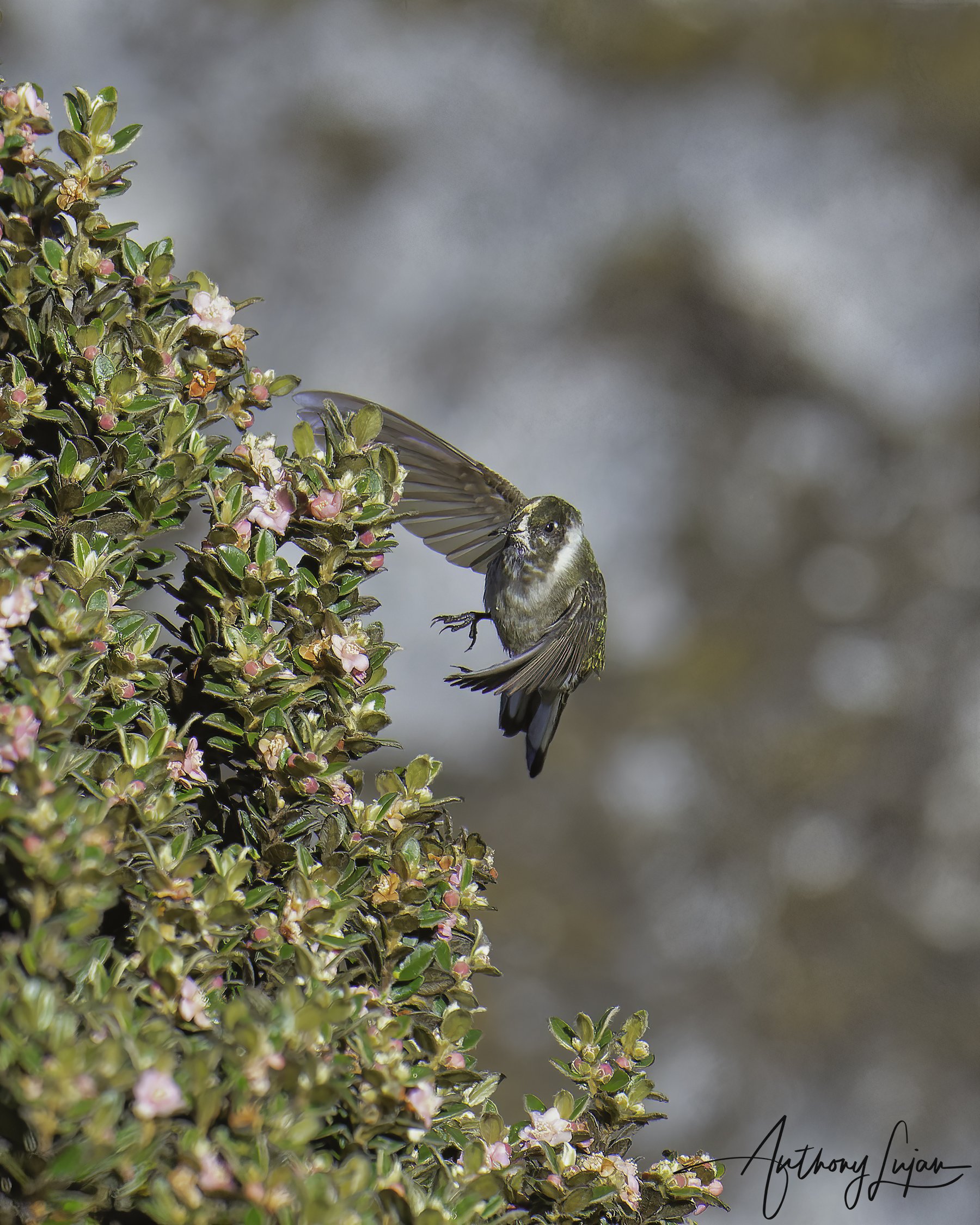
Females lack the full flowing crest and long blue beard of the males but still show a shorter crest and patterned head. Their plumage is more subdued, with olive and buff tones and reduced blue on the throat, helping them blend into the pale grasses and frailejón rosettes of the high páramo. Both sexes have a relatively short, straight bill and often cling to flowers or stems to feed, a useful behavior in the windy, exposed conditions of their habitat.
Behavior and Ecology
Blue‑bearded Helmetcrests are tightly associated with high‑elevation páramo vegetation, especially giant rosette plants and flowering shrubs that provide nectar and small arthropods. The species has been observed around 3,900 m in small habitat patches on steep slopes surrounded by burned vegetation, often perching quietly and making short sallies to nearby flowers. It is a non‑migrant landbird with an estimated generation length of about 2.4 years and does not normally occur in forest.
Distribution and Status
This species is endemic to the Sierra Nevada de Santa Marta in northern Colombia, one of the world’s most isolated coastal mountain systems. Within this massif it occupies tiny fragments of high‑elevation páramo, with recent confirmed records from a very small area around the Sevilla Lakes region and nearby slopes. Historical data and recent surveys indicate an extremely small range and severe habitat degradation from repeated burning and grazing, contributing to its Endangered status.
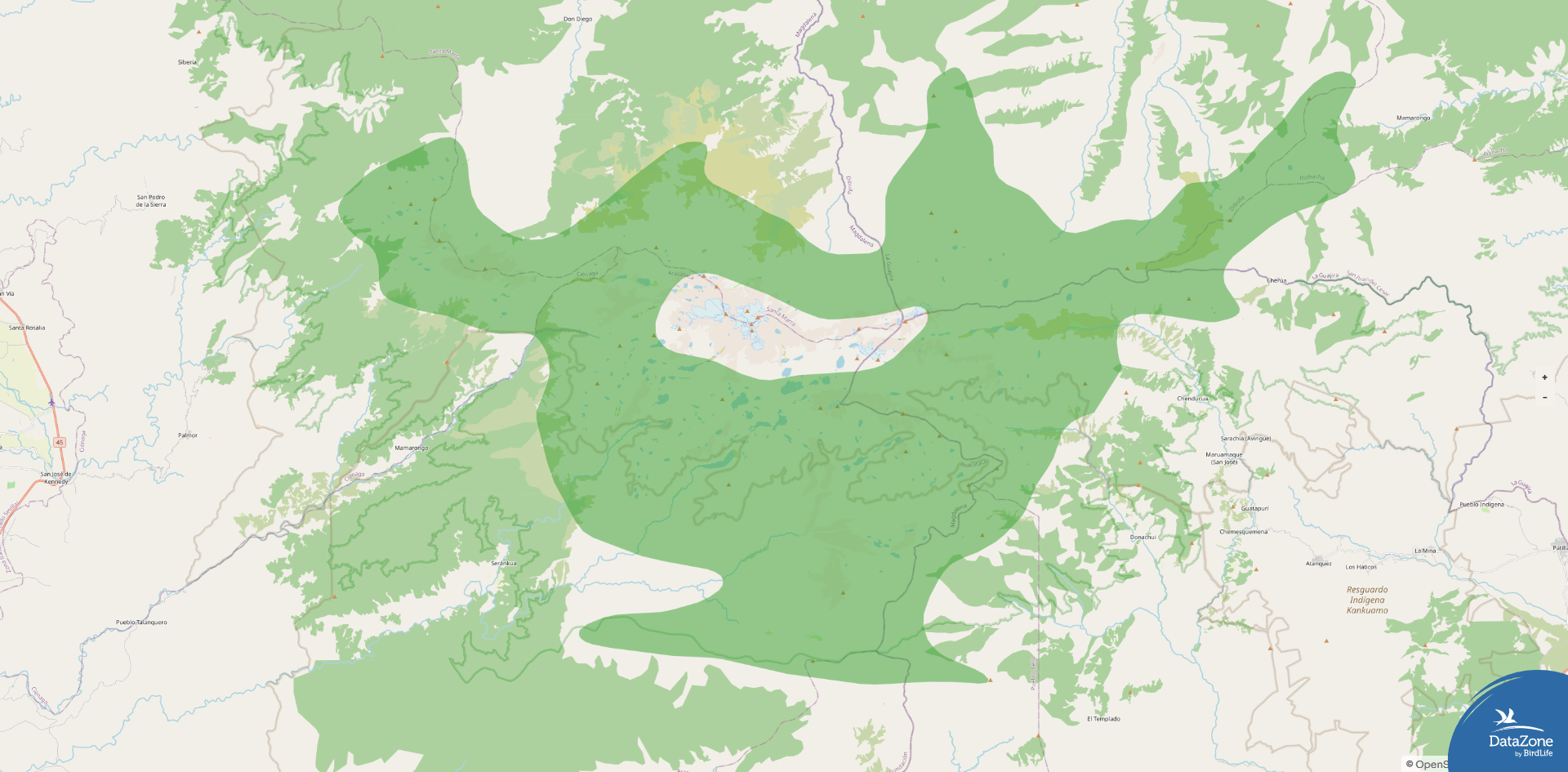
Legend
Green resident
Population and Threats
Estimated mature individuals: 250–999 (BirdLife/IUCN estimate).
Population trend: Decreasing.
The páramo of the Sierra Nevada de Santa Marta has suffered extensive destruction and degradation, largely from conversion to livestock pasture and clearance for agriculture. Repeated burning by local communities to maintain pasture has destroyed much of the natural vegetation; in 2015, observers reported that almost all natural vegetation except grasses at key sites had been burned, leaving foraging resources scattered over large areas. Additional pressure comes from grazing by cattle and sheep and the cutting of frailejón (including Libanothamnus occultus, likely an important nectar source) for firewood and house construction, further reducing critical food plants for the species.
Assessment history: listed as Critically Endangered in 2014–2016 and reassessed as Endangered in 2023 as more information on range and population became available.

Conservation
Because of its tiny range, small population, and dependence on specific páramo plants, the Blue‑bearded Helmetcrest is highly sensitive to changes in fire regimes, grazing pressure, and páramo management. Effective conservation focuses on reducing burning, managing livestock grazing, and protecting or restoring stands of frailejón and other high‑páramo shrubs in the Santa Marta region. Working with indigenous communities on fire‑free pasture practices and supporting local ecotourism and guide initiatives can help align livelihoods with the conservation of this emblematic hummingbird.

Video: Check out Anthony’s playlist of this species. Click the top-right dropdown to see all the videos.
Related species in this genus:



Please note: The content provided in this article reflects Anthony’s personal experience and photographic approach. Results can vary depending on light, weather, location, equipment, subject behavior, and field conditions.