
Scientific name: Cynanthus latirostris
The Broad-billed Hummingbird is a small, brilliantly colored hummingbird of canyons, riparian corridors, and open woodlands from the southwestern United States through much of Mexico. The number of mature individuals is unknown, the global population is considered stable, it is treated as a full migrant (with strong seasonal movements in northern populations), and it is currently listed as Least Concern with three recognized subspecies.
At a Glance
Family: Trochilidae (hummingbirds)
Clades: Trochilini – Emeralds
Genus group: Cynanthus — small, often blue‑green hummingbirds with red or two‑toned bills (6 species total)
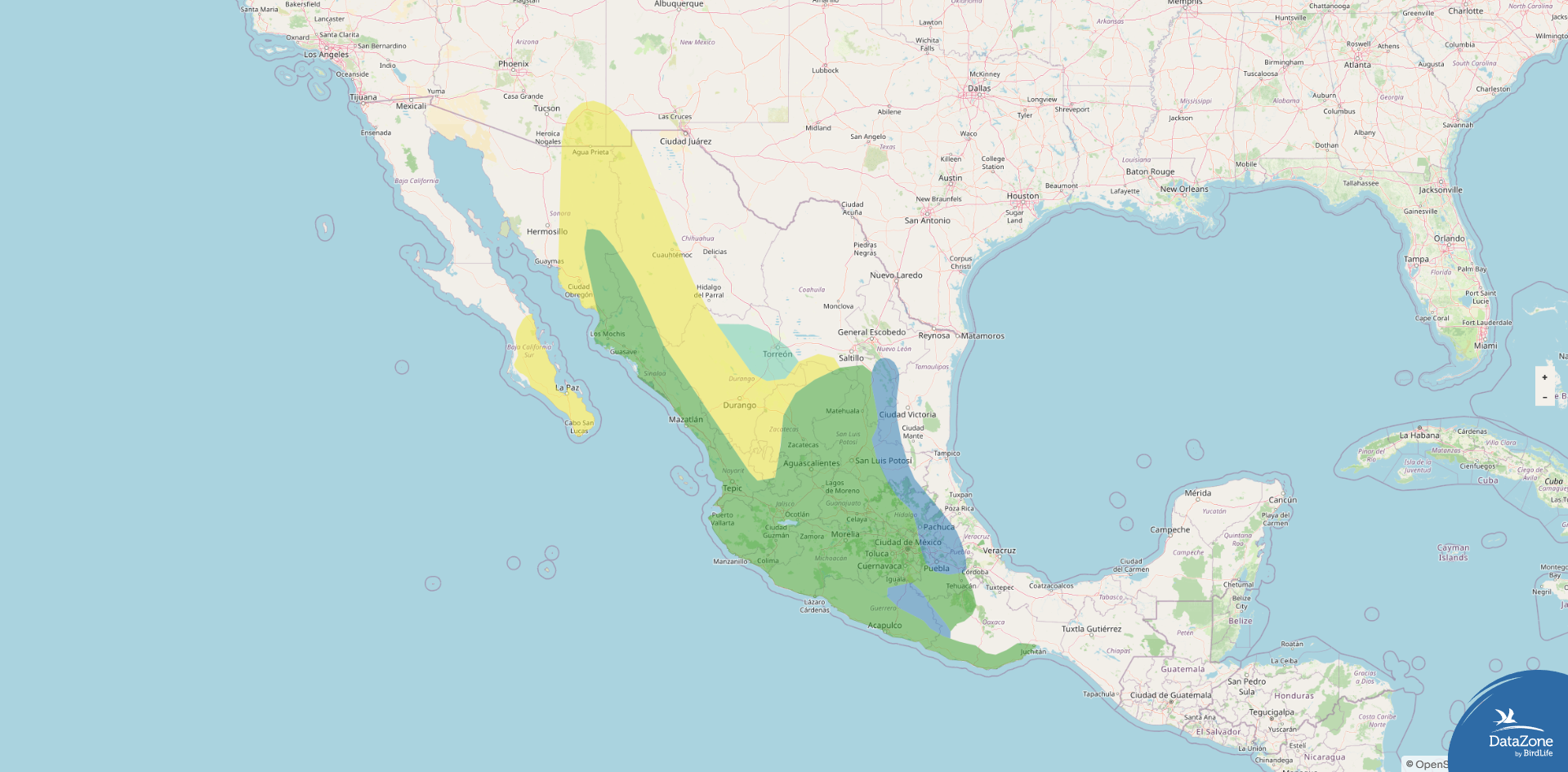
Range: Southern Arizona and southwestern New Mexico south through western and central Mexico, with resident populations in east‑central and central Mexico and migratory populations in the northwest; vagrants reach southern California and occasionally farther across the western and central U.S.
Habitat: Canyons, foothill streambeds, riparian woodland, desert scrub with mesquite and cottonwood, open oak and pine‑oak woodland, second growth, gardens, and orchards with flowering shrubs and trees.
Elevation: Common from about 600–2,400 m (2,000–7,900 ft), locally higher in summer in mountain meadows and canyons.
Length: About 8–10 cm (3.1–3.9 in).
Weight: About 3–4 g (0.11–0.14 oz).
Number of mature individuals: Unknown
Population trend: Stable
Status: Least Concern (IUCN)
Name Origin
The genus name Cynanthus comes from Greek roots meaning “dog” and “flower,” possibly alluding to the bird’s tenacity at flowers or to early naming conventions for hummingbirds. The species name latirostris means “broad‑billed,” referring to the proportionally wide base of the bill. The English name “Broad‑billed Hummingbird” highlights its bright red, broad‑based bill and distinguishes it from other small green hummingbirds.
Subspecies & Distribution
Three subspecies:
Cynanthus latirostris magicus
Distribution: Breeds from southern Arizona and southwestern New Mexico south along the Sierra Madre Occidental to Colima and Aguascalientes. Northernmost breeders in the U.S. and extreme northern Mexico migrate south into Mexico for the winter. Occasional vagrants reach southern California and other parts of the western U.S.Cynanthus latirostris latirostris (nominate)
Distribution: Resident in east‑central Mexico, from Nuevo León, San Luis Potosí, and Tamaulipas south through northern Veracruz, Morelos, and the Valley of Mexico. Birds occupy canyons, riparian woods, and semi‑open landscapes year‑round in this core region.Cynanthus latirostris propinquus
Distribution: Resident in central Mexico from Guanajuato through Michoacán to northern Guerrero. This subspecies occurs in similar habitats—canyons, dry and semi‑dry woodland, stream corridors, and gardens—at low to middle elevations.
Legend
Green Resident
Yellow Breeding
Blue Non-breeding
Species Overview
The Broad‑billed Hummingbird is one of the most colorful hummingbirds in the southwestern U.S., with a glittering blue‑green body and a vivid red bill. It is closely tied to streamside and canyon habitats in its northern range, particularly where sycamore, cottonwood, willow, and mesquite provide shade, structure, and flowers. Farther south in Mexico it is more widespread, inhabiting a range of wooded and semi‑open landscapes, and often visiting gardens and feeders. The species’ ability to exploit a variety of habitats and its extensive Mexican range underpin its stable conservation status.
Male Description
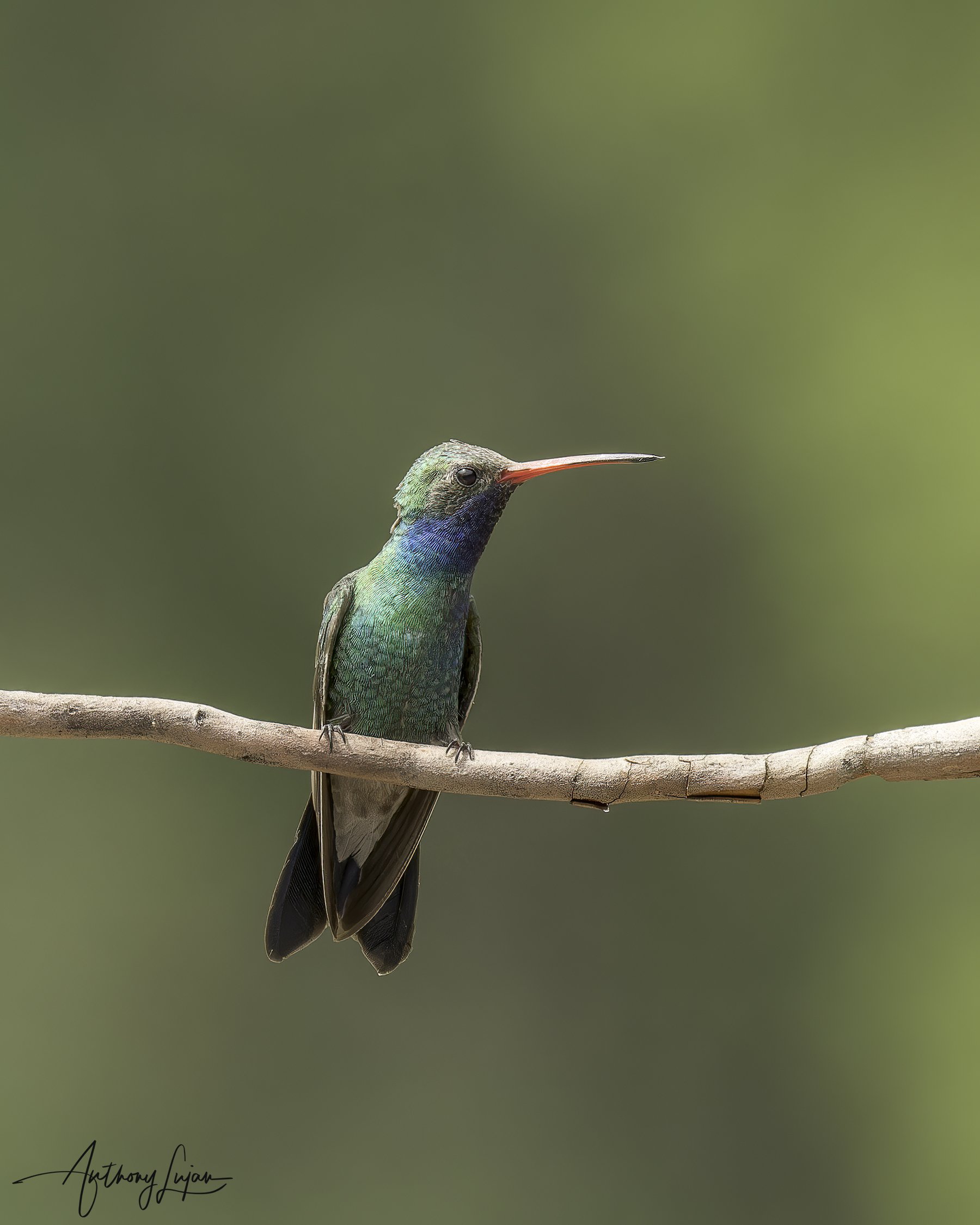
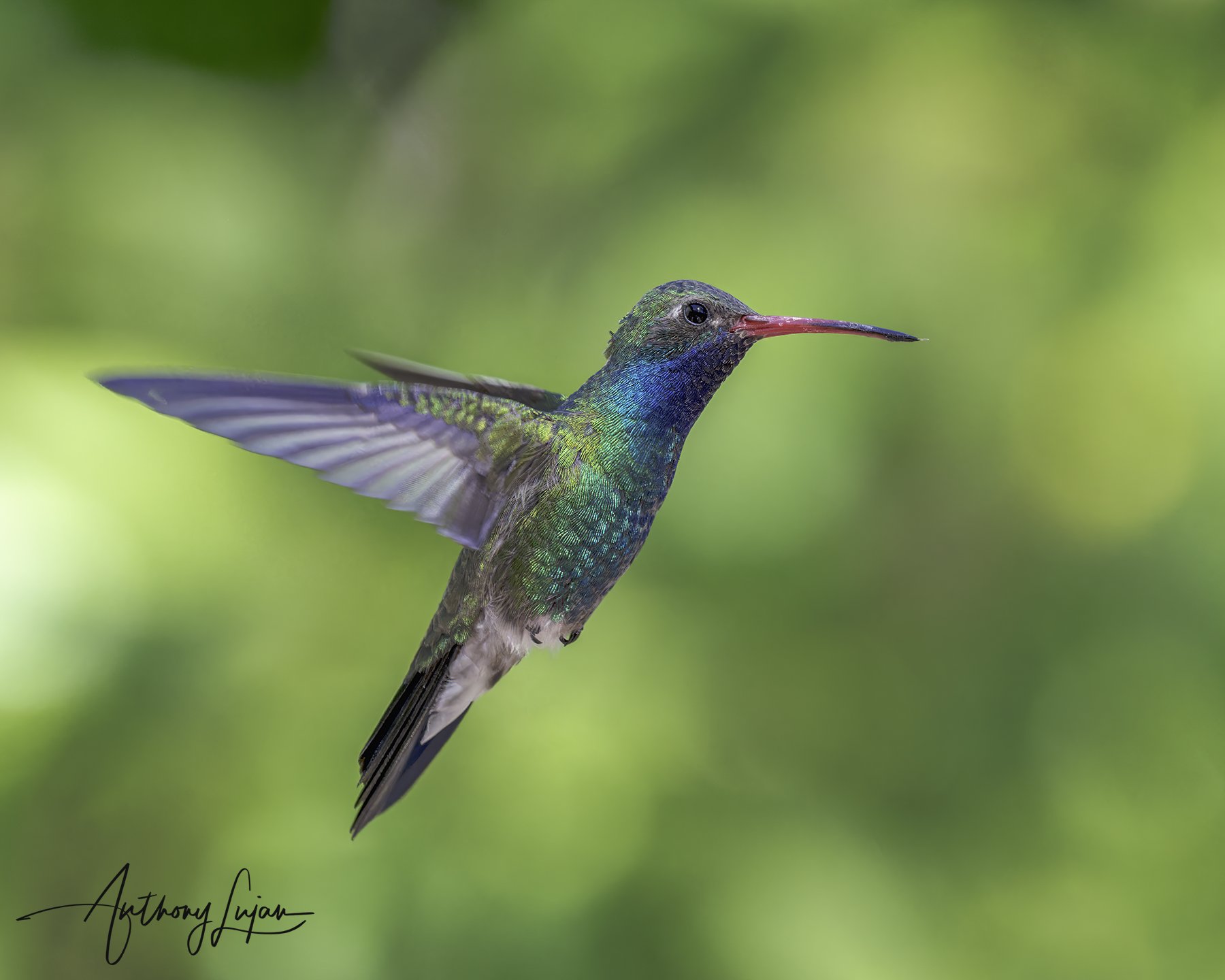
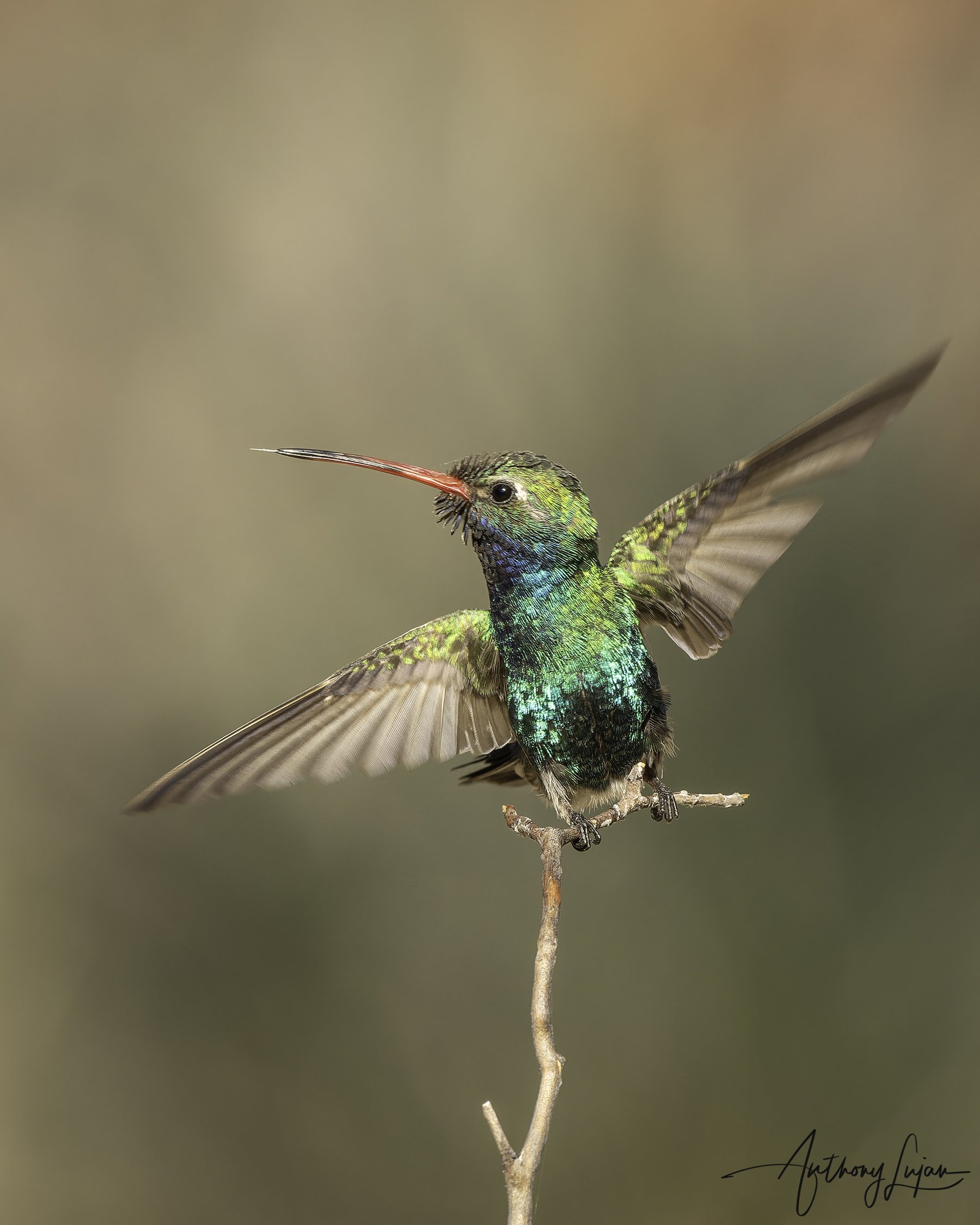
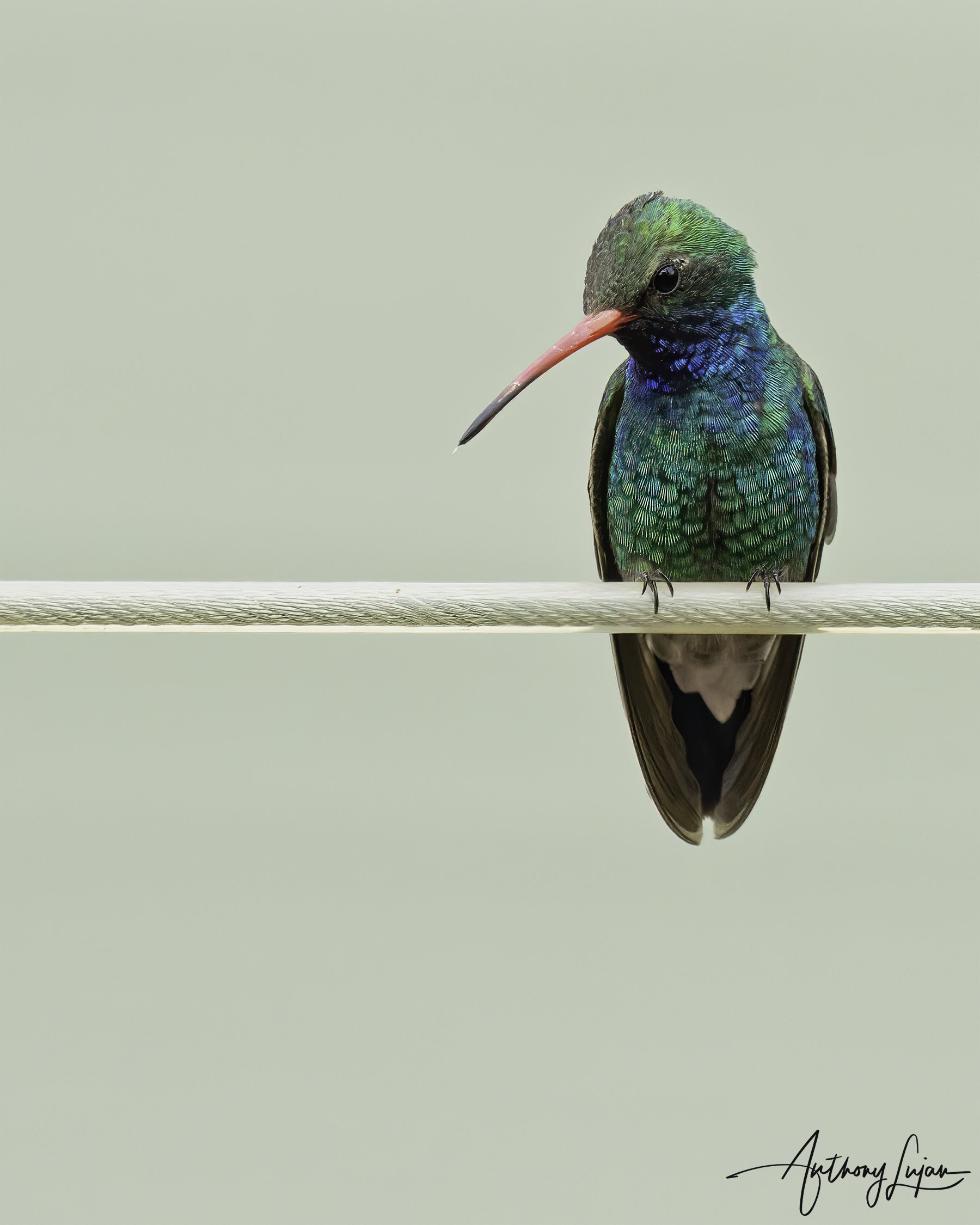
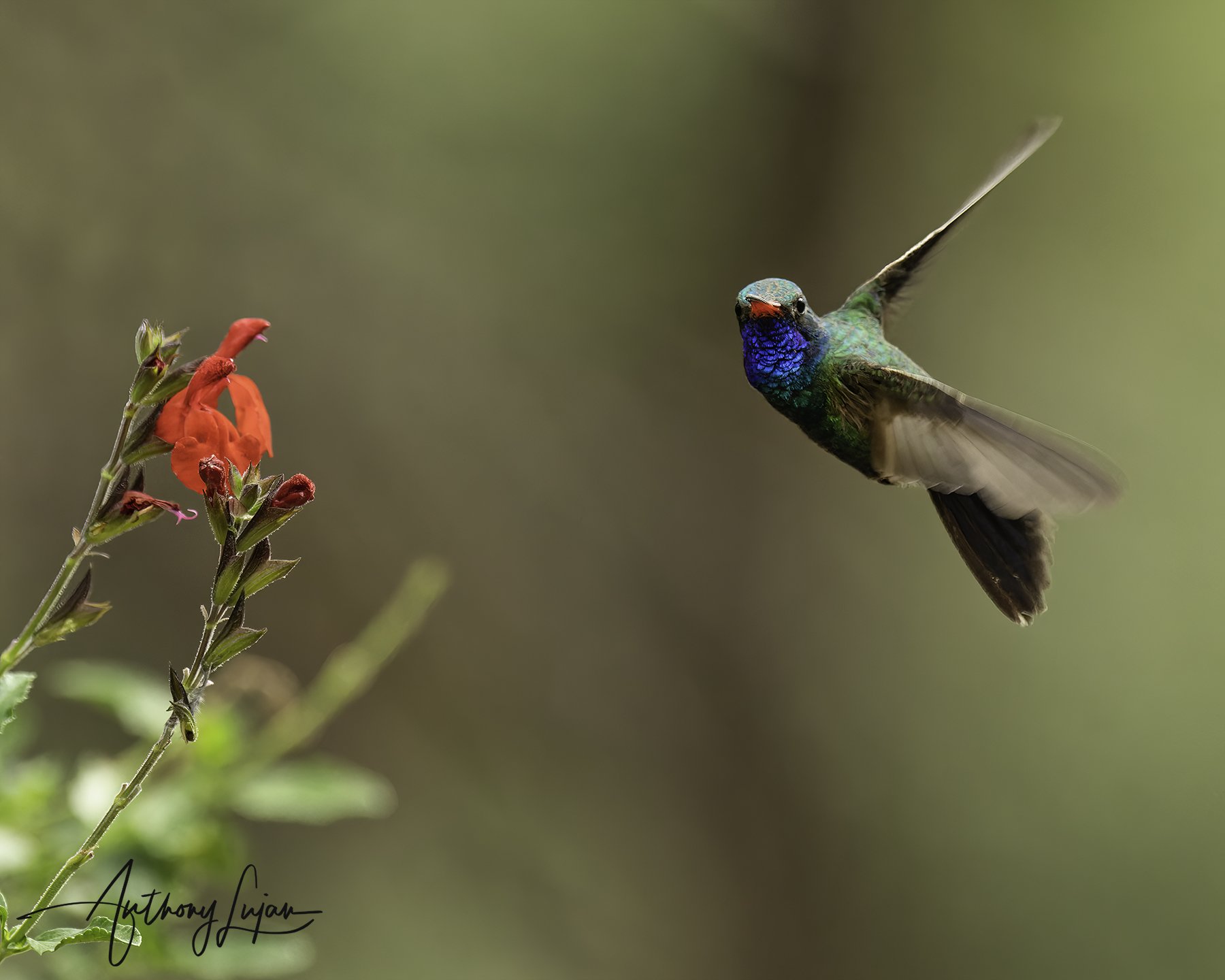
Adult males are small with a relatively broad‑based, straight bill that is bright red with a black tip. The head, throat, and upper breast are shimmering blue to blue‑green, contrasting with the bright green back and rump. The lower underparts are greenish with some grayish on the belly and undertail coverts. The tail is fairly long and slightly forked, dark blue to blue‑black with a velvety sheen. In the field, males appear as compact, intensely colored hummingbirds with a glowing blue‑green front, red bill, and dark forked tail.
Female Description
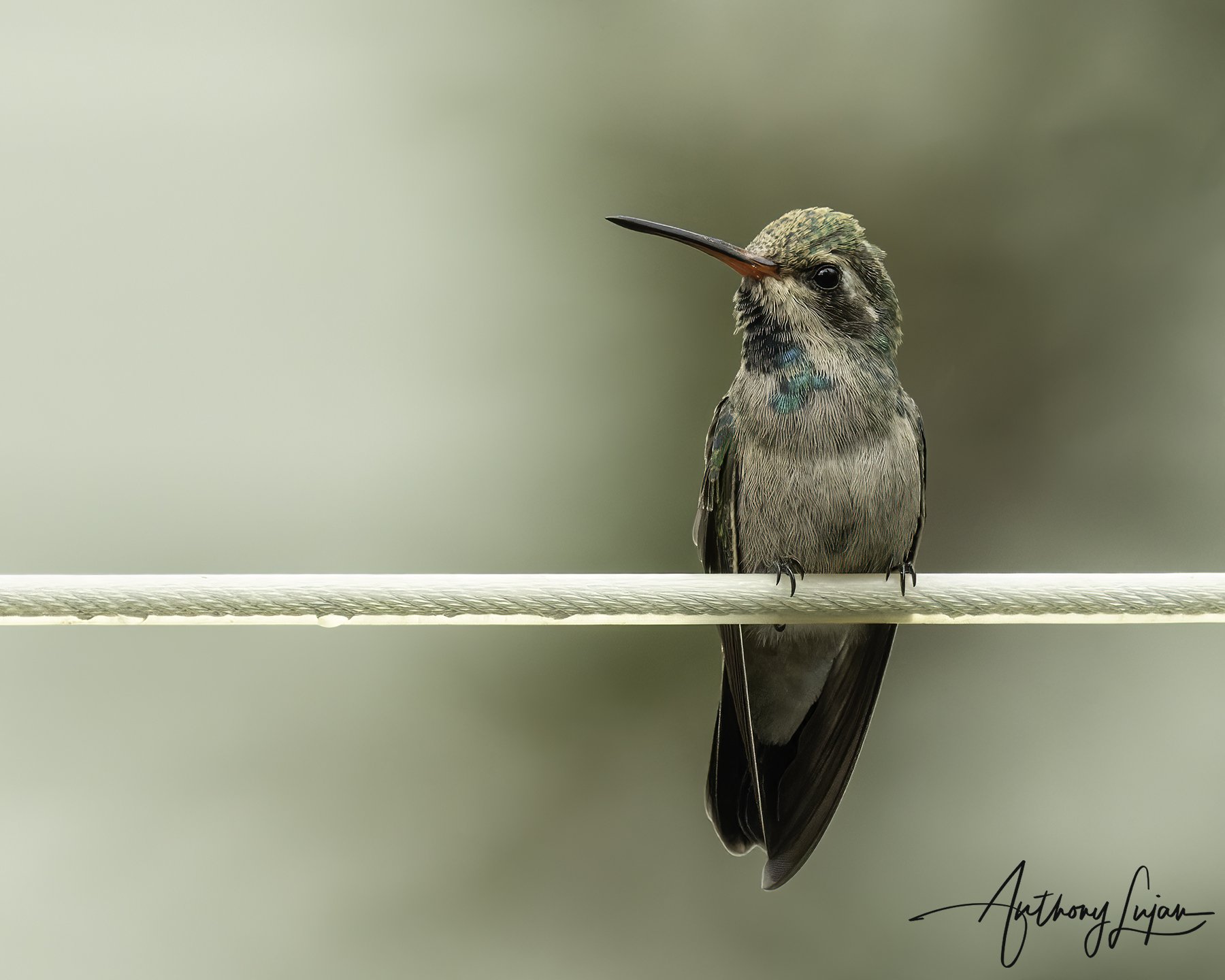
Adult females have a similar bill shape, typically red with a darker tip, though often duller than in males. The upperparts are bright green, while the underparts are pale gray to whitish with a slight greenish wash on the sides. The face shows a dark cheek with a pale line behind the eye. The tail is less strongly forked than in the male, dark with white or pale tips on the outer feathers that form noticeable white tail corners. Females thus appear as small green‑backed hummingbirds with pale grayish underparts, red‑based bill, and a dark tail with white corners.
Habitat & Behavior
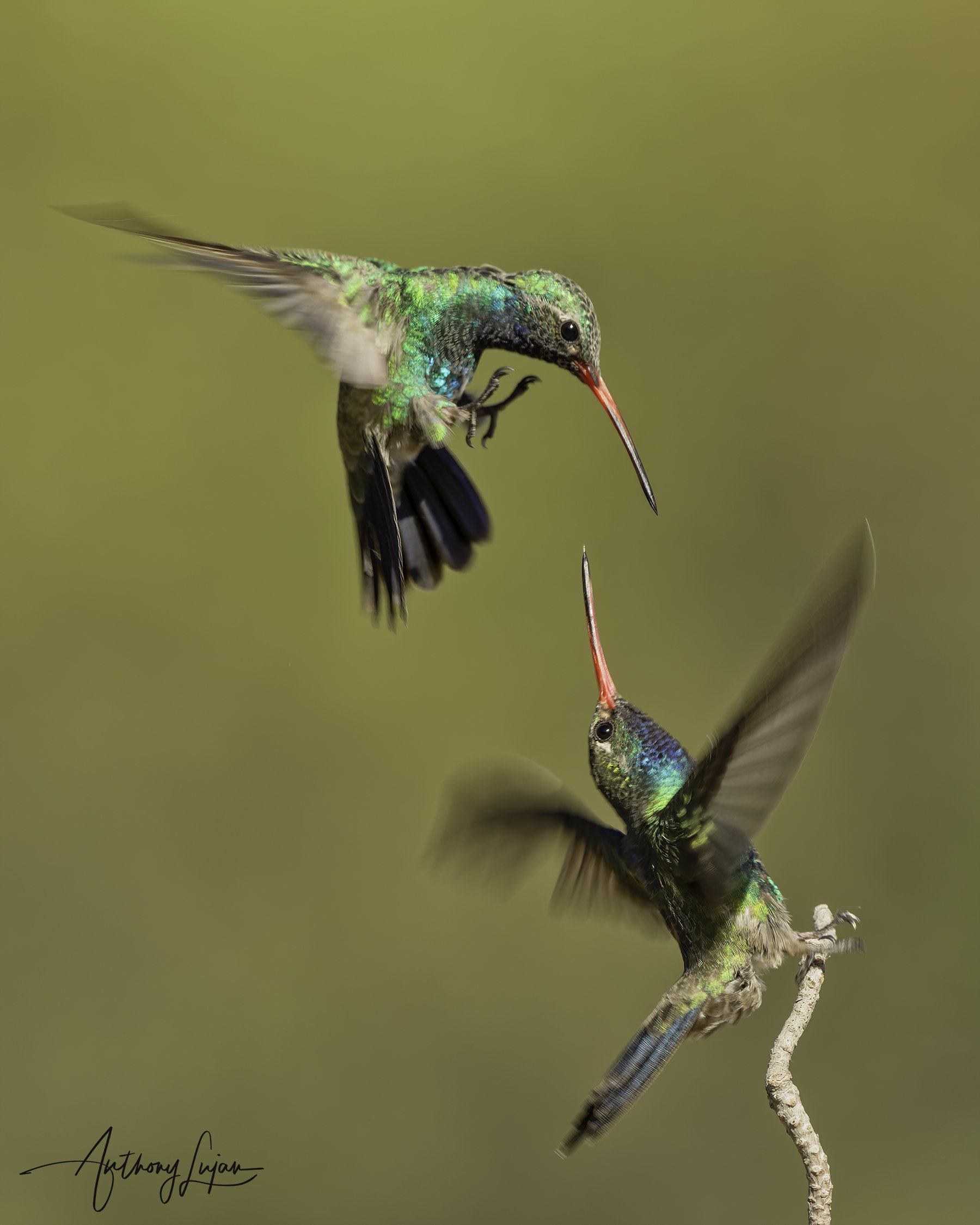
Broad‑billed Hummingbirds favor canyons, foothill streambeds, riparian thickets, and adjacent open woodlands, as well as desert scrub and chaparral with flowering shrubs and trees. In Arizona and New Mexico they are most often found along streams bordered by sycamore, cottonwood, willow, and dense mesquite or oak. They feed on nectar from a wide variety of flowers, including penstemons, agaves, ocotillo, salvias, and many ornamental plants, and they also take small insects captured in short sallies or gleaned from foliage. Males may hold and vigorously defend territories around rich nectar sources, while females defend smaller feeding areas near nest sites.
Movement
The species is largely resident across much of Mexico, but northern populations are migratory. Birds that breed in southern Arizona, southwestern New Mexico, and the northern Sierra Madre Occidental generally move south into Mexico for the winter, returning in spring as flowers and insect prey become abundant. Within Mexico, some populations make more modest seasonal shifts along elevation and moisture gradients, following flowering pulses. Considering this mix of resident and migratory behavior, treating the species as a full migrant on your site reflects the strong seasonal movements of the northern subspecies.
Population
The total number of mature individuals is unknown, but the Broad‑billed Hummingbird is common in many parts of its Mexican range and locally common in suitable riparian and canyon habitats in the southwestern U.S. Its stable population trend reflects its broad distribution and ability to use a variety of natural and human‑modified habitats, including gardens and orchards with flowering plants and feeders. Local populations can fluctuate with drought, riparian degradation, and changes in land use, but there is no evidence of rapid overall decline.

Conservation
The Broad‑billed Hummingbird is listed as Least Concern because of its wide range and stable global population. Key conservation needs include protecting and restoring riparian habitats in arid and semi‑arid regions, maintaining streamside groves of native trees, and preserving flowering shrub and tree diversity in both natural and agricultural landscapes. In the U.S. particularly, safeguarding canyon and stream habitats with sycamore, cottonwood, willow, and mesquite is crucial for sustaining breeding populations.
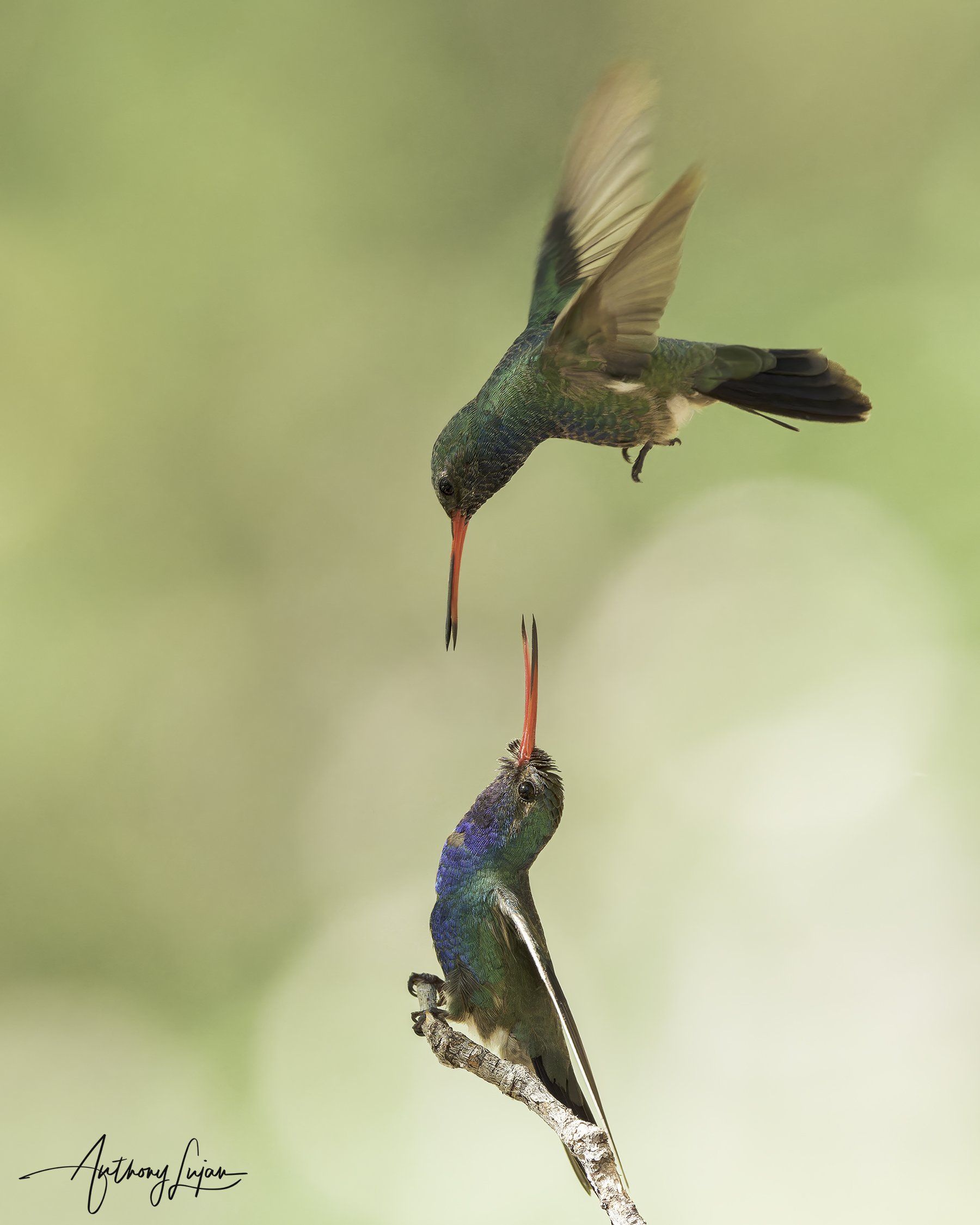
Below is the Broad-billed Hummingbird (Cynanthus latirostris magicus)
Photographed at Ramsey Canyon Inn, Cochise County, Arizona, United States
This individual belongs to the subspecies magicus, which occurs in the “Sky Island” ranges of southeastern Arizona, southwestern New Mexico, and northwestern Mexico. It inhabits riparian canyons, desert scrub, and pine-oak foothills, most common between 1,000 and 2,000 meters.
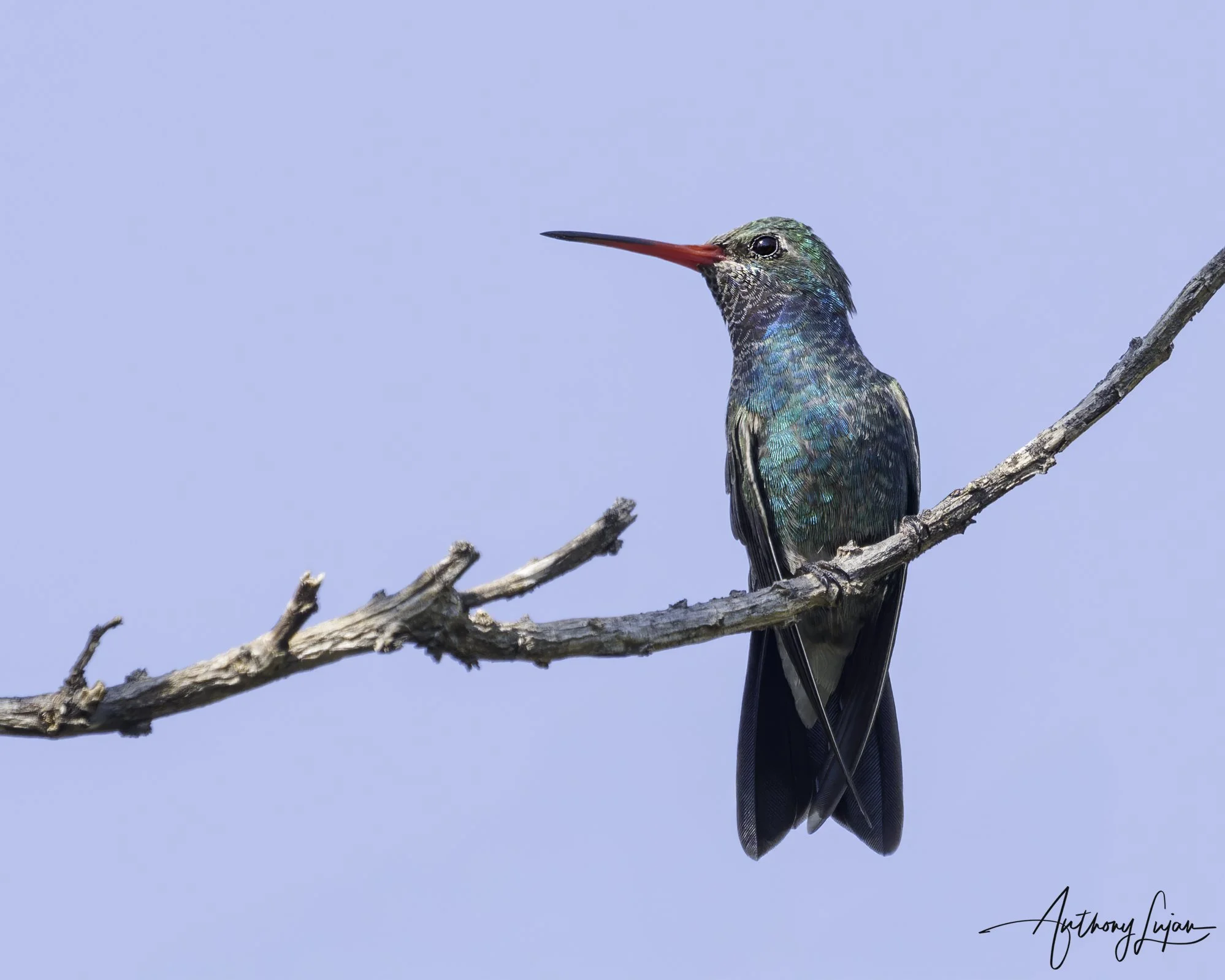
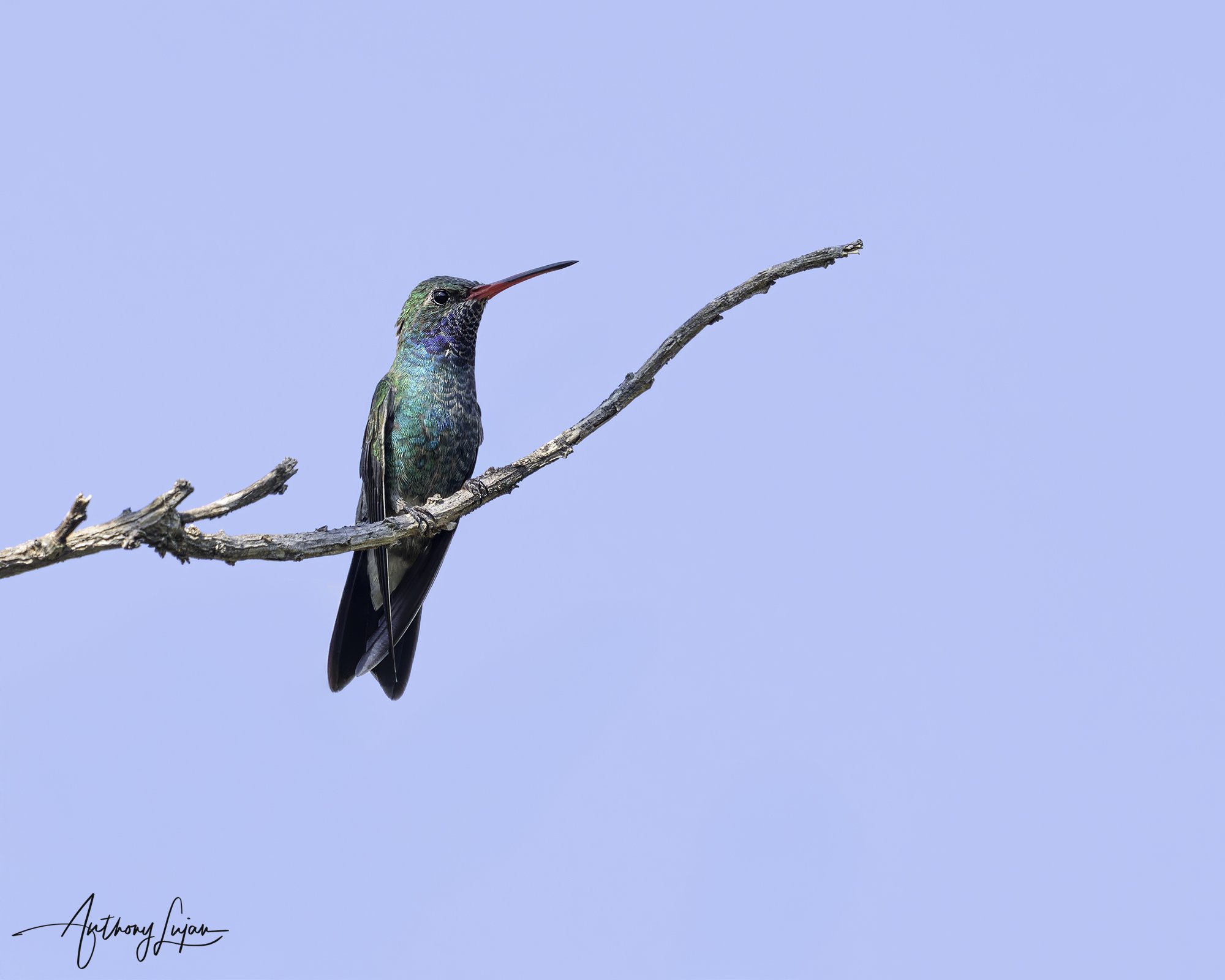
Below is the Broad-billed Hummingbird (Cynanthus latirostris latirostris)
Photographed at Camino San Juan – Coajomulco, Huitzilac, Morelos, Mexico
This individual belongs to the nominate subspecies latirostris, which occurs throughout central and southern Mexico from Jalisco and Morelos to Oaxaca and Guerrero. It inhabits montane woodland, scrub, and gardens between 1,000 and 2,500 meters.
This form is slightly larger and more vibrant than the northern magicus. Males have an intense sapphire-blue throat and chest, bright green upperparts, and a vivid red bill with a black tip. Females are paler but share the same slender build and active flight style.
Related species in the Cynanthus genus (6 species total):


Please note: The content provided in this article reflects Anthony’s personal experience and photographic approach. Results can vary depending on light, weather, location, equipment, subject behavior, and field conditions.