

Scientific name: Heliodoxa rubricauda
The Brazilian Ruby is a medium-sized hummingbird endemic to eastern and southeastern Brazil, where it frequents Atlantic Forest, scrub, parks, gardens, and banana plantations. The number of mature individuals is unknown, its population trend is Decreasing, it is assessed as Least Concern, and it is considered Not a Migrant (aside from local movements).
At a Glance
Family: Trochilidae (hummingbirds)
Clade: Heliantheini – Brilliants
Genus: Heliodoxa — robust brilliants with long tails and glittering throats
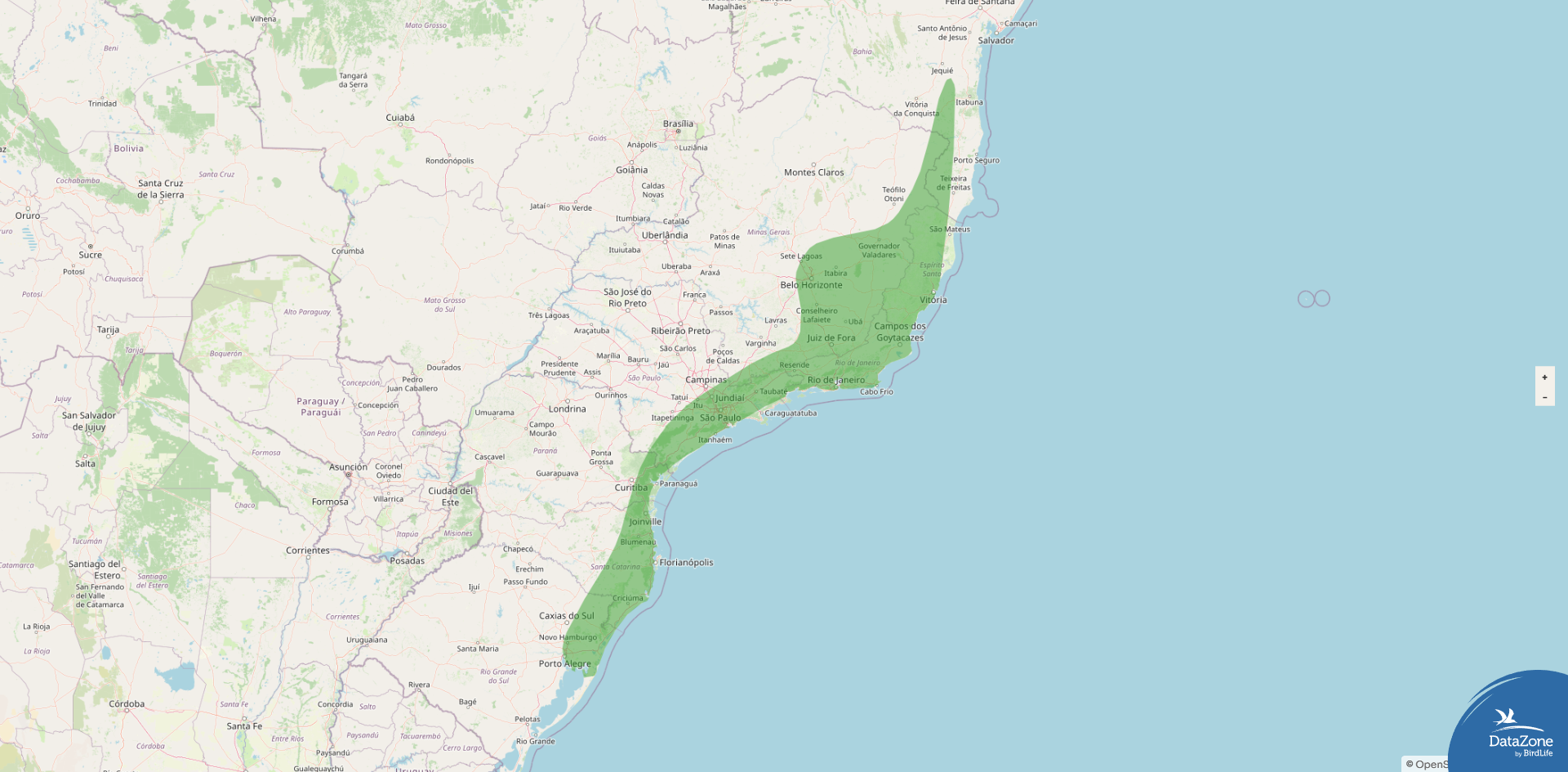
Range: Eastern and southeastern Brazil from Bahia south to Rio Grande do Sul
Habitat: Interior of forest, forest edge, scrublands, second growth, parks, gardens, and banana plantations; frequently seen at feeders
Elevation: Most numerous below 500 m, ranging up to about 1,500 m
Length: About 10.8–11.3 cm (4.3–4.4 in)
Weight: Males about 7–9.2 g; females about 5.9–7.1 g
Number of mature individuals: Unknown
Population trend: Decreasing
Status: Least Concern (IUCN)
Name Origin
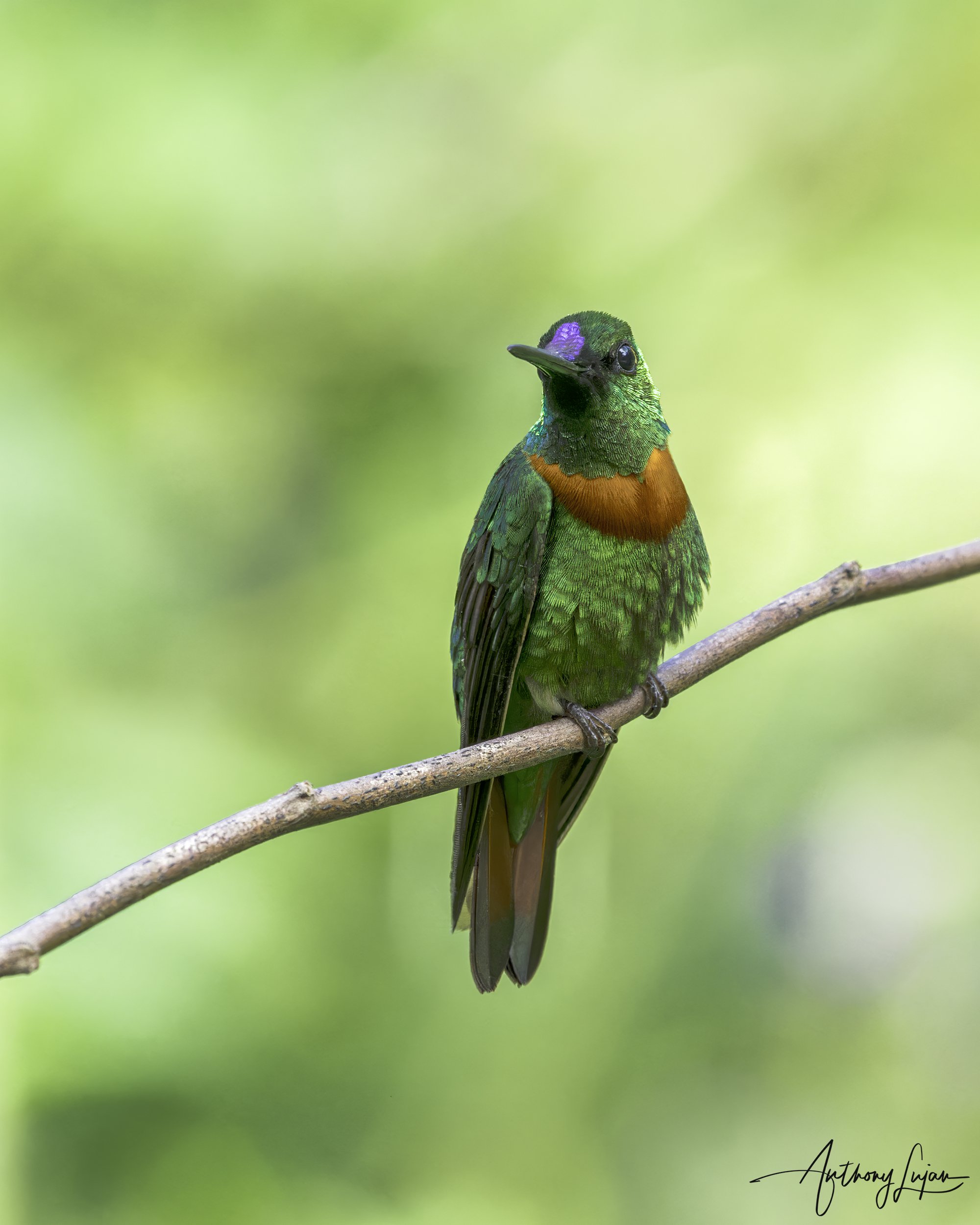
The genus name Heliodoxa combines elements meaning “sun” and “glory,” referring to the bright, shining gorgets typical of brilliants. The species name rubricauda means “red tail,” describing this hummingbird’s distinctive coppery-rufous tail. The English name “Brazilian Ruby” highlights both its endemic status in Brazil and the male’s sparkling ruby-colored throat.
Subspecies & Distribution
Brazilian Ruby is monotypic, with no recognized subspecies.
It is endemic to eastern and southeastern Brazil, occurring from Bahia south through Espírito Santo, Rio de Janeiro, São Paulo, Paraná, Santa Catarina, and into Rio Grande do Sul. Within this range it inhabits Atlantic Forest and associated habitats, including forest interior and edges, scrublands, second growth, parks, gardens, and banana plantations, and it is a regular visitor to hummingbird feeders.
Ledged
Green Resident
Species Overview
The Brazilian Ruby is one of the most familiar hummingbirds of Brazil’s Atlantic Forest region, often seen in gardens and at feeders as well as in natural forest and scrub. It thrives in a variety of semi-open and human-modified habitats, including parks and plantations, which helps support its current Least Concern status. However, ongoing loss and fragmentation of Atlantic Forest and surrounding landscapes contribute to a Decreasing population trend within its endemic range.
Male Description
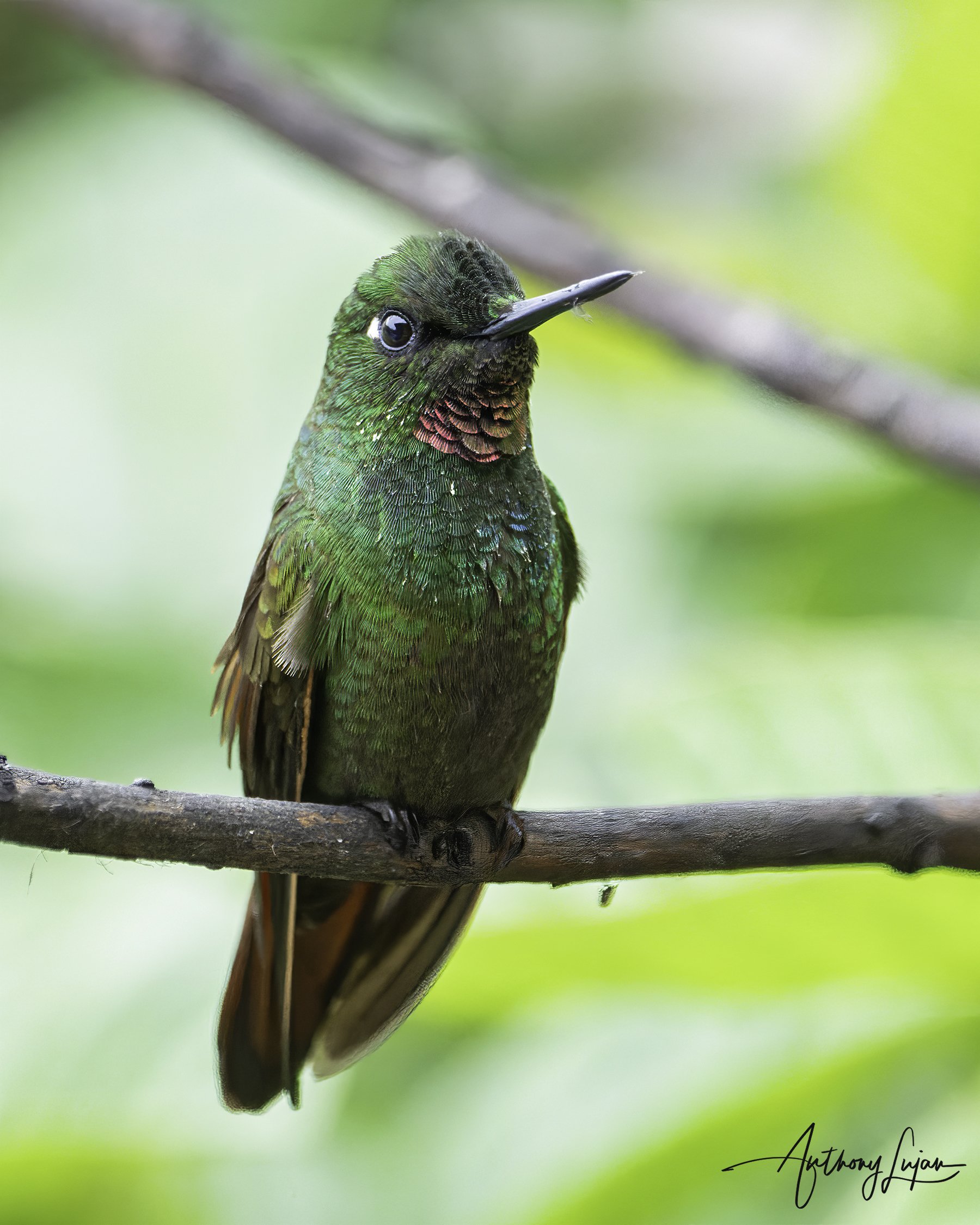
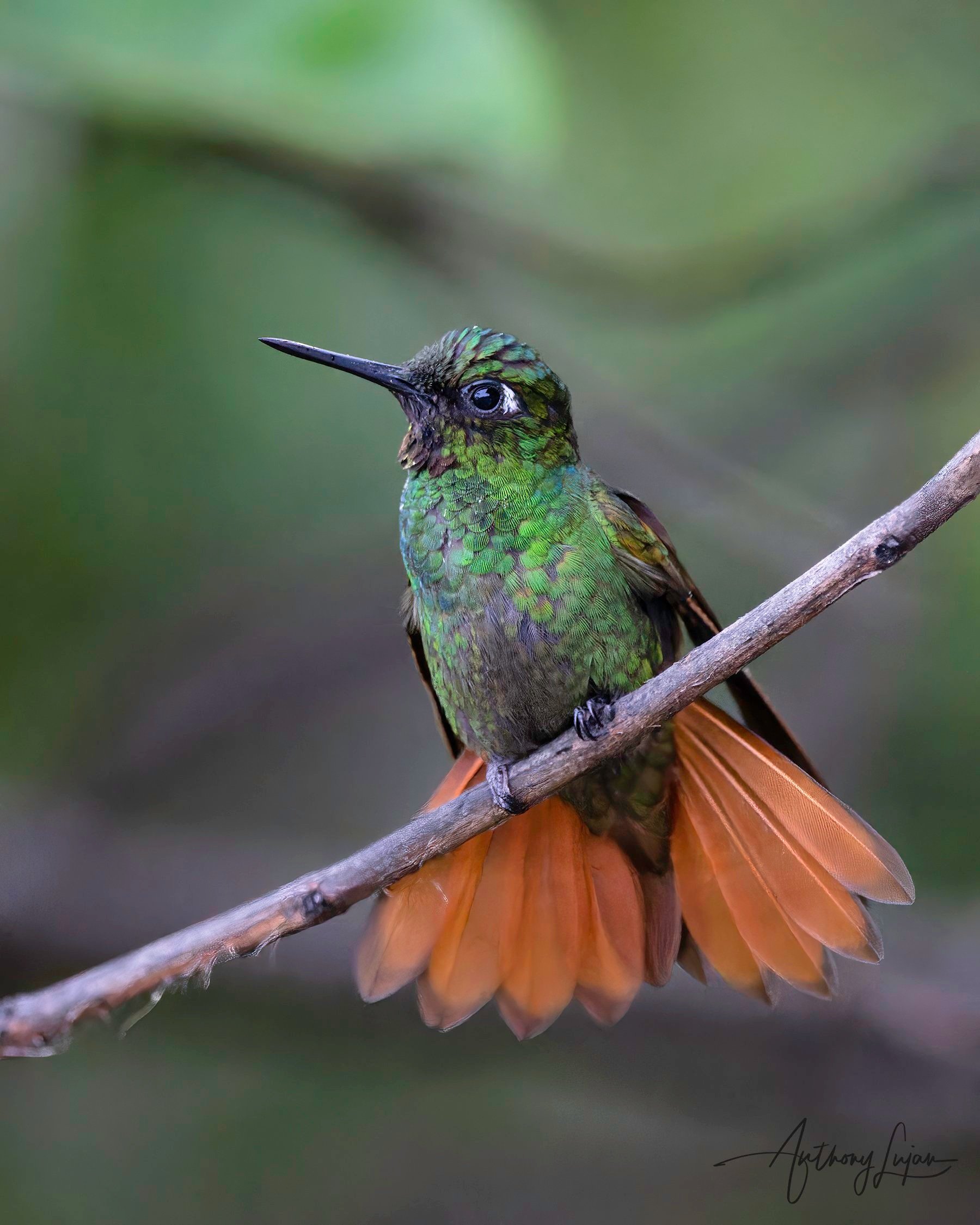
Adult males are mostly green, with a bright, highly iridescent ruby throat that can appear deep red or even black depending on the light and angle. The back and rump are a rich coppery green, and the tail is coppery-rufous, matching the meaning of rubricauda. Both sexes have a white spot behind the eye and a straight black bill, but in males the combination of shimmering ruby gorget, coppery back, and rufous tail makes them especially striking. In good light, the throat flashes brilliantly as the bird turns, creating the “ruby” effect for which it is named.
Female Description
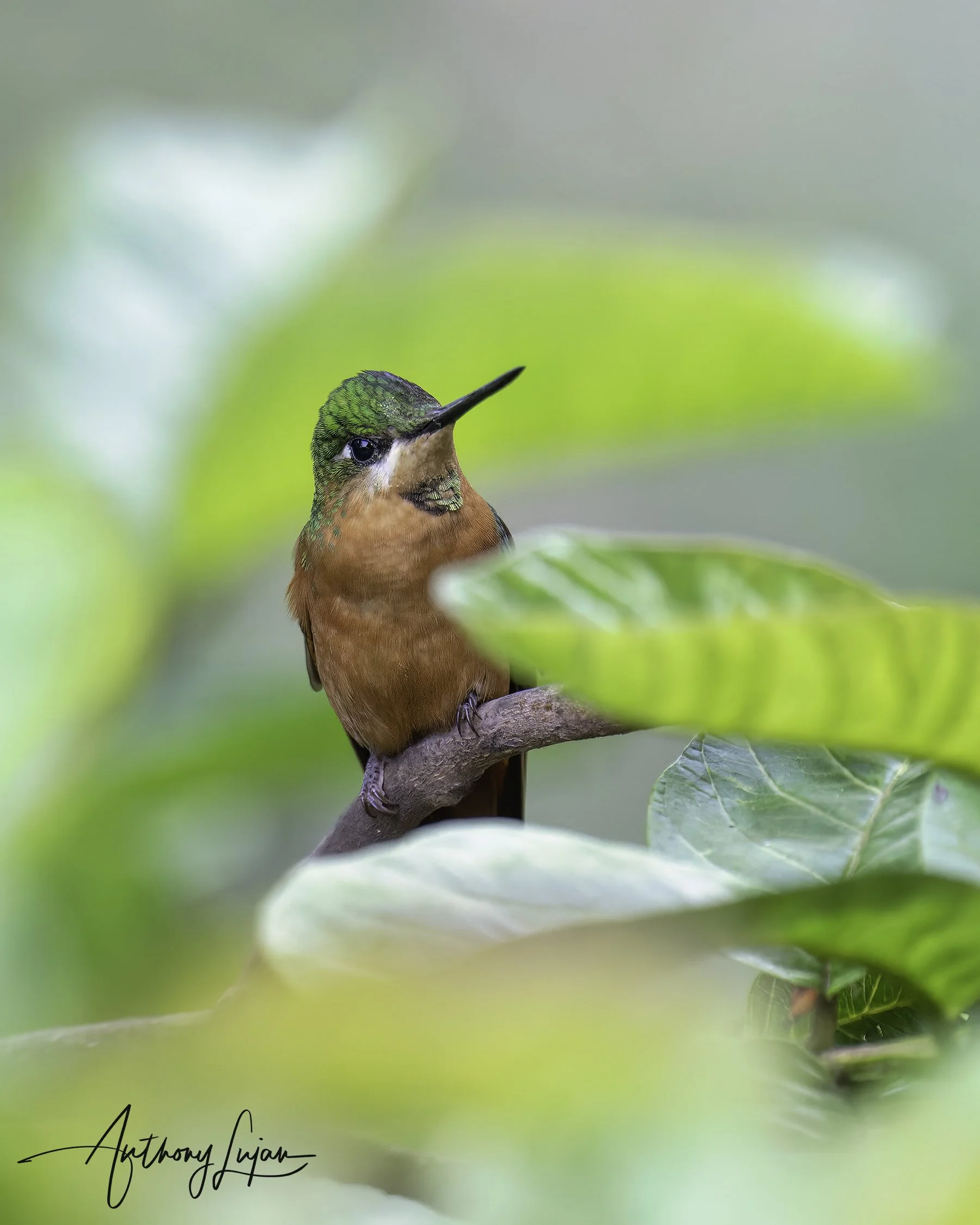
Females are green above and cinnamon to buffy below, lacking the male’s intense ruby throat. They share the white post-ocular spot and straight black bill, and their tail is also coppery-rufous, though the overall contrast is softer. The underparts may show subtle spotting or shading, but the main impression is of a neat green-backed hummingbird with warm, cinnamon underparts and a rufous tail. Young birds resemble females until the male’s colorful throat and stronger contrasts develop.
Habitat & Behavior
Brazilian Rubies inhabit the interior and edges of Atlantic Forest, scrublands, second growth, parks, gardens, and banana plantations across eastern and southeastern Brazil. They adapt well to human-modified environments and are frequently seen at hummingbird feeders, as well as foraging at ornamental flowering plants in gardens and town parks. Their diet consists mainly of nectar from a wide variety of flowers, including both native plants and garden species, supplemented with small insects caught in flight or gleaned from foliage.
The species is considered Not a Migrant, but individuals may move locally in response to flowering patterns and seasonal changes, shifting among forest patches, gardens, and plantations where nectar and feeders are available. Males often defend rich nectar sources, chasing other hummingbirds from favored feeders or flowering shrubs.
Population
The total number of mature individuals is unknown, but the Brazilian Ruby is locally common in suitable habitats within its Atlantic Forest range and is one of the species most frequently seen at feeders in parts of southeastern Brazil. Despite this apparent local abundance, the overall population trend is Decreasing, primarily due to ongoing deforestation, fragmentation, and habitat alteration in the Atlantic Forest biome and surrounding landscapes. Its tolerance of secondary growth and gardens offers some resilience, but large-scale habitat loss remains a concern.

Conservation
Brazilian Ruby is listed as Least Concern because it remains widespread within its endemic Brazilian range and is common in many human-modified habitats, including parks and gardens. However, continued loss and fragmentation of Atlantic Forest, conversion of forest to agriculture and urban areas, and degradation of remaining woodlands all contribute to its decreasing trend. Conservation measures that protect and restore Atlantic Forest, maintain flower-rich gardens and forest edges, and promote wildlife-friendly land management will help support this species. Monitoring populations and habitat changes will be important to ensure that this emblematic Brazilian hummingbird remains secure.
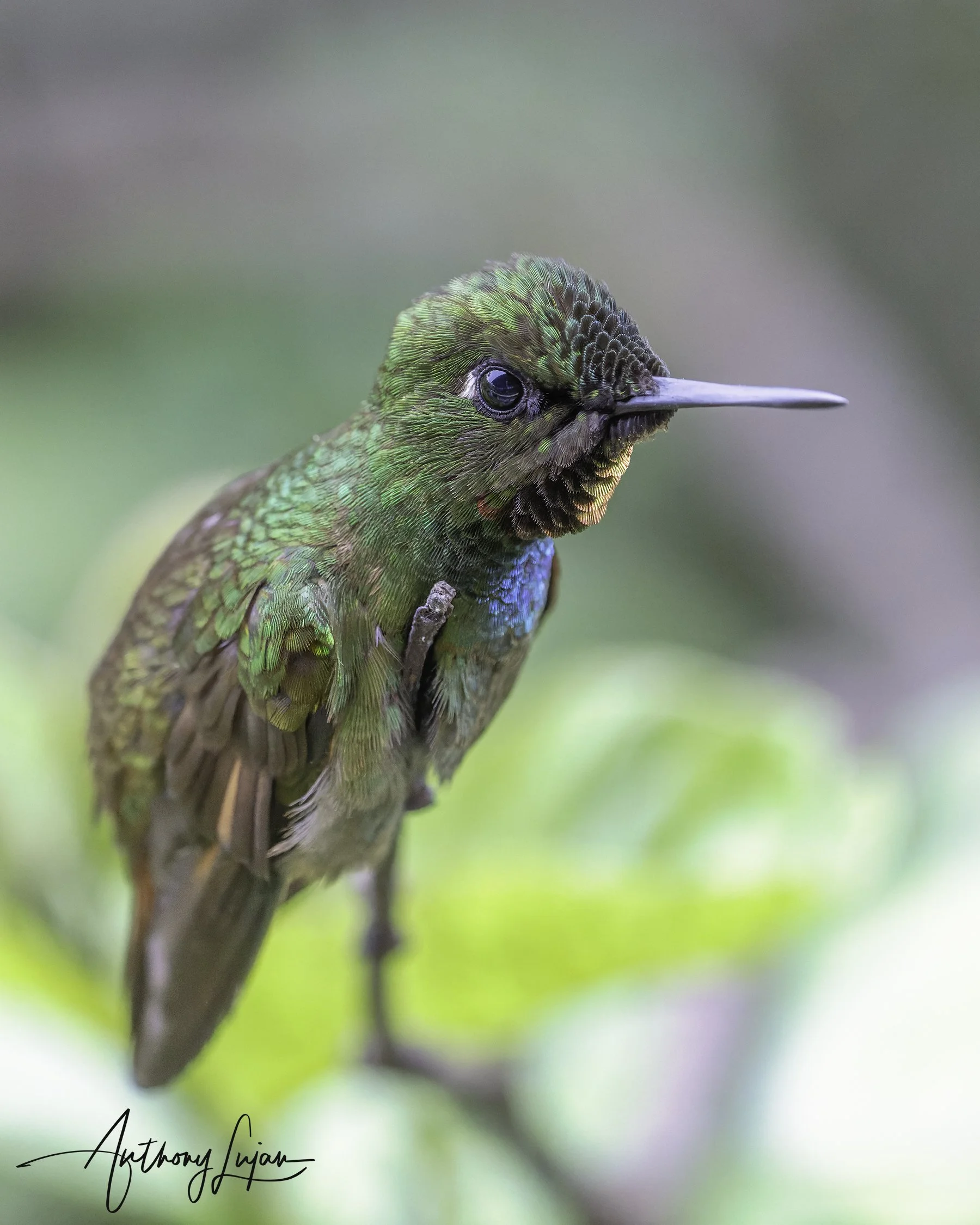
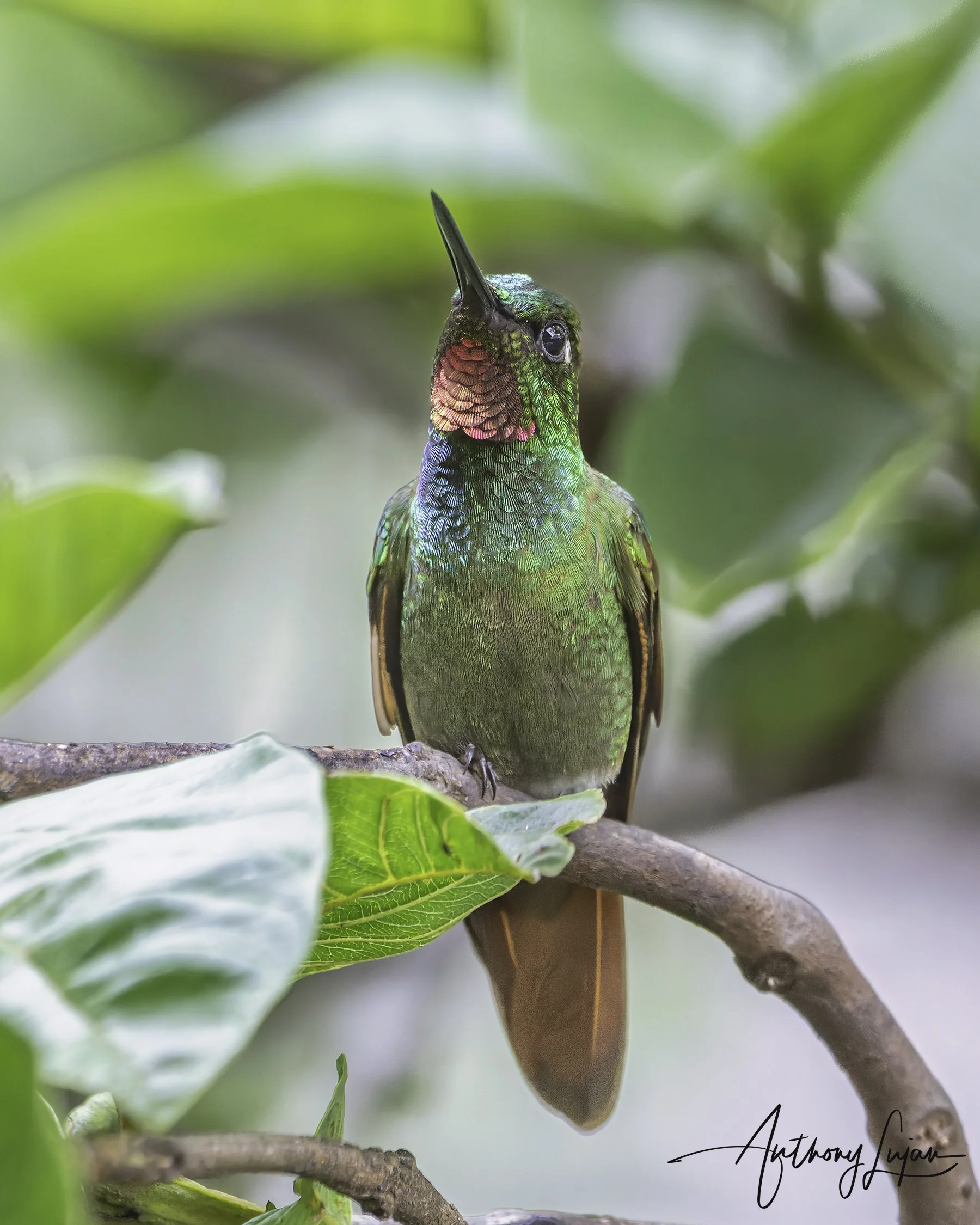
Checkout Anthony’s playlist of this species! Click the top right dropdown to see all the videos.
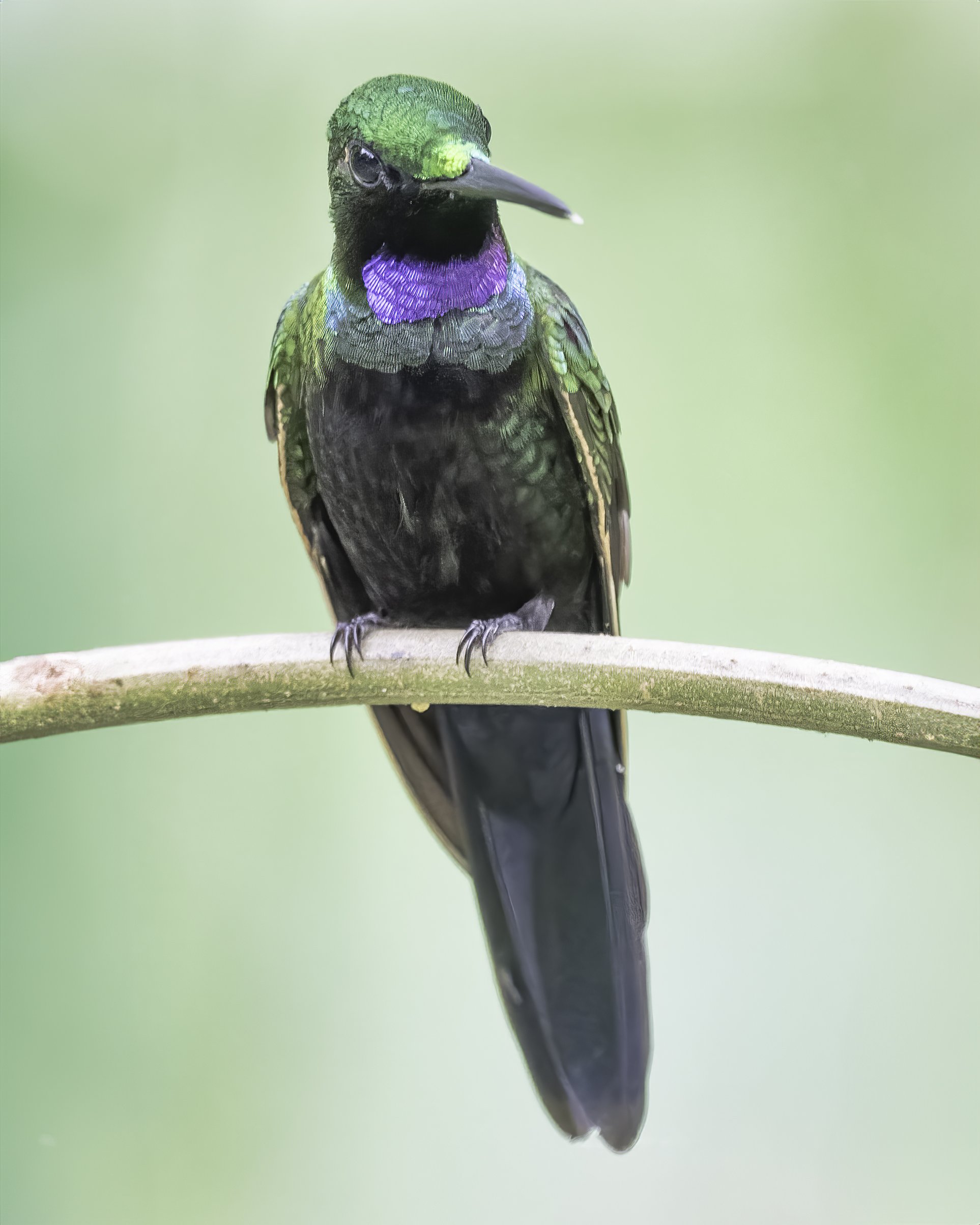
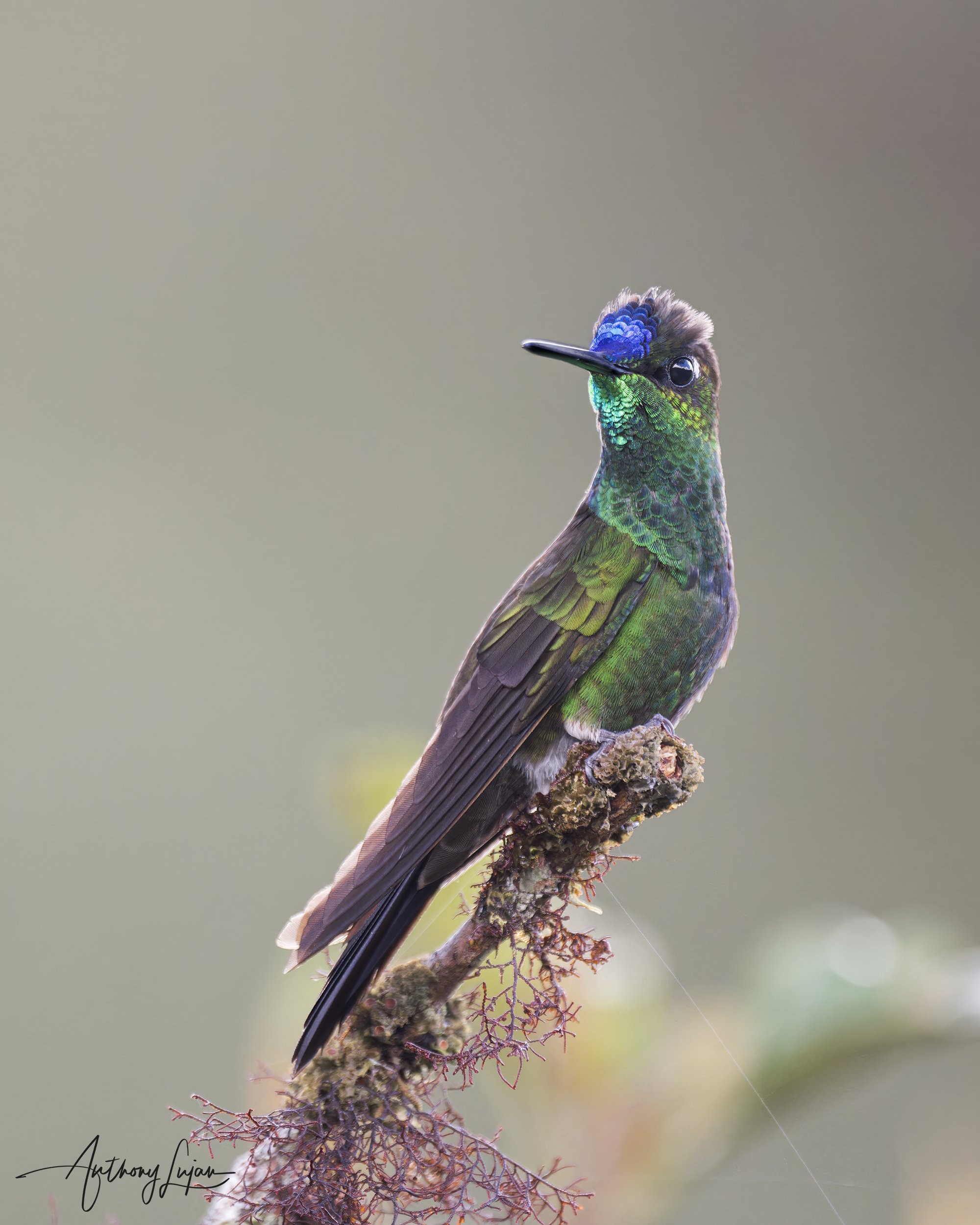
Related species in the Heliodoxa genus (10 species total):


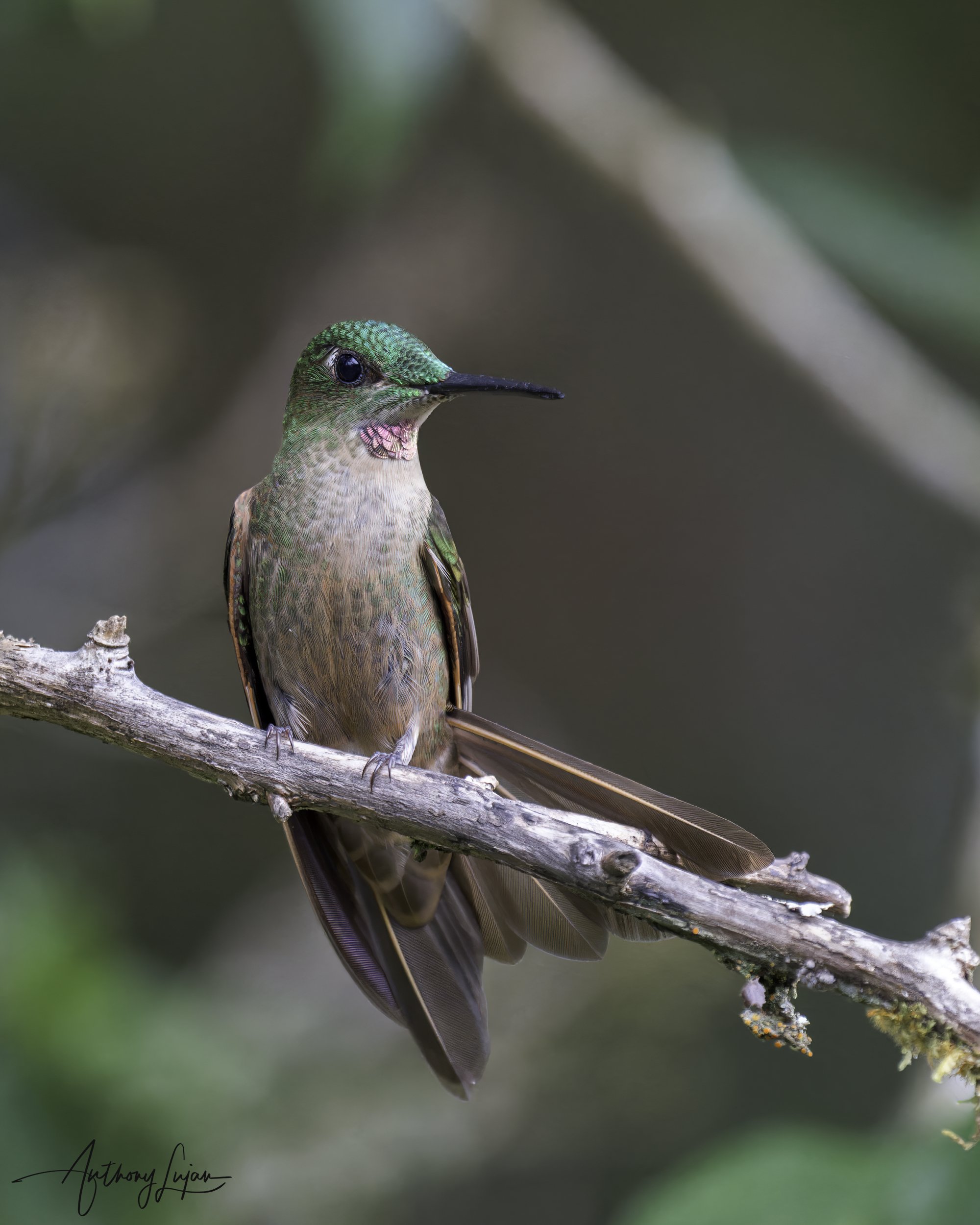

Please note: The content provided in this article reflects Anthony’s personal experience and photographic approach. Results can vary depending on light, weather, location, equipment, subject behavior, and field conditions.