

Scientific name: Coeligena lutetiae
The Buff-winged Starfrontlet is a medium-sized Andean hummingbird of high-elevation cloud and elfin forests from Colombia south through Ecuador into northern Peru. The number of mature individuals is unknown, the overall population is believed to be decreasing, and it is listed as Least Concern, with two recognized subspecies and no true long-distance migration, though it may move locally to track flowering.
At a Glance·
Family: Trochilidae (hummingbirds)
Clade: Heliantheini – Brilliants
Genus group: Coeligena — 15 species, 28 subspecies
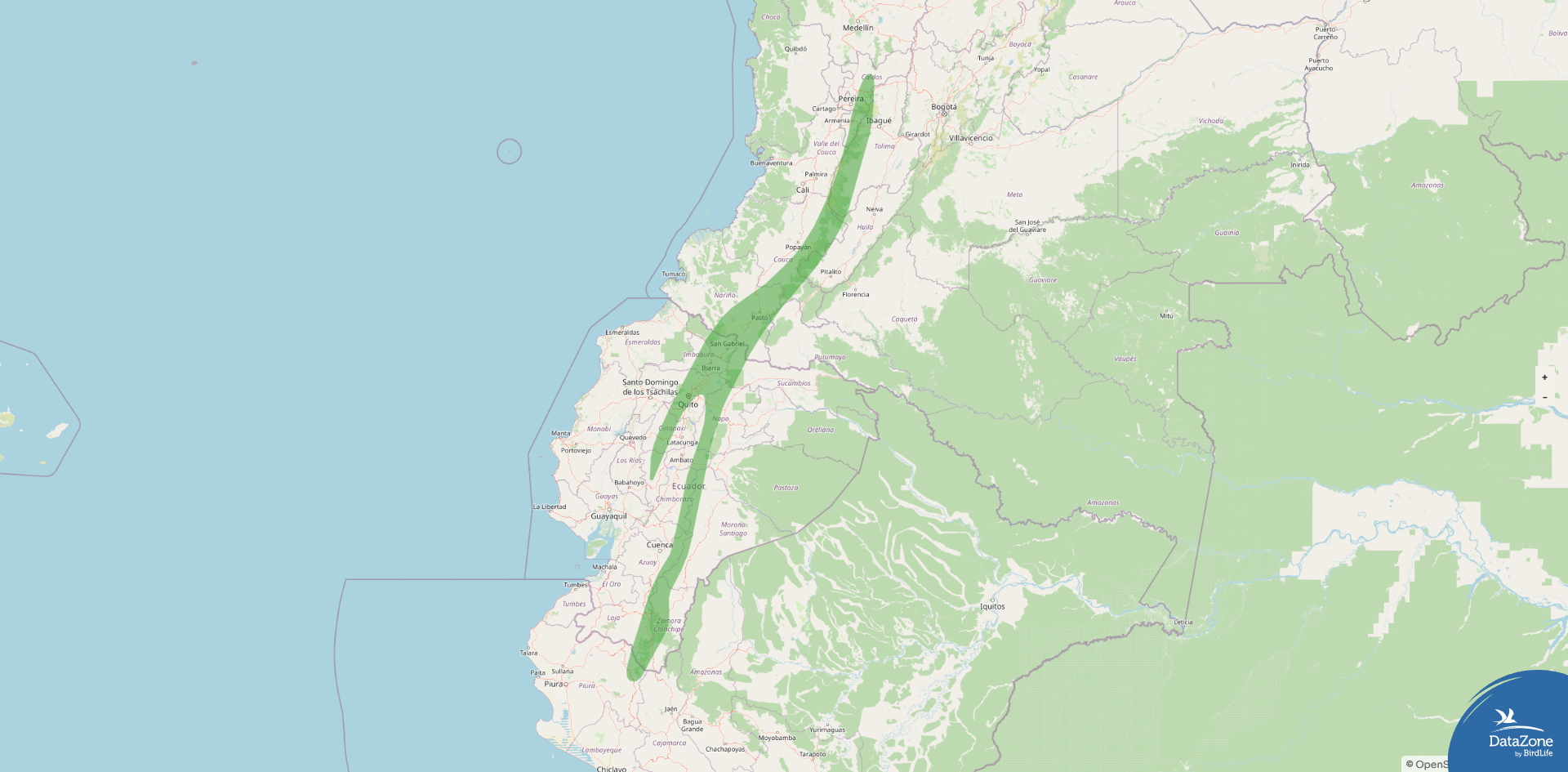
Range: Central Andes of Colombia south through the Andes of Ecuador into far northern Peru, with one subspecies confined to northwestern Ecuador.
Habitat: Cloud forest, elfin forest, and lower edges of páramo, also at forest margins and shrubby slopes with abundant flowering plants.
Elevation: Mainly from about 2,600–4,800 m, most common around 3,000 m.
Length: About 14 cm (5.5 in).
Weight: Males roughly 6.9–7.2 g; females about 6.6 g.
Number of mature individuals: Unknown
Population trend: Decreasing
Status: Least Concern (IUCN)
Name Origin
The genus name Coeligena means “born of heaven” or “sky-born,” a reference to the high Andean habitats and brilliant plumage typical of incas and starfrontlets. The species name lutetiae refers to Lutetia, the Latin name for Paris, likely honoring a connection to the city in the bird’s taxonomic history or to a person associated with it. The English name “Buff-winged Starfrontlet” highlights the distinctive pale buff or whitish patches on the wings and its placement among the starfrontlets.
Subspecies & Distribution
Two subspecies are recognized:
Coeligena lutetiae lutetiae
Occurs from the Central Andes of Colombia south through the Andes of Ecuador into far northern Peru. It inhabits cloud forest, elfin forest, and lower páramo edges at high elevations along this Andean corridor.Coeligena lutetiae albimaculata
Restricted to northwestern Ecuador. It is similar to the nominate but with almost white wing patches in males and paler, less iridescent underparts in females.
Overall, the Buff-winged Starfrontlet is confined to humid, high-elevation Andean habitats from Colombia through Ecuador into northern Peru, with subspecies separated mainly by geography within this montane band.
Ledged
Green Resident
Species Overview
The Buff-winged Starfrontlet is a high-Andean specialist of cloud and elfin forests and the lower páramo ecotone, where it forages in shrubby edges and forest margins rich in flowering plants. It is generally uncommon to fairly common within patches of suitable habitat but its overall distribution follows the fragmented belt of high-elevation forest and shrubland. Although currently listed as Least Concern, its habitat is patchy and under pressure from deforestation and land-use change, and its population is thought to be declining.
Male Description
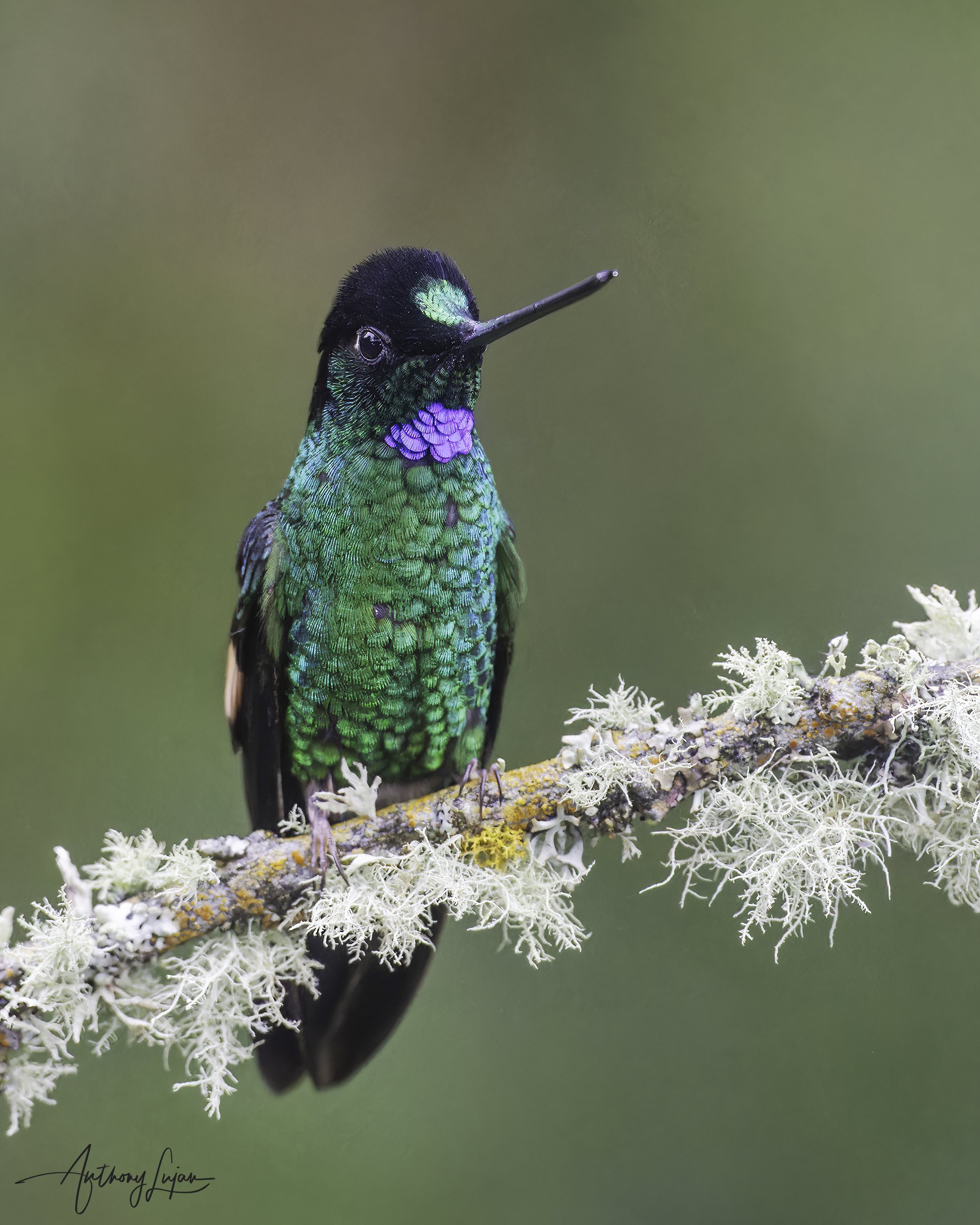
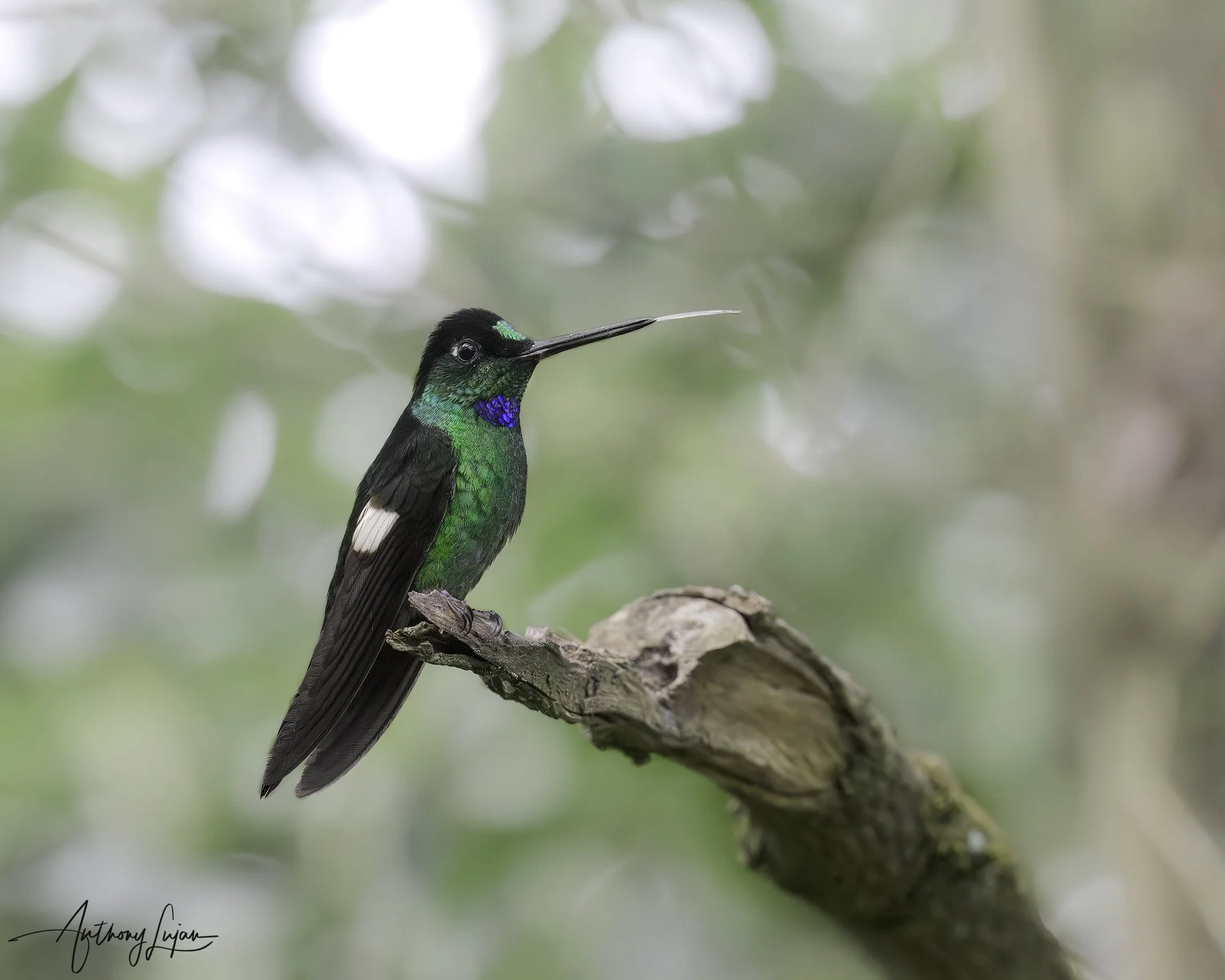
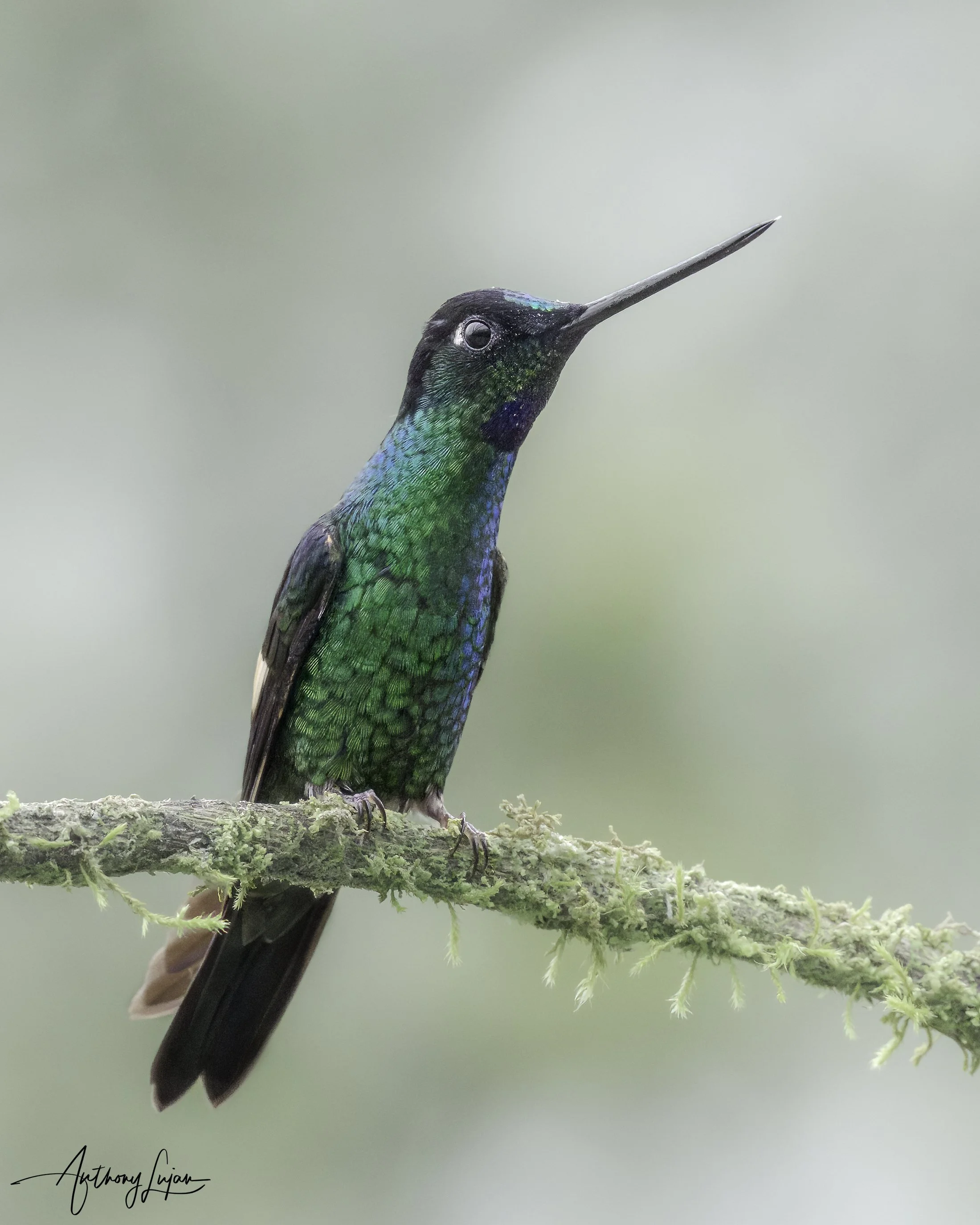
Adult males are medium-sized starfrontlets with a long, black, slightly upturned bill and a small white spot behind the eye. In the nominate subspecies, the upperparts are velvety black with a glittering green forehead, and the throat bears a violet or violet-blue gorget that contrasts with dark green underparts. The wings are dark with a large cinnamon-buff patch that shows conspicuously in flight, and the tail is bronzy black and forked. Males of subspecies albimaculata are similar but have almost white wing patches instead of cinnamon-buff.
Female Description
Nominate females have shining dark green upperparts and a cinnamon-buff throat, with the rest of the underparts golden green with pale feather fringes, giving a scaled appearance. They share the same buff wing patch as the males, though the tail is bronzy green rather than bronzy black. Females of subspecies albimaculata have paler throats and less iridescent golden-green underparts with a cinnamon tinge, and their wing patches are also paler, approaching whitish. Both sexes have forked tails, with the female’s tail less deeply indented than the male’s.
Habitat & Behavior
Buff-winged Starfrontlets inhabit high-elevation cloud forest, elfin forest, and the lower edges of páramo, especially at forest margins and shrubby slopes where flowering shrubs and small trees are abundant. They feed primarily on nectar by trap-lining, visiting a circuit of flowering plants, but will also defend rich flower patches and often forage at low levels along forest edges. They frequently cling to flowers to feed as well as hover. In addition to nectar, they capture small arthropods by gleaning from foliage and by aerial hawking. The species is generally considered sedentary, but it likely makes local movements to follow flowering peaks within its elevational range.
Population
The total number of mature Buff-winged Starfrontlets is unknown, but the species is described as uncommon to fairly common in suitable high-elevation habitats within parts of its range. Its distribution follows a band of cloud and elfin forest that is naturally patchy and has been further fragmented by deforestation and land-use change. Ongoing habitat loss and degradation across the high Andes are believed to be causing a gradual decline in its overall population, even though it still qualifies as Least Concern.

Conservation
Buff-winged Starfrontlet is assessed as Least Concern due to its relatively wide Andean distribution from Colombia to northern Peru, but its population is thought to be decreasing. Its high-elevation habitats—cloud forest, elfin forest, and lower páramo—are patchy, fragmented, and under continued threat from deforestation, agriculture, pasture expansion, and infrastructure development. Because the species is not strongly tolerant of heavily altered habitats, loss of natural montane forest and shrubland directly reduces its available range. Conservation measures should prioritize protection and restoration of high-elevation forests and ecotones, maintenance of forest edges with native flowering plants, and monitoring of population trends in Colombia, Ecuador, and Peru.
Below is the Buff-winged Starfrontlet (Coeligena lutetiae lutetiae)
Photographed at Hacienda El Bosque and Hotel Termales del Ruíz, Caldas, Colombia
These individuals belong to the nominate subspecies lutetiae, which occurs throughout the Central Andes of Colombia south into northern Ecuador. It inhabits humid montane forest, páramo edge, and shrubby high-elevation slopes typically between 2,500 and 3,800 meters.
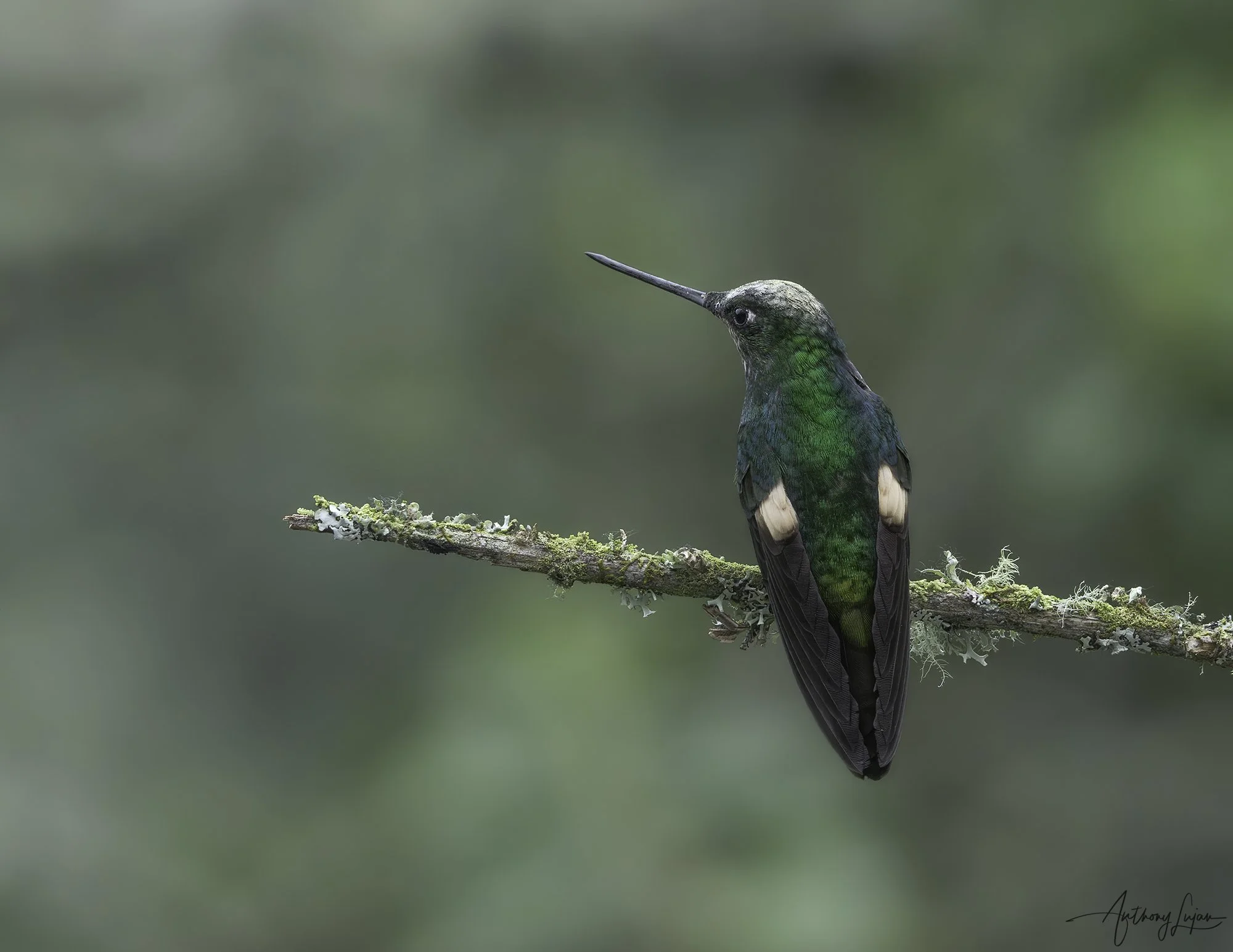
Checkout Anthony’s playlist of this species! Click the top right dropdown to see all the videos.
Related species in the Coeligena genus (15 species total):

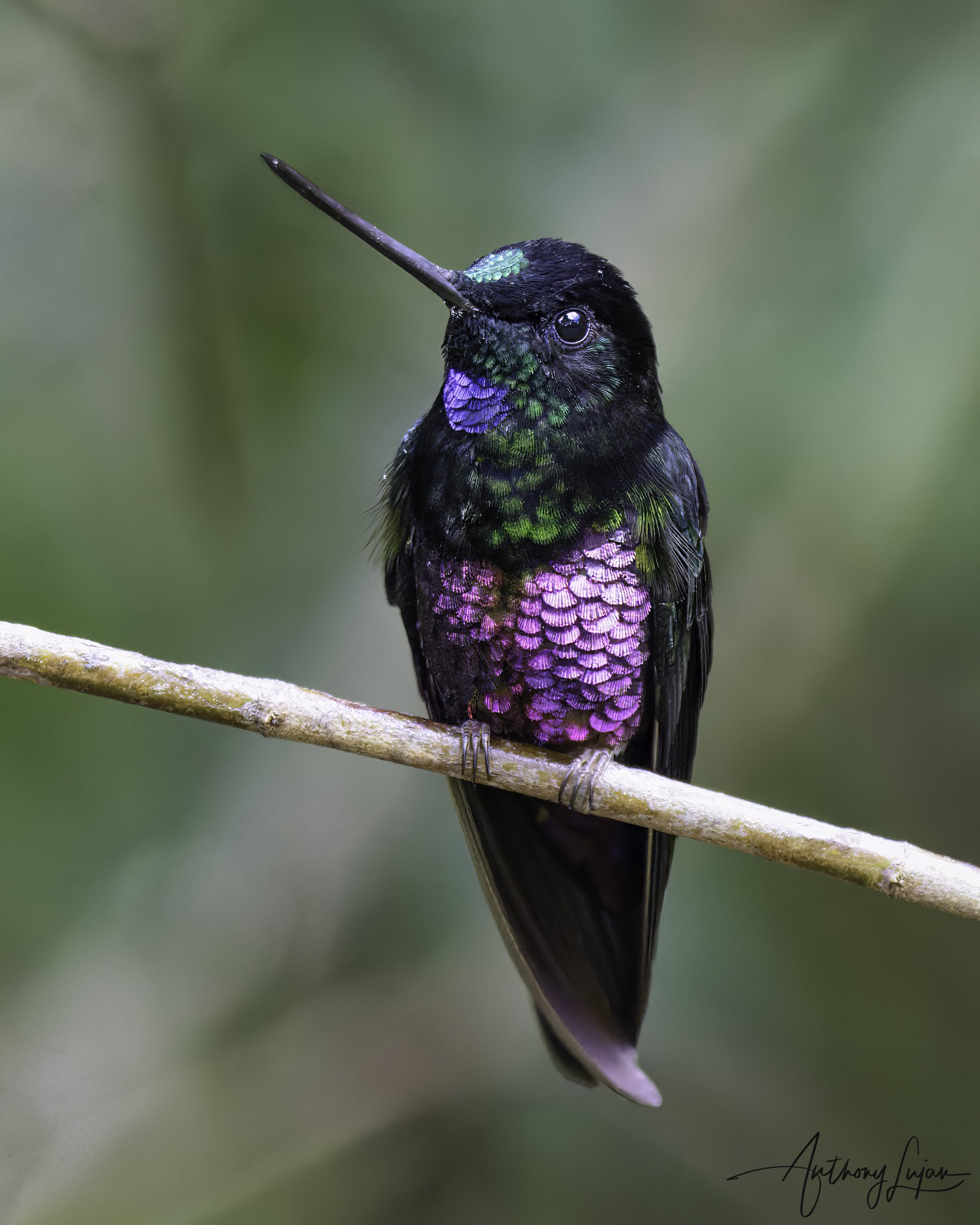
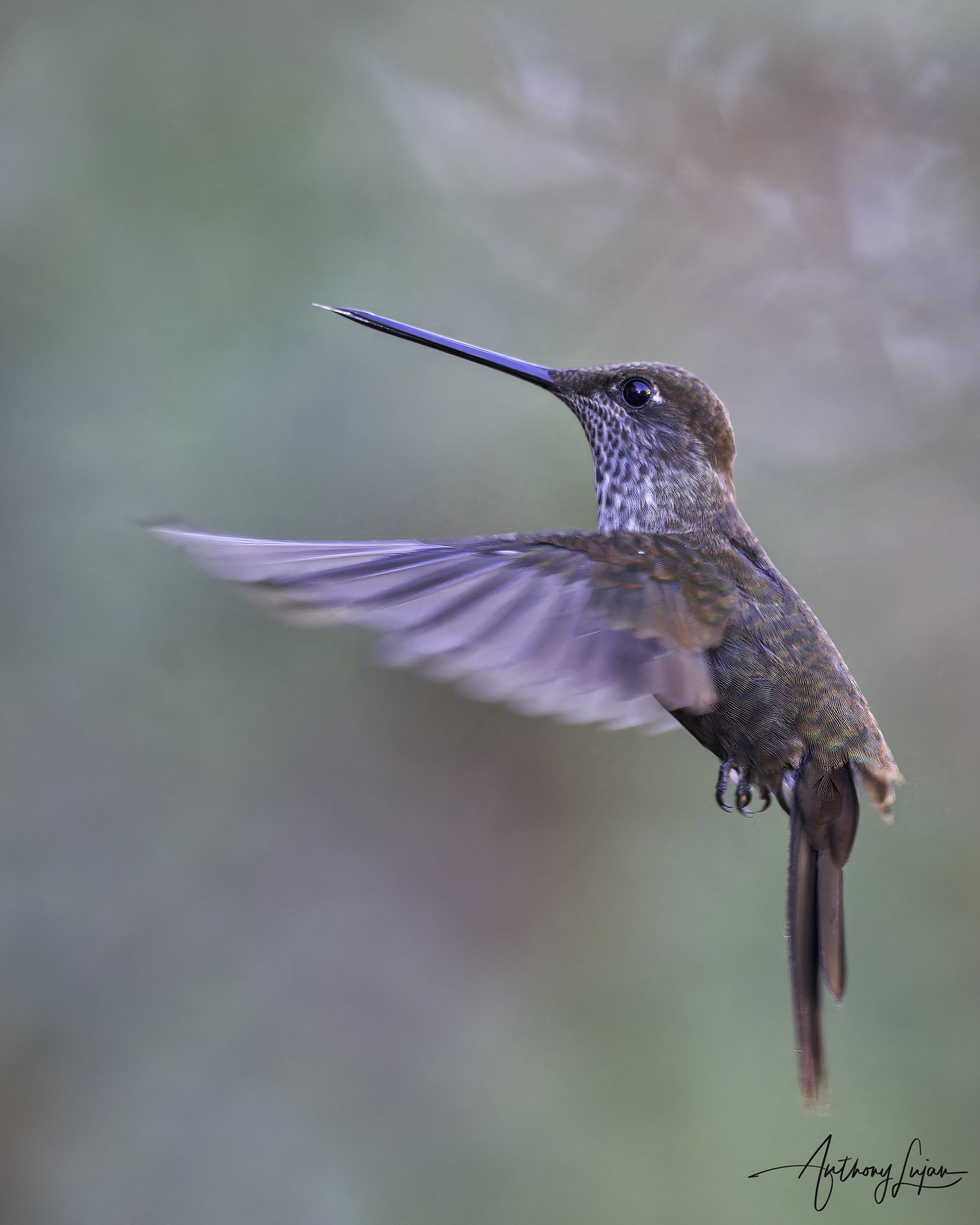

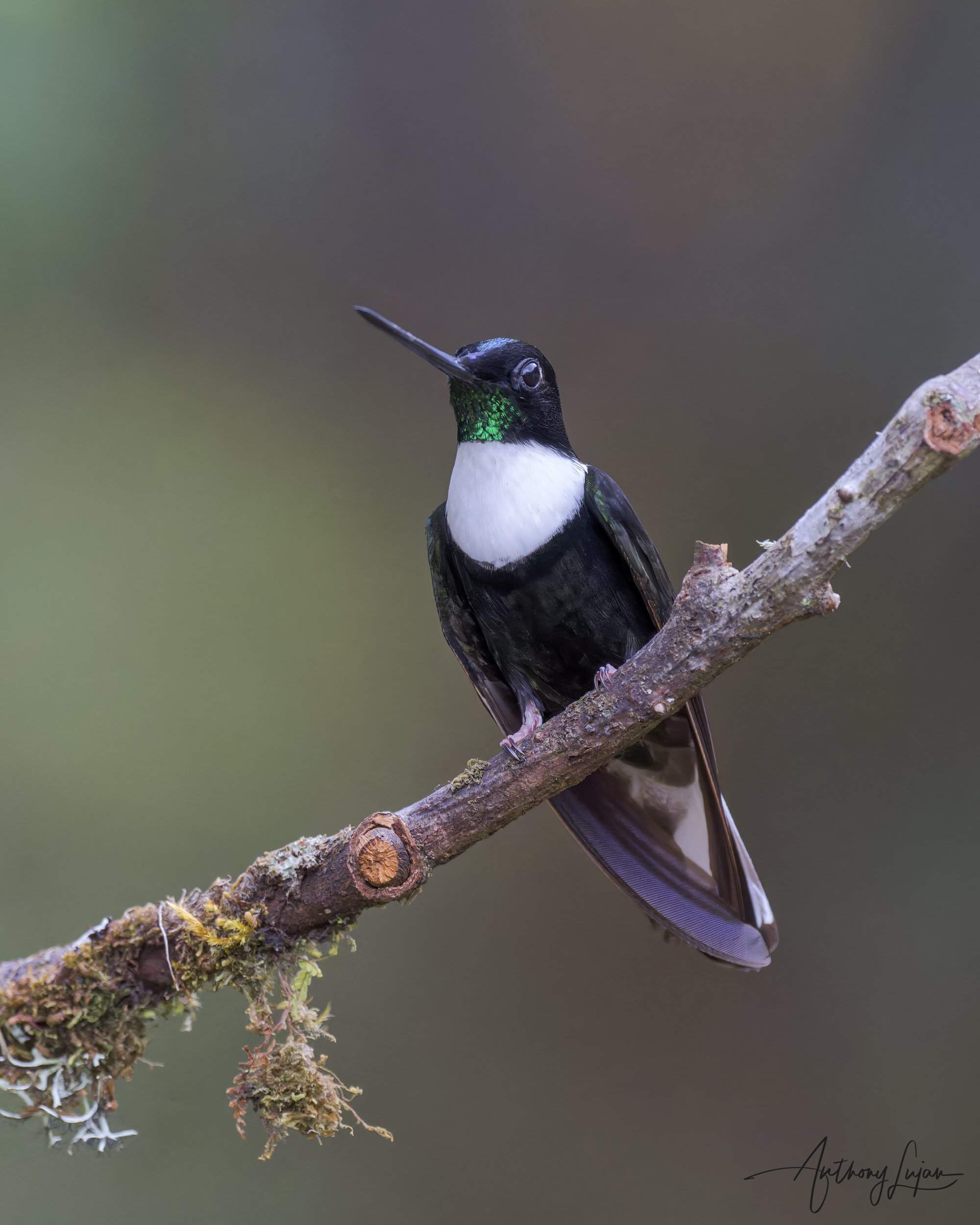



Please note: The content provided in this article reflects Anthony’s personal experience and photographic approach. Results can vary depending on light, weather, location, equipment, subject behavior, and field conditions.