
Fiery-throated Hummingbird

Scientific name: Panterpe insignis
The Fiery-throated Hummingbird is a medium-sized, brilliantly iridescent hummingbird of highland cloud forests and páramo edges in Costa Rica and western Panama. It is listed as Least Concern, with an estimated 50,000–499,999 mature individuals, a stable population trend, and it is considered an altitudinal migrant.
At a Glance
Family: Trochilidae (hummingbirds)
Clades: Lampornithini – Mountain Gems
Genus group: Panterpe — fiery-throated hummingbird (1 species in total)
Range: Highlands of Costa Rica (Cordillera de Guanacaste, Cordillera de Tilarán, Cordillera Central, and Cordillera de Talamanca) south into western Panama (Bocas del Toro and Chiriquí).
Habitat: Montane cloud forest, elfin forest, forest edges, highland shrublands, and páramo edges; also visits high-elevation gardens and clearings with flowering shrubs and trees.
Elevation: Mostly from about 1,800 to 3,500 m (5,900–11,500 ft), locally lower where cloud forest descends along ridges.
Length: About 10.5–11 cm (4.1–4.3 in).
Weight: Males about 5.9–6.2 g (0.21–0.22 oz); females about 4.9–5.2 g (0.17–0.18 oz).
Number of mature individuals: 50,000–499,999.
Population trend: Stable.
Status: Least Concern (IUCN Red List category).
Migration: Altitudinal migrant.
Name Origin
The genus name Panterpe is derived from a classical name applied in early ornithological works and is now used exclusively for this species. The species name insignis means “remarkable” or “distinguished,” reflecting the bird’s extraordinary colors. The English name “Fiery-throated Hummingbird” refers to the male’s spectacular fiery orange to coppery throat that flares into green and blue tones depending on the light.
Taxonomy & Distribution
Panterpe insignis
Fiery-throated Hummingbird belongs to the mountain gem tribe Lampornithini within the hummingbird family and is the only species in the genus Panterpe. It is restricted to the highlands of Costa Rica and western Panama, where it inhabits the upper montane cloud forests and páramo edges of several cordilleras. Two subspecies are recognized, which differ mainly in geography and subtle plumage and size variation.
Subspecies and Distribution
Fiery-throated Hummingbird has two recognized subspecies.
Panterpe insignis eisenmanni
Distribution: Northwestern Costa Rica, primarily in the Cordillera de Guanacaste. It occurs in high-elevation cloud forests, elfin forests, and edges in this northern mountain range, often associated with ridgetops and upper slopes with stunted forest and shrublands.Panterpe insignis insignis
Distribution: North-central Costa Rica (Cordillera de Tilarán and Cordillera Central) south through the Cordillera de Talamanca to extreme western Panama (Bocas del Toro and Chiriquí). This nominate subspecies is found in humid montane and cloud forests, elfin forests, and páramo edges across the main highland spine of Costa Rica and into western Panama, where it is a characteristic species of high-elevation bird communities.
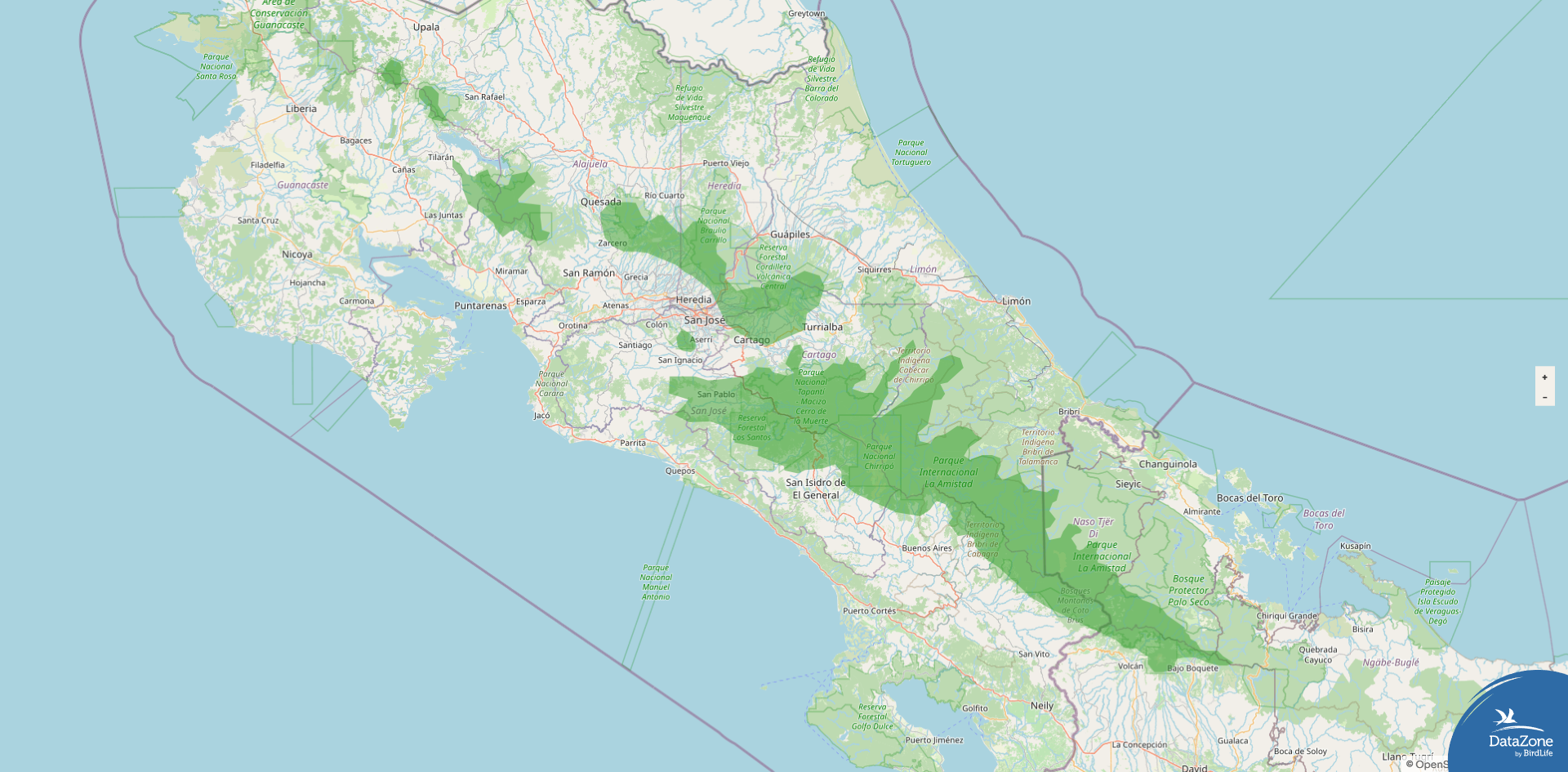
Legend
Green Resident

Species Overview
The Fiery-throated Hummingbird is one of the most striking birds of the Talamancan highlands, with a dark-headed appearance that transforms into a blaze of fiery orange, gold, green, and blue when hit by sunlight. It is common in suitable high-elevation habitats and often dominates hummingbird feeders and flowering patches in cloud-forest lodges and highland gardens. Its adaptation to cool, misty environments and its altitudinal movements make it a true emblem of Central American cloud forests.
Male Description
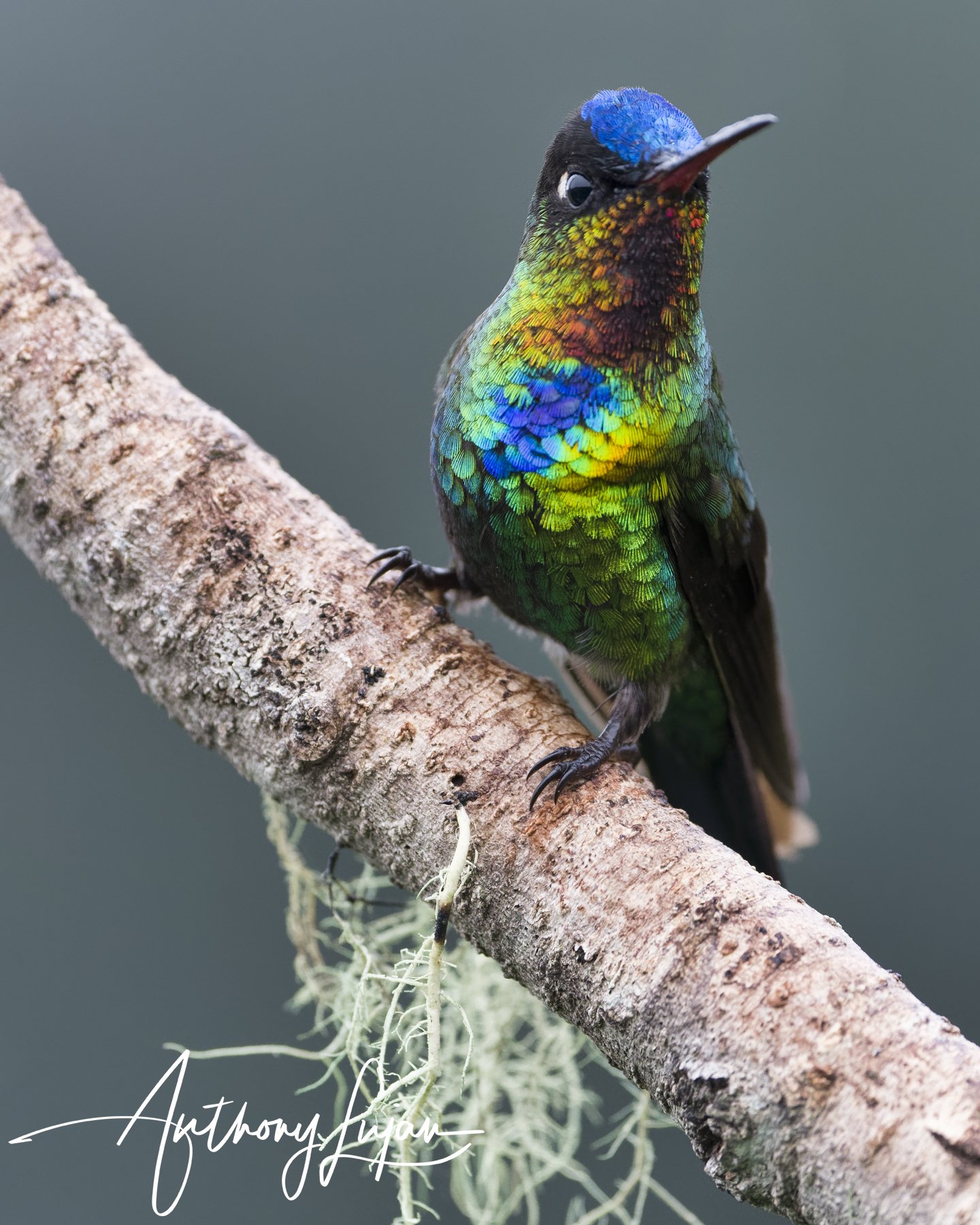
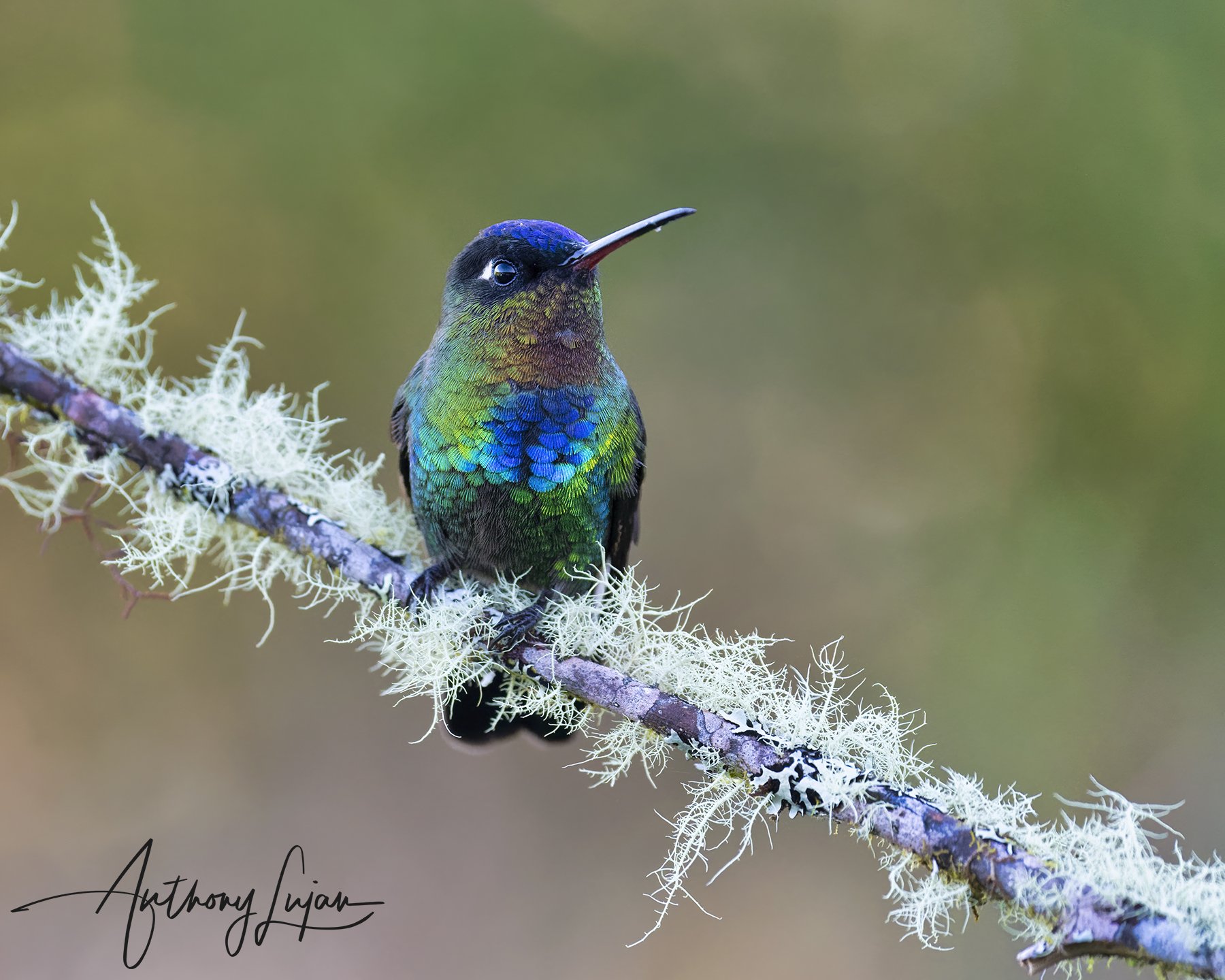
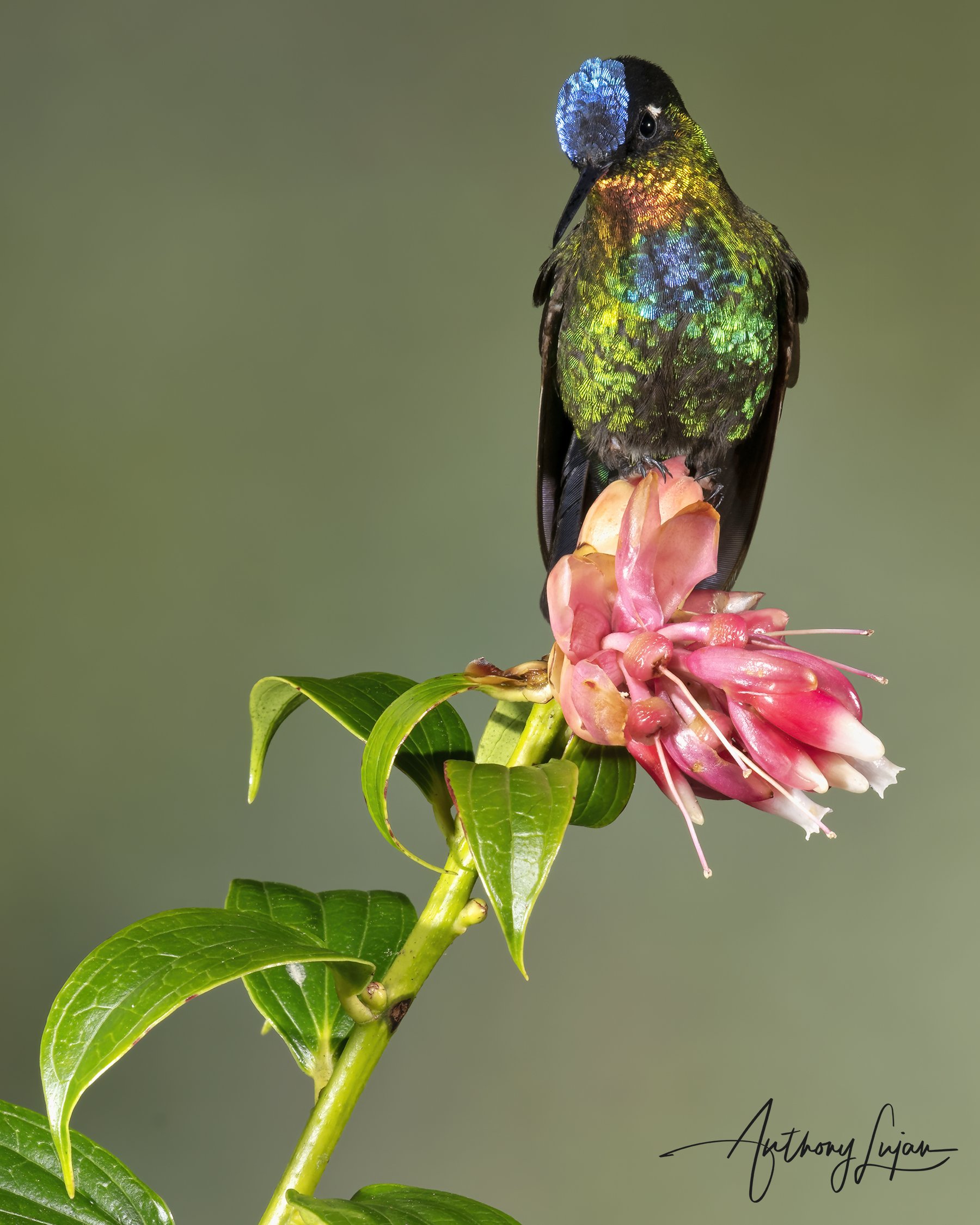
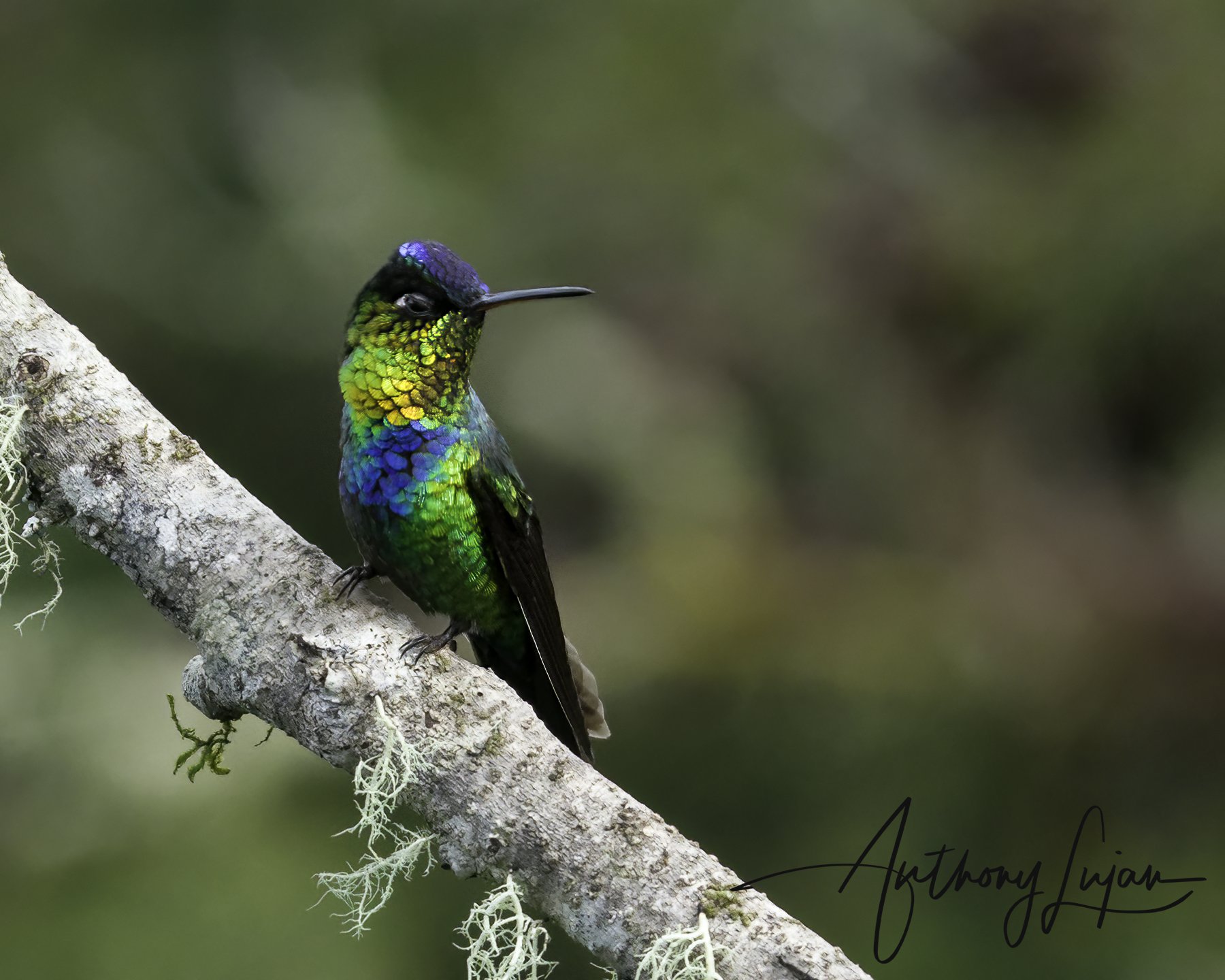
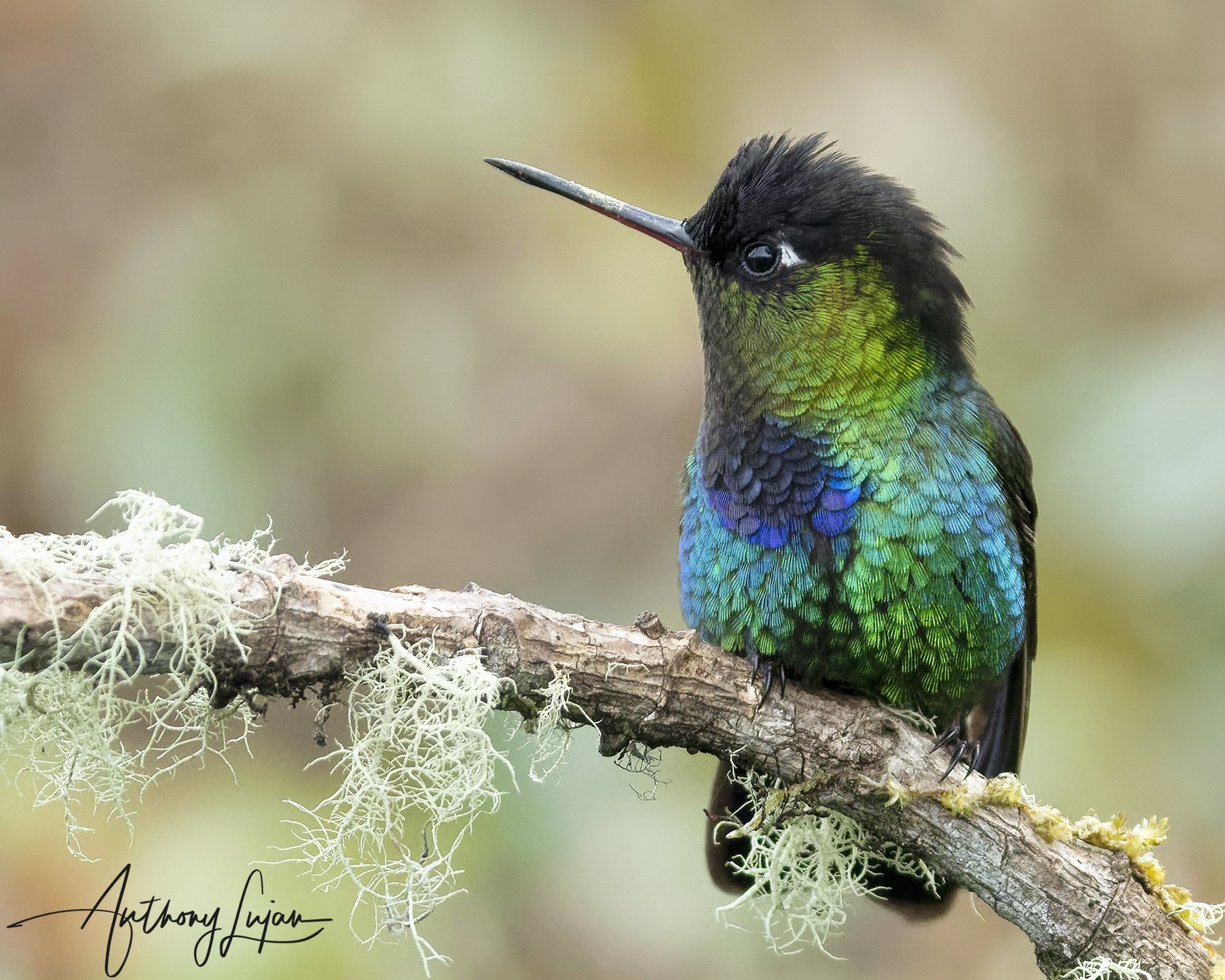
Adult males are medium-sized with a mostly black bill showing a pink base to the lower mandible. The crown is glittering royal blue, and the face and sides of the neck are black. The back and rump are bright metallic green, often shading to bluish-green near the tail. The throat glows with a brilliant fiery orange to rosy coppery color, with golden-green sides and a small violet-blue patch on the upper breast. The rest of the underparts are bright green to blue-green. The tail is dark blue to blue-black. In different angles of light, the throat and chest can flash from deep orange and gold to green and blue, giving the species its “fiery-throated” name.
Female Description
Females are very similar to males in overall size and pattern, with the same basic iridescent colors, but their throat and chest may be slightly less intensely colored and less extensively fiery than in males. The crown and face pattern are similar, though females can appear slightly duller and less contrasty. The bill and tail are much like the male’s. Juveniles resemble females but with duller plumage, less sharply defined throat and breast colors, and more subdued iridescence; young birds gradually acquire the full, intense adult coloration.
Habitat & Behavior
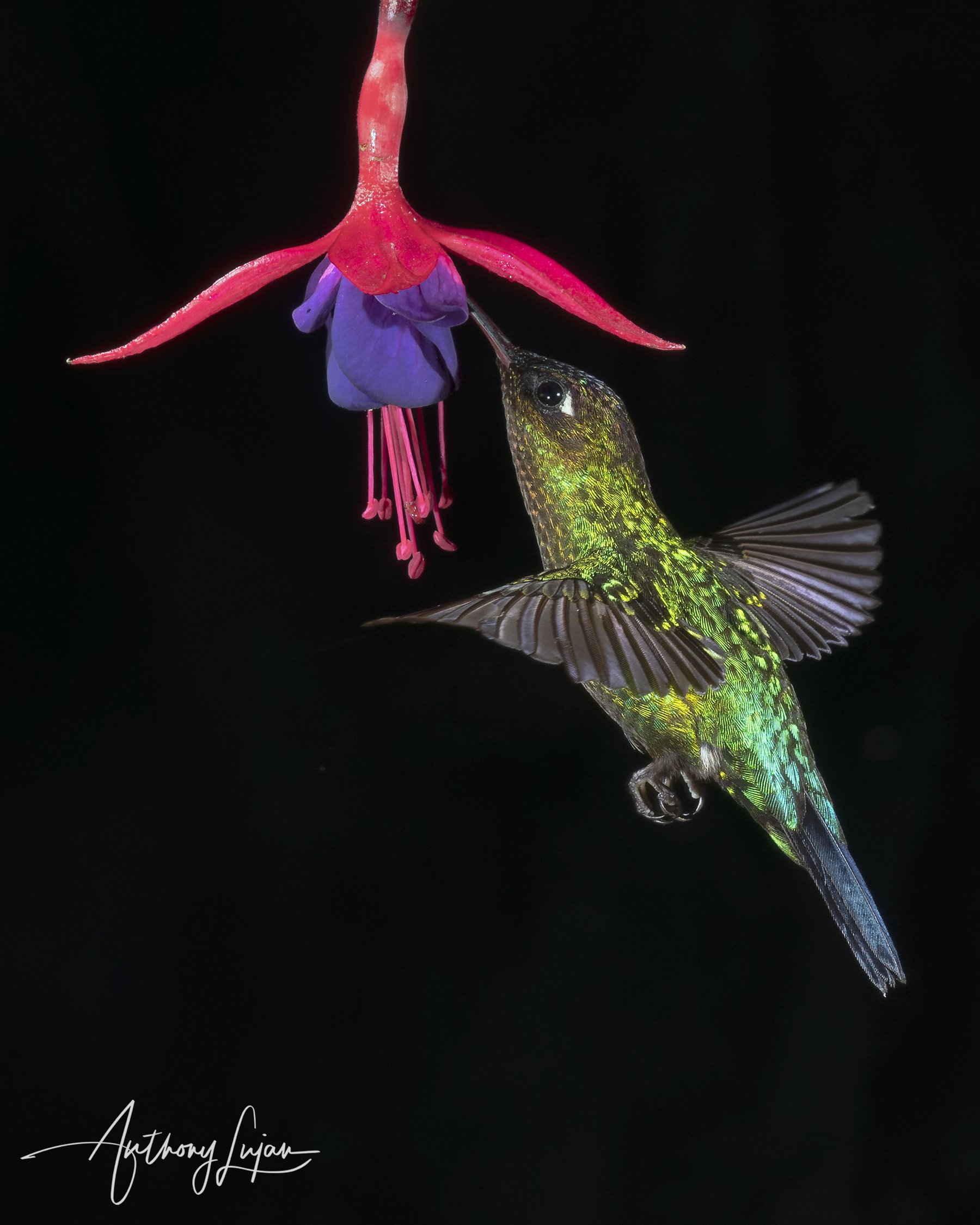
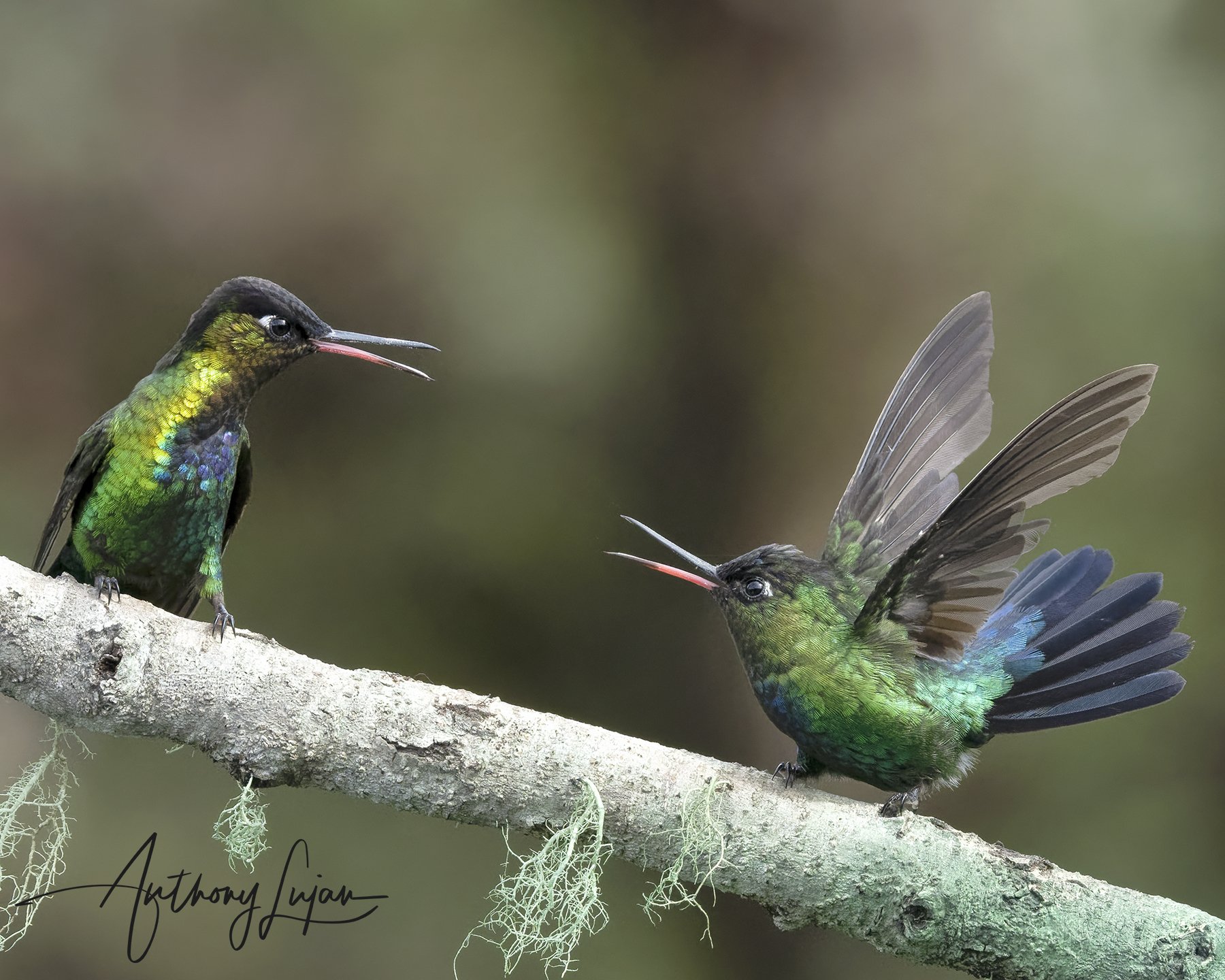
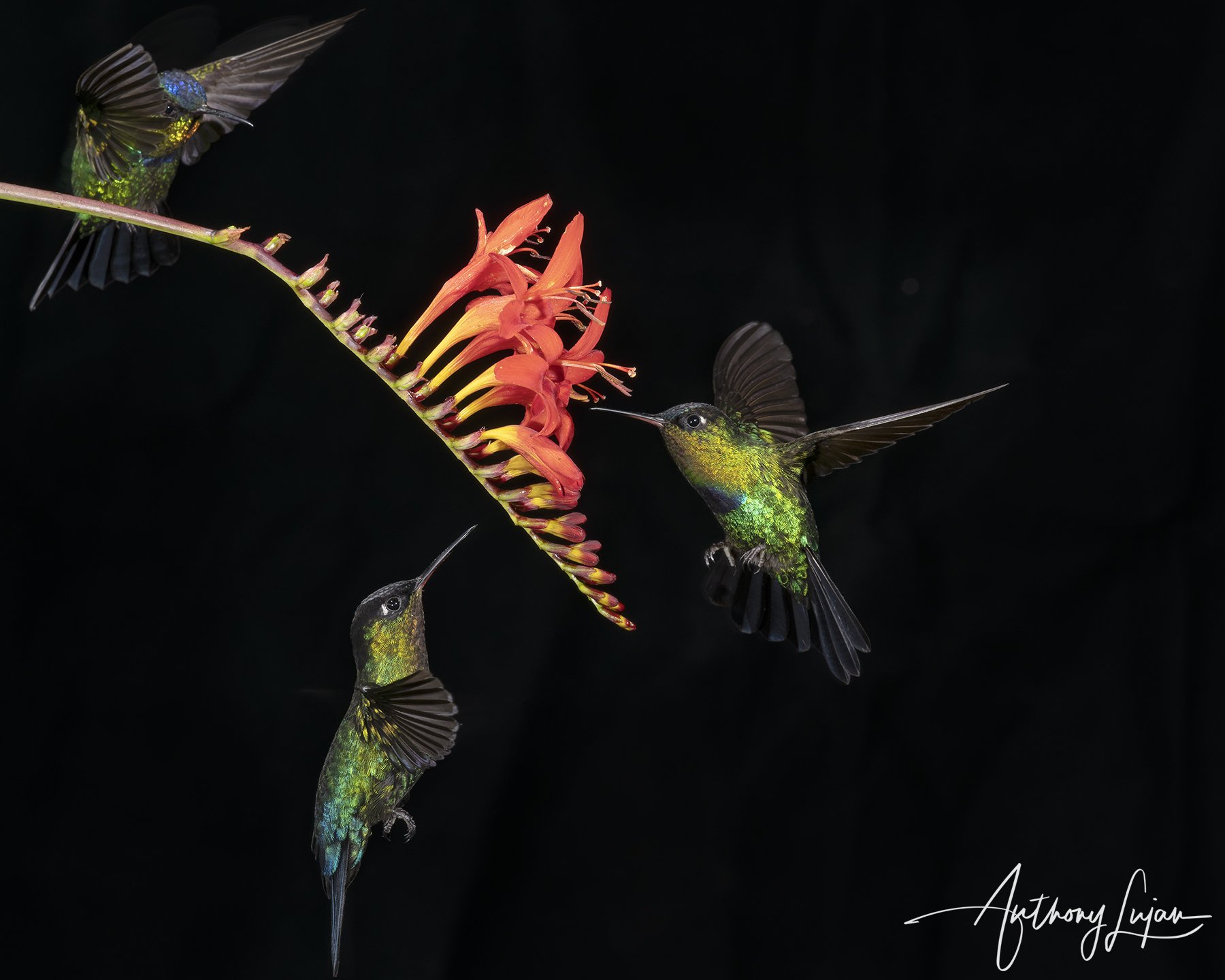
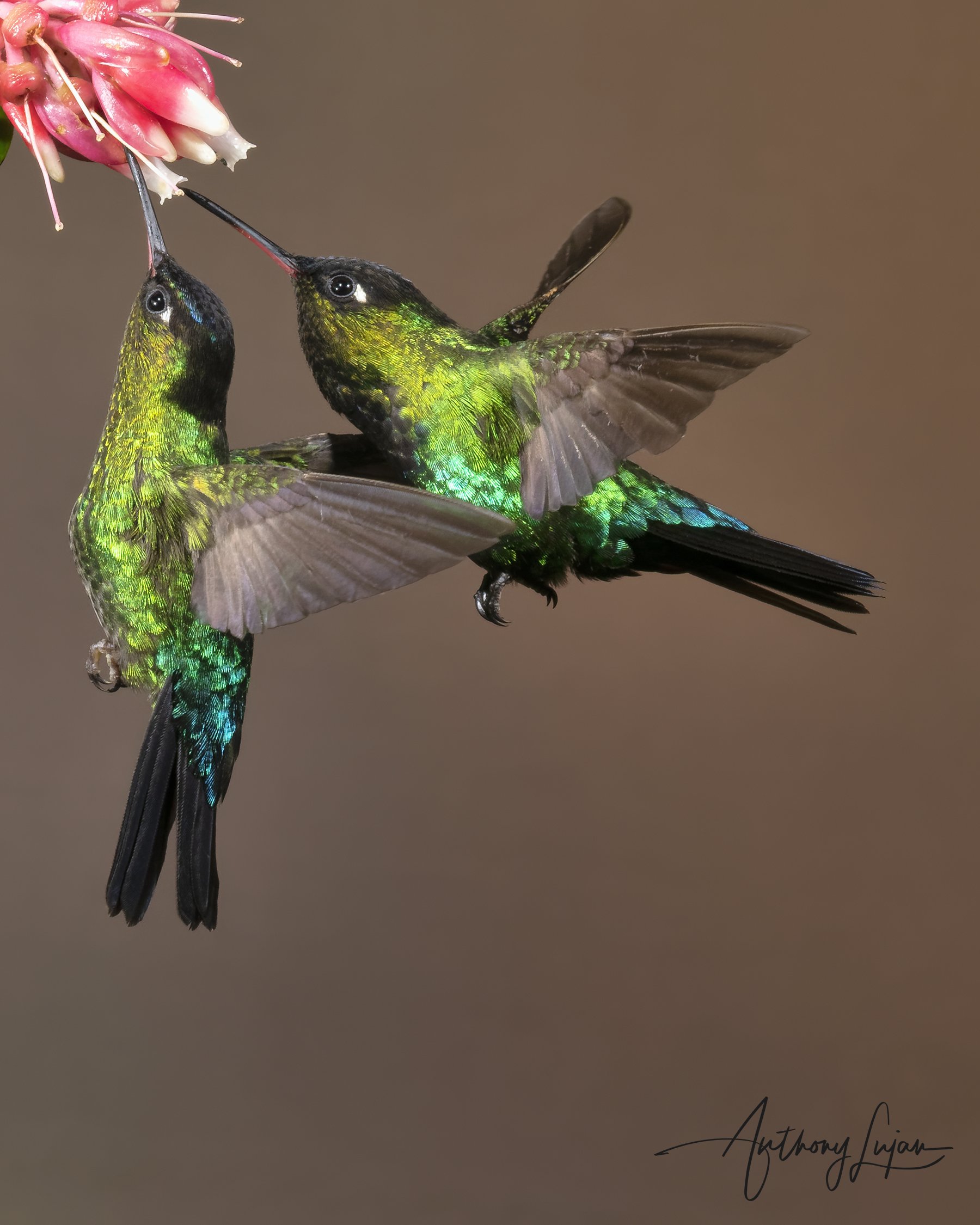
Fiery-throated Hummingbirds inhabit cloud forests, elfin forests, and shrub-dominated páramo edges at high elevations. They forage at flowers of shrubs, small trees, bromeliads, and epiphytic Ericaceae, often along forest edges, in clearings, and near highland gardens. They are highly territorial and aggressive, frequently chasing other hummingbirds and even larger birds away from rich nectar sources. They also capture small arthropods in flight and by gleaning from foliage, supplementing their nectar diet. Birds often perch conspicuously on exposed branches between feeding bouts, flashing their fiery throat when turning in the light.
Breeding
Breeding takes place in highland forests within their range, timed with favorable weather and flower availability. The female builds a small cup nest from plant fibers, moss, and lichens bound with spiderweb, typically placed on a sheltered branch or in dense foliage, often near water or along forest edges. She lays two white eggs and alone carries out incubation and chick-rearing. Nests are well camouflaged among mossy branches and epiphytes typical of cloud-forest environments.
Movement
Fiery-throated Hummingbirds are altitudinal migrants. They generally breed and spend much of the year in high montane forests and páramo edges but move down to slightly lower elevations outside the peak breeding or flowering season, tracking seasonal changes in nectar availability. These upslope and downslope movements keep them within the highland zone but can shift local abundance significantly along elevational gradients.
Population
With an estimated 50,000–499,999 mature individuals and a restricted but continuous range along the highlands of Costa Rica and western Panama, Fiery-throated Hummingbird has a moderate global population. Within suitable high-elevation cloud forests and at feeders in protected and rural areas it can be locally common to abundant. The population is considered stable, aided by the presence of large protected areas in the Talamanca range and other cordilleras.

Conservation
Fiery-throated Hummingbird is assessed as Least Concern, with a stable population trend. However, its dependence on high-elevation cloud forests and páramo means it is sensitive to habitat loss, fragmentation, and potential climate-driven shifts in cloud and vegetation belts. Conservation of montane forest and páramo habitats in Costa Rica and western Panama, protection of forest corridors along the highland spine, and careful management of tourism and development in highland regions are important for maintaining healthy populations. The species benefits from extensive national parks and reserves but will require continued habitat protection under changing climate conditions.
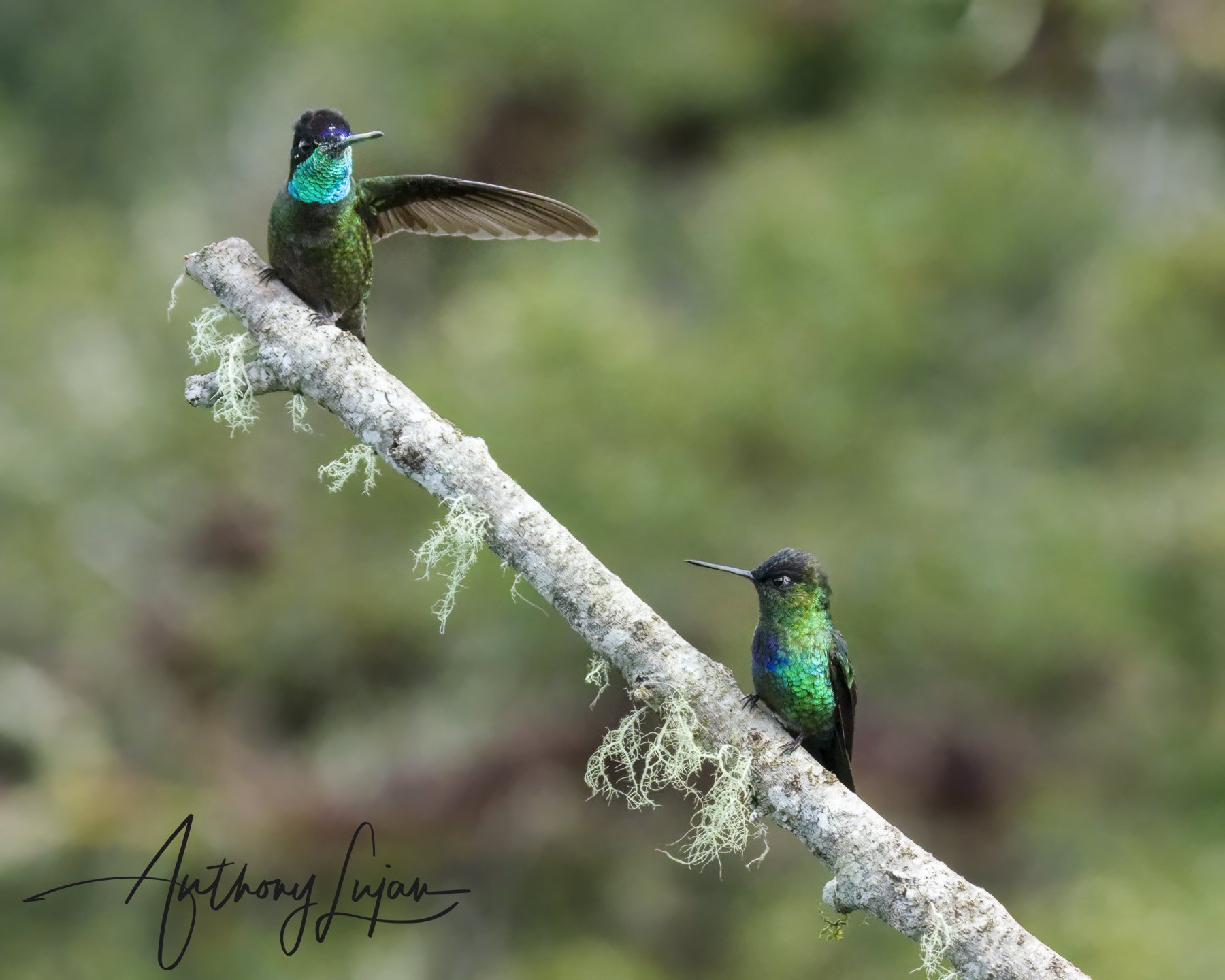
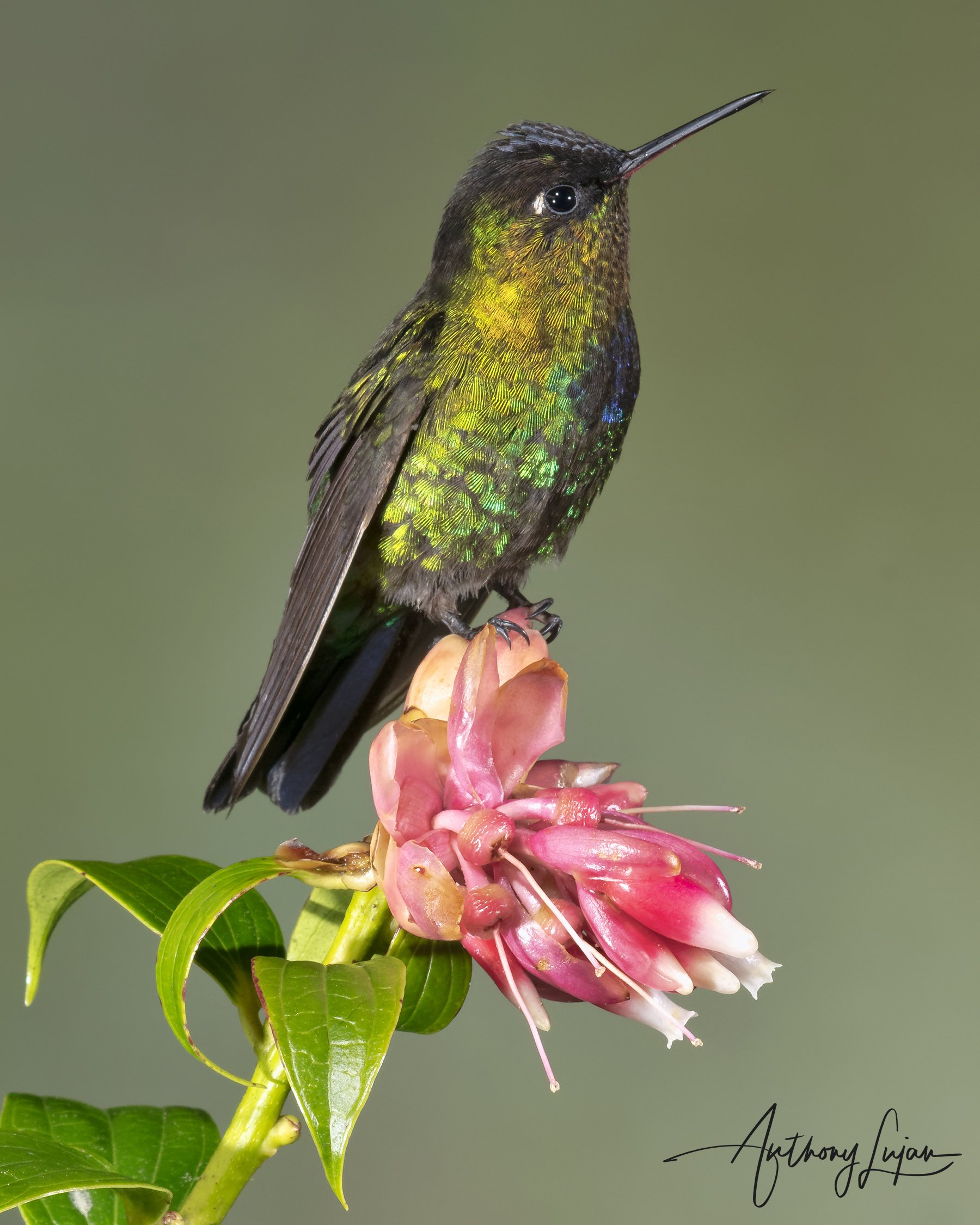
Below is the Fiery-throated Hummingbird (Panterpe insignis insignis)
Photographed at Paraíso Quetzal Lodge, Km 70, San José, Costa Rica
This individual belongs to the nominate subspecies insignis, which occurs from the Cordillera de Tilarán south through the Cordillera de Talamanca in Costa Rica to western Panama (Bocas del Toro and Chiriquí). It inhabits humid montane forest, cloud forest edge, and páramo zones between 1,800 and 3,500 meters.
Interested in coming along? Visit Travel with Me!
Also visit Costa Rica Hummingbird Expedition | July 2021 | 10 Species | Where It All Started
Also visit Costa Rica Hummingbird Expedition | November 2021 | 22 New Species | Second Chances
Also visit Costa Rica Hummingbird Expedition | July 2025 | 32 Species | 10 New | Closing the Gap
Checkout Anthony’s playlist of this species! Click the top right dropdown to see all the videos.
No related species in the Panterpe genus (1 species in total):
Please note: The content provided in this article reflects Anthony’s personal experience and photographic approach. Results can vary depending on light, weather, location, equipment, subject behavior, and field conditions.