
Festive Coquette
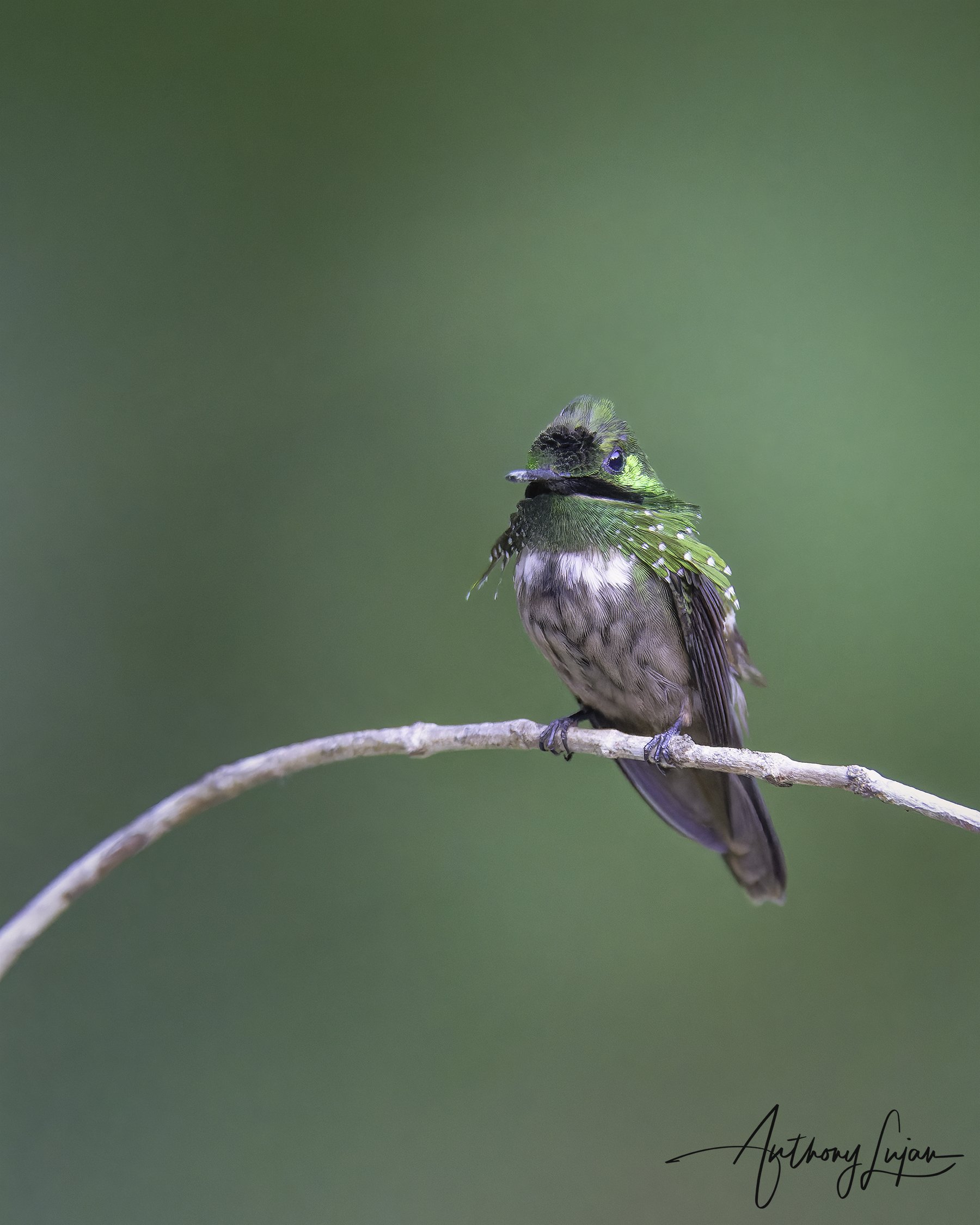
Scientific name: Lophornis chalybeus
The Festive Coquette is a tiny, ornate coquette hummingbird endemic to southeastern Brazil, where it inhabits humid forests, secondary growth, and patches of cerrado from sea level up to about 1,000 m. The number of mature individuals is currently unknown, its population trend is considered Stable, and it is assessed as Least Concern (LC).
At a Glance
Family: Trochilidae (hummingbirds)
Clade: Lesbiini – coquettes
Genus: Lophornis — very small, crested hummingbirds with ornate head and throat plumes
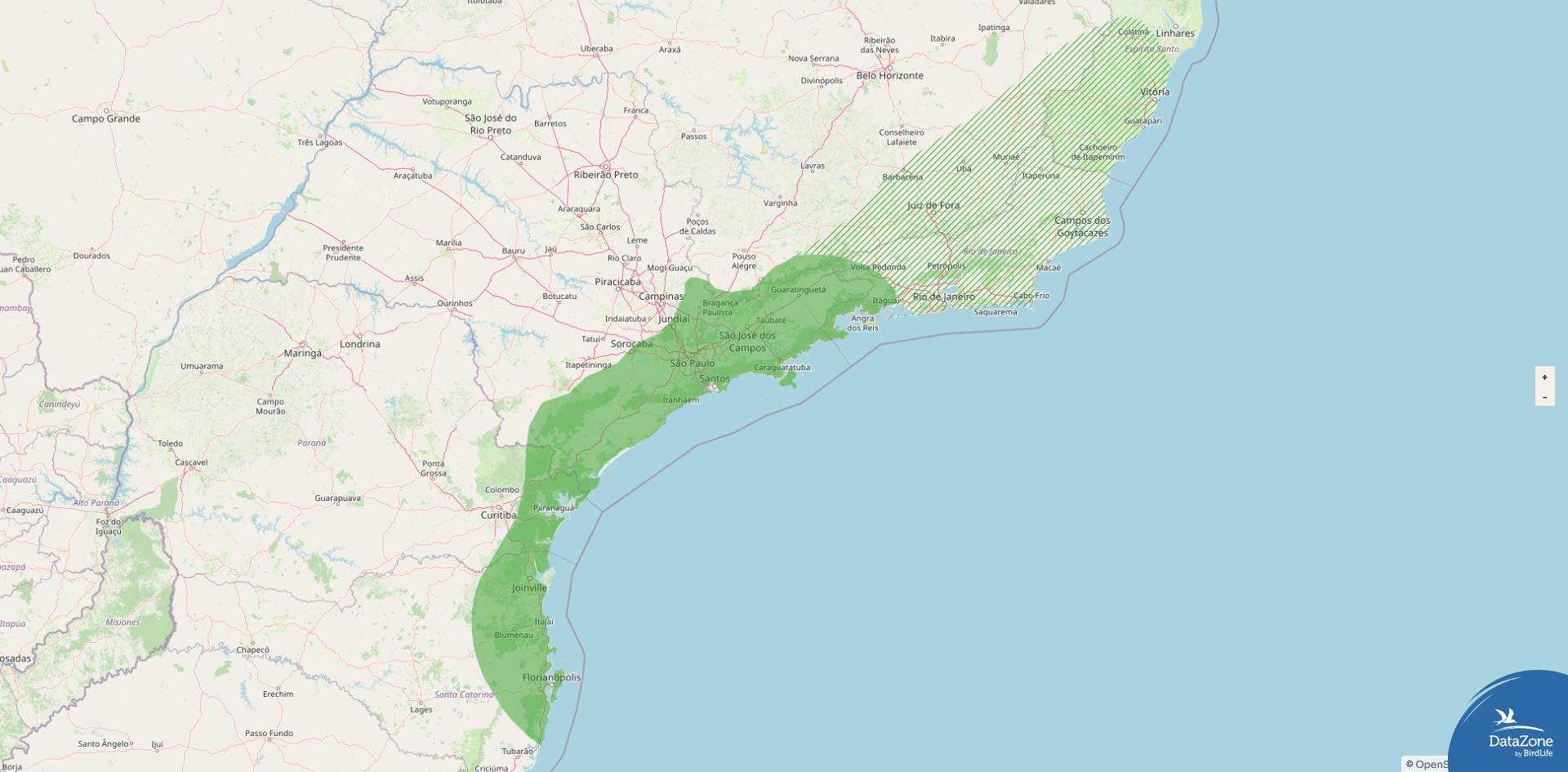
Range: Endemic to southeastern Brazil, from Espírito Santo south through Rio de Janeiro and São Paulo into Santa Catarina
Habitat: Humid primary and secondary forest, forest edges, clearings, and patches of cerrado with abundant flowering shrubs and trees
Elevation: From near sea level up to roughly 1,000 m
Length: About 7–8 cm (2.8–3.1 in)
Weight: Around 2–3 g (0.07–0.11 oz)
Number of mature individuals: Unknown
Population trend: Stable
Status: Least Concern (IUCN)
Name Origin
The genus name Lophornis comes from Greek words meaning “crest” and “bird,” referring to the elaborate crests typical of coquettes. The species name chalybeus is derived from Latin for “steel-blue,” alluding to the metallic tones in the plumage. The English name “Festive Coquette” highlights the bird’s bright colors and decorative head and throat pattern, which give it a celebratory, ornamental look.
Subspecies & Distribution
Festive Coquette is monotypic, with no recognized subspecies.
Within Brazil it occurs in the Atlantic Forest region of the southeast:
From Espírito Santo south through Rio de Janeiro and São Paulo
Reaching into Santa Catarina in the south
Across this range it is patchily distributed, tracking humid forests, edges, and semi-open areas where flowering plants are concentrated.
Ledged
Green Resident
Species Overview
The Festive Coquette is one of the smallest hummingbirds in southeastern Brazil’s Atlantic Forest, but it stands out due to its vivid colors and active, darting behavior. It typically inhabits lowland and foothill forests, forest borders, second growth, and nearby cerrado where nectar sources are abundant. Despite having a relatively restricted endemic range, it tolerates some habitat modification and currently shows a stable population, supporting its Least Concern status.
Male Description
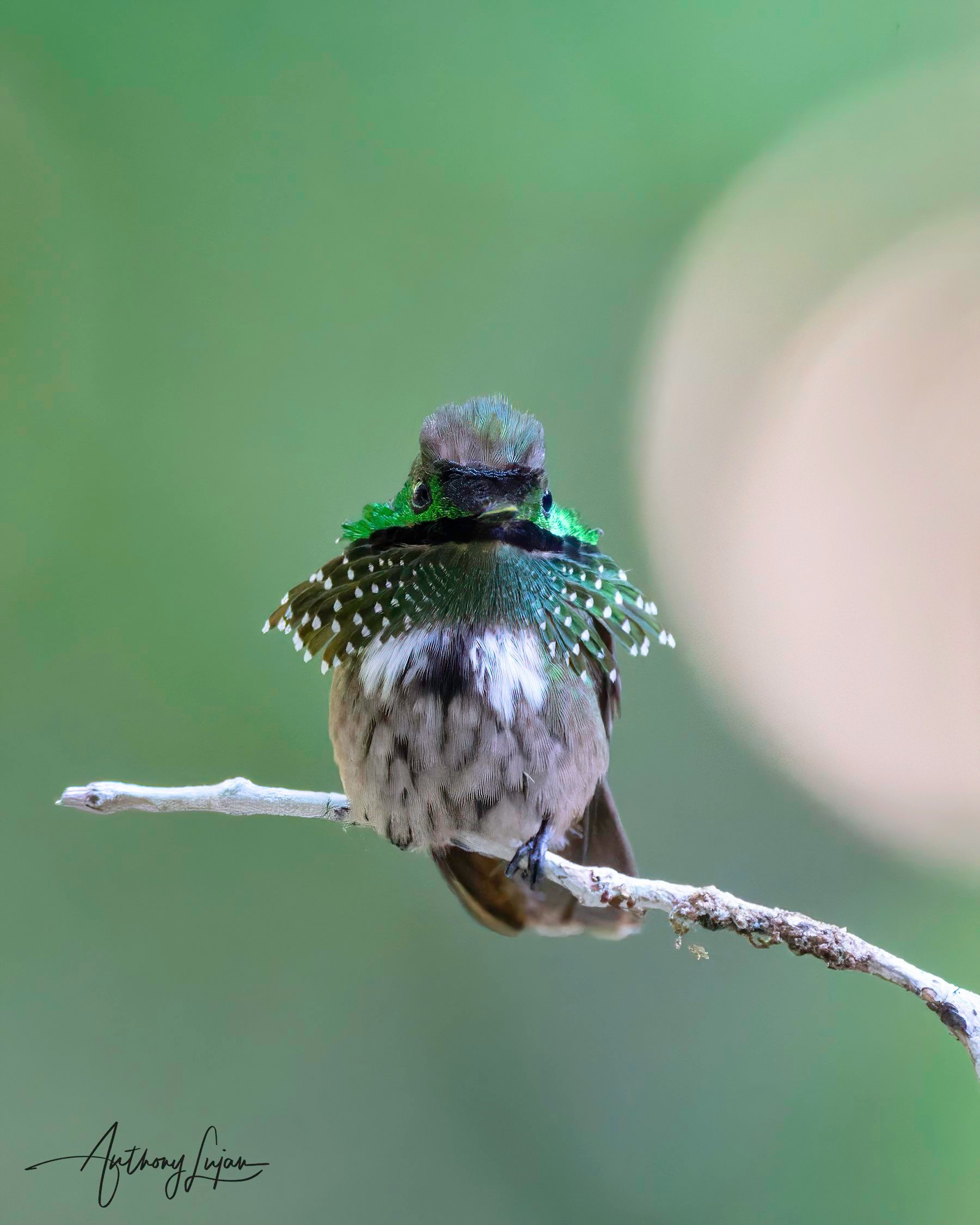
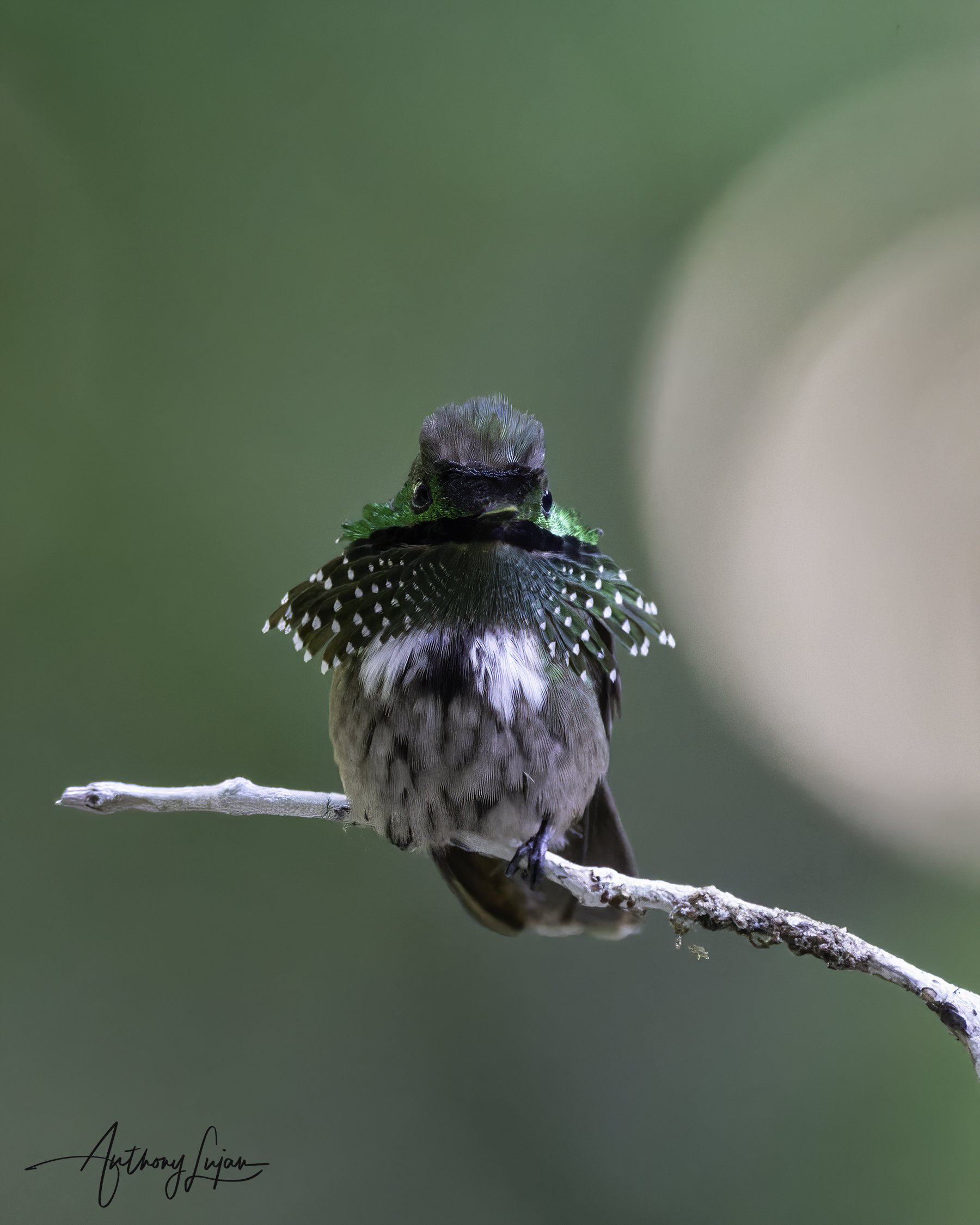
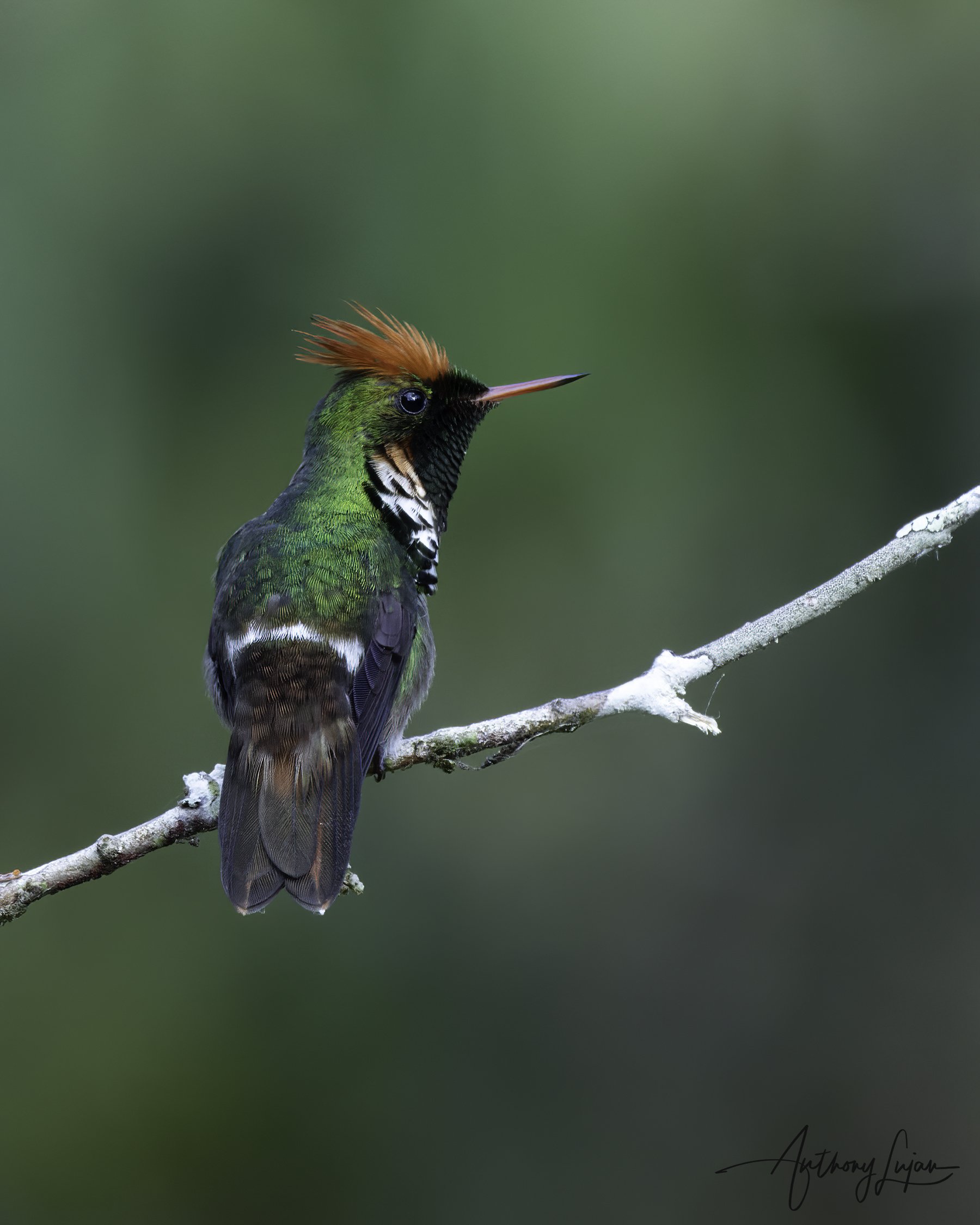
The adult male Festive Coquette is tiny and striking, with a short, straight bill and a bright, iridescent appearance. He has a green crown with a small crest, metallic green upperparts, and an ornate, glittering throat that can show coppery or golden-green tones depending on the light. The sides of the neck often bear contrasting pale spots or patches, and he sports projecting flank plumes that create a spiky, “festive” silhouette. His underparts are mostly pale with green spotting, and the tail is relatively short with rufous or bronzy tones and darker tips.
Female Description
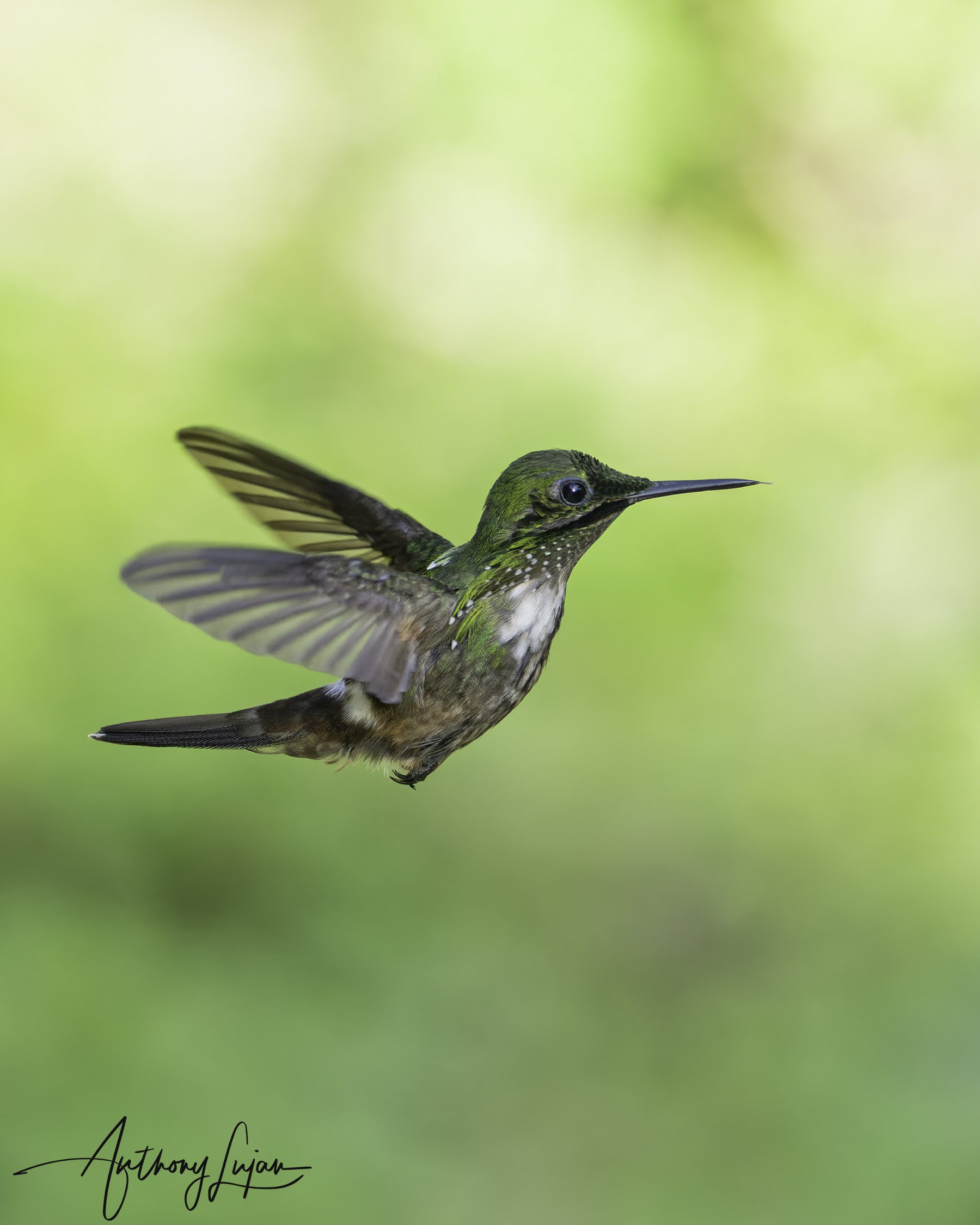
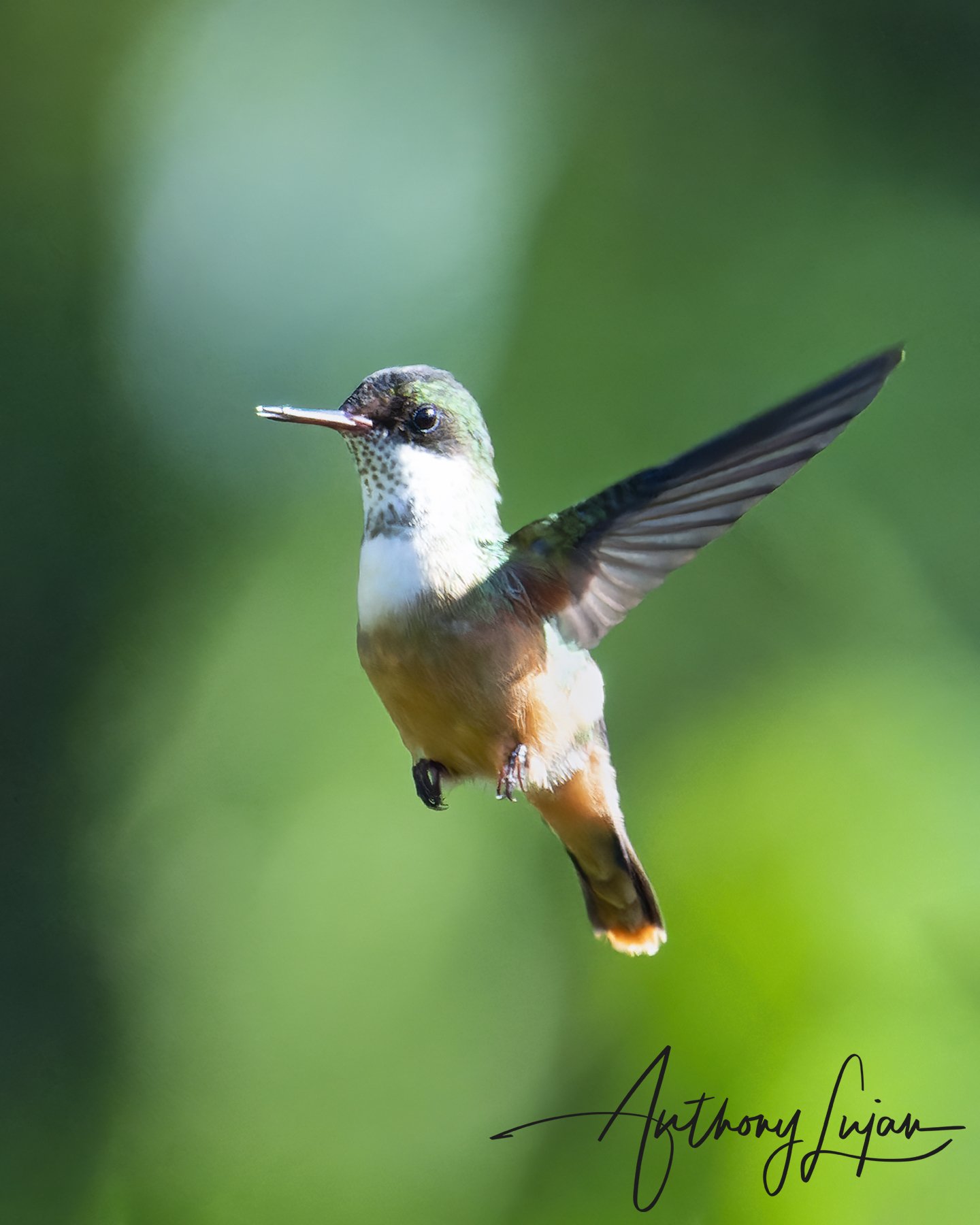
The female lacks the male’s conspicuous crest and showy throat, giving her a more subdued, clean look. Her head and upperparts are metallic green without exaggerated plumes, and her underparts are whitish to buff with green spotting along the sides of the breast and flanks. The tail is slightly longer in proportion to her body than in males, greenish above with rufous or buff at the bases of the outer feathers and pale tips, forming a gentle pattern. She appears as a neat, tiny green hummingbird best identified by size, structure, and association with males where both occur.
Habitat & Behavior
Festive Coquettes favor humid primary and secondary forest, forest edges, clearings, and sometimes cerrado patches with plentiful flowering shrubs and trees. They commonly use lower and mid-level vegetation, moving along edges, gaps, and around forest fragments as they track blooming plants. Like other coquettes, they feed mainly on nectar but also take tiny insects, which they capture in flight or glean from foliage. Birds are usually seen singly or in loose aggregations at flowering trees, and despite their minute size they can be quite active and assertive around rich nectar sources.
Population
The total number of mature individuals is not currently known, but within its range the Festive Coquette is generally considered locally uncommon to fairly common in suitable habitat. Its population trend is assessed as stable, with no strong evidence of rapid, widespread declines at present. However, its patchy distribution within a relatively small endemic range means local habitat loss can still cause reductions in numbers at specific sites.

Conservation
Festive Coquette is listed as Least Concern, reflecting its stable trend and ability to persist in a mixture of primary forest, secondary growth, and some modified habitats in southeastern Brazil. Ongoing threats include loss and fragmentation of Atlantic Forest, and the conversion of surrounding landscapes to agriculture, pasture, and urban areas, which shrink and isolate suitable habitat. Protecting remaining forest tracts, restoring degraded areas, and maintaining flowering shrub and tree resources in secondary growth and edges are important steps to support this small, ornate hummingbird into the future.
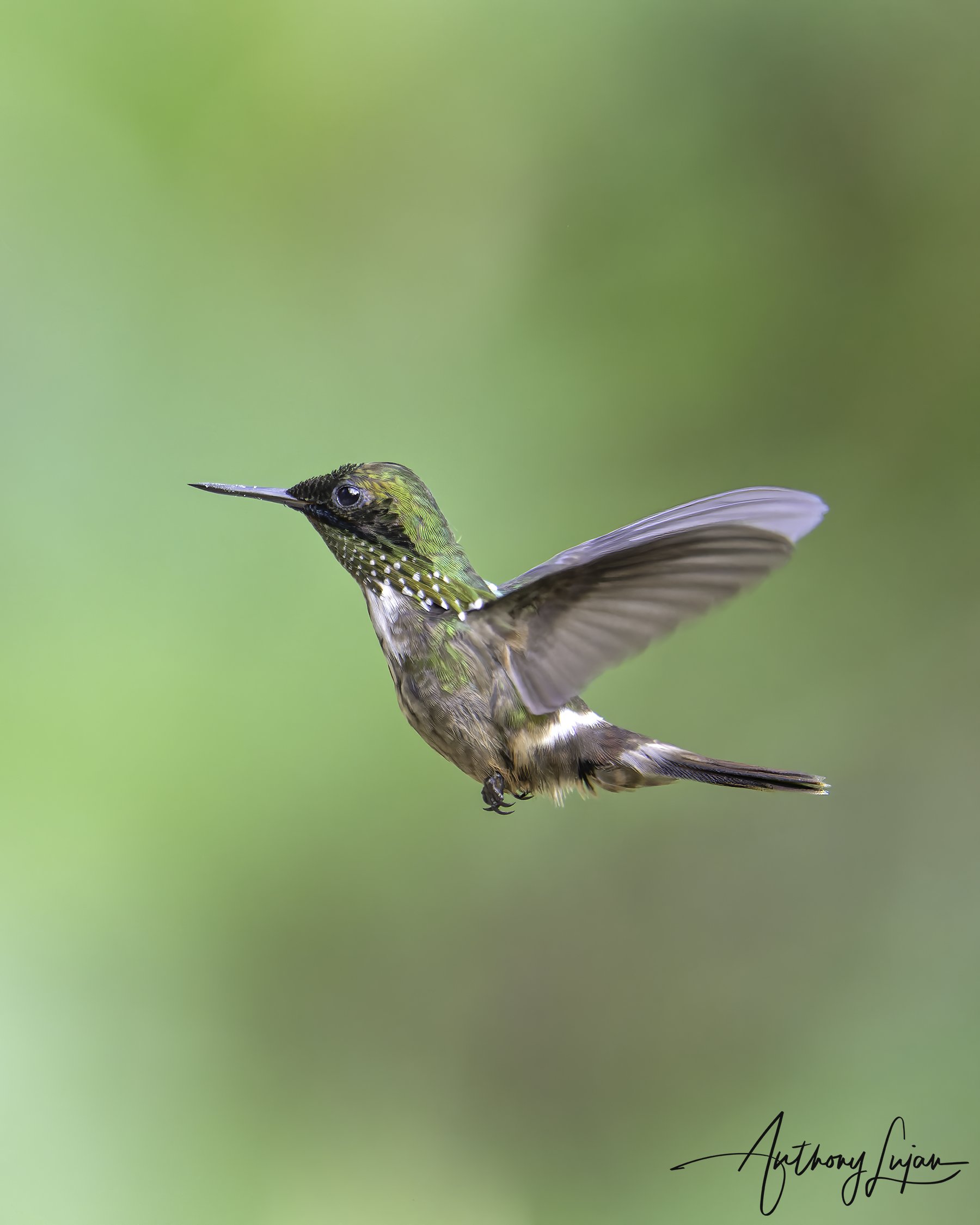
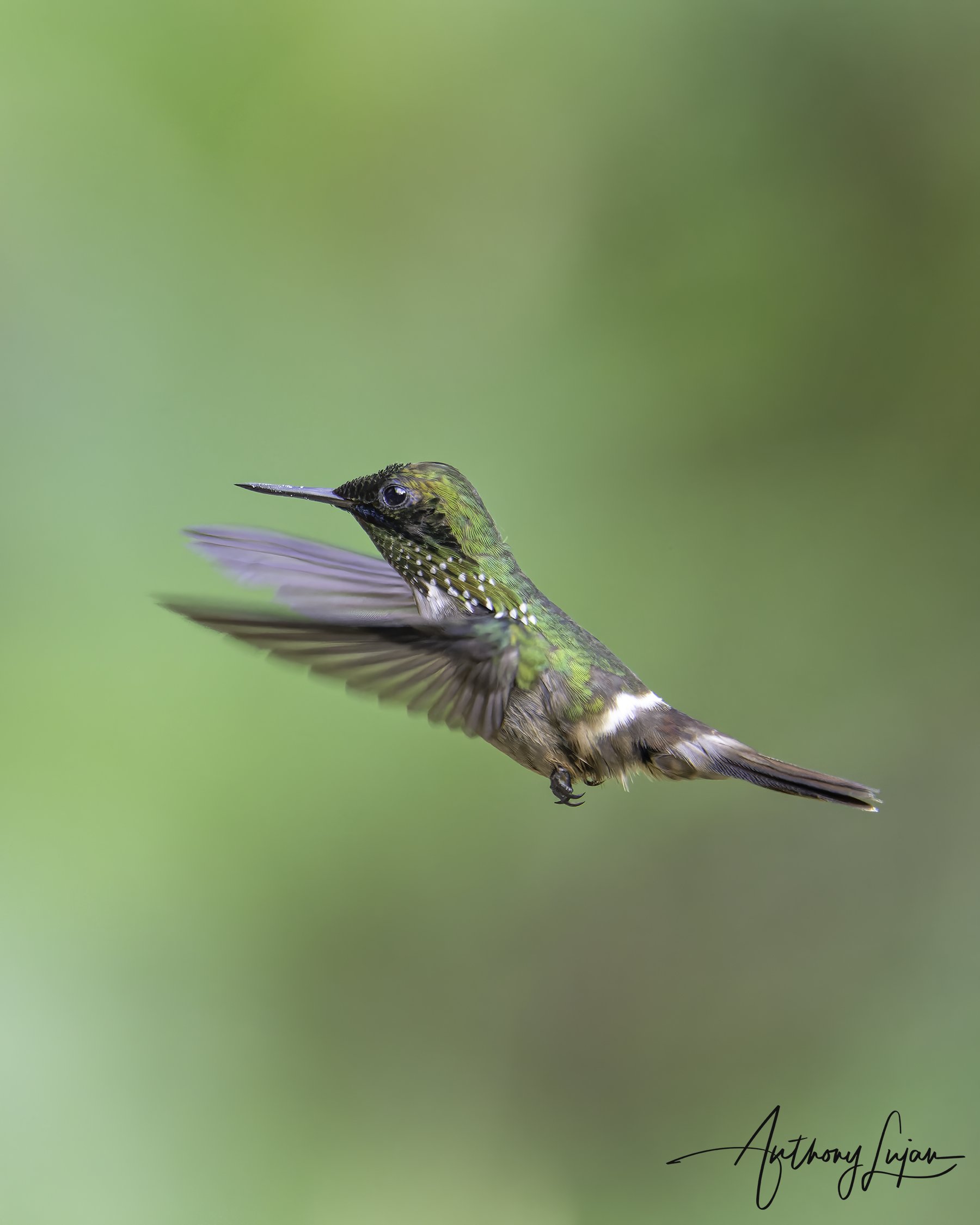
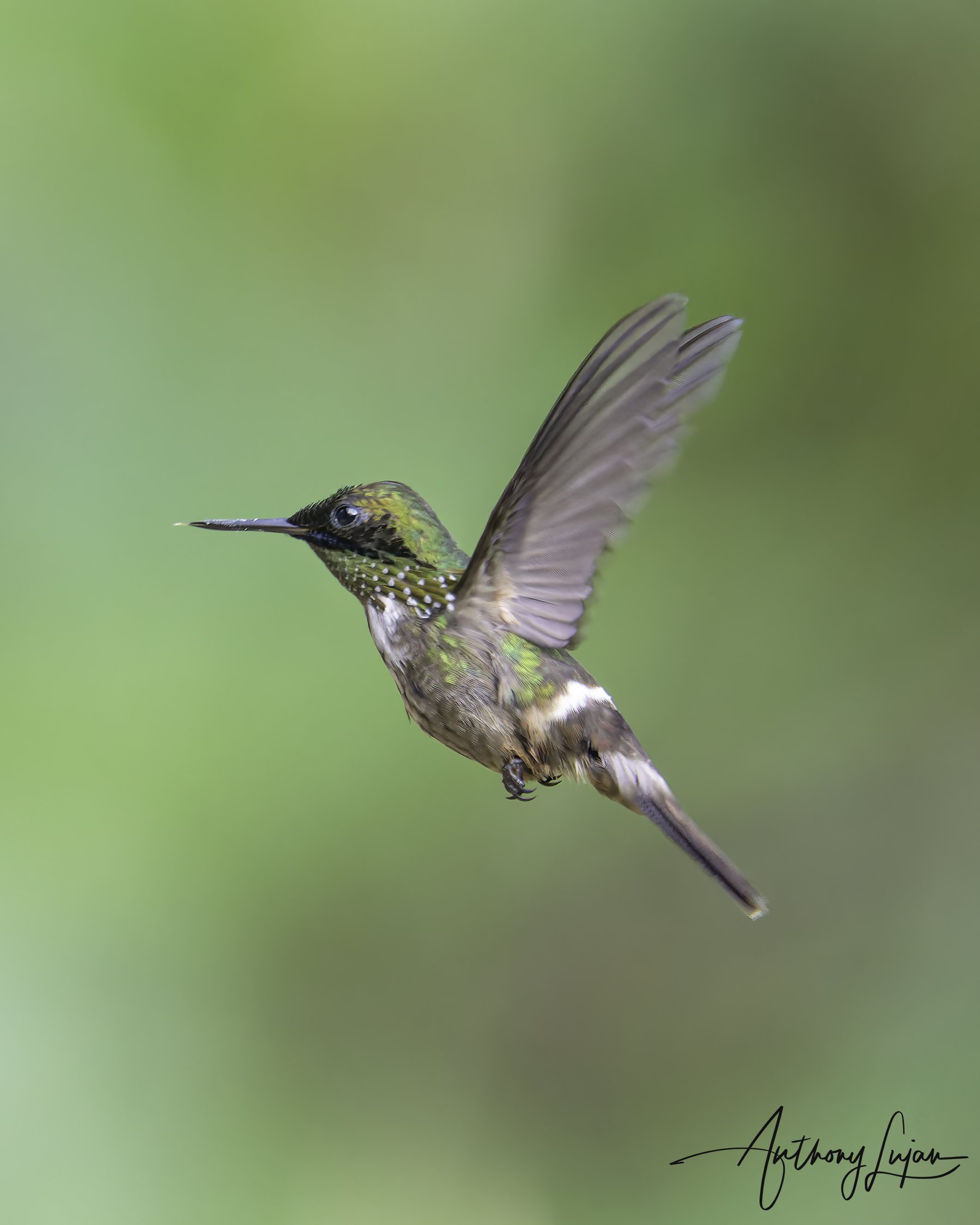
Checkout Anthony’s playlist of this species! Click the top right dropdown to see all the videos.
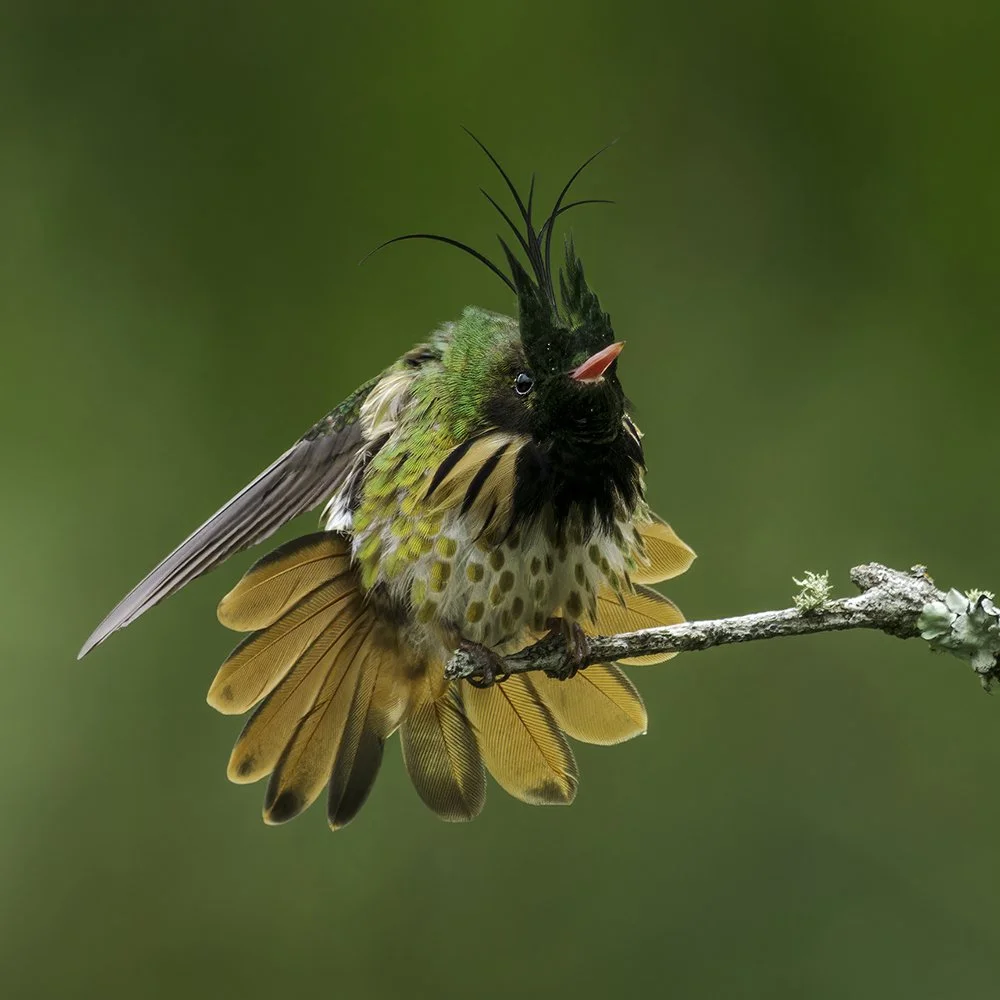


Please note: The content provided in this article reflects Anthony’s personal experience and photographic approach. Results can vary depending on light, weather, location, equipment, subject behavior, and field conditions.