
Plain-capped Starthroat
Scientific name: Heliomaster constantii
The Plain-capped Starthroat is a large, long-billed starthroat hummingbird of arid and semi-arid landscapes from western Mexico to southern Costa Rica. An estimated 50,000–499,999 mature individuals exist, the population is decreasing, it is considered non-migratory, and it is currently listed as Least Concern with three recognized subspecies.
At a Glance
Family: Trochilidae (hummingbirds)
Clades: Lampornithini – Mountain Gems
Genus group: Heliomaster — long-billed “starthroats” with bold gorgets and white tail spotting (4 species total)
Range: Western Mexico (Sonora south through Jalisco, Michoacán, and Chiapas) and Pacific-slope Central America from Guatemala and El Salvador south through Honduras and Nicaragua to southern Costa Rica; vagrant north to Arizona.
Habitat: Arid and semi-arid lowland and foothill habitats including tropical deciduous forest, thorn forest, scrubland, oak and pine-oak woodland, cottonwood–willow riparian forest, and open areas and clearings with scattered trees and shrubs.
Elevation: Mostly from near sea level up to about 2,000 m (6,600 ft), often at lower and middle elevations in foothills and interior valleys.
Length: About 11–13 cm (4.3–5.1 in).
Weight: About 7.2–7.4 g (0.25–0.26 oz).
Number of mature individuals: 50,000–499,999
Population trend: Decreasing
Status: Least Concern (IUCN)
Name Origin
The genus name Heliomaster combines Greek roots for “sun” and “master,” reflecting the way these birds’ gorgets flash brilliant colors when struck by sunlight. The species name constantii honors the French naturalist Benjamin Louis Constant de Rebeque or another Constant honored in the original description. The English name “Plain-capped Starthroat” refers to its relatively plain brownish crown compared with other starthroats, and the “star-like” throat patch that gives the group its name.
Subspecies & Distribution
Three subspecies:
Heliomaster constantii pinicola
Distribution: Western Mexico from Sonora south to Jalisco. This northernmost form inhabits tropical deciduous forest, thorn scrub, pine–oak and oak woodland, and riparian forest in canyons and foothill valleys. It is also the subspecies that wanders north to southern Arizona as a rare vagrant.Heliomaster constantii leocadiae
Distribution: Southwestern and southern Mexico (Michoacán to Chiapas) and Guatemala. It occupies similar arid and semi-arid lowland and foothill habitats, including dry forest, scrub, and open woodland with scattered trees and flowering shrubs.Heliomaster constantii constantii (nominate)
Distribution: Pacific slope from El Salvador south through Nicaragua to southern Costa Rica. It occurs in dry to semi-humid forest, second growth, riparian corridors, and open country with trees and hedgerows in this region.
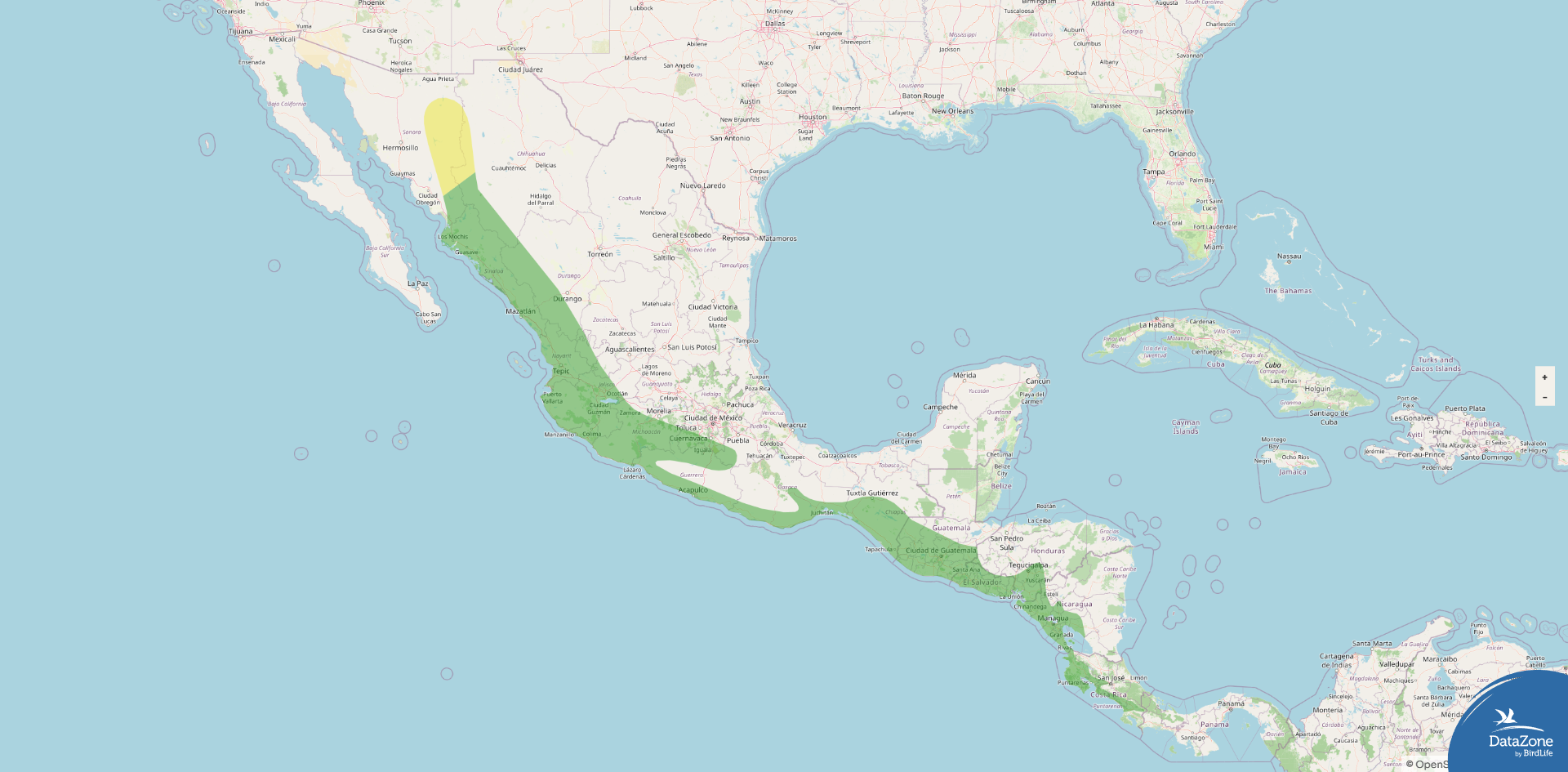
Legend
Green Resident
Yellow Breeding
Species Overview
The Plain-capped Starthroat is a conspicuously large hummingbird in its range, often associated with arid and semi-arid habitats where tall flowering trees and shrubs occur along washes, canyons, and forest edges. It tends to use higher perches and canopy-level flowers more than many smaller hummingbirds. Although it can adapt to some habitat modification, the overall population is believed to be slowly decreasing due to habitat loss and degradation across western Mexico and Pacific-slope Central America.
Male Description
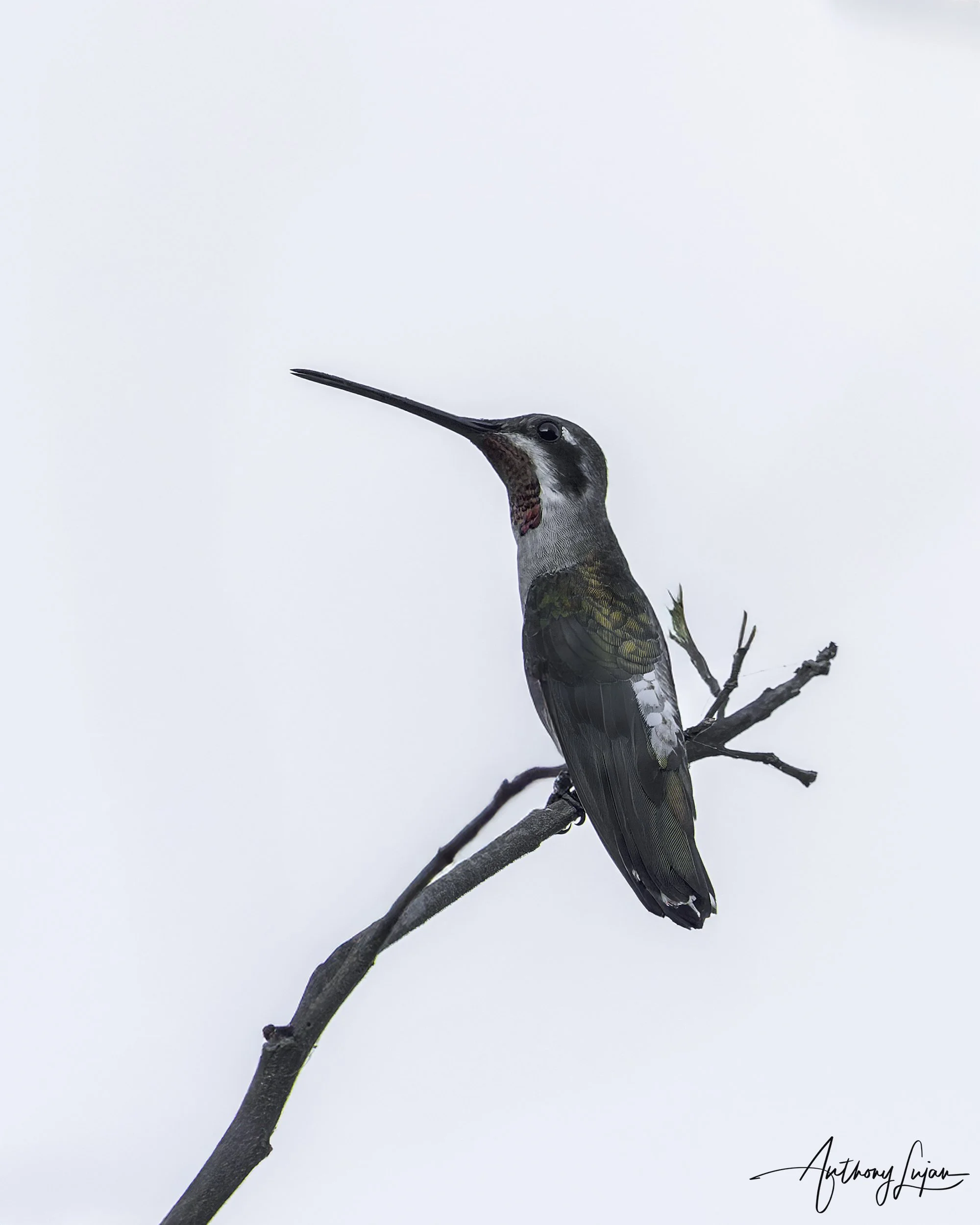
Adult males are large with a long, nearly straight black bill and a bold white stripe behind the eye. The crown and nape are dull brownish, giving the “plain-capped” look, while the back is bronzy green. The throat bears a patch of iridescent red to reddish-purple feathers (the “starthroat”) that flashes when the bird faces the light; below this is a gray breast band. The rest of the underparts are brownish-gray with a whitish belly, and the undertail coverts are pale gray with broad white tips. The flanks show conspicuous tufts of white feathers. The tail feathers are bronze-green near the base with blackish tips, and the outer feathers have white edges or tips on the inner margins, giving a patterned tail.
Female Description
Adult females resemble males in size and structure, with the same long black bill and white post-ocular stripe, but are duller overall. The crown is brownish and the back bronzy green as in the male, but the gorget patch is much less extensive and less bright, often a dusky reddish or a subtle wash rather than a bold, glittering patch. The underparts are brownish-gray with a whitish belly, similar to the male but often paler and with less contrast. The tail pattern is similar, with bronze-green basal portions and darker tips, and white-edged or white-tipped outer feathers. Overall, females appear as large, fairly plain hummingbirds with a long bill, white eye-stripe, and subdued starthroat.
Habitat & Behavior
Plain-capped Starthroats inhabit a variety of arid and semi-arid habitats: tropical deciduous forest, thorn scrub, dry forest edges, oak and pine–oak woodland, and riparian zones with cottonwood and willow, as well as open areas and clearings with scattered trees, hedgerows, and flowering shrubs. They often forage at mid-levels to high in trees, visiting long, tubular flowers on trees, shrubs, and vines, and frequently feeding at ornamental flowers around rural houses. Like other hummingbirds, they also take small insects and spiders, often hawking from exposed perches. Birds are usually solitary; males do not form pairs with females beyond mating and may defend favored nectar sources against intruders. The species is generally considered non-migratory, though local seasonal movements likely follow flowering cycles and rainfall.
Population
With an estimated 50,000–499,999 mature individuals, the Plain-capped Starthroat is not currently considered at immediate risk, but the population is believed to be decreasing. It is patchily distributed, often local but can be fairly common in suitable habitats, especially in rugged or protected areas. Habitat loss from deforestation, agricultural expansion, and urbanization, especially in lowland dry forests and riparian zones, reduces available breeding and foraging sites.
Conservation
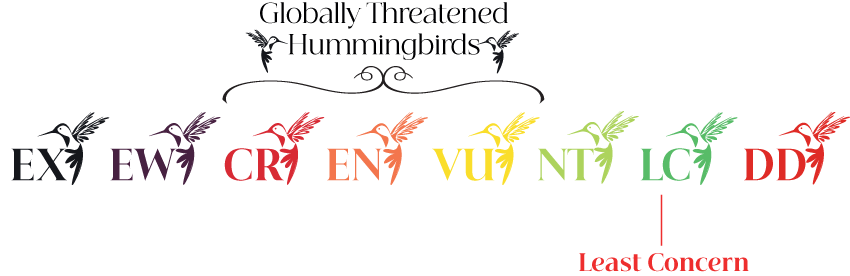
The Plain-capped Starthroat is listed as Least Concern due to its relatively large total population and broad range, but its decreasing trend reflects continuing habitat pressures. Conservation priorities include protecting tropical deciduous forest, thorn scrub, and riparian woodland, as well as maintaining tree- and shrub-rich agricultural landscapes. Retaining flowering native trees and hedgerows in rural and peri-urban areas supports this species and other large hummingbirds that rely on tall nectar sources.
Below is the Plain-capped Starthroat (Heliomaster constantii constantii)
Photographed at Esquipulas Rainforest Lodge, Puntarenas, Costa Rica
These individuals belong to the nominate subspecies constantii, which occurs along the Pacific slope from El Salvador to southern Costa Rica. It inhabits humid to semi-humid tropical zones and often frequents flowering trees and gardens. This form is distinguished by slightly longer wings and overall larger size compared to northern populations, though field distinctions are minor.
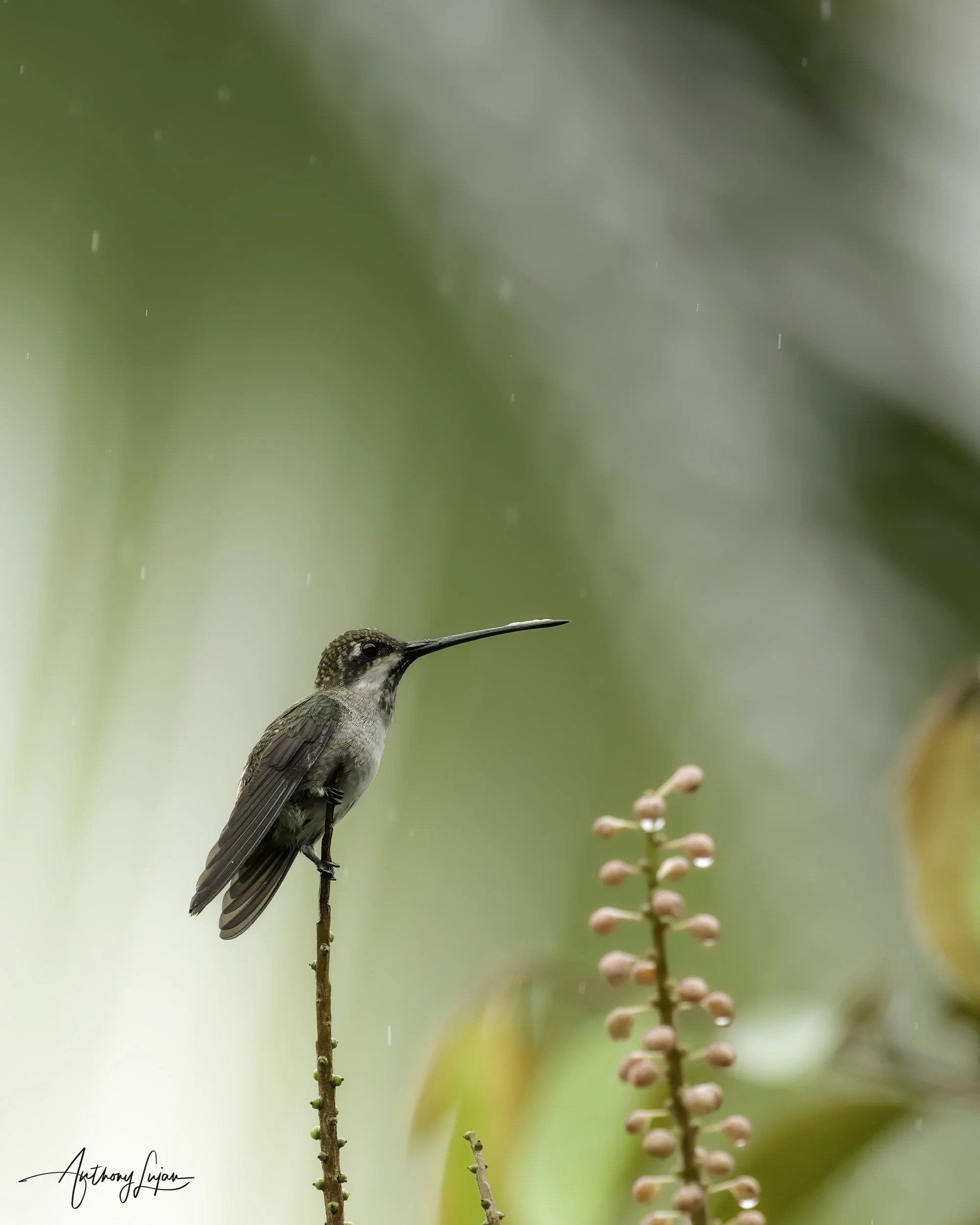
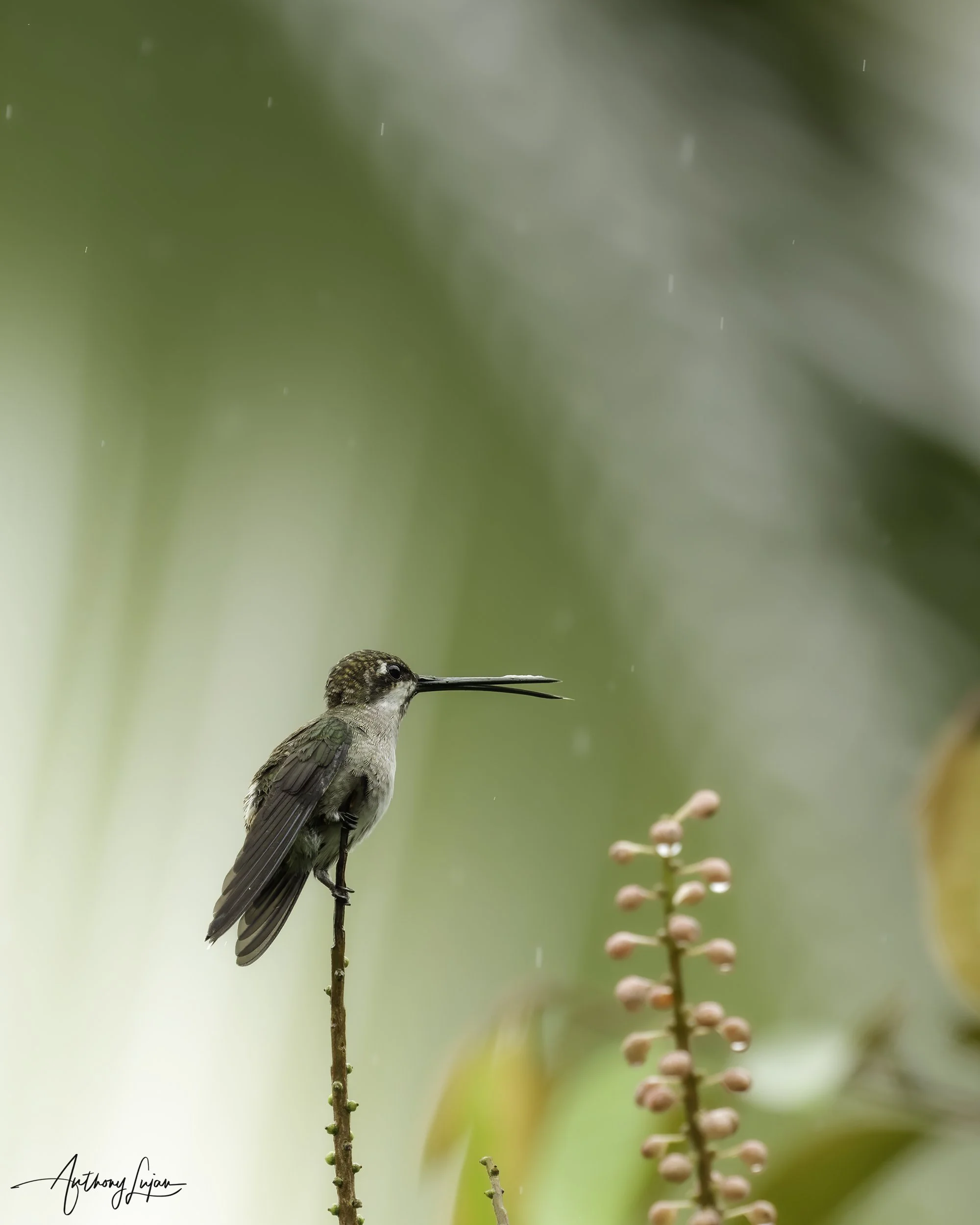
Below is the Plain-capped Starthroat (Heliomaster constantii leocadiae)
Photographed at Río Copalita, Pochutla, Oaxaca, Mexico
These individuals belong to the subspecies leocadiae, found from Michoacán to Chiapas and into Guatemala. This form inhabits dry forest and forest edge habitats across southern Mexico. It is similar in appearance to the nominate form but may show slightly duller underparts and marginally shorter bill length on average. Plumage differences are subtle and mostly overlap across the range.
For more details on the trips behind this species, visit the Costa Rica Hummingbird Expedition | July 2025 page and explore My Travel 2025-05 Costa Rica for guides and trip reports.
Related species in the Heliomaster genus (4 species total):


Please note: The content provided in this article reflects Anthony’s personal experience and photographic approach. Results can vary depending on light, weather, location, equipment, subject behavior, and field conditions.