
Hummingbirds already seem impossibly tiny. When one zips past your garden, it’s easy to think you’re looking at the smallest bird nature could possibly produce. But the real surprise comes when you learn about their eggs.
Hummingbird eggs are so small that many people can hardly believe they are real. In fact, they are the smallest bird eggs in the world, measuring roughly half an inch long and weighing less than a gram.
To put that into perspective, a typical hummingbird egg is about the size of a jelly bean, and in the smallest species it can be closer to the size of a coffee bean.
And inside that tiny shell is a developing bird that will one day fly hundreds or even thousands of miles during migration.
Nature packed an incredible amount of life into a very small package.
A Nest Smaller Than You Think
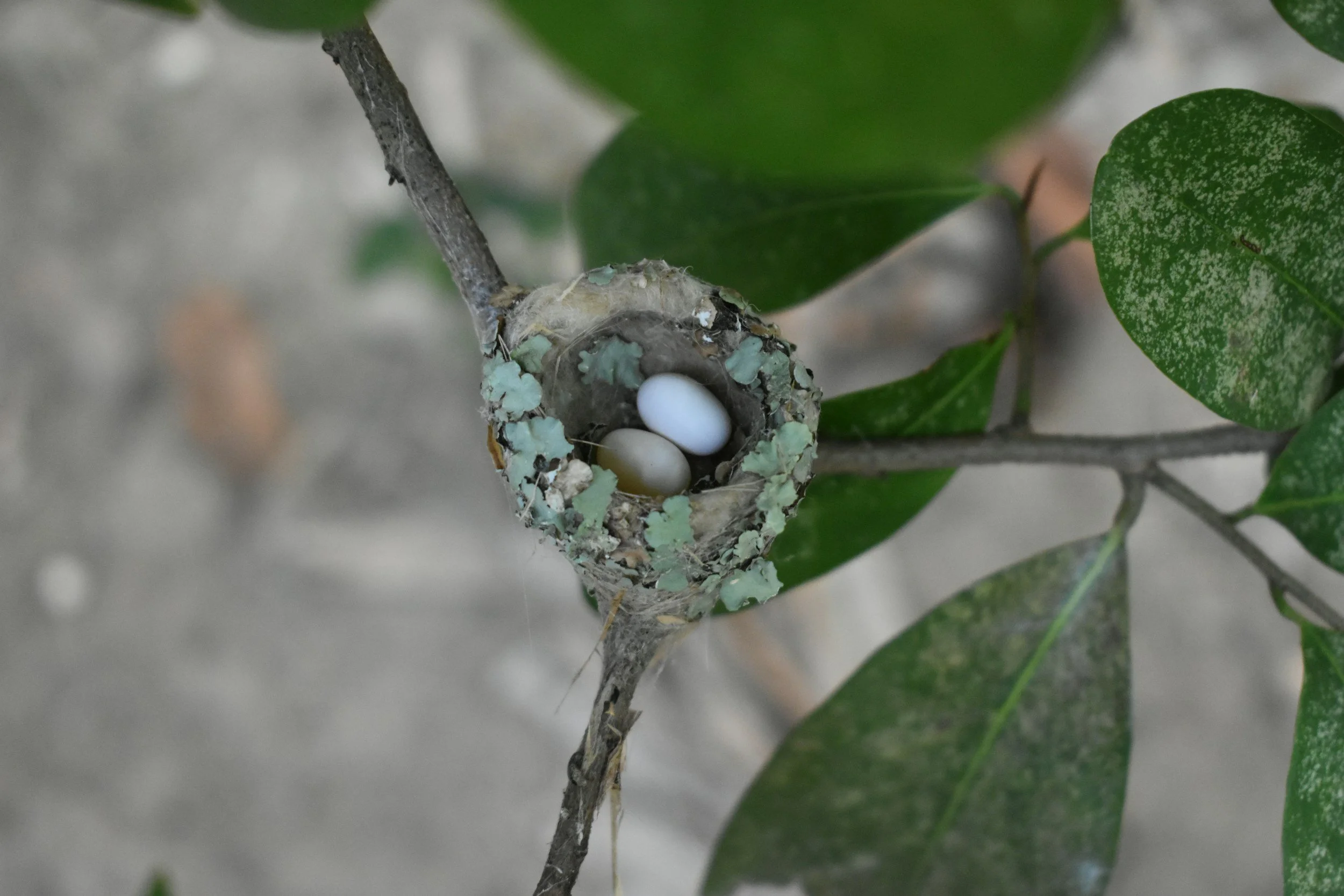
If the eggs are tiny, the nest holding them is even more astonishing.
Hummingbird nests are usually about the size of a walnut or a small golf ball. They’re carefully built using plant fibers, moss, lichen, and spider silk. The spider silk acts like natural elastic, allowing the nest to stretch as the chicks grow.
The female hummingbird does all the work. She collects materials piece by piece and shapes the nest with her body until it forms a soft cup just big enough to hold two eggs.
From a distance, the nest often looks like a small bump on a branch. That camouflage helps protect the eggs from predators.
It also makes them very easy to miss.
Only Two Eggs at a Time
Most hummingbirds lay two eggs per clutch, and that number rarely changes across species.
There’s a good reason for this. Raising hummingbird chicks requires an incredible amount of energy. The mother must constantly search for nectar and insects to feed herself and her growing young.
Because of this demanding lifestyle, hummingbirds evolved to raise small broods rather than large ones.
Once the eggs are laid, the female begins incubating them immediately. Incubation usually lasts about two to three weeks, depending on the species and environmental conditions.
During that time, she rarely leaves the nest for long.
The Incredible Responsibility of the Female
Unlike many birds, male hummingbirds do not help raise the young.
Once mating is complete, the male moves on. The female handles everything that follows. She builds the nest, lays the eggs, incubates them, and later feeds the chicks.
When the eggs hatch, the chicks are almost unbelievably small. They emerge blind, featherless, and completely dependent on their mother.
The female feeds them by regurgitating a mixture of nectar and tiny insects directly into their throats. The insects provide essential protein that helps the chicks grow quickly.
Within a few weeks, those helpless babies will transform into fully feathered hummingbirds ready to leave the nest.
Why Hummingbird Eggs Are White
If you ever see hummingbird eggs up close, you’ll notice they are plain white.
This is actually common among many birds that nest in protected locations. Since the eggs are hidden in a nest and shaded by the mother, they don’t need the camouflage patterns that ground-nesting birds rely on.
The smooth white shell is made mostly of calcium carbonate, which provides protection while still allowing oxygen to pass through tiny pores in the shell.
It’s a simple but effective design.
The Smallest Eggs in the Bird World
Among all birds, hummingbirds hold the record for the smallest eggs ever laid.
The champion of tiny eggs is the Bee Hummingbird, the smallest bird on Earth. Its eggs are roughly the size of a coffee bean.
That’s remarkable when you consider the bird itself is only about two inches long.
Even larger hummingbird species still lay eggs that look tiny compared to those of most other birds.
Yet inside each egg is everything needed to grow feathers, wings, muscles, and a beating heart.
A Hidden Miracle in Your Backyard
One of the most fascinating things about hummingbird nesting is how easily it can happen right under our noses.
A hummingbird nest might be built on a thin branch, tucked inside a shrub, or hidden in a small tree near your home. Because the nests are so small and well camouflaged, many people never notice them.
But if you’re lucky enough to spot one, it can be an incredible window into the life of these remarkable birds.
Watching a female hummingbird carefully tend her nest and raise her young is a reminder of just how much effort goes into sustaining wildlife around us.
A Tiny Beginning for a Powerful Flier
It’s easy to think of hummingbirds only as fast, colorful garden visitors.
But every hummingbird you see started life inside one of these unbelievably tiny eggs.
From that half-inch shell grows a bird capable of hovering in place, flying backward, and migrating hundreds of miles across continents.
All from something no bigger than a jelly bean.
Nature doesn’t just create beauty. Sometimes it hides its most incredible stories in the smallest places.
And hummingbird eggs might be one of the best examples of that.
Frequently Asked Questions
The more you learn about hummingbird nesting, the more incredible these tiny birds become. Here are a few common questions people ask about hummingbird eggs, nests, and chicks.
-
Hummingbird eggs are incredibly small, usually about the size of a jelly bean. Most measure around half an inch long and weigh less than a gram, making them the smallest bird eggs in the world.
-
Most hummingbirds lay two eggs per clutch. This number is very consistent across species because raising chicks requires a huge amount of energy for the female hummingbird.
-
Hummingbird eggs are plain white. Since their nests are usually hidden in trees or shrubs, the eggs do not need camouflage patterns like birds that nest on the ground.
-
Hummingbird eggs typically hatch in 14 to 18 days, depending on the species and environmental conditions. During this time the female hummingbird incubates the eggs and rarely leaves the nest for long.
-
Male hummingbirds do not help raise the young. The female builds the nest, lays the eggs, incubates them, and feeds the chicks after they hatch.
-
A hummingbird nest is usually about the size of a walnut or small golf ball. The female builds it using soft plant fibers, moss, and spider silk, which allows the nest to stretch as the chicks grow.
Please note: The content provided on this blog is for educational purposes only and contains general information.