
Seeing Conservation in Action: Supporting the Juan Fernández Firecrown
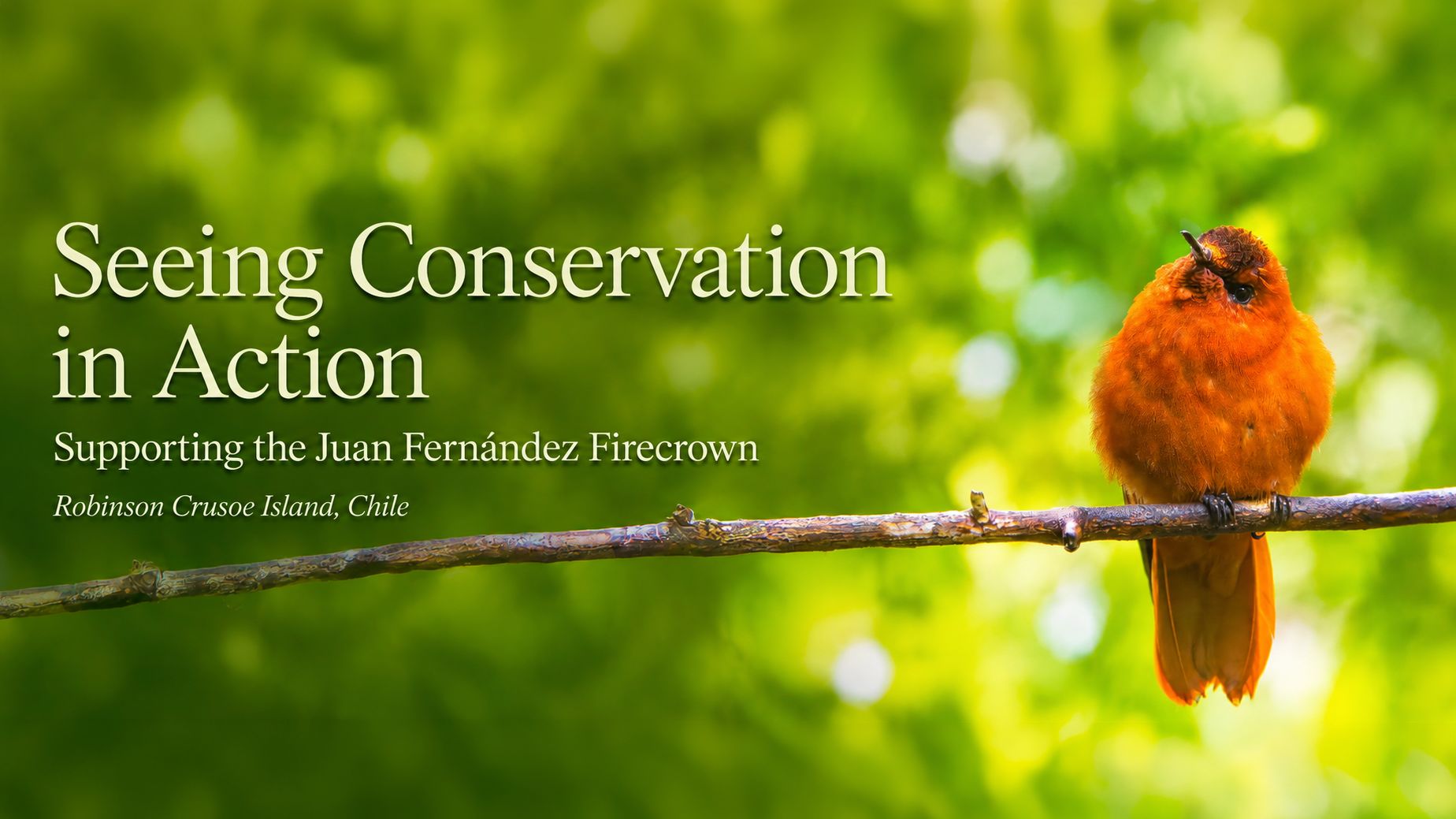
In January 2025, my journey to photograph the hummingbirds of the Americas took me somewhere unlike anywhere I had traveled before: Robinson Crusoe Island, roughly 400 miles off the coast of Chile.
The island is the only place in the world where the Juan Fernández Firecrown exists.
I traveled there to photograph this extraordinary hummingbird, but the experience became about much more than adding another species to my photographic journey. As a Board Member of the International Hummingbird Society, I also had the opportunity to see firsthand conservation work the Society has supported and to meet some of the people working to protect the Firecrown and the habitat upon which it depends.
For me, it was an opportunity for photography and conservation to come together in a very real way.
A Hummingbird Found Nowhere Else
There is something especially powerful about seeing an island endemic in the only place on Earth where it survives.
The Juan Fernández Firecrown is completely tied to Robinson Crusoe Island. There is no second population on the mainland or another island waiting in reserve. What happens to the habitat and ecological health of this one island directly affects the future of the species.
I set out for Robinson Crusoe Island with the goal of photographing the Juan Fernández Firecrown and experiencing its habitat firsthand, and I invited Alice Madar, Executive Director of the International Hummingbird Society, fellow IHS Board Member Carole Turek, and other photographers and conservation supporters to join me. Together, we spent several days observing and photographing the Firecrown while learning firsthand about the conservation challenges surrounding this remarkable species.
For me, photographing a species like this is never simply about getting the image.
Once you understand how small its world is, the photograph begins to represent something much larger.
Seeing Habitat Restoration Firsthand
One of the most important parts of our visit was spending time with Dr. Peter Hodum of Oikonos Ecosystem Knowledge, who has spent years working on conservation projects in the Juan Fernández Archipelago.
Peter took us into the Plazoleta El Yunque area to see habitat restoration work being carried out in areas used by the Juan Fernández Firecrown.
This gave us the opportunity to move beyond reports, photographs and conservation updates and actually stand in the landscape where the work is happening.
That perspective matters.
Conservation can easily become a discussion of population estimates, funding needs, habitat percentages and project goals. Those things are important, but being on the ground brings everything back to what those numbers actually represent.
Real habitat.
Real birds.
And people dedicating years of their lives to making sure those birds still have a future.
Presenting $4,000 for Firecrown Conservation
One of the most meaningful moments of the trip came when we had the privilege of presenting Dr. Peter Hodum and the Oikonos team with a $4,000 contribution from the International Hummingbird Society to help support continued conservation work for the Juan Fernández Firecrown.
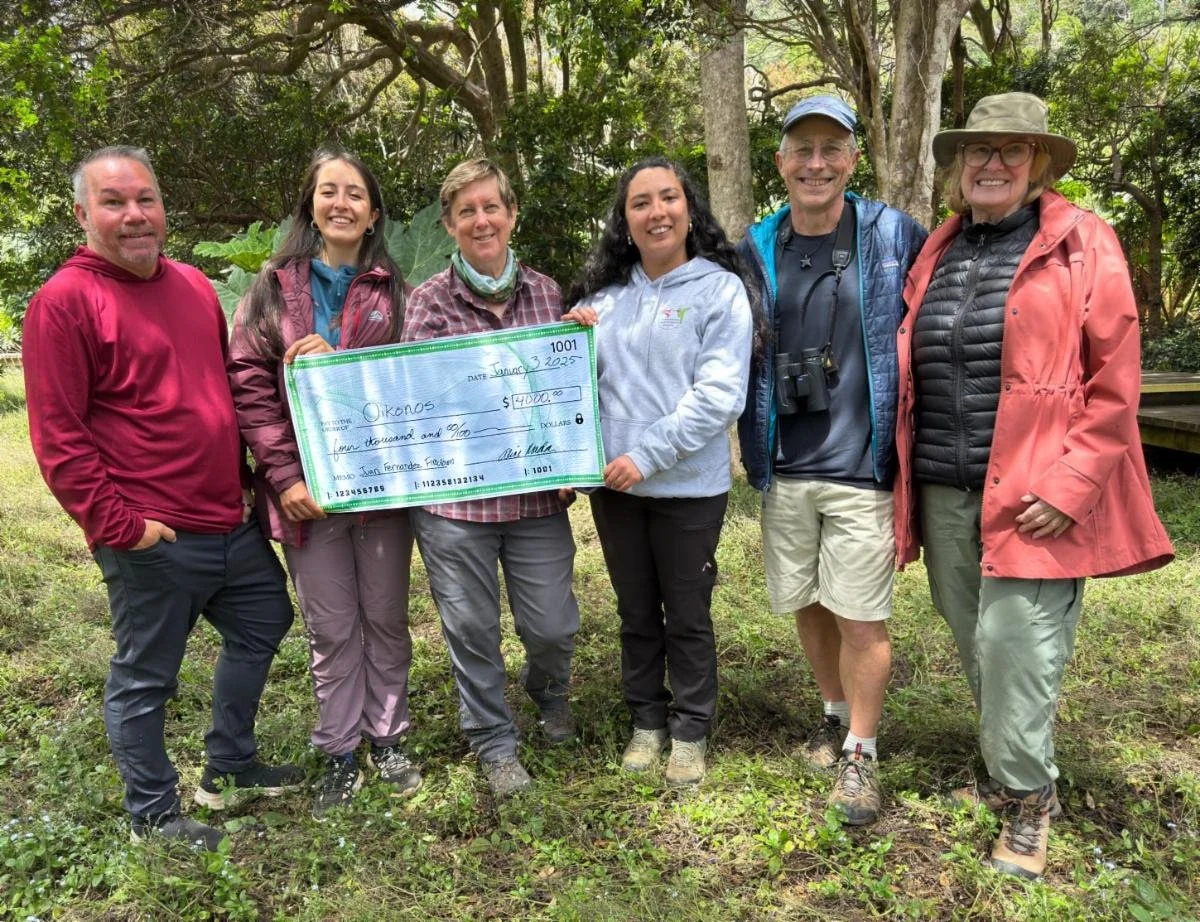
From left: Anthony Lujan, Génesis Astudillo, Alice Madar, Cabila Manríquez, Peter Hodum, Carole Turek. Photo courtesy William Orellana, Beaks and Peaks
The funding was directed toward habitat restoration and other conservation activities benefiting the species.
Being there as an IHS Board Member and helping present that support was especially significant to me.
Board meetings and conservation discussions are necessary parts of this work, but standing on Robinson Crusoe Island and seeing where that support was going created an entirely different connection.
We were able to meet the people doing the work, walk through the habitat being restored, and see the very hummingbird those conservation efforts are intended to protect.
There is a tremendous difference between discussing conservation from thousands of miles away and standing in the habitat of the species whose future you are discussing.
That experience reinforced for me why supporting conservation on the ground is so important.
Why Updated Population Research Matters
The work surrounding the Juan Fernández Firecrown did not end with that contribution.
One of the challenges conservationists face is understanding exactly how the population is doing today.
The last population estimate dates back to 2015, when approximately 1,000 individuals were believed to remain. More than a decade later, updated information is increasingly important.
A population count provides much more than another number.
It can help researchers determine whether a species is stable, increasing or declining. It can help identify where birds are occurring, where conservation efforts should be concentrated and whether the actions already underway are producing results.
That need has since inspired additional support.
An incredibly generous member of the International Hummingbird Society contributed another $4,000 specifically to help support research and a new population count of the Juan Fernández Firecrown on Robinson Crusoe Island.
For a hummingbird whose entire global population exists on one island, having current information about how many remain is critical to making informed conservation decisions.
More Than a Photograph
Experiences like Robinson Crusoe Island continue to change what hummingbird photography means to me.
I still feel the excitement of seeing a species for the first time and raising my camera to capture that moment. But the more endangered, threatened and highly restricted hummingbirds I encounter, the harder it becomes for me to separate photography from conservation.
These birds are not simply subjects in front of my lens.
Their photographs carry stories about habitat, isolation, survival and the people working to protect them.
The Juan Fernández Firecrown is a perfect example.
Having the opportunity to photograph a hummingbird found nowhere else on Earth was extraordinary.
Having the opportunity to stand in its habitat, see conservation work firsthand and help deliver resources to people working to protect its future meant even more.
That is what I want this Hummingbird Conservation series to document.
Not only the threats hummingbirds face, but also the people, partnerships, research, funding and conservation work giving some of the world's most vulnerable hummingbirds a fighting chance.
Help Support the Journey
There are still hummingbird species remaining on my journey to photograph them all, including species facing serious conservation challenges and some found in extraordinarily remote regions of the Americas.
Your sponsorship helps support the expeditions required to reach these species, document them through photography and video, and continue sharing their stories with a wider audience.
Help me continue the journey and bring greater attention to the hummingbirds that still need our help.