

Scientific name: Doryfera johannae
The Blue-fronted Lancebill is a distinctive hummingbird of humid Andean forests and tepuis in northern South America. The number of mature individuals is unknown, the population is decreasing, it is considered non-migratory, and it is currently listed as Least Concern with two recognized subspecies.
At a Glance
Family: Trochilidae (hummingbirds)
Clades: Polytminae – Mangoes
Genus group: Doryfera — straight, lance-billed hummingbirds of humid forests (2 species total)
Range: Discontinuous, with one population along the Andes of western Venezuela, Colombia, Ecuador, and northern Peru, and another in the tepui region of southern Venezuela, adjacent northern Brazil, and western Guyana.
Habitat: Humid montane and foothill forest, especially along streams, ravines, and waterfalls, plus humid tepui forest and steep, wet slopes.
Elevation: Mostly from about 500–2,000 m (1,600–6,600 ft), locally higher in the Andes and on tepuis.
Length: About 9–10 cm (3.5–3.9 in), much of it bill.
Weight: About 4–5 g (0.14–0.18 oz).
Number of mature individuals: Unknown
Population trend: Decreasing
Status: Least Concern (IUCN)
Name Origin
The genus name Doryfera combines Greek roots for “spear” and “bearing,” referring to the long, straight, spear-like bill. The species name johannae honors a woman named Johanna, commemorated in the bird’s scientific name. The English name “Blue-fronted Lancebill” highlights both the bright blue coloration on the forehead and the long, lance-like bill.
Subspecies & Distribution
Two subspecies:
Doryfera johannae johannae
Distribution: Andes of western Venezuela and Colombia south through Ecuador to northern Peru. It occurs along humid Andean slopes, usually near fast-flowing streams and waterfalls within foothill and montane forest.Doryfera johannae guianensis
Distribution: Isolated population in the tepui region of southern Venezuela and adjacent northern Brazil (Roraima) and western Guyana. Here it inhabits humid forest and steep, wet ravines associated with the sandstone table mountains (tepuis).
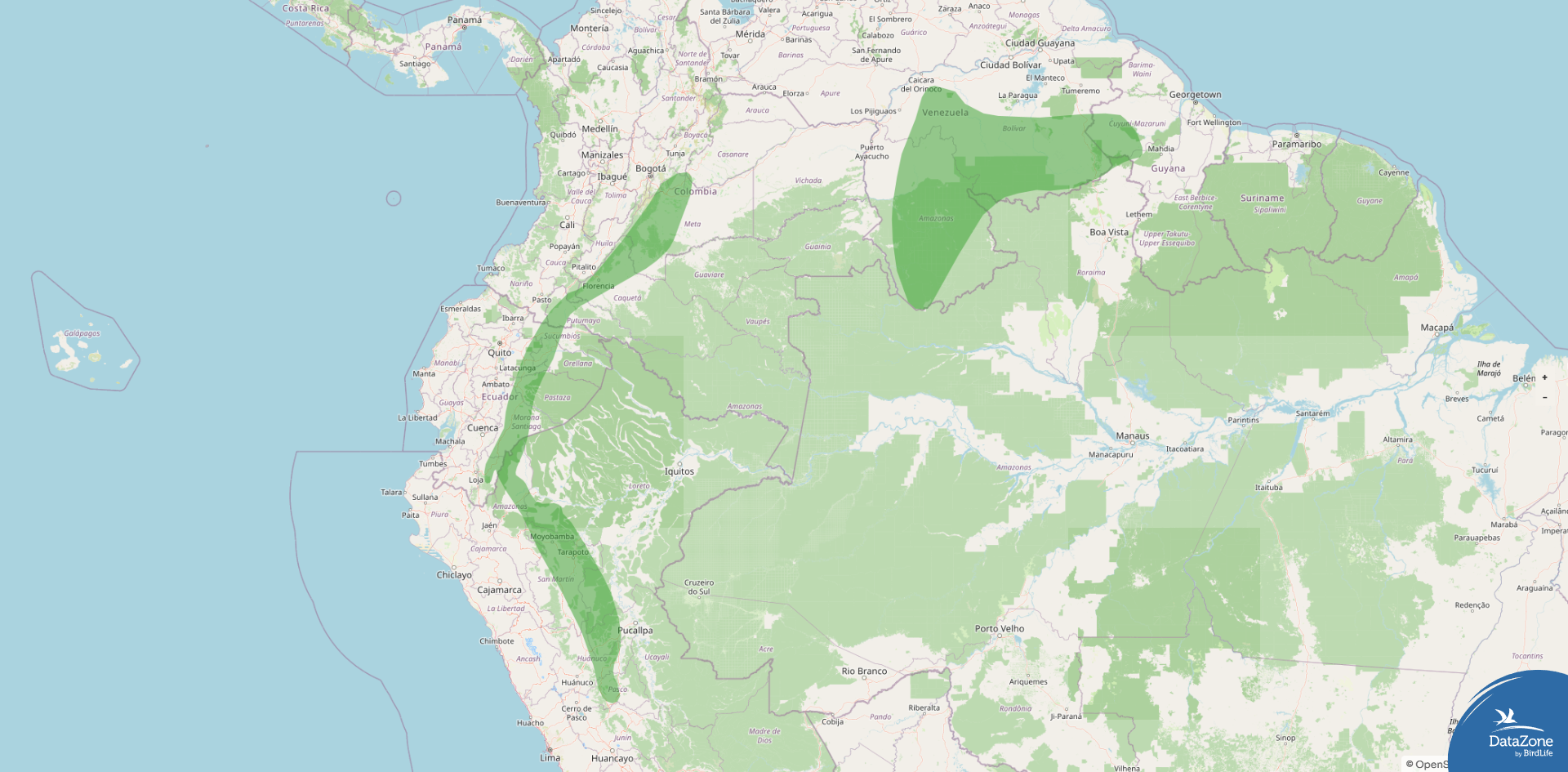
Legend
Green Resident
Species Overview
The Blue-fronted Lancebill is a specialist of fast-flowing streams and waterfalls in humid forest, using its long, straight bill to probe deep tubular flowers. It is typically seen along shaded ravines, the spray zones of waterfalls, and forested stream corridors. Its disjunct Andean and tepui populations share similar ecological preferences despite being widely separated geographically.
Male Description
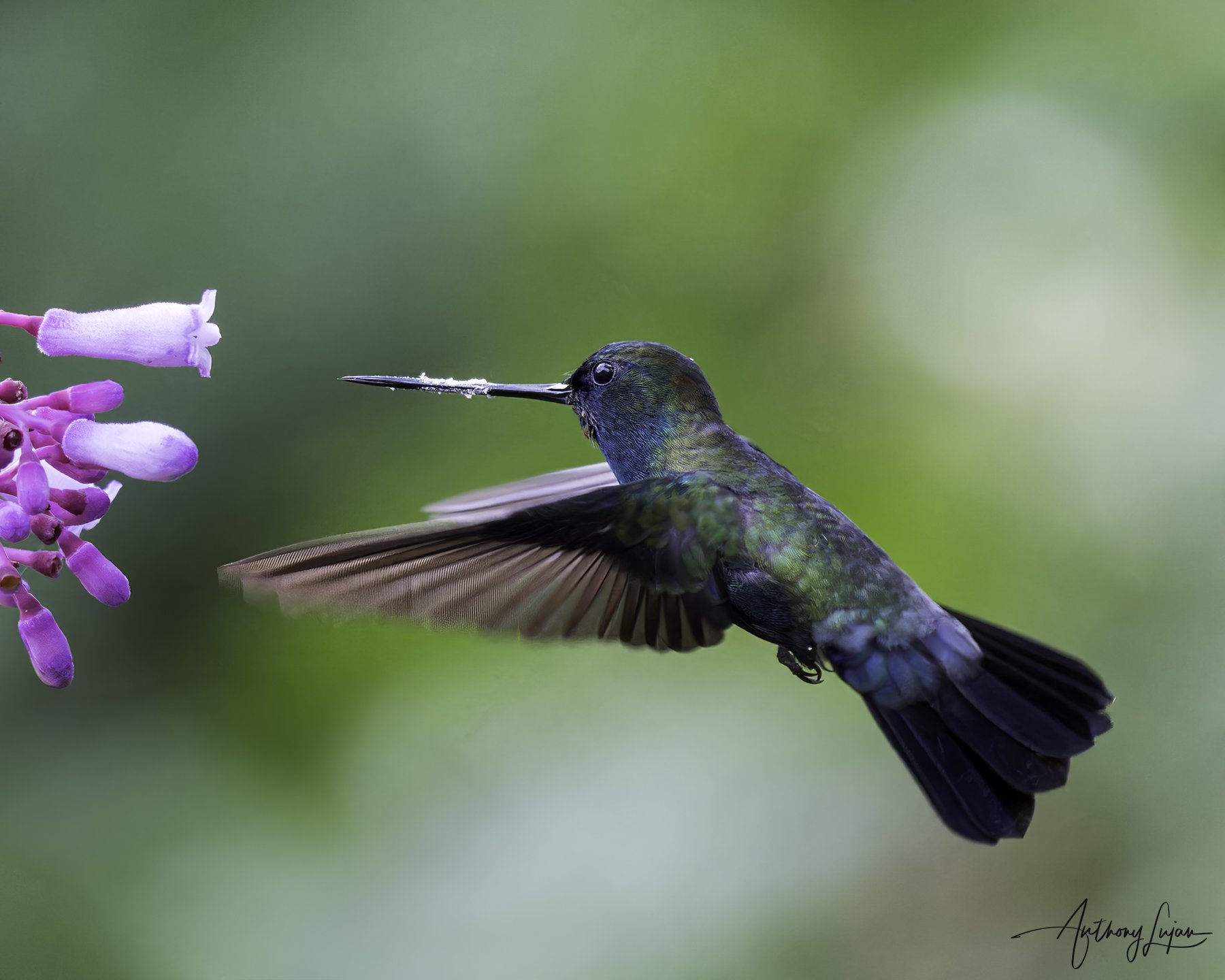
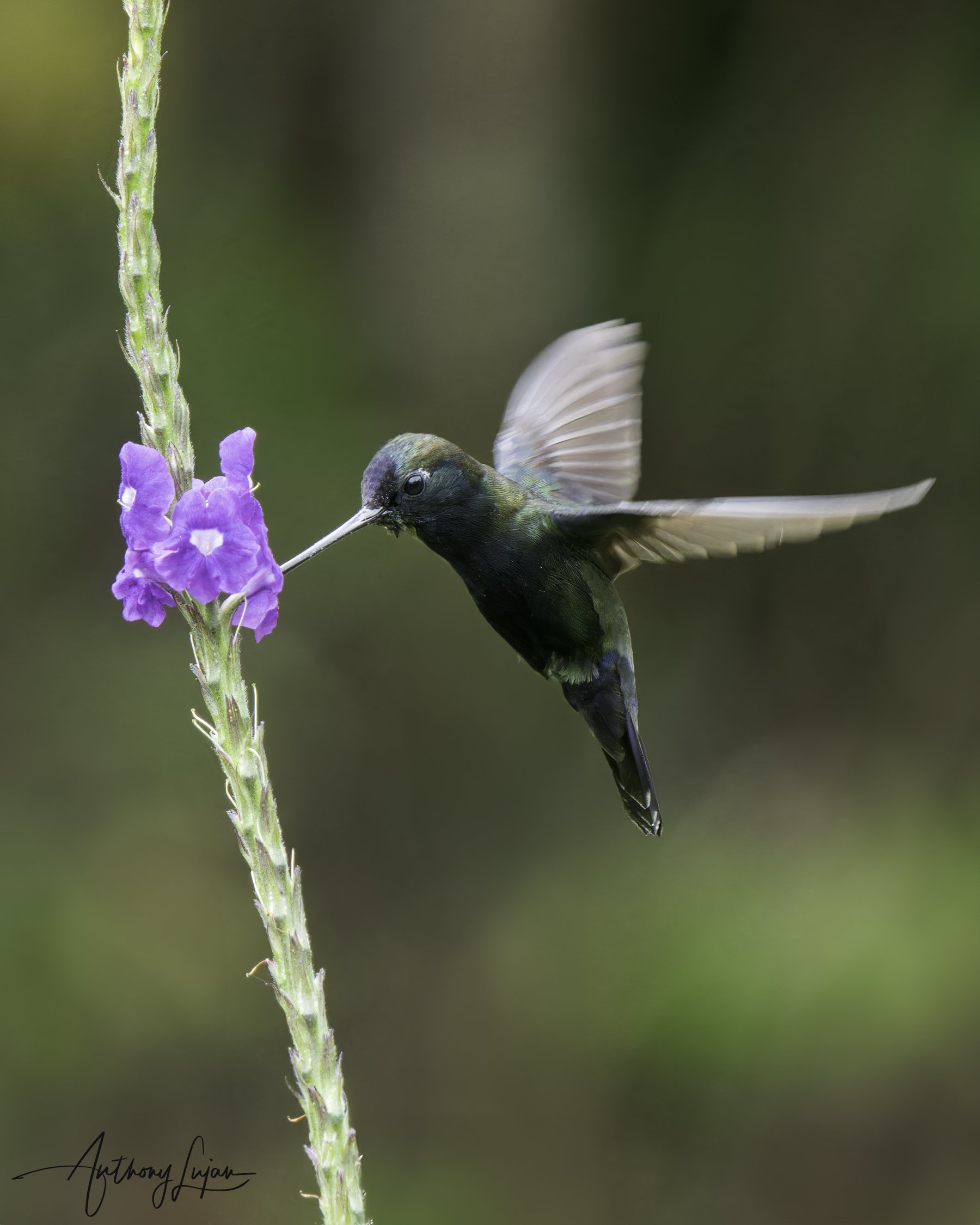
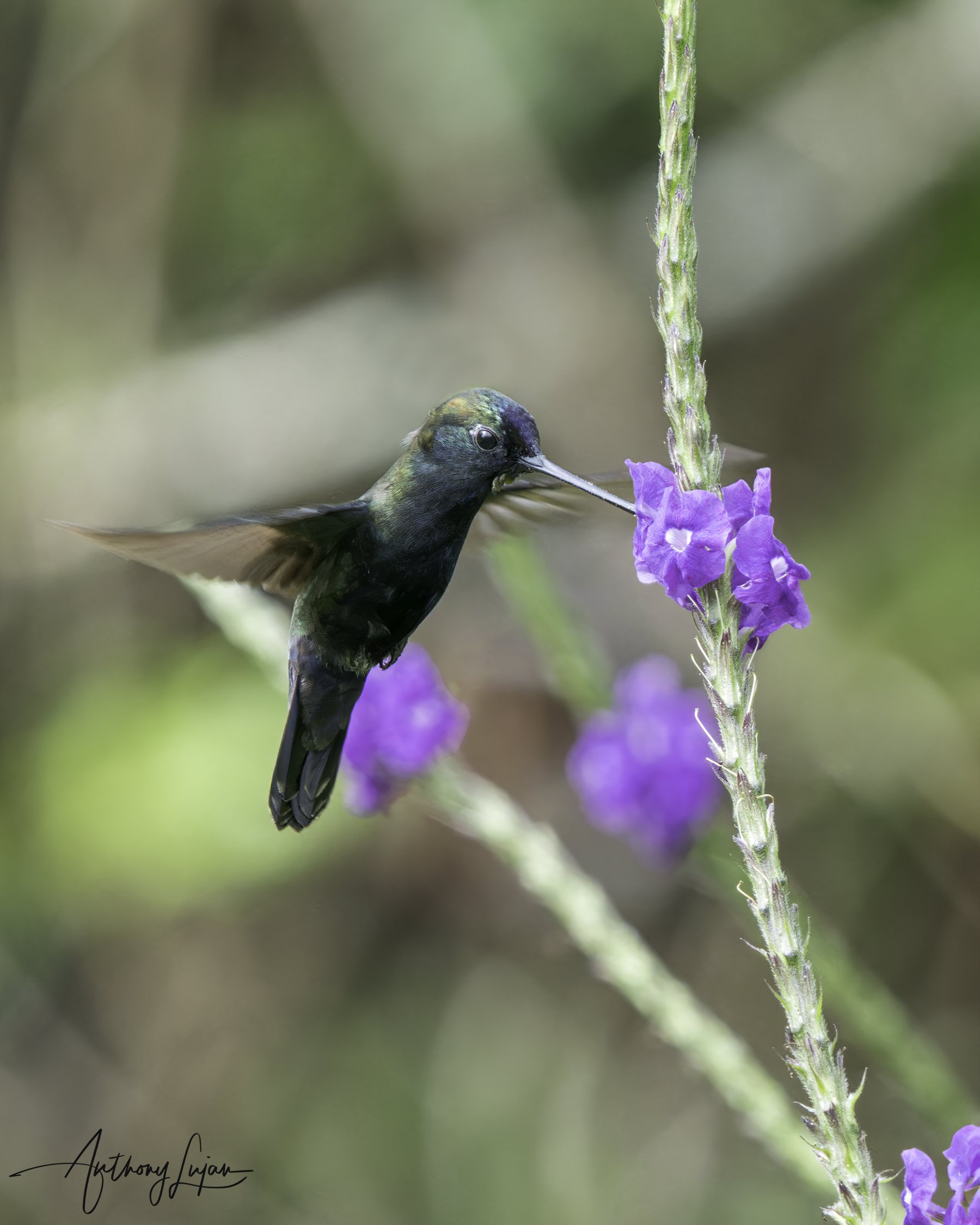
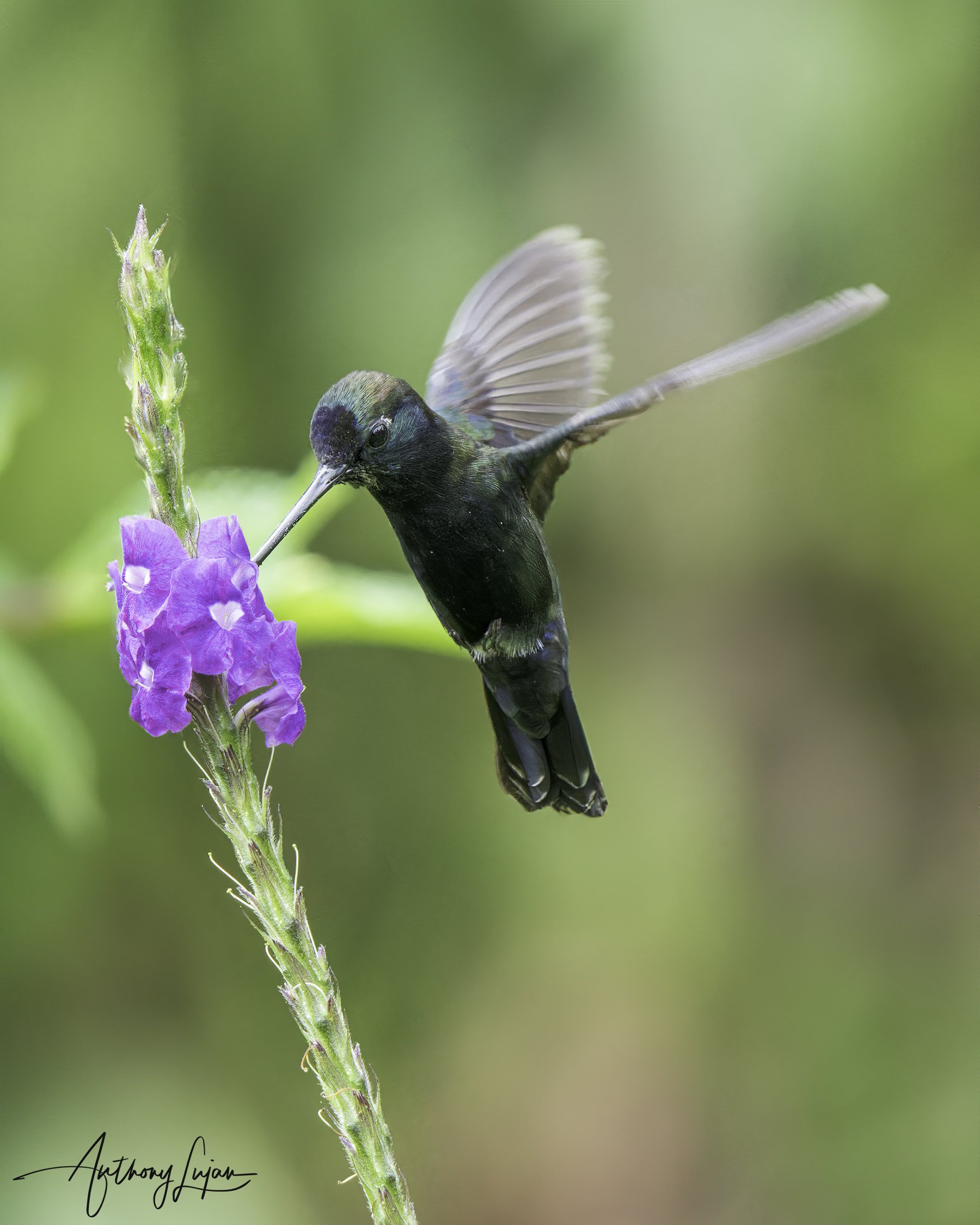
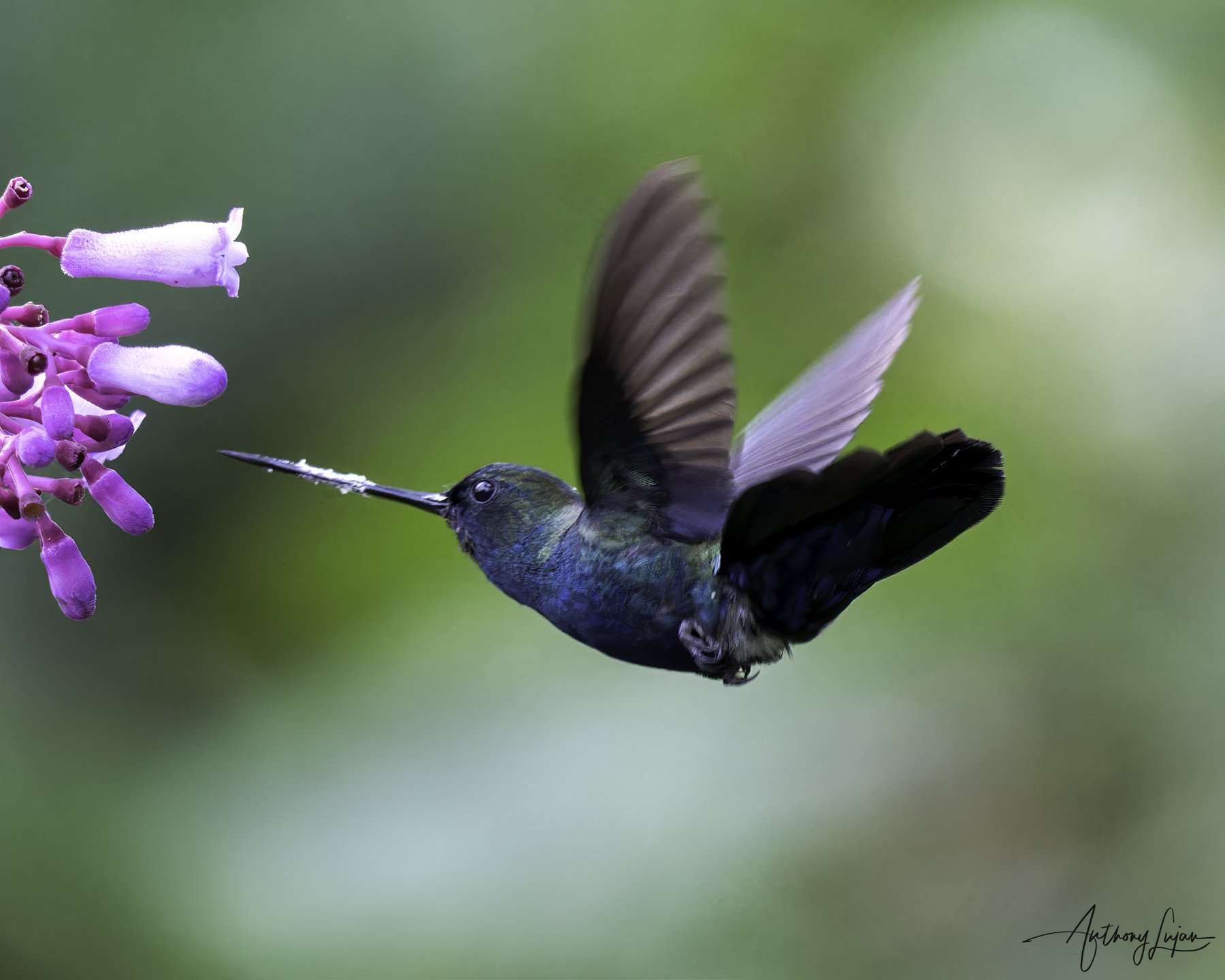
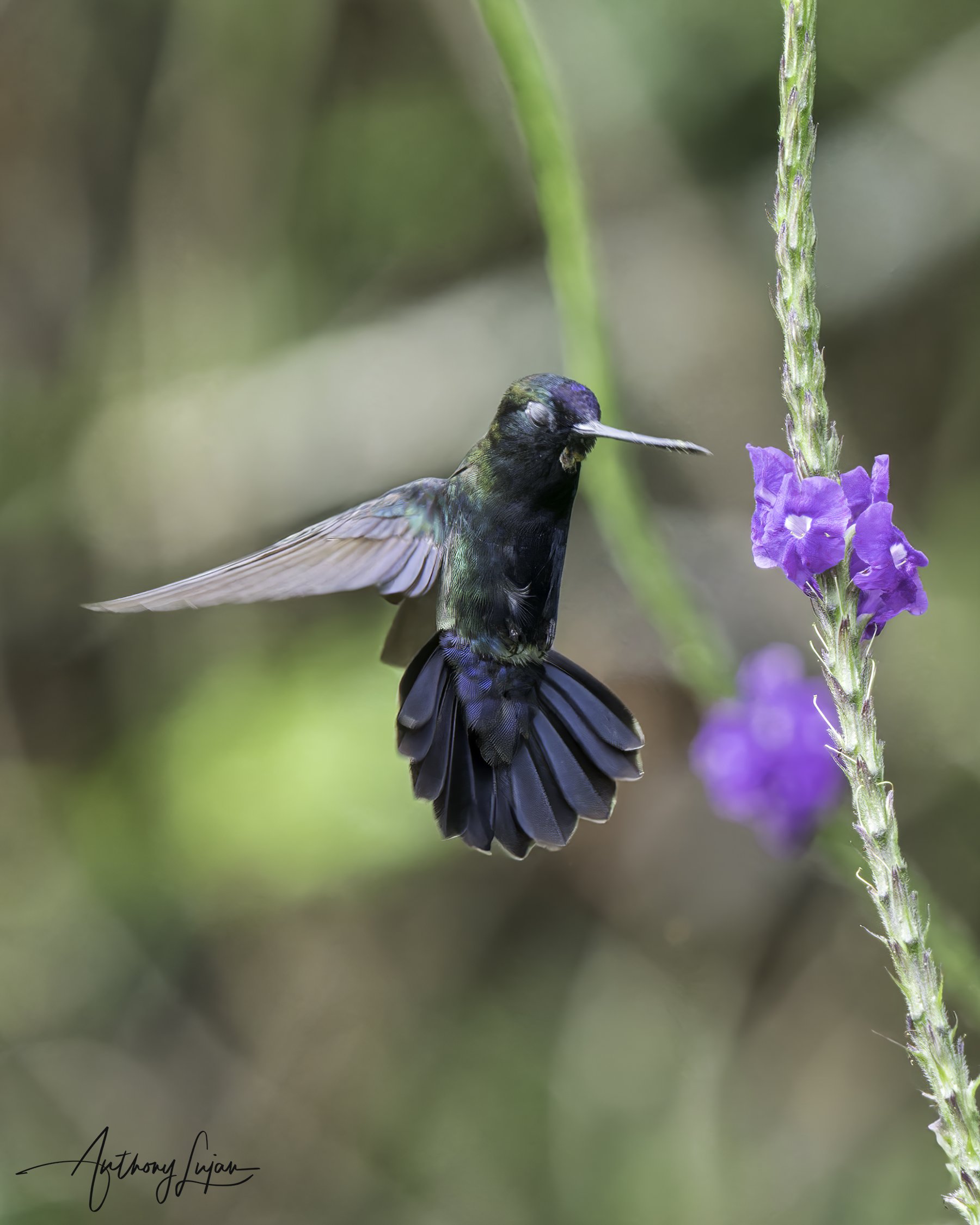
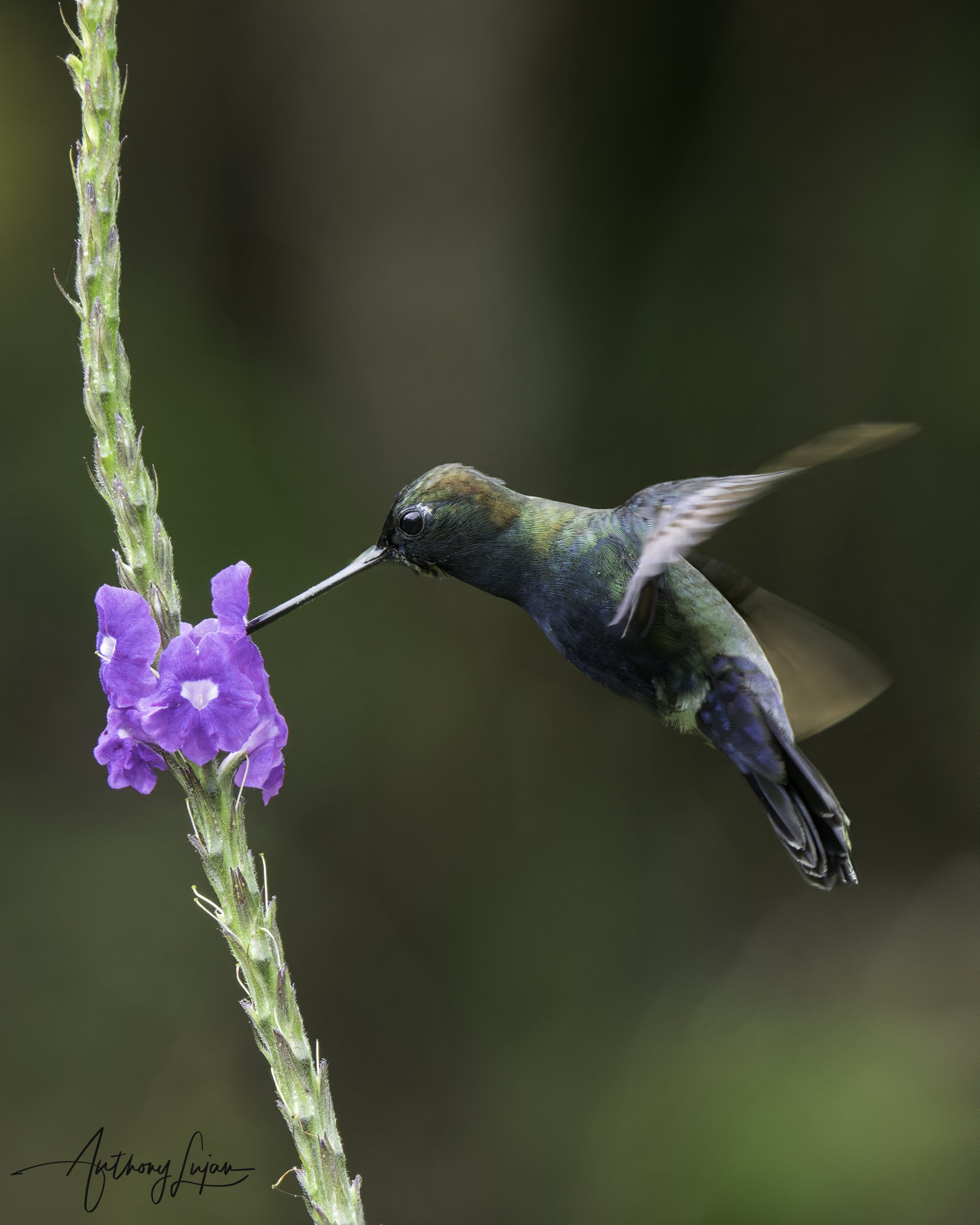
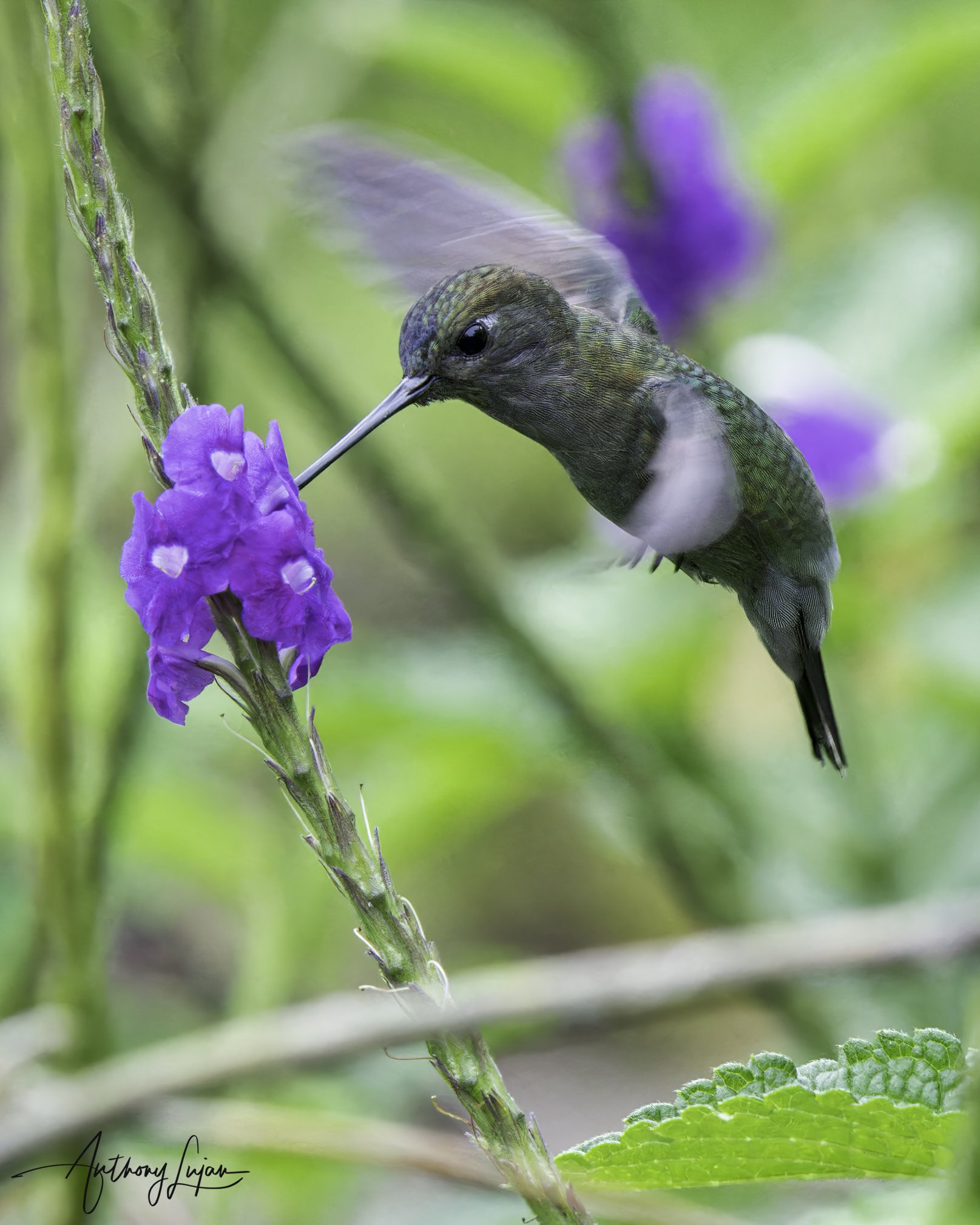
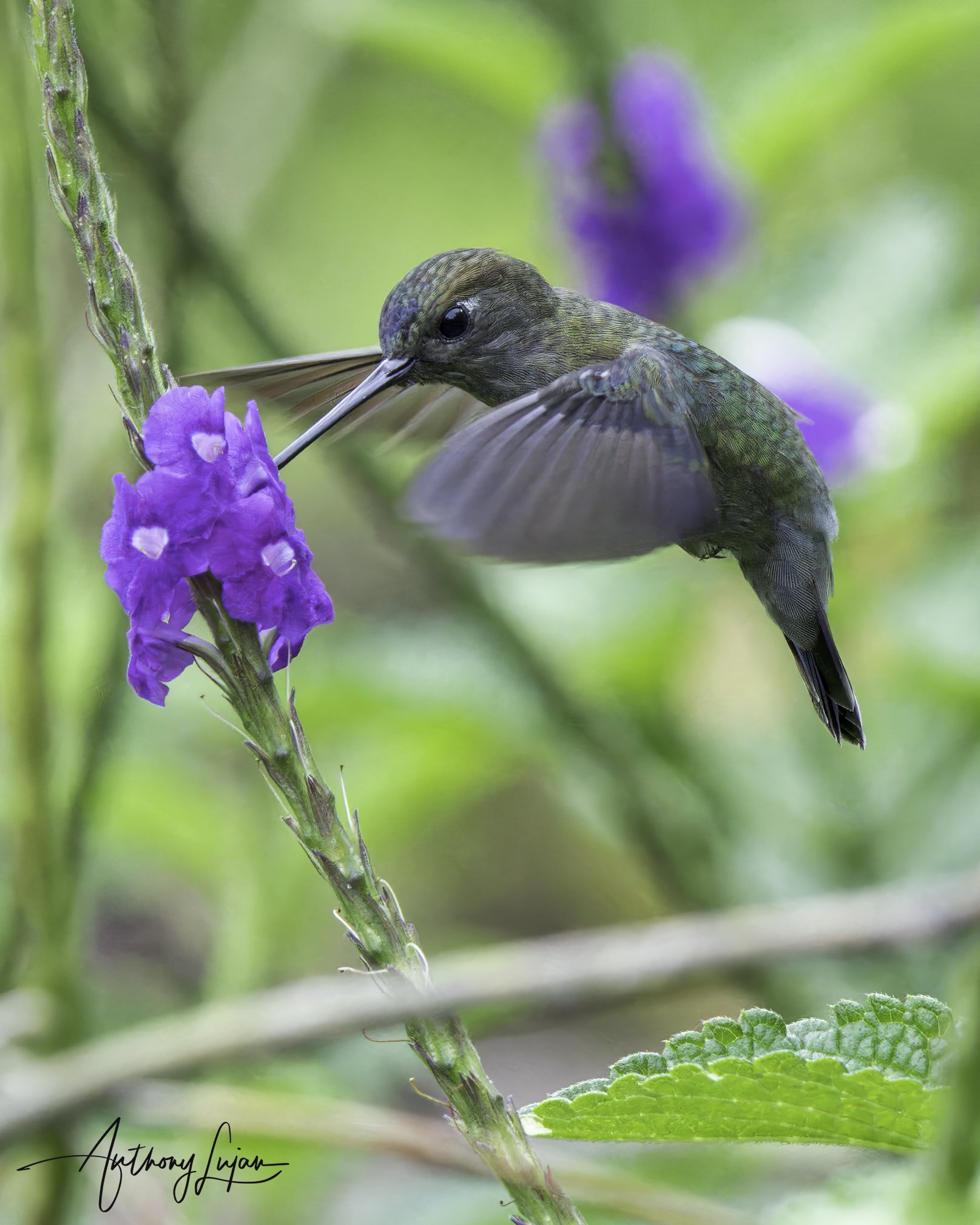
Adult males are medium-sized hummingbirds with a very long, straight, lance-like black bill. The crown and forehead show a patch of bluish to blue-green iridescence, giving the “blue-fronted” appearance. The upperparts are mostly dark green to bronzy-green. The throat and chest are dusky to dark, often with a subtle greenish sheen, and the belly is grayish to buffy with darker sides. The tail is relatively short and slightly rounded, dark with a slight metallic gloss. In the field, males appear as rather dark hummingbirds with a noticeably long, straight bill and a small but striking blue patch on the front of the head.
Female Description
Adult females are similar in size and structure, with the same long, straight bill, but their plumage is slightly duller. The blue on the forehead is reduced or less intense, and the underparts are paler, often grayish or buffy with some faint spotting or mottling on the throat and breast. The upperparts are greenish but less saturated than in males. The tail is dark, like the male’s, with subtle pale edging on the outer feathers in some individuals. Females therefore appear as long-billed, mostly green hummingbirds with a more subdued head pattern and paler underparts.
Habitat & Behavior
Blue-fronted Lancebills are strongly associated with humid forest along clear, fast-flowing streams, cascades, and waterfalls. They frequently forage in the spray zones of falls and along steep ravines where specialized tubular flowers grow on mossy rocks and overhanging vegetation. Their long, straight bill allows them to access deep corollas that many other hummingbirds cannot exploit. They also take small insects for protein, often gleaning them from foliage or catching them in short sallies over the water. The species is considered resident throughout both its Andean and tepui ranges, with no large-scale migratory movements known, though local movements along streams and elevation gradients likely follow flowering phenology and water conditions.
Population
The total number of mature individuals is unknown, but the species is patchily distributed along suitable stream and waterfall habitats rather than evenly spread through the forest. It may be locally fairly common along some river systems and tepui slopes, yet overall densities are limited by the availability of appropriate ravine and waterfall environments. Habitat alteration that affects forested streams, such as deforestation, road building, and changes in water flow, can reduce its local abundance.

Conservation
The Blue-fronted Lancebill is assessed as Least Concern because of its broad, though disjunct, range and occurrence in several protected and remote areas. However, its decreasing trend reflects pressures on humid montane and foothill forests, including logging, agriculture, hydroelectric and road development, and other disturbances that modify forested streams and waterfalls. Protecting river corridors, maintaining intact riparian forest, and safeguarding tepui and Andean ravine systems are crucial for this species and many other stream-dependent hummingbirds.
Below is the Blue-fronted Lancebill (Doryfera johannae johannae)
Photographed at Reserva Arena Blanca, San Martín, Peru
This individual belongs to the nominate subspecies johannae, which occurs along the eastern Andean slope from southern Colombia through Ecuador and into northern Peru. It is typically found near fast-flowing streams and waterfalls within humid montane forest, where it specializes in feeding from tubular flowers adapted to its long, slender bill.
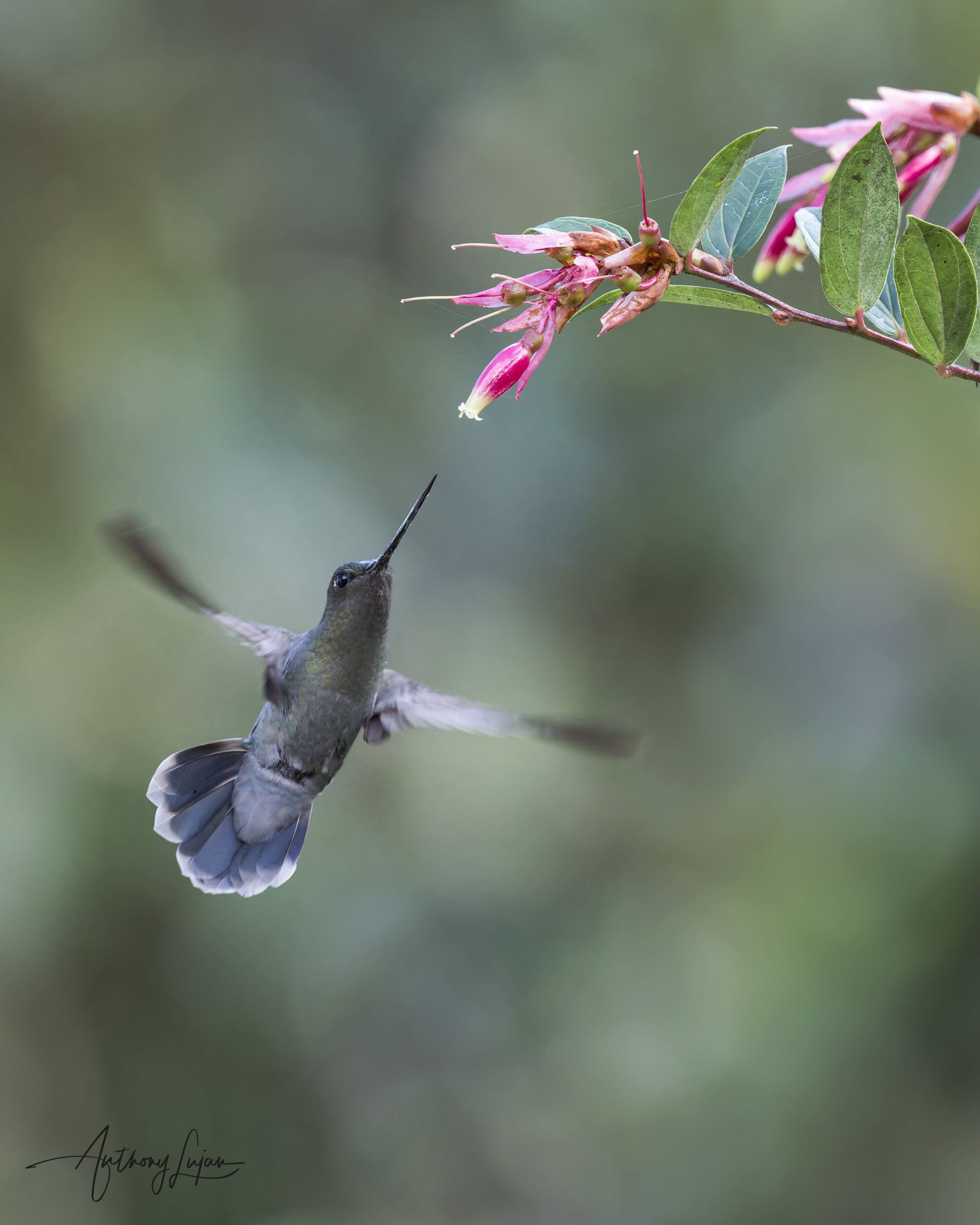
Related species in the Doryfera genus (2 species total):
Please note: The content provided in this article reflects Anthony’s personal experience and photographic approach. Results can vary depending on light, weather, location, equipment, subject behavior, and field conditions.