
Scientific name: Chrysuronia grayi
The Blue-headed Sapphire is a small, brilliantly colored hummingbird found in dry inter-Andean valleys from western Colombia south into northern Ecuador. The number of mature individuals has not been estimated, but the population is considered stable, it is treated as non-migratory, and it is currently listed as Least Concern and monotypic.
At a Glance
Family: Trochilidae (hummingbirds)
Clade: Trochilini – Emeralds
Genus group: Chrysuronia — 10 species, 24 subspecies
Range: Inter-Andean valleys from western Colombia’s Valle del Cauca south into Ecuador’s Pichincha and nearby provinces.
Habitat: Dry and semi-arid scrublands, edges of woodland and taller forest, hedgerows, and cultivated areas such as agricultural fields and orchards with scattered trees and shrubs.
Elevation: Mostly between about 500 and 2,000 m, occasionally up to roughly 2,600 m.
Length: About 9–11 cm (3.5–4.3 in).
Weight: Males about 6.2–6.8 g; females about 4.6–5.6 g.
Number of mature individuals: Unknown
Population trend: Stable
Status: Least Concern (IUCN)
Name Origin
The genus name Chrysuronia comes from Greek roots meaning “golden tail,” originally referring to the bright tails of some related species. The species name grayi honors British zoologist John Edward Gray, who worked extensively on vertebrate taxonomy. The English name “Blue-headed Sapphire” highlights the male’s deep blue head and throat paired with jewel-like green and blue body tones.
Subspecies & Distribution
Monotypic; no subspecies are recognized. It occurs in inter-Andean valleys from western Colombia (notably Valle del Cauca and neighboring departments) south into northern Ecuador (especially Pichincha and adjacent areas), where dry scrub and open woodland habitats are present.
Across this range, Chrysuronia grayi is patchily distributed in bands of dry and semi-arid vegetation between wetter Andean slopes and the lowland forests, making it a characteristic hummingbird of Andean valley scrub and farmland.
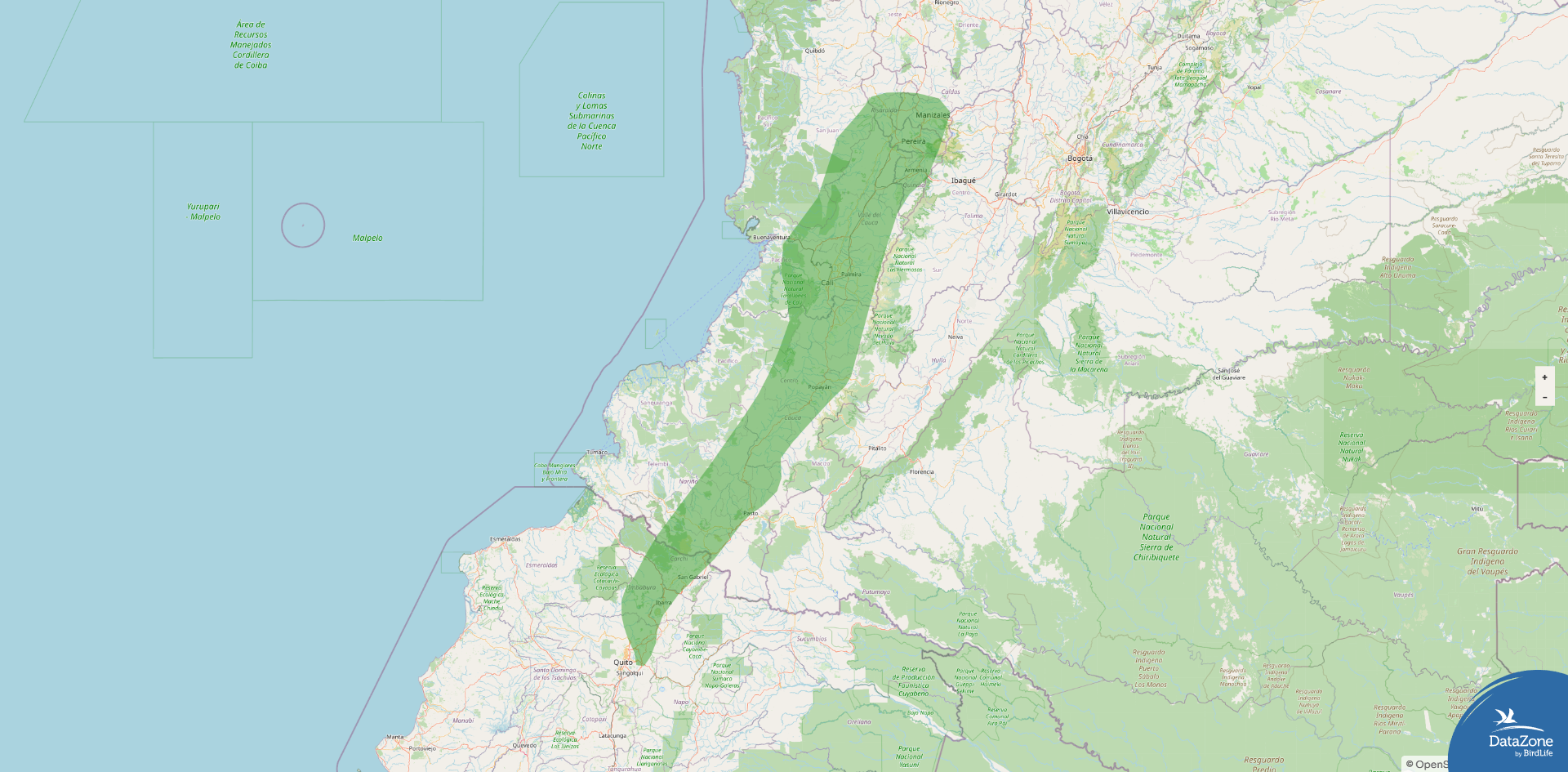
Legend
Green Resident
Species Overview
The Blue-headed Sapphire is a conspicuous hummingbird of open, dry habitats below cloud forest zones, frequently seen in scrubby hillsides, hedgerows, and agricultural mosaics. It often visits flowering shrubs and trees in fields, orchards, and gardens, making it one of the more visible hummingbirds in some Andean valleys. Its tolerance of human-modified landscapes and broad elevational range contribute to its current Least Concern status.
Male Description
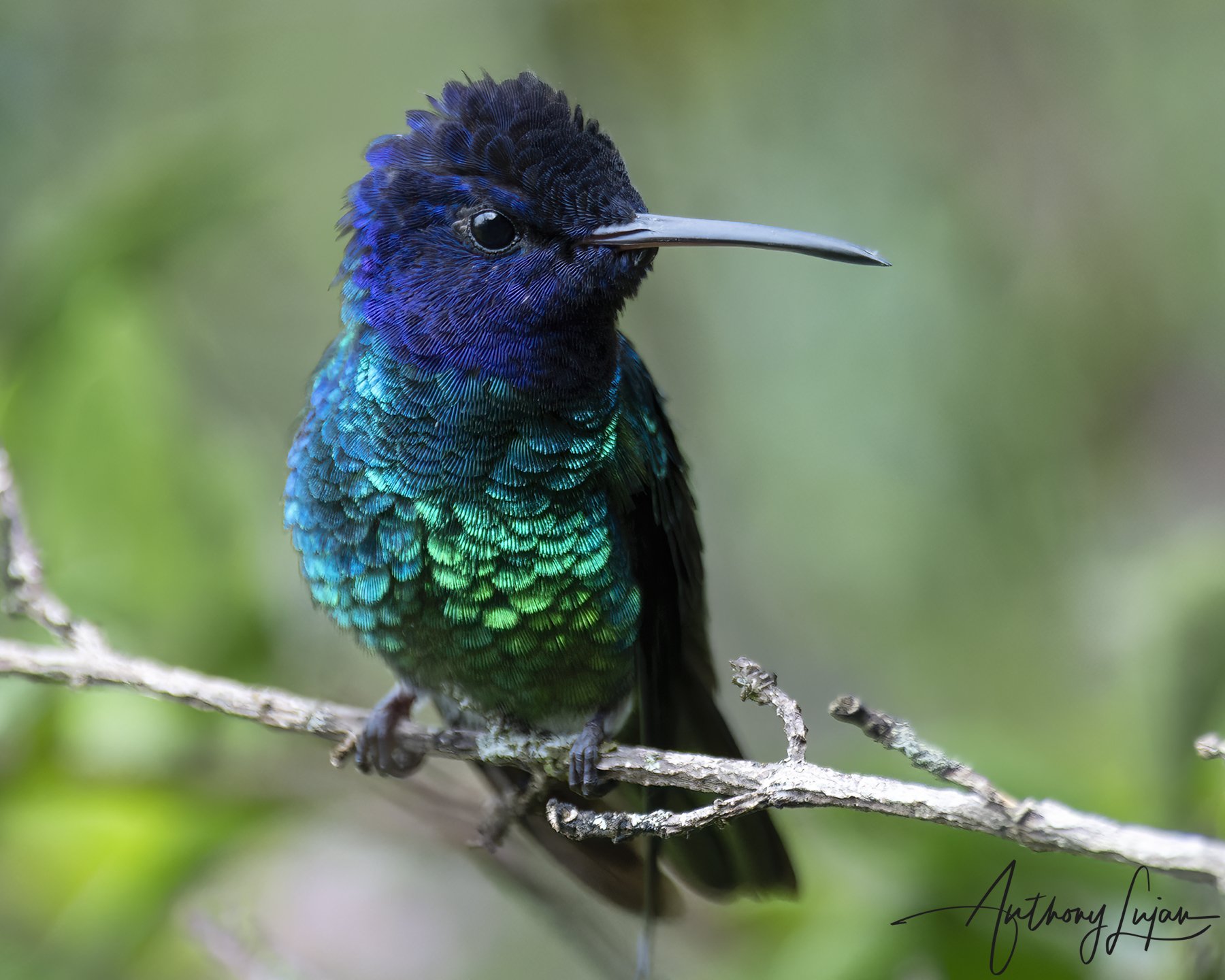
Adult males have a straight to slightly curved coral-red bill tipped black. The head, face, and upper throat are a deep, iridescent blue, contrasting with a bluish-green neck and metallic green upperparts. The chest and upper belly are sparkling emerald green, blending into a small whitish patch on the lower belly and vent area; the tail is dark steel blue. Overall, males appear as compact hummingbirds with a vivid blue head and throat, bright green body, dark tail, and a subtle white spot low on the belly.
Female Description
Adult females have metallic green to bronze-green upperparts and a tail that is bronze-green at the base, shading to blue-black with grayish tips on the outer feathers. The underparts are mostly dull white to grayish white, with bronze-green on the sides of the throat and chest and some green flecks on the lower throat, giving a lightly scaled look. Young females resemble adults but are duller and more bronzy overall, with less distinct contrast. In the field, females look like green-backed hummingbirds with pale, lightly marked underparts and a darker, slightly forked tail, lacking the intense blue head and throat of males.
Habitat & Behavior
Blue-headed Sapphires live in the valleys between Andean ridges, favoring dry, bushy areas, scrubby slopes, and the edges of woodland or taller forest. They are also common in cultivated landscapes, including fields, orchards, and areas with scattered trees and hedgerows, where they visit flowering shrubs and trees for nectar. They forage at low to mid-levels, often returning repeatedly to productive blossoms and occasionally defending small feeding territories; they also take insects by hawking from perches or gleaning from vegetation. The species is considered resident, with no evidence of large-scale migration, though local movements likely follow flowering cycles and seasonal resource availability.
Population
The global number of mature individuals is unknown, but the Blue-headed Sapphire appears to be fairly common in suitable Andean valley habitats within its range. Its use of scrub, forest edge, and agricultural mosaics suggests some resilience to moderate habitat change, and there is no indication of significant declines. Current assessments consider the overall population trend to be stable.

Conservation
The Blue-headed Sapphire is listed as Least Concern because of its relatively restricted but stable range in Colombia and Ecuador and its apparent adaptability to human-modified habitats. Ongoing threats include local habitat conversion, intensive agriculture, and urban expansion, which can reduce the extent of scrub and edge habitats in some valleys. Maintaining hedgerows, flowering shrubs, and scattered trees in farmland, protecting remnants of dry forest and scrub, and conserving riparian corridors will help sustain populations of this species and other hummingbirds that rely on Andean valley habitats.


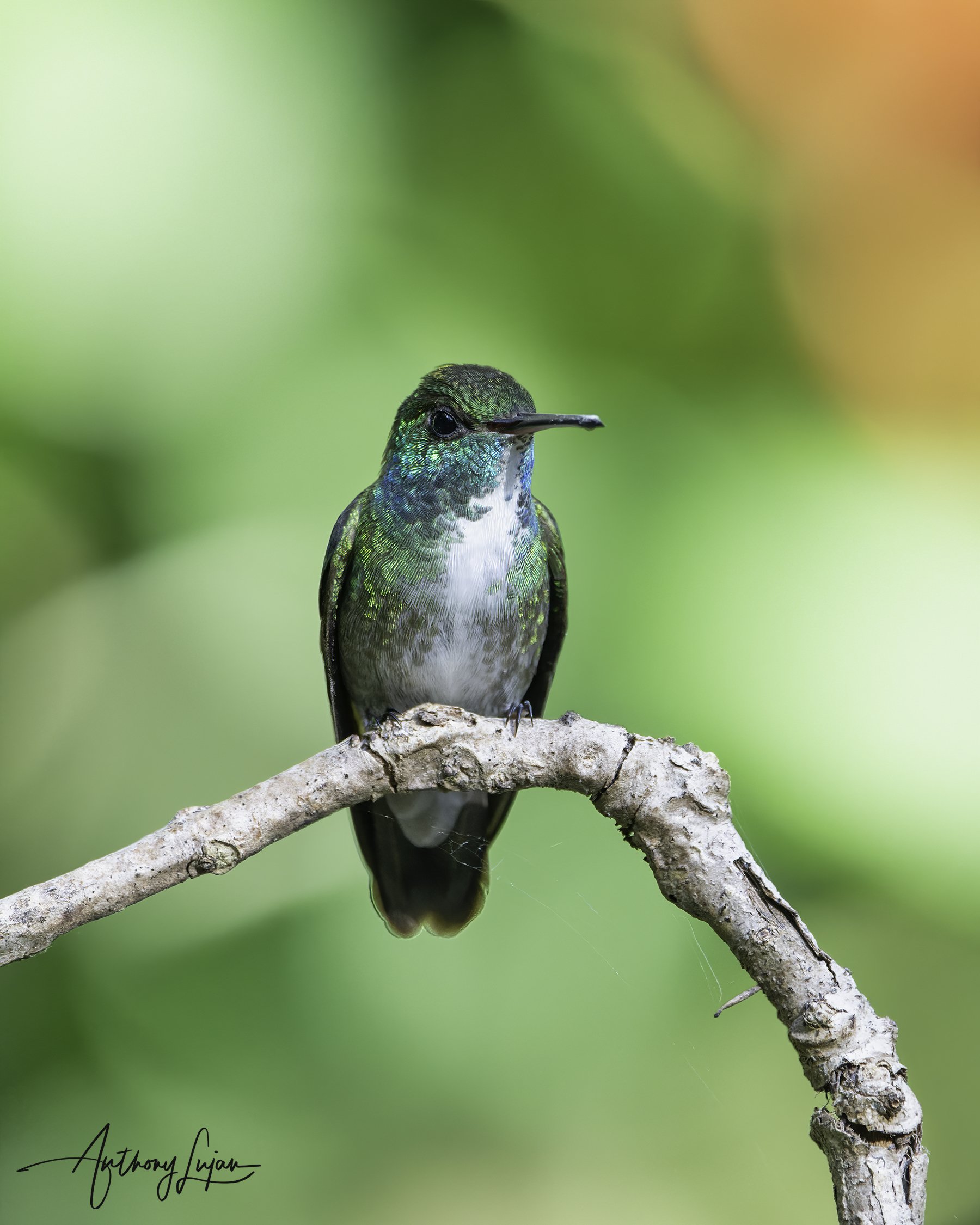
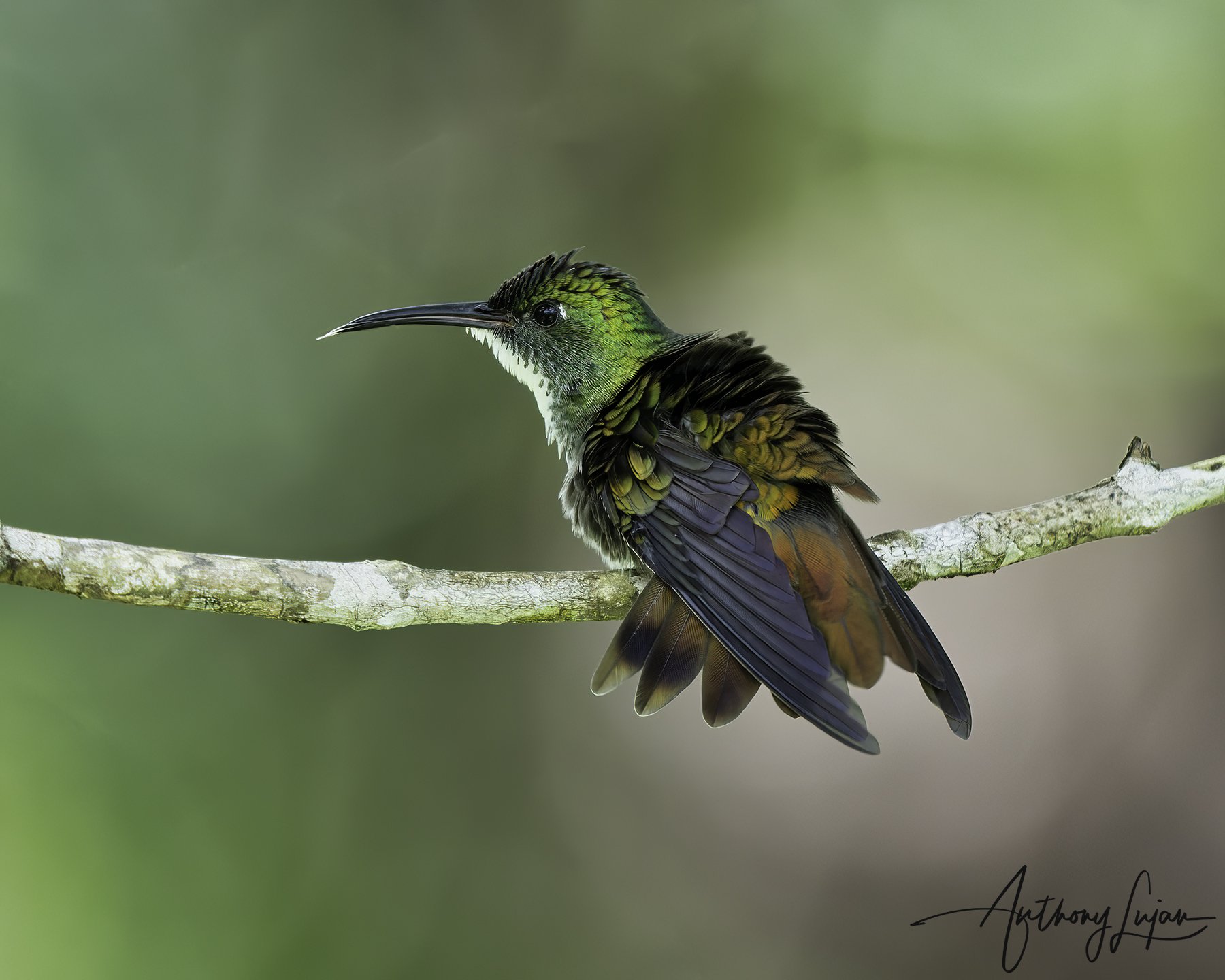
Related species in the Chrysuronia genus (10 species total):



Please note: The content provided in this article reflects Anthony’s personal experience and photographic approach. Results can vary depending on light, weather, location, equipment, subject behavior, and field conditions.