
Blue-throated Starfrontlet
Scientific name: Coeligena helianthea
The Blue-throated Starfrontlet is a striking Andean hummingbird found in the northern and eastern Andes of Colombia and adjacent western Venezuela. The number of mature individuals is unknown, the population is believed to be decreasing, and it is listed as Least Concern, with two recognized subspecies and no evidence of long-distance migration (though local elevational movements likely occur).
At a Glance
Family: Trochilidae (hummingbirds)
Clade: Heliantheini – Brilliants
Genus group: Coeligena — 15 species, 28 subspecies
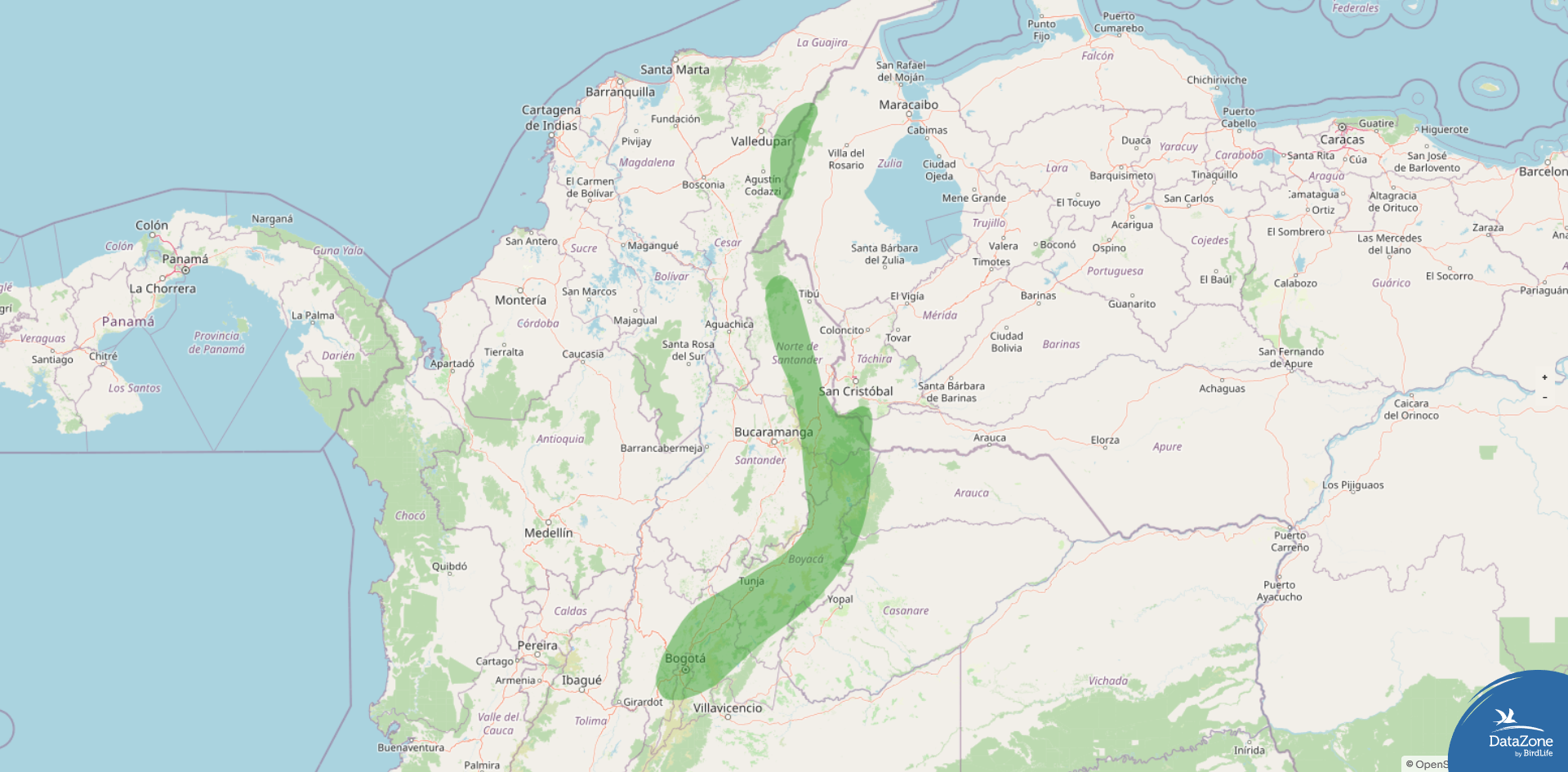
Range: Northern and eastern Andes of Colombia from the Serranía del Perijá south and west to the Bogotá region, and in the Tamá Massif of western Táchira state, Venezuela.
Habitat: Interior and edges of cloud forest and elfin forest, shrubby slopes, bushy landscapes near the lower margin of páramo, and flowering gardens.
Elevation: Mostly between about 1,900 and 3,300 m in humid montane and elfin forest zones.
Length: About 13 cm (5.1 in).
Weight: Males roughly 7.1–7.6 g; females about 6.0–6.5 g.
Number of mature individuals: Unknown
Population trend: Decreasing
Status: Least Concern (IUCN)
Name Origin
The genus name Coeligena comes from Latin roots meaning “born of heaven” or “sky-born,” reflecting the high Andean habitats and brilliant plumage typical of starfrontlets and incas. The species name helianthea refers to “sun-flower” or “sun-bright,” likely alluding to the bird’s vivid iridescent colors, especially the shining throat. The English name “Blue-throated Starfrontlet” emphasizes the male’s dark violet-blue throat and its placement among the starfrontlets of the Andean brilliants clade.
Subspecies & Distribution
Two subspecies are recognized:
Coeligena helianthea helianthea
Occurs in the northern and eastern Andes of Colombia from the Serranía del Perijá on the Colombia–Venezuela border south and west through the Eastern Cordillera to the Metropolitan Area of Bogotá. It inhabits cloud forest, elfin forest, shrubby slopes, and bushy habitats along this Andean corridor.
Coeligena helianthea tamai
Found in the Tamá Massif of western Táchira state in far western Venezuela. It is similar to the nominate but somewhat duller overall, with males showing more bluish than rosy tones on the belly and undertail coverts.
Overall, the species is confined to a relatively narrow Andean band in northeastern Colombia and far western Venezuela, occupying humid montane forest and associated shrubby habitats within this limited range.
Ledged
Green Resident
Species Overview
The Blue-throated Starfrontlet is a medium-sized, colorful hummingbird of cloud forest and elfin forest in the northern Andes. It favors humid montane habitats, especially forest interior and edges, as well as shrubby slopes and bushy areas near the lower edge of páramo, and it will also visit flowering gardens. While still considered Least Concern globally, its specialized montane habitats are under pressure from deforestation and land-use change, and its population is thought to be decreasing.
Male Description
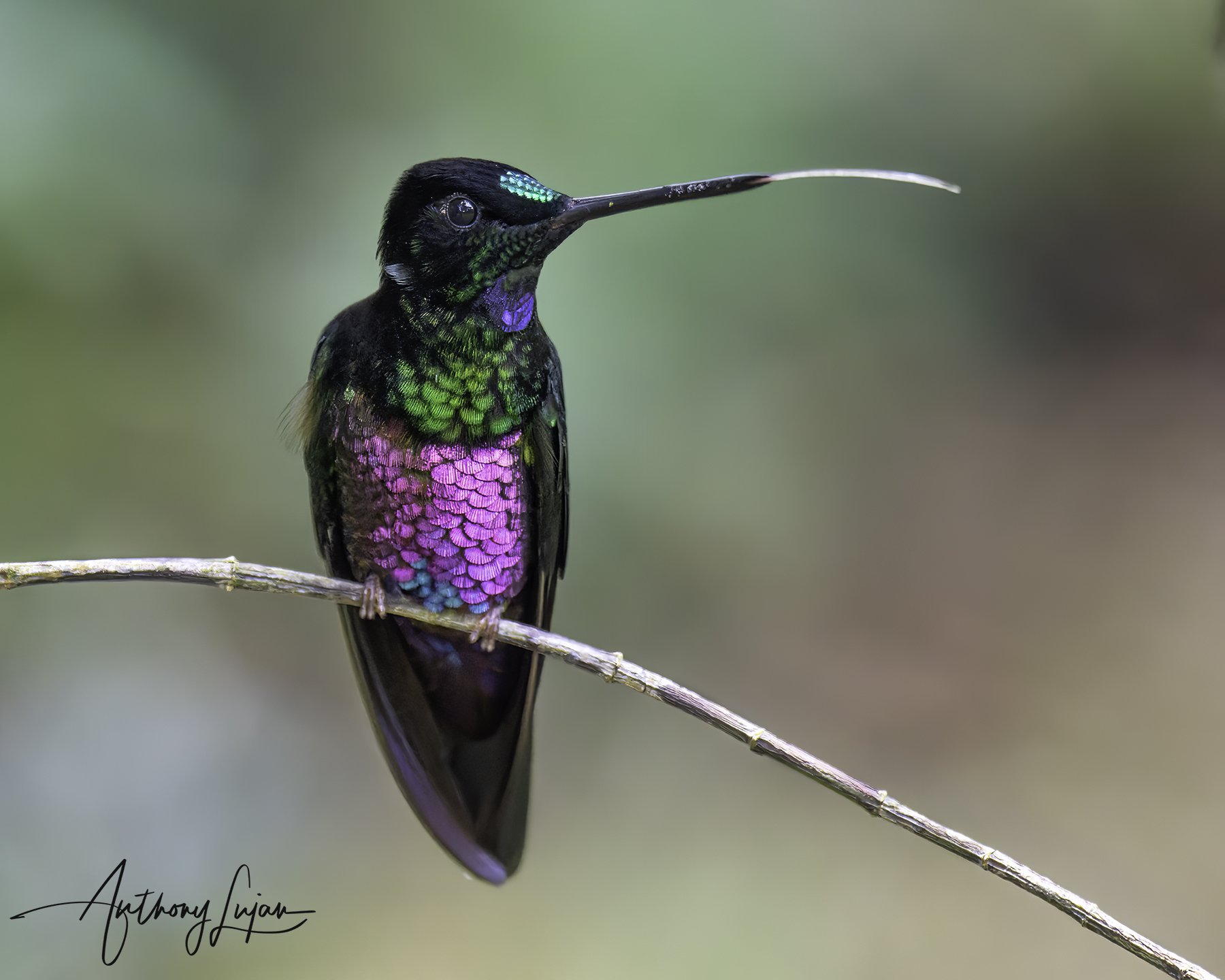
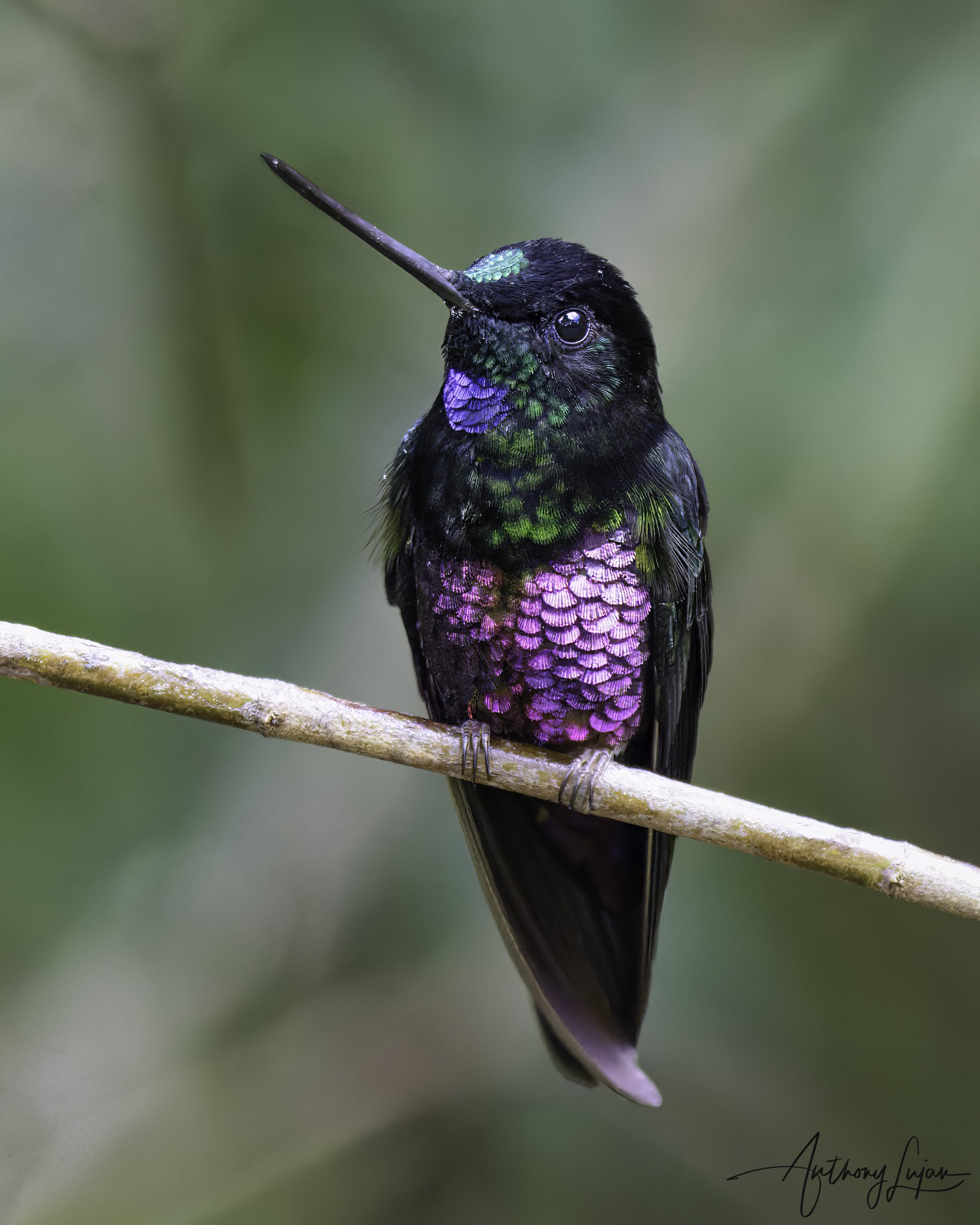
Adult males have a long, straight, black bill and a small white spot behind the eye, a typical Coeligena feature. The head is black with a dark green forehead, and the upperparts are dark with an emerald-green gloss, grading to a dark blue rump with violet tones. The throat is a dark, iridescent violet to violet-blue, contrasting with a dark gray breast that has an emerald sheen and a rosy to pinkish belly, vent, and undertail coverts. The tail is bronzy-black and distinctly forked. In good light, males show a dramatic combination of dark body, glowing blue-violet throat, and rosy belly.
Female Description
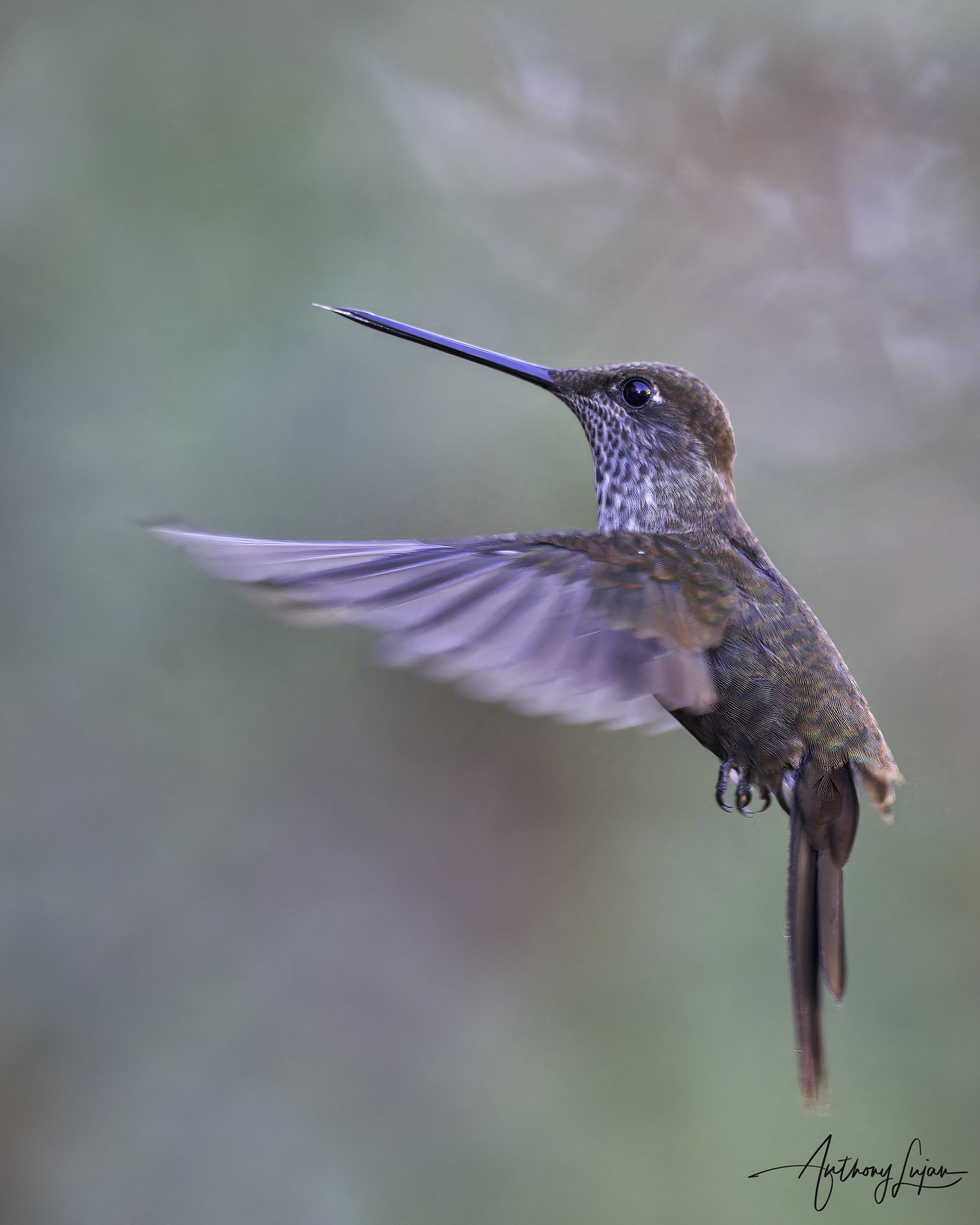
Adult females share the long black bill and white post-ocular spot but are duller overall and patterned differently below. The head and upperparts are gray-green to golden-green, transitioning to a blue-violet rump, all less vivid than in males. The throat and breast are rufous with green spots on the breast, while the belly is rosy and the undertail coverts a paler rose, lacking the male’s solid violet throat. The tail is bronzy-black and forked but less deeply indented than the male’s. Females appear as green-backed, rufous-throated birds with spotted breasts and rosy bellies.
Habitat & Behavior
Blue-throated Starfrontlets inhabit the interior and edges of cloud forest and elfin forest, shrubby slopes, and bushy landscapes near the lower boundary of páramo, and they readily use flowering gardens. They feed primarily on nectar by trap-lining, visiting a circuit of many flowering plants rather than defending a single patch, and usually forage within a few meters of the ground or lower canopy. Their nectar sources include a wide variety of tubular flowers, and they also capture small arthropods by gleaning from foliage or briefly hawking in flight. The species is not known to undertake long-distance migrations but likely makes local seasonal elevational movements within its Andean range to track flowering and resource availability.
Population
The total number of mature individuals is unknown, but the Blue-throated Starfrontlet is considered locally common in suitable habitat within parts of its range. However, continued deforestation, fragmentation of cloud forest and elfin forest, and conversion of montane slopes to agriculture or other uses are believed to be causing a gradual population decline. Its dependence on mid- to high-elevation humid forests makes it sensitive to ongoing habitat loss and degradation across the northern Andes.

Conservation
Blue-throated Starfrontlet is assessed as Least Concern because of its relatively broad distribution across the northern Andes of Colombia and western Venezuela and its local abundance in some areas. Nevertheless, its natural habitat is under threat from deforestation, agricultural expansion, and other land-use changes that reduce and fragment cloud forest and elfin forest. Conservation priorities include protecting remaining montane forests within its range, maintaining forest edges and shrubby slopes with native flowering plants, and promoting land-use practices that retain or restore montane forest cover. Monitoring population trends and habitat quality will help detect any acceleration in declines that could warrant a higher threat category in the future.
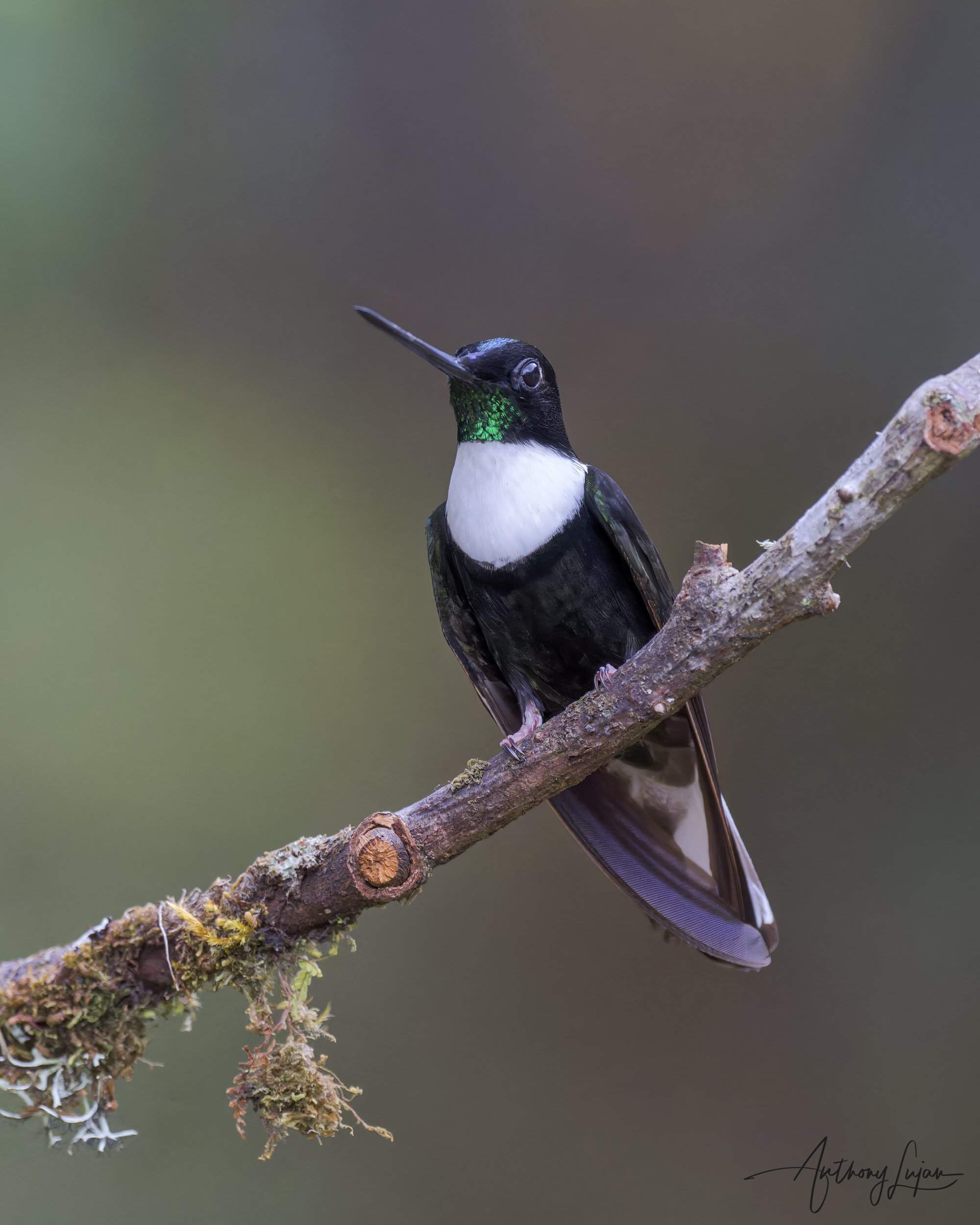
Below is the Blue-throated Starfrontlet (Coeligena helianthea helianthea)
Photographed at the Hummingbird Observatory and Reserva Bosque Guajira, Cundinamarca, Colombia
These individuals belong to the nominate subspecies helianthea, which occurs along the Eastern Andes of Colombia, from Boyacá and Cundinamarca south into Santander. It inhabits humid montane forest, cloud forest edge, and shrubby slopes between 2,000 and 3,400 meters.

Checkout Anthony’s playlist of this species! Click the top right dropdown to see all the videos.
Related species in the Coeligena genus (15 species total):





Please note: The content provided in this article reflects Anthony’s personal experience and photographic approach. Results can vary depending on light, weather, location, equipment, subject behavior, and field conditions.