
Scientific name: Boissonneaua matthewsii
The Chestnut-breasted Coronet is a medium-sized, robust hummingbird of humid montane and cloud forests from the Andes of Colombia south through Ecuador into Peru and northern Bolivia. It is listed as Least Concern, with an unknown number of mature individuals, a decreasing population trend, and it is considered not a migrant.
At a Glance
Family: Trochilidae (hummingbirds)
Clades: Lesbiinae – Brilliants
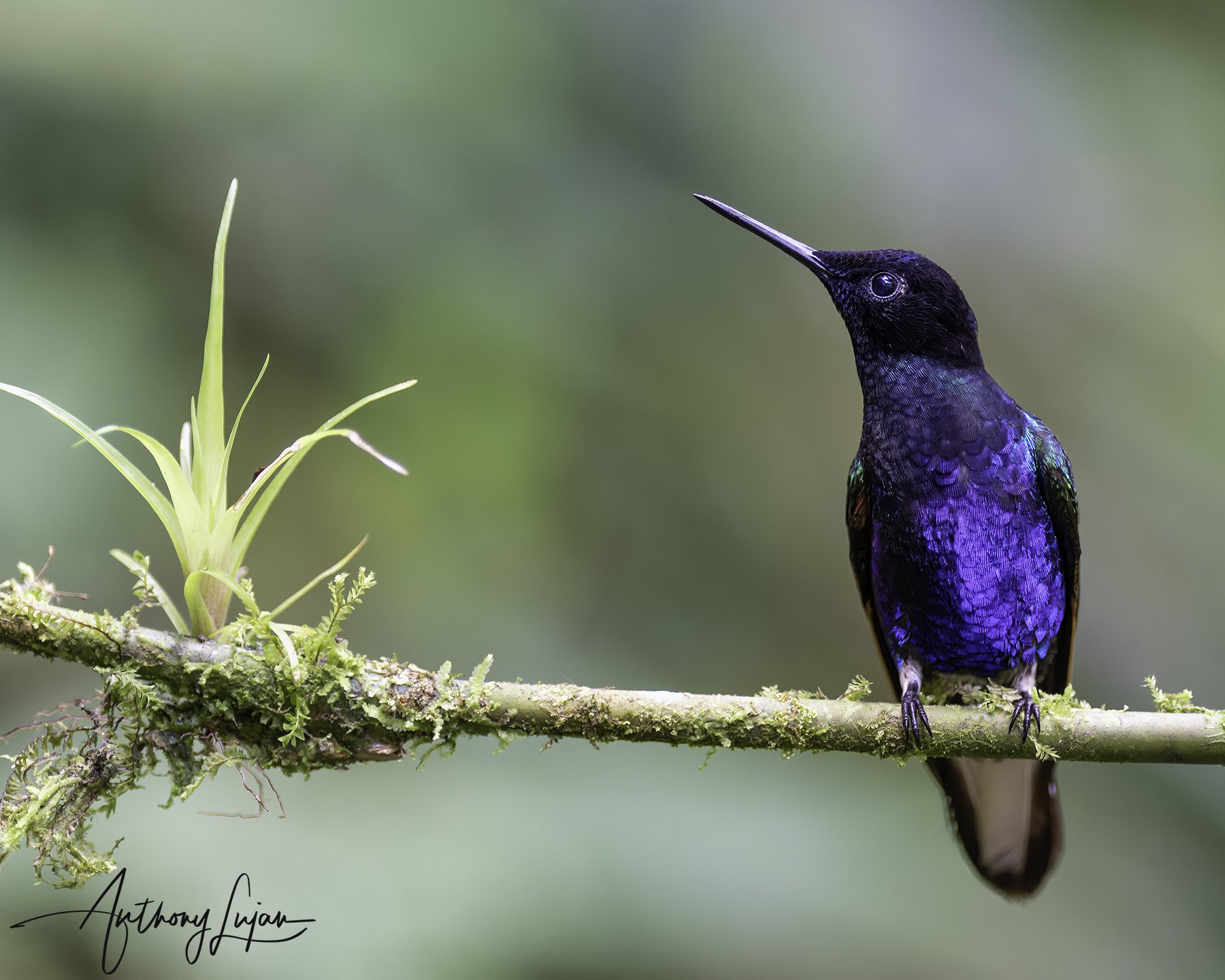
Genus group: Boissonneaua — medium-sized “coronets” (3 species in total: Buff-tailed, Velvet-purple, Chestnut-breasted)
Range: Andes of Colombia, Ecuador, Peru, and northern Bolivia.
Habitat: Humid montane forest, cloud forest, and forest edges, often in areas with abundant flowering shrubs and trees, including clearings and edges near forest.
Elevation: Mostly from about 1,500 to 3,000 m (4,900–9,840 ft), locally up to around 3,200–3,500 m.
Length: About 10.5–13 cm (4.1–5.1 in).
Weight: About 6.5–8.3 g (0.23–0.29 oz).
Number of mature individuals: Unknown.
Population trend: Decreasing.
Status: Least Concern (IUCN Red List category).
Migration: Not a migrant.
Name Origin
The genus name Boissonneaua honors Auguste Boissonneau, a 19th‑century French naturalist who described numerous Neotropical hummingbirds. The species name matthewsii commemorates the English naturalist Andrew Matthews, who collected extensively in South America. The English name “Chestnut-breasted Coronet” refers to the rich chestnut coloration of the breast and underparts and the typical upright, “crowned” posture of coronets.
Taxonomy & Distribution
Monotypic — no recognized subspecies.
Chestnut-breasted Coronet is a member of the Lesbiinae brilliants and one of three species in the coronet genus Boissonneaua. It is monotypic, with no recognized subspecies. The species is found along the Andes from southeastern Colombia south through Ecuador and Peru to northern Bolivia, mostly on humid montane slopes and ridges within this highland band.
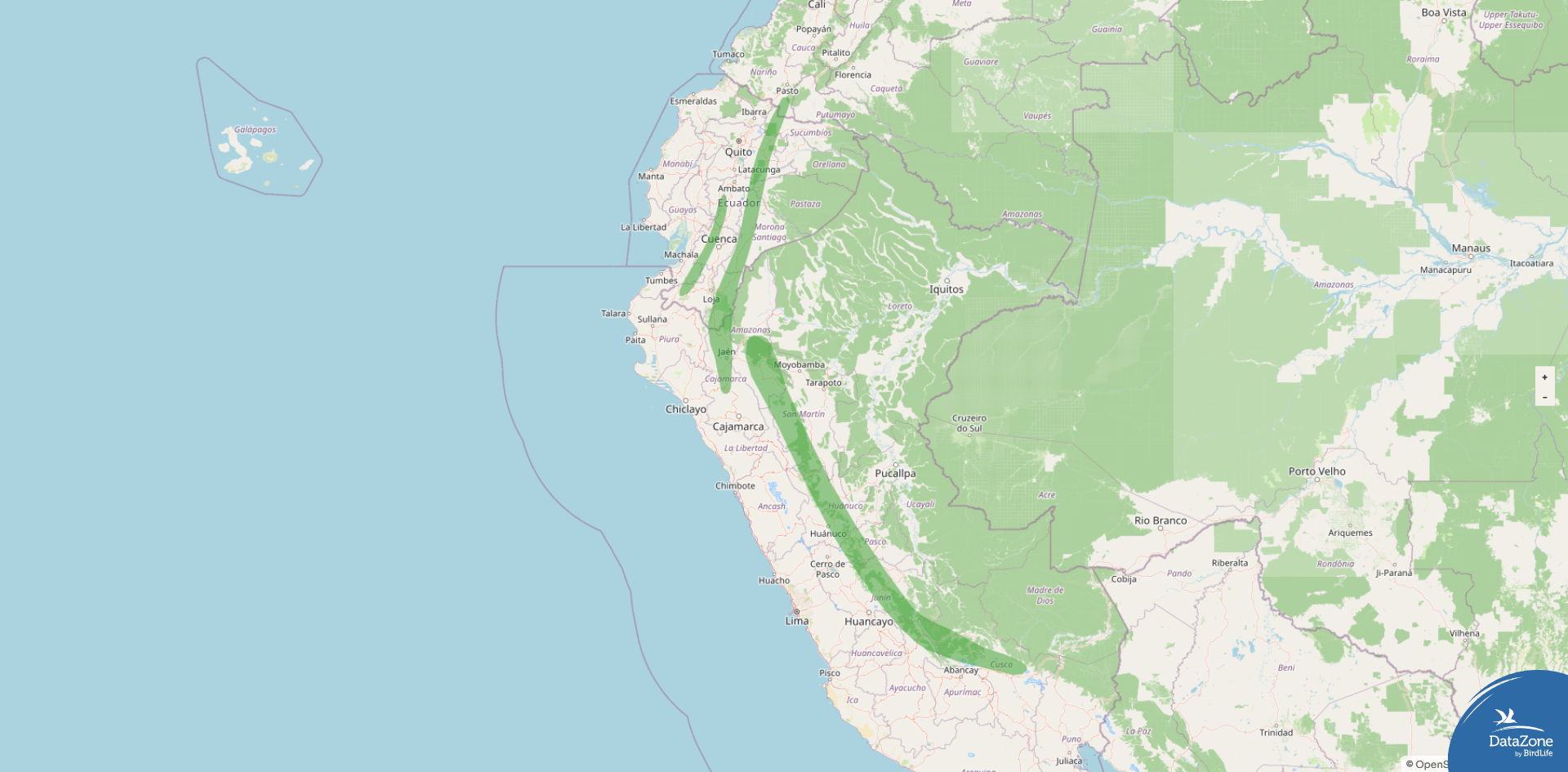
Legend
Green Resident
Species Overview
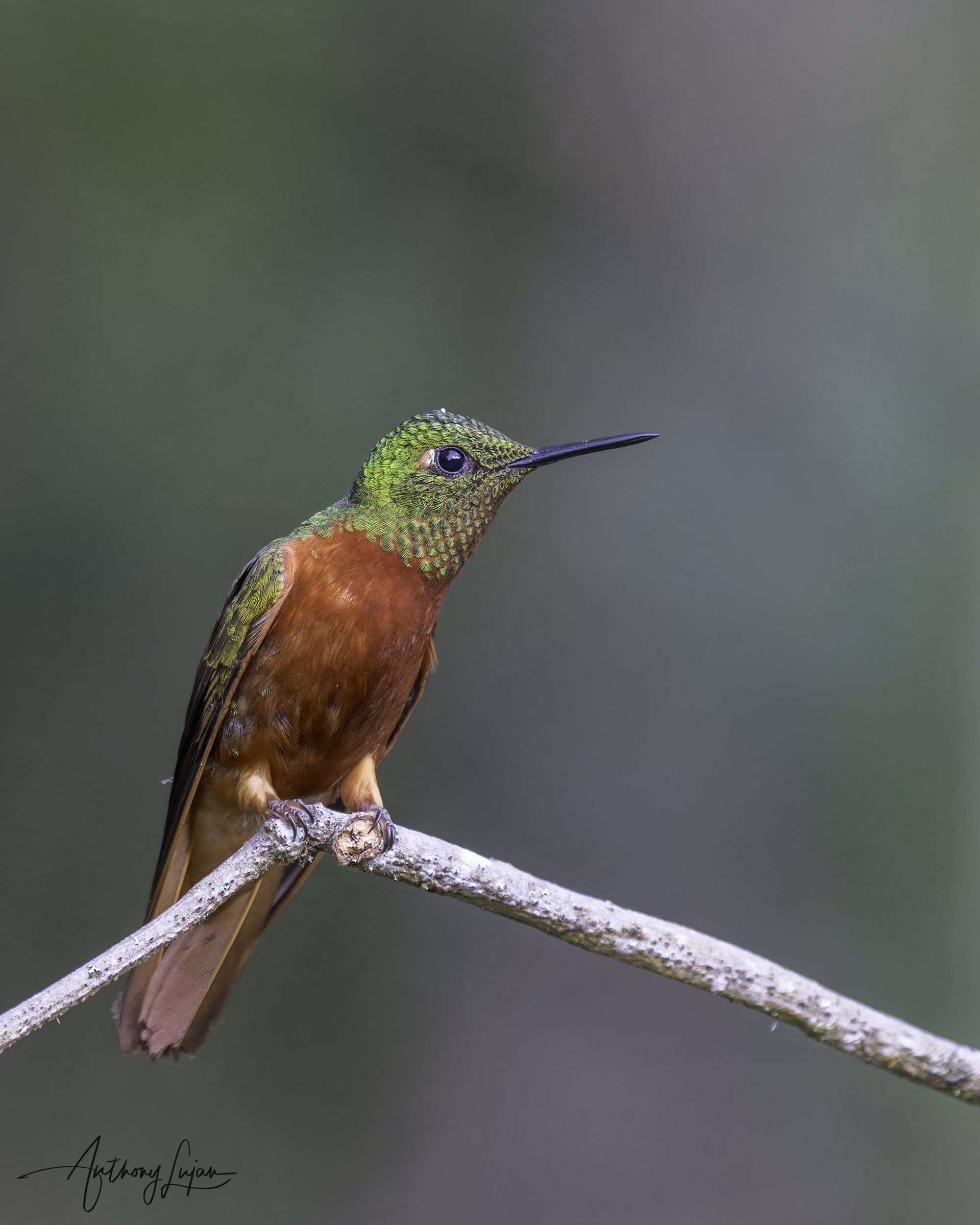
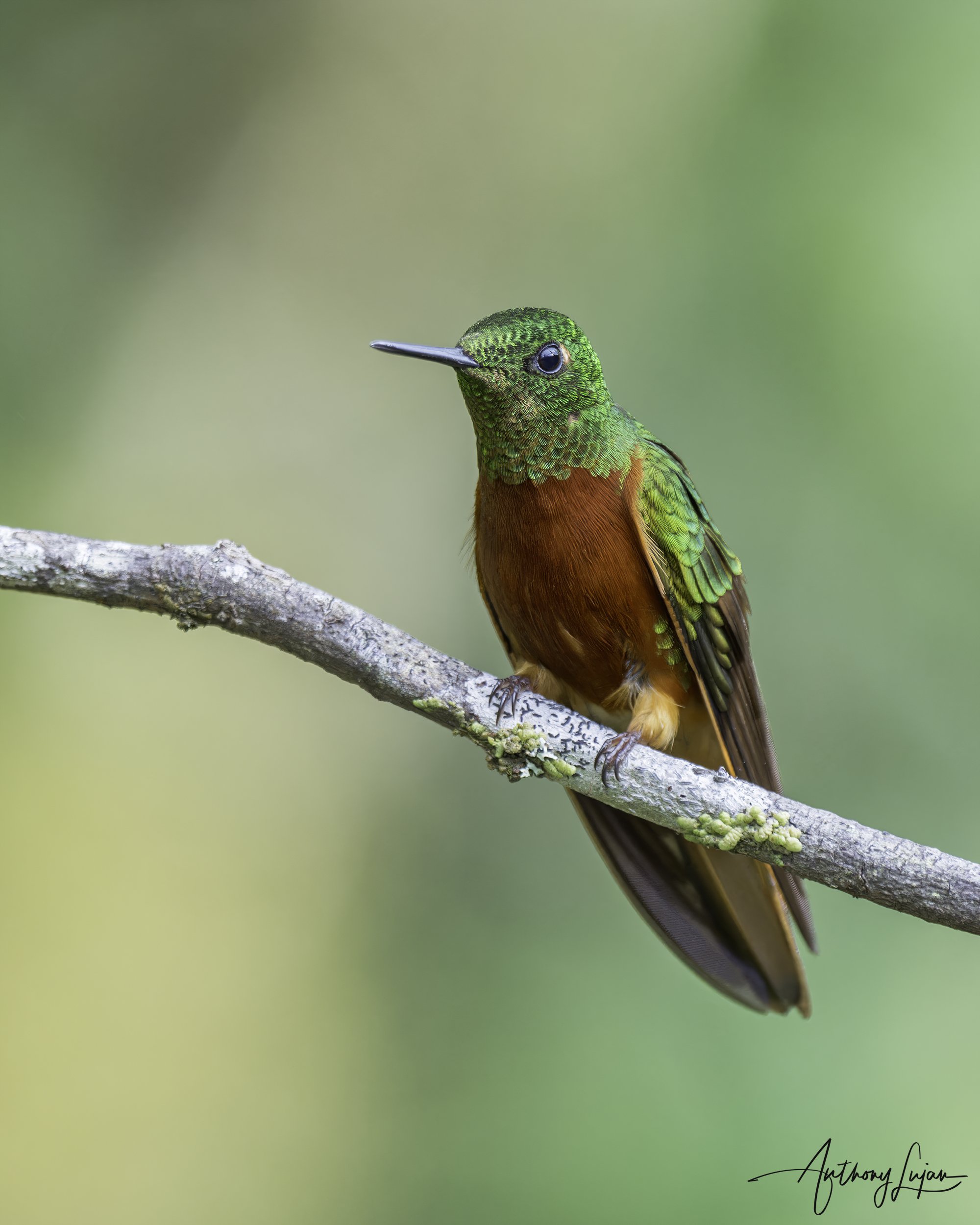
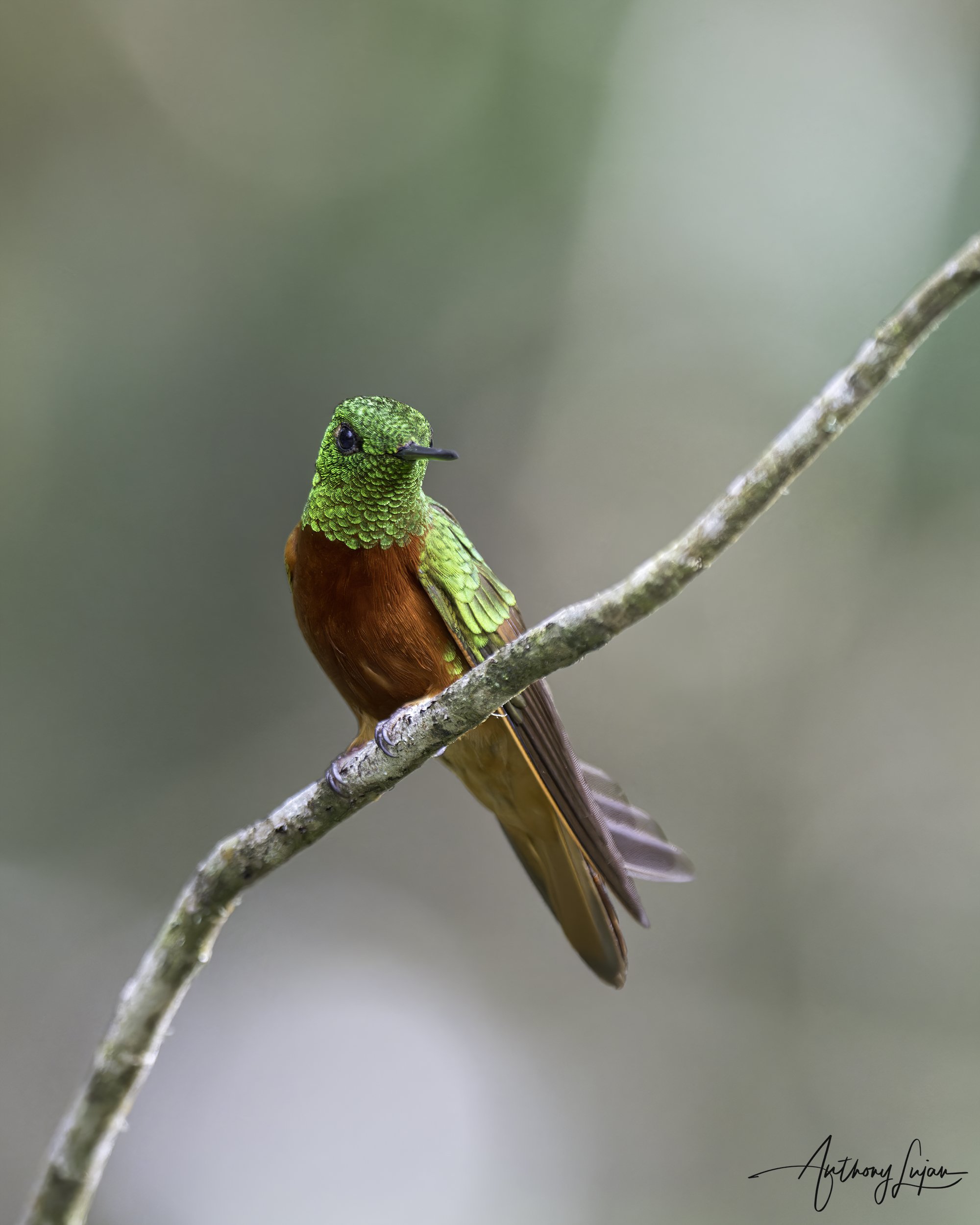
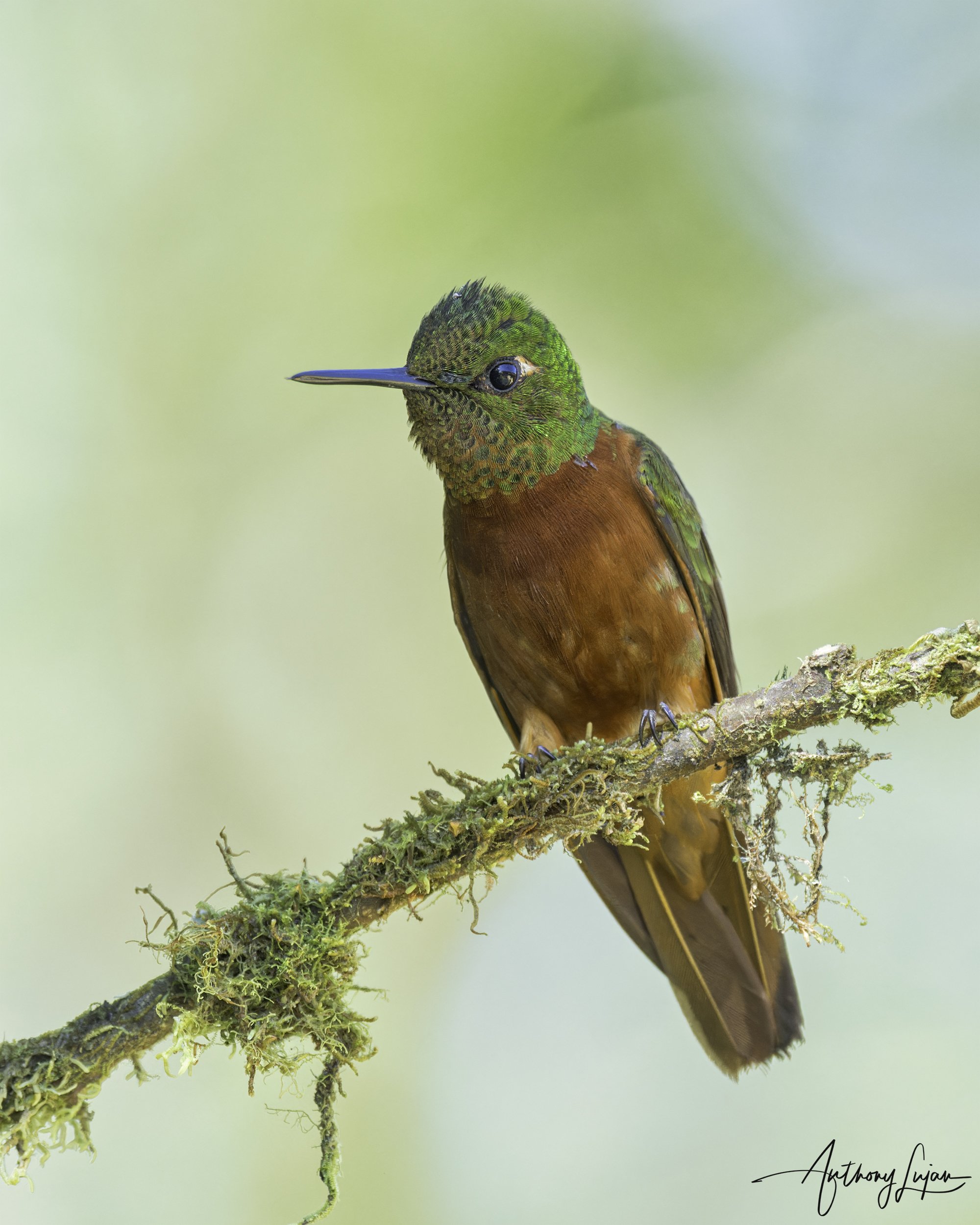
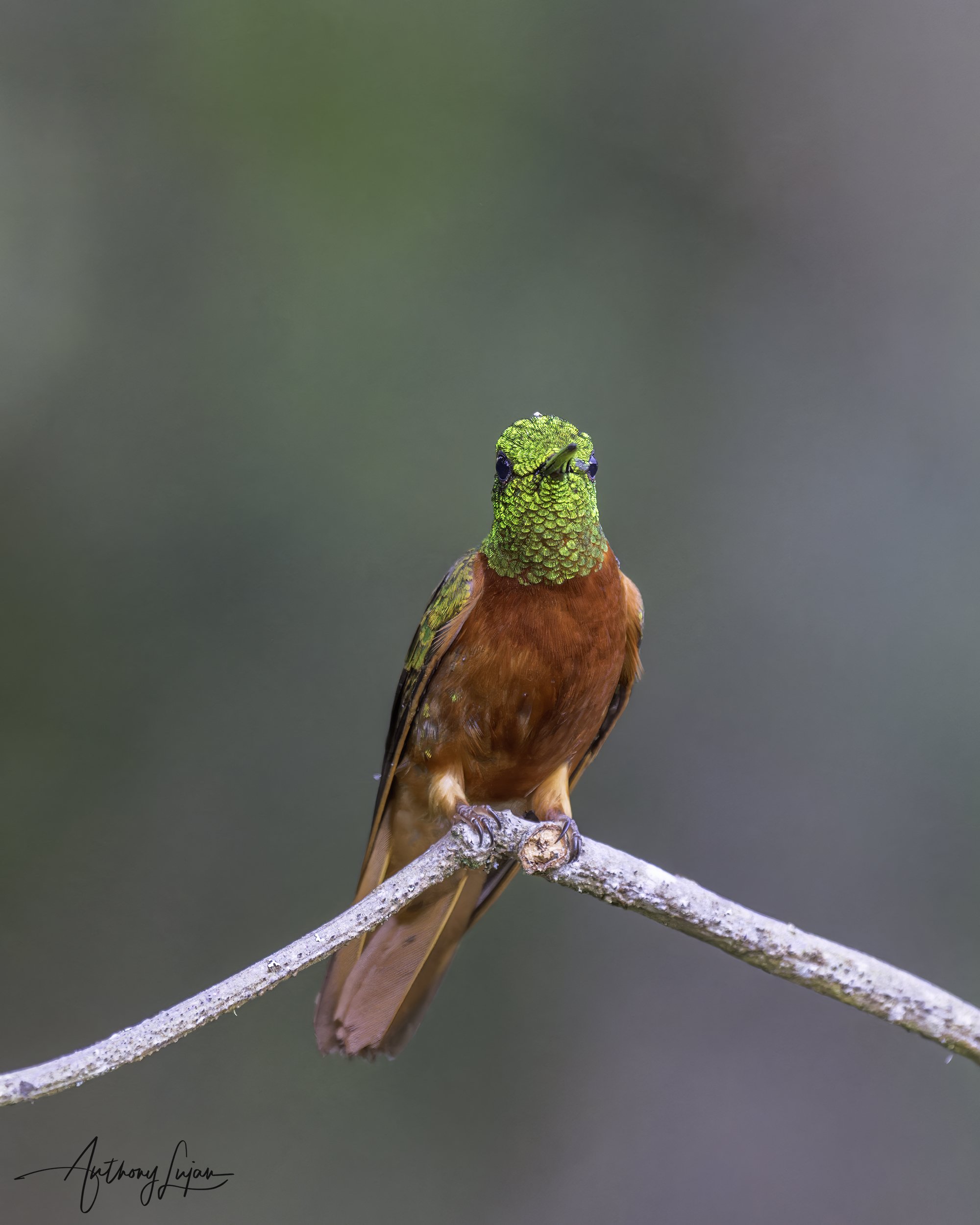
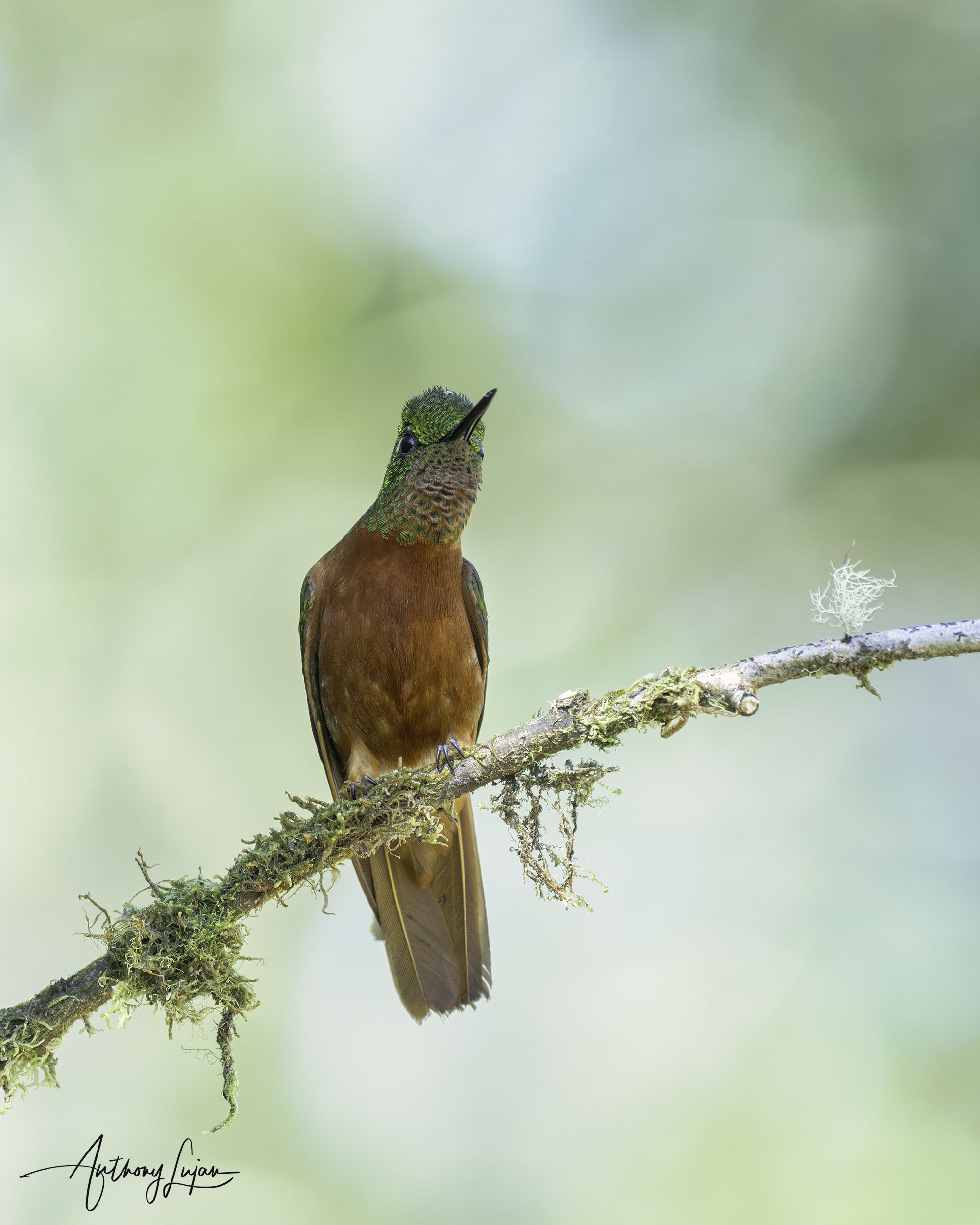
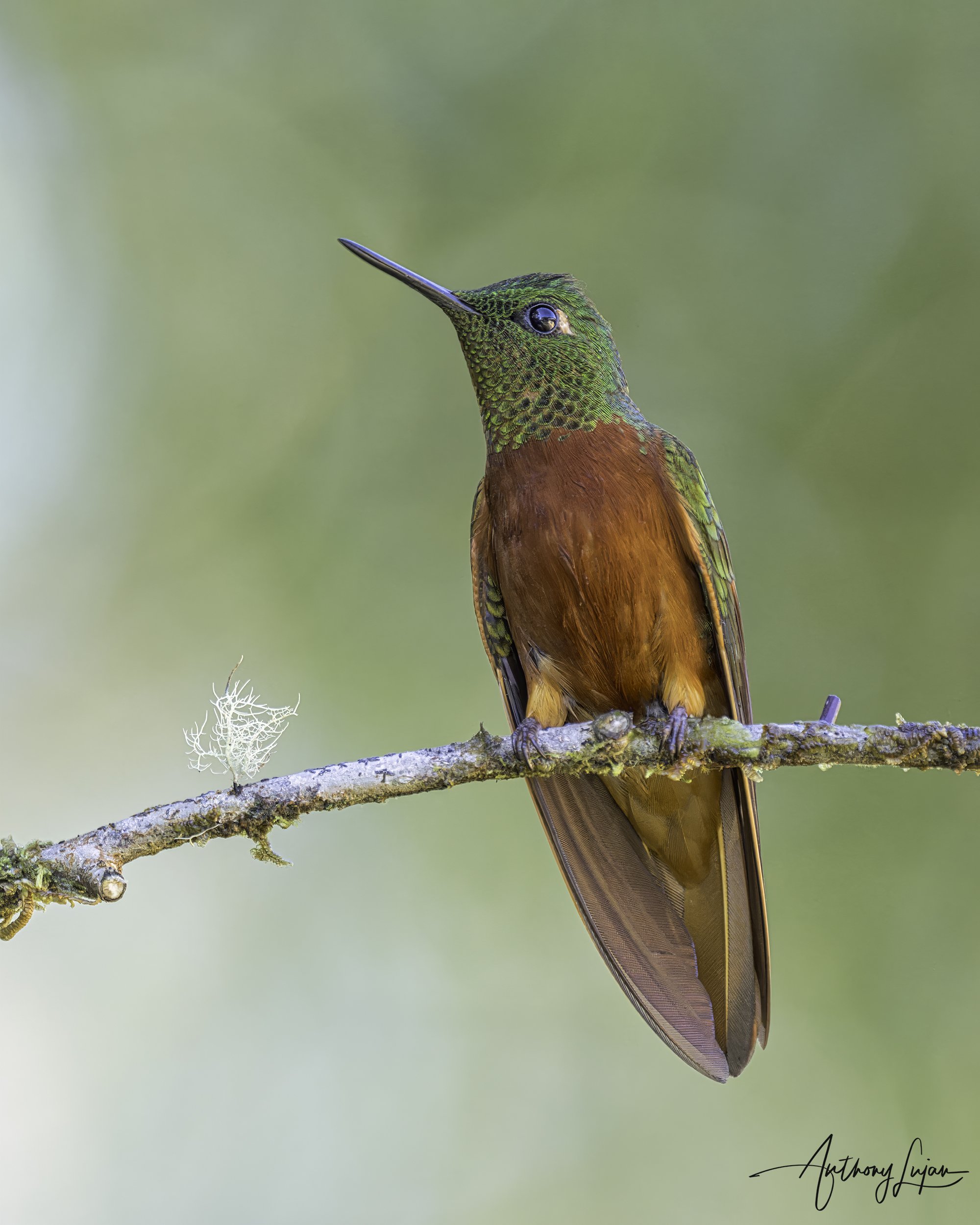
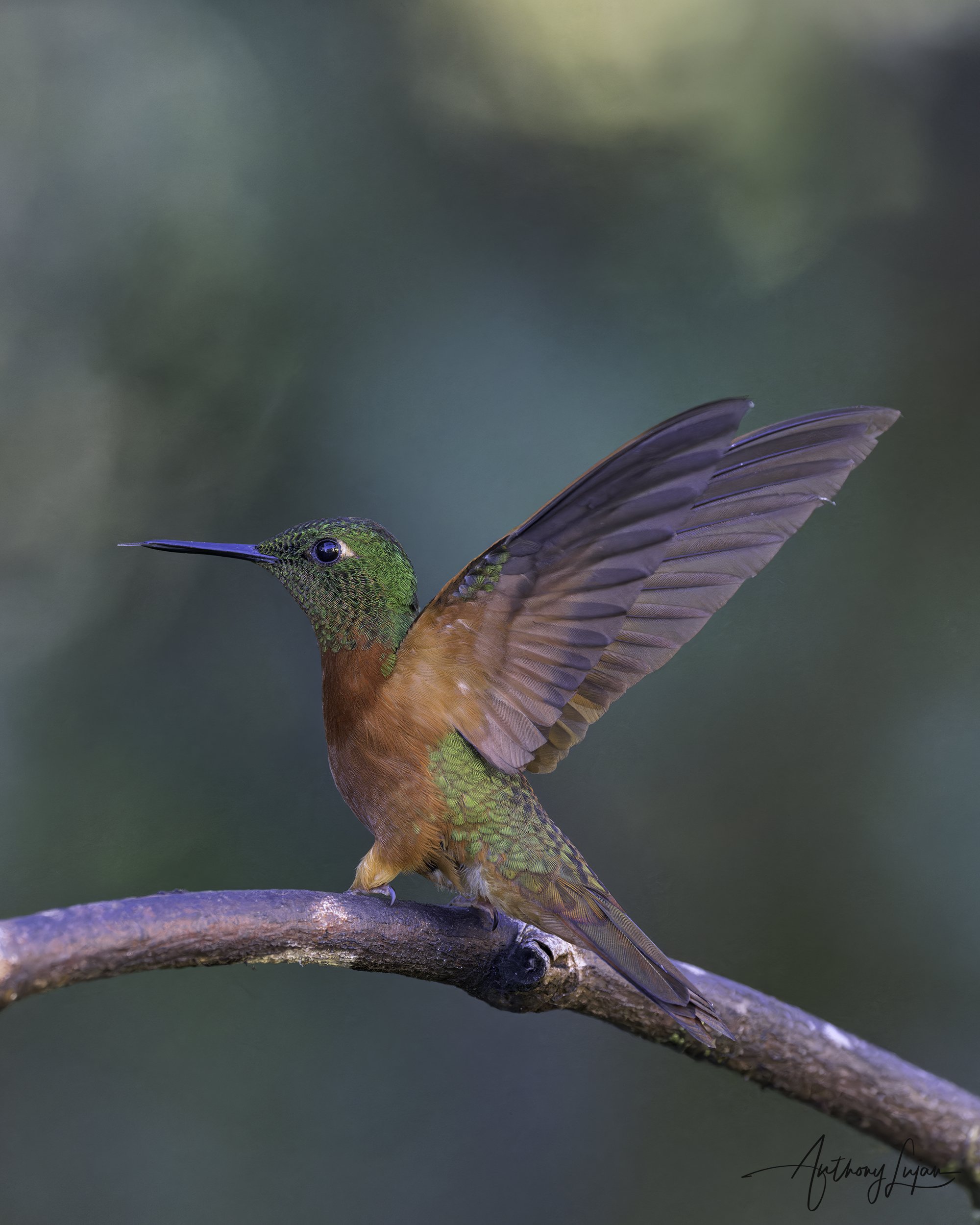
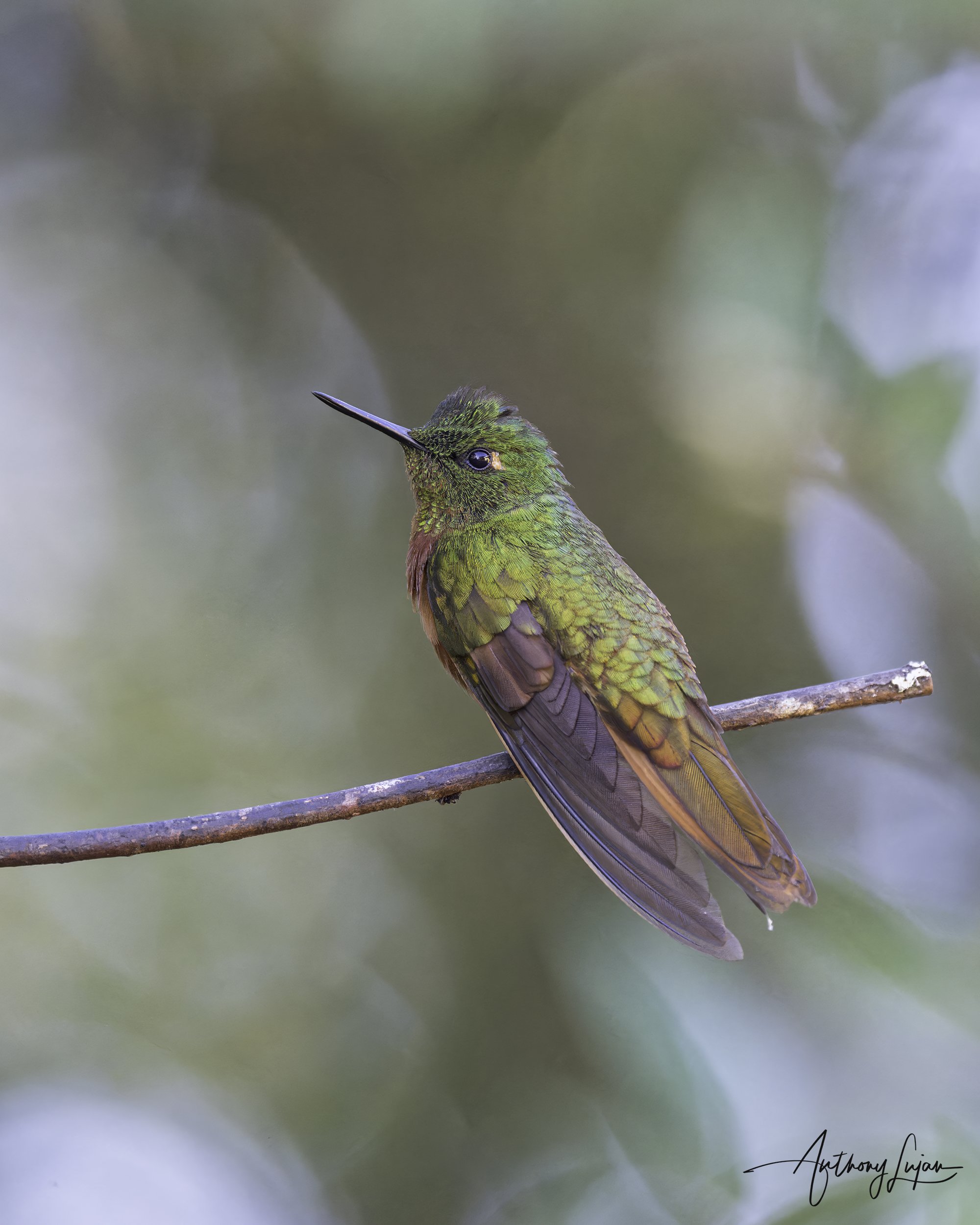
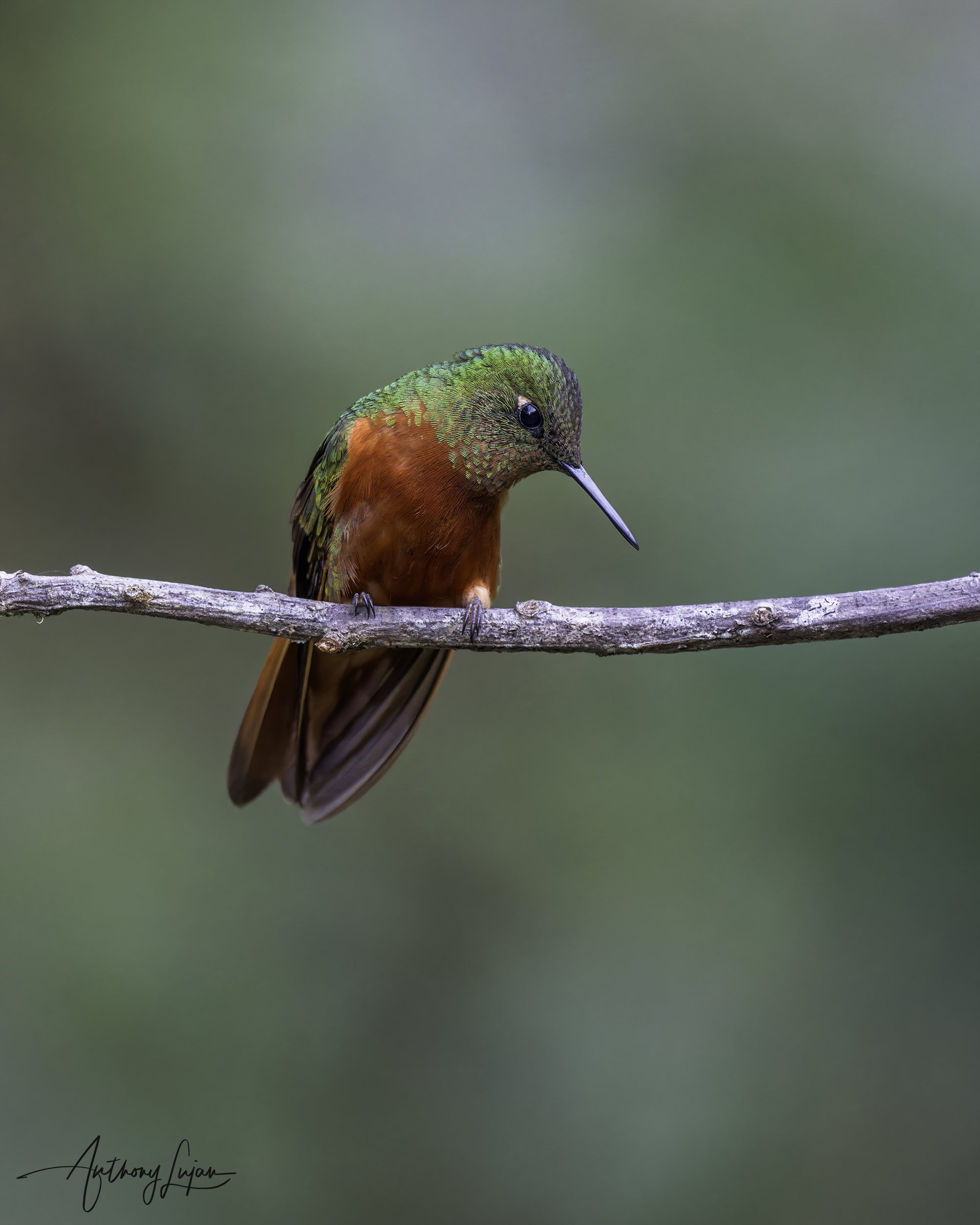
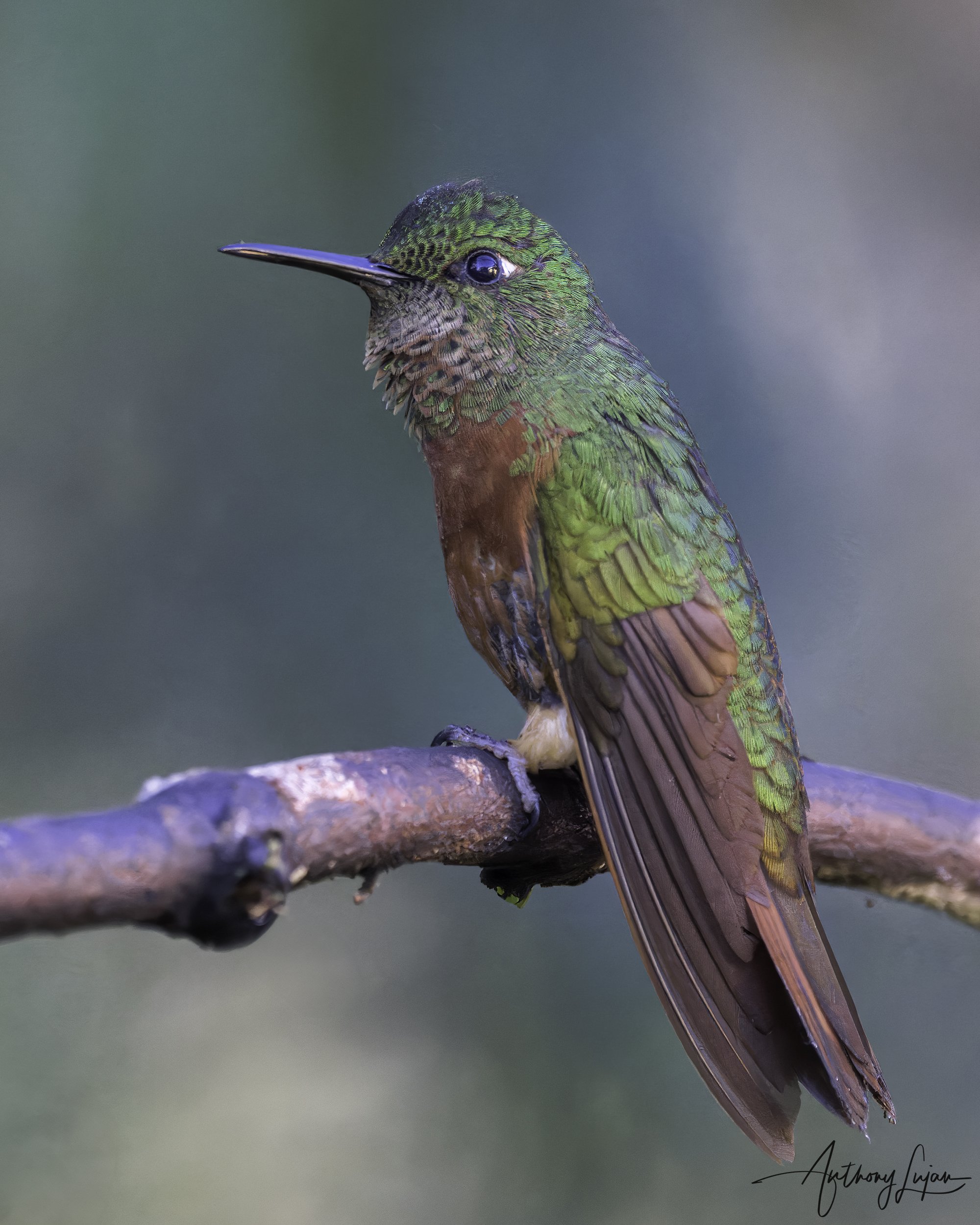
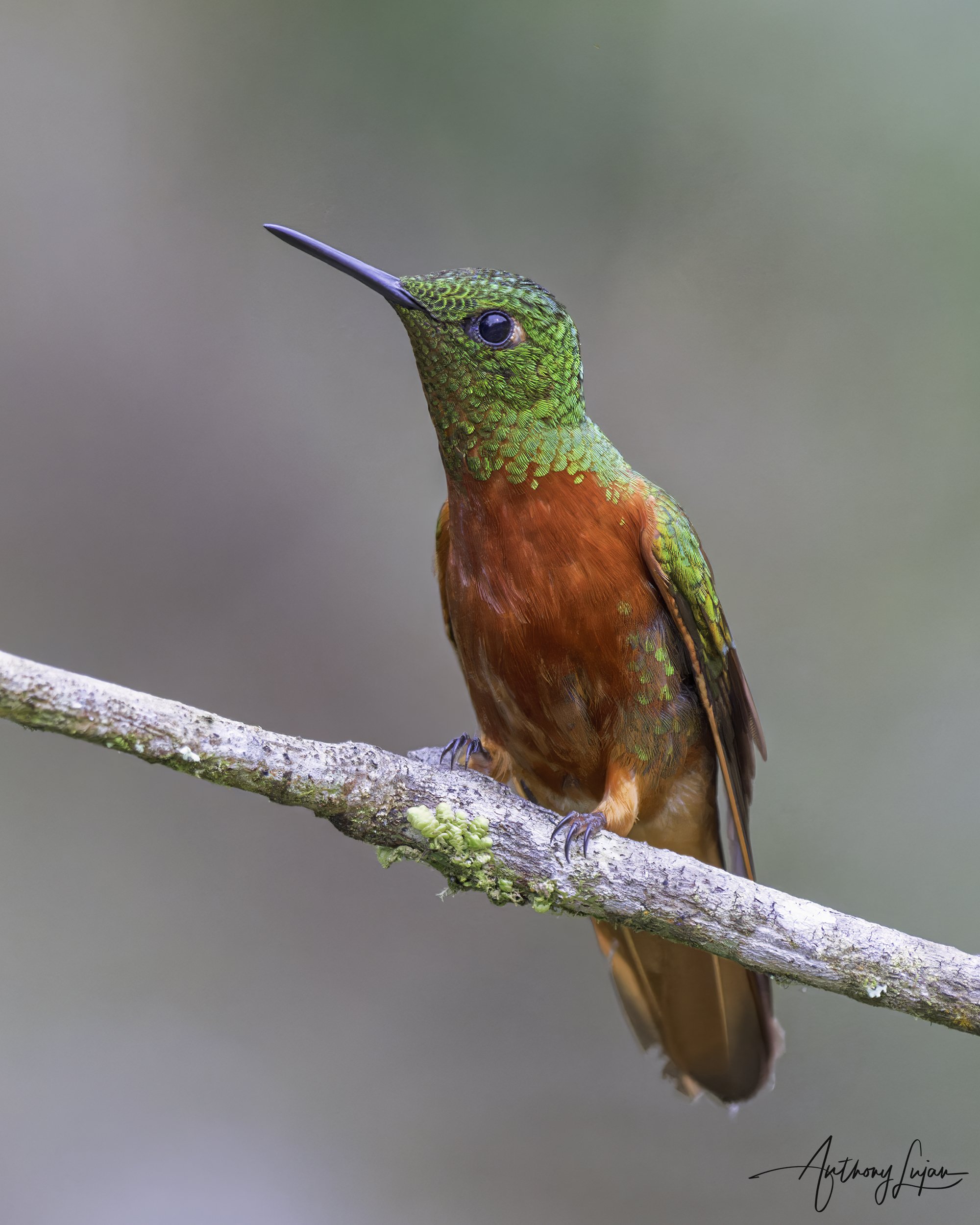
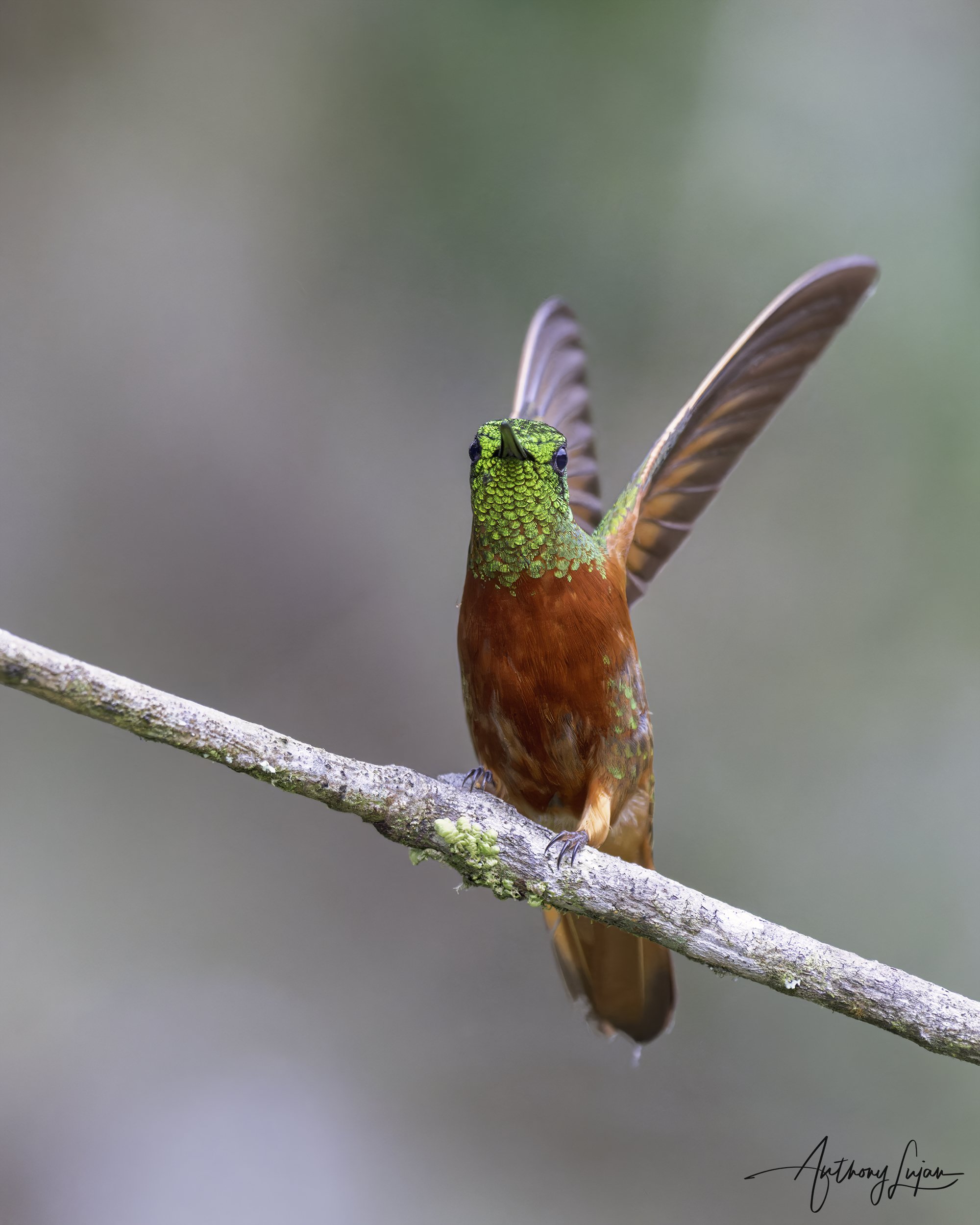
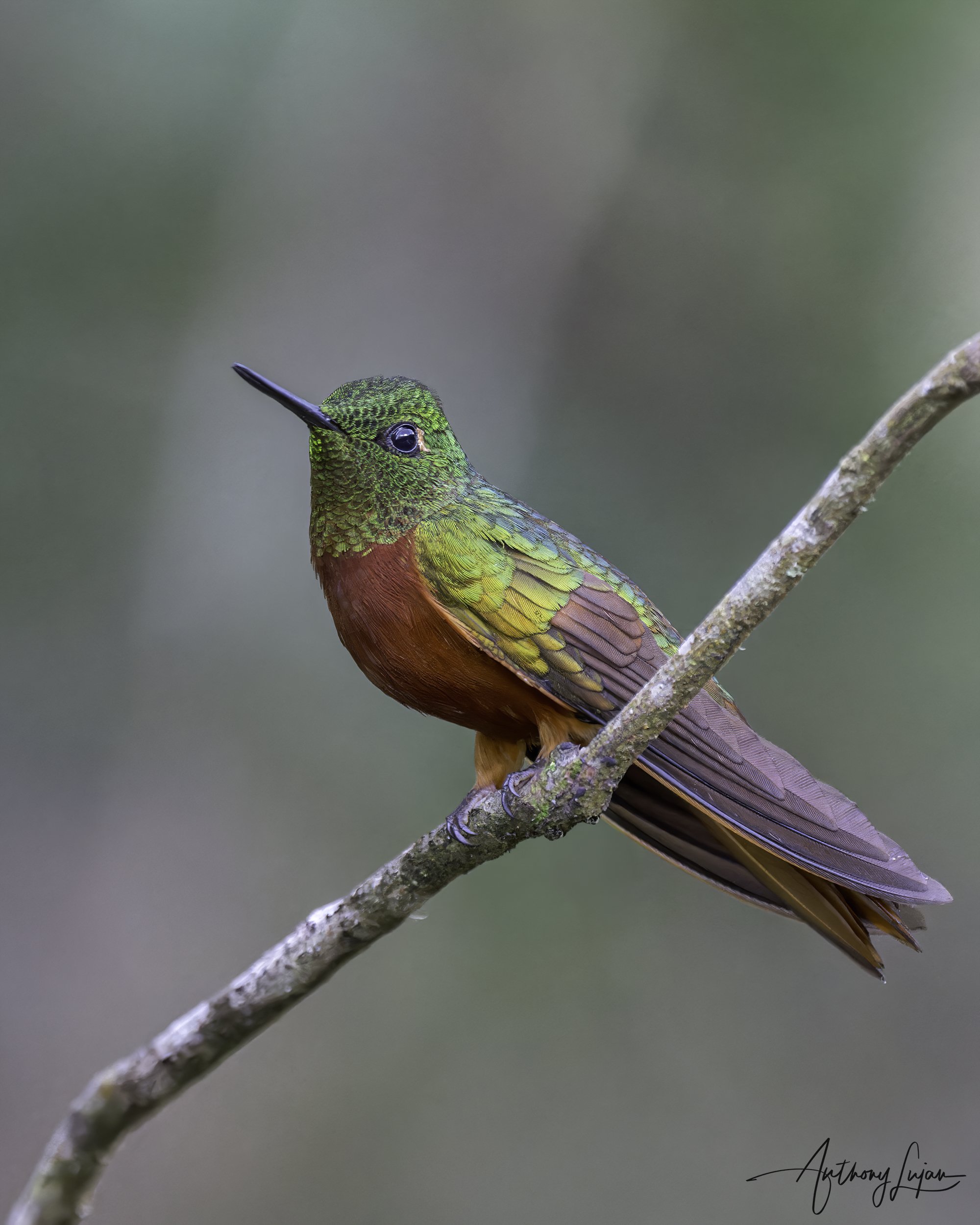
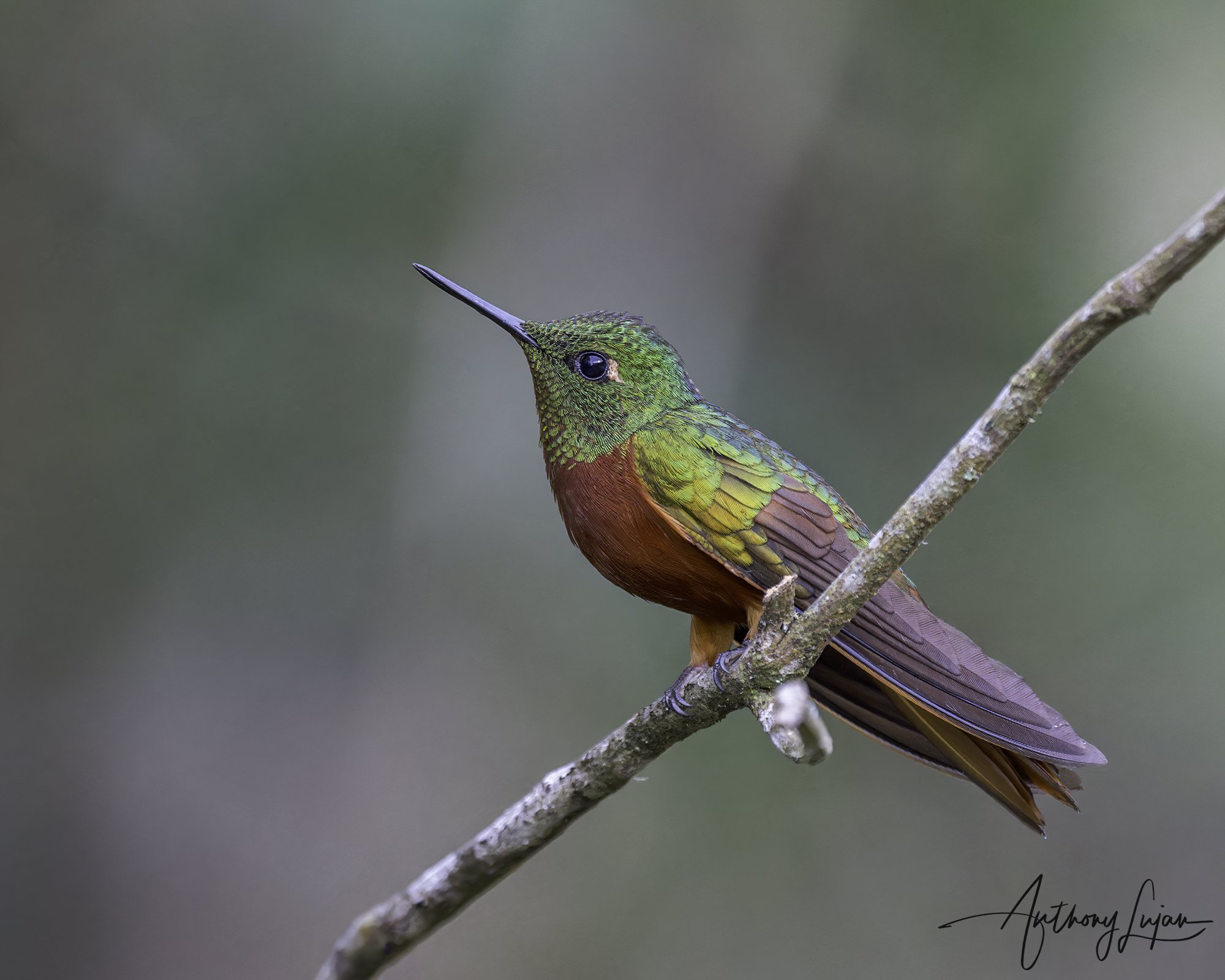
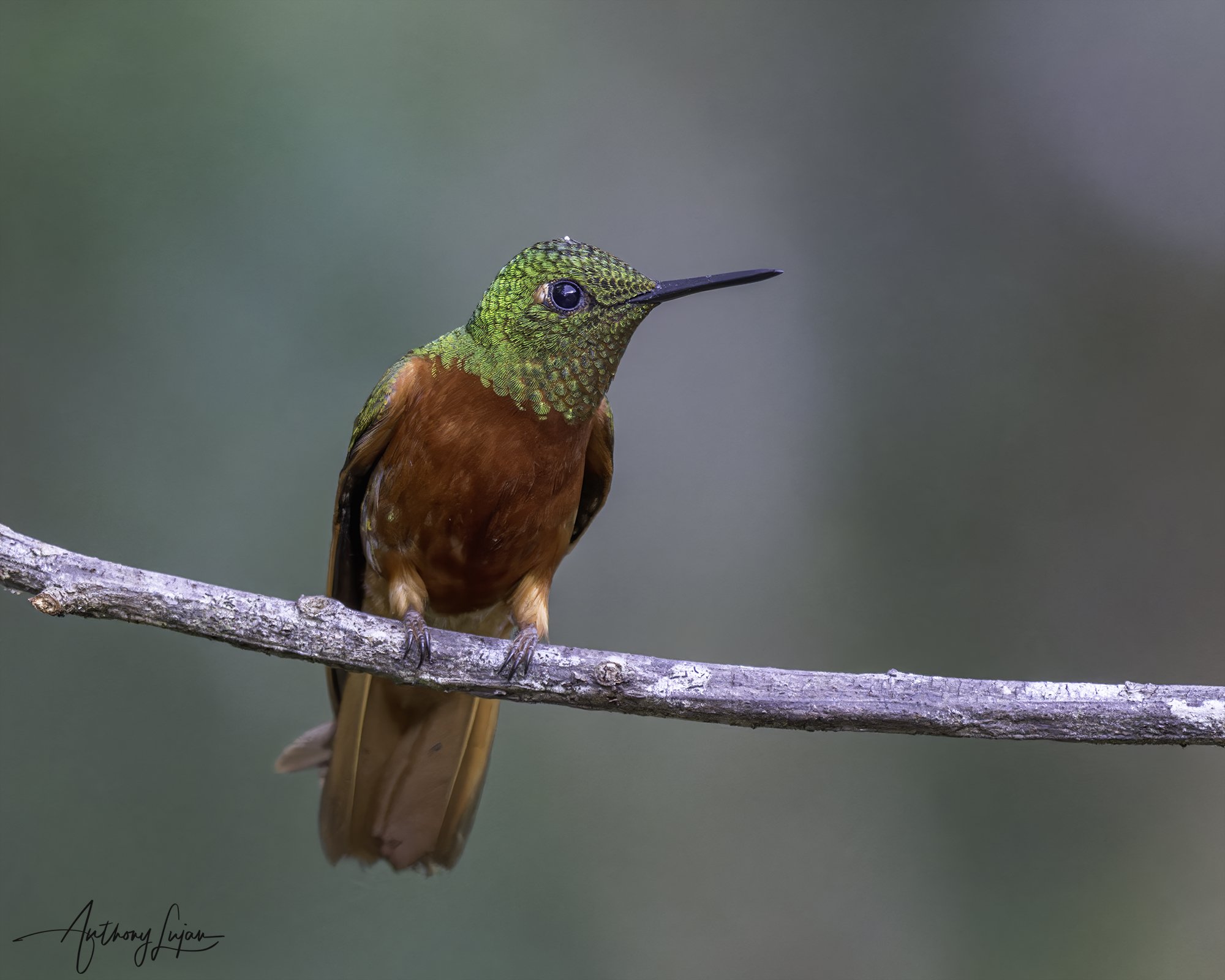
The Chestnut-breasted Coronet is one of the most distinctive highland hummingbirds of the northern and central Andes, combining vivid emerald-green upperparts with a rich chestnut breast and belly. Bold and aggressive, it is a familiar sight at forest feeders and flowering shrubs in Andean cloud forests, where it often dominates other hummingbirds. Its chunky build, short bill, and chestnut underparts make it unmistakable in its preferred habitat.
Male Description
Adult males have metallic green upperparts, including the crown, back, and rump, sometimes with bronzy tones on the upper back. The entire breast and belly are a deep chestnut to rufous‑chestnut, contrasting sharply with the green head and back. The tail is chestnut to rufous with darker or bronzy tips, and the wings are dark. The bill is short, straight, and black, and there is a clear white spot behind the eye. In good light, males show a brilliant green hood and back with a solid chestnut front and underside.
Female Description
Females are similar to males in overall pattern, with green upperparts and chestnut underparts, but may show some cinnamon or buffy speckling on the green throat and slightly duller or lighter chestnut on the breast. The white post‑ocular spot is present, and the tail and wing pattern are similar. Juveniles resemble females but have more green mixed into the underparts and cinnamon edging on upperpart feathers, especially on the rump, giving a more mottled appearance.
Habitat & Behavior
Chestnut-breasted Coronets frequent humid montane forests, cloud forests, and forest edges within their elevational range. They often forage from the mid‑story to the canopy, visiting flowers of shrubs, trees, and epiphytes, and are common at hummingbird feeders in Andean lodges and reserves. Like other coronets, they are highly territorial and pugnacious, defending clusters of flowers from other nectar-feeding birds, and may engage in loud chase flights and even physical aerial clashes. They also capture small insects by hawking from exposed perches.
Breeding
Breeding timing varies across its Andean range but generally aligns with favorable flowering and climatic conditions, often within the local wet season. The female builds a cup nest of moss and lichen bound with spiderweb, usually attached to a horizontal branch or sheltered support several meters above the ground in forest or along forest edges. She lays two white eggs and alone incubates and raises the young, following the typical hummingbird pattern.
Population
The total number of mature individuals is unknown, but the Chestnut-breasted Coronet is considered locally common to abundant in suitable montane forests and around feeders in protected areas. Despite its local abundance, its dependence on humid montane and cloud forests means that ongoing habitat loss and degradation across the Andes contribute to a decreasing overall population trend.

Conservation
Chestnut-breasted Coronet is currently assessed as Least Concern, thanks to its fairly wide Andean range and presence in multiple protected areas. However, continuing deforestation, fragmentation, and degradation of montane forests and cloud forests pose threats to its habitat and likely drive its decreasing trend. Conservation of intact montane forest, restoration of forest corridors, and protected reserves that maintain rich flowering plant communities are important for sustaining healthy populations.
Related species in the Boissonneaua genus (3 species in total):

Please note: The content provided in this article reflects Anthony’s personal experience and photographic approach. Results can vary depending on light, weather, location, equipment, subject behavior, and field conditions.