
Scientific name: Hylocharis chrysura
The Gilded Hummingbird is a small golden‑green hummingbird of open and semi‑open habitats in southern Brazil, Bolivia, Paraguay, Uruguay, and northern Argentina. Its global population size is unknown, but it is listed as Least Concern with an increasing population trend and is generally treated as a non‑migratory resident.
At a Glance
Family: Trochilidae (hummingbirds)
Clade: Trochilini – Emeralds
Genus: Hylocharis — 2 species in total
Range: Northeastern and south‑central Bolivia, central and southeastern Brazil, Paraguay, Uruguay, and northern Argentina
Habitat: Open and semi‑open landscapes including savannah with scattered trees, forest edges and clearings, plantations, and gardens
Elevation: Most numerous between 400–800 m, recorded from roughly 200–1,000 m and locally higher
Length: About 8–10 cm (3.1–3.9 in)
Weight: About 4–4.5 g (0.14–0.16 oz)
Number of mature individuals: Unknown
Population trend: Increasing
Movement: Not a migrant (resident, with only local movements)
IUCN Red List category: Least Concern
Name Origin
The name “Gilded Hummingbird” refers to the bird’s bright golden‑green plumage and gleaming coppery tail. The species name chrysura comes from Greek elements meaning “golden‑tailed,” again highlighting its distinctive metallic tail coloration.
Taxonomy & Distribution
Monotypic species — no recognized subspecies.
Hylocharis chrysura is placed in the tribe Trochilini (“emeralds”) within the hummingbird family Trochilidae. It occurs from northeastern and south‑central Bolivia east and south through central and southeastern Brazil, across most of Paraguay and Uruguay, and into northern Argentina. Within this broad range it primarily uses a patchwork of natural and human‑modified open habitats rather than dense interior forest.
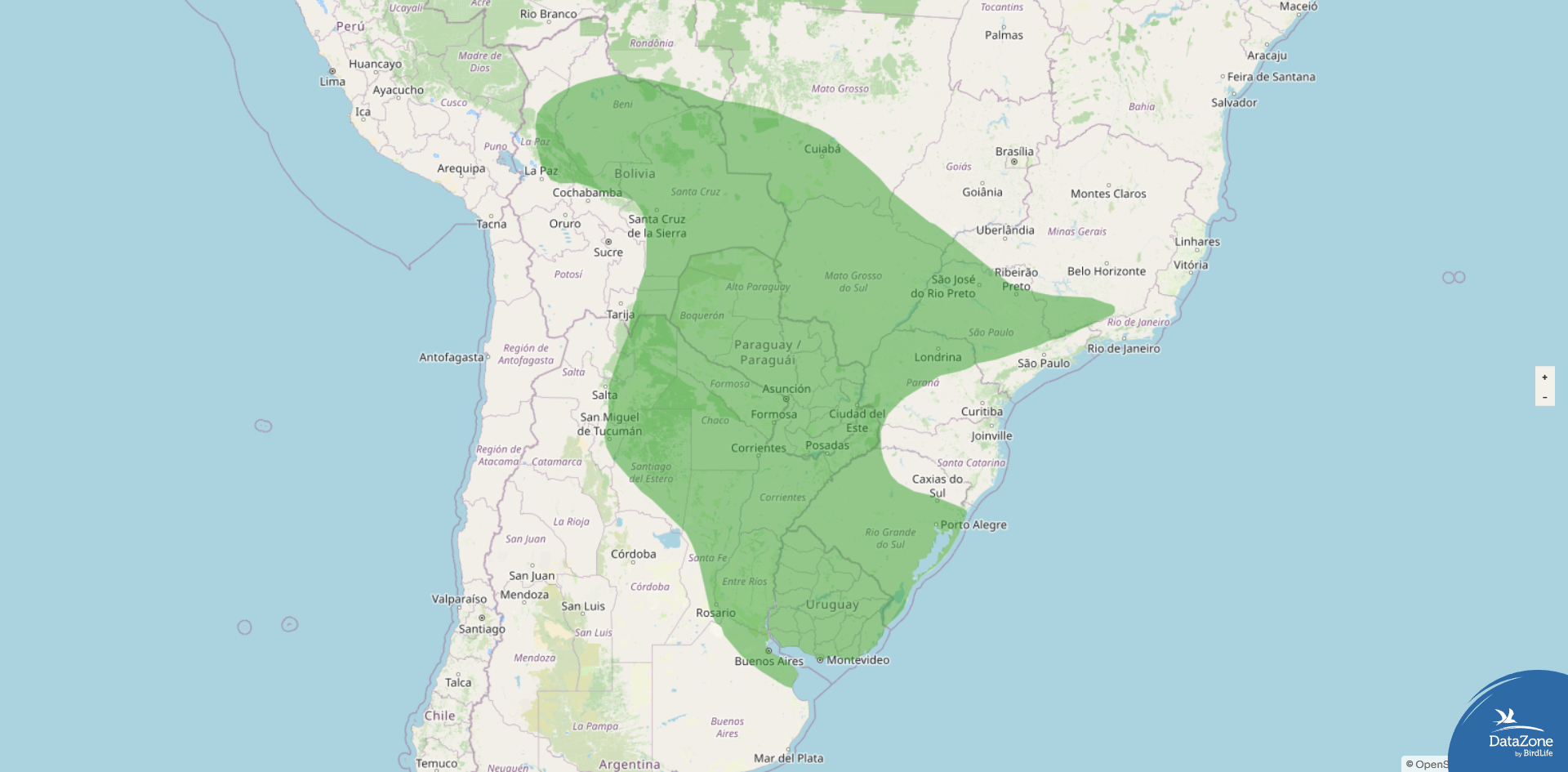
Legend
Green Resident
Species Overview
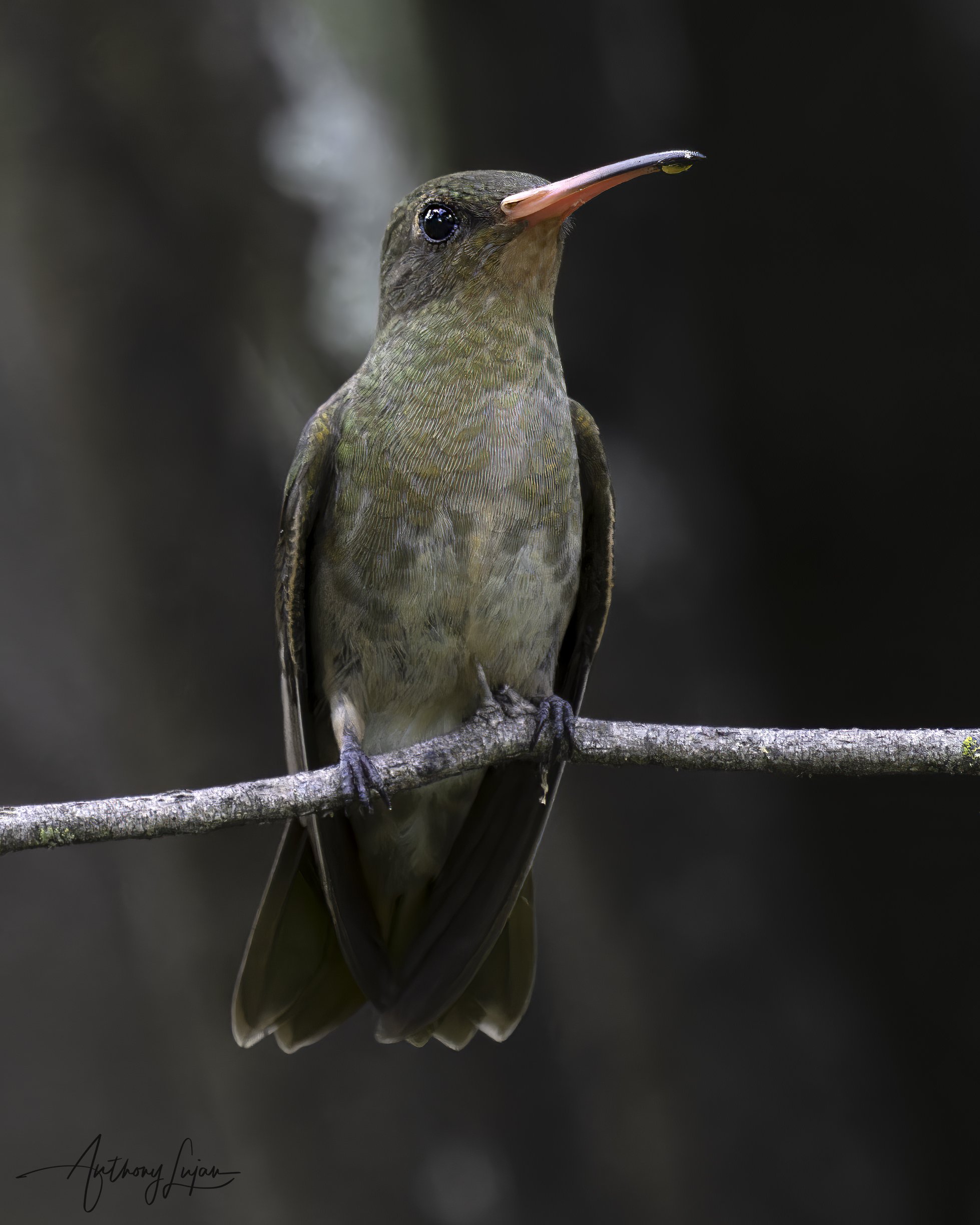
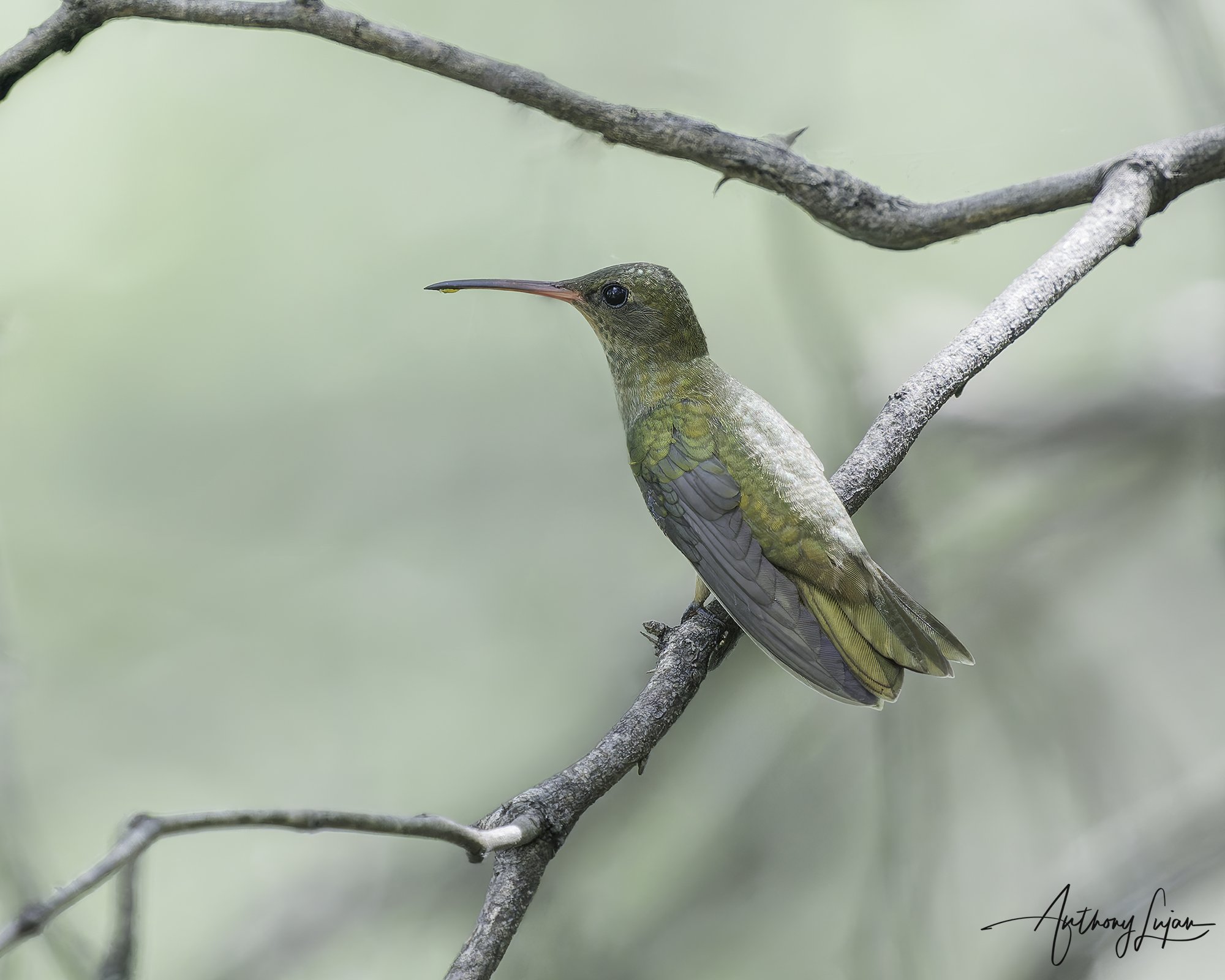
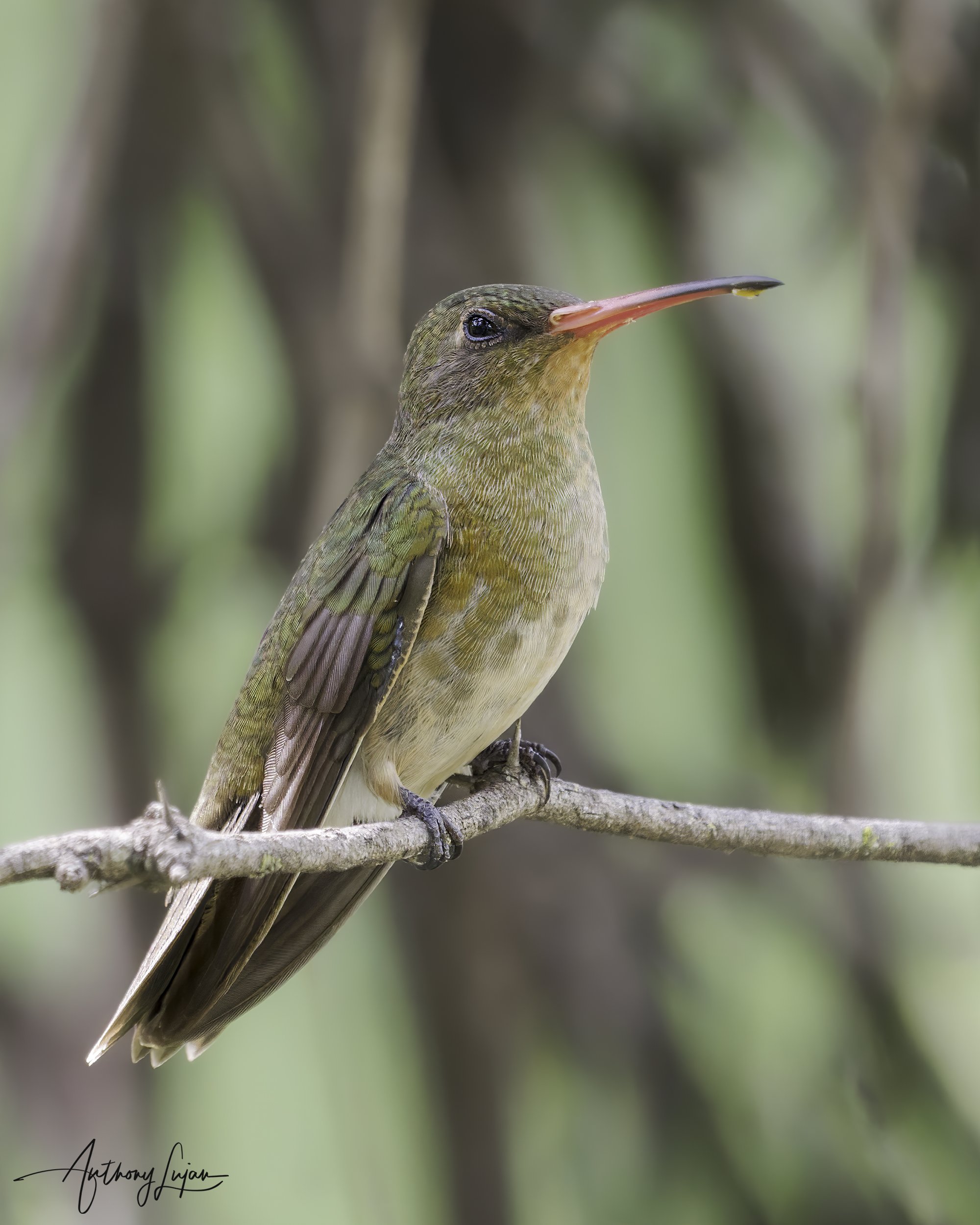
The Gilded Hummingbird is a conspicuous small hummingbird of gardens, savannahs, and woodland edges, often one of the most common species around flowering trees and ornamental shrubs. It shows an overall greenish‑golden sheen with a coppery tail, pale underparts, and a rufous‑tinged chin, giving it a warm, “gilded” appearance in good light. Its willingness to use plantations, rural areas, and towns has allowed it to thrive and expand within its South American range.
Male Description
Adult males have iridescent golden‑green upperparts, including crown, back, and rump, often appearing especially bright on the head and mantle. The chin is rufous to buffy, contrasting with whitish‑buff underparts that may show a light golden gloss on the breast. The tail is distinctly coppery or golden‑bronze and can look almost metallic in strong sunlight. The bill is straight, medium‑length, red to coral with a dark tip.
Female Description
Females closely resemble males in overall pattern but tend to be slightly duller, with less intense golden sheen and somewhat grayer or whiter lower underparts. The rufous chin can be less pronounced and the contrast between chin and breast is often softer than in males. Juveniles resemble adult females but show buffy fringes to the head feathers, giving a more scaly look to the crown and face, and may have less sharply defined tail color.
Habitat & Behavior
Gilded Hummingbirds favor open and semi‑open environments such as savannah with scattered trees, forest edges and clearings, scrublands, plantations, and urban or rural gardens. They typically forage from low shrubs to the canopy, visiting a wide variety of native and introduced flowering plants and ornamental species. The species often becomes very tame around people, frequenting feeders and flowering garden plants, and can be quite territorial, chasing conspecifics and other hummingbirds away from rich nectar sources. In addition to nectar, it feeds on small insects and spiders, caught in flight or gleaned near flowers for added protein.
Breeding
In Brazil, the main breeding season runs roughly from September to February, aligning with warm, wet months and peak flower availability; timing in other parts of the range is likely similar in the austral spring and summer. The female builds a small cup nest of plant seed fibers and cobweb, decorating the outside with lichen and bits of leaf. Nests are usually placed somewhat exposed on a thin horizontal branch or fork about 4–6 m above ground, occasionally up to around 10 m. The clutch is two white eggs, incubated by the female for about two weeks, and chicks typically fledge three to four weeks after hatching.
Movement
The Gilded Hummingbird is generally treated as resident throughout most of its range, with no large‑scale, long‑distance migrations documented. Some populations may make short‑distance seasonal movements in response to local flower availability, but overall it is considered non‑migratory. These local shifts keep birds within the same general regions, especially in open and semi‑open habitats that retain flowering plants year‑round.
Population
The total number of mature individuals has not been quantified, but the Gilded Hummingbird has a very large range and is described as common to very common in many areas. Its ability to exploit human‑modified habitats such as gardens and plantations appears to support an ongoing population increase. No rapid declines or major range contractions have been reported, and in some areas it is expanding or becoming more abundant.

Conservation
The species is assessed as Least Concern, with an increasing population trend and no major immediate threats identified. Its tolerance of disturbed and urban habitats, and frequent use of man‑made plantings and feeders, make it more resilient than many forest‑dependent hummingbirds. Continued maintenance of flowering trees and shrubs in rural and urban landscapes, along with general habitat stewardship, is likely to benefit this species under current land‑use patterns.
Checkout Anthony’s playlist of this species! Click the top right dropdown to see all the videos.
Related species in the Hylocharis genus (2 species in total):

Please note: The content provided in this article reflects Anthony’s personal experience and photographic approach. Results can vary depending on light, weather, location, equipment, subject behavior, and field conditions.