
Scientific name: Sephanoides fernandensis
The Juan Fernández Firecrown is an island-endemic hummingbird restricted to Robinson Crusoe Island in the Juan Fernández archipelago off central Chile. Its global population is estimated at about 1,500–3,500 mature individuals, the trend is decreasing, and it is listed as Critically Endangered, endemic, with two historically recognized subspecies (one now considered extinct).
At a Glance
Family: Trochilidae (hummingbirds)
Clade: Heliantheini – Brilliants
Genus group: Sephanoides — 2 species, 2 subspecies
At a Glance
Family: Trochilidae (hummingbirds)
Clade: Lesbiini – Coquettes
Genus group: Sephanoides — 2 species, 2 subspecies
Range: Robinson Crusoe Island in the Juan Fernández archipelago off central Chile; formerly also (extinct taxon) on Alejandro Selkirk Island.
Habitat: Native forest, scrub, and dense thickets with abundant flowering shrubs and trees, plus gardens, orchards, and semi-open wooded areas near the island’s town.
Elevation: From near sea level in coastal zones up into montane valleys and slopes across much of the island’s forested elevational range.
Length: Males about 11.5–12 cm (4.5–4.7 in); females about 10.5 cm (4.1 in).
Weight: Males around 10–11 g; females around 6–7 g.
Number of mature individuals: 1,500–3,500
Population trend: Decreasing
Status: Critically Endangered (IUCN)
Name Origin
The genus name Sephanoides comes from Greek roots alluding to a “crowned” appearance, referencing the brilliant iridescent crowns of the firecrown hummingbirds. The species name fernandensis refers to the Juan Fernández archipelago, the remote group of islands off Chile where this bird evolved in isolation. The English name “Juan Fernández Firecrown” emphasizes both its island home and the spectacular fiery crown of adult males.
Subspecies & Distribution
Two subspecies have been recognized historically:
Sephanoides fernandensis fernandensis
The nominate and only surviving subspecies, endemic to Robinson Crusoe Island. It occupies native forest, dense thickets, and gardens across parts of the island, especially where native flowering plants remain abundant.Sephanoides fernandensis leyboldi
A putative, now-extinct taxon historically attributed to Alejandro Selkirk Island (Más Afuera) within the same archipelago. Its status as a valid subspecies has been debated, but it is often listed as an extinct form associated with that island.
Today, all confirmed living Juan Fernández Firecrowns occur only on Robinson Crusoe Island; the species no longer occupies any other island.

Ledged
Green Resident
Species Overview
The Juan Fernández Firecrown is one of the world’s most isolated and threatened hummingbirds, confined to a single small oceanic island. It depends heavily on native forests and thickets, especially patches dominated by endemic flowering plants, but also uses gardens and orchards near the island’s town. Extreme sexual dimorphism, a tiny global range, strong reliance on native flora, and competition with the more numerous Green-backed Firecrown all contribute to its Critically Endangered status and ongoing decline.
Male Description
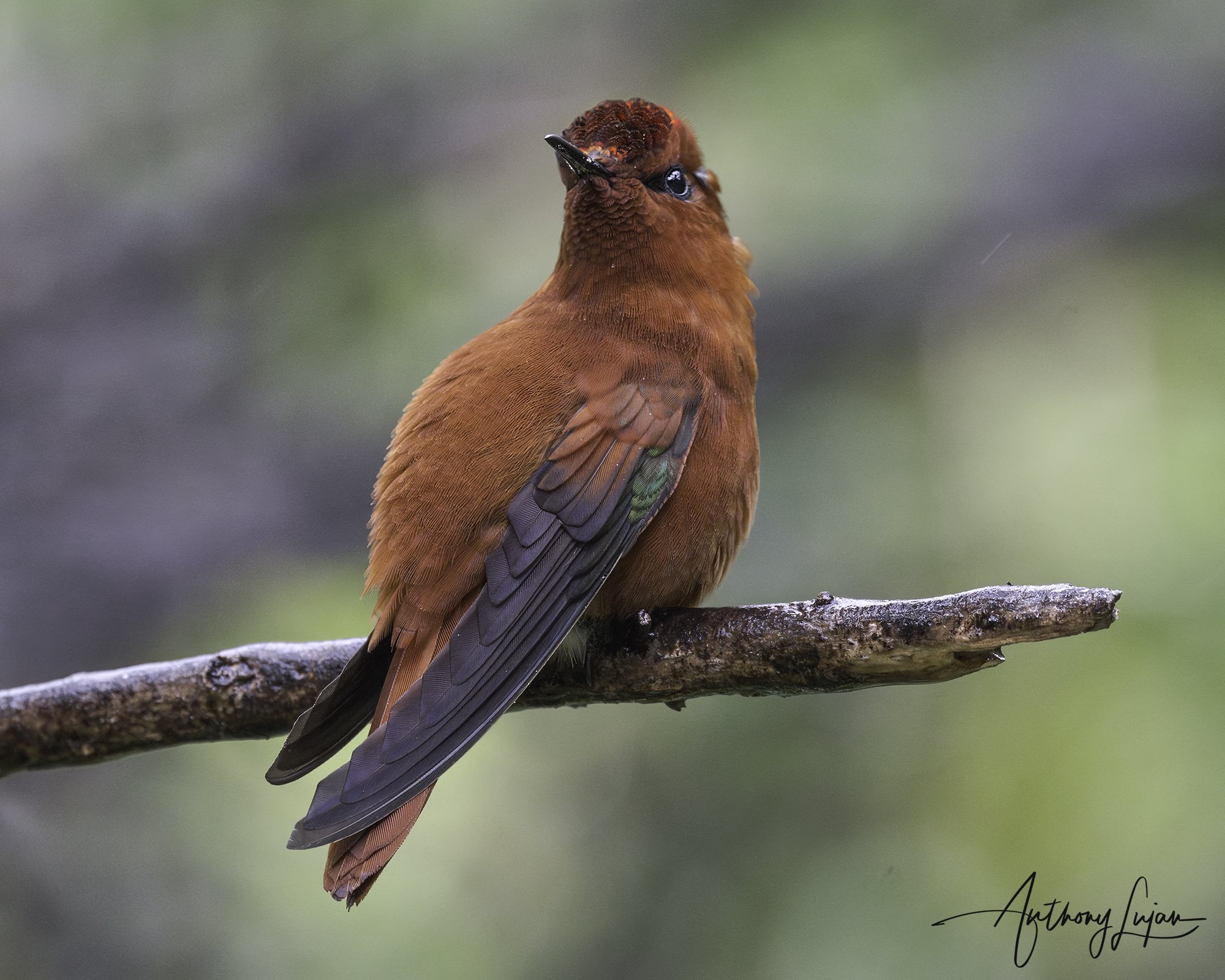
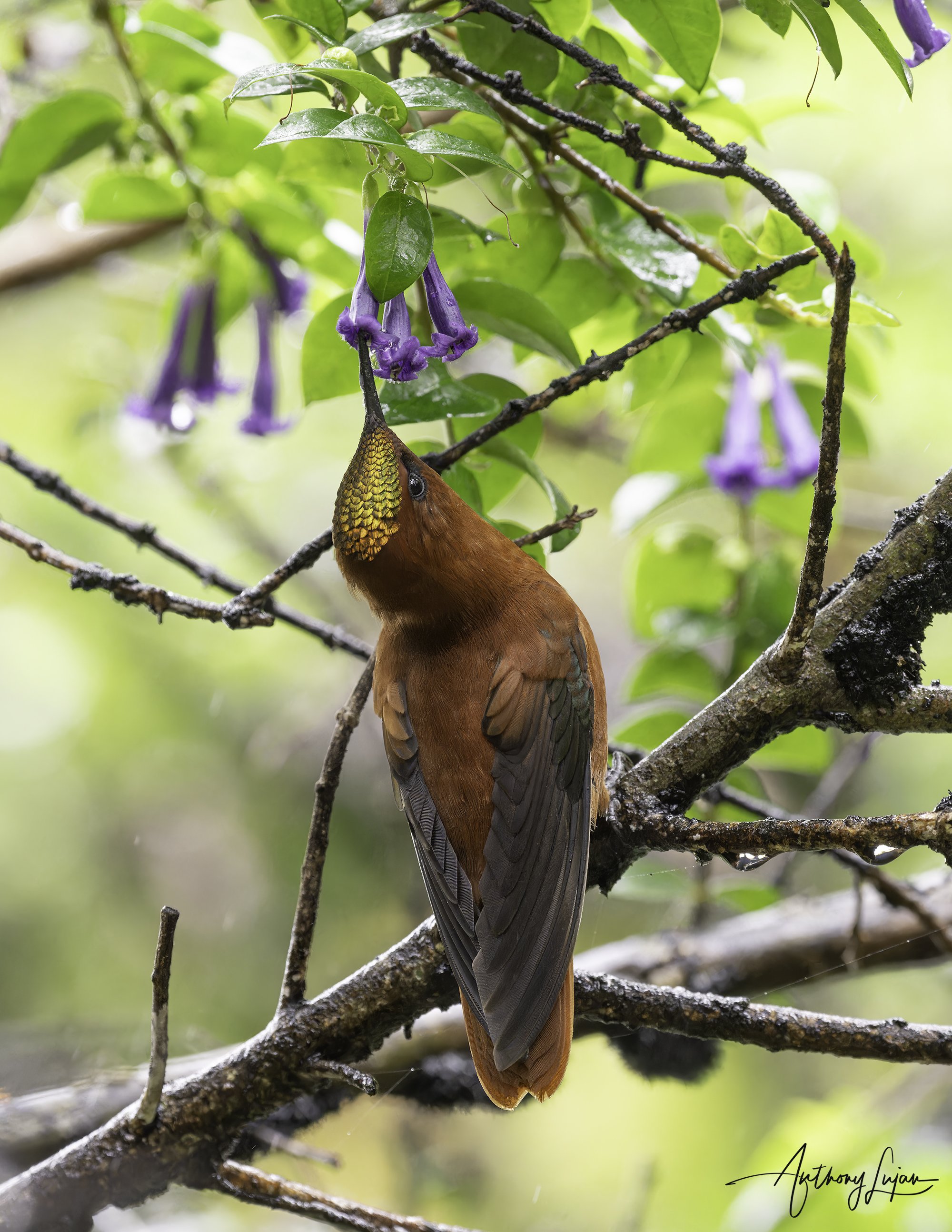
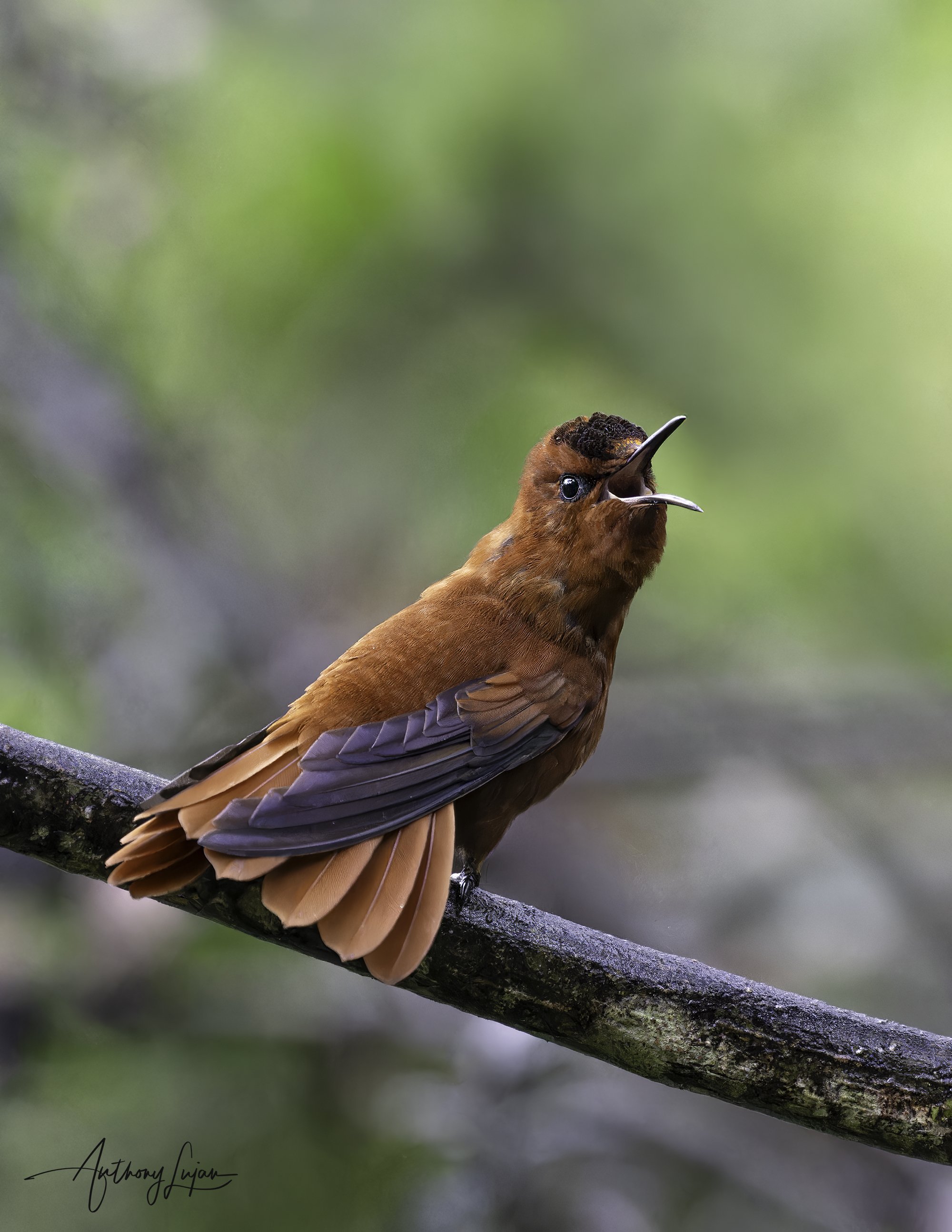
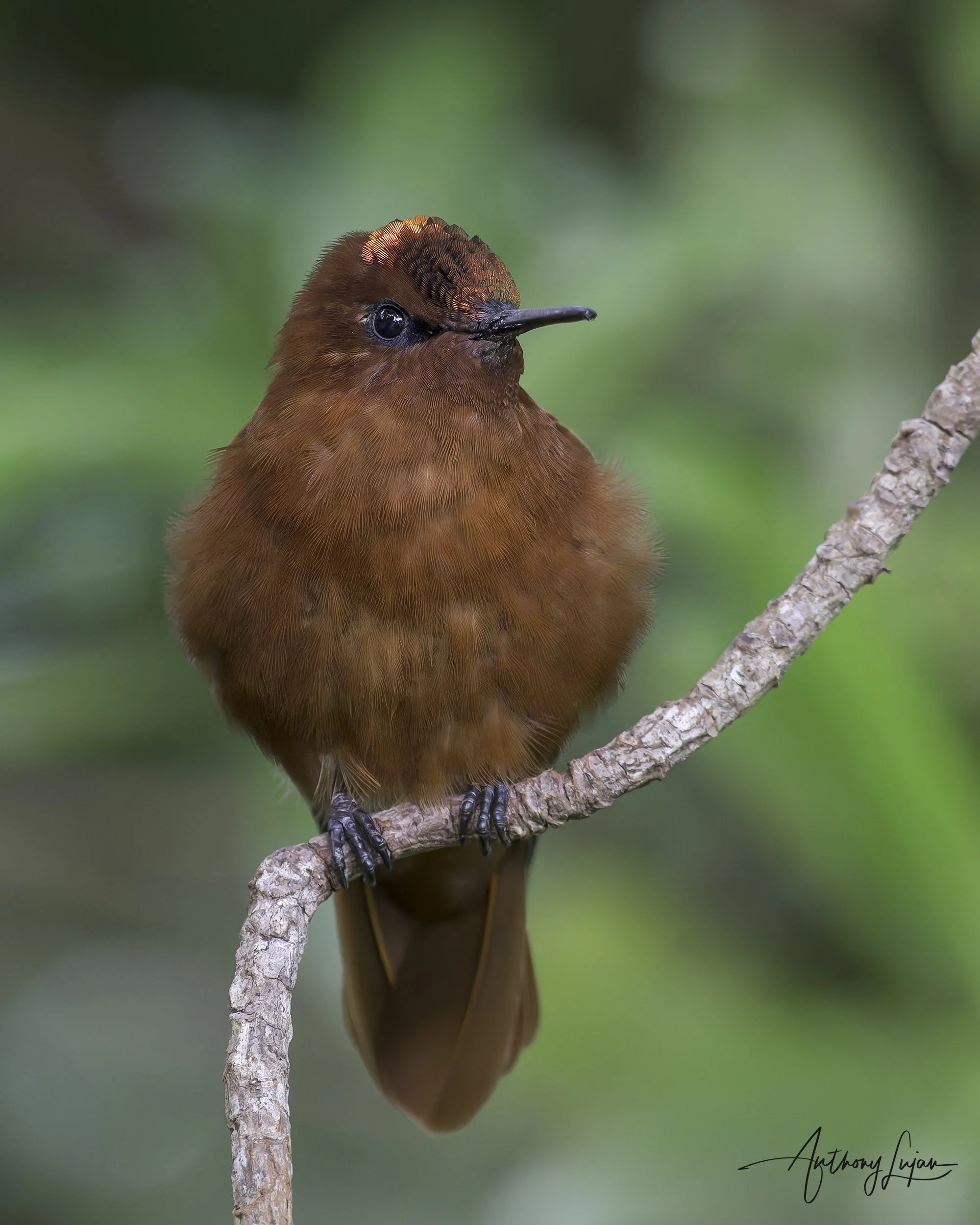
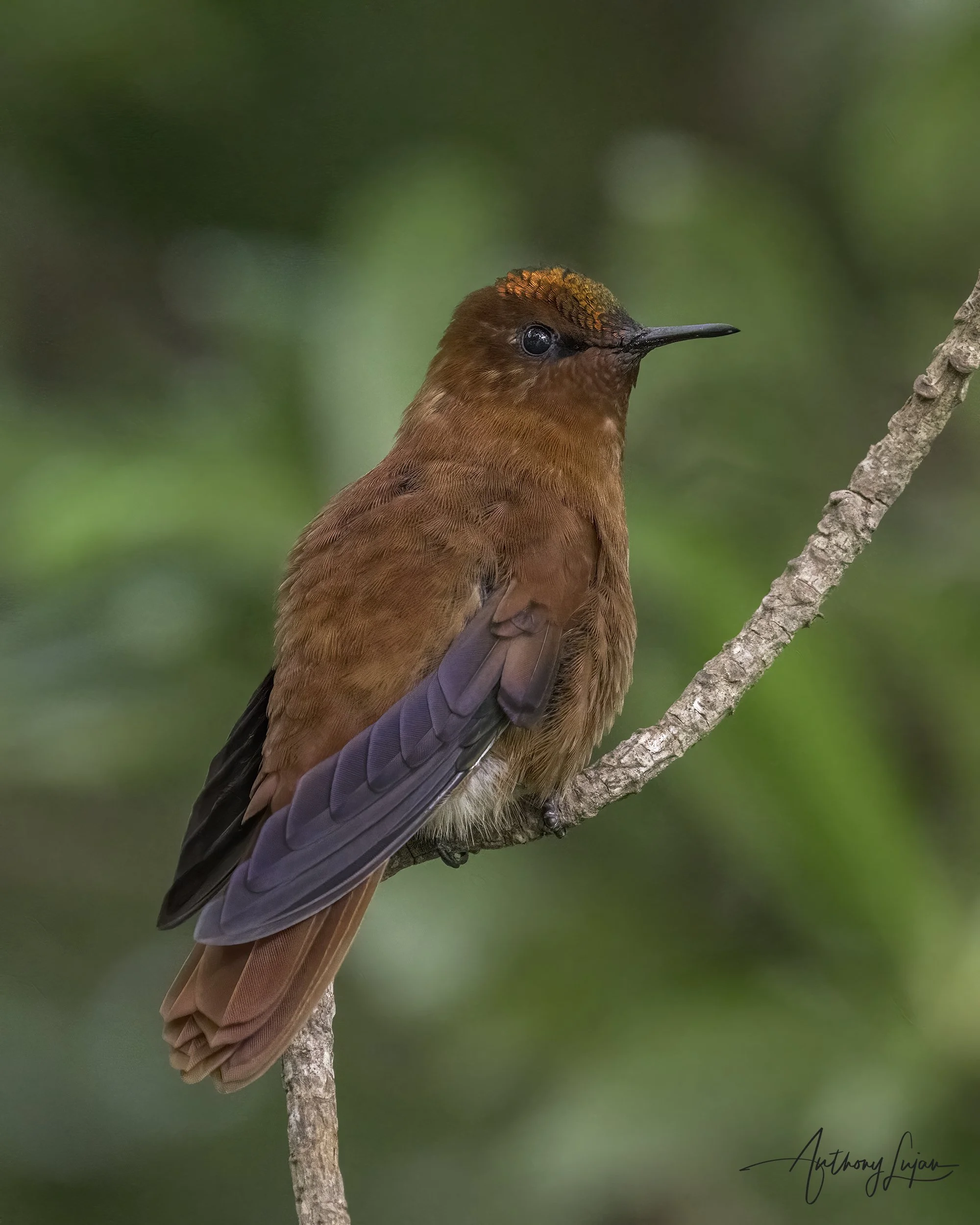
Adult males are medium-sized hummingbirds with a striking, mostly cinnamon-orange body, including the head, underparts, and tail. The wings are darker brownish, creating strong contrast with the warm-toned body. The most distinctive feature is the iridescent crown, which can flash from dark to brilliant shades of yellow, orange, or red depending on light and angle, forming the “firecrown” that gives the species its name. The bill is straight and dark, and the overall impression is of a glowing, fiery-colored hummingbird that stands out against the island’s greens and browns.
Female Description
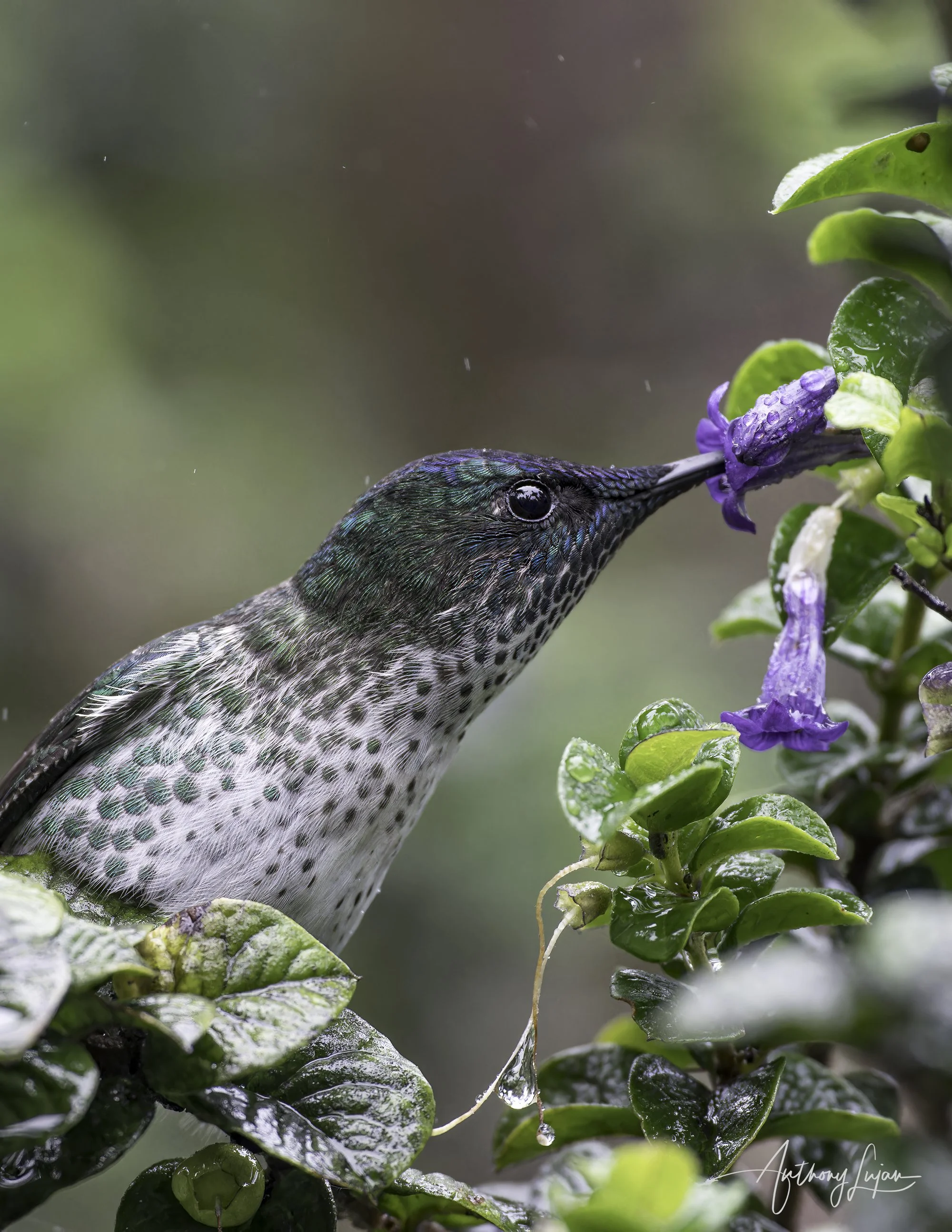
Females are so different from males that they were once thought to be a separate species. They have metallic green upperparts and a bright blue to blue‑violet crown patch, contrasting with their white underparts heavily speckled or spotted with greenish or bluish marks on the throat and flanks. The tail is mostly greenish with pale edges or tips instead of the male’s uniformly cinnamon tail. This combination of green back, spotted white underparts, and colorful crown makes the female distinctive and visually striking in her own right.
Habitat & Behavior
Juan Fernández Firecrowns inhabit native scrub, forest, and dense thickets, particularly areas with endemic flowering trees and shrubs that provide nectar and nesting sites. They also use gardens, orchards, and semi-open wooded areas around San Juan Bautista, especially when ornamental and native trees are in bloom. They feed mainly on nectar from both native and introduced flowers and supplement their diet with small arthropods captured by hawking or gleaning from foliage. The species is strongly territorial around rich nectar sources, and its distribution on the island is shaped by both habitat quality and aggressive interactions with the more common Green-backed Firecrown.
Population
The global population of Juan Fernández Firecrown is estimated at about 1,500–3,500 mature individuals, restricted entirely to Robinson Crusoe Island. Within that small area, the species occurs in fragmented patches of suitable habitat and is absent from large portions of the island where native vegetation has been lost or heavily degraded. The population trend is clearly decreasing, with ongoing declines driven by habitat changes, invasive species, and competition, leaving the species at continued high risk of extinction.

Conservation
Juan Fernández Firecrown is listed as Critically Endangered due to its extremely restricted range, small and declining population, and multiple severe threats. Major threats include destruction and fragmentation of native forest and scrub by past and ongoing human activities, invasion by non-native plants such as blackberry that outcompete native flora, and habitat degradation from introduced herbivores like rabbits and goats. Predation by introduced mammals (including cats and rats) and competition with the self-introduced Green-backed Firecrown further limit its numbers and distribution. Conservation efforts focus on invasive plant control, restoration and protection of native vegetation, management of introduced animals, and continued monitoring and research; long-term survival will depend on sustained habitat restoration and effective control of invasive species across the island.
Checkout Anthony’s playlist of this species! Click the top right dropdown to see all the videos.
Anthony created a few products designed around this species. Check them out!
Your purchase SUPPORTS conservation efforts, so the more you buy, the more you help hummingbirds.
Related species in the Sephanoides genus (2 species total):


Please note: The content provided in this article reflects Anthony’s personal experience and photographic approach. Results can vary depending on light, weather, location, equipment, subject behavior, and field conditions.