
Scientific name: Saucerottia cyanifrons
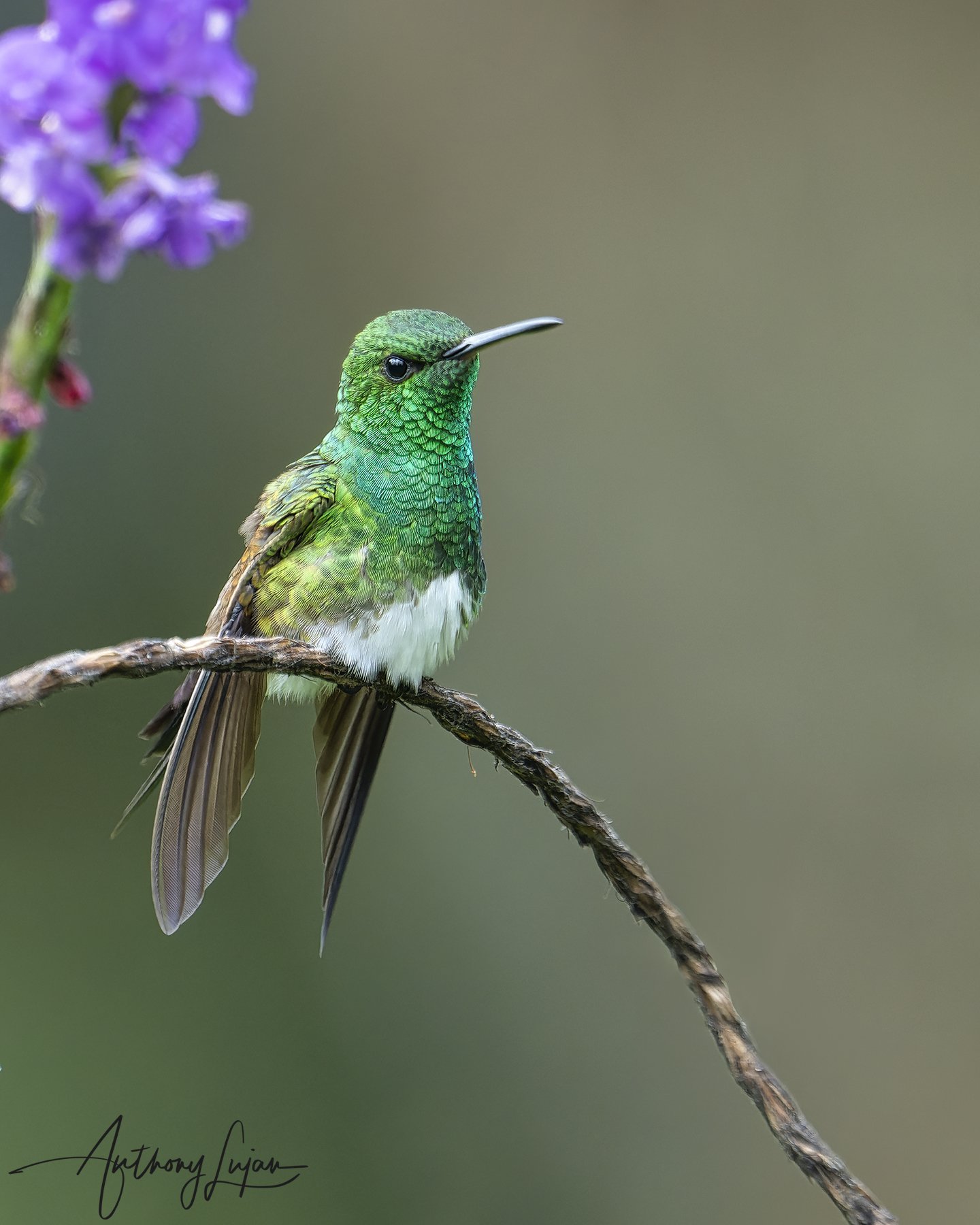
The Indigo-capped Hummingbird is a medium-sized emerald hummingbird endemic to Colombia, where it inhabits semi‑open Andean foothills and inter‑Andean valleys on both slopes of the Eastern Cordillera and adjacent ranges. Its bright indigo‑blue crown and green body make it one of the most distinctive regional endemics in central and northern Colombia.
At a Glance
Family: Trochilidae (hummingbirds)
Clade: Trochilini – Emeralds
Genus group: Saucerottia — emerald hummingbirds of Mexico, Central America, and northern South America.
Range: Endemic to Colombia; found mainly in north and central Colombia, including the Magdalena and upper Cauca river valleys and adjacent slopes, particularly in departments such as Antioquia, Caldas, Cundinamarca, Santander, Norte de Santander, and Tolima.
Habitat: Semi‑open to open landscapes such as edges of wet forest, savanna, shrubby areas, plantations, and gardens, many of them relatively dry; also forest borders and second growth.
Elevation: Most common between about 1,000 and 2,000 m (3,300–6,600 ft), regularly down to 400 m (1,300 ft) in the breeding season and rarely up to 3,000 m (9,800 ft).
Length: about 7–10 cm (2.8–3.9 in).
Weight: around 5 g (0.18 oz).
Number of mature individuals: not quantified.
Population trend: Stable (believed to be stable overall).
Status: Least Concern (IUCN).
Name Origin
The genus name Saucerottia honors Antoine Claudius Saucerotte, an 18th‑century French physician and naturalist noted for his work on hummingbirds. The species name cyanifrons comes from Greek kyanos (“dark blue”) and Latin frons (“forehead”), meaning “blue‑crowned” or “blue‑foreheaded,” referring to the bird’s indigo cap. The English name “Indigo-capped Hummingbird” mirrors this and emphasizes the vivid blue crown that contrasts with the green body.
Subspecies and Distribution
Most current global lists treat Indigo-capped Hummingbird as monotypic, though some taxonomies include the little‑known Alfaro’s Hummingbird (Amazilia alfaroana) within a broader Saucerottia cyanifrons complex.
Within Colombia, Indigo-capped Hummingbird occurs mainly in north and central regions, including the Magdalena and upper Cauca valleys and adjacent foothills and slopes. Key areas include parts of the Eastern and Central Cordilleras in departments such as Antioquia, Caldas, Cundinamarca, Santander, Norte de Santander, and Tolima, where it uses semi‑open habitats, forest edges, and gardens in lower and middle elevations.
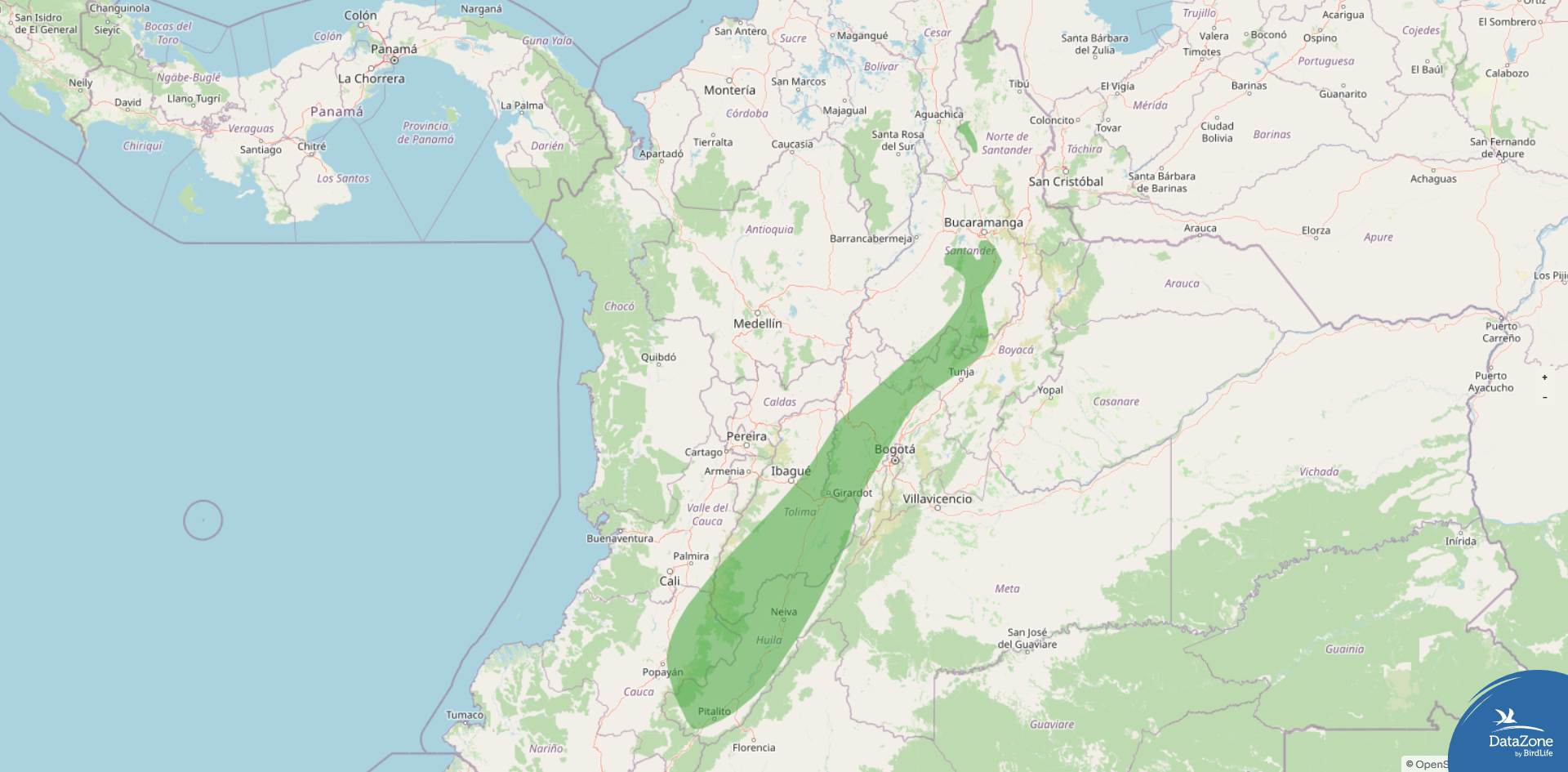
Legend
Green Resident
Species Overview
The Indigo-capped Hummingbird is a characteristic Colombian endemic of mid‑elevation valleys and slopes. Its ability to use plantations, gardens, and other man‑modified landscapes, in addition to natural forest edges and shrublands, has helped it remain relatively secure despite ongoing land‑use change. The combination of bright indigo crown, shimmering green body, and white leg puffs makes it one of the more striking hummingbirds in the Colombian Andes.
Identification
Male
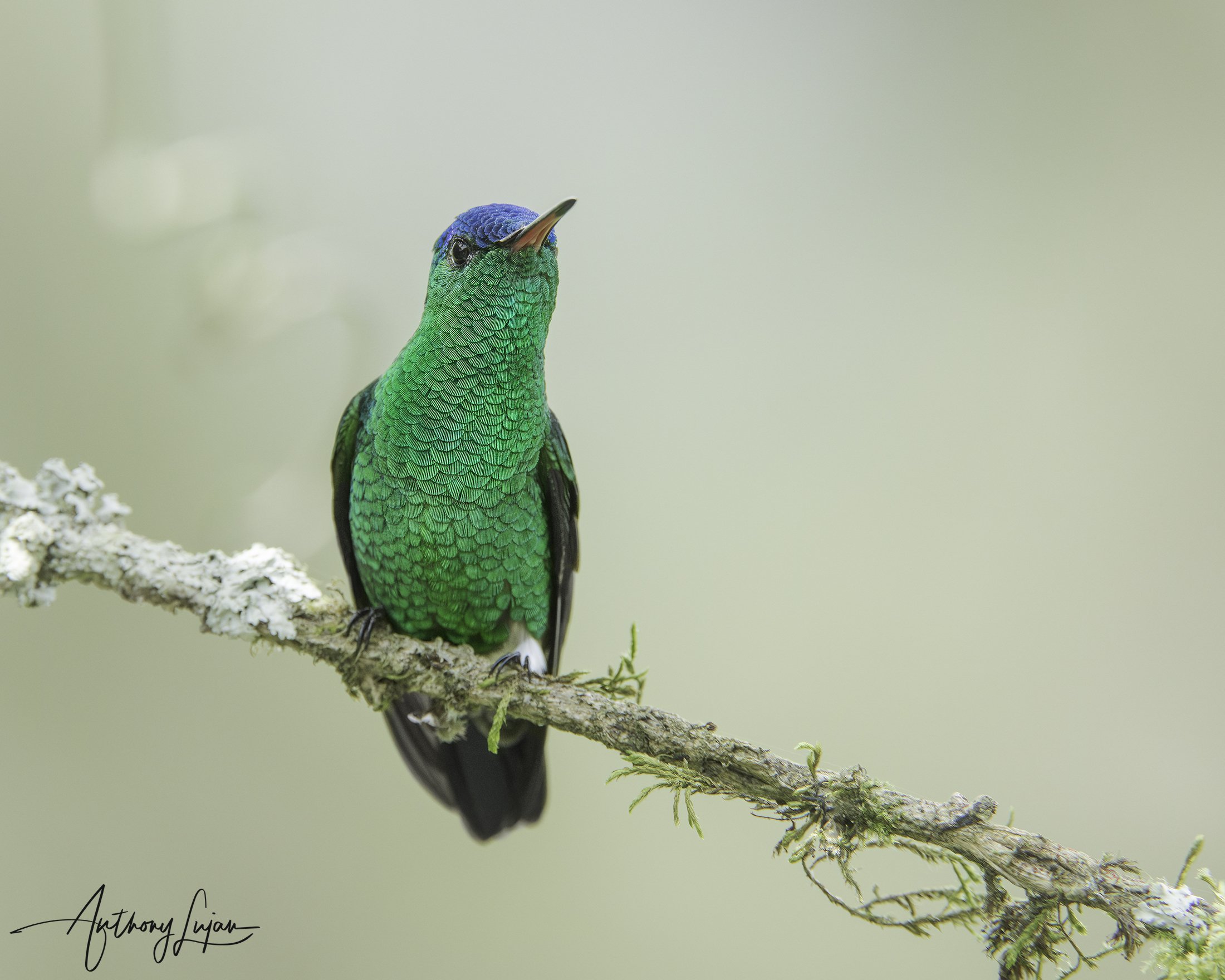
Adult males are about 7–10 cm long and weigh around 5 g. They have a bright indigo‑blue crown, shining green upperparts with a bronze to coppery gloss on the rump, and bronze to bluish‑black uppertail coverts. The underparts are green; the undertail coverts are bronze‑green or dark bluish with white edges, and the tail is a deep steel blue. The bill is mostly black with a red base to the mandible.
Female
Adult females have a turquoise‑blue cap toward the back of the head, with throat feathers showing grayish bars or scaling. Their underparts are somewhat paler than the male’s, and the belly can appear slightly grayer, while the tail remains dark steel‑blue. Juveniles resemble females but have a grayer belly; both sexes share the black bill with red base and the overall green body plus blue crown pattern.
Habitat and Behavior
Indigo-capped Hummingbirds favor semi‑open to open habitats, including edges of wet forest, secondary growth, savanna, shrubby areas, plantations, and gardens, many of which are fairly dry. They are most common between about 1,000 and 2,000 m but regularly descend to around 400 m during the breeding season and occasionally ascend to about 3,000 m. They feed on nectar from a variety of flowers at forest edges, in brushy fields, and in cultivated areas, and also take small insects for protein as other hummingbirds do. Birds often show territorial behavior around favored flowering shrubs and feeders and can be conspicuous in rural and suburban gardens within their range.
Population and Threats
The Indigo-capped Hummingbird is assessed as Least Concern, with a fairly large range in Colombia and a population believed to be Stable. Its exact number of mature individuals is not known, but there is no evidence of rapid declines, and no immediate global threats have been identified. Habitat loss and fragmentation from agricultural expansion, deforestation, and urban development do occur in its range, but the species’ wide altitudinal range and adaptability to man‑made habitats suggest it remains relatively secure at present.

Conservation
Because it tolerates and even benefits from some human‑modified habitats, the Indigo-capped Hummingbird does not currently require urgent targeted conservation measures. Nonetheless, conserving forest edges, gallery forest, and structurally diverse farmland mosaics in the Magdalena and Cauca valleys and adjacent slopes will help ensure its long‑term security. Maintaining native flowering shrubs and trees in rural and suburban gardens and limiting excessive deforestation will also support this Colombian endemic.



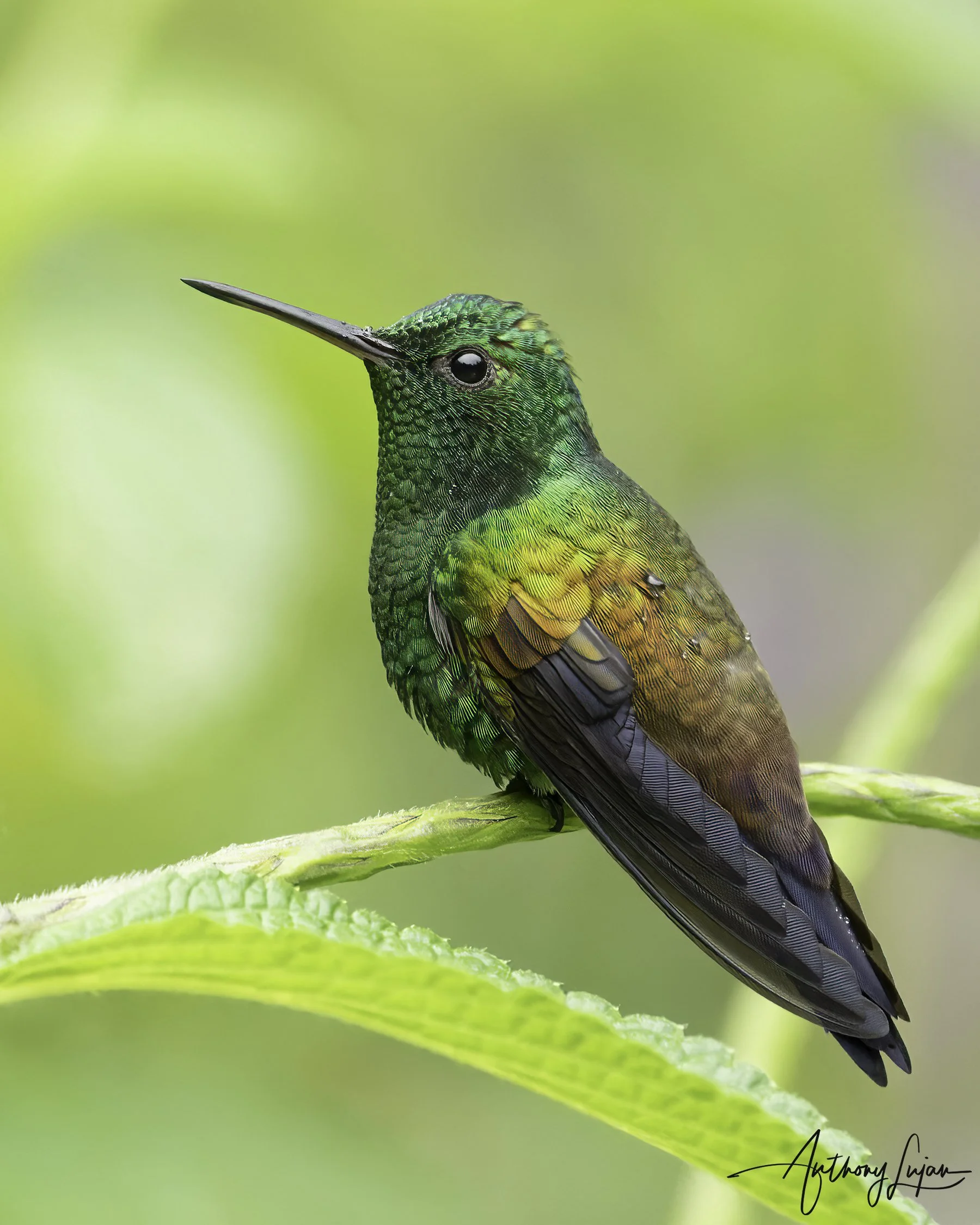
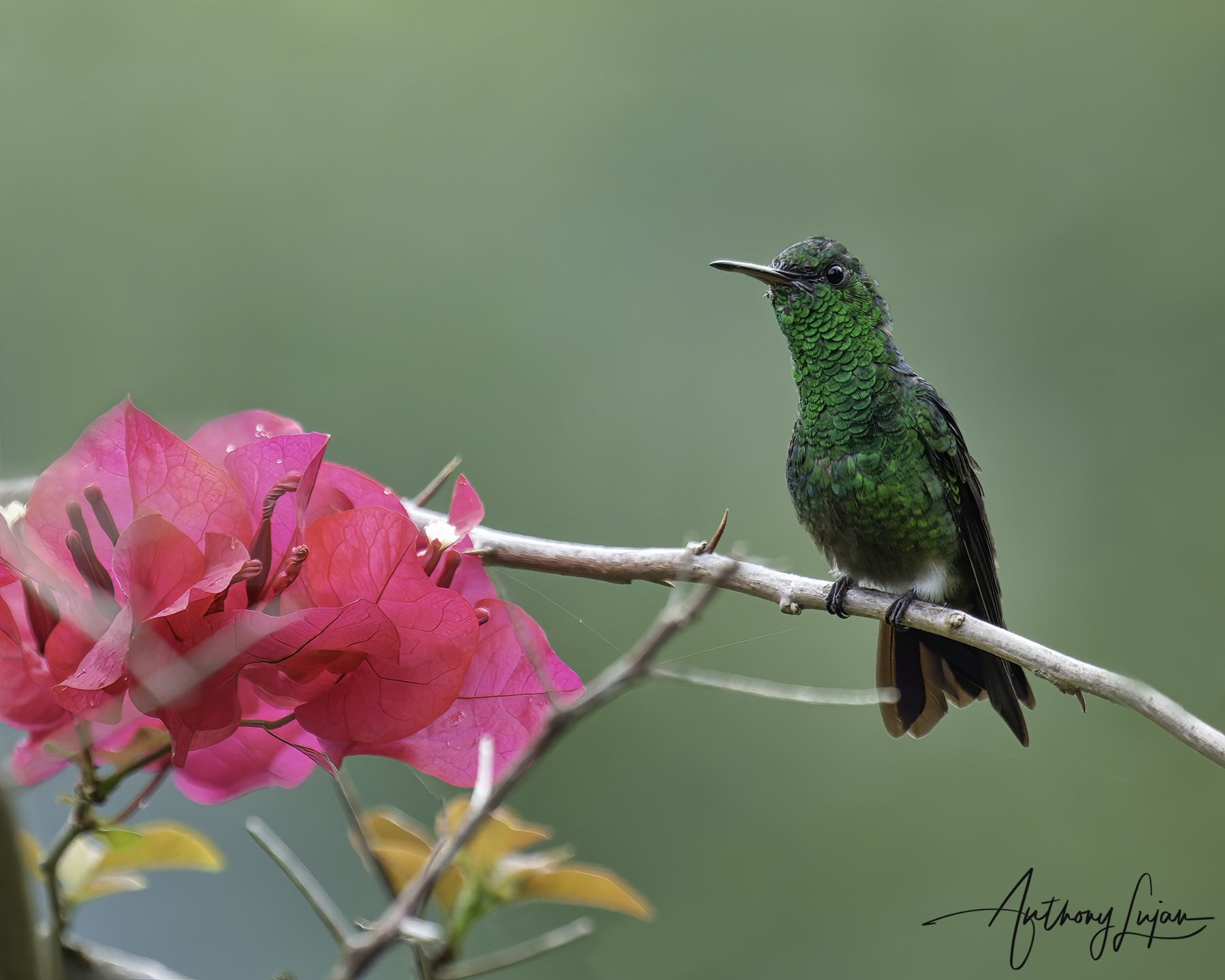
Related species in the Saucerottia genus (11 species total):



Please note: The content provided in this article reflects Anthony’s personal experience and photographic approach. Results can vary depending on light, weather, location, equipment, subject behavior, and field conditions.