
Scientific name: Phaethornis mexicanus
The Mexican Hermit is a medium-sized hermit hummingbird of humid evergreen and semi-deciduous forests along Mexico’s Pacific slope. Its global population is estimated at 20,000–49,999 mature individuals, the population trend is decreasing, it is not a migrant, and it is currently assessed as Least Concern.
At a Glance
Family: Trochilidae (hummingbirds)
Clade: Phaethornithinae – Hermits
Genus: Phaethornis — 27 species in total
Range: Two disjunct areas along the Pacific slope of western Mexico
Habitat: Interior and edges of humid evergreen forest, ravines in semi-deciduous woodland, Heliconia thickets, and tall second growth
Elevation: From sea level to about 2,000 m (6,600 ft)
Length: About 13–17 cm (5.1–6.7 in)
Weight: About 4.5–6 g
Number of mature individuals: 20,000–49,999
Population trend: Decreasing
Movement: Not a migrant
IUCN Red List category: Least Concern
Name Origin
The genus name Phaethornis comes from Greek roots meaning “sun‑shining bird,” reflecting the shimmering plumage typical of hummingbirds. The species name mexicanus simply refers to Mexico, acknowledging that this hermit is endemic to that country. The English name “Mexican Hermit” emphasizes both its hermit status and its restricted national range.
Taxonomy
Phaethornis mexicanus is a hermit hummingbird in the subfamily Phaethornithinae. It is one of 27 species in the genus Phaethornis and is closely related to other long‑tailed, long‑billed hermits of Central and South America.
Subspecies and Distribution
Two recognized subspecies:
Phaethornis mexicanus mexicanus
Distribution: Southwestern Mexico, from western Guerrero to southeastern Oaxaca.Phaethornis mexicanus griseoventer
Distribution: Western Mexico, from Nayarit to Colima.
Endemic to Mexico, the species occurs in two separated regions along the Pacific slope. It inhabits the interior and edges of humid evergreen forest, Heliconia thickets, and ravines in semi-deciduous woodland, from near sea level up to about 2,000 m.
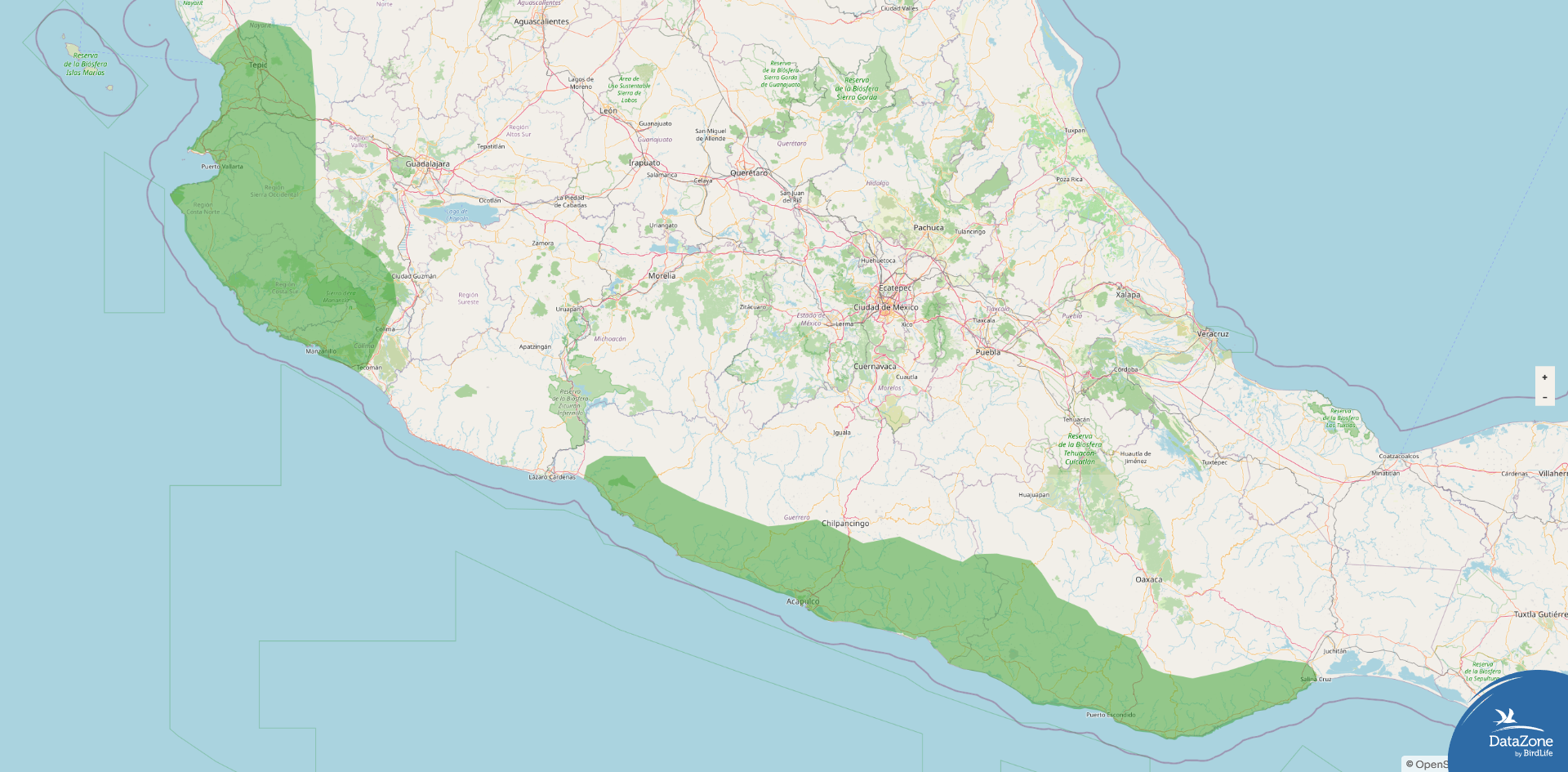
Legend
Green Resident
Yellow Breeding
Blue Non-breeding
Species Overview
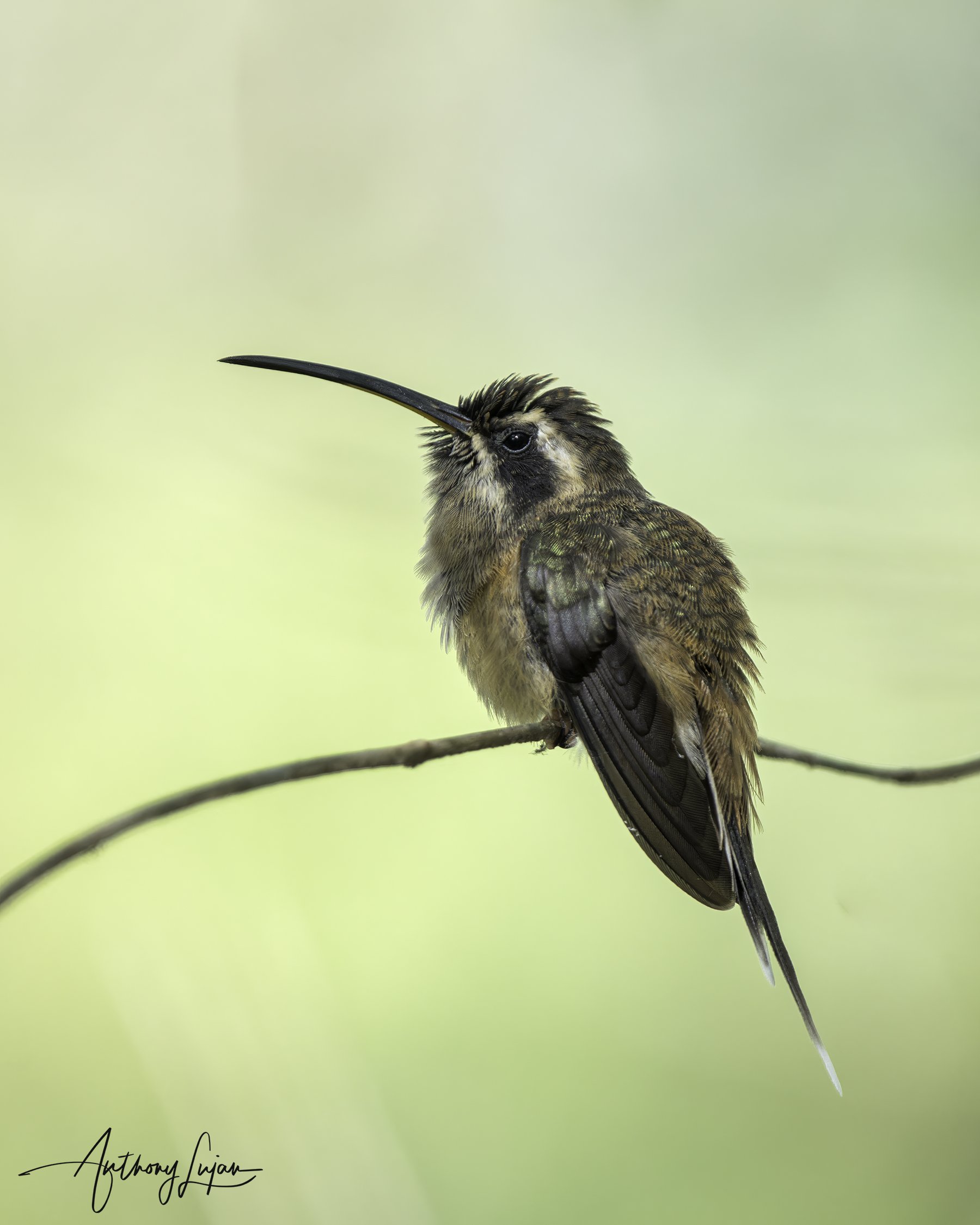
The Mexican Hermit is a shy, forest‑dwelling hermit with bronzy‑green upperparts, cinnamon‑buff underparts, and a dark tail with white tips. A dusky facial mask crossed by pale superciliary and moustachial stripes creates the classic hermit face pattern. It keeps to dense understory and ravines, where it follows traplines between scattered flowering plants and can be easily overlooked despite its size.
Male Description
Males are medium‑sized hermits with bronzy‑green upperparts and a contrasting rufous to cinnamon‑buff belly and flanks. The face shows a dark stripe through the eye, bordered above by a pale supercilium and below by a pale moustachial line. The bill is long and decurved, suited to tubular flowers. The tail is relatively long and dark, with white tips on the outer feathers; the rump often shows warmer rufous tones. Overall, the bird appears bronzy above, warm buff below, with a strong hermit face pattern and long, curved bill.
Female Description
Females closely resemble males in plumage but may be slightly smaller and a bit duller on the underparts. The bill can be marginally shorter and more strongly curved. Both sexes share the same bronzy upperparts, cinnamon‑buff underparts, dark tail with white tips, and distinctive facial stripes. Juveniles resemble adults but may show softer contrasts and fresher feather edges.
Habitat & Behavior
Mexican Hermits inhabit humid evergreen forest, semi‑deciduous woodland, ravines, and Heliconia thickets along the Pacific slope of western Mexico. They favor dense understory and the interiors and edges of forest, often staying low in shaded ravines and along streams.
They feed primarily on nectar from tubular flowers along a trapline route, visiting the same sequence of blossoms repeatedly rather than defending a single territory. Heliconias and other understory flowers are important nectar sources. They also take small insects and other arthropods for protein, gleaned from foliage or taken in short sallies. Birds are typically solitary and quiet, moving through dense vegetation and rarely venturing into open areas.
Breeding
The Mexican Hermit is believed to have a breeding system similar to other hermits, with males gathering at leks to sing and display while females handle all nesting and chick care. The female builds a small cone‑shaped or cup nest of plant fibers and spiderweb, suspended from the underside of broad leaves or similar supports in shaded forest, often in ravines or near streams.
The clutch usually consists of two white eggs. The female alone incubates the eggs and feeds the chicks. Incubation and nestling periods together span several weeks, in line with other Phaethornis hermits.
Movement
The Mexican Hermit is considered not a migrant. It is resident within its two disjunct Pacific-slope ranges in western Mexico, though individuals may move locally along elevational gradients or between forest types in search of flowering plants and nest materials. These shifts are local and do not constitute long-distance migration.
Population
The global population is estimated at 20,000–49,999 mature individuals. Within suitable humid forest and ravine habitats it can be locally fairly common, but its overall range is limited and fragmented, and ongoing habitat loss is contributing to a decreasing trend. Its small global population and restricted, disjunct distribution make it a conservation priority within Mexico’s Pacific forests.

Conservation
The Mexican Hermit is currently assessed as Least Concern, but its relatively small, declining population and restriction to two forested regions along Mexico’s Pacific slope are cause for attention. Deforestation, forest degradation, and conversion of humid forest and ravines to agriculture or pasture threaten its habitat. Conservation of intact evergreen and semi‑deciduous forests, especially ravines and Heliconia‑rich understory, is important for maintaining viable populations.
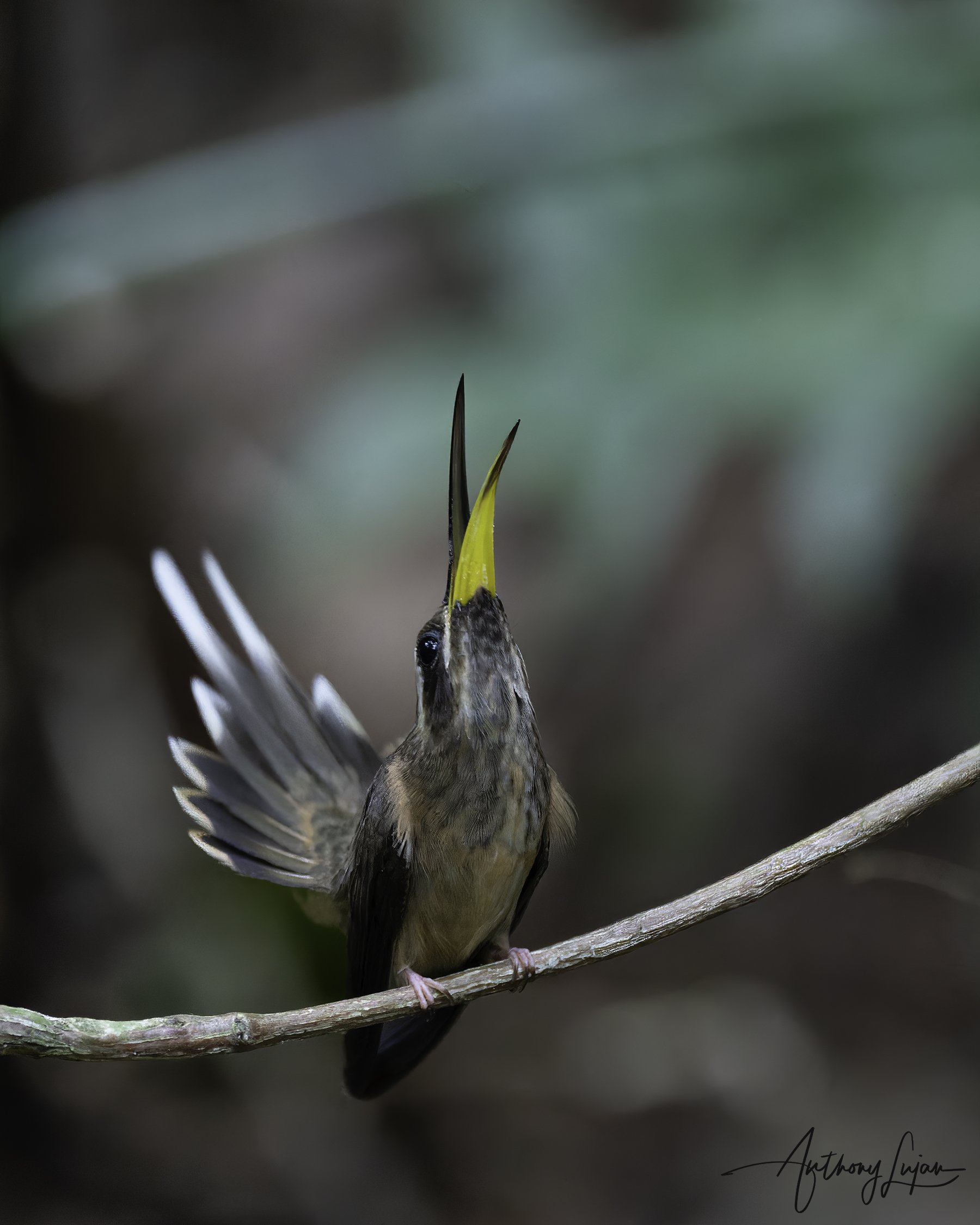
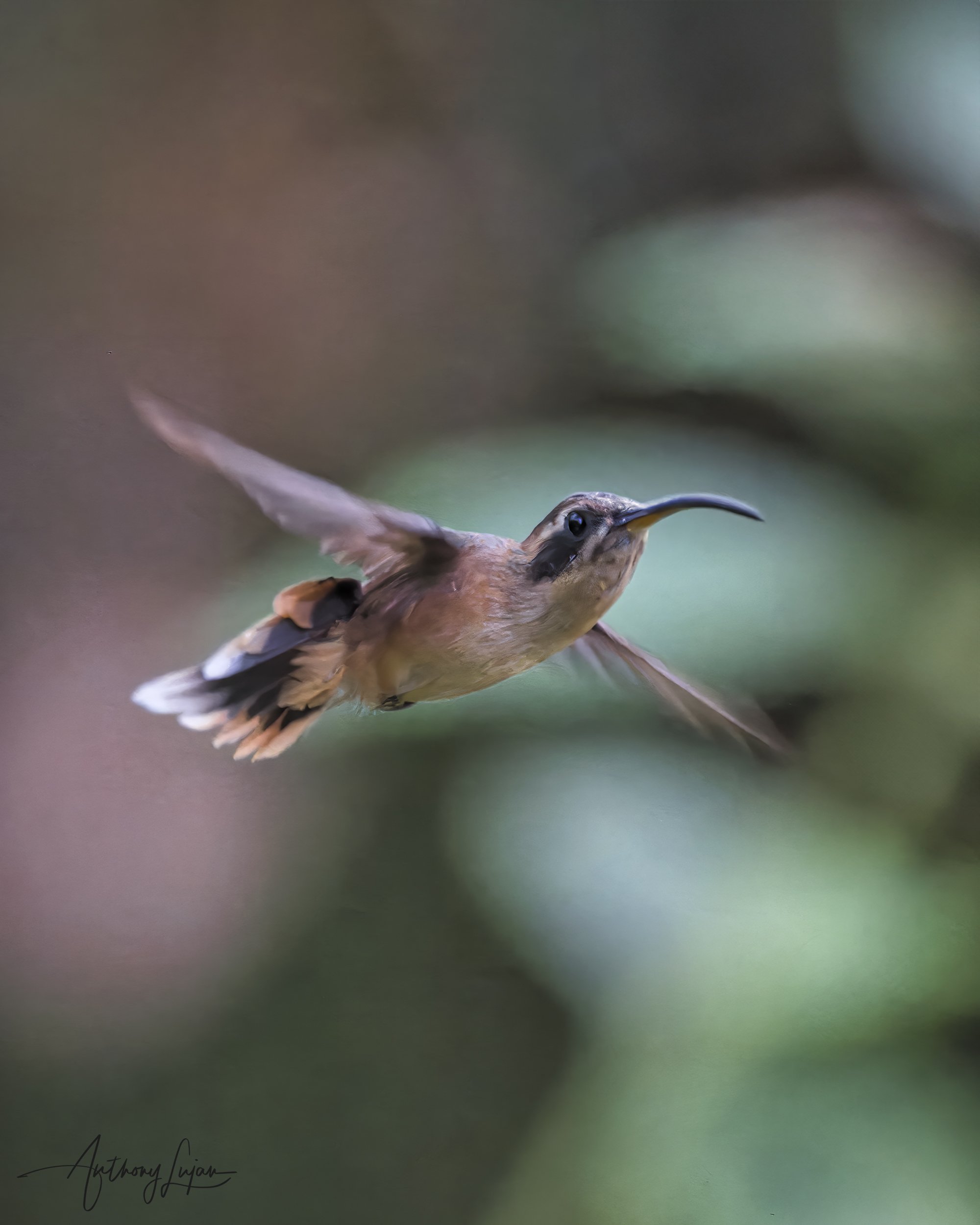
Below is the Mexican Hermit (Phaethornis mexicanus mexicanus)
Photographed at Atoyac de Álvarez, Guerrero, Mexico
These individuals belong to the subspecies mexicanus, which ranges from western Guerrero to southeastern Oaxaca along Mexico’s Pacific slope. This form inhabits humid lowland and foothill forest, ravines, and semi-deciduous woodland from sea level to about 2,000 meters. It shows bronzy upperparts, a dark tail with white tips, and cinnamon-buff underparts. The facial stripe is distinct and the belly has a richer tone than in griseoventer.


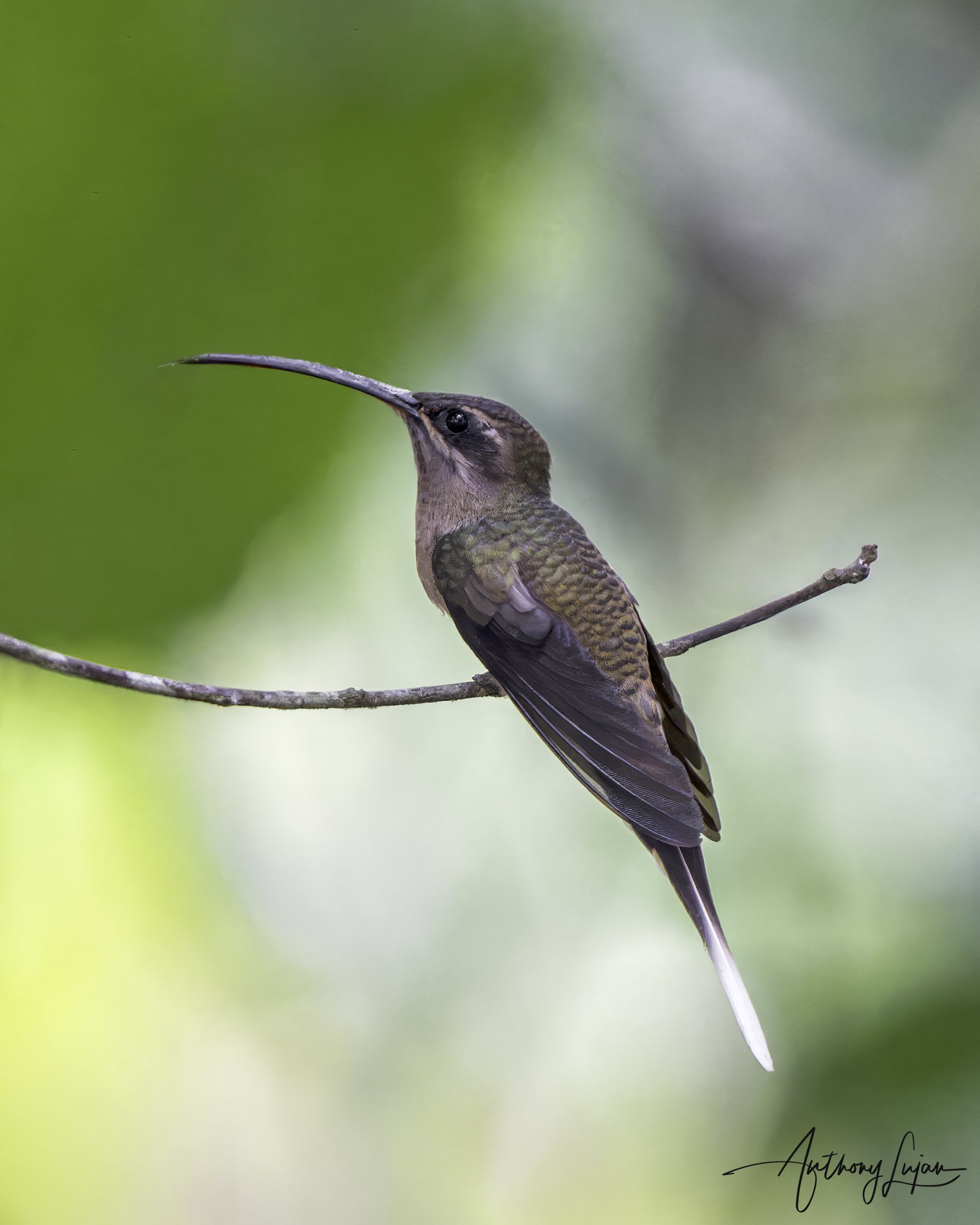
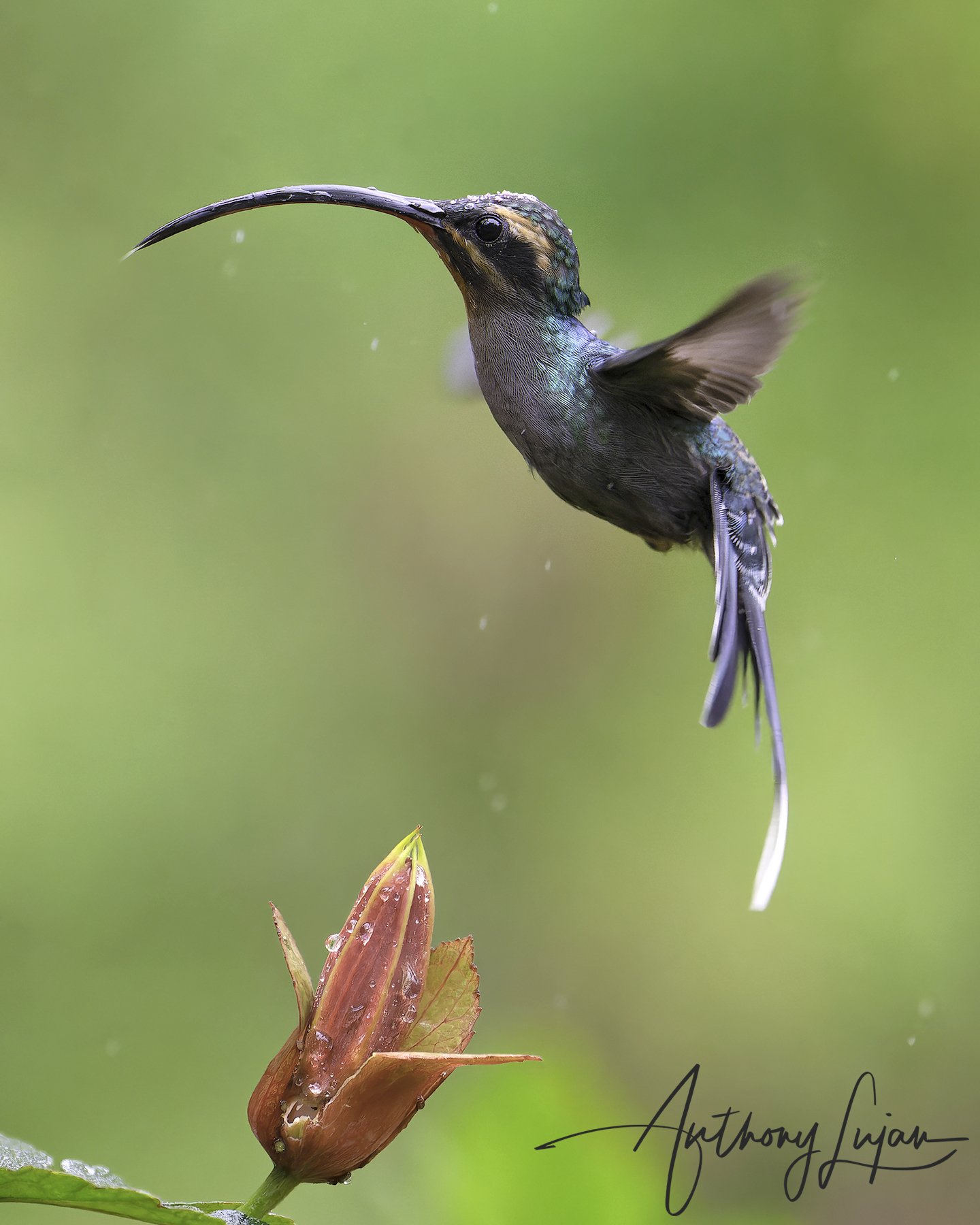
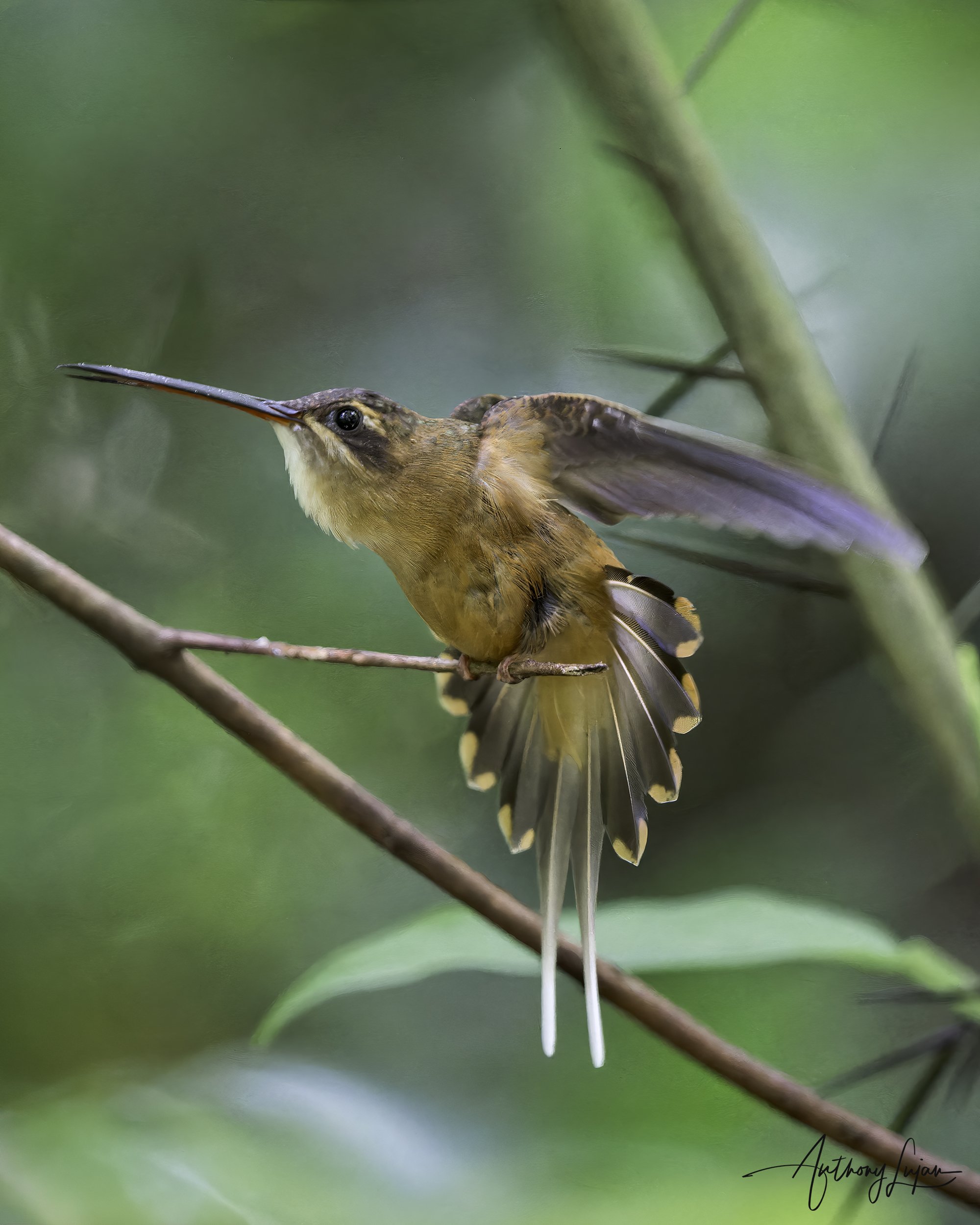
Related species in the Phaethornis genus (27 species total)



Please note: The content provided in this article reflects Anthony’s personal experience and photographic approach. Results can vary depending on light, weather, location, equipment, subject behavior, and field conditions.