
Scientific name: Chlorostilbon poortmani
The Short-tailed Emerald (also known as Poortman’s emerald) is a small Andean “emerald” hummingbird of Colombia and western Venezuela. The number of mature individuals is unknown, the population is considered stable, it is non-migratory, and it is currently listed as Least Concern with two recognized subspecies.
At a Glance
Family: Trochilidae (hummingbirds)
Clades: Trochilini – Emeralds
Genus group: Chlorostilbon — small, iridescent green “emerald” hummingbirds of the Neotropics (10 species total)
Range: Andes of central and eastern Colombia and western Venezuela, mainly along the Eastern Andes and adjacent ranges.
Habitat: Interior and edges of humid forest, open woodland, secondary forest, coffee and banana plantations, and pastures with trees, often near streams.
Elevation: Usually 750–2,200 m (2,500–7,200 ft), recorded from about 150 m (490 ft) up to 2,800 m (9,200 ft).
Length: About 7.8–8.5 cm (3.1–3.3 in).
Weight: About 2.5–3.3 g (0.09–0.12 oz).
Number of mature individuals: Unknown
Population trend: Stable
Status: Least Concern (IUCN)
Name Origin
The genus name Chlorostilbon combines Greek for “green” and “shining,” referring to the metallic emerald sheen of these hummingbirds. The species name poortmani honors Poortman, commemorated in the original description. The English name “Short-tailed Emerald” highlights its relatively short tail compared with several longer-tailed emerald relatives.
Subspecies & Distribution
Two subspecies:
Chlorostilbon poortmani euchloris
Distribution: Endemic to the East Andes of Colombia, found on the western slope south to Huila, and on the eastern slope in Santander. It inhabits humid forest edges, open woodland, and secondary growth in these Andean zones.Chlorostilbon poortmani poortmani
Distribution: Andes of western Venezuela (Mérida and Táchira) and the eastern slope of the East Andes in Colombia, from Boyacá to western Meta. It occupies similar habitats—humid forest borders, woodland, plantations, and tree-lined pastures—across this range.
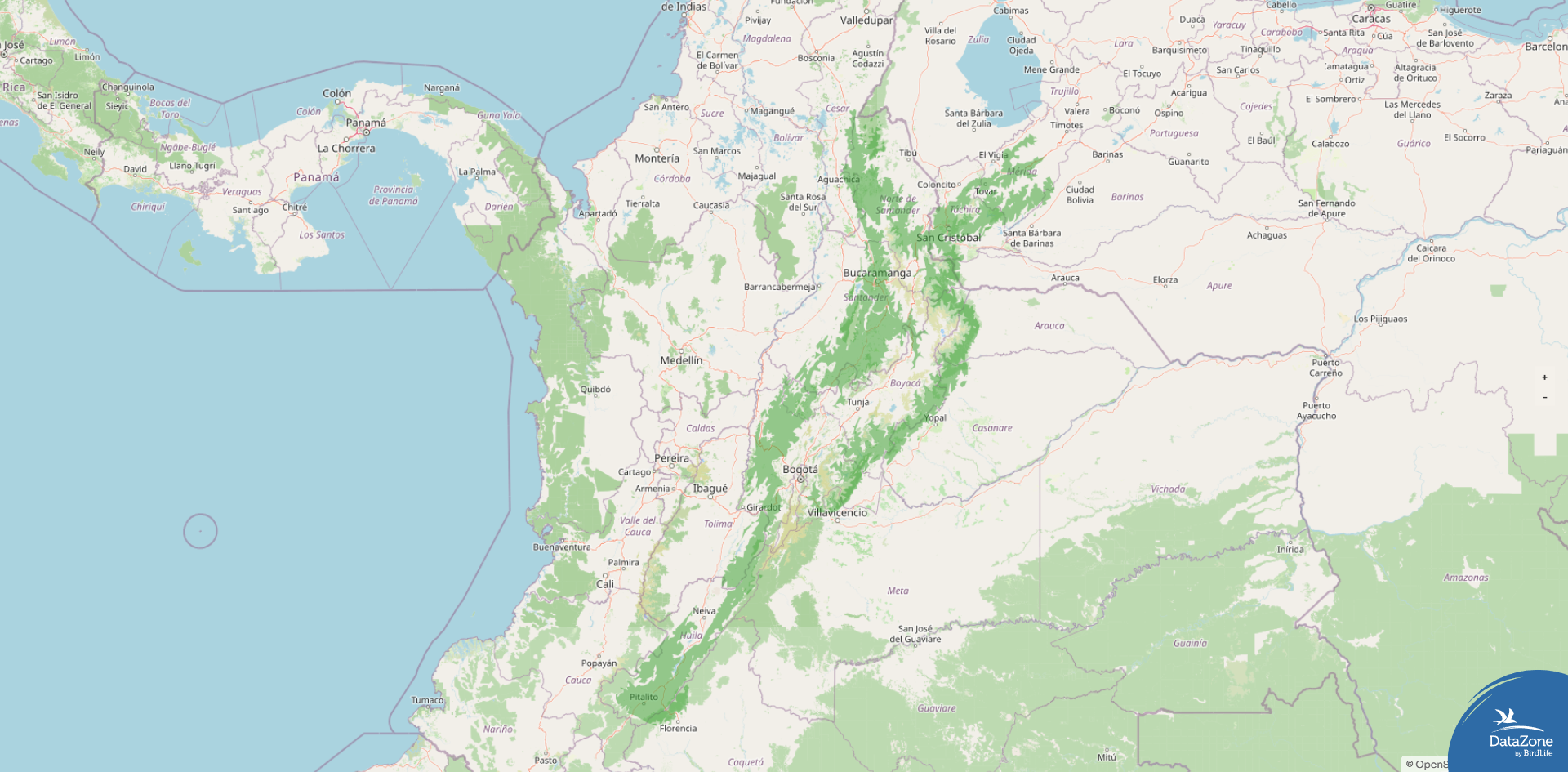
Legend
Green Resident
Species Overview
The Short-tailed Emerald is a typical edge and semi-open country hummingbird of the Andean slopes, often seen in clearings, forest borders, and agricultural mosaics rather than dense interior forest. It readily uses coffee and banana plantations and pastures with trees as long as flowering shrubs and trees are present. Its broad elevational range and adaptability to human-influenced landscapes support a stable overall status despite localized habitat changes.
Male Description
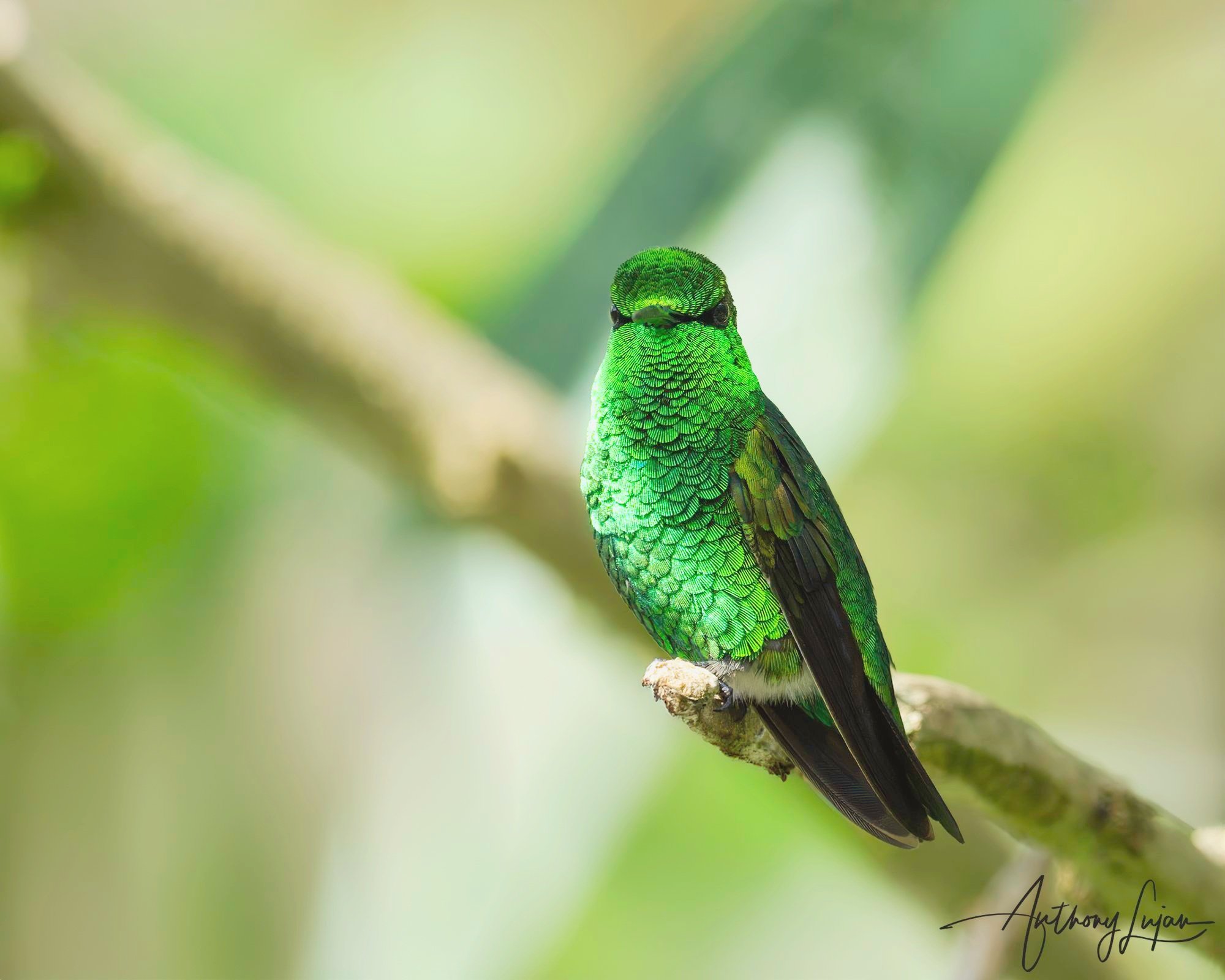
Adult males are very small with a straight black bill. The crown, back, and rump are bright metallic green. The underparts are glittering green, sometimes slightly lighter on the belly, with small white tufts on the thighs. The tail is relatively short for an emerald, slightly forked, and dark blue to blue-black with a metallic sheen. In the field, males appear as compact, bright green hummingbirds with a notably short, dark, slightly forked tail.
Female Description
Adult females have green upperparts and a darker face with a narrow white line or spot behind the eye. The throat and underparts are pale grayish to whitish, often with a faint gray or buffy wash, but generally lacking bold spotting. The tail is short and only slightly notched, dark with distinct white tips on the outer feathers, producing white tail corners that stand out in flight. Females thus look like small green-backed hummingbirds with a pale underside and a short, dark tail with crisp white corners.
Habitat & Behavior
Short-tailed Emeralds inhabit the interior and edges of humid forest and open woodland, as well as secondary growth, coffee and banana plantations, and pastures with scattered trees. They are often found near streams and in moist ravines within these landscapes. They feed on nectar from flowers of shrubs, vines, and trees, and also take small insects and spiders. Birds usually forage from low to mid-levels and may defend rich nectar patches against other hummingbirds. The species is considered resident throughout its Colombian and Venezuelan range, with only local movements along slopes and valleys following flowering patterns.
Population
The total number of mature individuals is unknown, but the Short-tailed Emerald has a moderate range across the Eastern Andes of Colombia and western Venezuela and is locally fairly common in suitable habitats. Its willingness to use plantations and semi-open agricultural landscapes supports stable numbers over much of its range. While deforestation and intensive land-use change can reduce or fragment habitat locally, current data suggest that the overall population is stable.

Conservation
The Short-tailed Emerald is listed as Least Concern due to its stable population and relatively wide distribution along the northern Andes. Nevertheless, continued clearing of forest and over-intensification of agriculture could degrade important edge and secondary habitats. Conservation measures that maintain shade-grown coffee and banana plantations, hedgerows, and forest edges, and that protect humid forest along streams and ravines, will support this species and many other Andean emeralds.
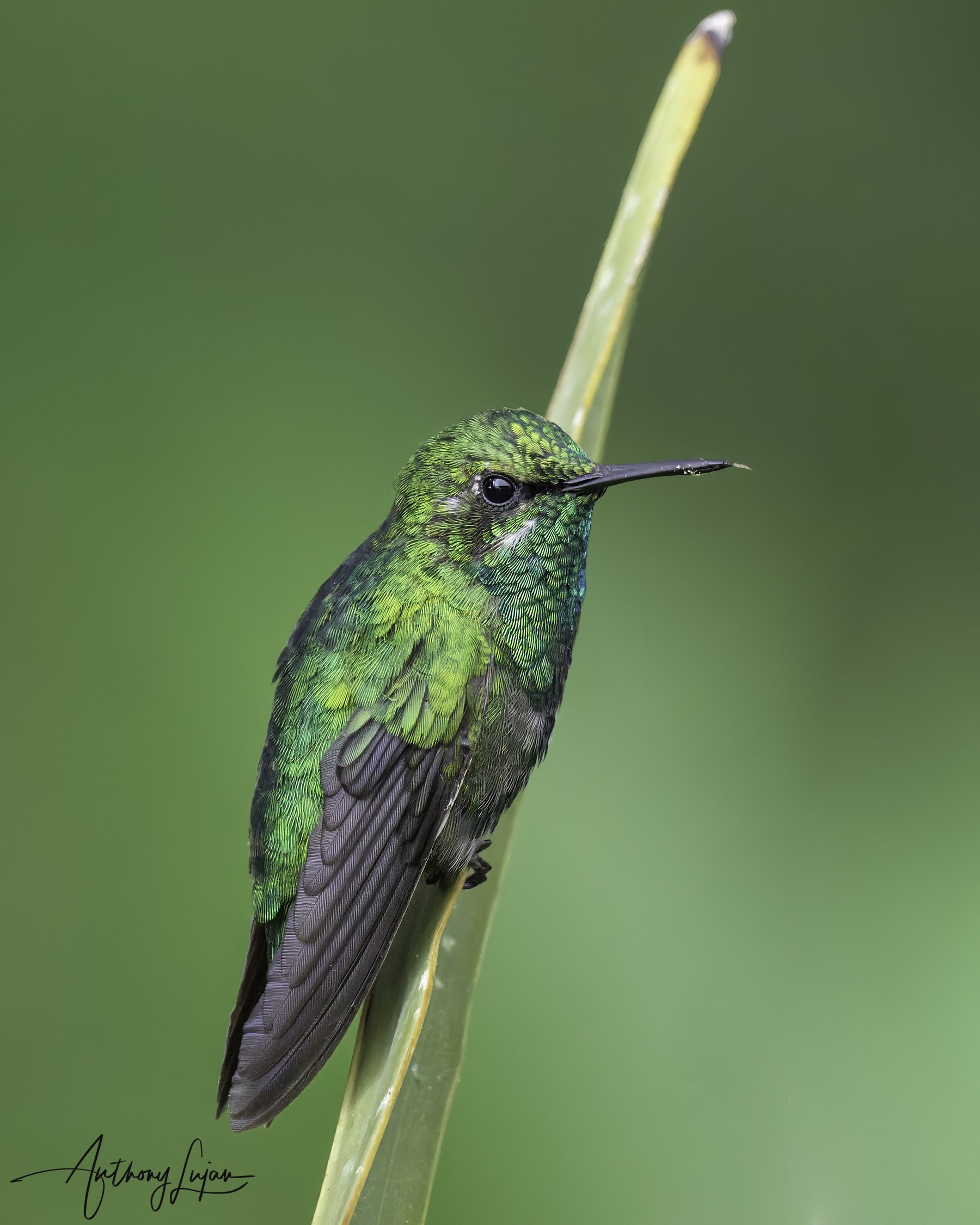
Below is the Short-tailed Emerald (Chlorostilbon poortmani poortmani)
Photographed at Finca Mangomacho and Rogitama Biodiversidad, Boyacá, Colombia
These individuals belong to the subspecies poortmani, which is found in the Andes of western Venezuela and along the eastern slope of Colombia’s Eastern Andes, from Boyacá south to western Meta. It inhabits humid montane forest edges, gardens, and shade coffee plantations between 1,000 and 2,200 meters. This subspecies shows the typical deep green plumage in males and pale gray underparts in females, with no known strong plumage distinctions from euchloris.


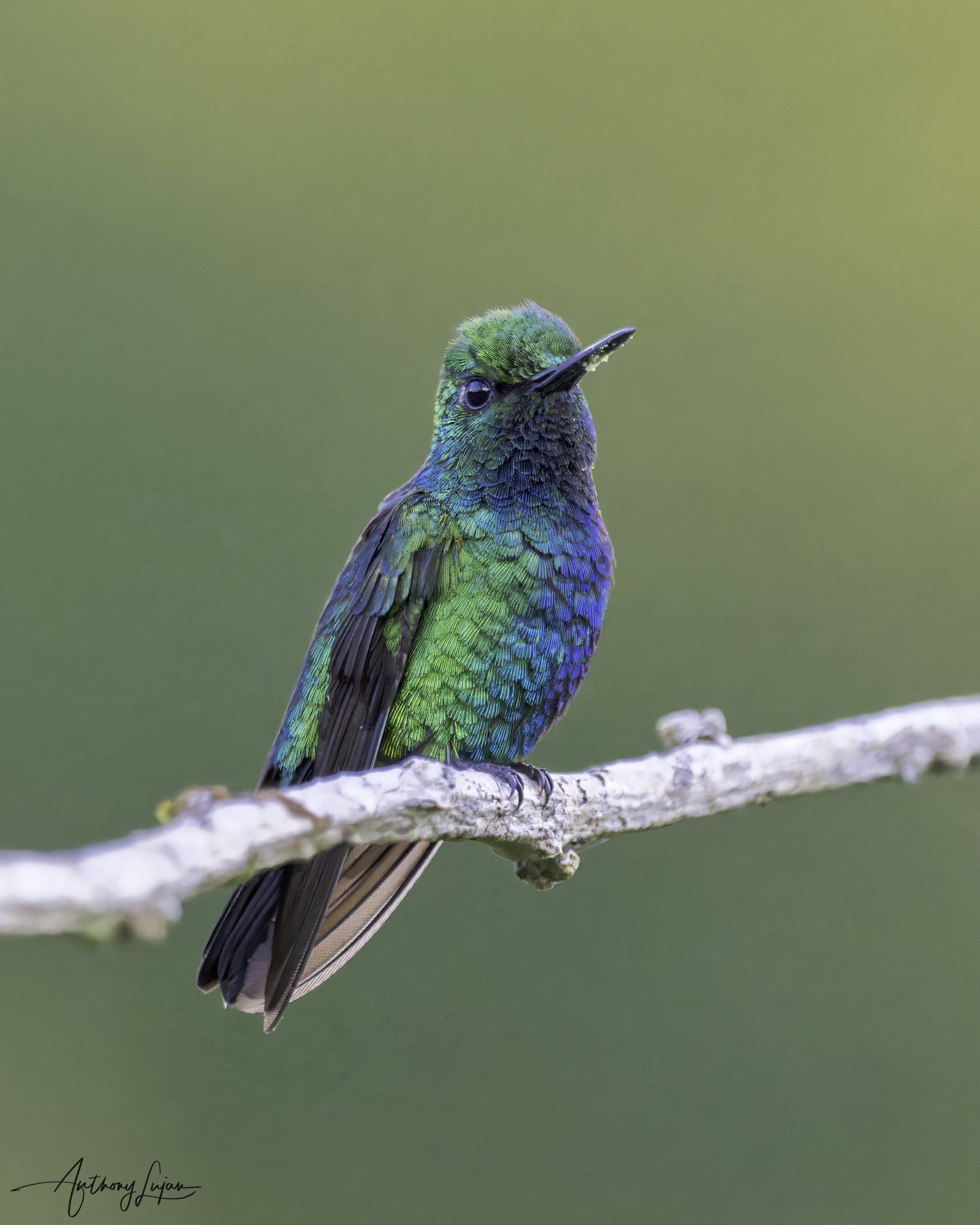
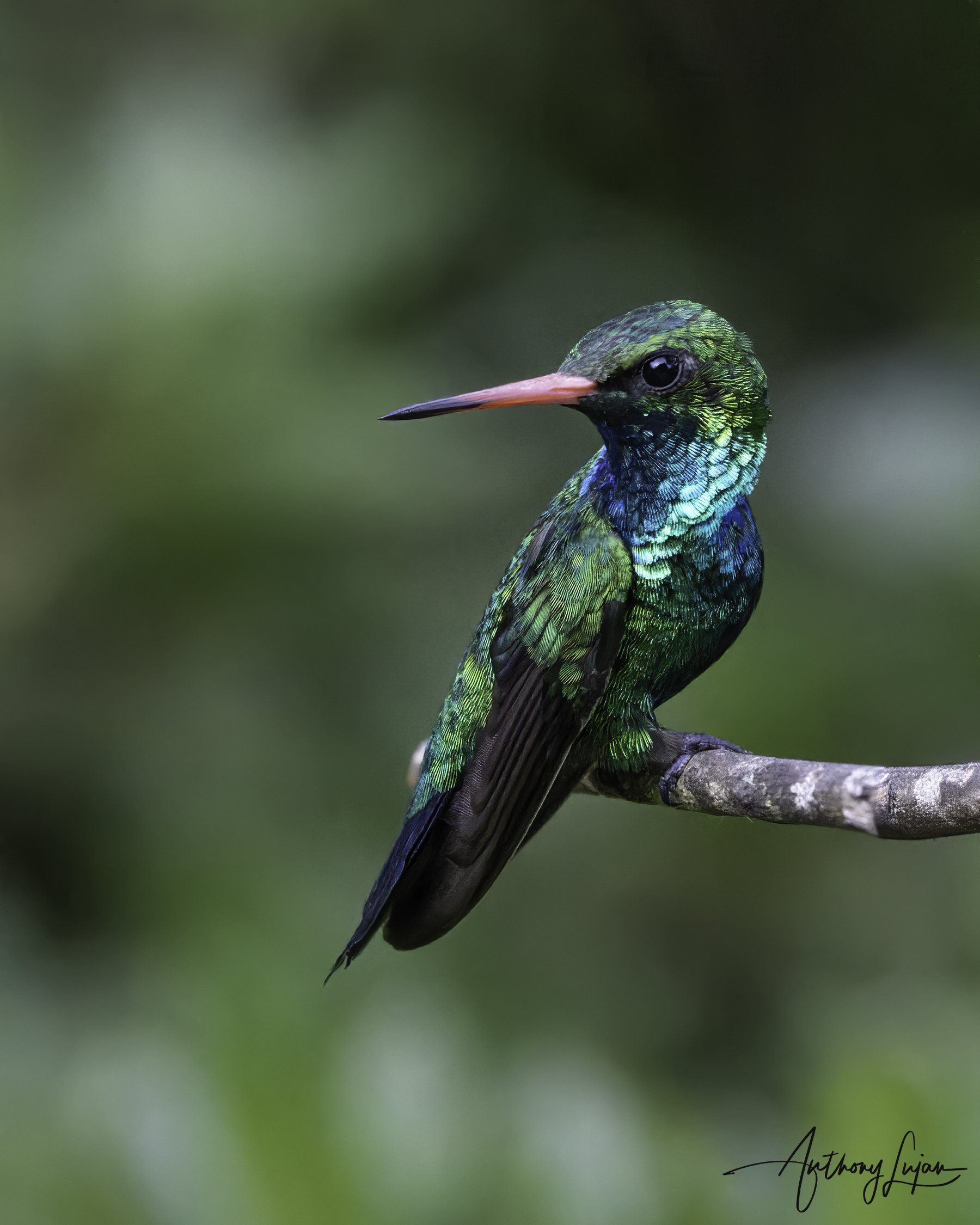
Related species in the Chlorostilbon genus (10 species total):




Please note: The content provided in this article reflects Anthony’s personal experience and photographic approach. Results can vary depending on light, weather, location, equipment, subject behavior, and field conditions.