
Tawny-bellied Hermit
Scientific name: Phaethornis syrmatophorus
The Tawny-bellied Hermit is a medium-sized hermit hummingbird of humid montane forests and edges along the Andes of Colombia, Ecuador, and northern Peru. The number of mature individuals is unknown, the population trend is decreasing, it is not a migrant, and it is currently assessed as Least Concern.
At a Glance
Family: Trochilidae (hummingbirds)
Clade: Phaethornithinae – Hermits
Genus: Phaethornis — 27 species in total
Range: Andes of Colombia, Ecuador, and northern Peru
Habitat: Understory of humid montane forest, forest edges, and dense secondary forest
Elevation: Mostly 1,000–2,300 m (recorded from about 750 up to 3,100 m)
Length: About 14 cm (5.5 in)
Weight: About 5–7 g
Number of mature individuals: Unknown
Population trend: Decreasing
Movement: Not a migrant
IUCN Red List category: Least Concern
Name Origin
The genus name Phaethornis refers to Phaethon of Greek mythology and the sun, combined with “bird,” and is applied to hermit hummingbirds. The species name syrmatophorus comes from Greek roots meaning “train-bearing,” referring to the long central tail feathers that form a trailing “train.” The English name “Tawny-bellied Hermit” describes the rich orange‑tawny underparts of the nominate subspecies.
Taxonomy
Phaethornis syrmatophorus is a hermit hummingbird in the subfamily Phaethornithinae. Two subspecies are currently recognized—syrmatophorus and columbianus—with additional forms historically proposed but not widely accepted. Within Phaethornis, it is part of a group of medium-sized, Andean and foothill hermits with long, white central tail feathers.
Subspecies and Distribution
Two subspecies:
Phaethornis syrmatophorus syrmatophorus
Distribution: Western Andes of Colombia (including the Cauca and Patía river valleys) south along the western Andean slope through Ecuador, reaching southwestern Ecuador (Loja).Phaethornis syrmatophorus columbianus
Distribution: Central and Eastern Andes of Colombia (including the southern Magdalena Valley) south on the eastern slope through Ecuador to northern Peru (San Martín).
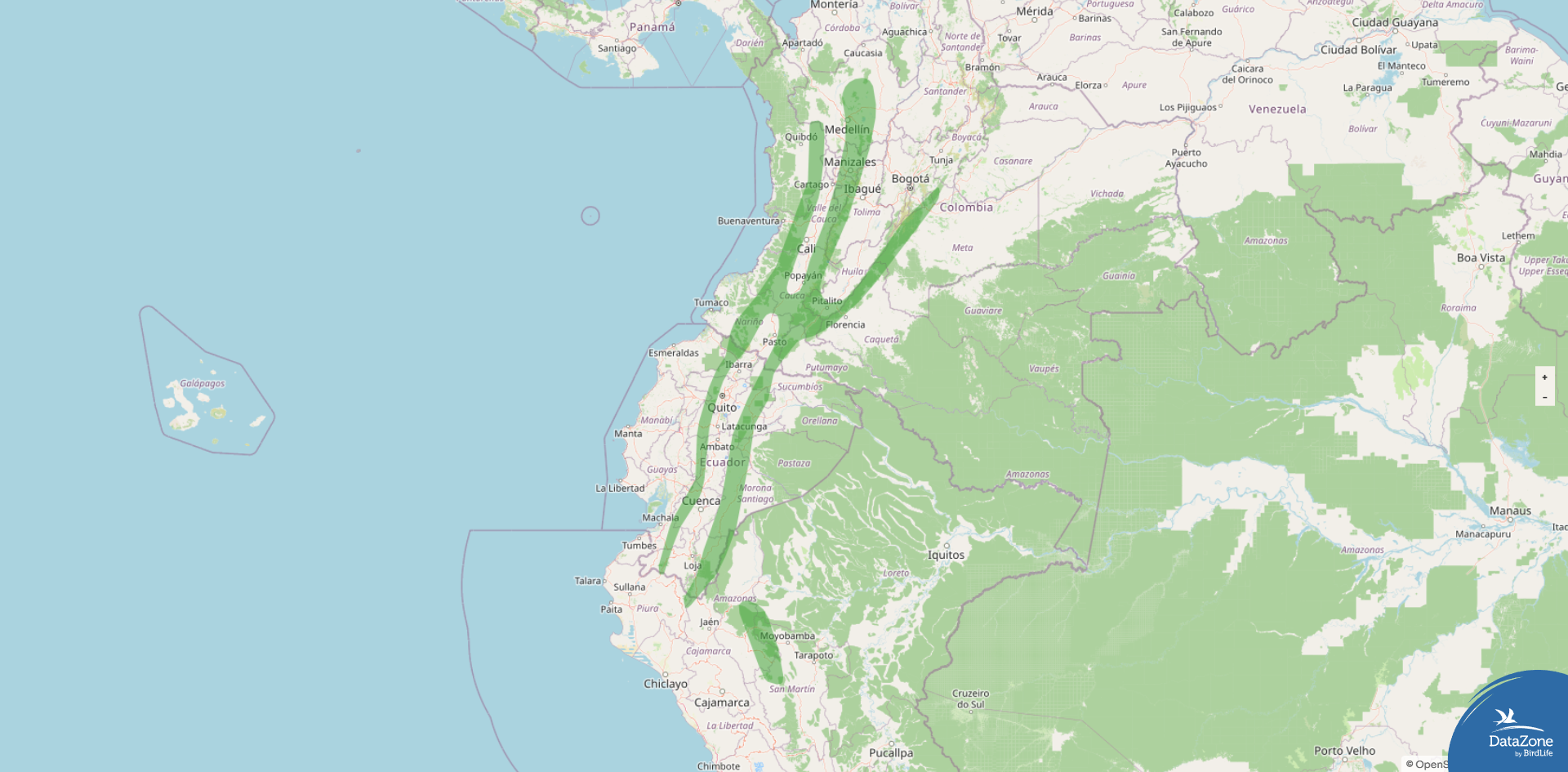
Legend
Green Resident
Species Overview
The Tawny-bellied Hermit is a medium-sized hermit with olive‑green upperparts, long white central tail feathers, and bright orange or tawny underparts in much of its range. Males of the nominate subspecies have reddish‑orange uppertail coverts, and the outer tail feathers are dark with vivid orange tips, creating a striking pattern in flight. As in other hermits, the face shows a dark mask crossed by pale superciliary and gular stripes and a long, strongly decurved bill suited to tubular flowers. The species is characteristic of humid Andean montane forests, where it is often heard giving persistent songs from concealed perches.
Male Description
Males are about 14 cm long and weigh 5–7 g. Upperparts are olive‑green, with brightly reddish‑orange uppertail coverts in the nominate subspecies. The central tail feathers are long and white in both sexes, forming a distinct “train,” while the remaining tail feathers are dark with bright orange tips. In syrmatophorus the throat, belly, and undertail coverts are rich orange‑tawny, matching the English name. In columbianus the throat and chest are much darker brown, contrasting with paler lower underparts. The face has a dark mask with a pale line above the eye and a pale stripe along the lower cheek and throat. The bill is long, obviously decurved, and slightly shorter and less curved in males than in females.
Female Description
Females are similar in size and plumage to males, sharing the olive‑green upperparts, long white central tail feathers, and orange‑tawny or brown underparts depending on subspecies. Their bills are generally more strongly decurved than those of males, a common pattern in hermits. Juveniles resemble adults but may show slightly duller colors and less crisp contrast in the head and throat until they complete their first molt.
Habitat & Behavior
Tawny-bellied Hermits mainly inhabit the understory of humid montane forest along the Andes, including both primary forest and mature secondary growth. They are also found at forest edges and in dense second growth, where flowering shrubs and understory plants are abundant. Most records fall between 1,000 and 2,300 m, but the species can occur from roughly 750 m up to about 3,100 m; below about 1,000 m, similar habitats are typically occupied by the White-whiskered Hermit (Phaethornis yaruqui).
Like other hermits, they are trapline feeders, following regular routes between scattered flowering plants rather than defending a single nectar resource. They visit a wide variety of tubular flowers in the forest understory and also take small arthropods such as insects and spiders for protein. Birds often sing persistently from semi‑concealed perches, and their presence is more frequently detected by voice than by direct observation.
Breeding
Breeding seasons vary across the range but appear to fall mostly between March and August, with additional nesting activity possibly occurring in December. The nest is a cone‑shaped cup built from leaves and plant fibers bound together with spider silk and suspended from the tip of a drooping leaf or similar support in shady forest. The typical clutch consists of two white eggs. The female alone handles nest building, incubation, and feeding of the chicks, as is typical for hermits.
Movement
The Tawny-bellied Hermit is considered not a migrant. It is resident throughout its Andean range, though individuals may shift locally along elevational gradients and between different forested slopes and valleys as flowering patterns and moisture conditions change. These are local, short‑distance adjustments rather than true long‑distance migrations.
Population
The total number of mature individuals is unknown. The species is generally considered fairly common within suitable habitat, and it occurs in several protected areas across Colombia, Ecuador, and northern Peru. Nonetheless, the overall population is believed to be decreasing due to ongoing habitat loss and degradation in Andean montane forests.

Conservation
The Tawny-bellied Hermit is assessed as Least Concern owing to its relatively wide range and local abundance, but it faces significant long‑term pressure from deforestation, forest fragmentation, and conversion of montane forest to agriculture and pasture. Habitat loss is expected to be a serious threat in the future if current trends continue. Conservation priorities include protecting remaining humid montane forests, maintaining and restoring forest corridors, and preserving structurally complex secondary forest with abundant flowering understory plants.
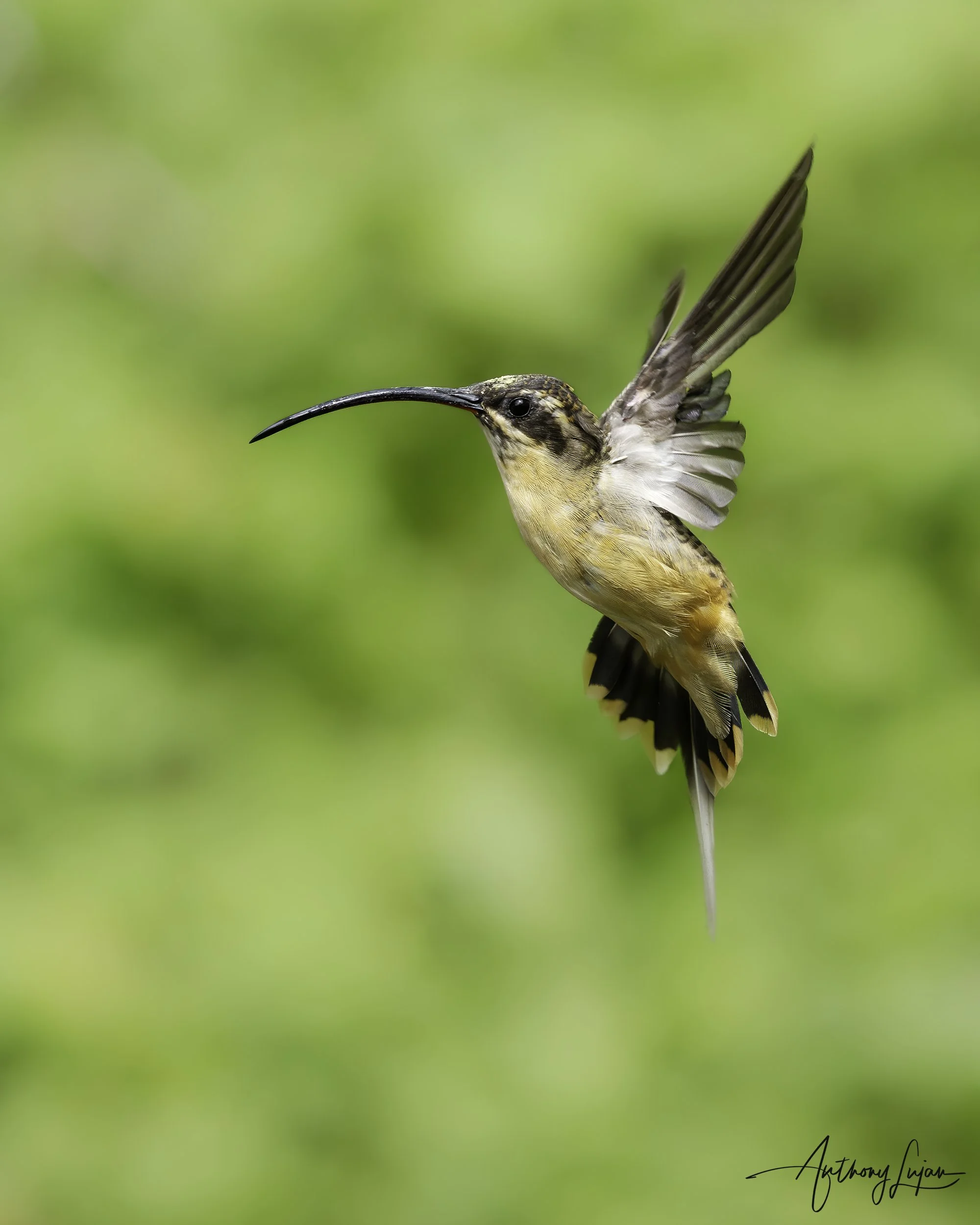
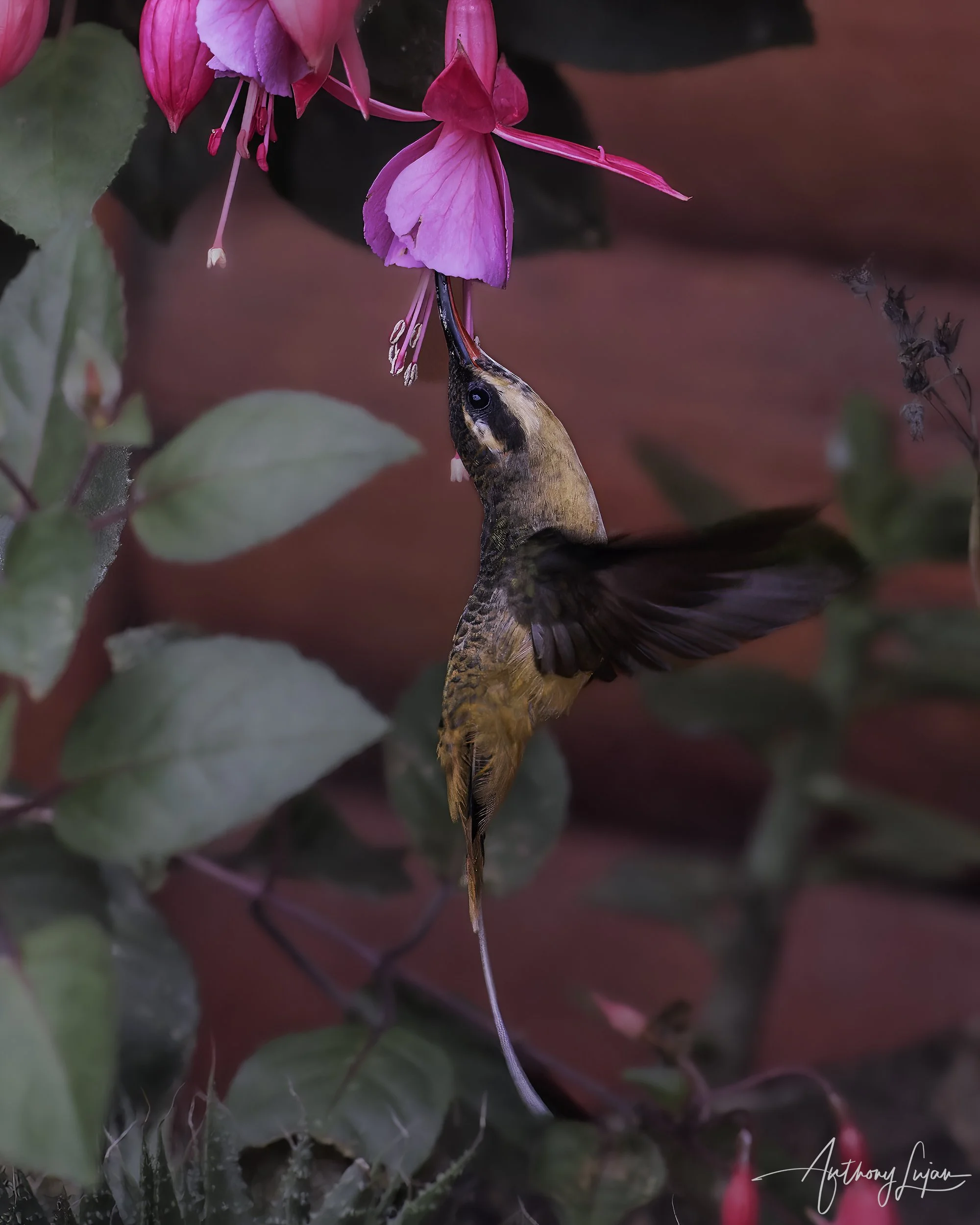
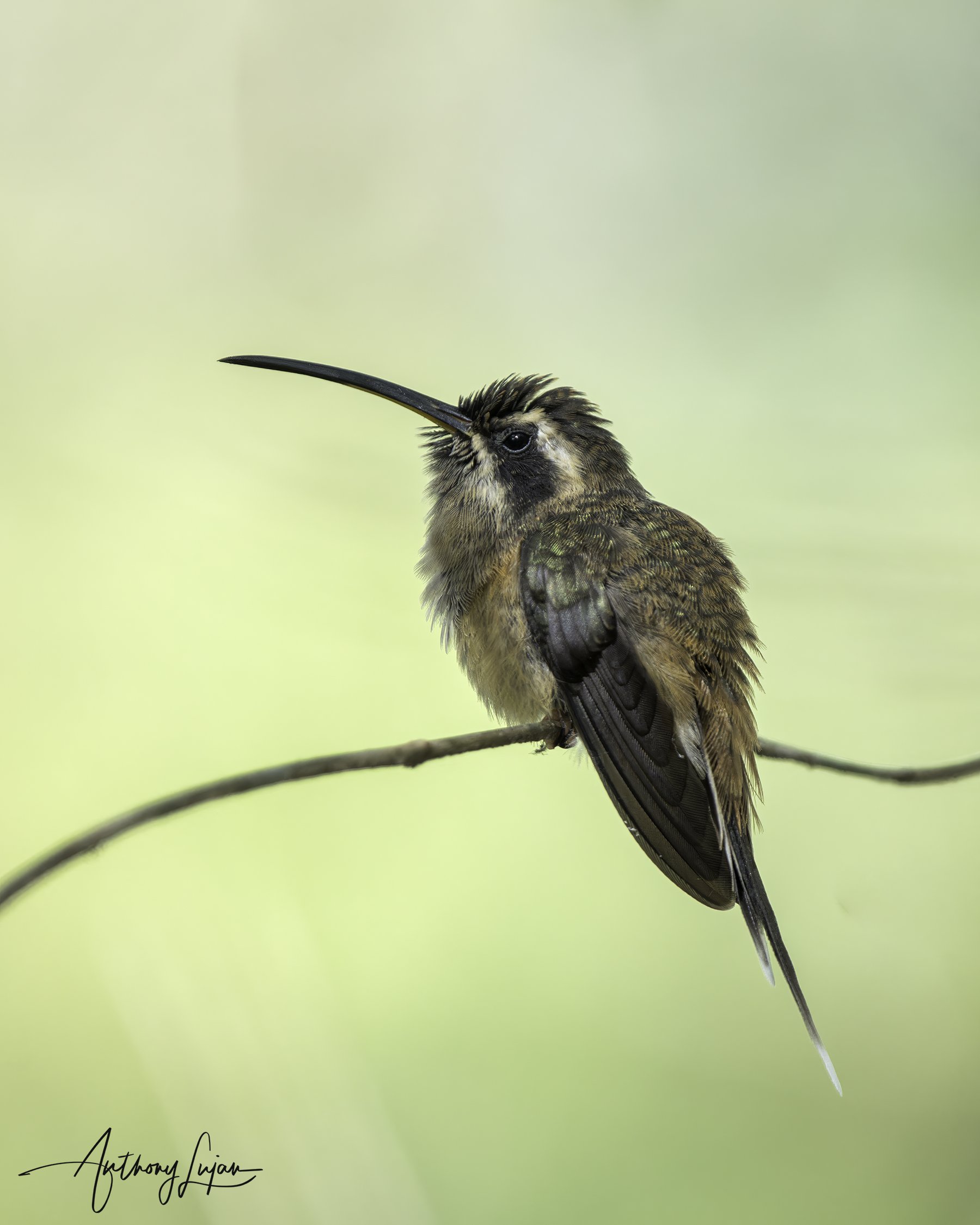
Below is the Tawny-bellied Hermit (Phaethornis syrmatophorus syrmatophorus)
Photographed at La Florida – Bosque de Las Aves, Valle del Cauca, Colombia
This individual belongs to the subspecies syrmatophorus, found along the Western Andes of Colombia, including the Patía Valley, and southward into southwestern Ecuador (Loja). This form is distinguished by deeper rufous tones on the underparts and a slightly shorter bill compared to the eastern subspecies. It frequents lower understory levels in humid montane forest and follows quiet foraging circuits near forest edges and clearings.
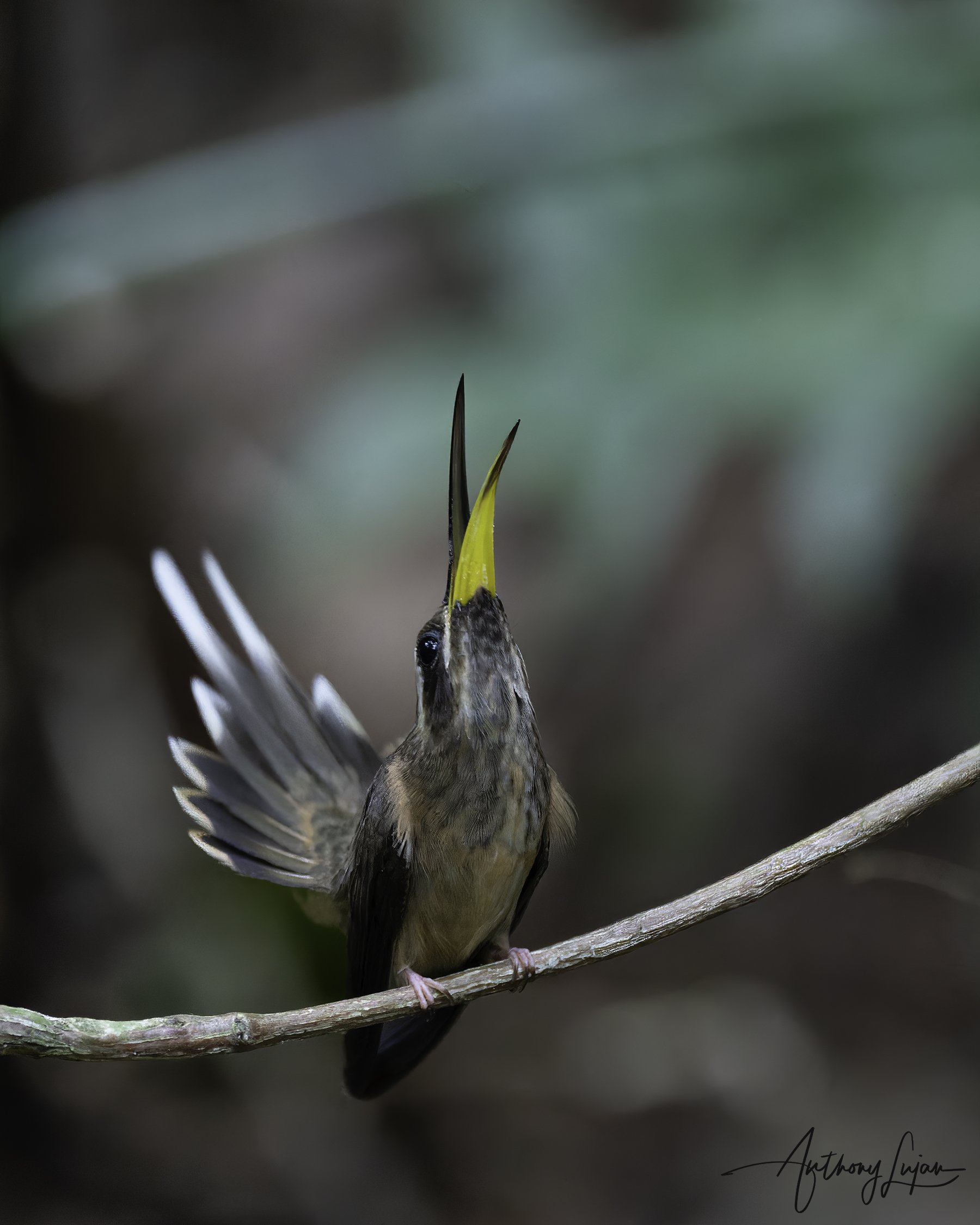
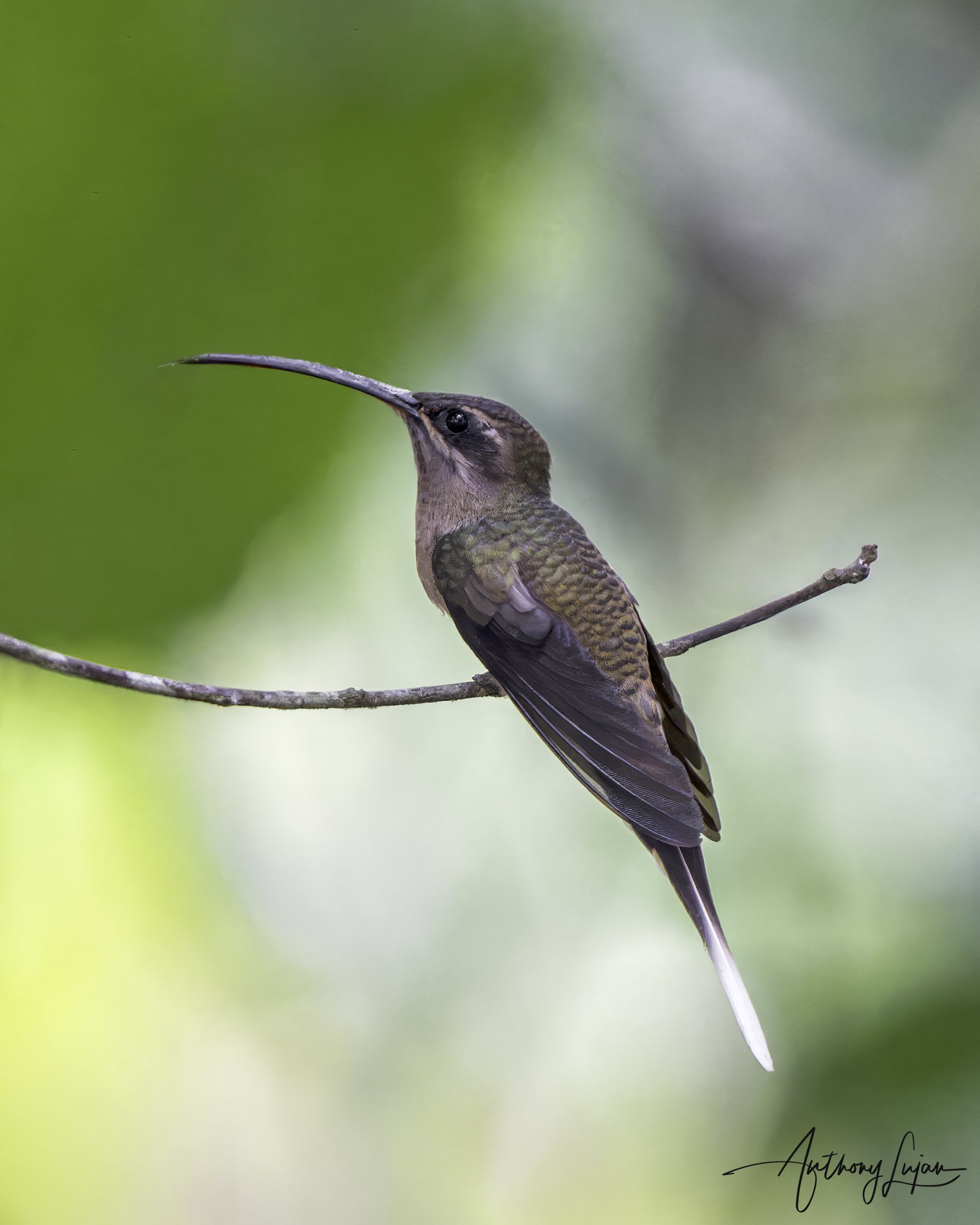
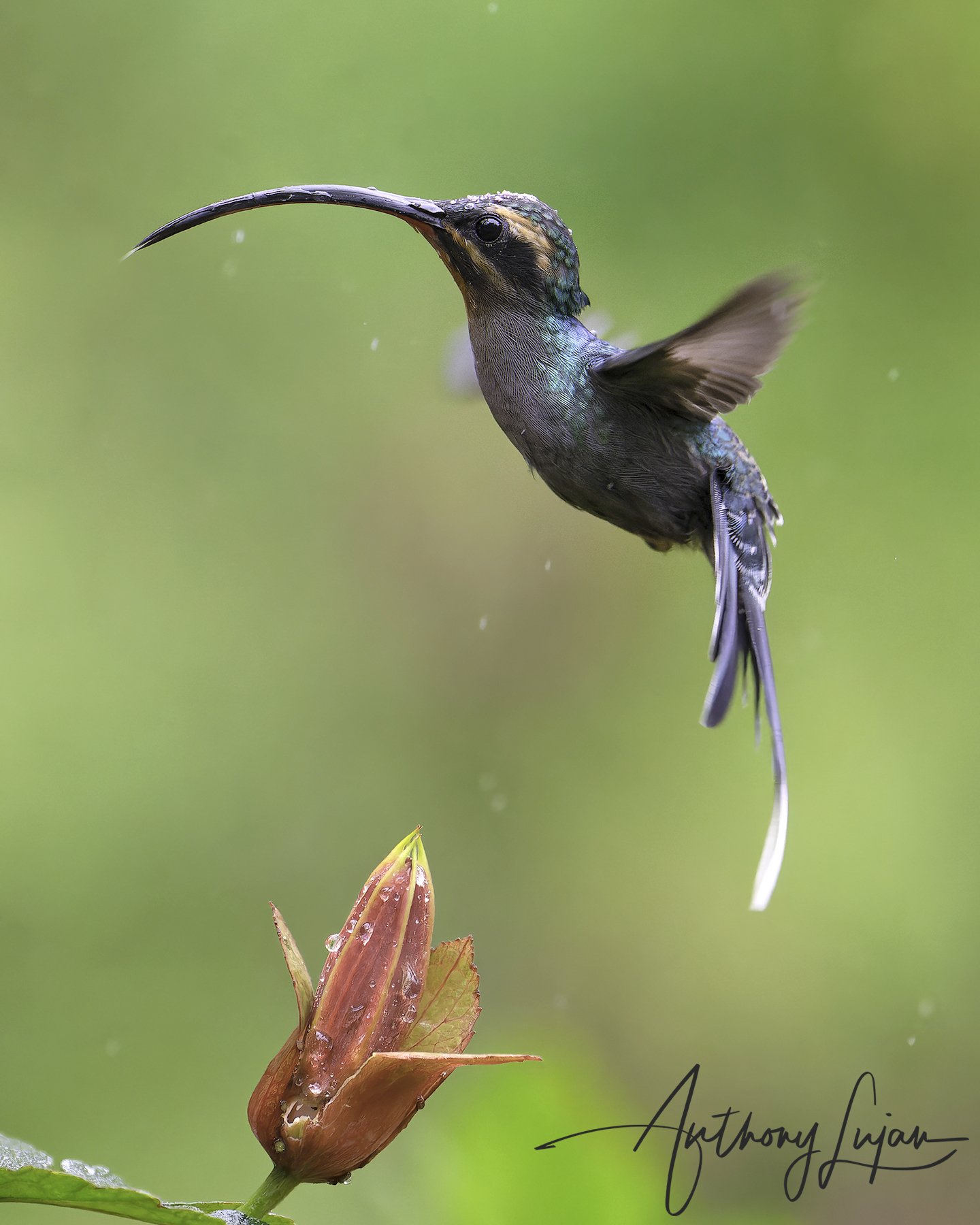
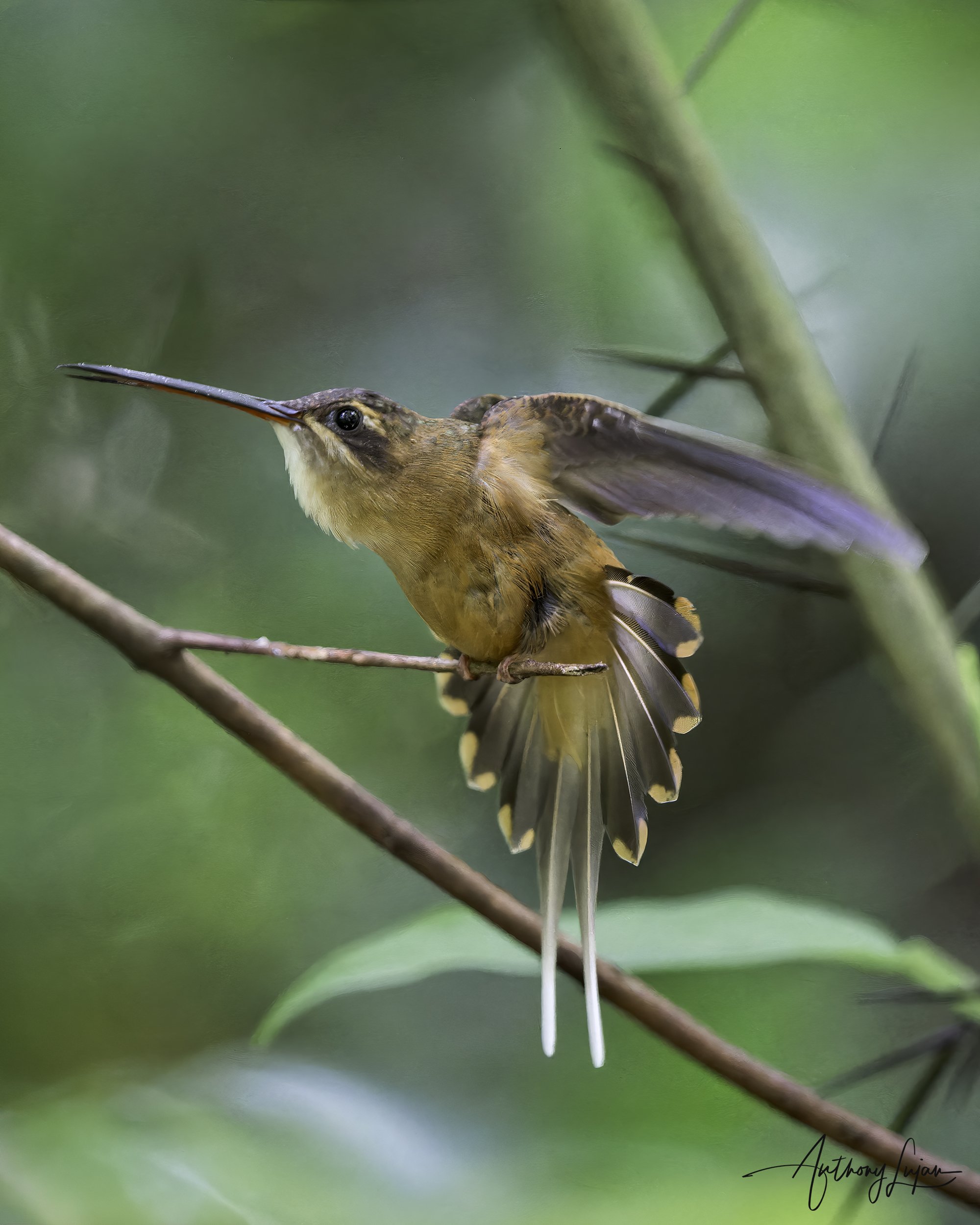
Related species in the Phaethornis genus (27 species total)





Please note: The content provided in this article reflects Anthony’s personal experience and photographic approach. Results can vary depending on light, weather, location, equipment, subject behavior, and field conditions.