
Tolima Blossomcrown
Scientific name: Anthocephala berlepschi
The Tolima Blossomcrown is a small, range-restricted hummingbird found only in Colombia’s upper Magdalena Valley. An estimated 1,000–4,500 mature individuals exist, the population is decreasing, it is an altitudinal migrant within this Andean valley system, and it is currently listed as Vulnerable, endemic to Colombia, and monotypic.
At a Glance
Family: Trochilidae (hummingbirds)
Clade: Trochilini – Emeralds
Genus group: Anthocephala — 2 species, 2 subspecies (by broader treatment; this species is monotypic)
Range: Endemic to Colombia, restricted to the upper Magdalena River Valley where it flows through Cauca, northern Huila, Tolima, and Quindío departments.
Habitat: Interior and edges of humid primary montane forest and mature secondary forest, often near forest borders and partially cleared areas with abundant flowering shrubs and trees.
Elevation: Mostly between about 1,200 and 2,500 m.
Length: About 8.4–9 cm (around 3.3 in).
Weight: Around 2.7–3.0 g.
Number of mature individuals: 1,000–4,500
Population trend: Decreasing
Status: Vulnerable (IUCN)
Name Origin
The genus name Anthocephala combines Greek roots meaning “flower” and “head,” referring to the bright, blossom-like crowns of blossomcrown hummingbirds. The species name berlepschi honors German ornithologist Hans von Berlepsch, recognized for his work on Neotropical birds. The English name “Tolima Blossomcrown” links the ornate head pattern to the species’ strong association with Colombia’s Tolima region and the upper Magdalena Valley.
Subspecies & Distribution
Monotypic – no recognized subspecies. It occurs only in Colombia’s upper Magdalena River Valley, where it inhabits humid montane forest and mature secondary forest from Cauca and northern Huila through Tolima to Quindío.
Overall, Anthocephala berlepschi is confined to a narrow strip of forested slopes along the upper Magdalena, making it a highly localized Andean endemic.
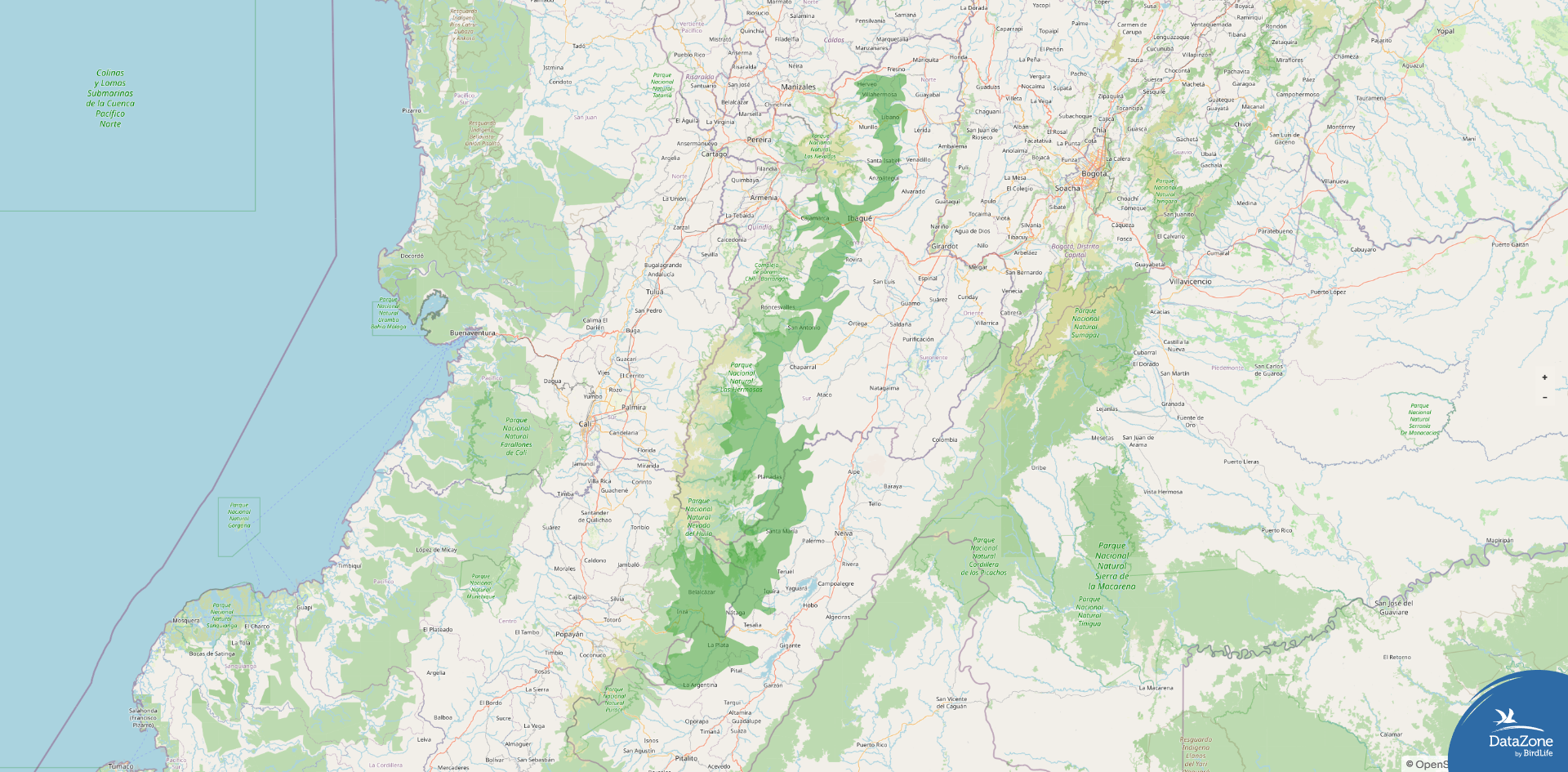
Legend
Green Resident
Species Overview
The Tolima Blossomcrown is a close relative of the Santa Marta Blossomcrown but is restricted to Andean forest rather than the isolated Santa Marta range. It occupies humid montane forest and mature second growth, often near forest edges, trails, and small clearings where low flowers are plentiful. Its tiny range, small population, and dependence on intact forest have led to significant conservation concern despite it still being locally present in several sites.
Male Description
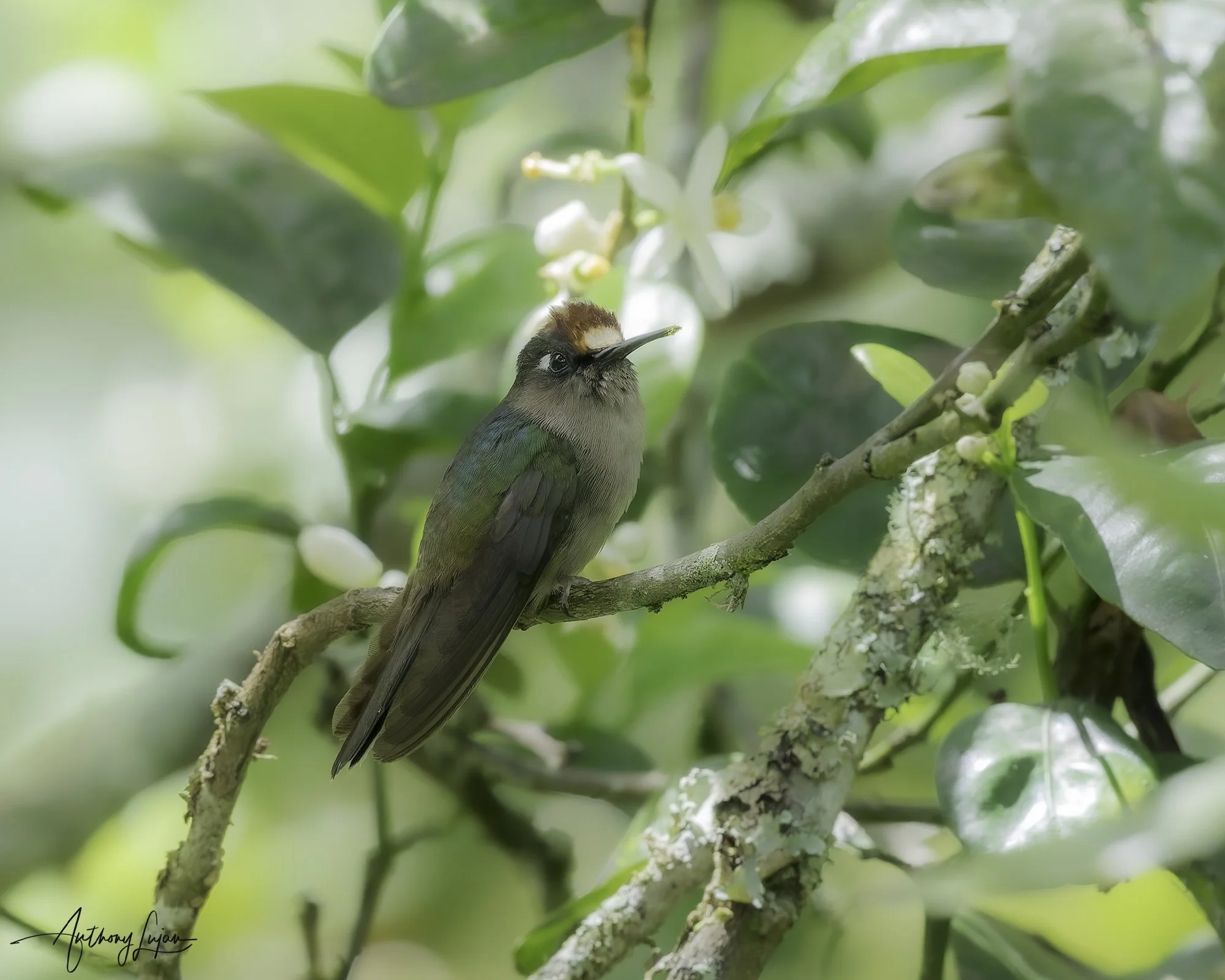
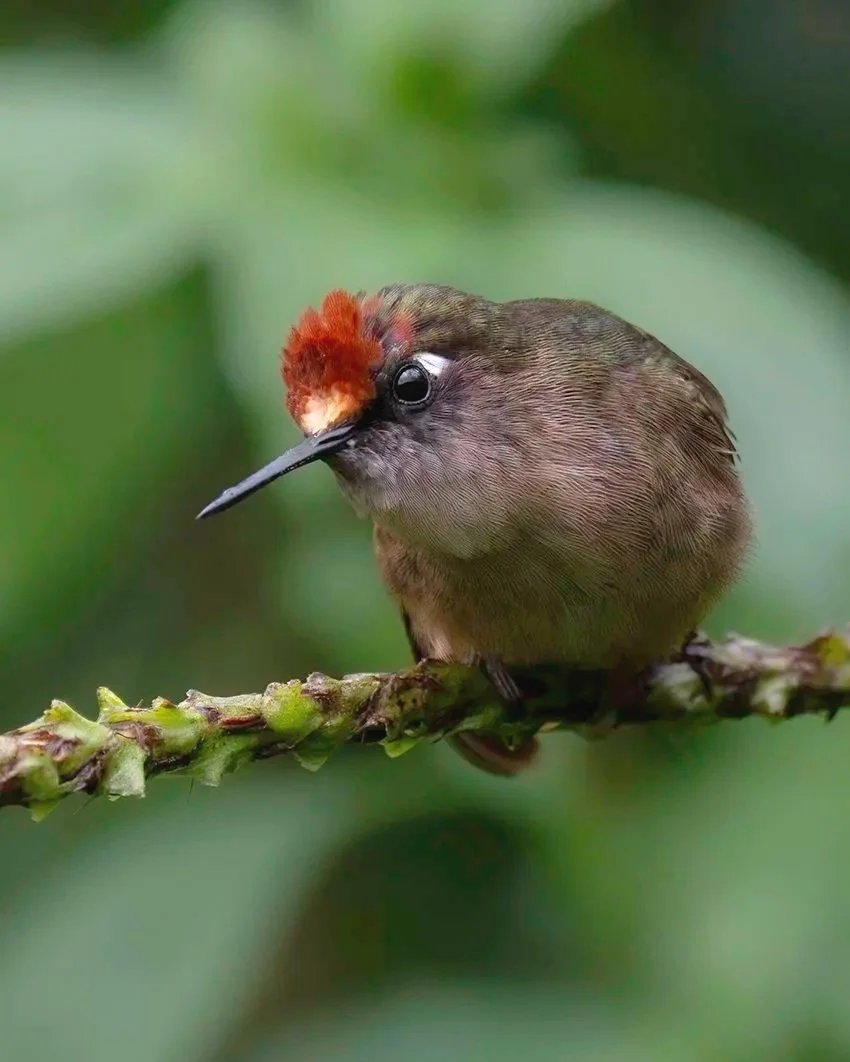
Adult males have a straight black bill and a distinctive crown pattern with a buffy white forehead and a rufous-chestnut hindcrown, while the rest of the upperparts are shining green. A small white spot is present behind the eye, and the lower back and uppertail coverts are rusty. The underparts are grayish buff, and the tail is bronzy green with wide white tips to all but the central pair of feathers, which lack the pale tips but share the black subterminal bar seen on the other rectrices. Overall, males appear as small, warm-toned hummingbirds with a pale-and-rufous “blossom” crown, green back, rusty rump, and a bronzy tail broadly tipped white.
Female Description
Females and immatures are similar in size and general pattern to males but have the entire crown brownish instead of a sharply contrasting buff forecrown and rufous hindcrown. The upperparts remain shining green with a rusty lower back, and the underparts are grayish buff. The tail pattern is like the male’s, with bronzy-green feathers broadly tipped white and black subterminal bars on all but the central pair. In the field, females look like duller-headed versions of the male, lacking the two-toned crown but still showing the rusty rump and white-tipped tail that help identify the species.
Habitat & Behavior
Tolima Blossomcrowns inhabit the interior and edges of humid primary forest and mature secondary forest, typically between about 1,200 and 2,500 m along the upper Magdalena slopes. They often forage at low levels near forest edges, in gardens and partially cleared areas close to forest, and along trails, visiting small flowers for nectar and likely taking tiny insects as well. The species is considered an altitudinal migrant within this region, moving up and down the slopes seasonally to track flowering plants and suitable microclimates, though the exact patterns of these movements are still poorly documented.
Population
The global population is estimated at roughly 1,000–4,500 mature individuals, all confined to a relatively small portion of Colombia’s Andes. It is generally uncommon and patchily distributed even within suitable habitat, and many known populations occur in areas where forest is fragmented or under pressure from human activities. This small, localized population and ongoing habitat loss underpin its decreasing trend.

Conservation
The Tolima Blossomcrown is listed as Vulnerable because of its small, declining population, restricted range in the upper Magdalena Valley, and dependence on humid montane forest. Deforestation for agriculture, cattle pasture, human settlement, and other land uses continues to fragment and reduce its forest habitat, particularly at the elevations it occupies. Since the species appears to rely on mature forest and older second growth near forest edges rather than heavily modified landscapes, continued habitat loss poses a serious threat. Conservation needs include protecting remaining forest tracts in Cauca, Huila, Tolima, and Quindío, restoring degraded areas, maintaining forested corridors, and working with local communities to promote land uses that preserve canopy cover and flowering shrubs.



Related species in the Anthocephala genus (2 species total):

Please note: The content provided in this article reflects Anthony’s personal experience and photographic approach. Results can vary depending on light, weather, location, equipment, subject behavior, and field conditions.