
White-bellied Emerald
Scientific name: Chlorestes candida
The White-bellied Emerald is a medium-sized “emerald” hummingbird of eastern Mexico and northern Central America. An estimated 500,000–4,999,999 mature individuals exist, the population is decreasing, it is considered non-migratory, and it is currently listed as Least Concern with three recognized subspecies.
At a Glance
Family: Trochilidae (hummingbirds)
Clades: Trochilini – Emeralds
Genus group: Chlorestes — small, mostly green “emerald” hummingbirds of the Neotropics (5 species total)
Range: Eastern and southeastern Mexico south through northern Central America into northeastern Nicaragua.
Habitat: Interior and edges of lowland evergreen and semi-deciduous forest, second growth, plantations, and gardens with tall trees and flowering shrubs.
Elevation: Mostly from sea level up to about 1,600 m (5,200 ft).
Length: About 8.5–9.5 cm (3.3–3.7 in).
Weight: About 3–4 g (0.11–0.14 oz).
Number of mature individuals: 500,000–4,999,999
Population trend: Decreasing
Status: Least Concern (IUCN)
Name Origin
The genus name Chlorestes comes from Greek roots meaning “green companion,” reflecting the predominantly green plumage of these emeralds. The species name candida means “shining white” or “pure white,” referring to the bird’s clean white underparts. The English name “White-bellied Emerald” highlights the bright white belly contrasted with the shimmering green upperparts.
Subspecies & Distribution
Three subspecies:
Chlorestes candida genini
Distribution: Eastern Mexico, from southeastern San Luis Potosí and Veracruz south to northern Oaxaca. It inhabits lowland and foothill forest interiors and edges, as well as nearby plantations and semi-open wooded areas.Chlorestes candida pacifica
Distribution: Pacific slope in southeastern Mexico (southeastern Chiapas) and southern Guatemala. This subspecies occurs in humid foothill and lowland forest on the Pacific side, including forest borders and disturbed areas with tall trees.Chlorestes candida candida
Distribution: Southeastern Mexico (Yucatán Peninsula and northern Chiapas), northern Guatemala, Belize, Honduras, and northeastern Nicaragua. It is the Caribbean-slope and Yucatán form, common in lowland forest, second growth, plantations, and gardens throughout this region.
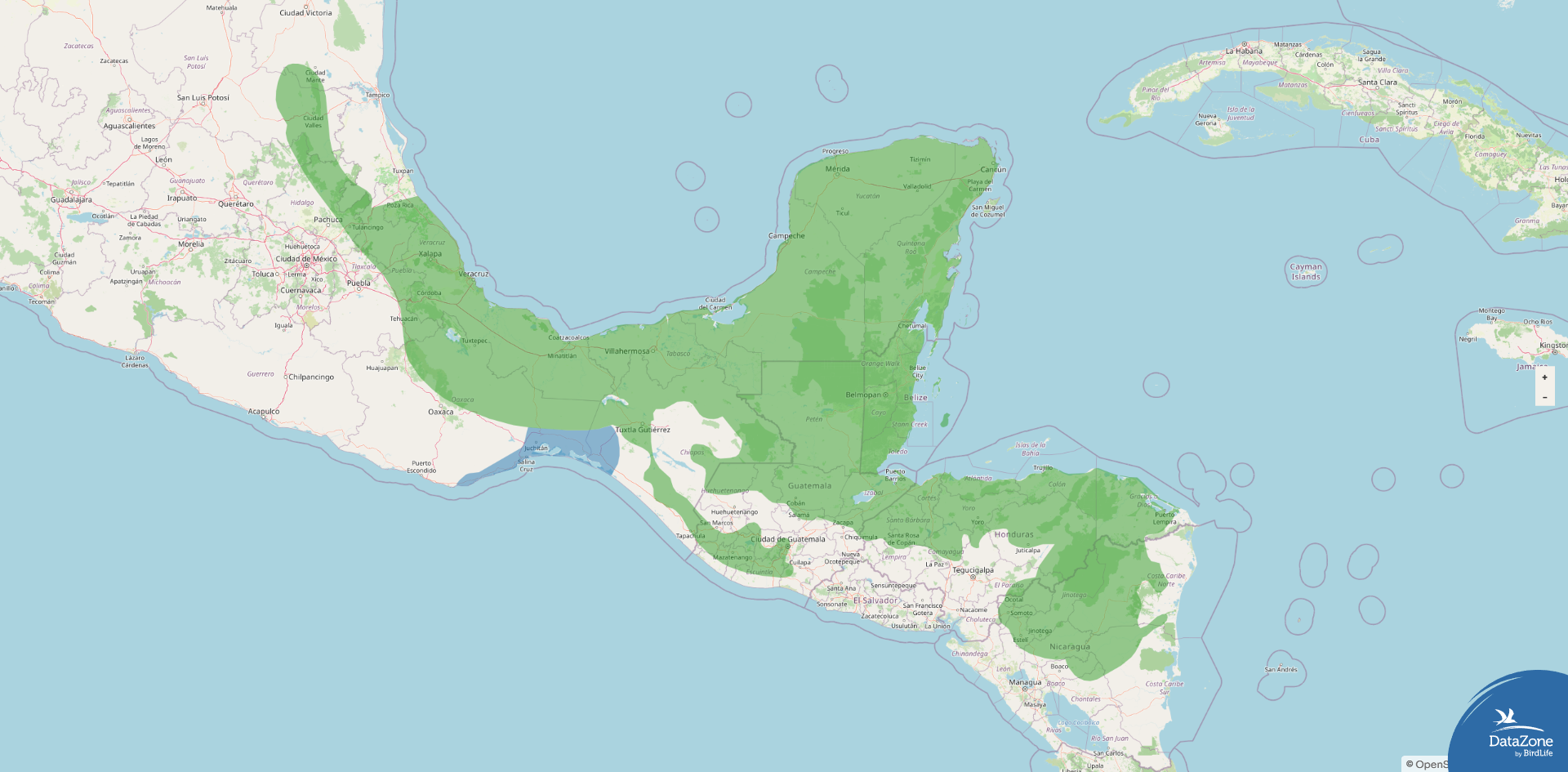
Legend
Green Resident
Species Overview
The White-bellied Emerald is a familiar hummingbird in many parts of eastern Mexico and northern Central America, often seen around flowering trees in forest edges, gardens, and plantations. Its bright green back and gleaming white belly make it distinctive among local hummingbirds. Although still common in many areas, ongoing habitat loss and fragmentation have led to a slow decline across parts of its range.
Male Description
Adult males are medium-small with a straight black bill (sometimes with a slightly paler base to the lower mandible). The crown, nape, back, and rump are bright metallic green. The throat and chest are also green, grading into a clean white belly and undertail coverts. The sides may show a narrow green wash, but the overall underpart impression is white. The tail is moderately forked and dark, often bluish or dusky with a slight metallic sheen. In the field, males appear as compact green hummingbirds with a crisp white belly and a dark tail.
Female Description
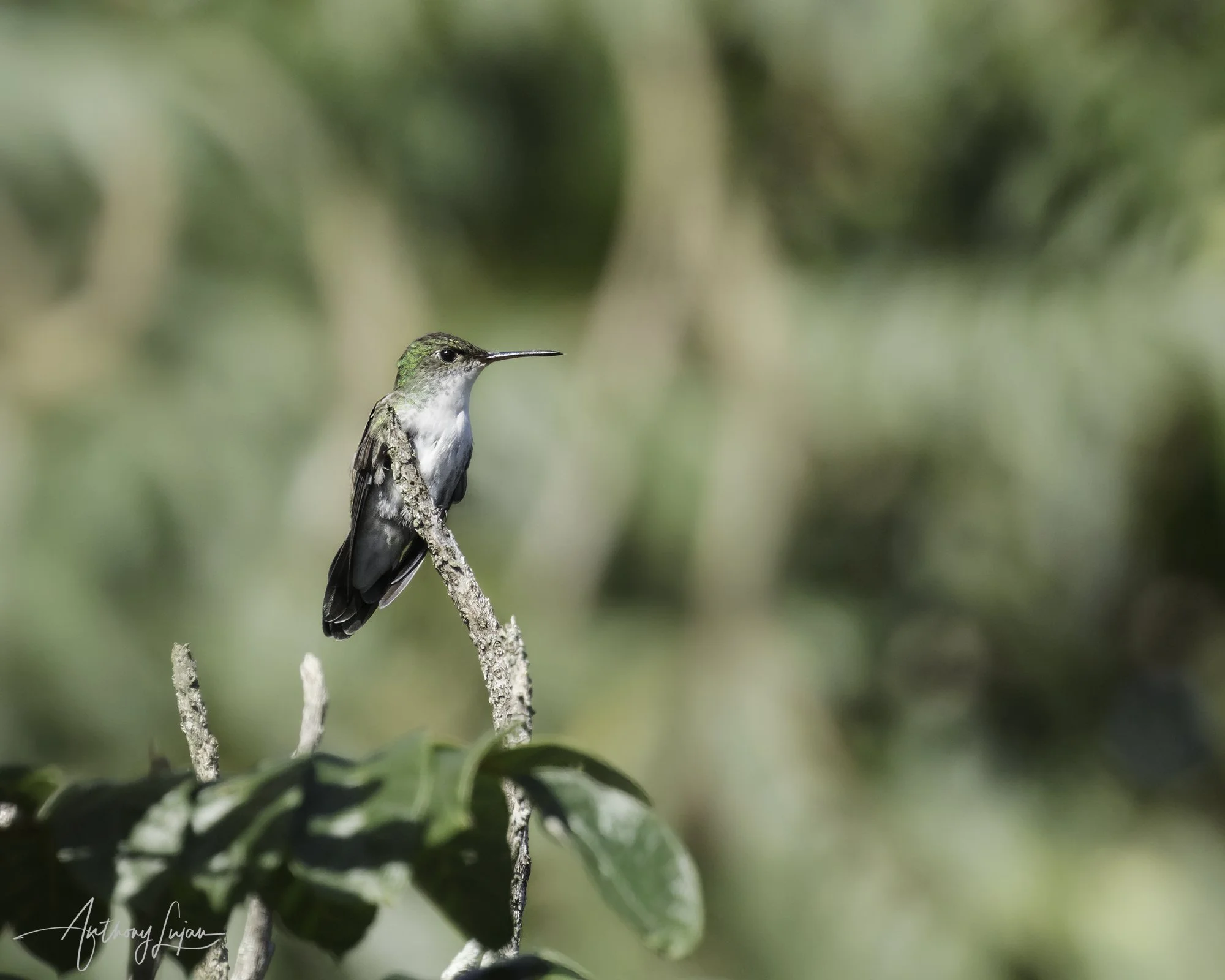
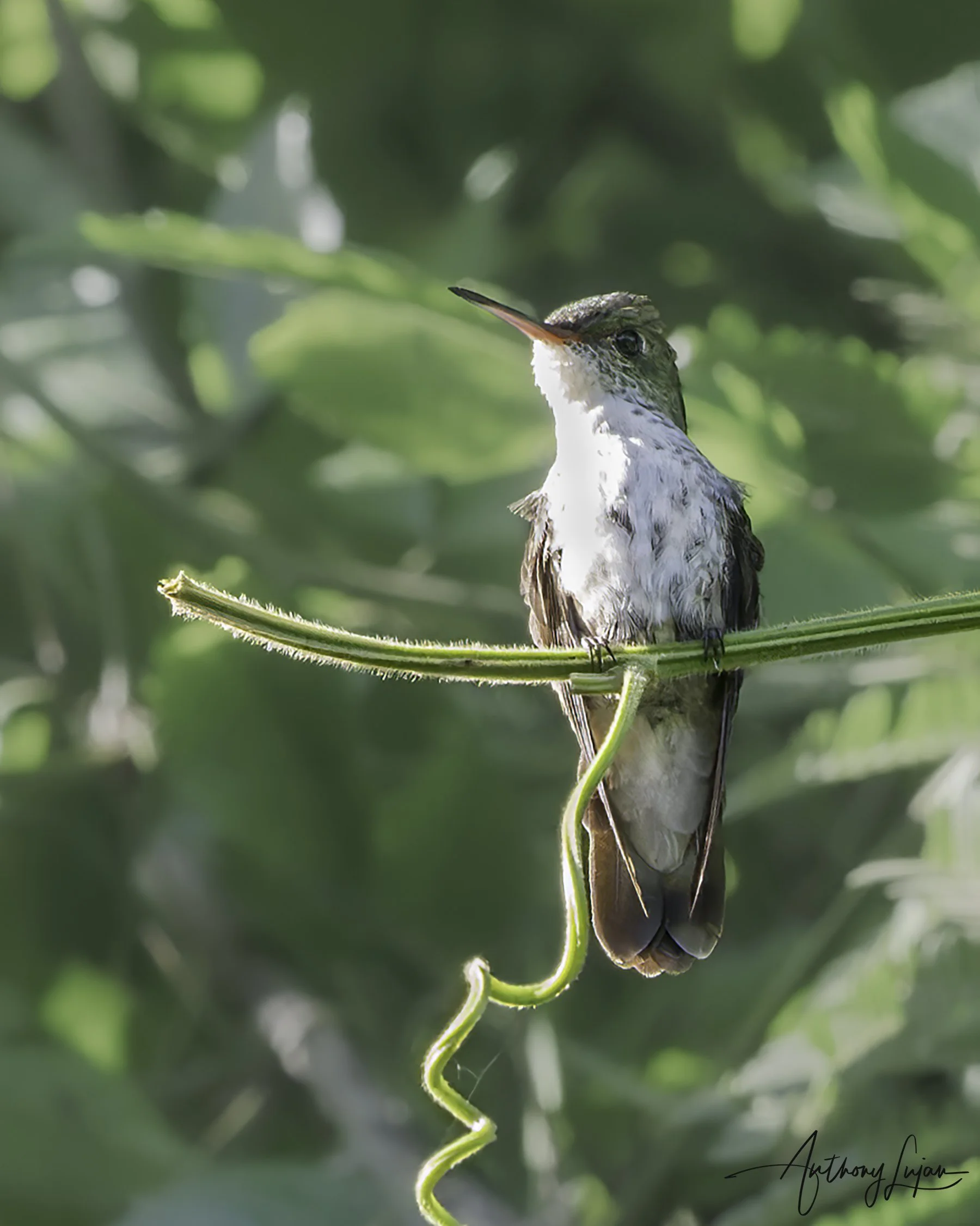
Adult females are similar above, with bright green upperparts, but differ below. The throat and upper breast are whitish to grayish with green spotting or scaling, and the rest of the underparts are white, sometimes with a faint grayish wash on the sides. The bill is like the male’s, dark with a slightly paler lower mandible base. The tail is dark with pale or whitish tips on the outer feathers. Females therefore appear as green-backed hummingbirds with a finely spotted pale throat and a clean white belly.
Habitat & Behavior
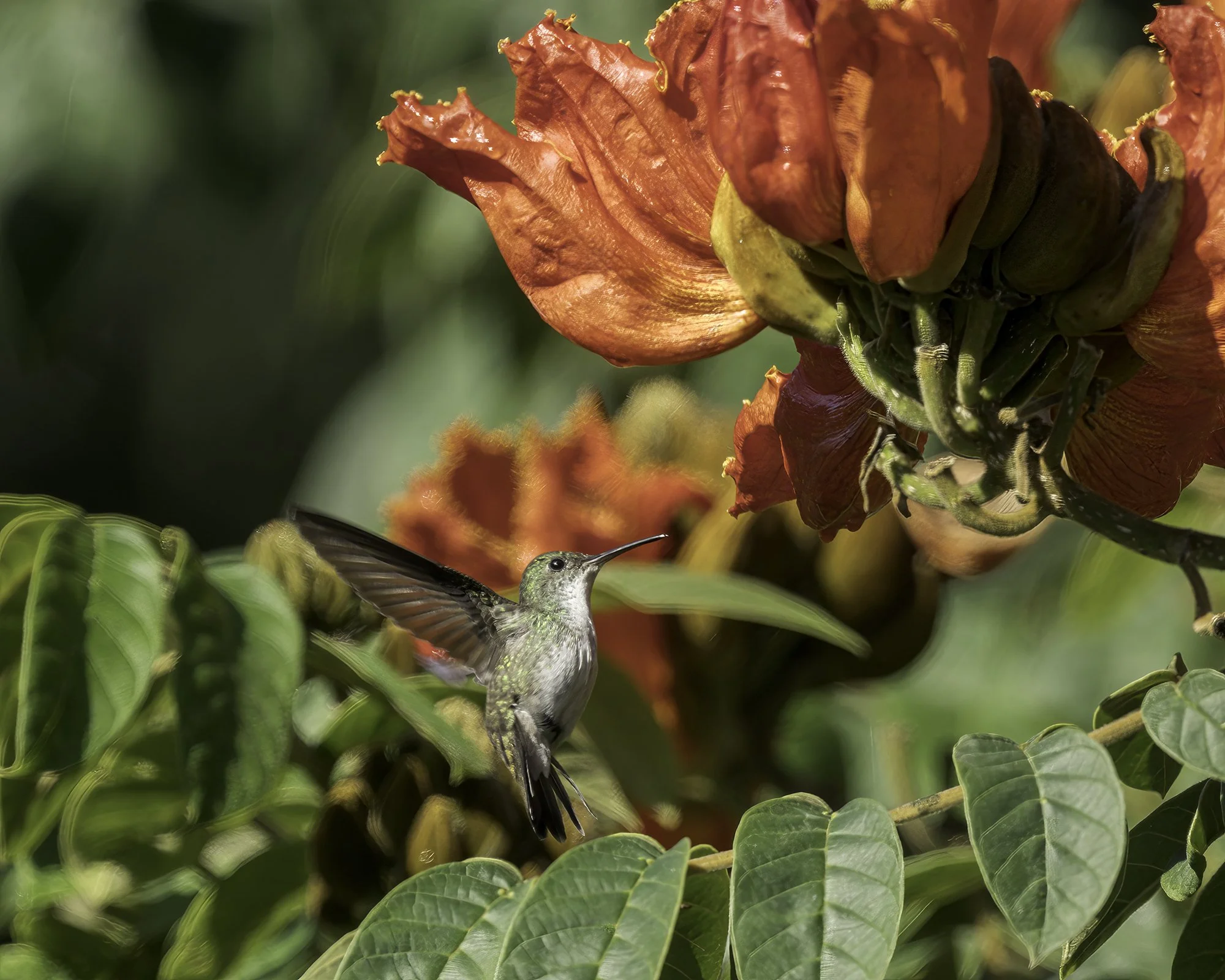
White-bellied Emeralds inhabit the interior and edges of lowland evergreen and semi-deciduous forest, as well as second growth, plantations (such as cacao or coffee with shade trees), and gardens with tall flowering trees and shrubs. They feed on nectar from a wide variety of flowers on trees, shrubs, and herbs, and also take small insects for protein. Birds forage by hovering or briefly perching at blossoms and may defend rich nectar sources against other hummingbirds. The species is considered resident throughout most of its range, though some local seasonal movements may occur in response to flowering cycles.
Population
With an estimated 500,000–4,999,999 mature individuals, the White-bellied Emerald is still numerically strong, particularly in the Yucatán region and other suitable lowland forests. However, deforestation, agricultural expansion, and urbanization continue to reduce and fragment its habitat. Despite its willingness to use secondary habitats and gardens, habitat loss over large areas is believed to be driving a gradual overall decline.

Conservation
The White-bellied Emerald is listed as Least Concern because of its large population and fairly wide distribution across eastern Mexico and northern Central America. Nonetheless, its decreasing trend and dependence on forest and tree-rich landscapes warrant continued monitoring. Protecting lowland evergreen and semi-deciduous forest, maintaining shade-tree plantations, and encouraging native flowering trees and shrubs in rural and urban areas will help sustain this species and many other regional hummingbirds.
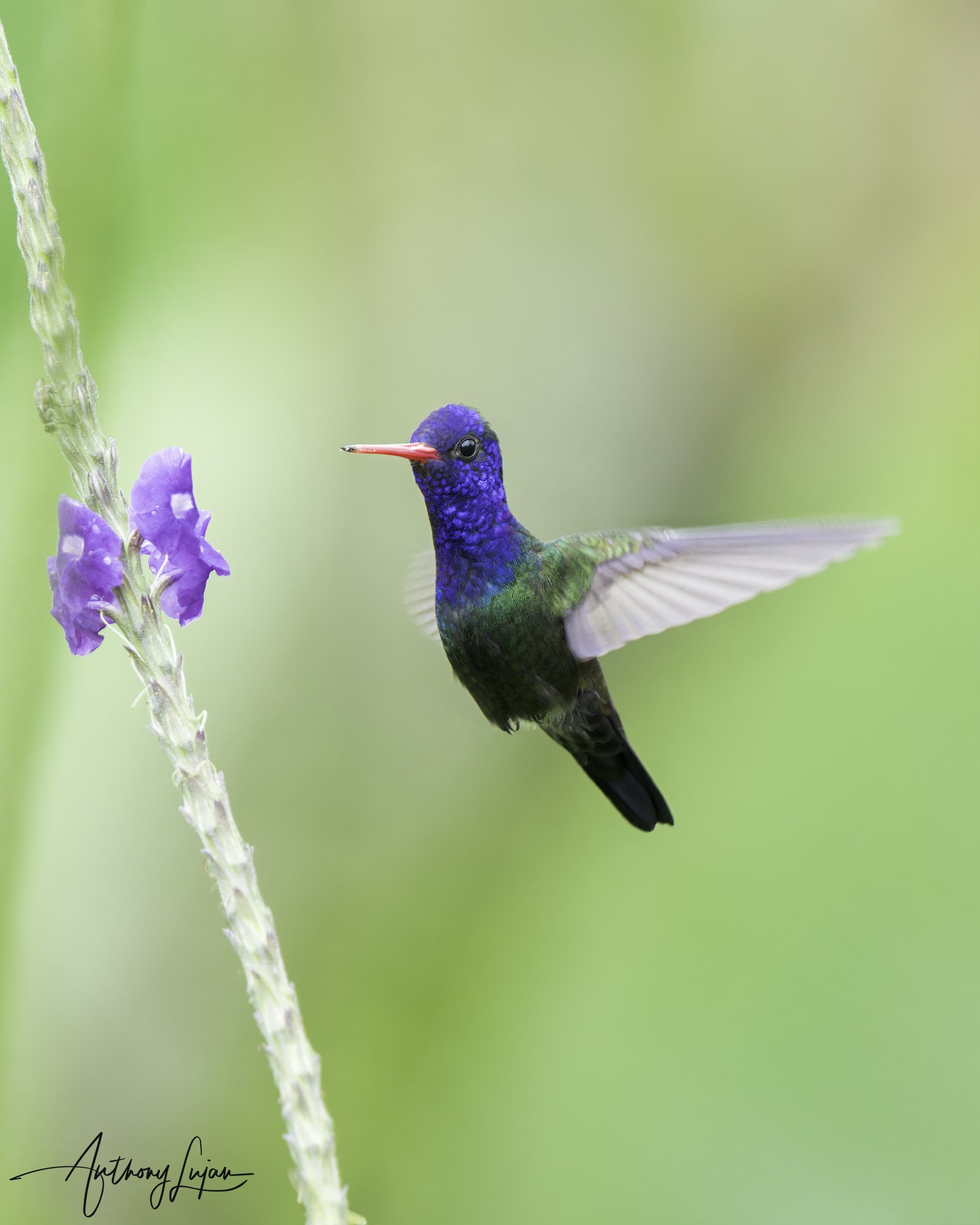
Below is the White-bellied Emerald (Chlorestes candida genini)
Photographed at Cerro Marín, Oaxaca, and Chavarrillo, Veracruz, Mexico.
These individuals belong to the subspecies genini, which is found in eastern Mexico, from southeastern San Luis Potosí and Veracruz south through northern Oaxaca. It typically inhabits tropical lowland and foothill forests, especially edges, plantations, and disturbed areas with dense flowering shrubs, from sea level to around 1,200 meters.
Related species in the Chlorestes genus (5 species total):


Please note: The content provided in this article reflects Anthony’s personal experience and photographic approach. Results can vary depending on light, weather, location, equipment, subject behavior, and field conditions.