
2026 Birds of the World Hummingbird Species Full Revisions
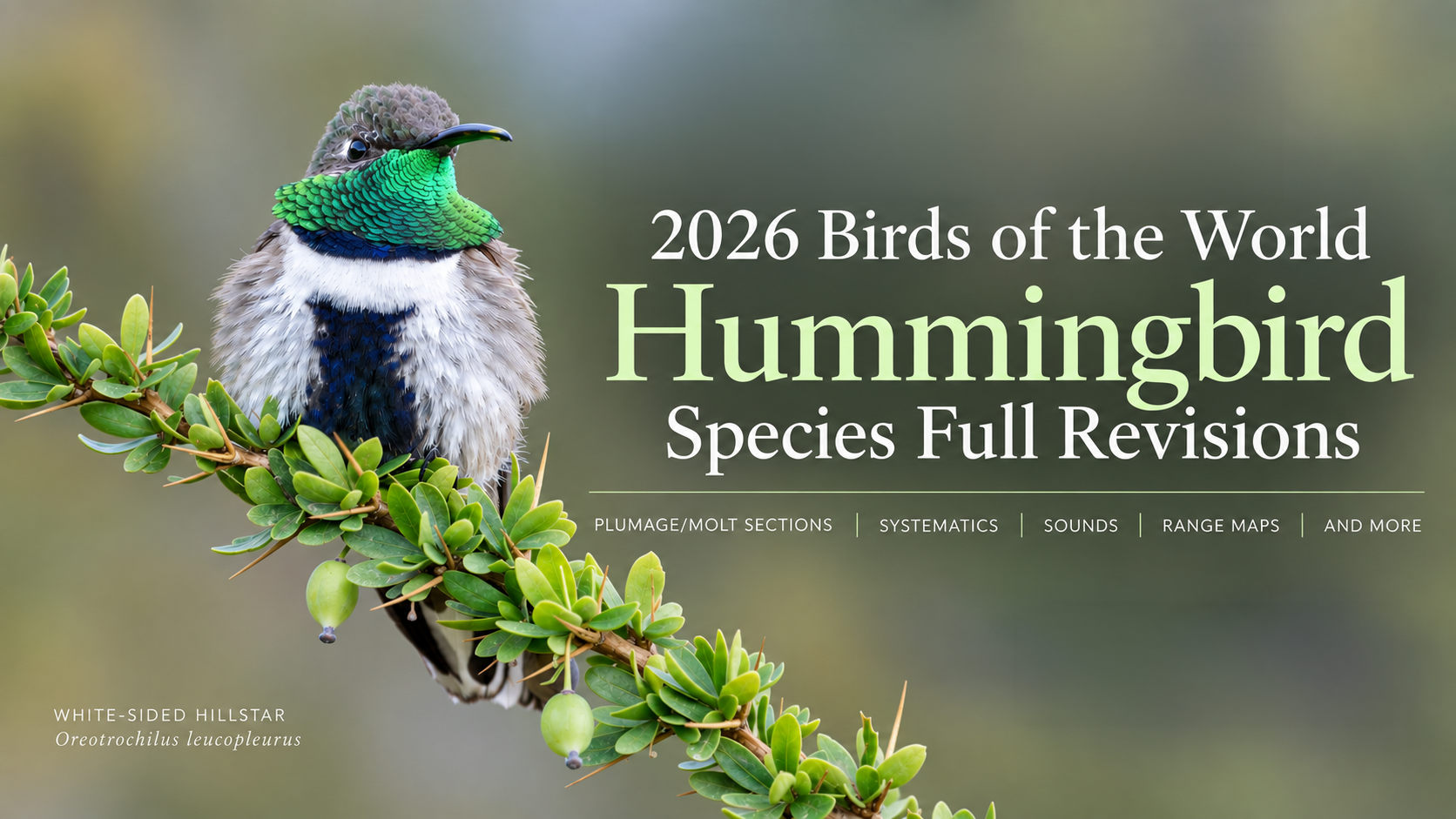
Nine Hummingbirds, New Knowledge
Birds of the World is not a static reference. Species accounts are revised as new research, field observations, recordings, photographs, museum work, and published studies expand what we know about birds.
In 2026, nine hummingbird species received Full Revisions to their Birds of the World accounts. A Full Revision is a substantial update of an existing species account, bringing the information together with more current research and knowledge. Depending on the species, that can include updates to distribution and range, identification, plumage and molt, behavior, breeding, habitat, diet, vocalizations, systematics, conservation, maps, photographs, recordings, and supporting literature.
These are not necessarily taxonomic changes. A Full Revision does not automatically mean that a species was split, lumped, renamed, or moved to another genus. Instead, it means that the scientific account itself has been thoroughly reviewed and brought up to date.
For anyone who studies, photographs, guides, researches, or simply wants to better understand hummingbirds, these revisions matter. They help ensure that the information we rely on reflects the best available knowledge of each species.
And none of these updates happen on their own.
Behind every revised account are researchers, ornithologists, editors, reviewers, mapmakers, media curators, and organizations contributing their expertise. The nine hummingbird revisions published in 2026 represent the work of an impressive group of people, and I wanted to recognize both the updated species and those who helped make that new knowledge available.
Blue-headed Hummingbird
Riccordia bicolor
Version 2.0, published March 6, 2026
The Blue-headed Hummingbird account was revised by Steven G. Mlodinow, who also curated the media for the updated account. Peter Pyle contributed to the Plumages, Molts, and Structure section.
Each of these specialized contributions helps create a more complete picture of the species, from identification and appearance to the details of molt and feather development.
https://birdsoftheworld.org/bow/species/blhhum1/cur/introduction
Canivet's Emerald

Cynanthus canivetii
Version 2.0, published February 6, 2026
Steven G. Mlodinow revised the Canivet's Emerald account, with Peter Pyle contributing to the Plumages, Molts, and Structure section.
Tony Leukering copyedited the revision, while Simón O. Valdez-Juárez generated the updated range map.
It is a good example of just how collaborative these accounts can be. Updating what we know about a species involves far more than writing alone. Mapping, editing, specialized plumage knowledge, and careful review all play a role.
https://birdsoftheworld.org/bow/species/caneme1/cur/introduction
Cinnamon Hummingbird

Amazilia rutila
Version 2.0, published February 6, 2026
The Cinnamon Hummingbird received a full revision by Steven G. Mlodinow.
Peter Pyle contributed to the Plumages, Molts, and Structure section, Eva Ledvina copyedited the draft, and Simón O. Valdez-Juárez generated the map.
Together, those contributions help keep one of Central America's most recognizable hummingbirds represented by current and carefully reviewed information.
https://birdsoftheworld.org/bow/species/cinhum1/cur/introduction
Green-breasted Mountain-gem
Lampornis sybillae
Version 2.0, published September 11, 2026
This revision highlights another important part of Birds of the World: collaboration with ornithologists and conservation organizations in the countries where these birds occur.
John van Dort and Roselvy Juárez revised the Green-breasted Mountain-gem account and curated its media as part of a partnership with Aves Honduras.
Simón O. Valdez-Juárez generated the updated range map.
Local and regional expertise is enormously important in understanding birds, particularly species whose distributions may cross remote or poorly studied areas.
https://birdsoftheworld.org/bow/species/gbmgem1/cur/introduction
Green-throated Mountain-gem

Lampornis viridipallens
Version 2.0, published September 11, 2026
The Green-throated Mountain-gem was also revised through the partnership with Aves Honduras.
Roselvy Juárez and John van Dort revised the account and curated its media, while Simón O. Valdez-Juárez generated the map.
Seeing organizations such as Aves Honduras directly involved in documenting the birds of their region is especially encouraging. The people who know these landscapes and species firsthand bring an invaluable perspective to our understanding of them.
https://birdsoftheworld.org/bow/species/gtmgem1/cur/introduction
Mexican Violetear

Colibri thalassinus
Version 2.0, published February 13, 2026
The Mexican Violetear account was revised and its media curated by Steven G. Mlodinow.
Peter Pyle contributed to the Plumages, Molts, and Structure section, Tony Leukering copyedited the draft, and Simón O. Valdez-Juárez generated the map.
For a widespread species such as the Mexican Violetear, continually bringing together information from across its range is essential to maintaining a useful and accurate species account.
https://birdsoftheworld.org/bow/species/grnvie1/cur/introduction
Plain-capped Starthroat
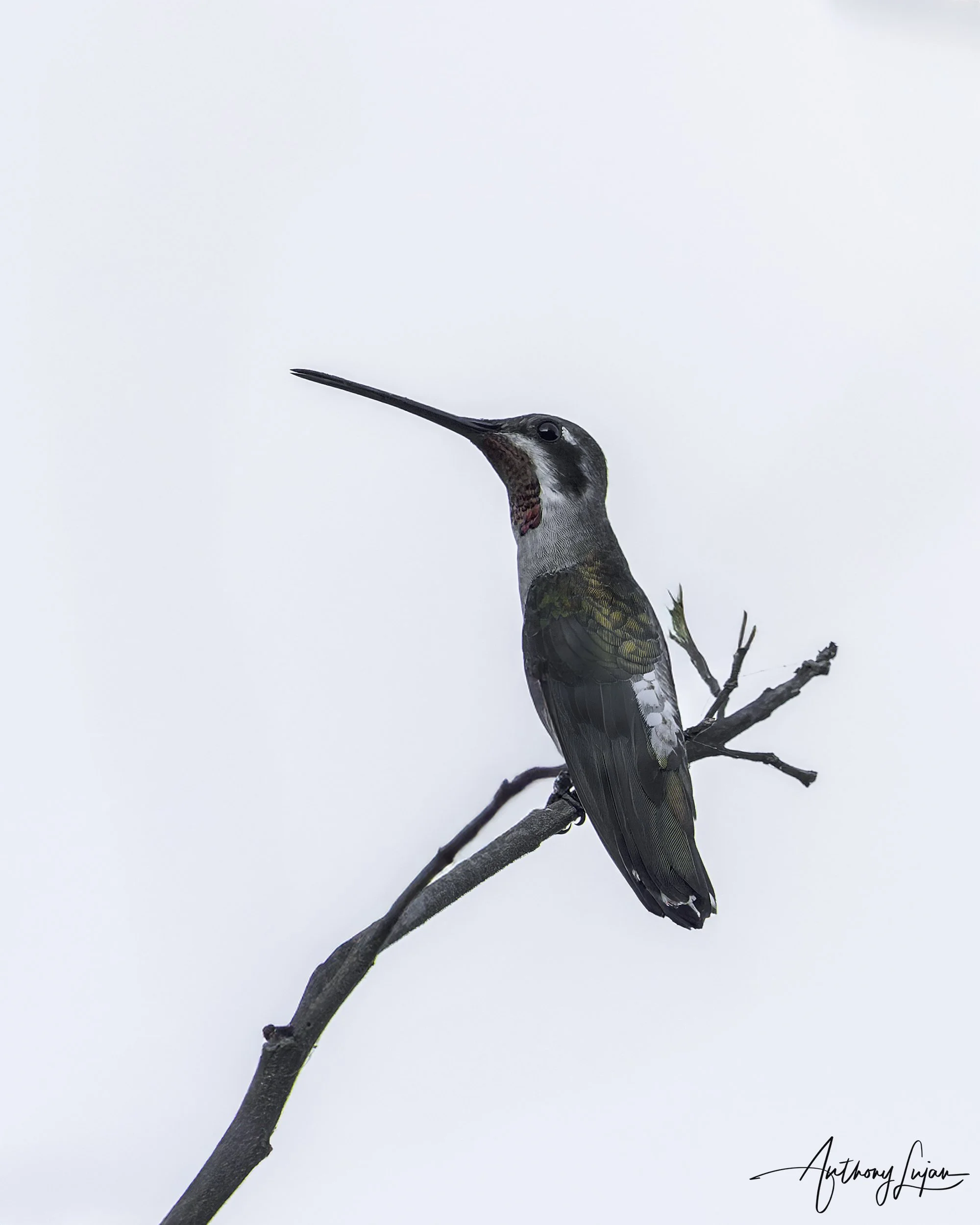
Heliomaster constantii
Version 2.0, published February 13, 2026
Steven G. Mlodinow revised the Plain-capped Starthroat account and curated its media, while Peter Pyle contributed his expertise to the Plumages, Molts, and Structure section.
The draft was copyedited by JoAnn Hackos, Linda A. Hensley, Robin K. Murie, and Daphne R. Walmer, and Andre E. Golumbeski generated the range map.
The number of people involved is a reminder of the considerable work that can sit behind a single updated species account.
https://birdsoftheworld.org/bow/species/plcsta/cur/introduction
Wedge-tailed Sabrewing
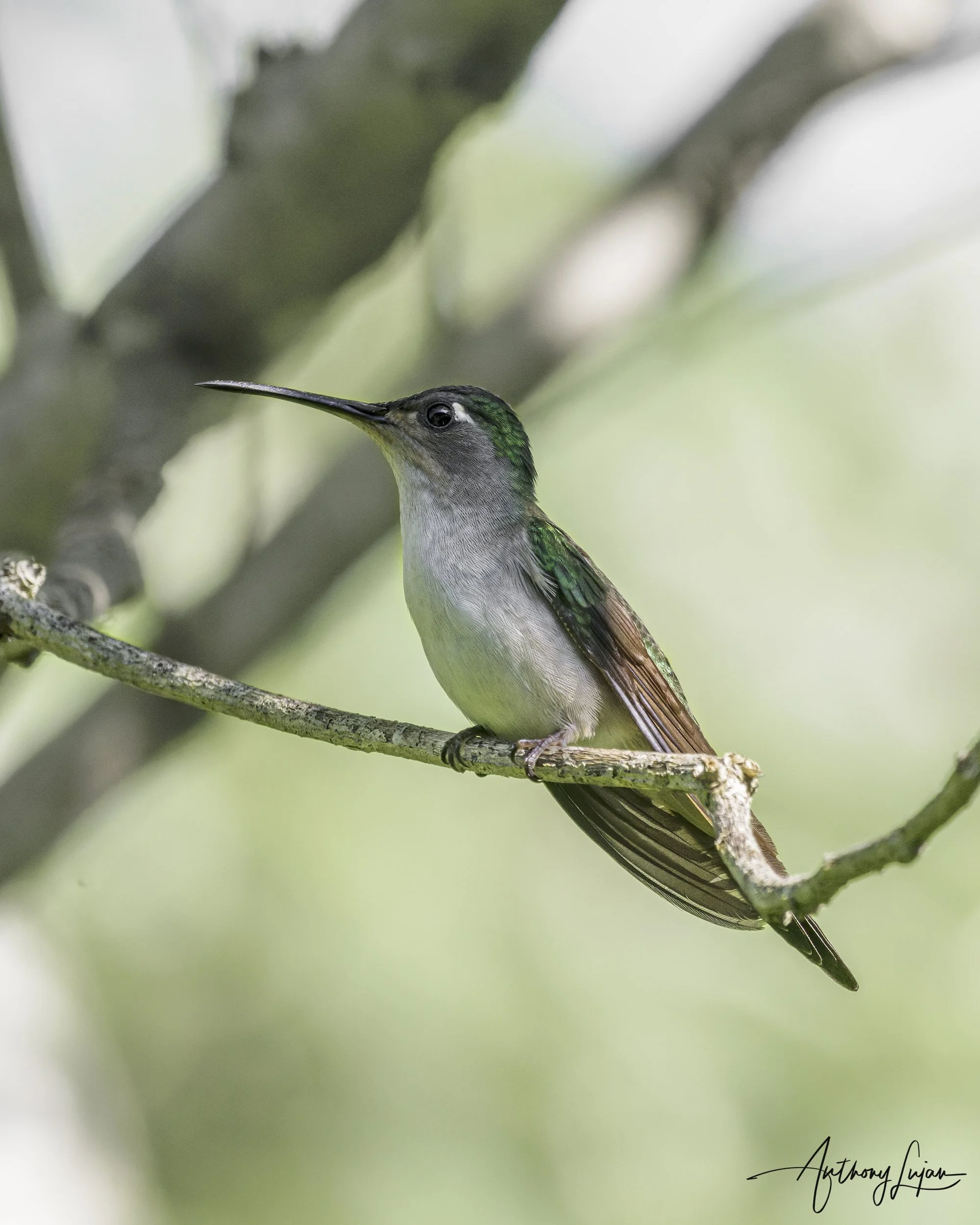
Pampa curvipennis
Version 2.0, published May 15, 2026
The Wedge-tailed Sabrewing received another particularly collaborative revision.
Steven G. Mlodinow revised the account and curated its media. Peter Pyle contributed to the Plumages, Molts, and Structure section, and hummingbird researcher Claudia I. Rodríguez-Flores reviewed the revision.
JoAnn Hackos, Linda A. Hensley, Robin K. Murie, and Daphne R. Walmer copyedited the draft, while Abigail A. Archey generated the map.
Review by researchers familiar with the species and region adds another important layer to the process, helping ensure that these accounts reflect the best information currently available.
https://birdsoftheworld.org/bow/species/wetsab1/cur/introduction
White-sided Hillstar
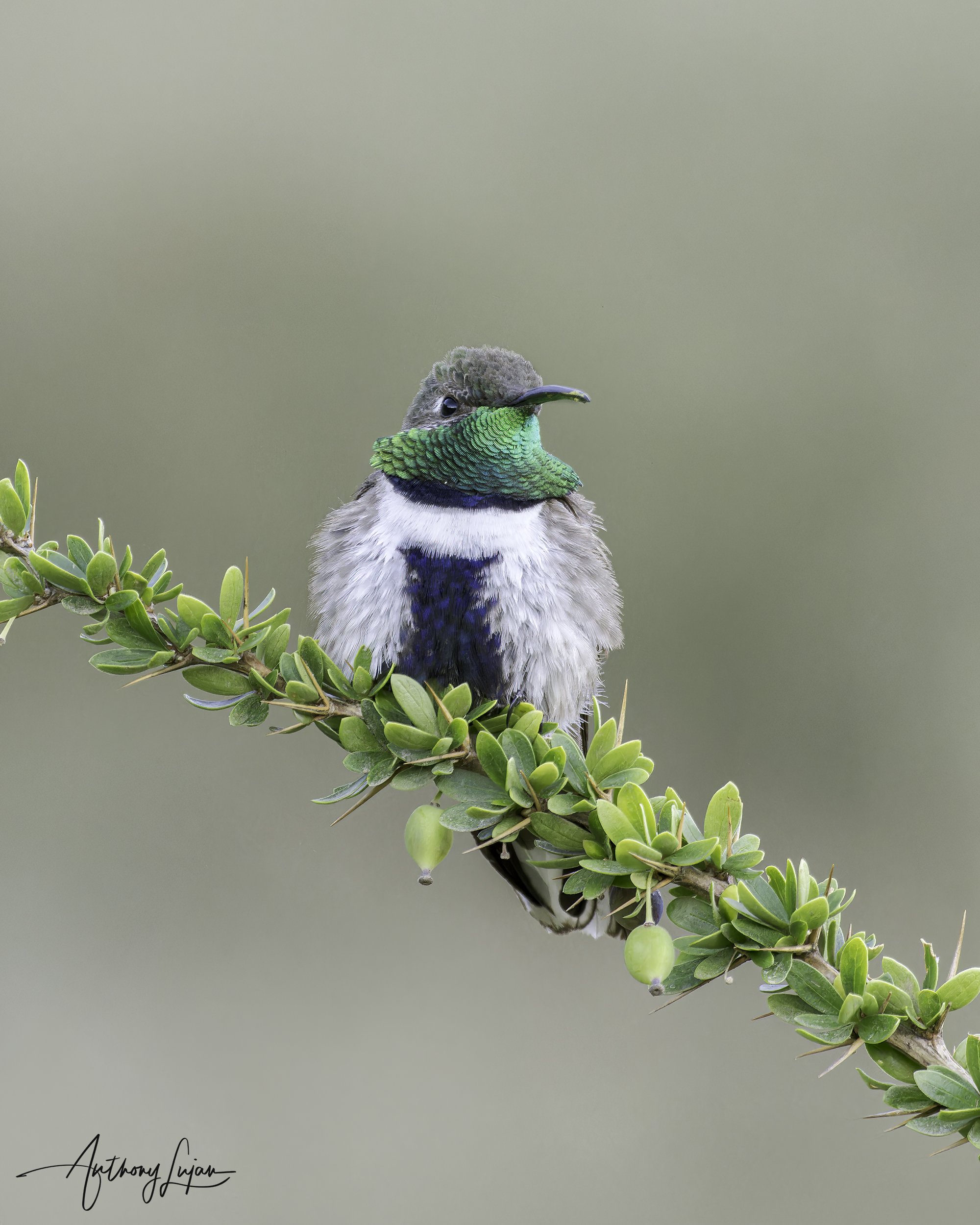
Oreotrochilus leucopleurus
Version 2.0, published August 7, 2026
The White-sided Hillstar revision brought together an especially broad group of contributors.
Vicente Pantoja-Maggi and Benito Rosende revised the account through a partnership with Chile's Red de Observadores de Aves y Vida Silvestre de Chile (ROC).
Peter Pyle contributed to the Plumages, Molts, and Structure section. Guy M. Kirwan contributed to Systematics, while Peter F. D. Boesman contributed to Sounds and Vocal Behavior.
Billy Dignam copyedited the draft, Jaden Wolf curated the media, and Simón O. Valdez-Juárez revised the range map.
The White-sided Hillstar is a hummingbird that has given me some unforgettable experiences in the field, which makes seeing this account receive such a comprehensive update particularly meaningful to me.
https://birdsoftheworld.org/bow/species/whshil1/cur/introduction
Behind Every Revision
A species account is the result of many different kinds of expertise coming together.
Researchers study plumage, molt, behavior, vocalizations, distribution, and systematics. Editors review and refine the written account. Mapmakers update ranges. Media curators select photographs, recordings, and videos that help document the species.
Field observations also continue to add to that knowledge through the work of ornithologists, guides, photographers, sound recordists, conservationists, and other contributors.
Each revision represents far more than an updated webpage. It reflects an ongoing effort to make the scientific record more complete, accurate, and useful.
That work is especially important for hummingbirds, where better information about distribution, behavior, population differences, and conservation status can contribute to a deeper understanding of the species and the challenges they may face.
Thank You
My sincere thanks to Steven G. Mlodinow, Peter Pyle, John van Dort, Roselvy Juárez, Vicente Pantoja-Maggi, Benito Rosende, Guy M. Kirwan, Peter F. D. Boesman, Claudia I. Rodríguez-Flores, Tony Leukering, Eva Ledvina, JoAnn Hackos, Linda A. Hensley, Robin K. Murie, Daphne R. Walmer, Simón O. Valdez-Juárez, Andre E. Golumbeski, Abigail A. Archey, Billy Dignam, and Jaden Wolf, as well as Aves Honduras, Red de Observadores de Aves y Vida Silvestre de Chile (ROC), the Cornell Lab of Ornithology, and everyone else whose research and contributions help keep Birds of the World growing and current.
For those of us who love hummingbirds, whether we study them, photograph them, travel in search of them, or simply marvel at them, your work helps us better understand these extraordinary birds.
Science never stops learning, and thanks to the people doing this work, our understanding of hummingbirds continues to grow.