From the Cover to Conservation: Helping Protect the Chilean Woodstar
There are hummingbirds I have traveled great distances to photograph, and then there are species that change the way I see my photography entirely.
For me, the Chilean Woodstar was one of those birds.
It was the first Critically Endangered hummingbird I had ever seen in the wild. Standing in northern Chile and watching this tiny bird move through the desert landscape was extraordinary, but my heart also sank knowing how few remained and that this species could disappear within our lifetime.
That experience stayed with me.
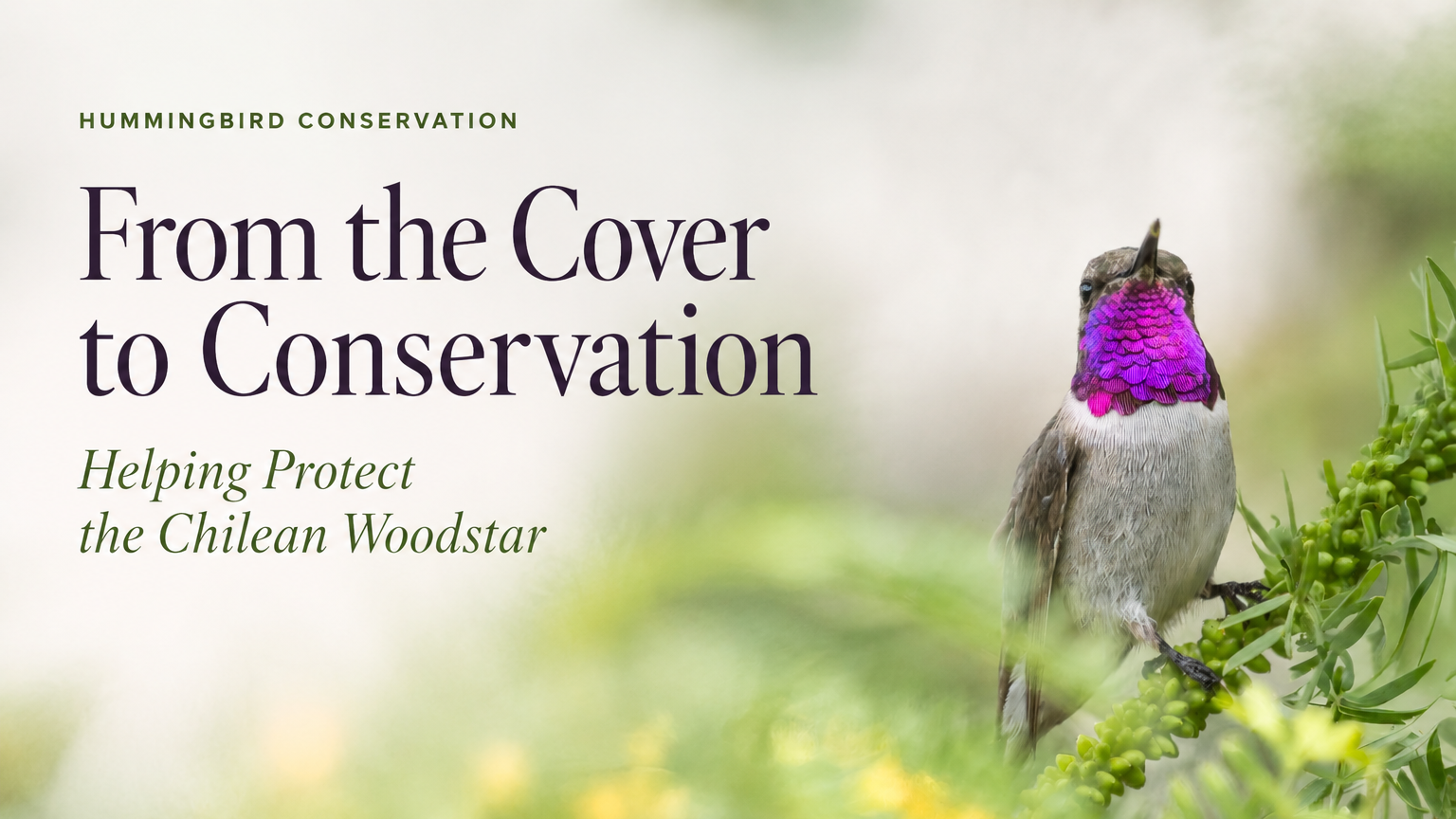
It became one of the main reasons I created Endangered Hummingbirds: Seeing the Crisis Through My Lens, and why I ultimately chose the Chilean Woodstar for the cover.
I wanted people to see the bird whose story had affected me so deeply and understand that hummingbird extinction is not an abstract possibility.
For some species, it is a very real threat.
A Hummingbird Running Out of Habitat
The Chilean Woodstar is one of the most threatened hummingbirds in South America.
Once much more widespread throughout the oasis valleys of northern Chile, its population has declined dramatically as native desert and riparian habitat has been lost or fragmented by agriculture, development, and other changes to the landscape.
More recent population work led by Cristián F. Estades, PhD, of the University of Chile, places the population at fewer than 500 individuals.
Habitat loss remains one of the greatest challenges. Agricultural expansion has replaced native vegetation in important valleys, while pesticide use and the degradation and fragmentation of riparian vegetation add further pressure.
The Woodstar also faces potential competition and displacement from the Peruvian Sheartail, a more aggressive hummingbird that expanded into northern Chile beginning in the 1970s.
When a species' entire population is measured in only a few hundred individuals, every remaining feeding area, breeding site, and patch of suitable habitat matters.
From Concern to a Conversation
Almost immediately after seeing and photographing the Chilean Woodstar, I wanted to know what more could be done.
I reached out to Cristián F. Estades, PhD, one of the leading researchers on the Chilean Woodstar, who has spent years studying the species, monitoring its decline, and publishing research on its conservation, along with biologists and hummingbird conservation experts Paulina González-Gómez and Matías Castillo.
At the same time, Alice Madar, Executive Director of the International Hummingbird Society, was flying into Chile to join me before we continued on to Robinson Crusoe Island to photograph the Juan Fernández Firecrown. Her timing was incredibly important. I knew that having Alice at the table was vital if we were going to move beyond simply learning more about the Woodstar's decline and begin discussing how IHS could become directly involved.
Together, we met to better understand the condition of the species, the work already underway, the challenges still standing in the way of recovery, and where the International Hummingbird Society might be able to help.
That conversation moved my concern beyond simply asking, “How bad is the situation?”
The more important question became:
What can we do to help?
Turning What I Saw Into Action
After photographing the Chilean Woodstar, I knew I did not want my involvement with this species to end when I returned home with photographs.
I wanted to help protect it.
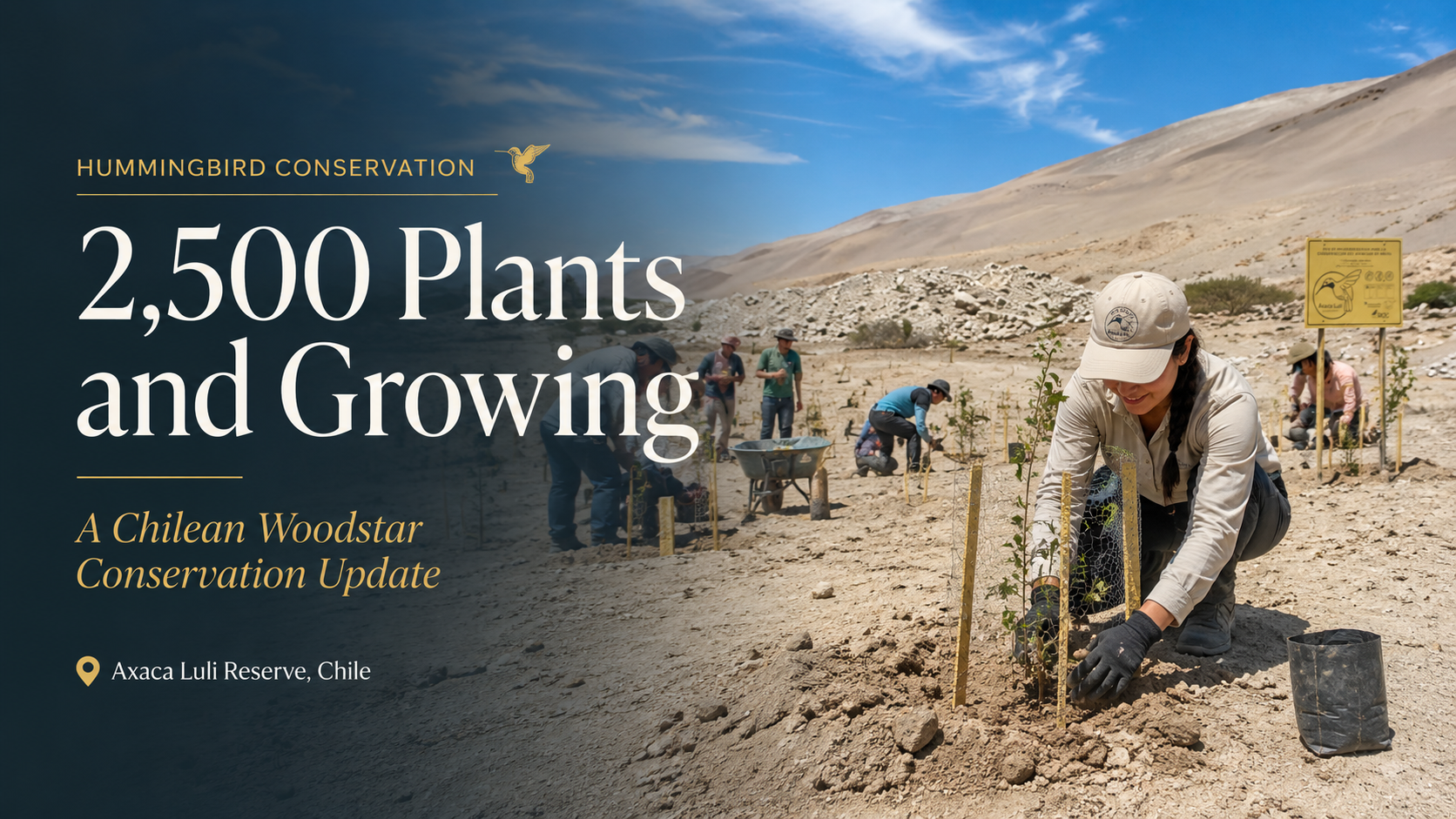
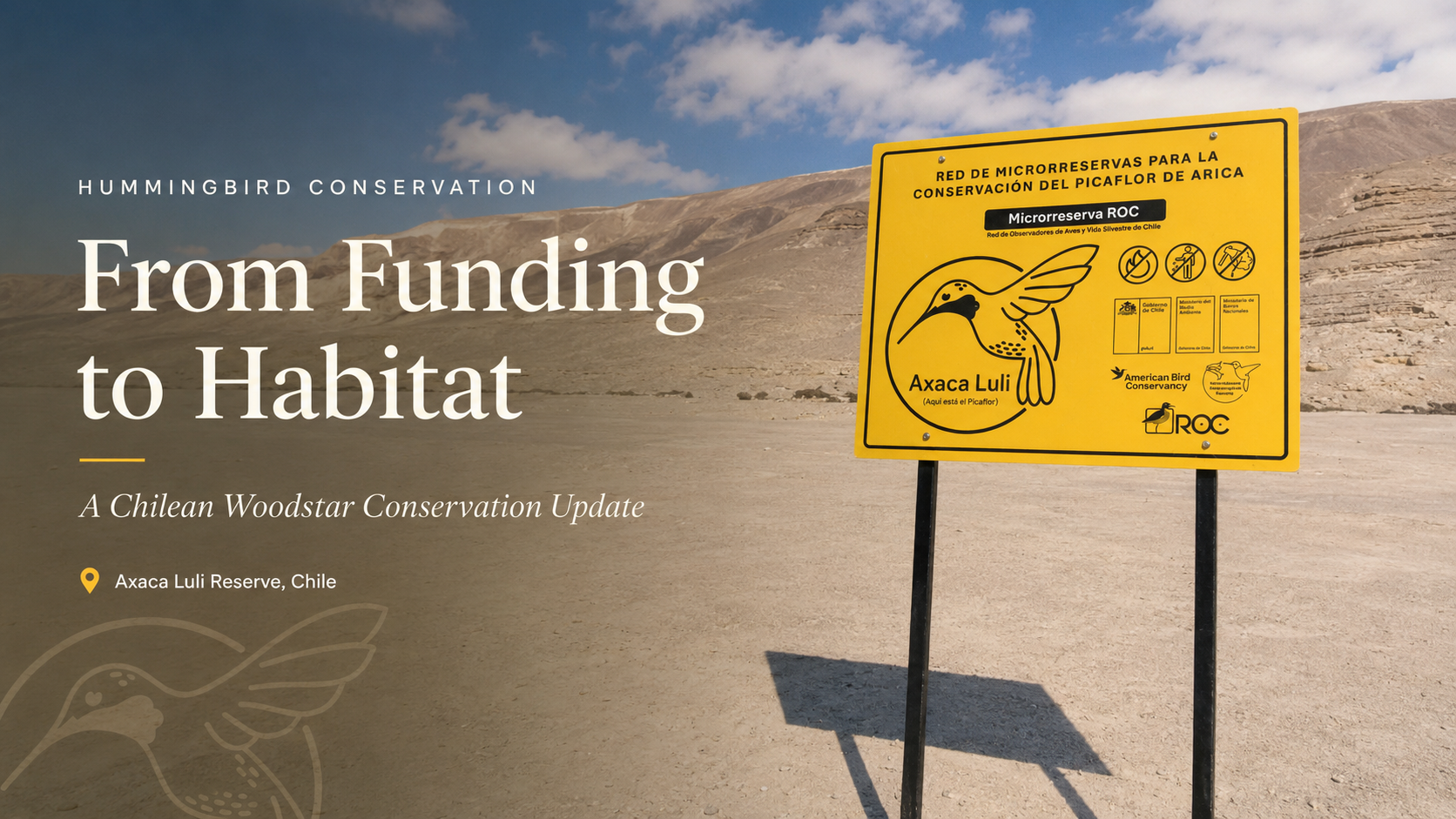
In March 2025, American Bird Conservancy developed a first-phase proposal with its Chilean partner, Red de Observadores de Aves y Vida Silvestre de Chile (ROC), focused on beginning habitat recovery efforts in the Chaca Valley. The proposal identified habitat loss in northern Chile as the primary driver of the Woodstar's decline and proposed the creation and restoration of microreserves as one way to help stabilize the population.
In April 2025, the International Hummingbird Society sent $5,684 to American Bird Conservancy to help launch that first phase.
Of that initial contribution, $3,000 came directly from me.
It was a deeply personal decision.
I had stood in the Woodstar's habitat. I had photographed one of the few remaining birds. And I had returned home knowing that documenting its existence was no longer enough for me.
I wanted those photographs to lead to action.
What the First Phase Was Designed to Accomplish
The initial project focused on a 15.4-hectare property known as Hacienda Vítor, located less than two kilometers from the existing Monumento Natural Picaflor de Arica.
Nearly eight hectares of the property lacked native vegetation, but the site also contained a well and irrigation infrastructure that could potentially be used to support habitat restoration. ROC had submitted a formal request for the property to be managed for conservation, with support from Chile's Ministry of Environment.
The goal of the first phase was straightforward but important: develop and begin implementing a restoration plan capable of creating suitable habitat for the Chilean Woodstar.
The work was designed to establish:
Where native vegetation should be restored and at what densities
How much water new plantings would require
What irrigation infrastructure would be needed
What alternative methods could be used to bring water into the restoration area
How initial habitat restoration could begin on the property
The first restoration activities also called for planting 1,000 native plants provided by Chile's National Forest Corporation, CONAF.
For me, this is what made the project tangible.
The funding was helping determine what it would actually take to begin turning degraded land back into functioning habitat for one of the world's most threatened hummingbirds.
The Bird That Became the Cover
The Chilean Woodstar ultimately became the cover of Endangered Hummingbirds: Seeing the Crisis Through My Lens because, for me, it represents exactly why the book needed to exist.
Its photograph is beautiful, but the story behind it is difficult.
Fewer than 500 individuals remain, and the species' future depends on conservation action happening while there is still time.
Putting the Chilean Woodstar on the cover gave me a way to place that reality directly in front of readers.
Helping support its conservation was the natural next step.
And this first contribution was only the beginning of what would follow.
Help Anthony Reach the Next At-Risk Hummingbird
Like my journey into northern Chile to photograph the Critically Endangered Chilean Woodstar, many of the hummingbirds still ahead require travel into remote and difficult-to-reach regions across the Americas.
Your sponsorship helps make these expeditions possible, allowing me to reach and document these species through photography and video, share their stories, and bring greater attention to the challenges facing their survival.
Each expedition is about more than creating a photograph. It is about documenting a species, the habitat it depends upon, and the conservation story surrounding its future.
Help me continue the journey and reach the next hummingbird that needs its story told.
More on Chilean Woodstar Conservation
Follow the habitat restoration, research, funding, and progress helping protect one of South America's most threatened hummingbirds.