From Funding to Habitat: A Chilean Woodstar Conservation Update
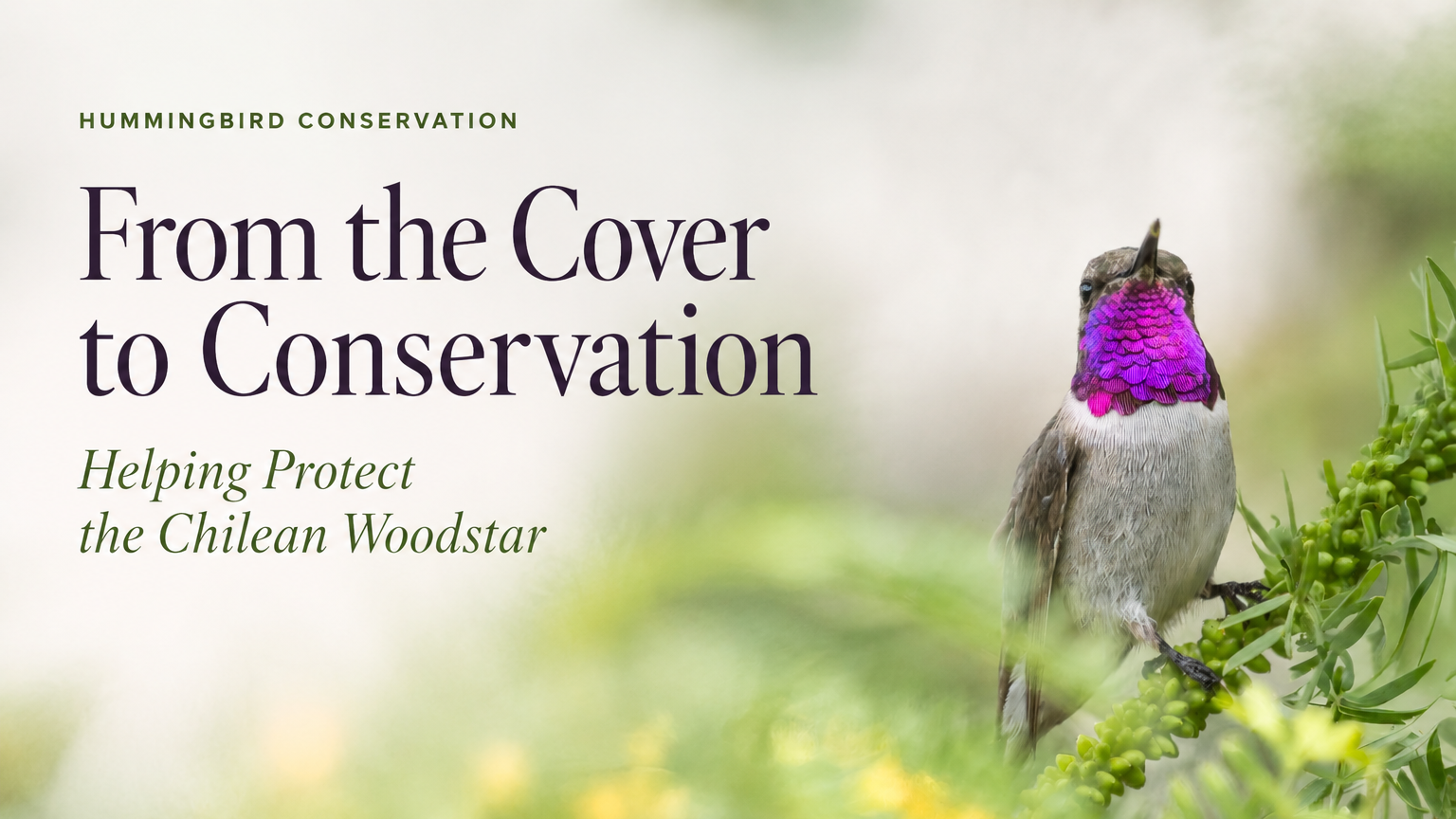
Earlier this year, I shared how my first encounter with the Critically Endangered Chilean Woodstar led me to become more directly involved in efforts to help protect this species.
In April 2025, the International Hummingbird Society provided $5,684 through American Bird Conservancy to help launch the first phase of habitat recovery, with $3,000 of that initial contribution coming directly from me.
We now have an update on what happened next.
In November 2025, American Bird Conservancy provided IHS with a final report on Phase One, carried out in partnership with Chilean conservation organization ROC, Red de Observadores de Aves y Vida Silvestre de Chile.
photos provided by American Bird Conservancy
photos provided by American Bird Conservancy
And there is meaningful progress to share.
Restoration Is Happening on the Ground
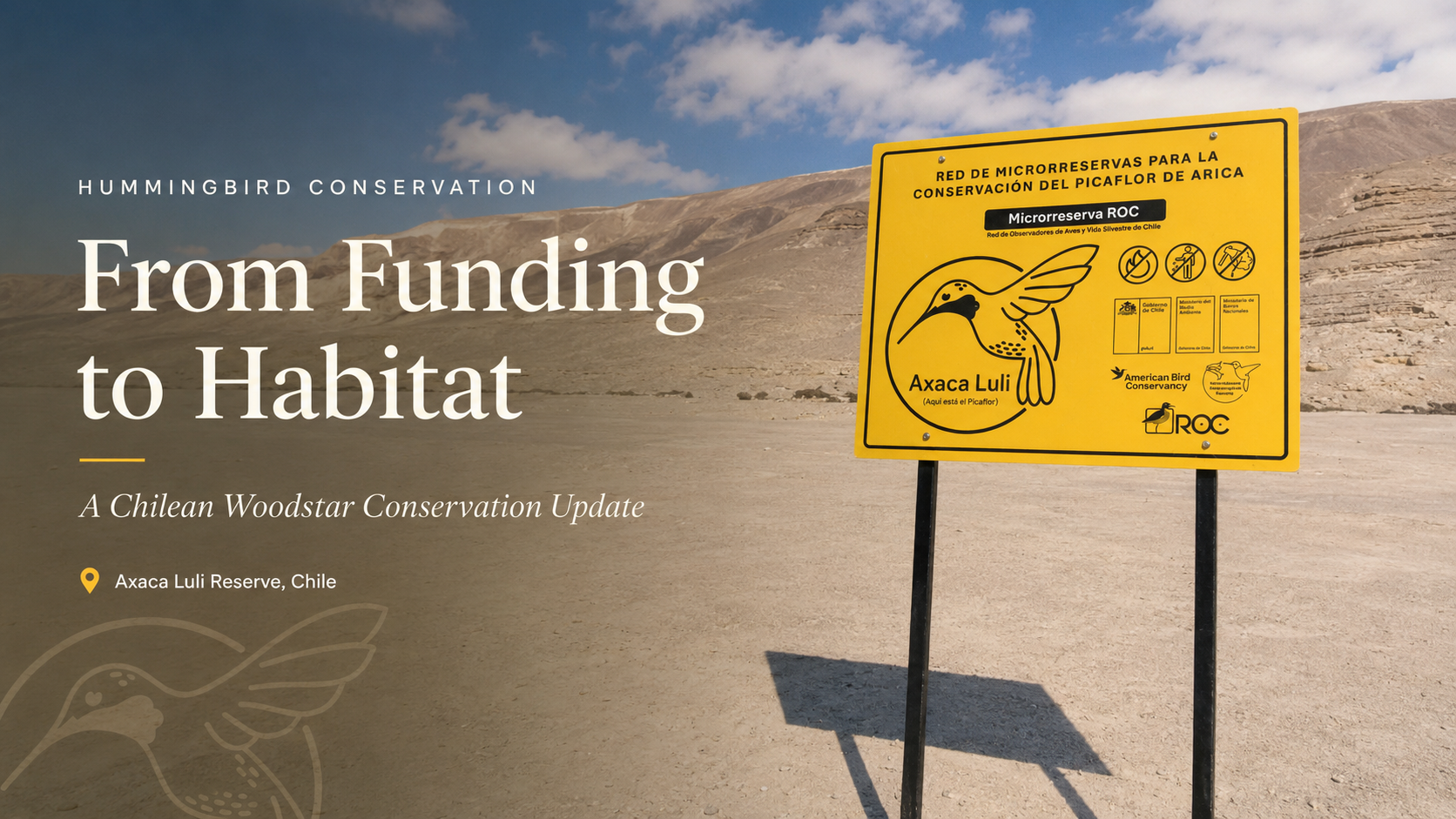
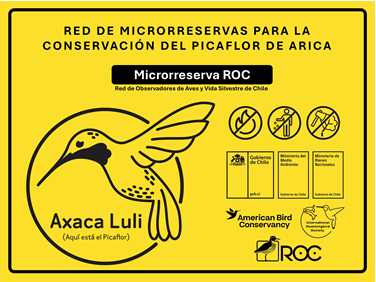
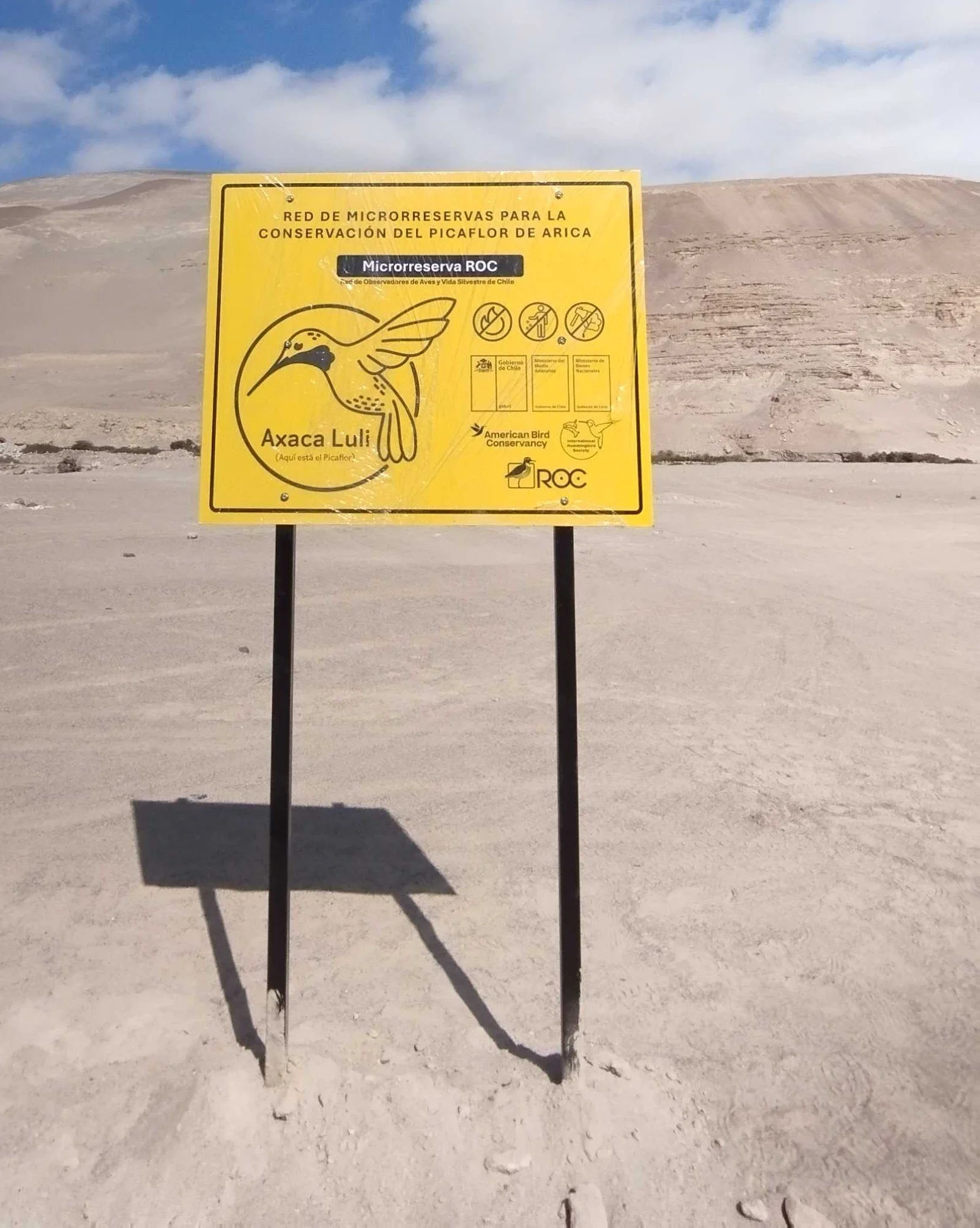
The work has centered on the Axaca Luli Reserve, approximately 15 hectares of protected land in northern Chile managed by ROC.
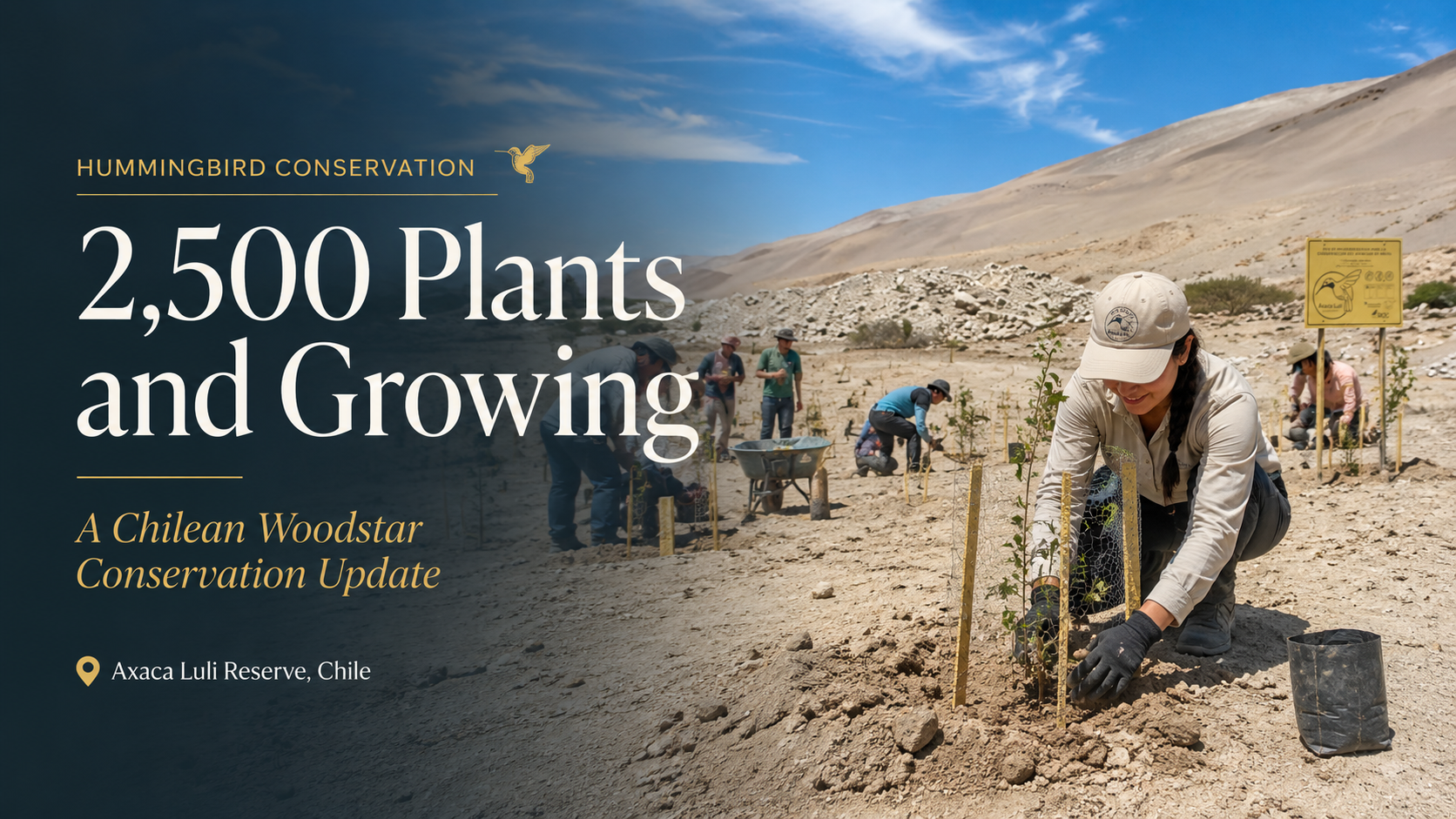
According to the report, 1,300 native trees planted as part of the restoration effort are currently surviving, with another 1,000 plants planned.
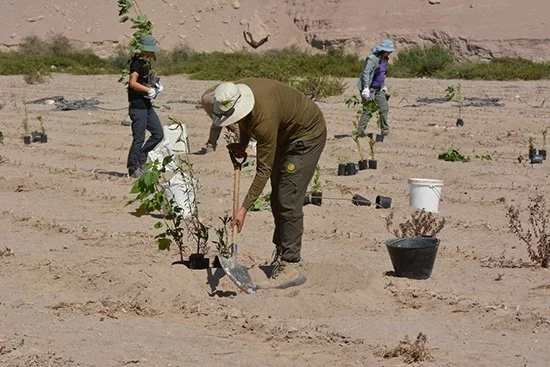
photo provided by American Bird Conservancy
The team has also developed a longer-term restoration plan addressing where vegetation should be established, how much water it will require, and how the site can be irrigated more efficiently.
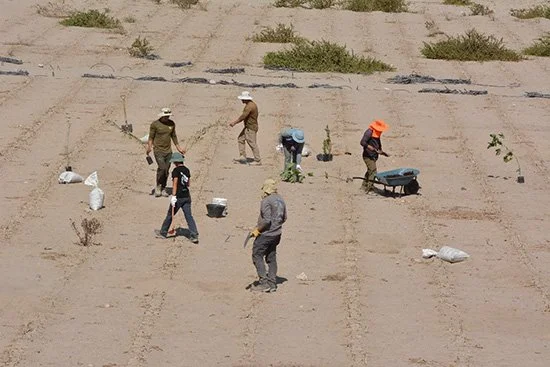
Rather than simply planting individual trees across the desert, the project is using a clustered or "nucleation" approach that brings trees, shrubs, and other native plants together to improve their chances of becoming established.
photos provided by American Bird Conservancy
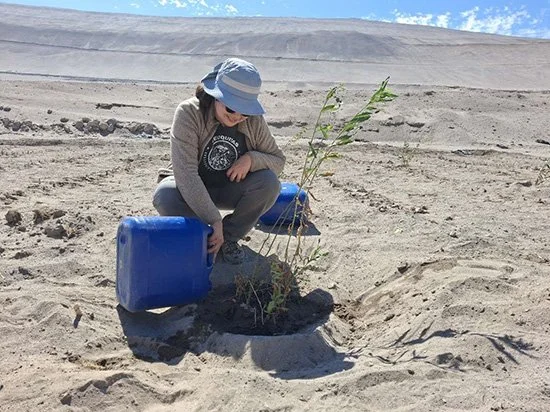
Seeing photographs of people physically planting and watering vegetation across this incredibly dry landscape makes the work very real.
This is no longer simply a proposal.
Habitat is going back into the ground.
Water Remains a Major Challenge
One of the biggest obstacles continues to be water.
A 10,000-liter storage tank has been installed at the reserve, but it currently has to be supplied by tanker trucks from Arica. ABC and ROC recognize that this is expensive and not sustainable over the long term.
photos provided by American Bird Conservancy
Part of Phase One therefore focused on identifying more efficient irrigation options that can support the restored vegetation into the future.
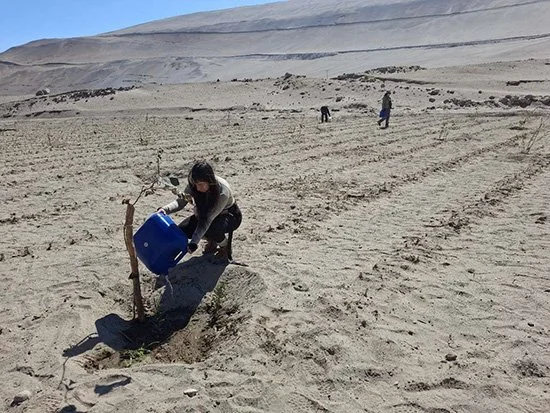
photos provided by American Bird Conservancy
The project has also already provided useful lessons. Some early plantings were lost to wildlife or insufficient shade, helping the team adjust how future restoration is approached.
That is part of conservation work too. You learn, adapt, and improve.
A Beginning, Not an Ending
For me, this update is encouraging because it shows the progression from a conversation about helping the Chilean Woodstar to actual restoration taking place on the ground.
There is now a managed reserve, native vegetation being restored, water infrastructure in place, and a clearer understanding of what will be required to keep rebuilding habitat.
For a hummingbird with fewer than 500 individuals believed to remain, that matters.
There is still a tremendous amount of work ahead, but Phase One has moved this effort from planning into action.
I look forward to continuing to share the progress as the work at Axaca Luli moves forward.
Help Anthony Reach the Next At-Risk Hummingbird
Like my journey into northern Chile to photograph the Critically Endangered Chilean Woodstar, many of the hummingbirds still ahead require travel into remote and difficult-to-reach regions across the Americas.
Your sponsorship helps make these expeditions possible, allowing me to reach and document these species through photography and video, share their stories, and bring greater attention to the challenges facing their survival.
Each expedition is about more than creating a photograph. It is about documenting a species, the habitat it depends upon, and the conservation story surrounding its future.
Help me continue the journey and reach the next hummingbird that needs its story told.
More on Chilean Woodstar Conservation
Follow the habitat restoration, research, funding, and progress helping protect one of South America's most threatened hummingbirds.