
Beautiful Hummingbird
Scientific name: Calothorax pulcher
The Beautiful Hummingbird, also known as the Beautiful Sheartail, is a small, striking hummingbird endemic to south-central Mexico. It inhabits arid and semi‑arid highland scrub, slopes, and canyons where flowering shrubs, cacti, and agaves provide nectar in otherwise dry landscapes. Males are noted for their vivid magenta‑violet gorget and long, narrow, sheartail‑shaped tail, which give this tiny desert hummingbird a delicate, elegant appearance.
At a Glance
Family: Trochilidae (hummingbirds)
Clade: Mellisugini – “Bee” hummingbirds
Genus group: Calothorax — small, long‑tailed sheartails of arid Mexico (Beautiful Hummingbird and Lucifer Hummingbird)
Range: Endemic to south‑central Mexico, from central Guerrero and southern Puebla south to Oaxaca, mainly in interior valleys and adjacent slopes
Habitat: Arid and semi‑arid scrublands, dry interior valleys with bushes and shrubs, semi‑open slopes with agaves and cacti, and edges of open woodland and gallery forest
Elevation: About 1,000–2,200 m (3,300–7,200 ft)
Length: About 8–9 cm (3.1–3.5 in)
Weight: About 2–3 g (0.07–0.11 oz)
Number of mature individuals: Approximately 20,000–50,000
Population trend: Decreasing
Status: Least Concern (IUCN)
Name Origin
The genus name Calothorax comes from Greek kalos (“beautiful”) and thorax (“breast” or “chest”), referring to the strikingly colored throat and upper breast of males in this genus. The species name pulcher is Latin for “beautiful,” emphasizing the bird’s vivid, eye‑catching appearance. Taken together, Calothorax pulcher essentially means “beautiful, beautiful‑breasted hummingbird,” a fitting name for such an ornate, long‑tailed sheartail.
Subspecies and Distribution
Beautiful Hummingbird is currently treated as monotypic — no recognized subspecies.
It is endemic to south‑central Mexico, where it occurs from central Guerrero and southern Puebla south into Oaxaca, primarily in interior valleys and adjacent slopes. Within this limited range it inhabits arid and semi‑arid shrublands, dry canyons, and semi‑open country with scattered shrubs, cacti, and agaves, as well as edges of open woodland and gallery forest along washes.
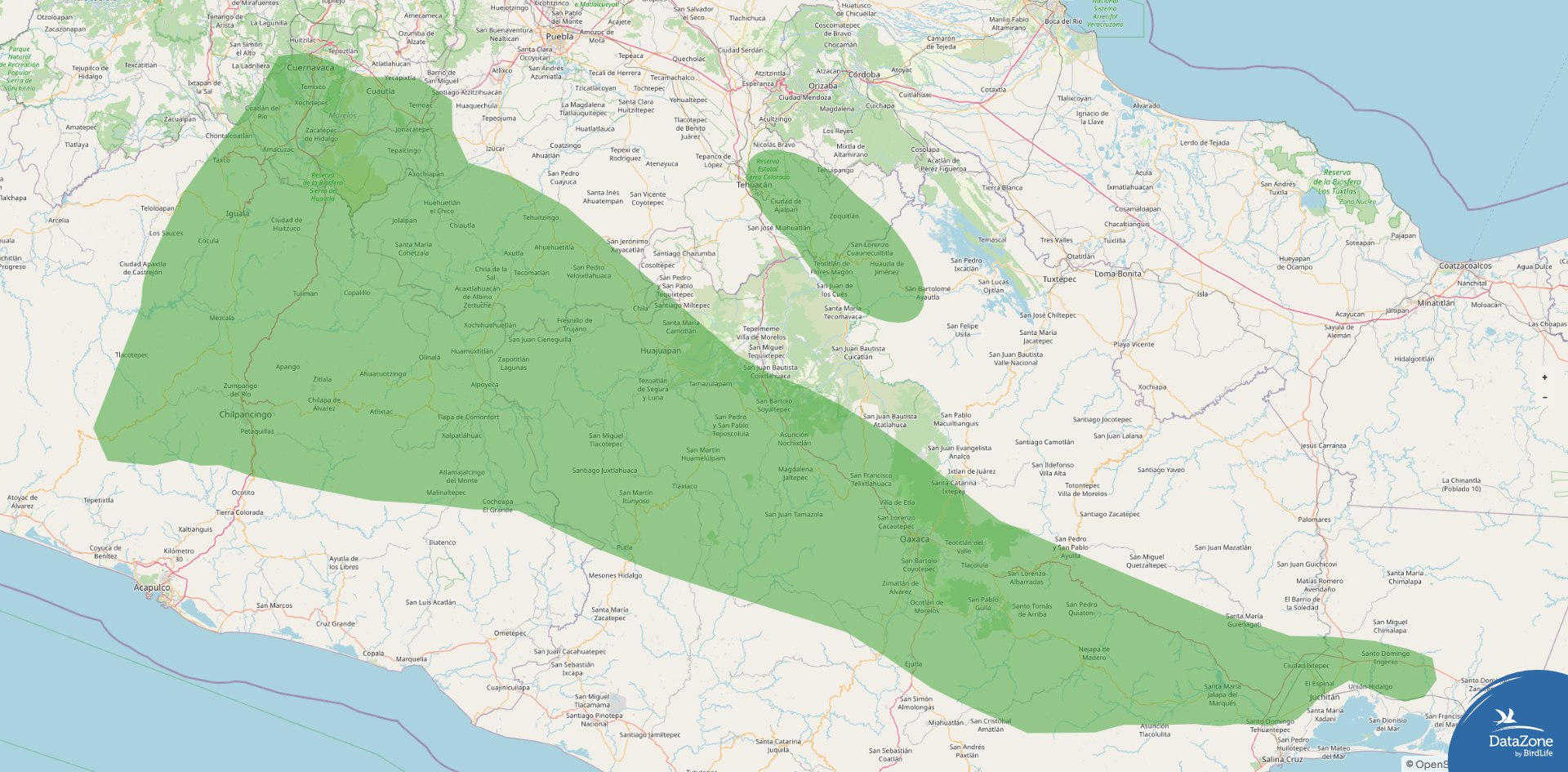
Legend
Green Resident
Species Overview
The Beautiful Hummingbird is a desert‑edge specialist of south‑central Mexico, adapted to dry, scrubby habitats where flowering shrubs and cacti punctuate rocky slopes and valleys. Its small size, glowing magenta‑violet gorget, and long, narrow tail give it an almost delicate, moth‑like quality when hovering at flowers. Despite its restricted range and relatively modest global population (roughly 20,000–50,000 mature individuals), it remains locally fairly common in suitable habitat, though the overall population is believed to be decreasing.
Identification
Male
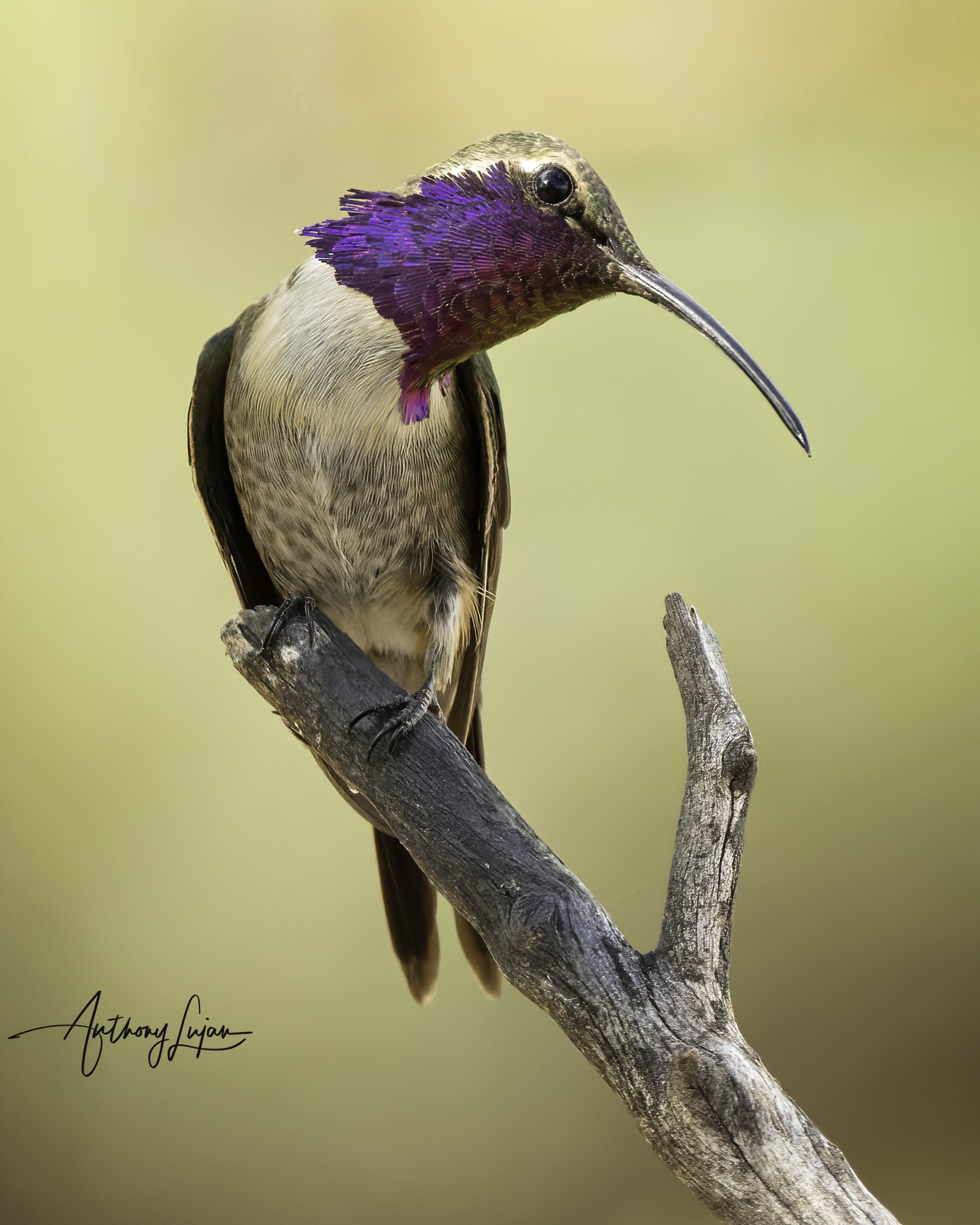
Adult males are tiny hummingbirds with green upperparts, a clean whitish underbody, and long, narrow tail feathers that taper into a sheartail shape. The most striking feature is the iridescent magenta‑violet gorget and upper chest, often appearing as a brilliant, angular patch that flares and darkens with viewing angle and light. The tail is relatively long and slender, with the outer rectrices forming the “shear‑tail” silhouette, and the bill is straight, slender, and dark, well suited to small desert flowers. In flight, the combination of bright gorget, white belly, and narrow tail makes males distinctive among small Mexican hummingbirds.
Female
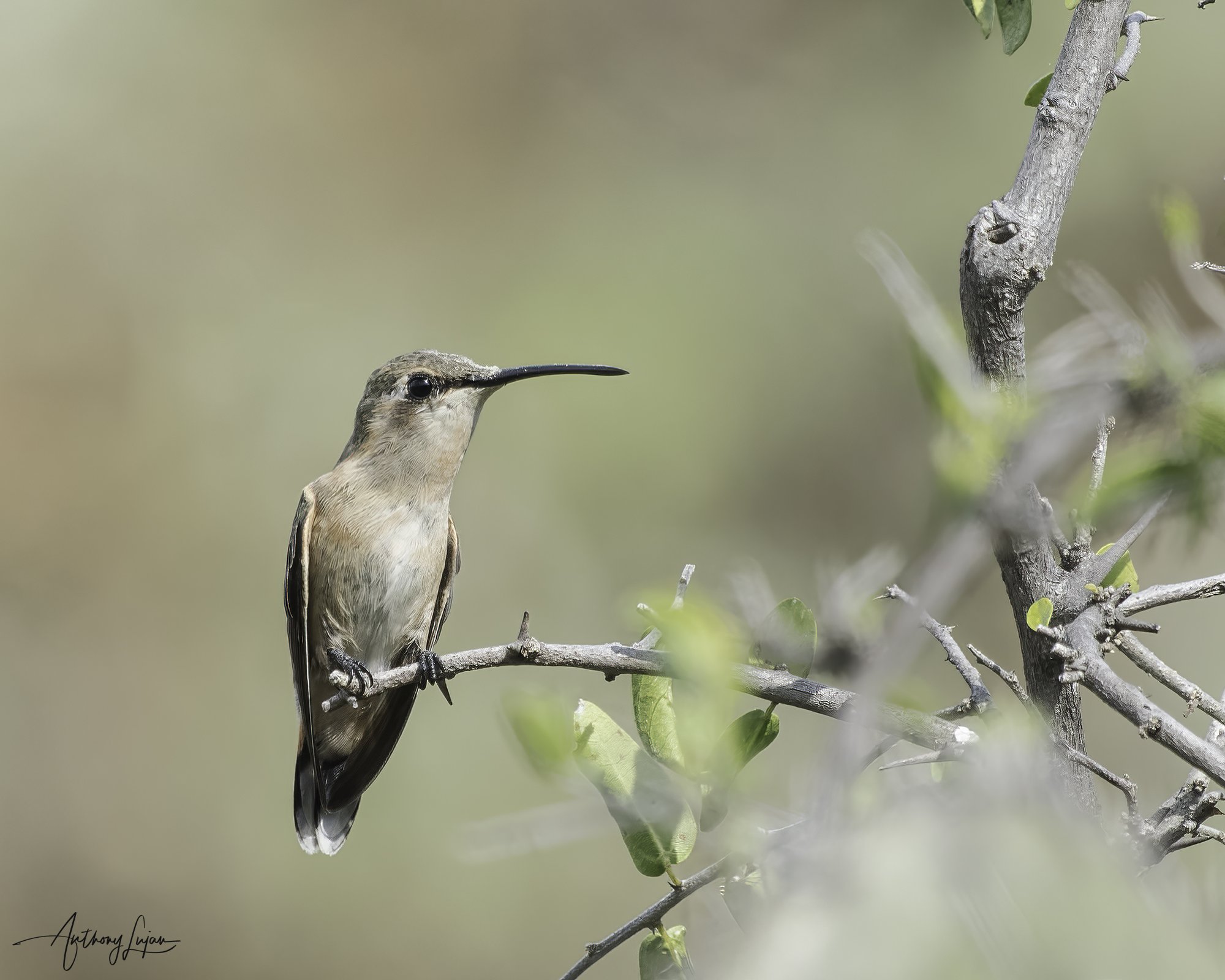
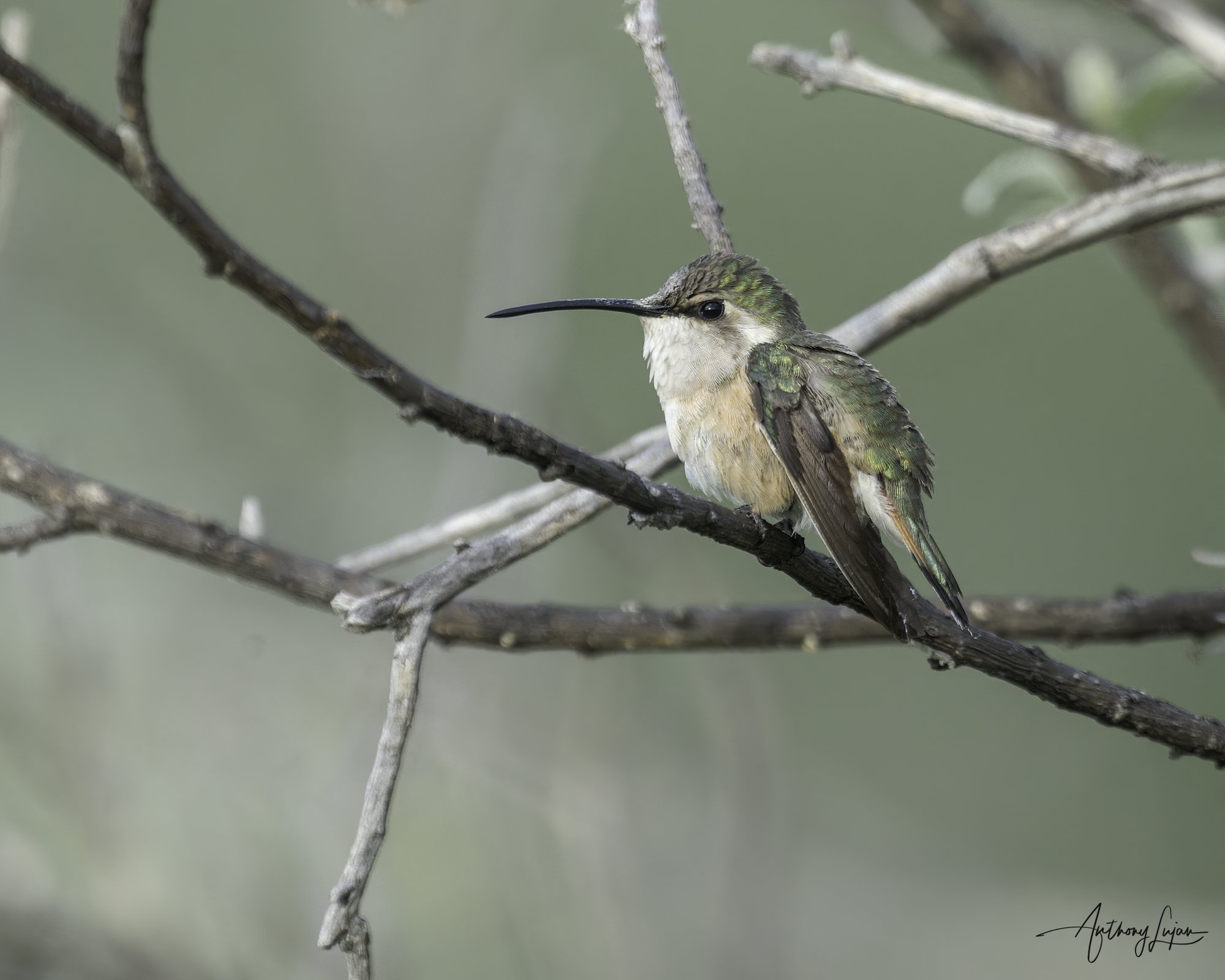
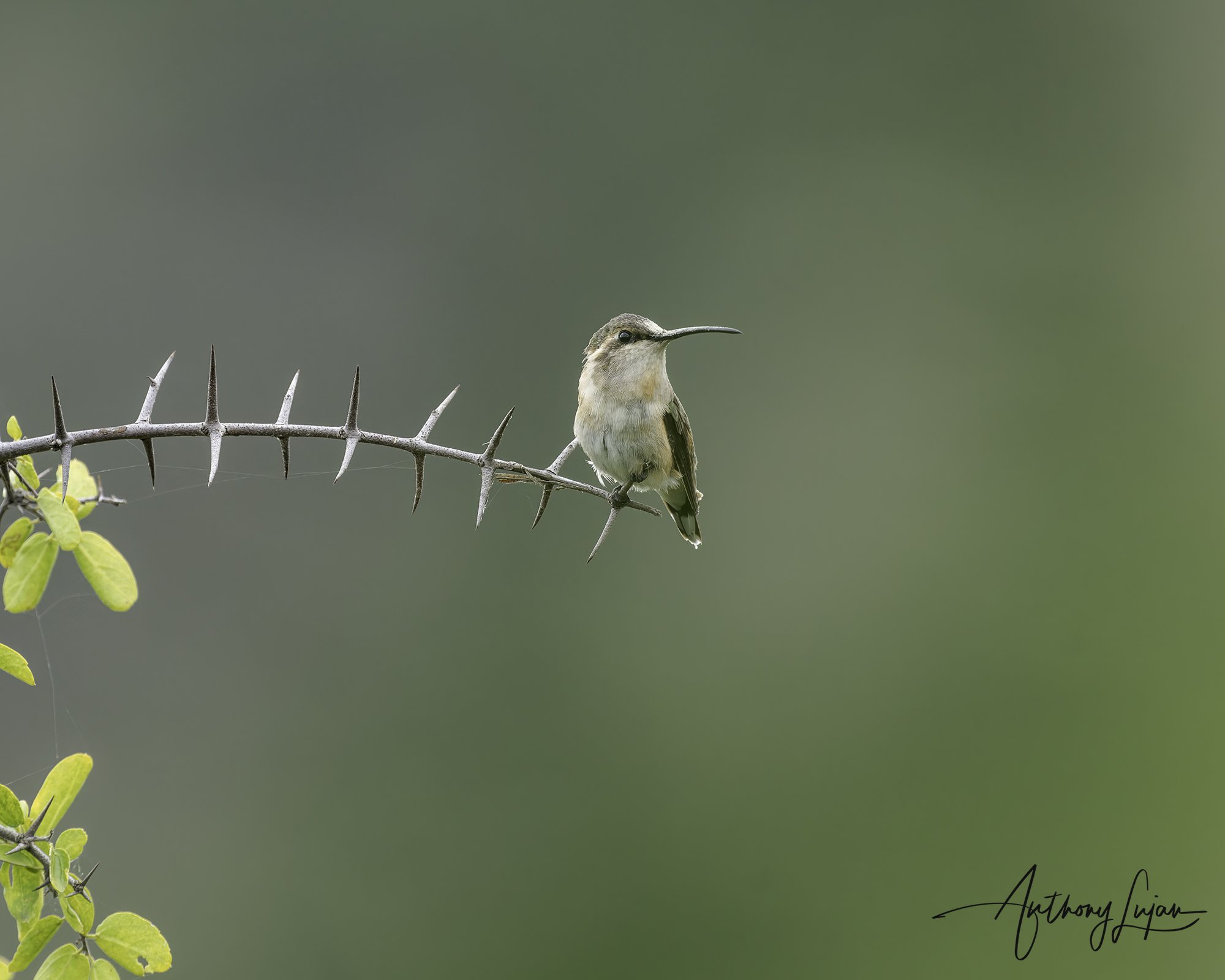
Females lack the full magenta‑violet gorget of the male and instead show mostly white underparts with some dusky spotting or a faint wash on the throat. The upperparts are green, the tail is shorter and more modestly patterned but still somewhat elongated compared with many other hummingbirds, and the overall look is of a small, pale‑bellied desert hummingbird. Females can resemble female Lucifer Hummingbirds, but Beautiful Hummingbird tends to have a less strongly curved bill, subtly different tail shape and pattern, and a range centered in south‑central Mexico. Juveniles are similar to females until they acquire the male’s full gorget and tail shape.
Habitat and Behavior
Beautiful Hummingbirds inhabit arid and semi‑arid scrublands, rocky interior valleys, and dry slopes with bushes, shrubs, agaves, and cacti in south‑central Mexico. They frequent semi‑open areas with scattered trees and shrubs, including edges of gallery forest along washes, where flowering plants are concentrated. The species forages at low to mid‑levels, visiting small tubular flowers on shrubs, cacti, and agaves, and also taking nectar from garden plants where available.
Like many small hummingbirds, Beautiful Hummingbirds combine nectar feeding with hawking for small insects, which provide essential protein for adults and growing young. Individuals may defend favored flower patches, chasing away other hummingbirds and insects, but they can also move between sparse nectar sources in these dry landscapes. The species is generally considered a year‑round resident within its limited range, with only local movements in response to flowering patterns and seasonal conditions.
Population and Threats
Beautiful Hummingbird is assessed as Least Concern, with an estimated 20,000–50,000 mature individuals across its small range in south‑central Mexico. However, its population is believed to be decreasing, and its endemic, restricted distribution makes it sensitive to habitat loss and degradation. Potential threats include conversion of arid scrub and interior valleys for agriculture, urbanization, and changes in native plant communities that reduce the availability of key nectar sources such as flowering shrubs, cacti, and agaves.

Conservation
Because Beautiful Hummingbird is confined to arid and semi‑arid highland habitats in south‑central Mexico, conserving native scrub, canyon vegetation, and agave‑ and cactus‑rich slopes is essential for its long‑term persistence. Protecting dry interior valleys from excessive clearing, overgrazing, and development helps maintain the flowering shrubs and succulents this species relies on for nectar. Encouraging native, hummingbird‑friendly plantings in local communities, along with continued monitoring of populations and habitat change, will support the conservation of this small but aptly named hummingbird.
only the female was photographed
Checkout Anthony’s playlist of this species! Click the top right dropdown to see all the videos.
Related species in the Calothorax genus (2 species total):

Please note: The content provided in this article reflects Anthony’s personal experience and photographic approach. Results can vary depending on light, weather, location, equipment, subject behavior, and field conditions.