
Bronze-tailed Plumeleteer
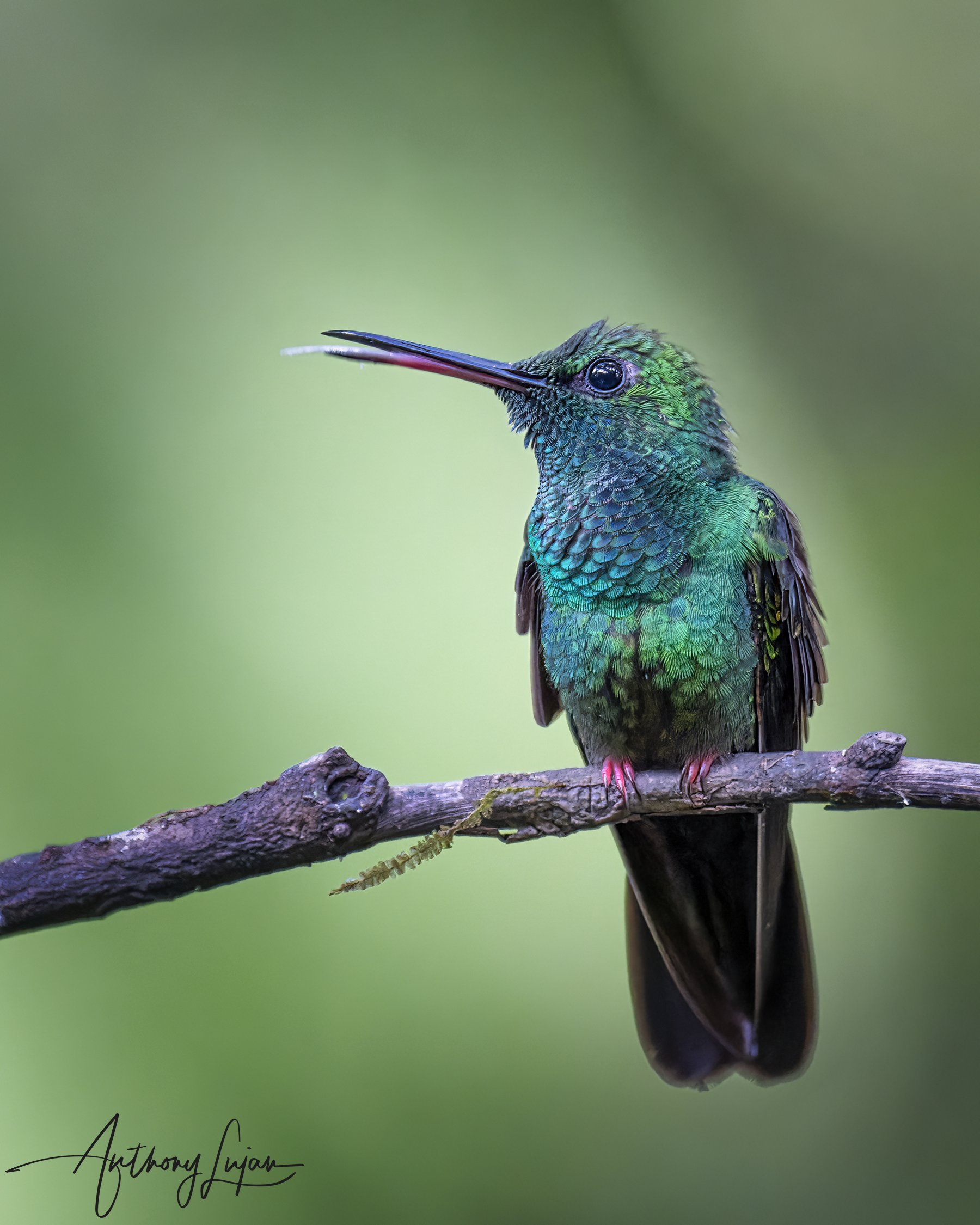
Scientific name: Chalybura urochrysia
The Bronze-tailed Plumeleteer (also known as the Red-footed Plumeleteer in Costa Rica) is a robust “emerald” hummingbird of humid lowland and foothill forests from eastern Honduras to northwestern Ecuador. An estimated 500,000–4,999,999 mature individuals exist, the population is decreasing, it is considered non-migratory, and it is currently listed as Least Concern with three recognized subspecies.
At a Glance
Family: Trochilidae (hummingbirds)
Clades: Trochilini – Emeralds
Genus group: Chalybura — medium-sized, heavy-plumaged plumeleteers with bright feet (2 species total)
Range: Caribbean slope from eastern Honduras through Nicaragua, Costa Rica, and Panama to extreme northwest Colombia; also Pacific slope in parts of Panama and into western Colombia and extreme northwestern Ecuador.
Habitat: Interior and edges of humid evergreen forest, mature secondary forest, shady plantations (such as banana and cacao), forested stream banks, gaps, and shaded gardens; generally avoids very open country.
Elevation: Mostly from sea level up to about 700 m (2,300 ft) in Central America and to around 900 m (3,000 ft) in Colombia and Ecuador.
Length: About 10.5–12 cm (4.1–4.7 in).
Weight: About 6–7.5 g (0.21–0.26 oz).
Number of mature individuals: 500,000–4,999,999
Population trend: Decreasing
Status: Least Concern (IUCN)
Name Origin
The genus name Chalybura combines Greek roots for “steel” and “tail,” referring to the metallic sheen of the tail feathers. The species name urochrysia combines Greek for “tail” and “golden,” a poetic reference to the bronzy-golden tones of the tail. The English name “Bronze-tailed Plumeleteer” highlights the bronzy tail and the fluffy leg “plumes” typical of plumeleteers.
Subspecies & Distribution
Three subspecies:
Chalybura urochrysia melanorrhoa
Distribution: Caribbean slope of eastern Honduras, eastern Nicaragua, and Costa Rica. Often called the “Red-footed Plumeleteer” in Costa Rica, it is found in humid lowland and foothill forest, edges, and shady second growth, generally from near sea level up to about 700 m.Chalybura urochrysia isaurae
Distribution: Caribbean slope of Panama to extreme northwest Colombia; also locally on the Pacific slope in western and central Panama and widely in eastern Panama. It occupies similar humid forest interiors and edges, riverine corridors, and shaded plantations.Chalybura urochrysia urochrysia (nominate)
Distribution: Extreme southeastern Panama (eastern Darién), north-central and western Colombia, and extreme northwestern Ecuador. It inhabits humid lowland and foothill forests, forest edges, and mature secondary forest in this trans-Andean region.
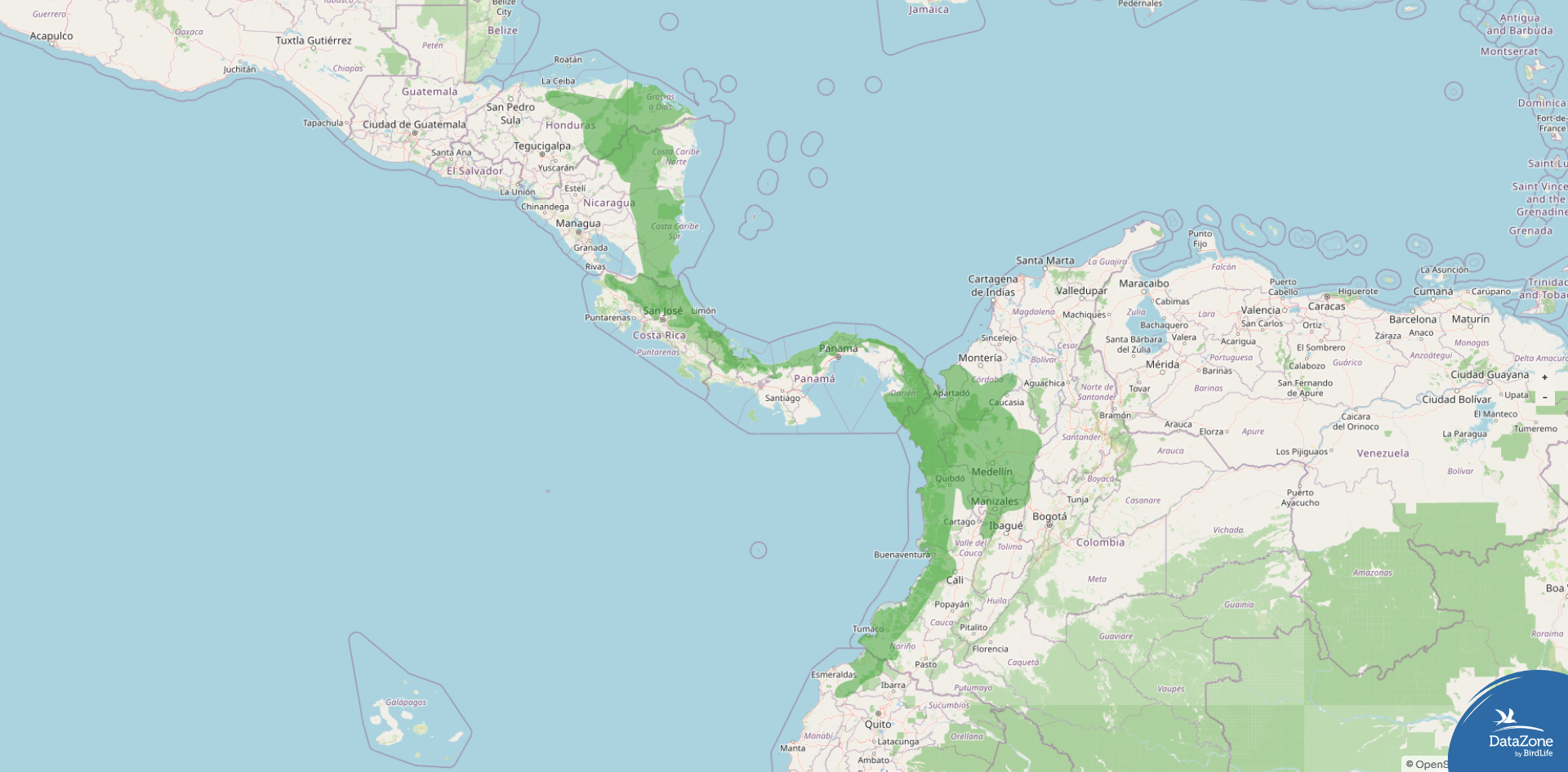
Legend
Green Resident
Species Overview
The Bronze-tailed Plumeleteer is a heavy-bodied, aggressive hummingbird of humid forests, often associated with forest edges, gaps, and shady plantations rather than dense interior or open fields. It frequently forages at Heliconia and other large understory flowers, defending productive patches against other hummingbirds. Its broad but continuous range across Central America and northwestern South America and the use of secondary habitats support its Least Concern status, though habitat loss is driving a slow decline.
Male Description
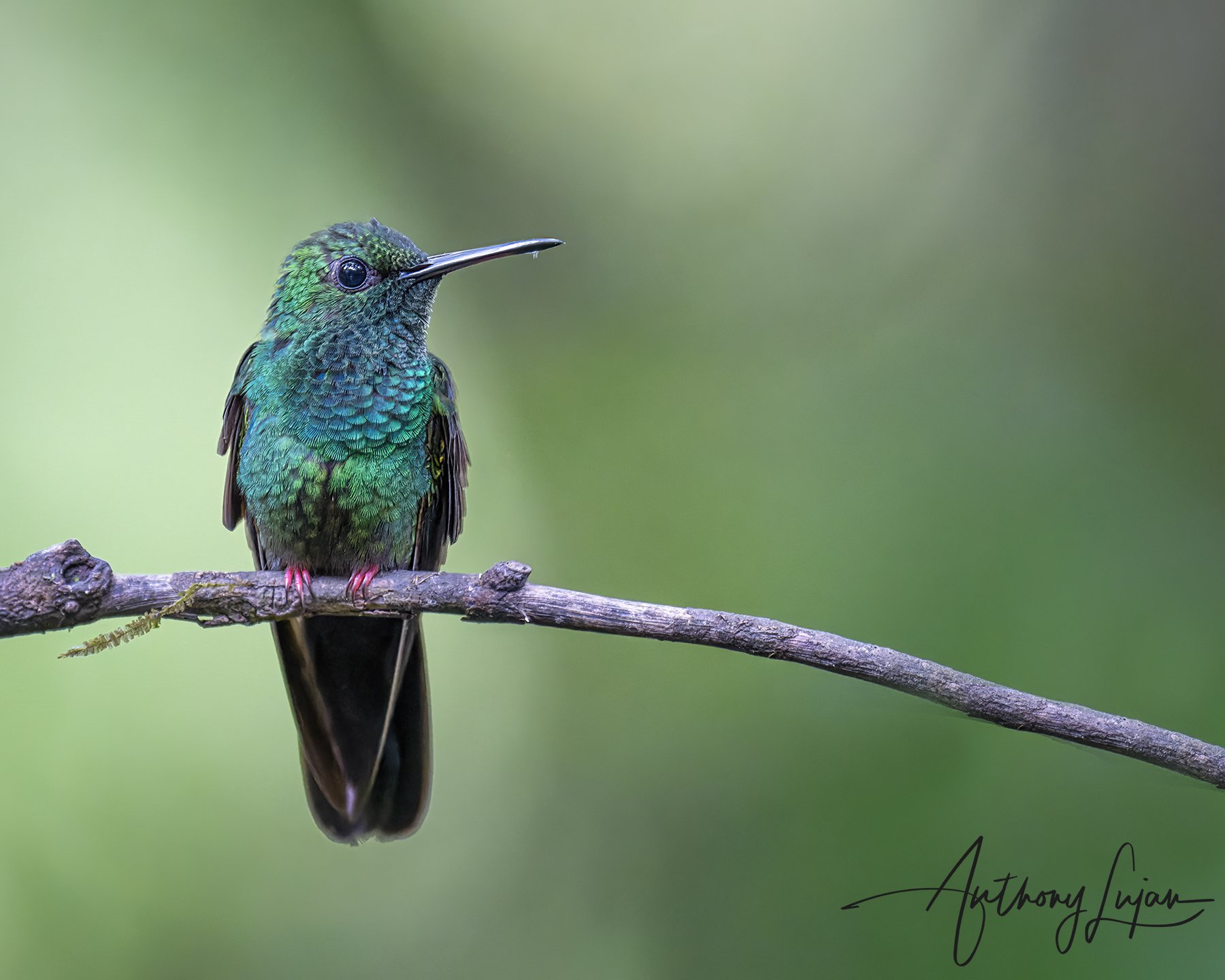
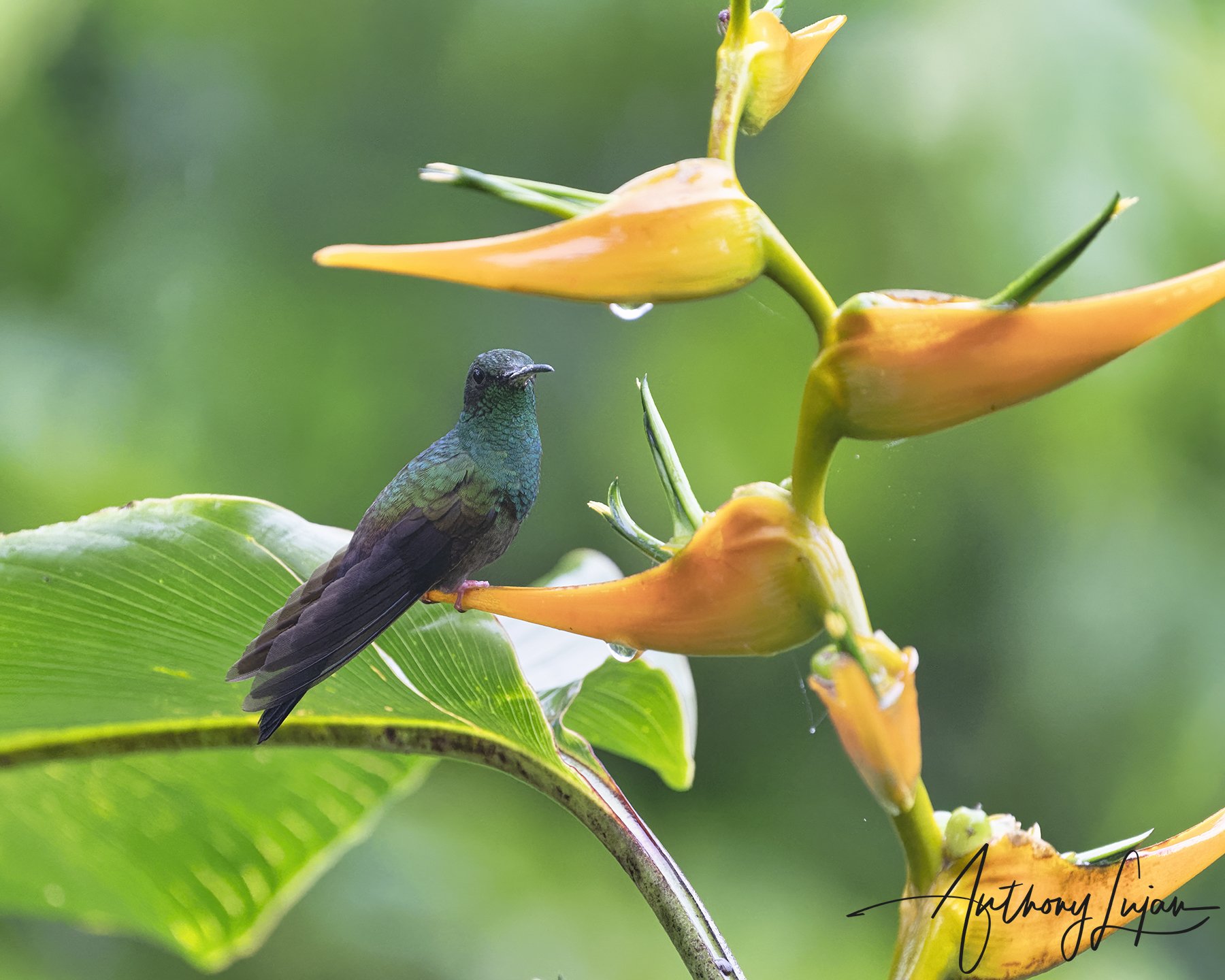
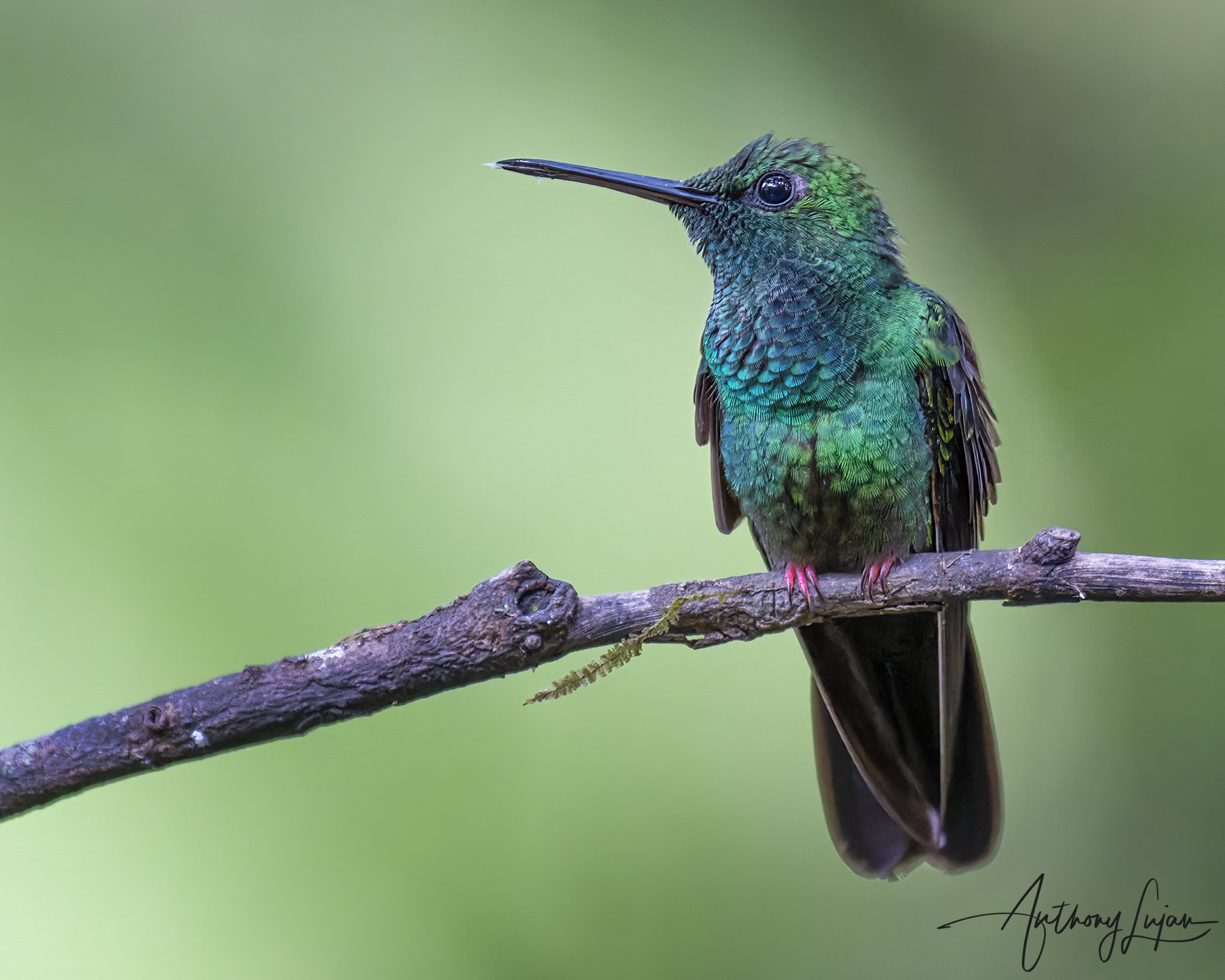
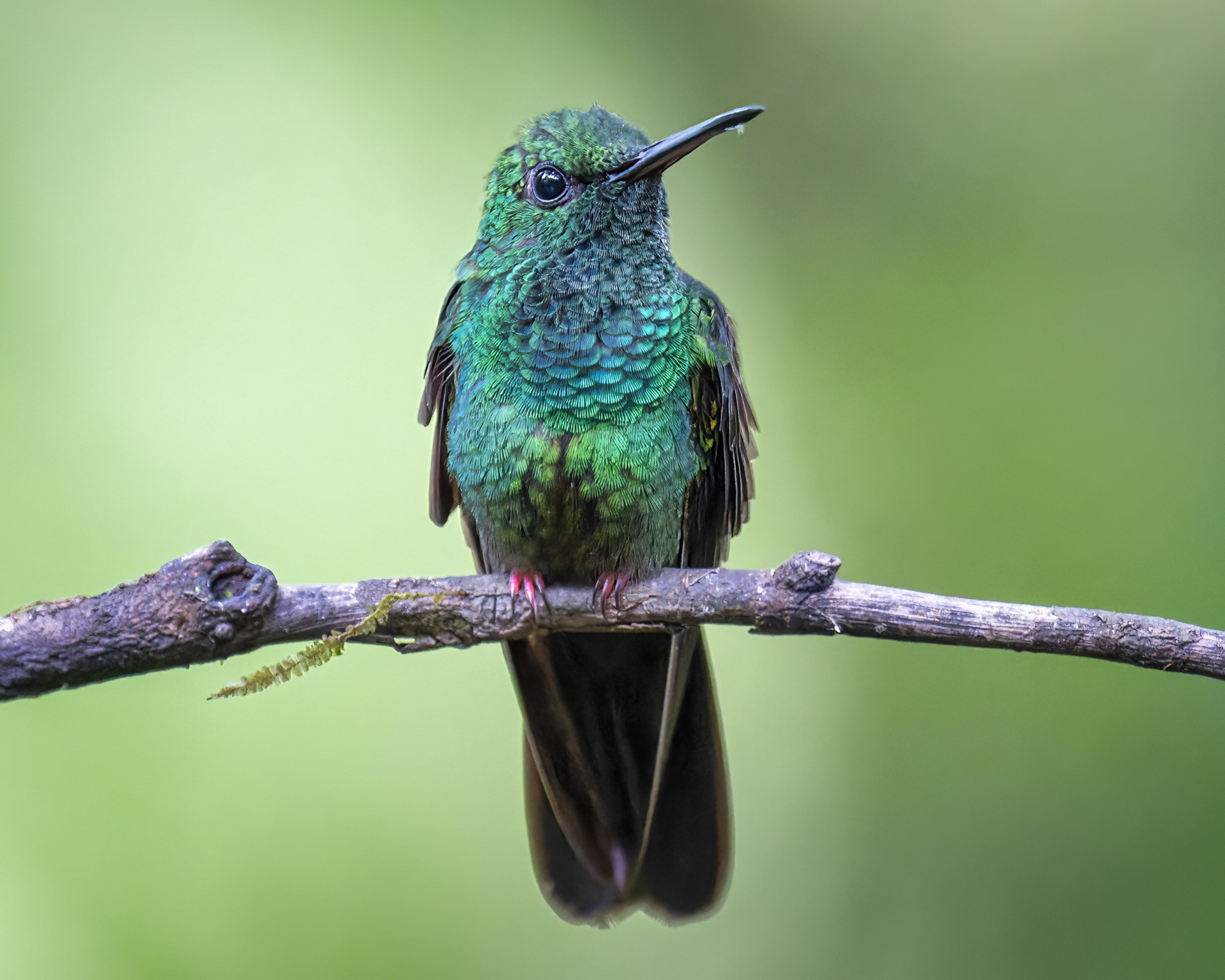
Adult males are medium-sized with a fairly straight black bill and bright pink to red feet, a key field mark. The upperparts are dark bronzy-green, shading to purplish-bronze on the rump and uppertail coverts. The tail is purplish-black to bronze, often reflecting a bronzy sheen. The throat and breast are glittering dark green, with the belly darker, dusky bronze, and the undertail coverts sooty blackish. In the field, males appear as dark, thick-set green hummingbirds with a bronzy tail and conspicuously red feet.
Female Description
Adult females are similar in structure but duller overall. The upperparts are green with a less intense bronze sheen. The throat and belly are pale grayish to whitish, often lightly mottled or washed with green on the sides, with darker undertail coverts. The tail is dark with some bronzy gloss and may show slightly paler tips or edges on the outer feathers. Females also have pink to reddish feet, though these can be less conspicuous than in males. Overall, females look like medium-sized green hummingbirds with pale underparts, dark tail, and colored feet.
Habitat & Behavior
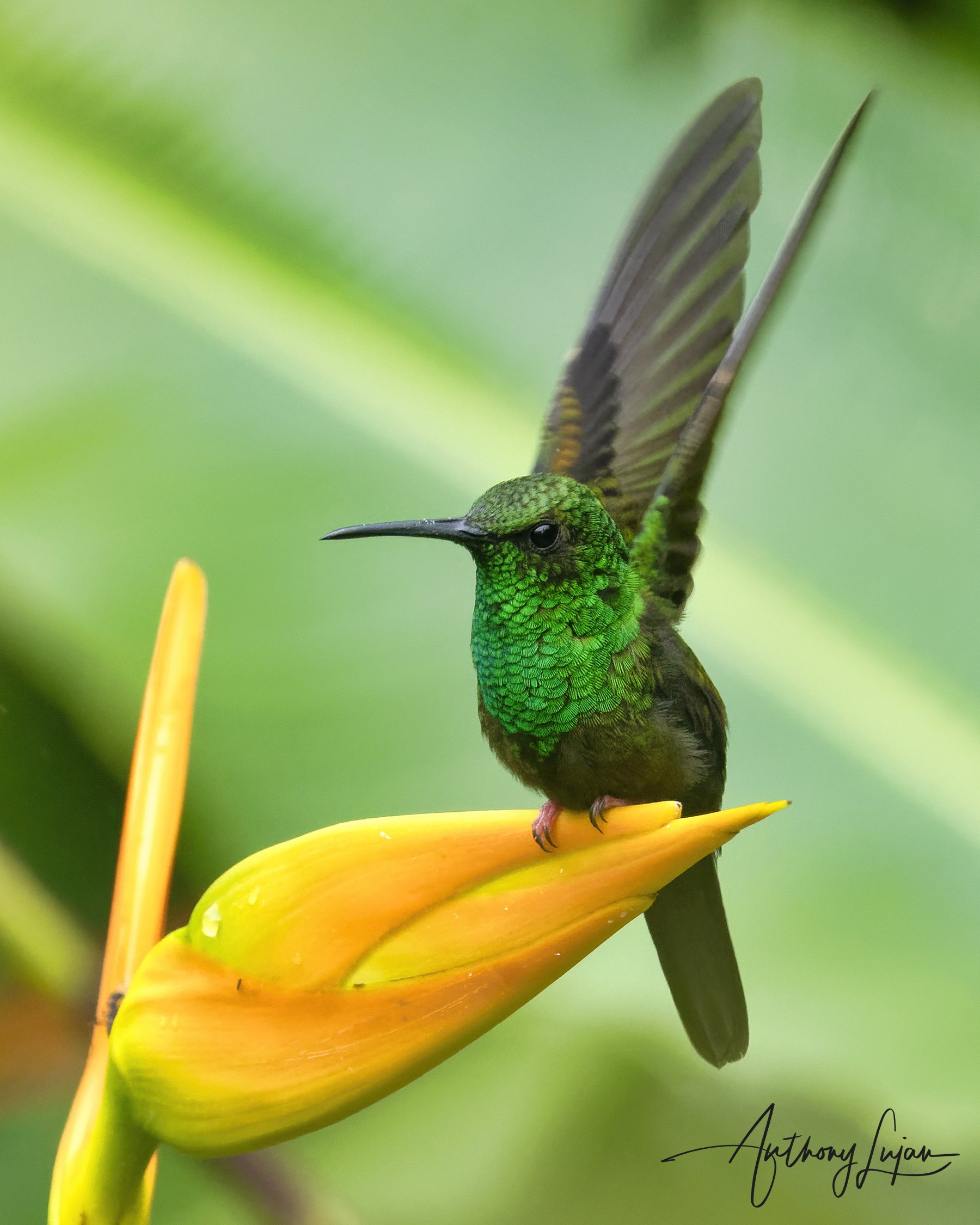
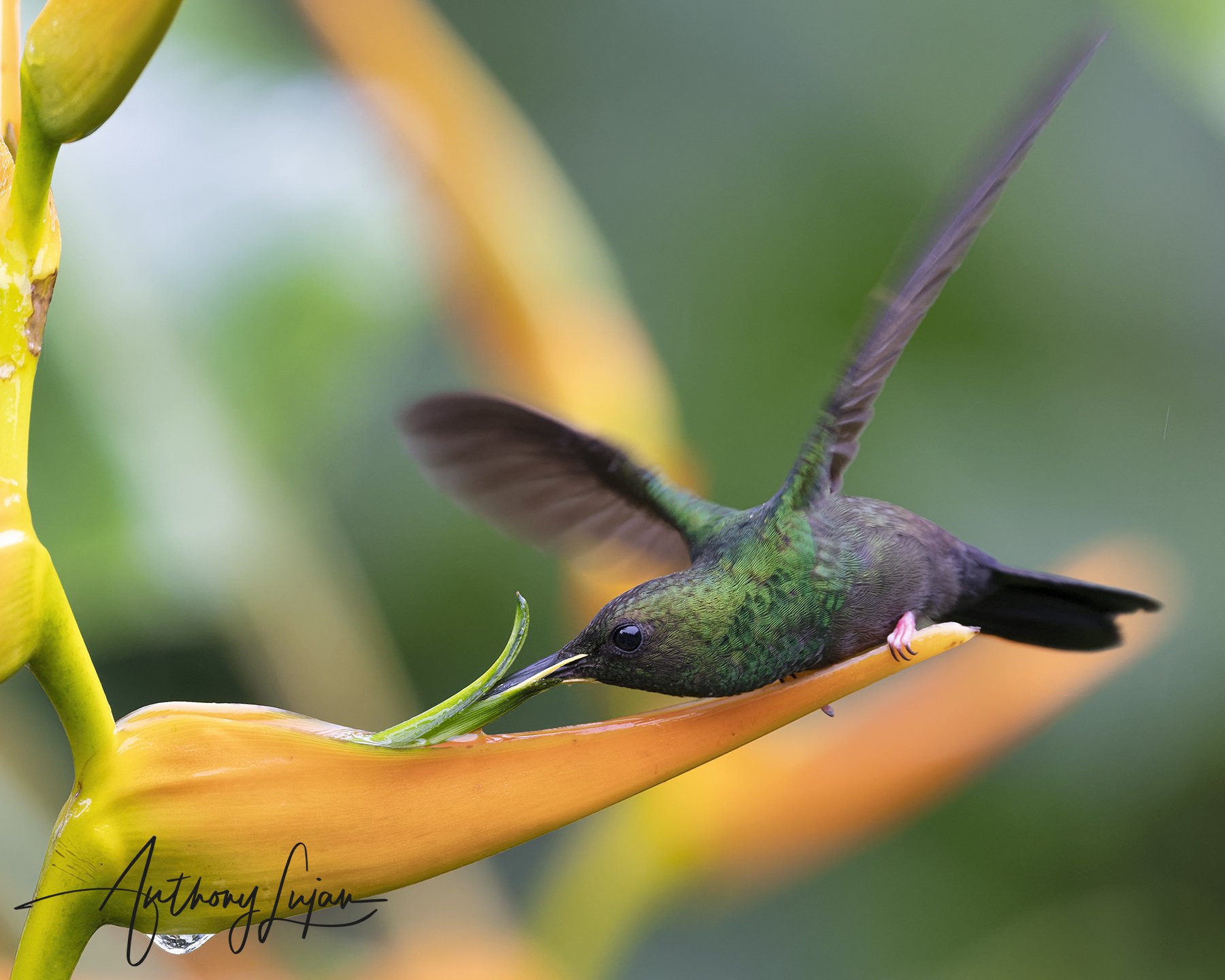
Bronze-tailed Plumeleteers inhabit the understory and mid-story of humid evergreen and semi-evergreen forests, forest edges, mature secondary forest, and shaded plantations such as banana and cacao. They shun very open habitats, usually staying near dense cover and along streams, ravines, and gaps. They feed heavily at Heliconia and other tubular flowers, often aggressively defending rich patches and chasing away other hummingbirds. They also take small arthropods, usually by hawking from low perches or gleaning from foliage. Birds typically forage from near ground level up to the mid-story and occasionally visit epiphytes in the subcanopy.
Breeding
Breeding timing varies by region: in Costa Rica, nesting occurs mainly from December to June (peaking February–April), while in Colombia it appears to run from roughly February to April. The nest is a deep cup of pale plant down and fibers bound with spiderweb and covered with moss and bits of lichen, usually placed 0.5–1.5 m (2–5 ft) above the ground in a shrub or low sapling, often near a stream or trail. The female alone incubates two white eggs and raises the chicks; incubation and fledging periods are similar to other medium-sized hummingbirds (around two weeks of incubation and about three weeks to fledging).
Population
With an estimated 500,000–4,999,999 mature individuals, the Bronze-tailed Plumeleteer remains widespread and locally common throughout much of its range. However, it is closely tied to humid forest and well-shaded secondary habitats, so deforestation, fragmentation, and conversion of forest to pasture or intensive agriculture reduce suitable habitat. These pressures are believed to be causing a gradual, ongoing decline rather than a rapid crash.

Conservation
The Bronze-tailed Plumeleteer is assessed as Least Concern due to its large population and broad distribution, including populations in several protected areas across Central America and northwestern South America. Conservation priorities include preserving humid lowland and foothill forest, maintaining shaded plantations and forest edges, and protecting riparian corridors and ravines that offer dense, moist vegetation. Maintaining Heliconia-rich understory and other nectar-rich plants is especially important for this and other forest-dependent hummingbirds.
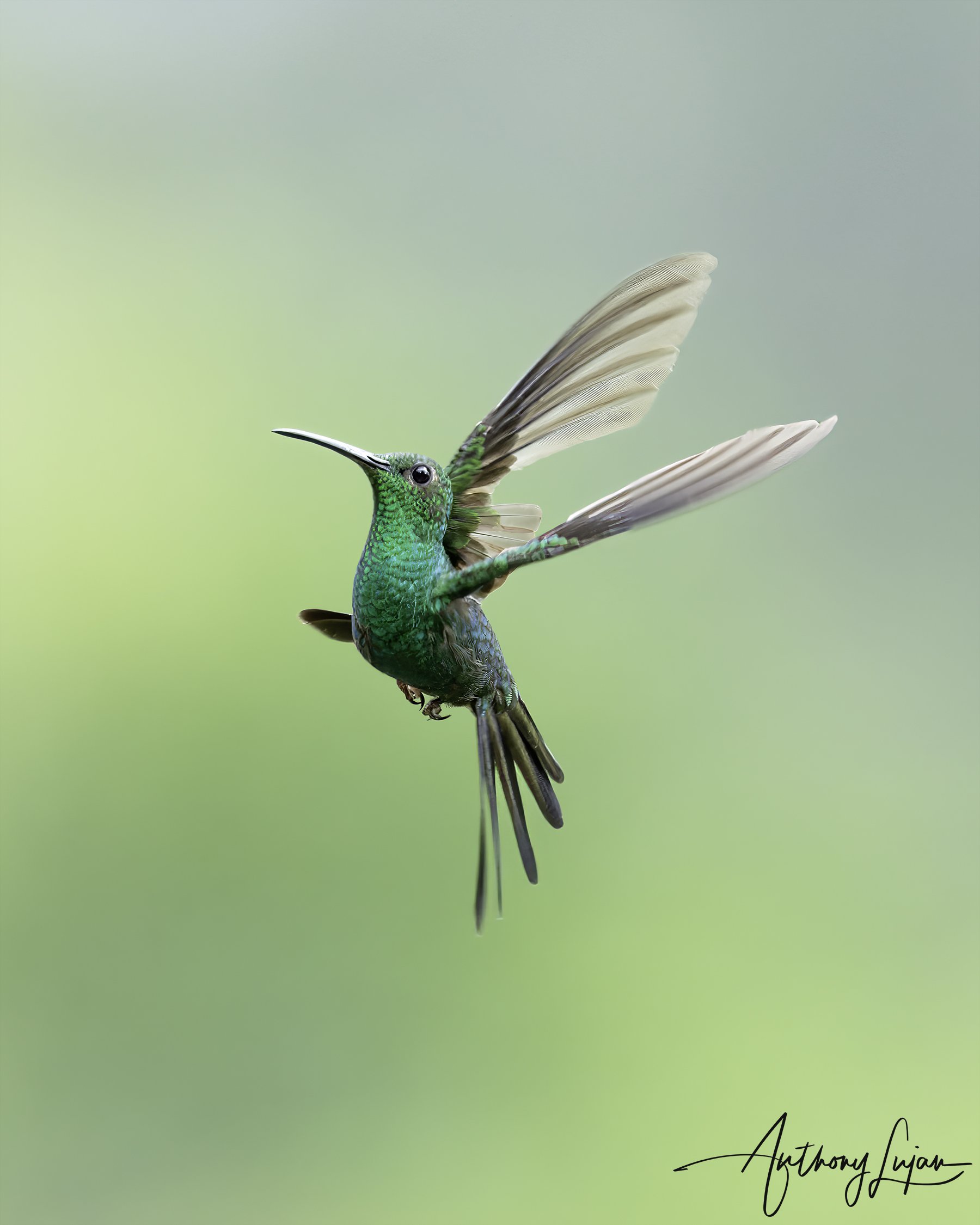
Below is the Bronze-tailed Plumeleteer (Chalybura urochrysia urochrysia)
Photographed at Donde Cope – La Unión de Guápiles, Limón, and Arenal Observatory Lodge and Trails, Costa Rica
These individuals belong to the nominate subspecies urochrysia, which occurs along the Caribbean slope of Central America from Honduras south through Nicaragua and Costa Rica into western Panama. It inhabits humid lowland and foothill forest, forest edge, and shaded gardens, generally from sea level up to 1,000 meters.
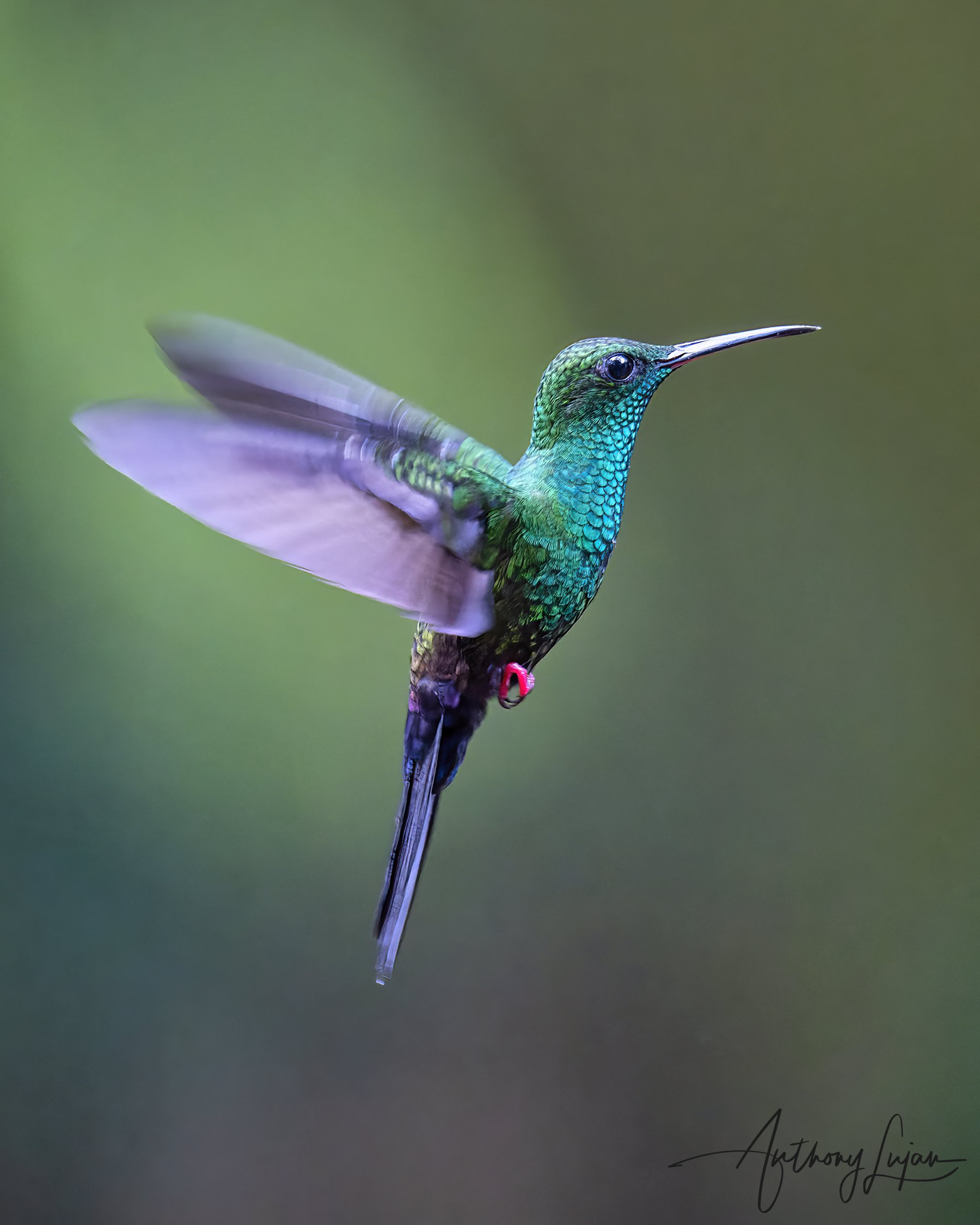
Related species in the Chalybura genus (2 species total):
Please note: The content provided in this article reflects Anthony’s personal experience and photographic approach. Results can vary depending on light, weather, location, equipment, subject behavior, and field conditions.